Advertising disclosure: This page includes affiliate links that may earn us a commission at no additional cost to you.
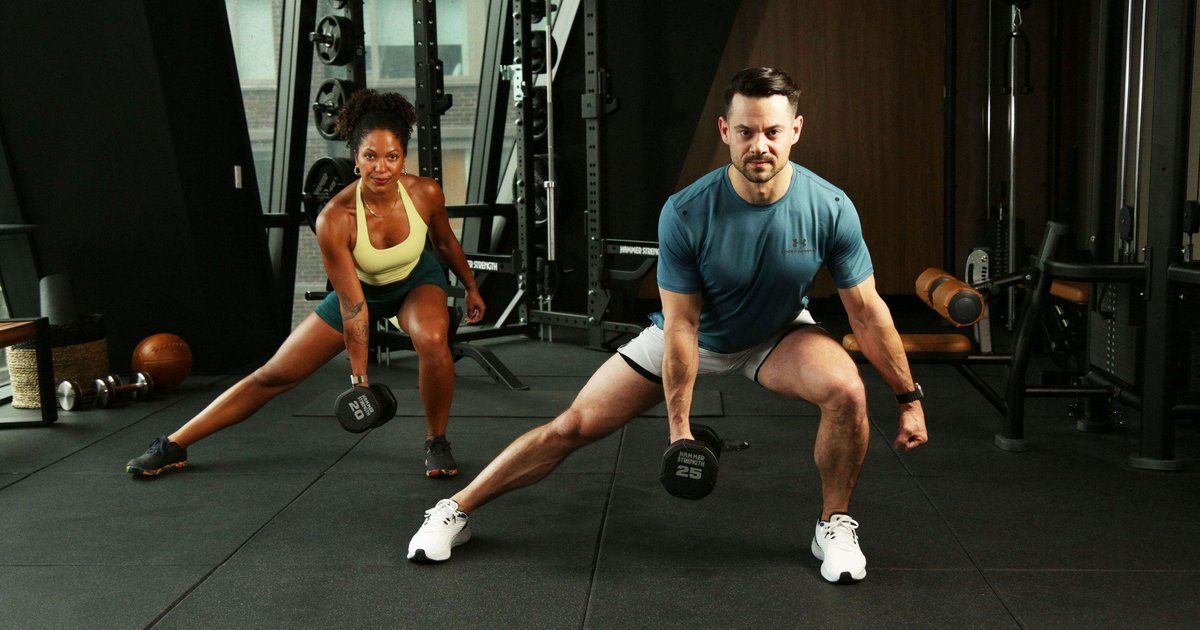
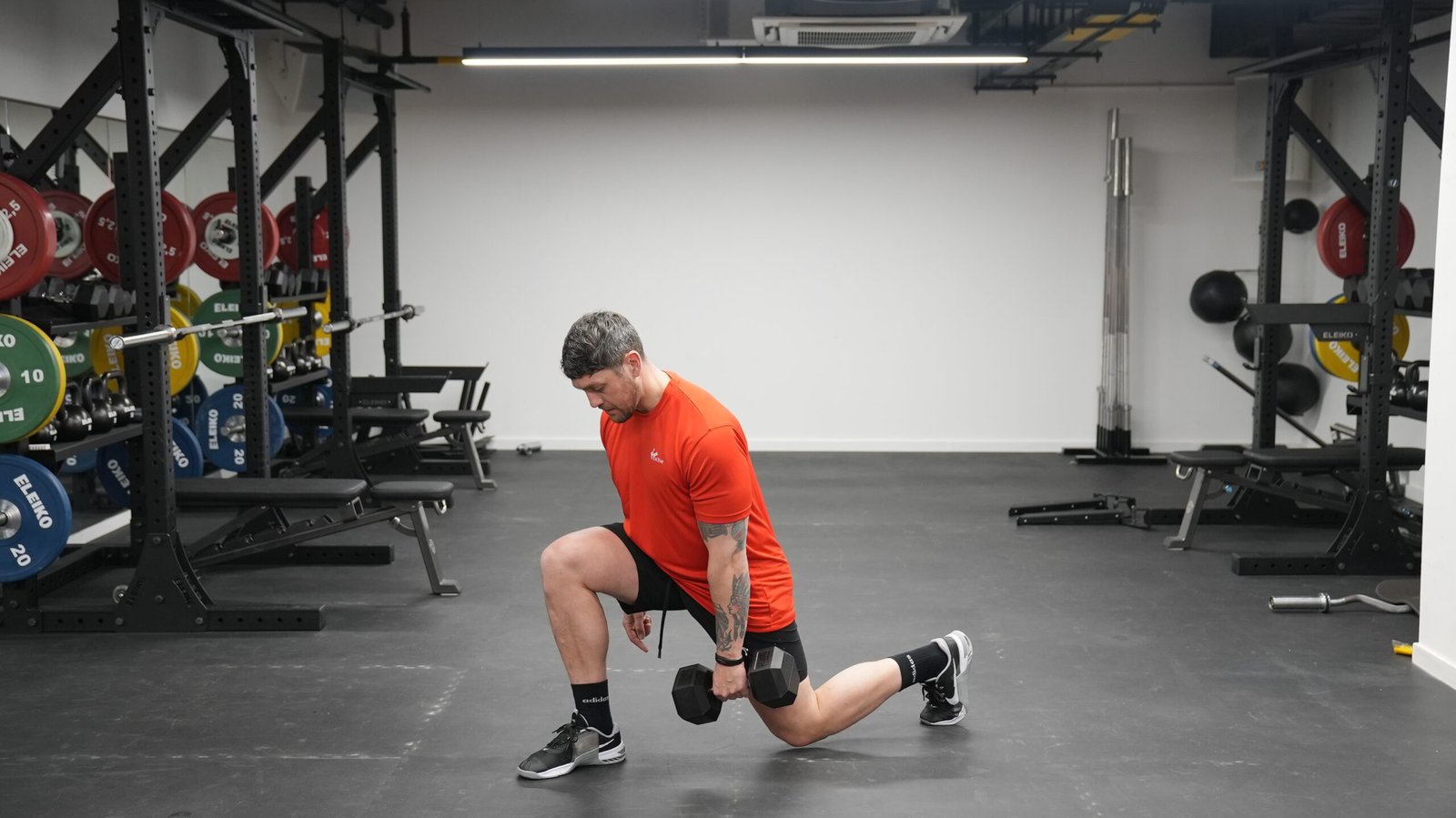
Forward lunges and lateral lunges look like close relatives, but they do not ask your legs to solve the same movement problem. One sends your body forward and then back; the other shifts your weight sideways. If you are trying to build bigger legs, improve control or simply make a leg day less repetitive, that difference gives you a useful reason to keep both movements in your toolkit.
A 2013 laboratory comparison gives us a more precise way to think about the choice. Rather than deciding which exercise feels harder, the researchers examined how the ankle, knee and hip contributed when people stepped in two directions at two different distances. The findings challenge the idea that the deepest knee bend always means the greatest demand on the knee extensors.
What the experiment actually compared
The experiment involved 32 young adults, evenly divided between men and women. Each performed six repetitions under each of four conditions: forward and lateral lunges, both at a personally chosen distance and at a standardized distance of 60 percent of standing height. The researchers examined joint motion and net extensor moment impulse in the stepping leg.
Think of the latter measure as a way of combining the magnitude of a joint moment with how long that moment acts. A movement that requires a substantial moment over an extended portion of the repetition can produce a different impulse from one that briefly reaches a large peak. This is an important distinction for lifters who instinctively equate a pronounced joint angle or an intense muscular sensation with mechanical loading.
The comparison is particularly useful because it separates direction from the choice of step distance. Someone who normally steps a short distance to the front but a long distance sideways is not just changing direction. They are also changing leverage and how far their center of mass travels. Even when a researcher tries to hold one variable constant, the resulting movement need not look identical at the ankle, knee and hip.
These measurements describe immediate exercise mechanics. They are not muscle biopsies, electromyography of individual muscles, or a training intervention measuring gains over months. They cannot establish a winner for hypertrophy or prove that either lunge is safer for everyone.
Why direction changes the demands on your legs
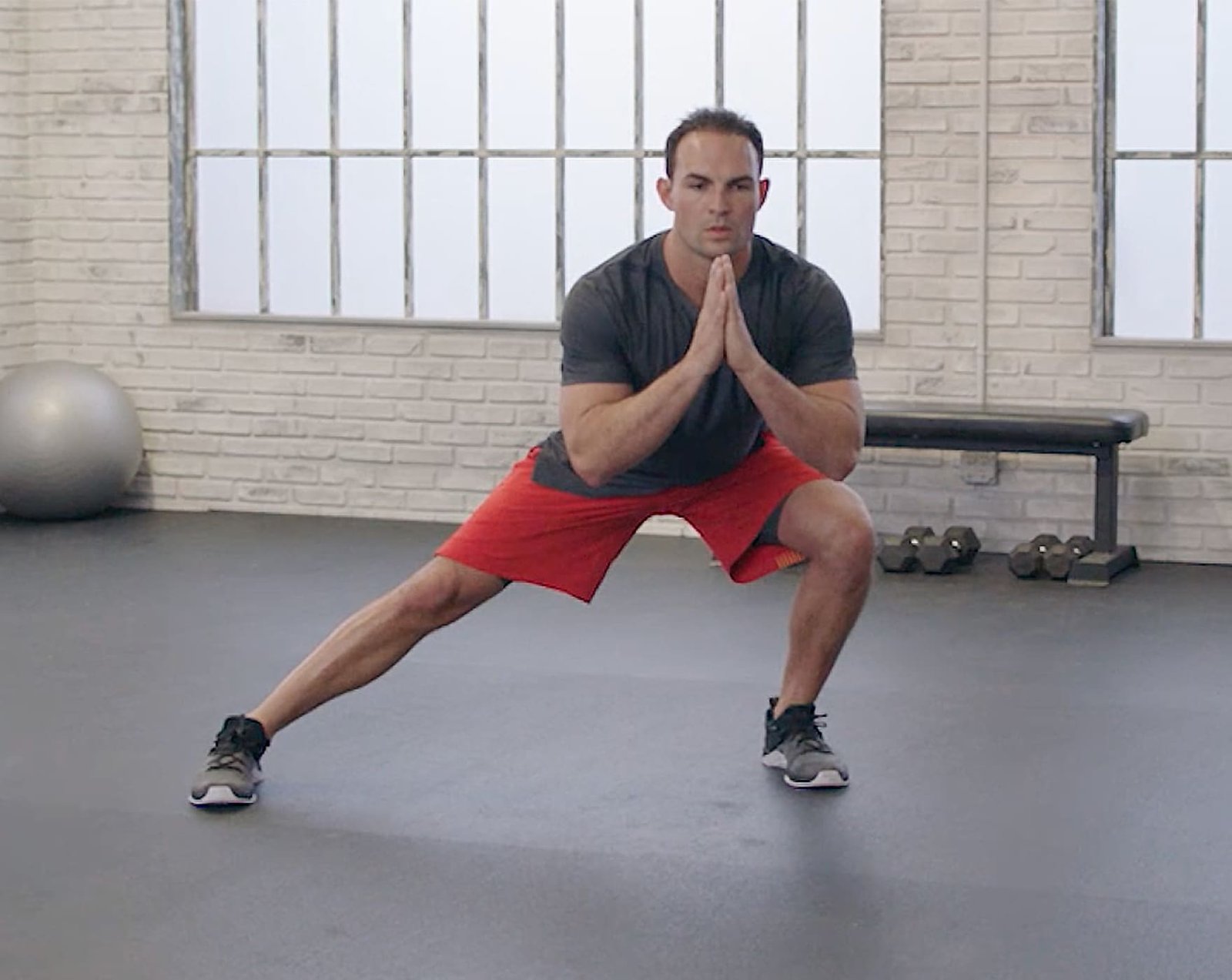
The forward movement produced greater knee flexion, whereas lateral lunges generated more ankle motion and greater ankle and knee extensor impulse. In contrast, forward lunges generated the larger hip extensor impulse. The difference in hip impulse was approximately 65 percent at the standardized step distance and 45 percent when participants chose their own distance. The lateral knee impulse advantage was about 48 percent at the fixed distance and 17 percent with the chosen distance.
It is tempting to translate those results into a headline declaring that a forward lunge is a glute exercise and a lateral lunge is a quad exercise. That goes too far. Both recruit coordinated hip and knee extension, and lateral movement also requires the lifter to manage the sideways transfer of weight. Net joint moments cannot tell you exactly how much force each individual muscle produced.
What you can take from this is a reason to pay attention to how you move, not just which muscle is burning. When you step forward, you have to accept your moving body weight, control the descent and then push yourself back to your starting position. When you step sideways, the loaded leg bends while the other leg helps you manage the width of your base. The direction of travel changes the balance challenge as well as how the joints share the work.
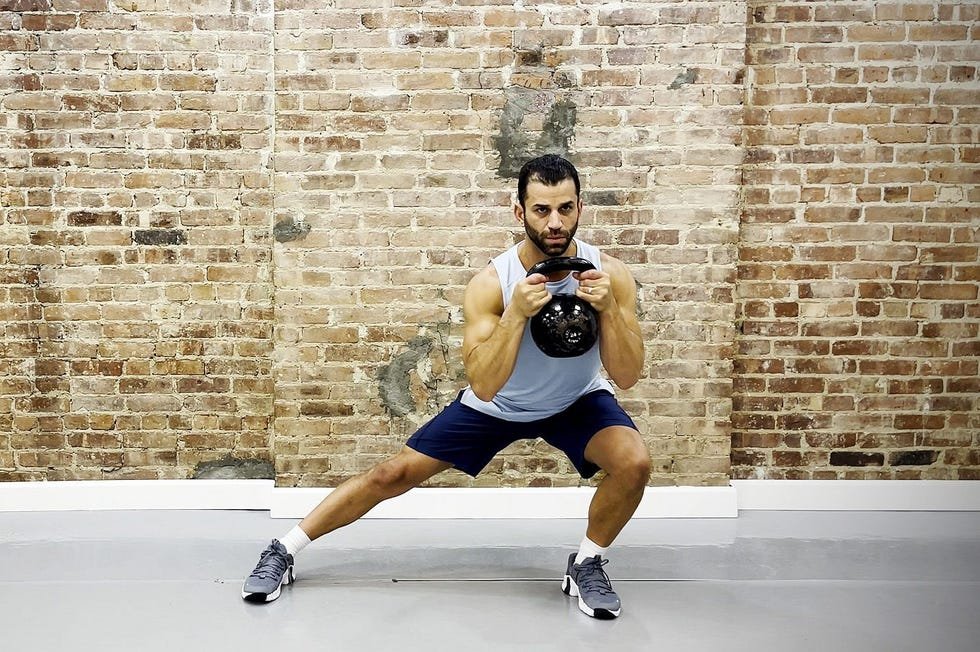
If your ankle mobility limits your side lunge, a wider step is not automatically the solution. Try a shallower descent with the stepping foot fully planted. Keep the knee moving in the general direction of the toes and let the hips travel back as appropriate. You should be able to reverse the motion without a desperate push from the trailing leg.
Step length matters more than a magic number
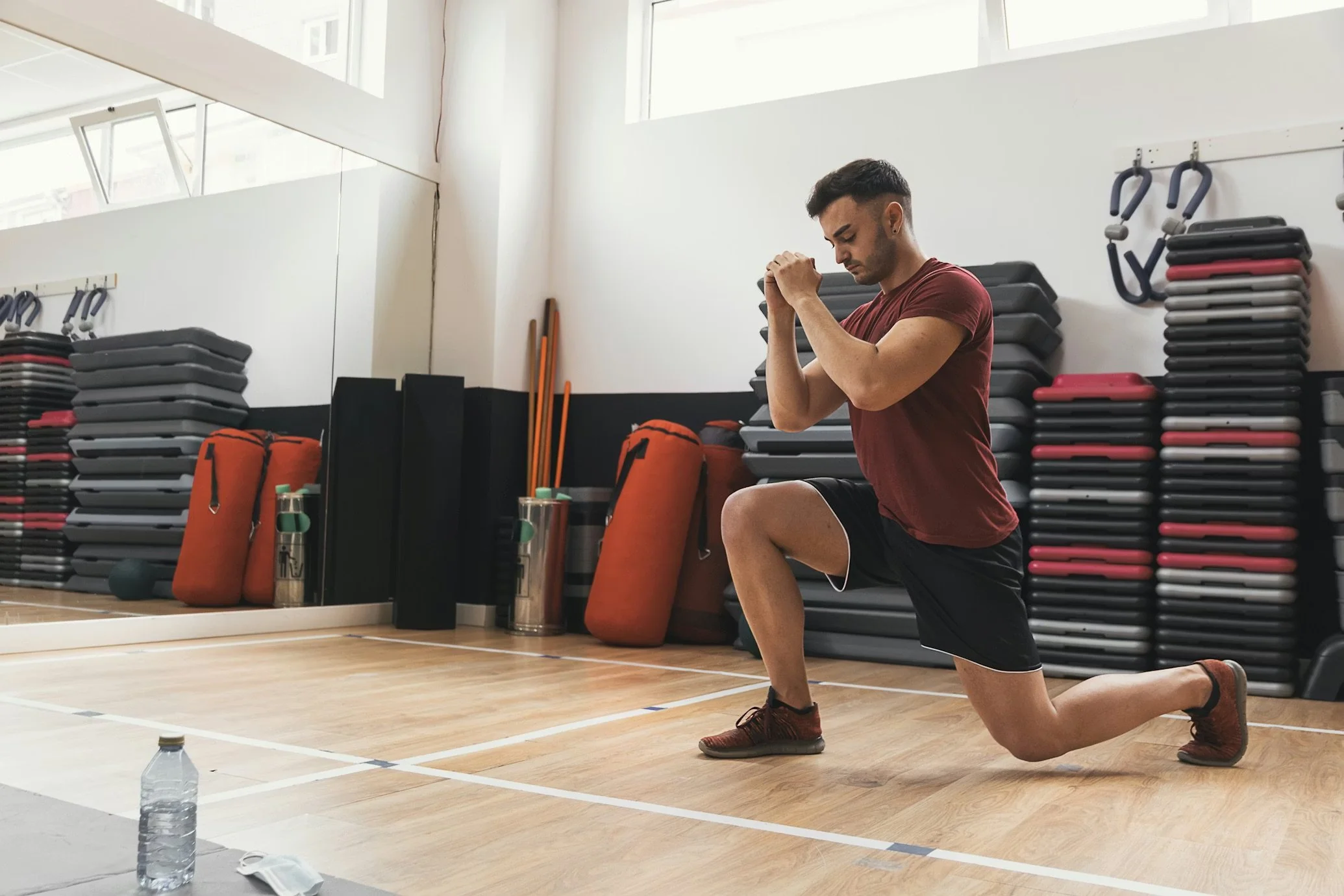
In the study, participants chose forward steps about ten percent shorter than the imposed distance. Their preferred lateral steps were not statistically different from the imposed lateral distance. That is another reminder that the same percentage of height can feel very different depending on which way you step.
For someone who stands 180 centimeters tall, 60 percent of height works out to 108 centimeters. That number describes a study condition, not a target every lifter must hit. Limb proportions, footwear, available floor space, confidence and the range of motion you can control all influence a usable starting position. A taller person might need a longer absolute step than a shorter person without necessarily using a larger relative distance.
Other biomechanics experiments comparing forward lunges with reverse lunges and single-leg squats also highlight that changing the movement pattern changes joint loading. That supports a practical principle: exercise names are only the beginning of the comparison. Your actual execution matters.
To make your own progression measurable, use a floor seam or removable mark as a repeatable reference. Start unloaded, find a distance that lets you complete the repetition without wobbling, then record it. Maintain that distance for a few weeks rather than simultaneously chasing a wider step, deeper descent and heavier dumbbells.
If you cannot maintain control, shorten the movement or hold a stable support lightly. In a forward lunge, avoid trying to reach the front foot so far that you have to pull yourself upright with momentum. In the lateral variation, avoid rolling onto the inside edge of the foot to reach additional depth. Move within a comfortable range and stop if you experience sharp or escalating pain.
Choose the version that fits your leg day
For a conventional lower-body session, begin with the exercise that matters most to you: a squat, hip hinge or another substantial strength movement. Add a lunge after it when you still have enough concentration to control the stepping motion. You do not need to make the lunge a maximal strength test to get useful training from it.
A forward lunge is a sensible option when you want to practice accepting and reversing forward movement. A lateral lunge is a useful complement when your program otherwise contains little sideways movement. If you already perform heavy split squats, forward lunges may overlap more closely with some of the demands of your existing program, making a lateral variation worth considering for variety.
The simplest loading choices are a dumbbell or kettlebell held at the chest, followed by a pair of dumbbells held at your sides. A weighted vest is another option when you want your hands free. Each changes where the added mass sits, so begin conservatively when switching positions. Experienced lifters who can already control stationary split-stance repetitions may use a barbell and rack, with suitable plates, collars and safeties. Dynamic loaded steps are not the place to improvise an unstable setup.
Keep your equipment selection practical. Adjustable dumbbells and kettlebells allow smaller changes in load; fixed dumbbells or a conventional kettlebell are just as suitable when the available weights match your ability. A barbell is optional, not a requirement. You can make bodyweight lunges challenging by slowing the descent or controlling a brief pause without adding more equipment.

Equipment Worth Exploring
Explore equipment, accessories and gear from our carefully selected range.


Rubber Hex Dumbbells
Rubber-coated hex dumbbell pairs with a stable shape for home and commercial strength training.


Cast Iron Kettlebells
Textured cast-iron kettlebells for swings, squats, carries, and full-body training.


Progress without turning balance into the bottleneck
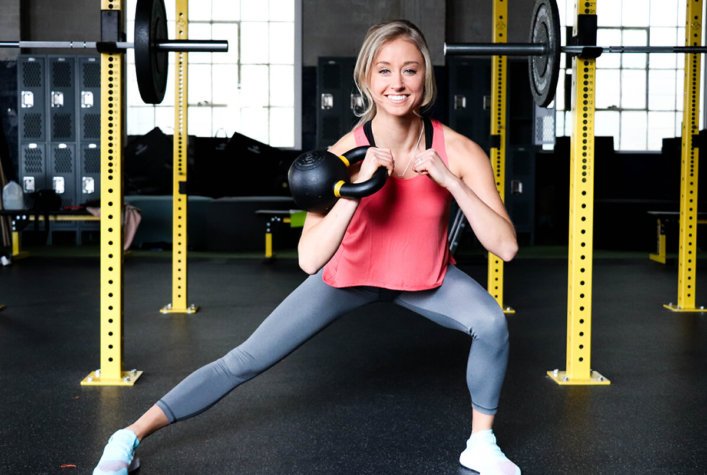
For the first two weeks, try two sets of six to eight controlled repetitions per side, using body weight or a light goblet hold. Rest enough to maintain the same step distance and range of motion. One session can emphasize forward lunges and another lateral lunges. If you train your legs only once weekly, alternate the variation each week or use a smaller dose of each in the same session.
Once those repetitions are repeatable, add a third set or a couple of repetitions before increasing the load. Aim to leave several good repetitions in reserve while learning the movement. This is especially helpful for lateral lunges, where fatigue can make your stance and return path inconsistent long before your legs feel completely exhausted.
After four to six weeks, compare your log with the starting point. Did you use a slightly heavier weight at the same distance and depth? Did the weaker side become easier to control? Can you return to the center without pushing off unpredictably? These observations are more meaningful than trying to imitate a laboratory percentage or judge success by next-day soreness.
You can keep both exercises indefinitely, but you do not have to. If a particular variation becomes difficult to recover from, temporarily reduce its volume or use a more stable split-stance option. If you have ongoing joint pain or a recent injury, seek individualized guidance rather than interpreting this study as a rehabilitation prescription.
The bottom line is that forward and lateral lunges are not interchangeable simply because both train the legs. Their direction and step distance alter how movement and mechanical demands are distributed. Choose the variation that fits your goal, establish a repeatable setup and make gradual progress. That is a more useful way to build a leg day than declaring one version universally superior.

Leg Day Shirts & Workout Gear
Leg-day gym shirts and workout gear for lifters who never skip squats, lunges and lower-body punishment.

Never Skip Leg Day – NSLD Meme Fried Chicken Jumper Pul T-Shirt
Add a playful “Never Skip Leg Day” touch to your casual rotation.

Anti Leg Day Leg Day Club & Meme Fans Hoodie
Show off your leg-day humor in a laid-back “Anti Leg Day Leg Day Club” hoodie.

Legendary Leg Day – Squat Meme Vest Muscle Shirt For At Tank Top
Add some leg-day attitude to training with “Legendary Leg Day”.

Quadzilla Massive Quads Sweater Leg Day Squatting T-Shirt
Keep things casual with a little “Quadzilla” attitude.

Leg Day Thou Shalt Not Skip Leg Day Medieval Knight Gym Sticker
Give your everyday gear a playful “Leg Day” twist.

I Love Squats | Leg Day Pink Heart Plate Graphic T-Shirt
Show some leg-day attitude with a playful “I Love Squats” tee.

Heavy Metal Leg Day – Shirt Squats & Gains – & T-Shirt
Show some metalhead attitude with a playful “Heavy Metal Leg Day” tee.


Leg Day Gains | LEGO Inspired Workout Decal for Water B Sticker
Bring “Leg Day Gains” attitude to your water bottle or laptop.

8 Plates Squat Club : Essential Meme & T-Shirt
Make gym days more fun with “8 Plates Squat Club” style.