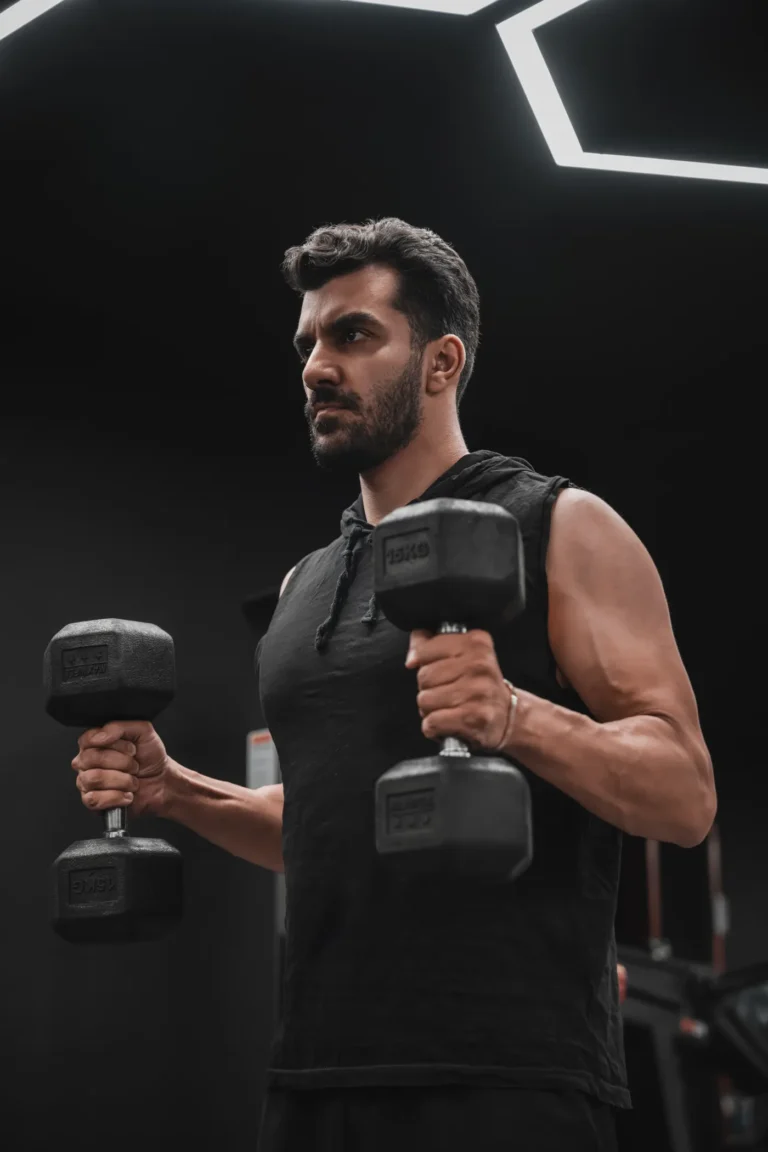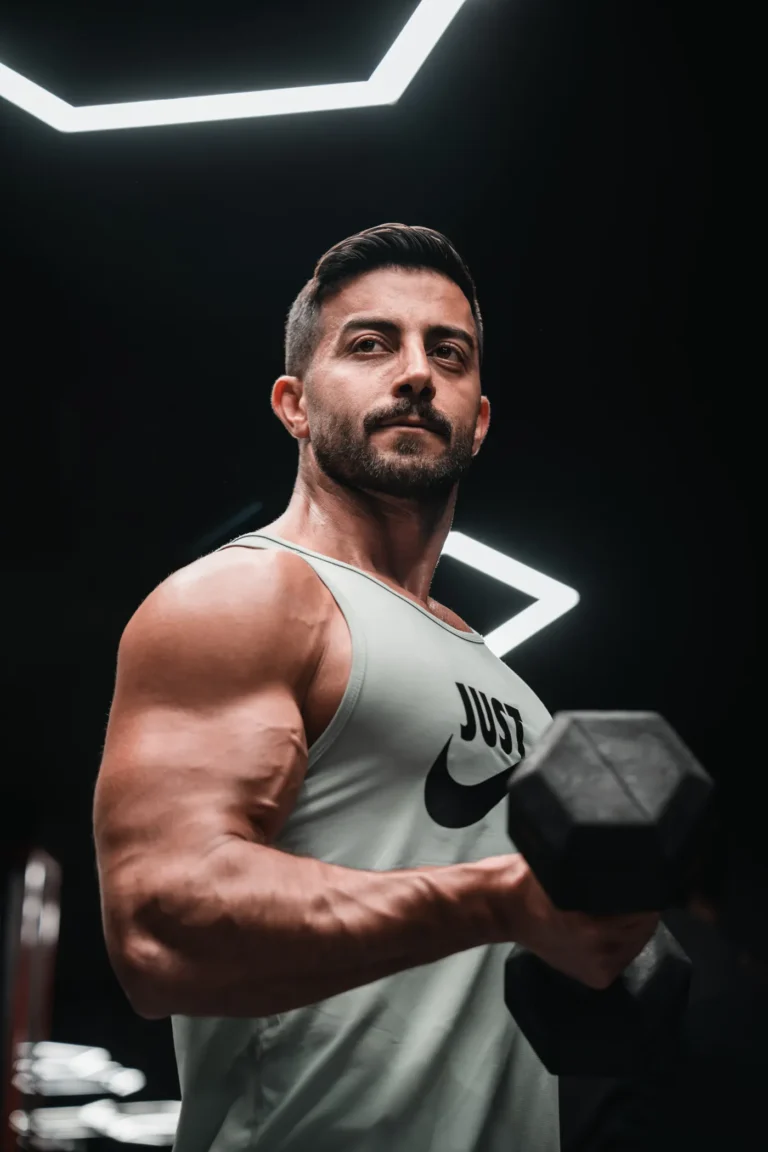
A pair of dumbbells is enough to train the legs, chest, back, shoulders and trunk, but it creates a programming problem: the weight that challenges a shoulder press may be far too easy for a hip hinge. The answer is not to turn every exercise into a breathless race. It is to choose movements, repetitions and rest periods that make one available load useful across several patterns.
This 25-minute full-body plan is designed for someone who wants a repeatable strength session rather than an endless list of exercises. It works in a commercial gym, a hotel fitness room or wherever a pair of suitable dumbbells is available. It combines a small amount of conditioning with deliberate resistance training, while making clear where the single-pair approach eventually runs out of room.
1. Choose a pair for your weakest useful movement
Start by testing a controlled overhead press or floor press, not by picking the heaviest pair you can row. If you can press the dumbbells for roughly six to ten clean repetitions without arching your back or shrugging aggressively, they may be a reasonable starting load. A person who cannot press comfortably can choose the floor press as the limiting movement and use a lighter shoulder variation without forcing overhead range.
Expect compromises. A pair that feels challenging for pressing will usually be relatively light for a two-leg squat or Romanian deadlift. You can make those movements more demanding with a longer lowering phase, a pause, a staggered stance or extra controlled repetitions. That is a better solution than swinging weights through the easy parts of the motion.
Keep the first workout conservative. Leave approximately two or three technically clean repetitions available on most sets. Record the pair’s weight, completed reps and any exercise that felt awkward. These observations determine the next session more reliably than sweat or a fitness watch’s calorie estimate.
2. Train the legs with a squat and a hinge
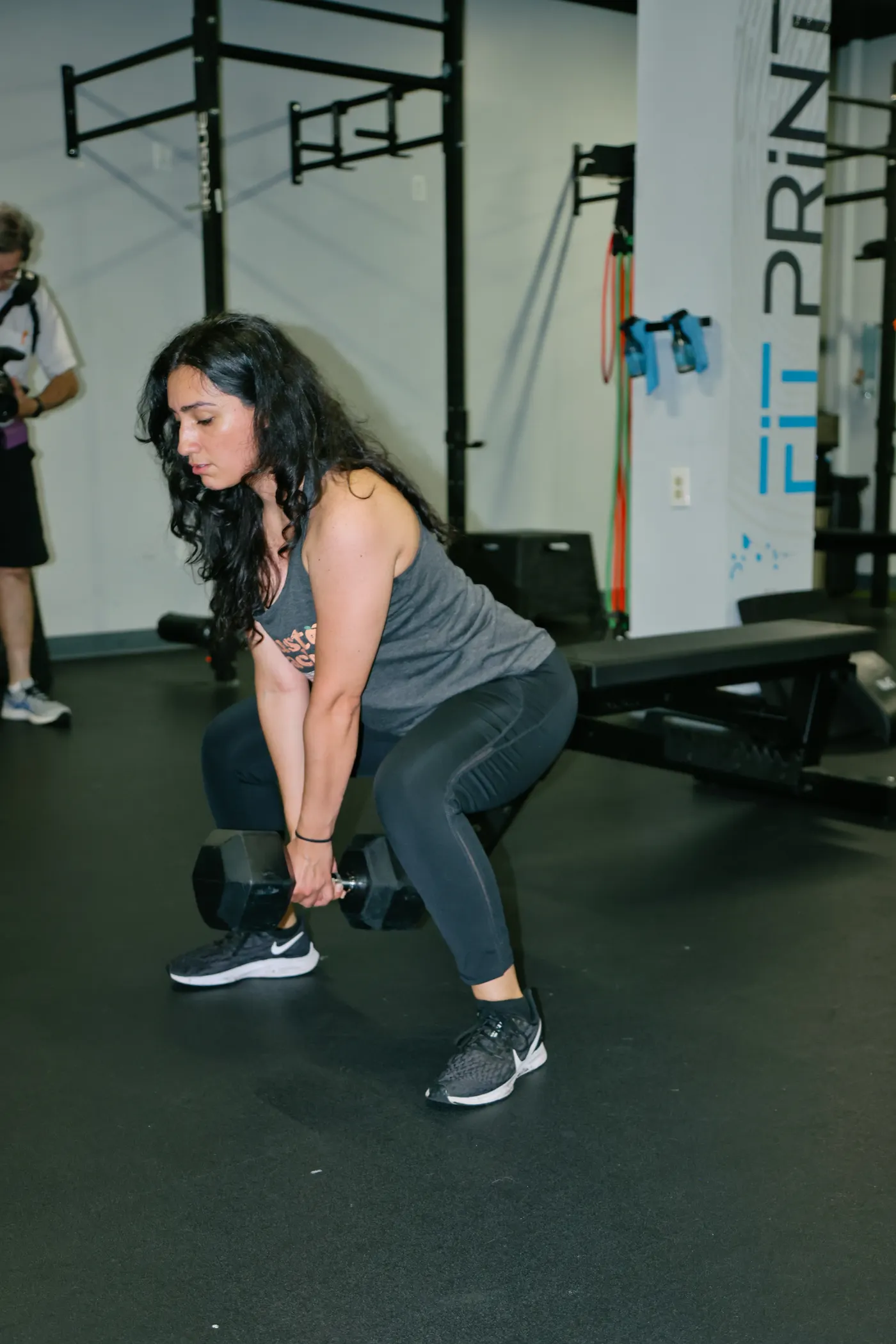
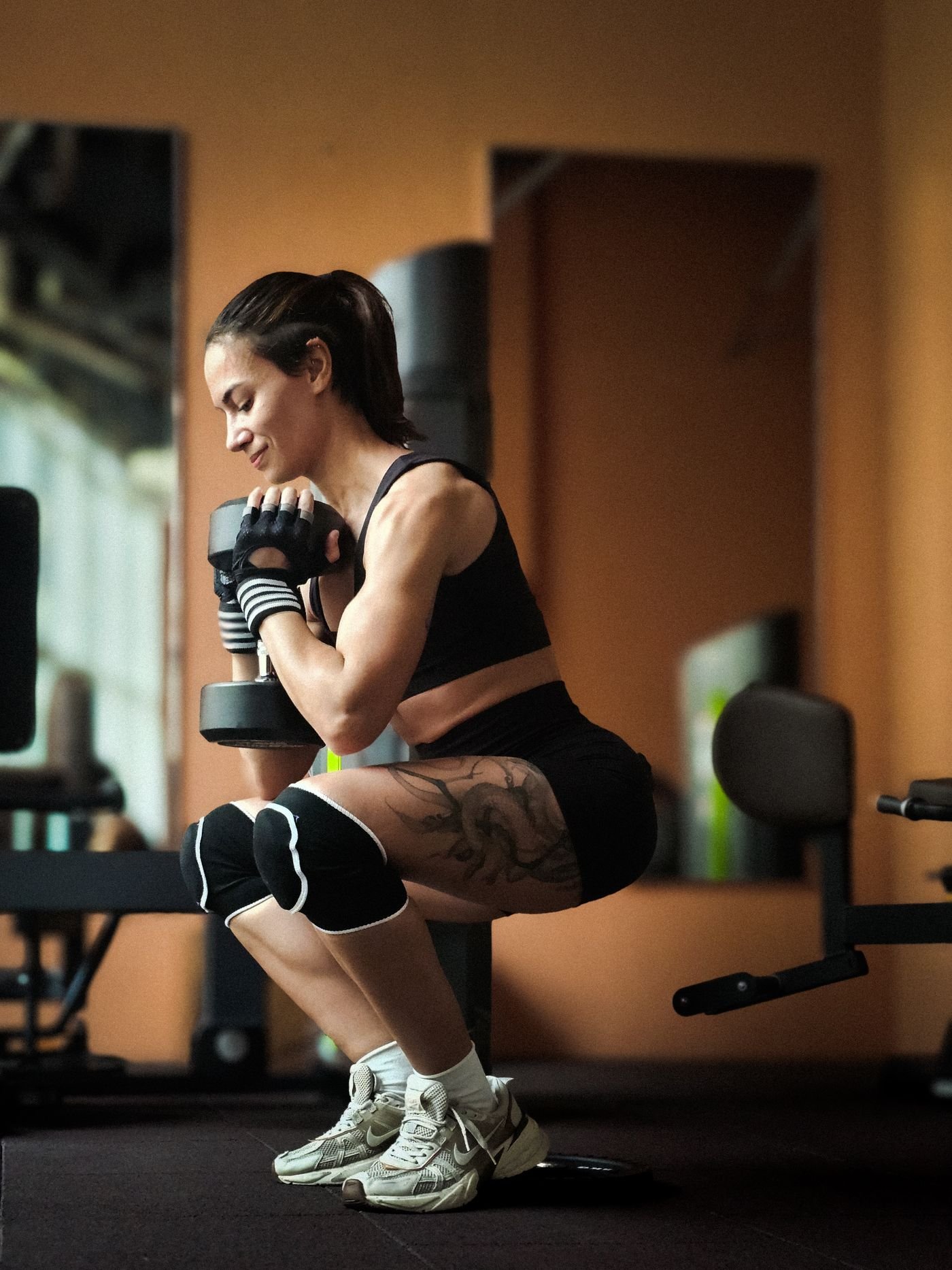
Lower-body training should include both a knee-dominant pattern and a hip-dominant pattern. For the first, hold one dumbbell at chest height for a goblet squat or keep one at each side for a suitcase squat. Lower to a depth you can control while maintaining steady foot pressure, then stand without bouncing. A bench can provide a consistent depth target if needed, but it should not be used as an excuse to drop onto the seat.
For the hinge, hold the dumbbells in front of the thighs, soften the knees and move the hips backward. Lower only as far as you can maintain your back position and feel the hamstrings taking tension. The dumbbells do not need to reach the floor. A Romanian deadlift is not a squat with weights hanging from the hands; the hips move much farther backward than the knees move forward.
Try eight to twelve squats and eight to twelve hinges per set. If the load is too light for both, use a three-second descent on the squat and a brief pause near the bottom of the hinge. If the hinge remains easy, a staggered stance increases the demand on the forward leg without requiring a heavier pair. Avoid unstable balancing tricks that turn a strength set into a coordination test.
Because both exercises challenge the legs, they can share a short workout without demanding identical effort. A controlled hinge followed by a squat is a practical pairing; the limiting factor should be local muscular effort and technique, not how fast you can switch movements.

Equipment Worth Exploring
Explore equipment, accessories and gear from our carefully selected range.


FID Bench MAX
Adjustable bench offering flat, incline, and decline positions + adjustable headrest.
VOLTRA
Compact digital cable trainer with smooth, adjustable resistance.

Go-Tone Pro
Portable digital cable trainer with up to 66 lb (30 kg) of adjustable resistance.

Leather Lifting Straps
Padded leather straps support grip during heavy rows, deadlifts and pulling exercises.

Leather Wrist Grips
Padded leather lifting grips help support the hands and wrists on heavy pulling exercises.


3. Build a pressing pattern without needing a bench
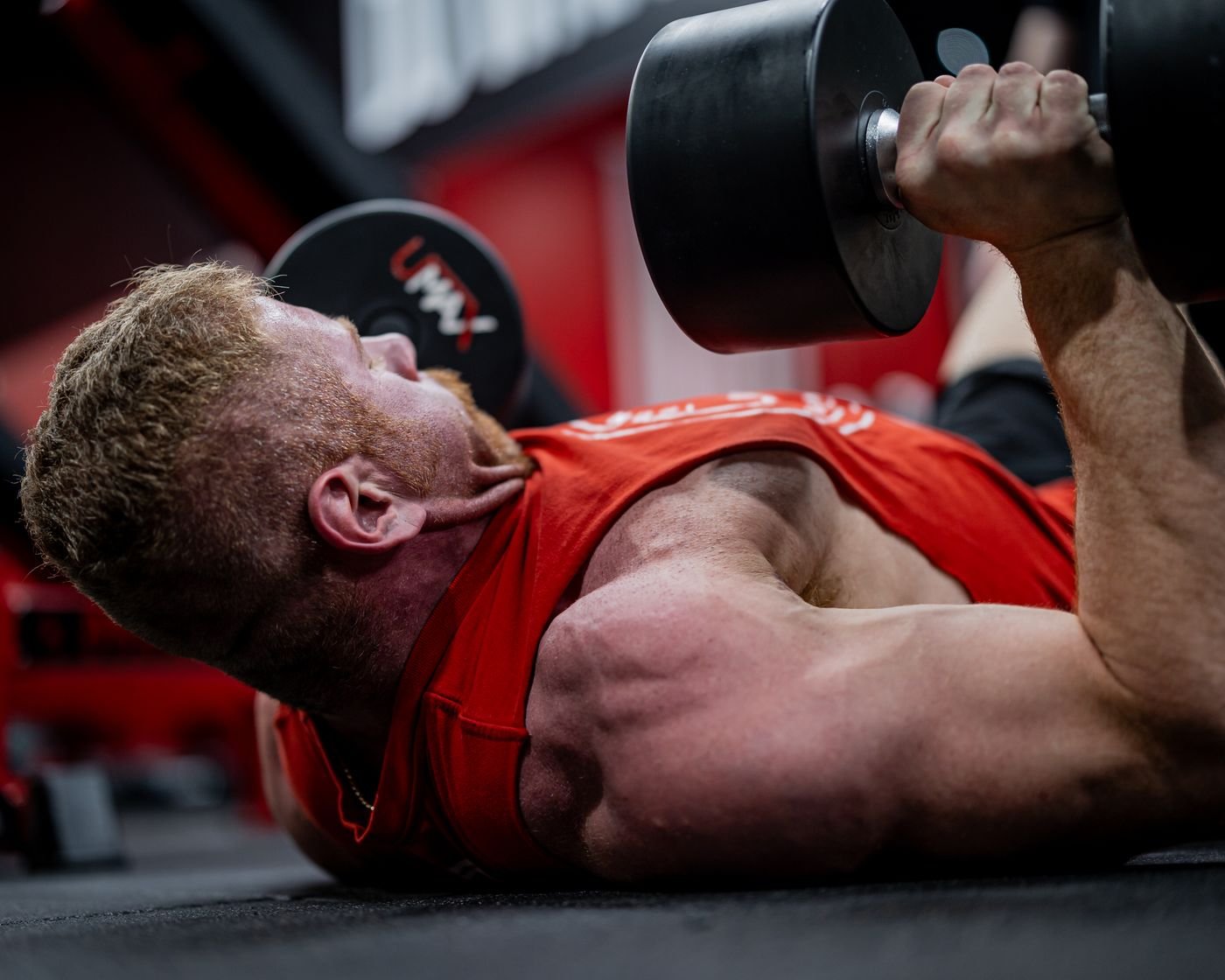
The dumbbell floor press is a useful horizontal push when a bench is unavailable. Lie on the floor with knees bent, position the upper arms at a comfortable angle from the torso and press until the elbows straighten without snapping into a hard lockout. Lower until the upper arms touch the floor gently, pause and repeat. The floor naturally limits shoulder extension, which can make the movement easier to set up than a deep bench press for some lifters.
The main drawback is reduced range at the bottom. If chest development is the priority and a stable bench is available, a full-range dumbbell bench press may offer a different stimulus. For a time-limited full-body session, however, the floor press is simple, repeatable and easy to measure. Do not bounce the elbows or let the wrists fold backward under the bells.
Choose six to twelve controlled repetitions. If the pair is too heavy, alternate arms while the other dumbbell rests safely on the floor, or substitute an incline push-up against a stable surface. If it is too light, slow the descent and pause just above the floor instead of turning the movement into a rapid shoulder exercise. A push-up is also a useful companion on a different day, because bodyweight may provide a better loading challenge than light dumbbells.
Progress is not simply getting through more repetitions in less time. The useful comparison is whether the same weight moves through a consistent range with better control, more quality reps or less perceived effort.

Functional Fitness Shirts & Workout Gear
Functional-fitness shirts, tanks and workout gear for athletes who train strength, conditioning and everything in between.

Hybrid Athlete – Strength & Endurance Gym Pullover for Hoodie
Keep it laid-back with a little “Hybrid Athlete” attitude.


Atlas Kettlebell Earth Lifting – Meme Top T-Shirt
Rep “Atlas Kettlebell Earth Lifting Graphic” humor in and out of the gym.

Lift Together Grow Stronger for Gym Buddies Who Train T T-Shirt
Show some gym-day personality with “Lift Together Grow Stronger”.

Gym Equation Kettlebell Happiness Muscle Shirt for Lift Tank Top
Show some personality between sets with “Gym Equation”.

Muscle Mommy Pink Kettlebell Gym Design for Women & Fem Tank Top
Add some gym-girl attitude to training with “Muscle Mommy”.


Break the Stereotype Tee
Show some gym-girl attitude with a playful “Break The Stereotype Gym Girl” tee.


Kettlebell Skull Tee
Heavy lifts, good laughs, and a little “Kettlebell Skull Gym Meme” energy.
4. Give the upper back enough attention with rows
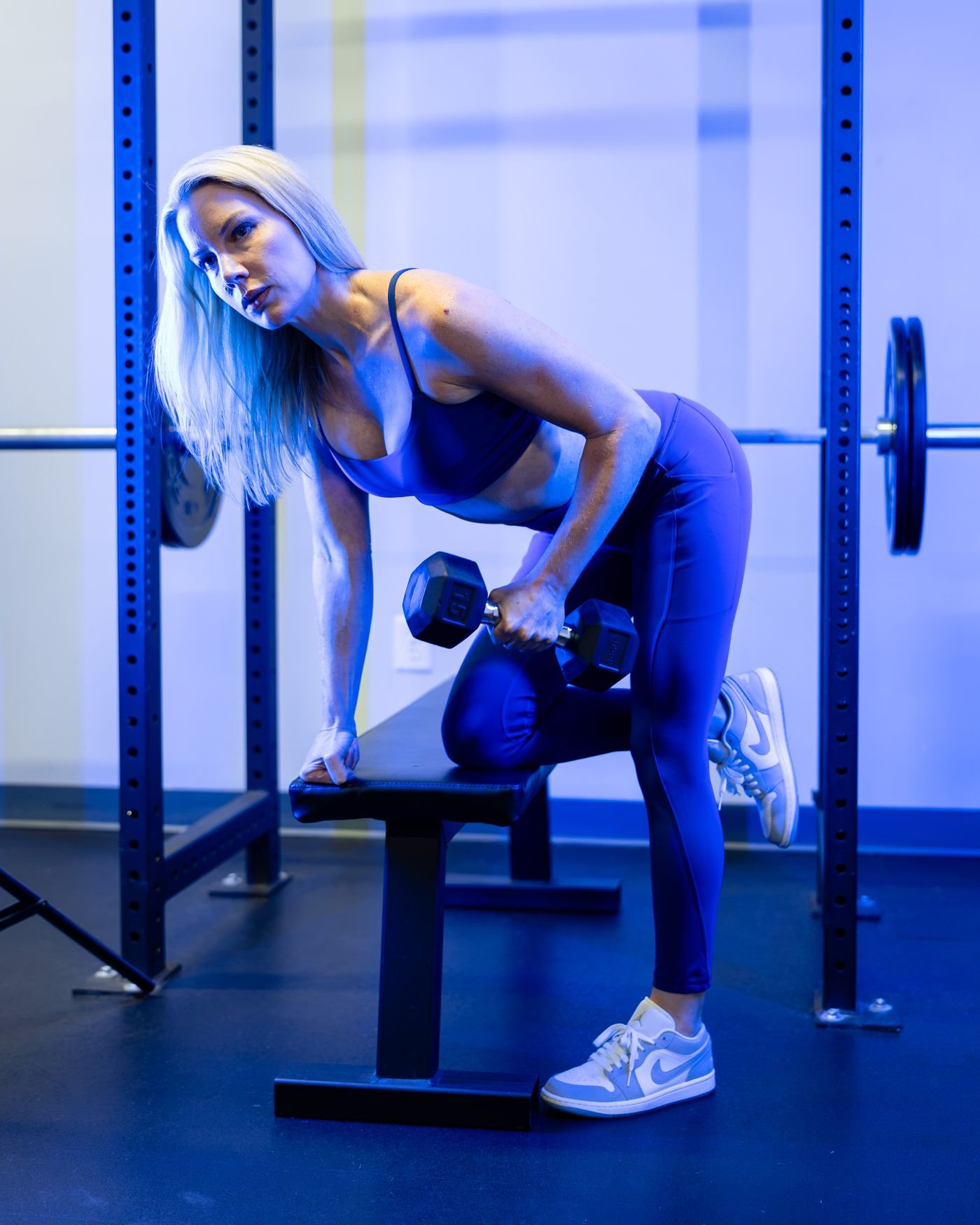
One-arm dumbbell rows complement the pressing work and help prevent the session from becoming a sequence of chest and shoulder exercises. Place the free hand on a stable bench or other solid support, hinge at the hips and let the working arm reach toward the floor. Pull the elbow toward the back pocket without twisting the torso to manufacture extra range.
A row should feel like the shoulder blade and upper arm moving together, not a whole-body heave. Keep the neck relaxed and the ribs controlled. At the bottom, allow the shoulder to reach naturally rather than pinching the shoulder blade backward throughout the entire repetition. At the top, stop when the elbow reaches a useful range; pulling far behind the body often shifts the effort into trunk rotation.
Use eight to twelve repetitions per side. A lighter dumbbell can become more challenging when you pause briefly at the top, avoid momentum and allow a deliberate reach at the bottom. If a stable support is unavailable, a two-arm bent-over row can work, but the lower back must then hold the hinged position for the full set. That may limit the exercise before the upper back is challenged.
Do not assume that one row variation fully trains every back function. Vertical pulling and heavier rows can be added elsewhere when equipment and time permit. Within this short session, the priority is a reliable pulling pattern that balances the floor press and can be repeated week after week.
5. Add overhead work and a carry without rushing either
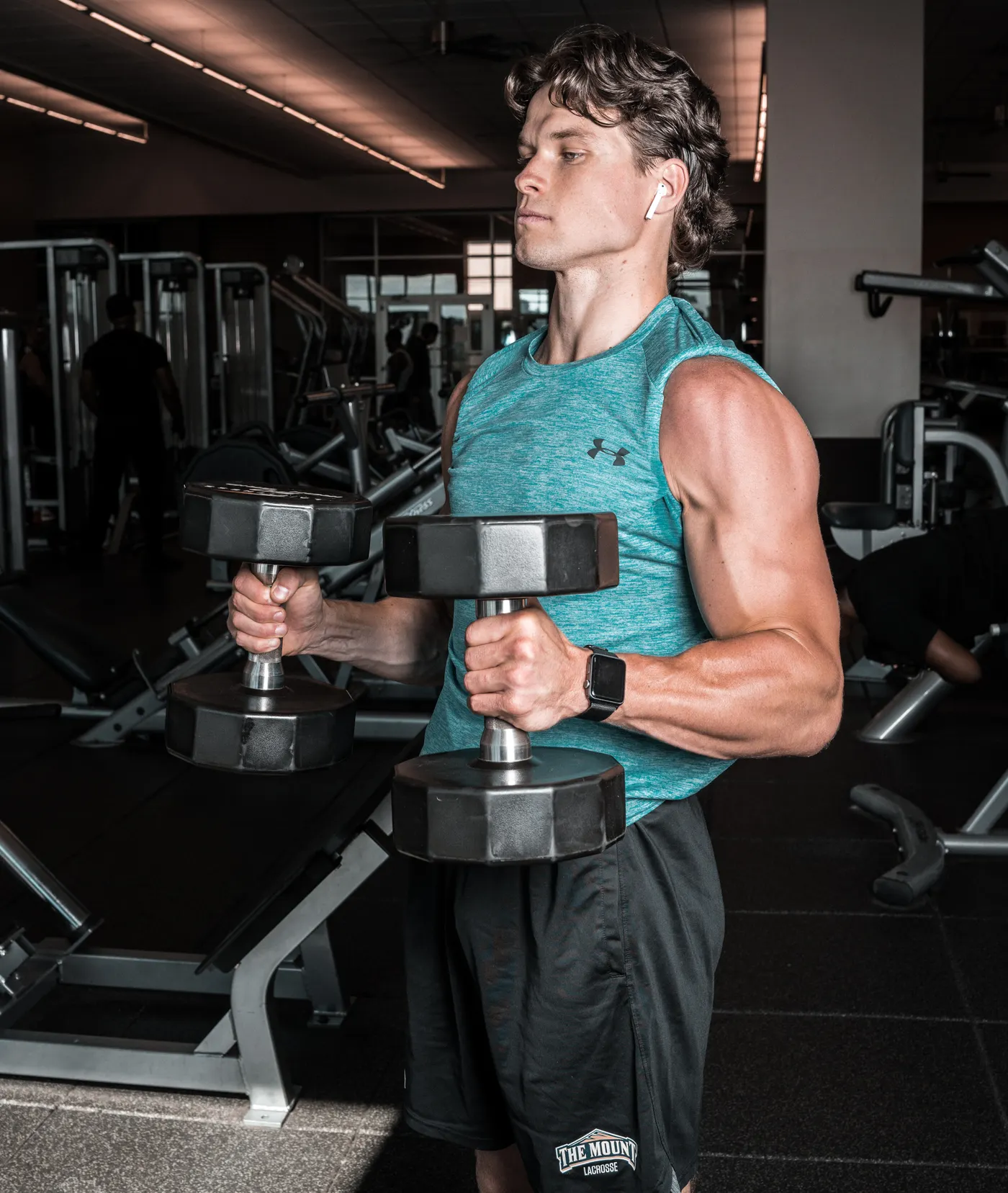
Pressing overhead challenges the shoulders and triceps in a different direction from the floor press. Stand tall, keep the ribs stacked over the pelvis and move the dumbbells upward without turning the lift into a dramatic backward lean. Some people press comfortably with palms facing inward; others prefer a slightly wider grip. Use the path that permits smooth, pain-free control rather than forcing a textbook shape.
If overhead pressing is uncomfortable, substitute a landmine press, incline press or another shoulder-friendly movement when equipment is available. A sharp pain is not something to push through for the sake of completing a circuit. If the pair is too heavy for two-arm pressing, alternate single-arm sets with a controlled stance. Do not add leg drive unless you intentionally want to train a push press and can execute it consistently.
Finish with a suitcase carry or suitcase hold. Hold one dumbbell at your side and stand tall without leaning toward or away from it. Walk slowly through a clear path, or march in place if space is limited. The goal is resisting side-bending while breathing normally, not clenching every muscle and holding your breath. Switch sides after about twenty to thirty seconds.
This is where a single dumbbell often shines: a moderate load can challenge trunk stability even when it is light for the legs. Carries also provide a simple way to make the session feel athletic without requiring a frantic finisher or pretending that fatigue alone measures training quality.
Equipment Worth Exploring
Explore equipment, accessories and gear from our carefully selected range.


GymPin Squat Wedges
Non-slip 15-degree squat wedges help elevate the heels for deeper quad-focused squats.


6. Two practical 25-minute sessions to alternate
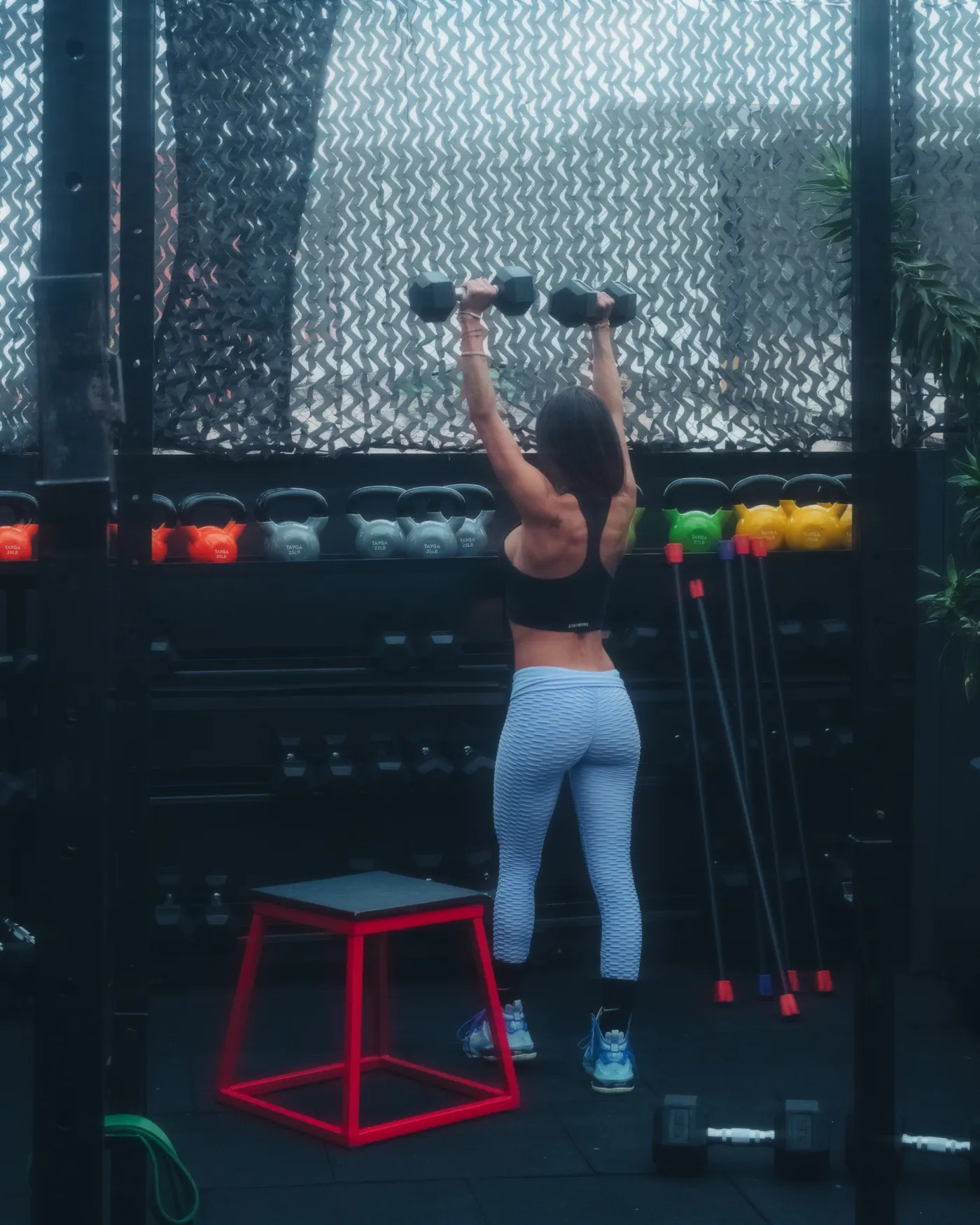
Keep the structure predictable. Spend three minutes warming up with easy squats, hip hinges, arm circles and a few lighter practice repetitions. Then perform five movements for two controlled sets each. Allow approximately a minute for each working set and its transition, and use the remaining time for deliberate rest. The 25-minute target is a planning tool, not a rule that makes poor repetitions acceptable.
Session A: goblet squat, dumbbell floor press, supported one-arm row, Romanian deadlift and suitcase hold. Complete two sets of each. Use roughly eight to twelve repetitions for the first four movements, and twenty to thirty seconds per side for the hold. Rest long enough to restore controlled breathing and repeatable technique, especially before the next squat or hinge set.
Session B: staggered-stance hinge, alternating dumbbell overhead press, suitcase squat, supported one-arm row and suitcase march. Use two sets per movement, about six to ten presses per side and eight to twelve controlled repetitions for the other lifts. Keep the march slow and upright. The two sessions share the same movement families but change emphasis enough to make the one-pair limitation less repetitive.
Train on two nonconsecutive days to start, alternating A and B. A third session is optional if recovery and other training allow. If the clock runs out, remove an accessory set rather than cutting all rest between demanding exercises. If ten working sets plus setup cannot fit in 25 minutes at your current pace, extend the session slightly. A realistic schedule beats a technically impressive stopwatch result.
These workouts provide a useful strength foundation, not a guarantee of maximal muscle growth. Someone already training seriously may need heavier loads, more weekly sets and additional pulling or lower-body exercises. A short circuit is valuable when it replaces doing nothing; it should not be oversold as a complete advanced bodybuilding program.
7. Progress for four weeks, then assess the single-pair limit
For week one, learn the exercise setup and choose repetition targets you can repeat without grinding. Write down the weight, repetitions, pauses and whether each set finished with a few good reps still available. During week two, add one or two clean repetitions to movements that were comfortably below their upper target. Keep the same pair and rest periods so the comparison is meaningful.
In week three, improve the hardest movement rather than making everything harder at once. For example, add a pause to the goblet squat, use a slightly longer reach on the row, or progress a two-leg hinge to a controlled staggered stance. These are different kinds of overload; record which change you made. If technique deteriorates, return to the previous version instead of chasing a number.
By week four, ask whether the limiting dumbbell pair still challenges the intended muscles. If overhead pressing remains difficult but squats are effortless even with good tempo, you have reached the main compromise of single-pair training. A second heavier pair, adjustable dumbbells or a different lower-body movement will be more productive than adding endless repetitions. Likewise, if rows are easy while the floor press remains challenging, use a more demanding row variation or additional resistance when available.
Measure success with repeatable performance: more clean reps, steadier positions, a longer controlled carry, and a plan you actually complete. A short session can build a durable habit and meaningful strength, but the quality of the work matters more than whether it looks intense. One pair is a starting constraint, not a permanent ceiling on progress.
Funny Gym Shirts & Workout Gear
Funny gym shirts, tanks, hoodies and workout gear for lifters who like training hard.

Dumbbell Meme Shirt – Essential & Gymbros Seeking T-Shirt
Make gym days more fun with “Dumbbell Gym Meme” style.

Dumbbell Heartbeat Crewneck Pullover Sweater Workout Fa T-Shirt
Add a playful “Dumbbell Heartbeat” touch to your casual rotation.

Grip Strength Fanatic Meme Hoodie
Show off your lifting humor in a laid-back “Grip Strength Fanatic” hoodie.

Consistency Is Key Stoic Greek God Marble Sculpture T-Shirt
Make gym days more fun with “Consistency is Key Stoic Greek God Marble” style.

Progressive Overload Milo Tee
Bring “Progressive Overload Milo Bull” humor to your next gym day.

Heart And Brains Dumbbell Meme : The Ultimate T-Shirt
Make gym days more fun with “Heart and Brains Dumbbell Gym Meme” style.


I’m Strong Barbell Heartbeat Decal for Powerlifting Str Sticker
A fun “I’m Strong Barbell Heartbeat” touch for bottles, laptops, and lockers.

Muscle Mommy Lifting Club for Gym Girls, Lifting, Fitne Tank Top
Show some personality between sets with “Muscle Mommy Lifting Club”.