Advertising disclosure: This page includes affiliate product links that may earn us a commission, as well as products from our own store.
When a deadlift slips out of your hands, the obvious response is to squeeze harder, buy a gripper or spend more time hanging from a pull-up bar. But there is another part of the system worth examining: the muscles that keep the wrist from collapsing into flexion as the fingers contract.
A small eight-week experiment in healthy adults suggests that training these wrist extensors can improve measured grip strength, even when the exercise itself is not a conventional gripping exercise. That is an interesting distinction. It does not establish a shortcut to a bigger deadlift or massive forearms, but it gives lifters a practical reason to consider direct wrist extension work alongside their usual grip training.
Grip Strength Is More Than Finger Strength
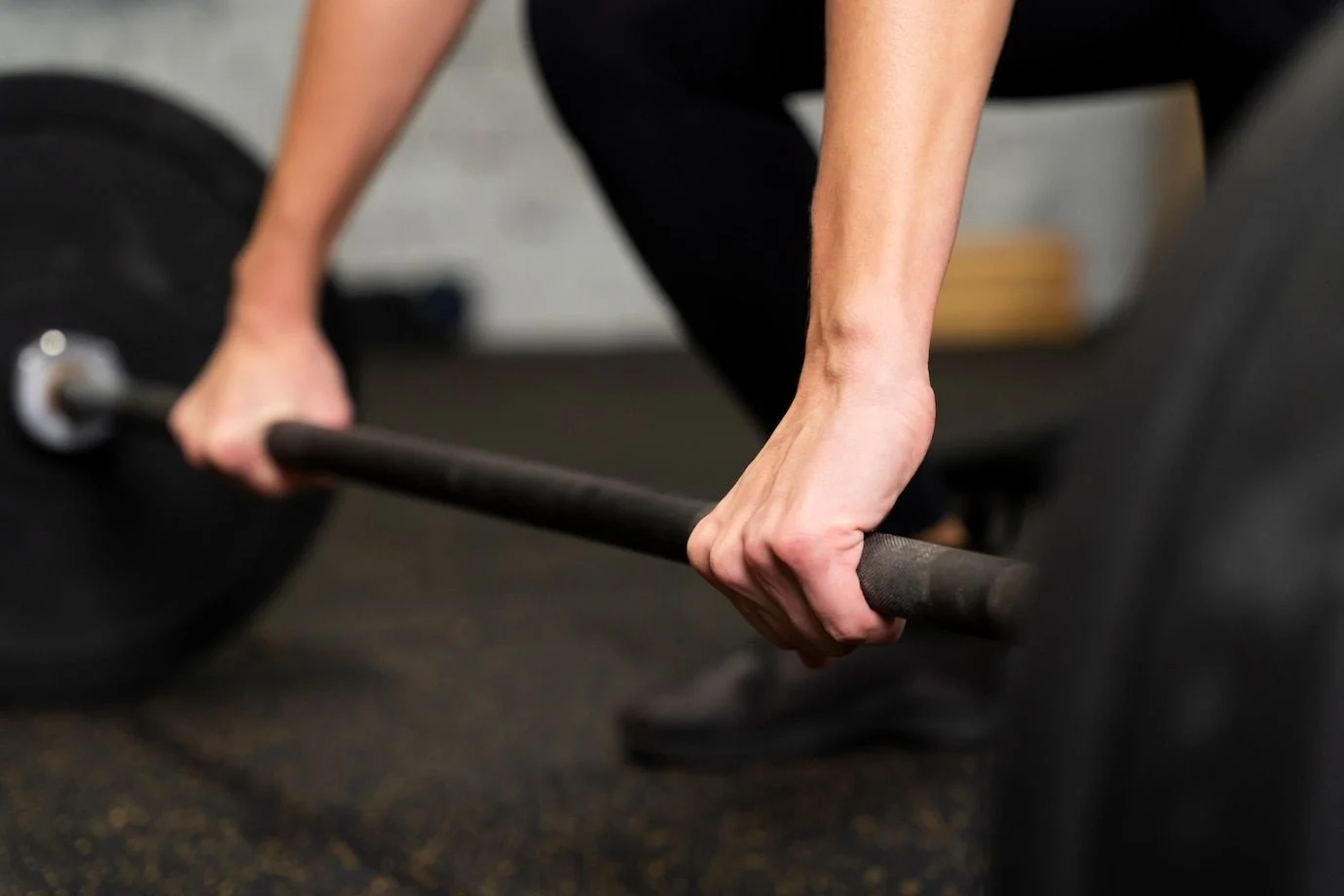
Making a fist is not an isolated finger movement. Several of the muscles that bend your fingers cross the wrist, so the force they produce also tends to pull the wrist into flexion. Muscles on the back of the forearm help oppose that tendency. Their job can be largely stabilizing rather than visibly moving the wrist.
Try a simple demonstration with an empty hand. Make a moderately tight fist with your wrist in a comfortable, nearly straight position. Now gently bend your wrist forward and make another fist. Many people find that the second position feels less powerful. Do not force the joint to its end range or squeeze through discomfort. The point is to notice how much the position of one joint changes the sensation at another.
This matters in the gym because a grip can fail for several reasons. The fingers may lack the force to close around the handle. The wrist may be unable to maintain a useful position. The skin may slip against the bar. Or the forearm muscles may simply fatigue before the target muscles. A heavier gripper will not necessarily solve all four problems.
Direct wrist extension training is particularly interesting if your grip tends to deteriorate as your wrist bends under load. It can also complement high volumes of finger-flexor work from rows, curls and loaded carries. But the aim is not to force every exercise into an identical wrist angle. A straight or comfortably extended wrist is useful in many gripping tasks; other movements have their own technical requirements.
What the Eight-Week Wrist Extension Study Found
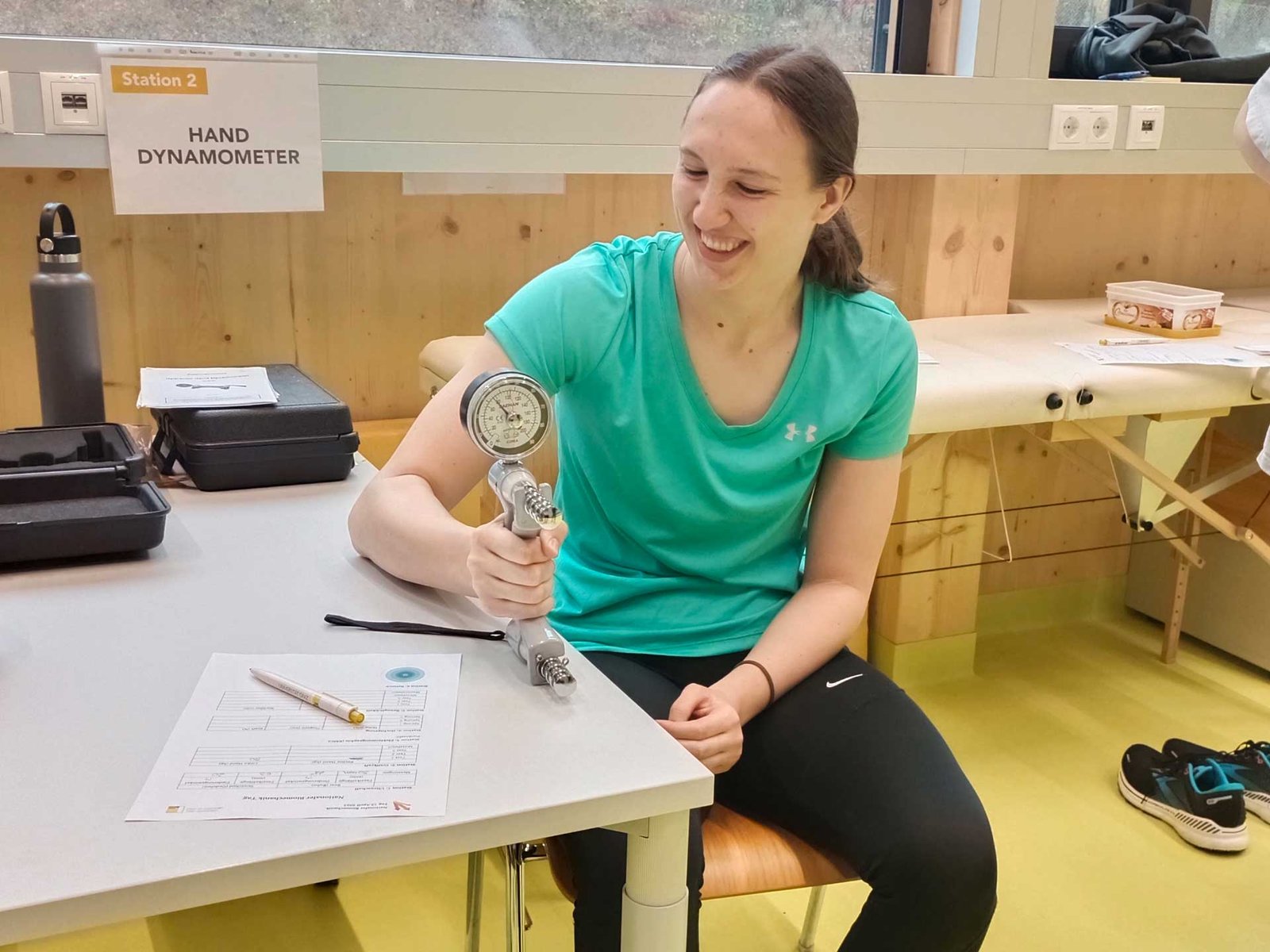
The experiment involved 13 healthy participants. Researchers measured grip force and wrist muscle activity across a broad range of wrist positions, from 70 degrees of flexion to 80 degrees of extension. The training intervention focused on isometric wrist extension on the right side, meaning participants produced force without repeatedly moving the joint through a range of motion.
The protocol was relatively demanding: 30 contractions at 70 percent of maximal voluntary contraction, five days per week for eight weeks. Measurements were taken before training, after four weeks and after eight weeks. The trained side showed improvements in both wrist extension strength and grip strength. The wrist angle at which peak grip force occurred also changed. During gripping, measured activity in the wrist extensors increased while measured activity in the wrist flexors decreased.
That combination is more interesting than a simple before-and-after grip score. It suggests that training may change how the muscles share the work of stabilizing the wrist during gripping. Electrical activity measured at the muscle surface is not a direct measure of muscle size, however. It also cannot tell us exactly how much force every individual muscle generated.
There are important boundaries around this result. Thirteen participants make for a small study. The intervention involved a specific isometric task and a standardized grip assessment, not a barbell deadlift, climbing session or bodybuilding program. The accessible research abstract does not provide a percentage improvement that can safely be promised to a new trainee. There was also no direct measurement of forearm muscle growth reported in that abstract.
Think of the result as evidence that wrist extension strength is a potentially useful contributor to grip performance, not proof that everyone needs the exact same high-frequency routine.
Why Wrist Position Changes the Result
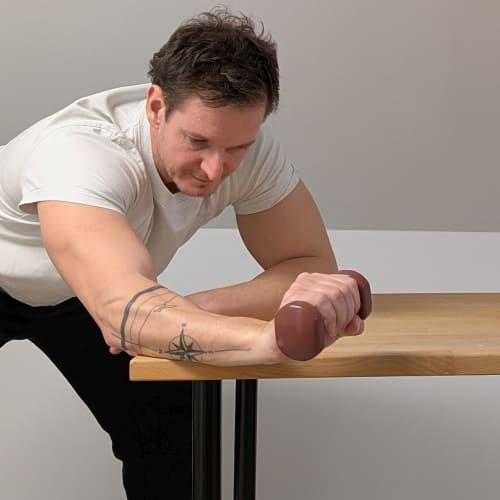
The angle of the wrist changes the operating length of the muscles that cross it. When you squeeze a handle, the finger flexors need to generate force while other muscles counter their pull on the wrist. If you change the angle, you change that mechanical problem. Handle diameter matters too: gripping a thick axle is different from holding a narrow cable attachment or a standard barbell.
Separate laboratory work has found that adding external wrist extension assistance can reduce the activity required from the extensors during a gripping task at the same grip force. That is consistent with a stabilizing role. It is not, by itself, proof that an assistance device builds grip strength. Another experiment showed that the level of gripping force can alter measured wrist flexion and extension strength. The relationship is not one-way.
Research on wrist position and grasp size has also found that people often select some degree of wrist extension when producing a strong grip. An average position recorded in a laboratory should not be interpreted as an ideal angle to impose on every athlete. Hand dimensions, handle shape and the task itself all matter.
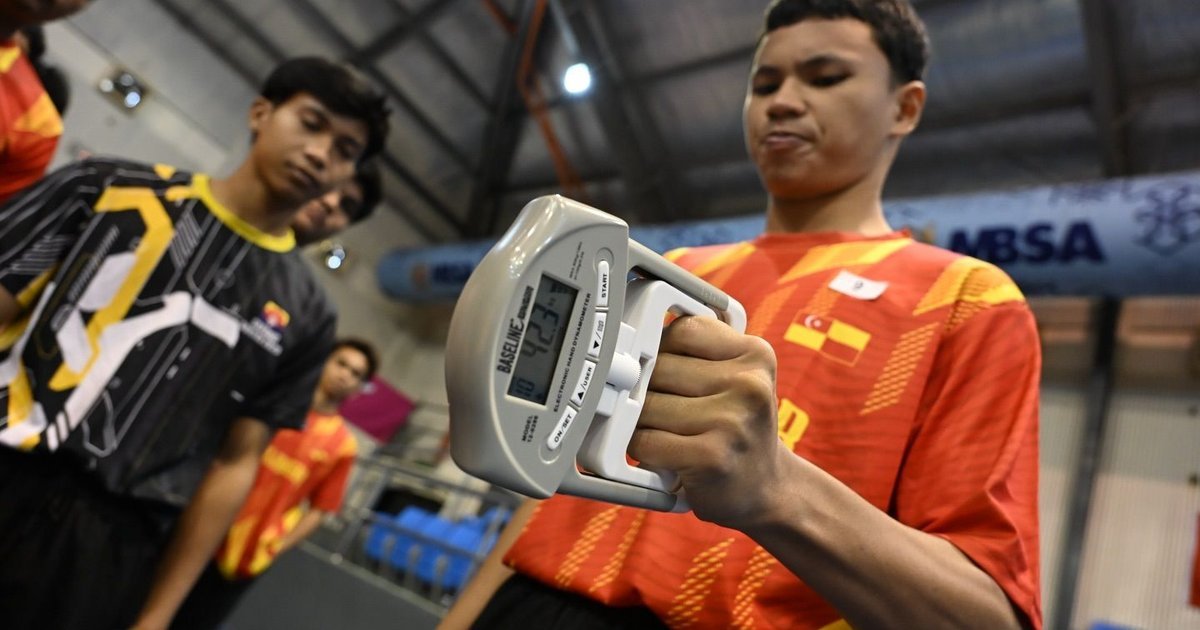
For your training log, the implication is straightforward: compare like with like. If you test grip with your elbow bent and your wrist slightly extended this week, do not change to a straight elbow and a flexed wrist next week. If you use a dynamometer, use the same device and handle setting. Different instruments can give meaningfully different readings even when the person being tested is unchanged.
A more reliable test is often a more useful test, even if it is less impressive to perform. For a lifter interested in deadlift grip, a separate timed hold with a familiar barbell can be a sensible secondary measure. Do not treat that hold and a dynamometer score as interchangeable measures of progress.
How to Train Wrist Extension Without Chasing Heavy Weights
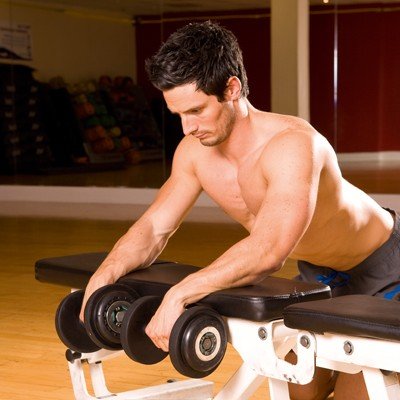
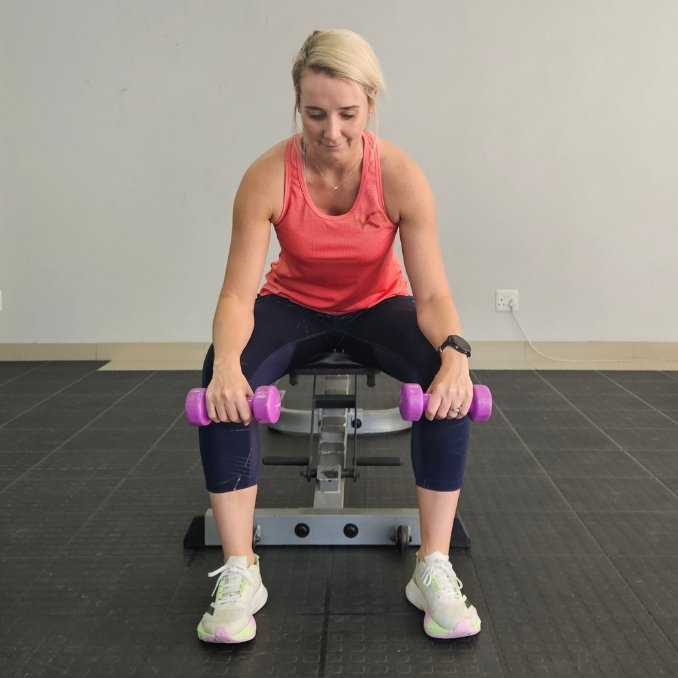
You do not need a clinical testing machine to introduce wrist extension work. A bench and a light dumbbell are enough for a basic version. Sit down, support the forearm on a bench or your thigh, turn the palm toward the floor and leave the hand free to move just beyond the edge of the support. Keep your elbow still and lift the back of your hand slowly through a comfortable range.
Start lighter than you expect. A dumbbell becomes a relatively long lever when it is held out beyond the wrist, and small movements can feel surprisingly difficult. If the forearm lifts off the bench or the shoulder starts assisting, reduce the weight. Avoid dropping the hand abruptly on the lowering phase.
For an isometric variation, hold the wrist in a comfortable position against resistance without allowing it to move. Your other hand can provide gentle opposing pressure, or you can hold a light dumbbell with your forearm supported. A cable or elastic band can also provide resistance, although the direction of the pull must actually challenge extension rather than simply drag the entire arm forward.
For a practical starting dose, try two sets of 12 to 20 controlled repetitions or three holds of around 10 to 20 seconds per side, twice per week. These are conservative coaching suggestions, not a replication of the research protocol. The objective is a repeatable stimulus that does not interfere with your main lifts. Increase one variable at a time as the movement becomes easier.
If the wrist or elbow is painful, do not use this routine to diagnose or treat an injury. Persistent symptoms, weakness or tingling deserve assessment rather than a larger training load.

Equipment Worth Exploring
Explore equipment, accessories and gear from our carefully selected range.


Rubber Hex Dumbbells
Rubber-coated hex dumbbell pairs with a stable shape for home and commercial strength training.


FID Bench MAX
Adjustable bench offering flat, incline, and decline positions + adjustable headrest.


Grip Plates
Rubber-coated weight plates with handholds for loading barbells and machines.

Cast Iron Kettlebells
Textured cast-iron kettlebells for swings, squats, carries, and full-body training.

An Eight-Week Experiment for Your Own Grip
Start with a baseline on a day when your forearms are reasonably fresh. If you have a grip dynamometer, take a few brief attempts with consistent positioning and rest between attempts. Record the best reading and the conditions. If you are interested in a specific gym movement, record a manageable barbell hold using a fixed weight and grip rather than attempting an all-out deadlift every time.
During weeks one and two, add the supported extension exercise after your regular lifting sessions. Keep the load low enough that the last repetition looks like the first. During weeks three and four, increase repetitions or hold duration if recovery is good. At week four, repeat the baseline assessment under similar conditions.
For weeks five through eight, gradually increase resistance when you can complete the planned work without compensating. Keep the rest of your grip program reasonably consistent. If you introduce heavy farmer’s carries, thick-bar deadlifts and a new gripper program simultaneously, it becomes difficult to know which change contributed to your results.
At the end of eight weeks, compare your wrist extension exercise performance, grip measurement and gym-specific hold. These may not improve at the same rate. A stronger wrist extension exercise with unchanged barbell hold time can still represent progress in the trained task. A better grip score with unchanged forearm circumference does not establish that you gained muscle.
For most strength trainees, the best outcome is not an entirely new forearm day. It is a small, sustainable addition to a program that already includes pulling, carrying and enough recovery. Keep training the fingers for the grip tasks you care about, and give the muscles that stabilize the wrist a deliberate share of the work.

Bodybuilding Shirts & Workout Gear
Bodybuilding shirts, tanks and gym gear for lifters chasing muscle, size, symmetry and the pump.

Slip Not Grip Training – Heavy Metal Workout Hooded Pul Hoodie
Make your off-duty look more fun with “Slip Not Grip Training”.

Pumpeye Forearm Gains & Grip Training Decal Popeye Sticker
Put “Pumpeye” gym humor on your laptop, bottle, or gym gear.

Huh Huh Let'S Train Grip Beavis And Butt-Head T-Shirt
Make gym days more fun with “Huh Huh Let's Train Grip” style.

Muscle Mommy Muscle Club for Gym Girls, Lifting, Fitnes Tank Top
Show some personality between sets with “Muscle Mommy Muscle Club”.

Welcome To The Gun Show Dwight Schrute The Office Hoodie
Make your off-duty look more fun with “Welcome to the Gun Show”.

Ha Ha Hammer Curls Joker Gym Funny Workout Pullover Hoo Hoodie
Bring “Ha Ha Hammer Curls Joker” gym humor to lazy days and post-workout plans.

GymTok – TikTok Parody Bicep Gym Decal for Fitness Crea Sticker
Give your everyday gear a playful “GymTok” twist.

White Marble Greek God Statue – Bicep Pose T-Shirt
Bring “White Marble Greek God Statue” humor to your next gym day.

Gym If You're Reading This It's Arm Day Drake Parody & Hoodie
Bring “If You're Reading This It's Arm Day Drake” gym humor to lazy days and post-workout plans.

Big Gun Hooded Pullover AC DC Rock Big Arms Fans Hoodie
Stay casual and show some metalhead attitude with “Big Gun”.