Advertising disclosure: This page includes affiliate product links that may earn us a commission, as well as products from our own store.
Alex Goulding can make a push-up look like an entirely different sport. His record portfolio includes rapid plank transitions, side jumps and explosive variations. Yet the most useful part of his story happens before the stopwatch starts: finding a reason to train when life is difficult.
In a public account shared on November 18, 2026, the British trainer described how exercise helped him through a mental-health crisis during lockdown. His experience deserves to be heard without turning an exceptional athlete’s schedule into a prescription for everyone else. There is plenty to learn from his focus while keeping your own goals, recovery and support needs in view.
A specific challenge gave his training a direction
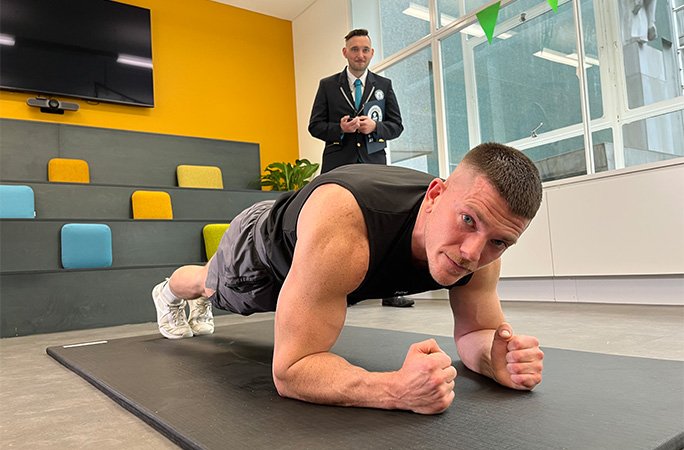
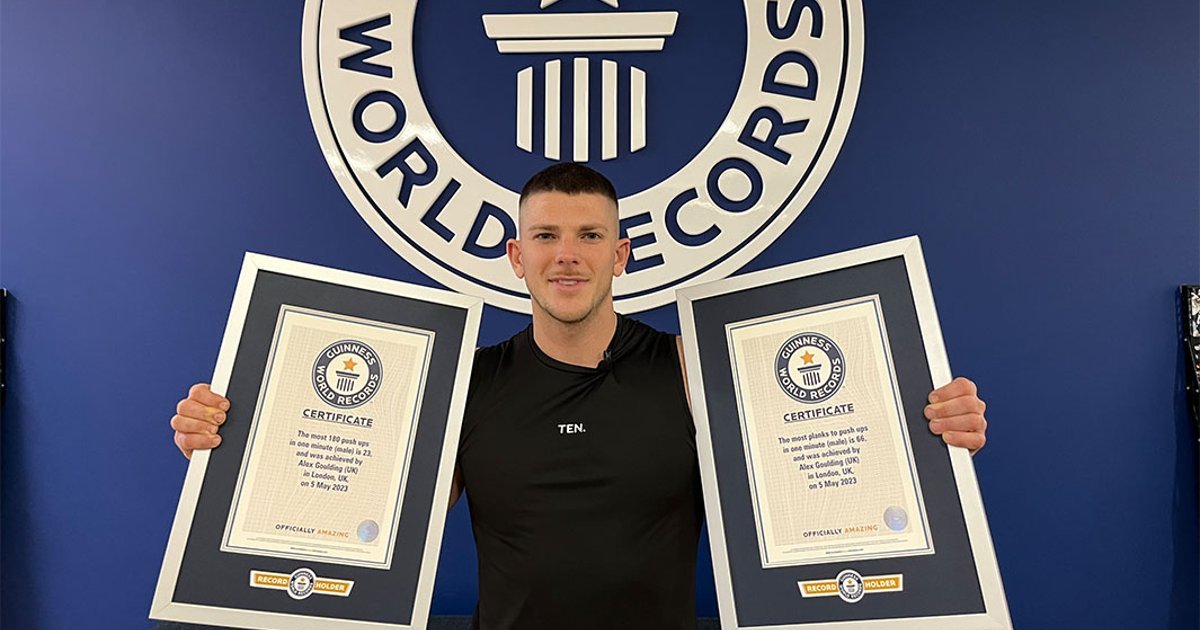
Goulding’s listed achievements include 84 push-ups to planks in one minute and 63 side-jump push-ups in one minute. These are different disciplines with their own movement requirements. The figures describe his established records, not new performances announced this week.
That distinction matters when a spectacular clip reaches your feed. A fast transition between hands and forearms is not the same test as a conventional chest-to-floor push-up. Neither number can be dropped straight into a comparison with your normal training set. Before comparing performances, check what the athlete actually had to do.
The practical appeal of a defined challenge is that it gives a session a job. You can decide what counts, practise it and notice whether you are improving. That is more useful than finishing every workout with the vague feeling that you should have worked harder.
Try writing your own standard in one sentence: five controlled push-ups using the same hand position and depth, for example. Film from the side occasionally so that a shorter range of motion does not quietly become your progression method. Keep the setup and counting consistent. A repeatable personal benchmark gives you information; a comparison with a specialist’s highlight reel often gives you very little.
Build a push-up you can repeat before chasing speed
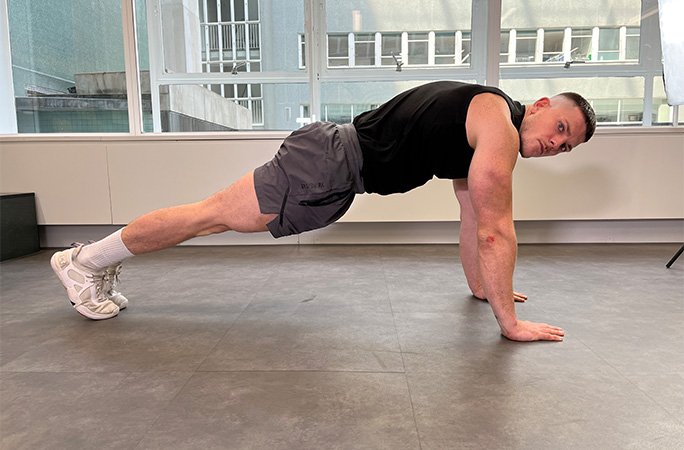
Bodyweight work can provide meaningful resistance training. The useful question is whether the exercise is challenging enough for your current ability and whether you can repeat it with control. Floor push-ups are one option; an elevated hand position can make the movement more manageable.
Use a stable surface that cannot slide or tip. Set your hands where you can lower comfortably, brace your trunk and move your chest and hips together. If the final repetitions become a succession of sagging hips and shortened descents, end the set or choose an easier variation. There is no prize for preserving the harder exercise’s name after losing its movement.
Here is an illustrative starting option for a healthy adult already comfortable exercising: practise two manageable sets on two separate days, leaving a few clean repetitions available. Adjust the difficulty until those sets feel useful rather than desperate. This is an editorial example, not Goulding’s programme or a universal starting dose.
Make one adjustment at a time. Add a clean repetition, improve control or use a slightly lower support. Do not simultaneously add repetitions, reduce rest and introduce a jump. Explosive push-ups demand additional skill and landing control. They are a separate progression, not an obligatory graduation ceremony for anyone who has learned the basic movement.
Take the principle from his week, then scale the workload
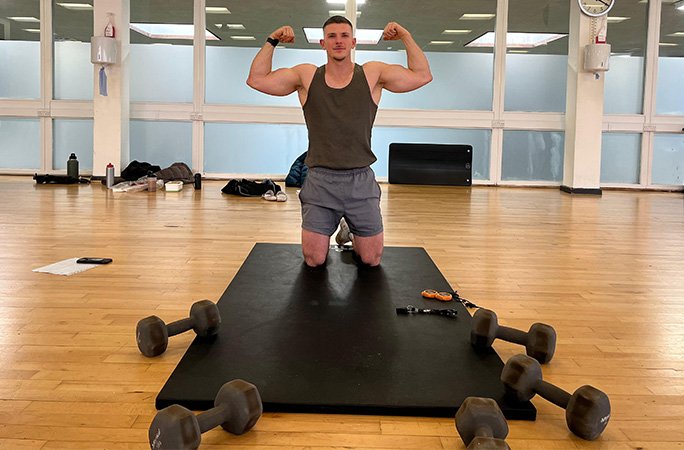
Goulding describes a varied schedule spanning calisthenics, weights and cardiovascular work, with seven weekly sessions and a Saturday rest day. That tells us about his approach; it does not establish the right frequency for another person’s life or training history.
For general strength, regular work for the major muscle groups at least twice weekly is a useful foundation. Bodyweight exercises, bands and free weights can all contribute. You do not need to take every set to absolute failure or organise your week like a record attempt to make worthwhile progress.
Look for gaps rather than copying the total session count. If your training is almost entirely push-ups, consider where your pulling and lower-body work belong. A row, an appropriate pull-up progression, a squat pattern and a hip-hinge pattern can help make the programme broader. Choose versions that fit your ability and available setup.
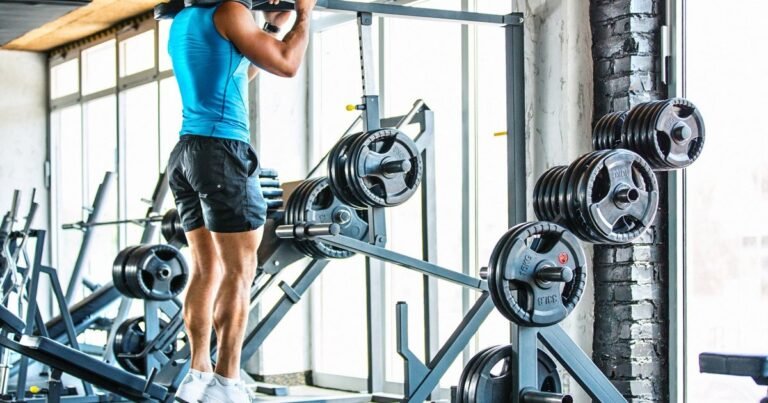
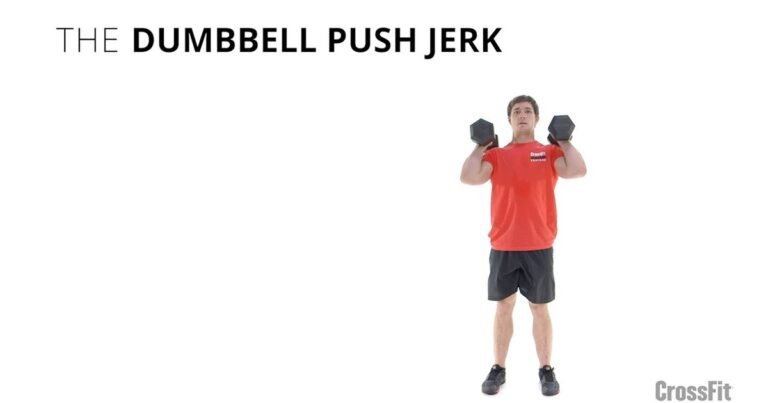
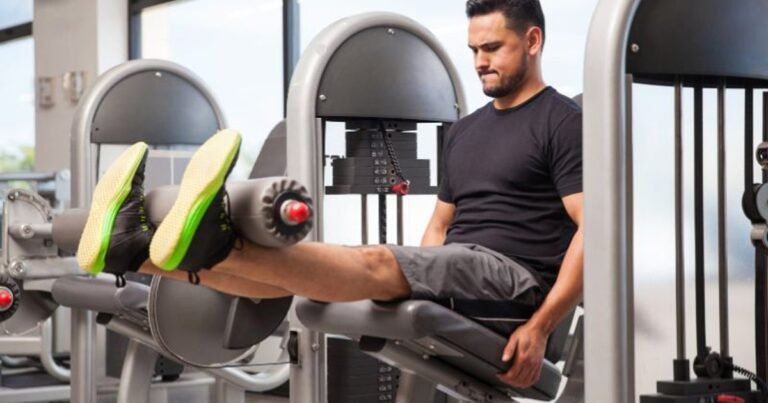
Equipment is optional and should solve an actual problem: stable parallettes for a different hand position, rings for scalable rows, or dumbbells for straightforward loading. Added weight belongs after you can manage the unweighted movement. These are possible tools, not evidence that Goulding uses or endorses the products shown below.
Finally, count demanding sessions honestly. A hard run, a long lifting session and repeated maximum push-up tests all draw from the same week. If quality keeps falling, simplify the schedule before adding another challenge.

Equipment Worth Exploring
Explore equipment, accessories and gear from our carefully selected range.


Power Tower
Freestanding pull-up and dip station with adjustable handles for bodyweight training.


Choose a goal you would still care about without a camera

A fitness goal does not need a record certificate to be meaningful. It could be your first controlled pull-up, a comfortable walking route with a friend, or a short strength session you can repeat during a busy month. The right choice gives you a reason to return without requiring every day to produce a dramatic result.
Separate the outcome from the action. The outcome might be ten push-ups. The action is turning up for two planned practices, recording the variation and keeping the repetitions honest. You can complete that action even during a week when the final number does not change.
Keep a tiny log with three entries: what you did, how it felt and what you intend to repeat. If a variation becomes uncomfortable, the useful response is an adjustment, not a declaration that you lack discipline. Likewise, missing one session does not require doubling the next one as punishment.
Make the social part concrete if it helps: agree on a time with someone, share a modest target or attend a class you actually enjoy. The outdoor photographs here show Goulding with friends; they are not instructions to balance on a ball or copy every activity pictured. Take the invitation to participate, then choose your own appropriate version.

Calisthenics Shirts & Street Workout Gear
Calisthenics and bodyweight-training gear for pull-ups, dips, handstands and street-workout athletes.

T-Rex Hates Push Ups Crewneck Pullover Sweater for Cali T-Shirt
For laid-back days and bodybuilding humor: “T-Rex Hates Push Ups”.

Big Dip Energy Hooded Pullover for Calisthenics Dips Fa Hoodie
Show off your lifting humor in a laid-back “Big Dip Energy” hoodie.

Always Pull Yourself Up Calisthenics Decal for Water Bo Sticker
A fun “Always Pull Yourself Up” touch for bottles, laptops, and lockers.


Turn Off Gravity Funny Calisthenics Gym Hooded for Huma Hoodie
Show off your lifting humor in a laid-back “Turn Off Gravity Funny Calisthenics” hoodie.

Calisthenics Heartbeat Crewneck Pullover Sweater for Pu T-Shirt
For laid-back days and lifting humor: “Calisthenics Heartbeat”.

Calisthenics Hanging Out Tank
Show some personality between sets with “Calisthenics Is My Idea of Hanging Out”.

Calisthenics Workout Sweatshirt
Add a playful “Calisthenics” touch to your casual rotation.

Funny Calisthenics Gym Crewneck Pullover Sweater for Bo T-Shirt
Keep things casual with a little “Calisthenics” attitude.

Calisthenics – Meme & Lovers – Top & Gains T-Shirt
Heavy lifts, good laughs, and a little “Calisthenics” energy.
Exercise can support mental health without becoming the whole answer
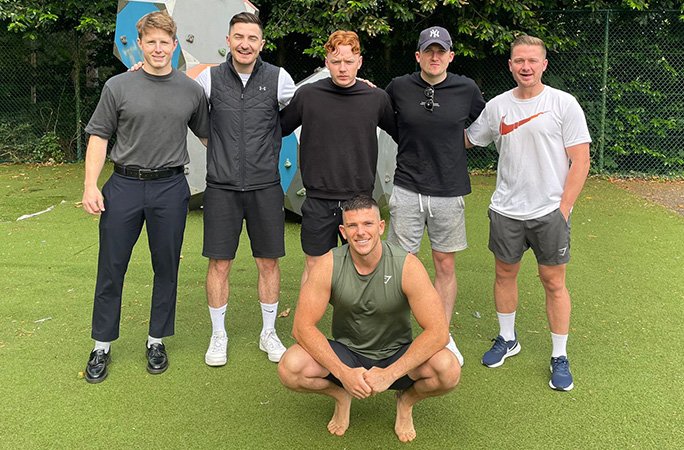
Goulding’s account connects training with purpose and support from people close to him. It is a personal experience, not proof that a particular workout cures depression or that struggling people simply need to try harder.
Regular physical activity can help mood, and enjoyable, manageable activity is easier to sustain. Starting gradually is reasonable after inactivity; even a short walk can be a useful beginning. The broader adult health target of 150 minutes of moderate activity per week is something to build toward, not a test you must pass before a session counts.
Exercise also sits alongside other forms of care. Persistent low mood or feeling unlike yourself warrants a conversation with a qualified healthcare professional. Talking therapies, medication and other support may be appropriate. A disappointing workout is not a diagnosis, and a good workout does not mean you should stop treatment or conceal ongoing difficulties.
For a lifter who already tracks everything, there is another useful question: does the routine leave room for ordinary life and honest conversations? Training can be a positive commitment without becoming the only place you feel allowed to have a difficult day.
Goulding’s records are exceptional. A repeatable session, a goal you value and someone you can talk to are much more accessible starting points. Choose one concrete action for the coming week and give yourself permission to make it manageable.