Advertising disclosure: This page includes affiliate product links that may earn us a commission, as well as products from our own store.
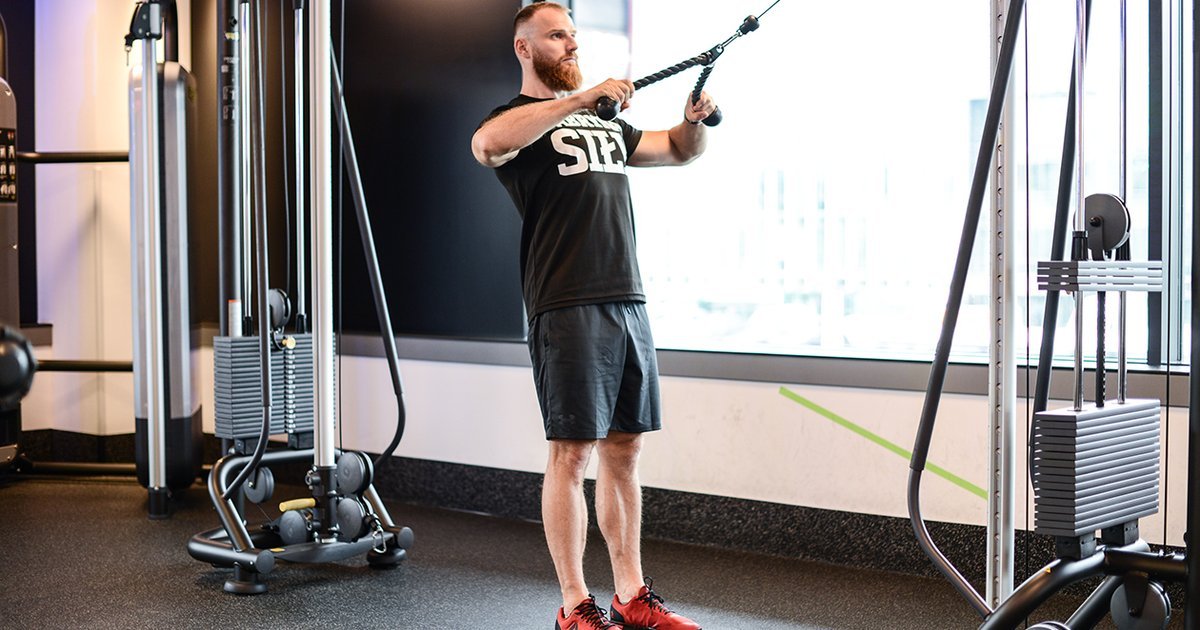
A high row is not simply a regular cable row with a heavier stack. Pulley height, handle choice and especially the direction of your elbows change the exercise. With a rope at about shoulder height, a standing high row challenges you to bring the upper arms backward while keeping your ribs and torso quiet. It can be a useful accessory for the upper back and rear shoulders, but only when you know which variation you are doing.
The confusing part is that gyms use high row for multiple distinct movements. A rope pulled toward the upper chest with elbows wide is different from a high-to-low lat row that drives the elbows toward the hips. A plate-loaded high-row machine may follow yet another fixed path. This article specifically covers the standing rope high row with a shoulder-height pulley. Learn the setup, compare nearby exercises and build a six-week progression that rewards repeatable movement rather than a bigger number on the stack.
What a standing rope high row actually trains
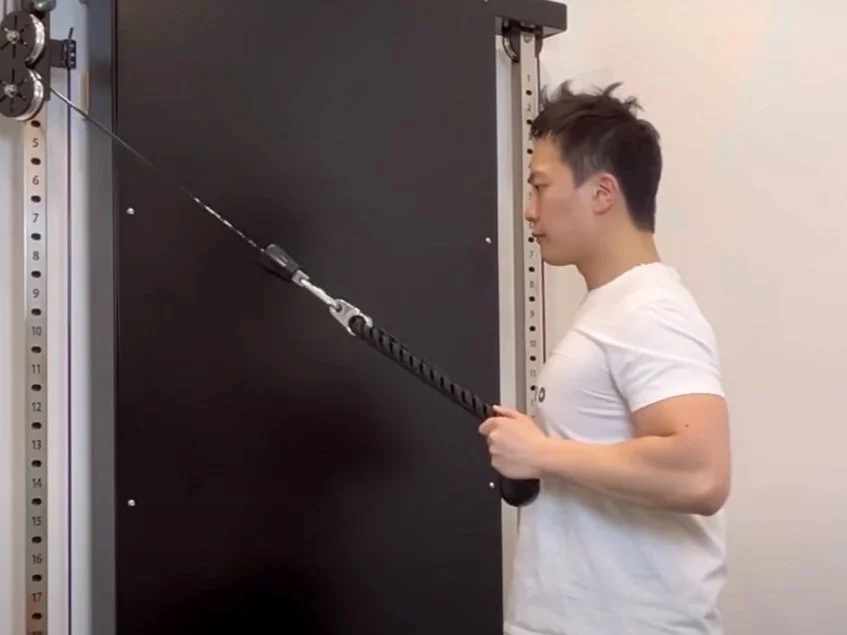
Face the machine with the rope leaving its pulley roughly level with your shoulders. Reach forward, then draw the rope backward toward the upper chest while your elbows travel broadly outward. The shoulder blades move around the rib cage during the reach and move back as you pull. The middle and upper back, rear deltoids and elbow flexors all contribute. Your trunk and legs prevent the weight from pulling you toward the machine.
A standing high rope row is not exactly a face pull. A face pull usually finishes nearer the forehead and may involve greater external rotation as the hands separate. A high row can finish somewhat lower, near the upper chest and shoulder line, with a stronger rowing emphasis. Their ranges overlap, so identifying a reproducible hand target is more useful than pretending there is a perfect anatomical border. The movement is also different from an upright row, where the handle travels vertically upward beside the body.
Wide elbows generally emphasize a high-elbow rear-shoulder and upper-back pattern, but they do not isolate just one muscle. If you drop your elbows beside the ribs and pull your hands toward the waist, you have shifted toward a more conventional lat-focused row. That movement can be excellent too; the mistake is accidentally changing the exercise halfway through a set and then logging all repetitions as identical. Decide which task your training is missing before choosing the load.
In many routines, this lift fits best after the heaviest row or pulldown. You are practicing controlled upper-back work with less external loading than a heavy unsupported bent-over row. It may also serve as a light warm-up, although a warm-up is not proof that your shoulders are protected from injury. Let the required movement quality determine where it sits in the session.
Set the rope, pulley and stance before you begin
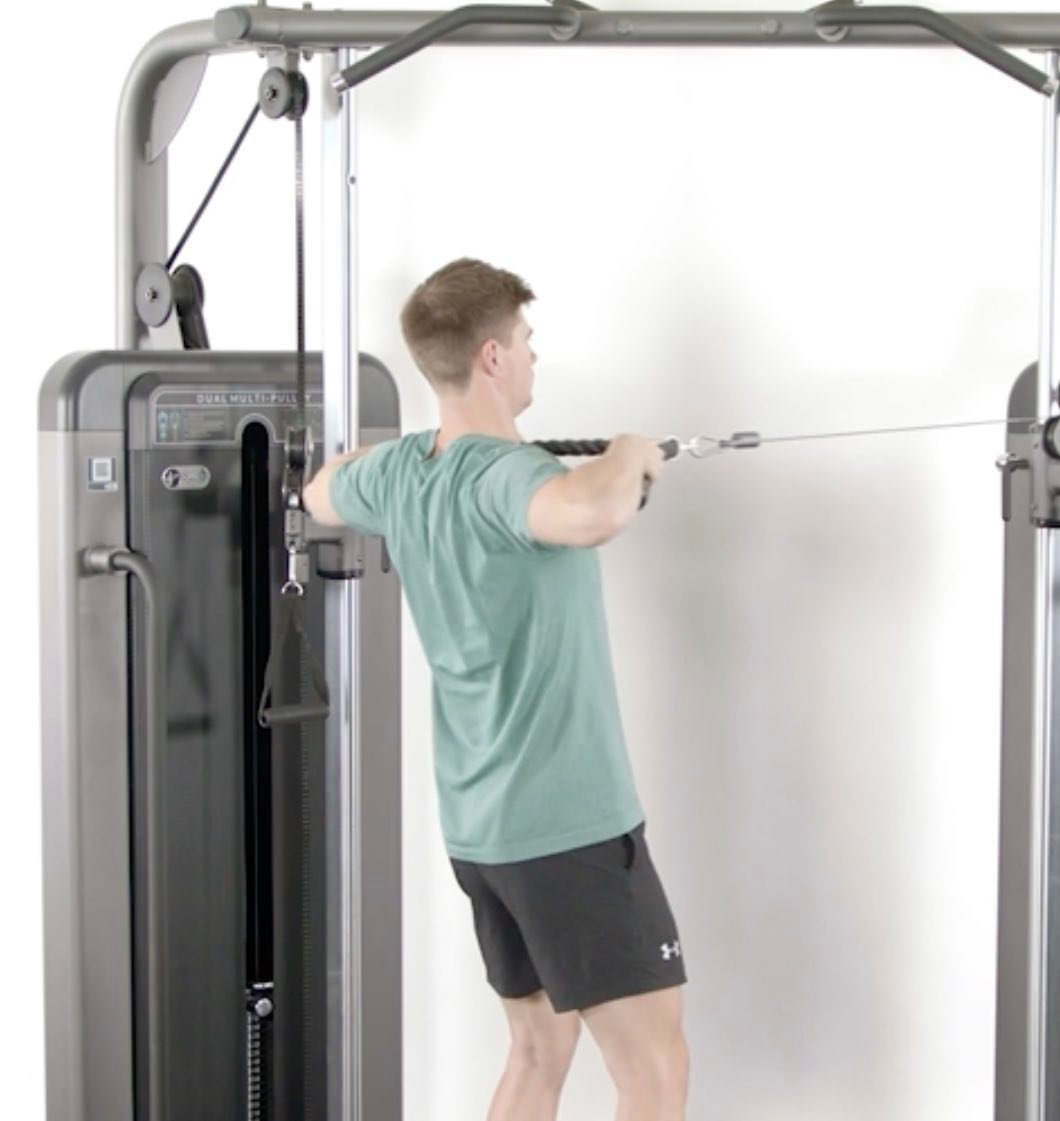
Clip a secure rope onto a pulley near shoulder height, or modestly above if that is the only available setting. Inspect the cable and carabiner, fully seat the weight pin and leave enough travel for the stack to move freely. Face the machine and grasp one end of the rope in each hand. A neutral-to-slightly-pronated grip is fine when it feels comfortable. Step back until the cable is taut with arms extended in front of you.
Stand about hip width with soft knees and a tall chest. Brace your abdomen to keep ribs above pelvis without arching hard. Your hips should stay over your feet rather than shooting backward with every pull. If the stack yanks you onto your toes, use less resistance or adjust your stance. A staggered stance can provide stability, but record it because the amount of body assistance may change. The point is not to satisfy a photo pose. It is to maintain a position from which the actual row is measurable.
Allow a comfortable forward reach of the shoulder blades. Do not lock them down so rigidly that your arms cannot move naturally. On the other hand, avoid collapsing the entire spine just to make the movement look longer. Shoulder blade movement across the ribs and uncontrolled spinal rounding are different actions. You want a stable trunk and shoulders that can travel through their own comfortable range.
Begin with a load that permits around 12 clean repetitions and two or three repetitions still in reserve. That is an initial technique target, not a special hypertrophy number. If you can lift a heavier stack only by rocking backward or bending your wrists into a desperate curl, the weight has exceeded the controlled version you selected. Before your working set, practice a few unhurried unloaded or light repetitions and check that the rope cannot strike your face or throat at the finish.

Equipment Worth Exploring
Explore equipment, accessories and gear from our carefully selected range.
VOLTRA
Compact digital cable trainer with smooth, adjustable resistance.

Go-Tone Pro
Portable digital cable trainer with up to 66 lb (30 kg) of adjustable resistance.

GymPin D Cuffs
Adjustable wrist cuffs with textured grips for supported cable-machine exercises.


Back Bar
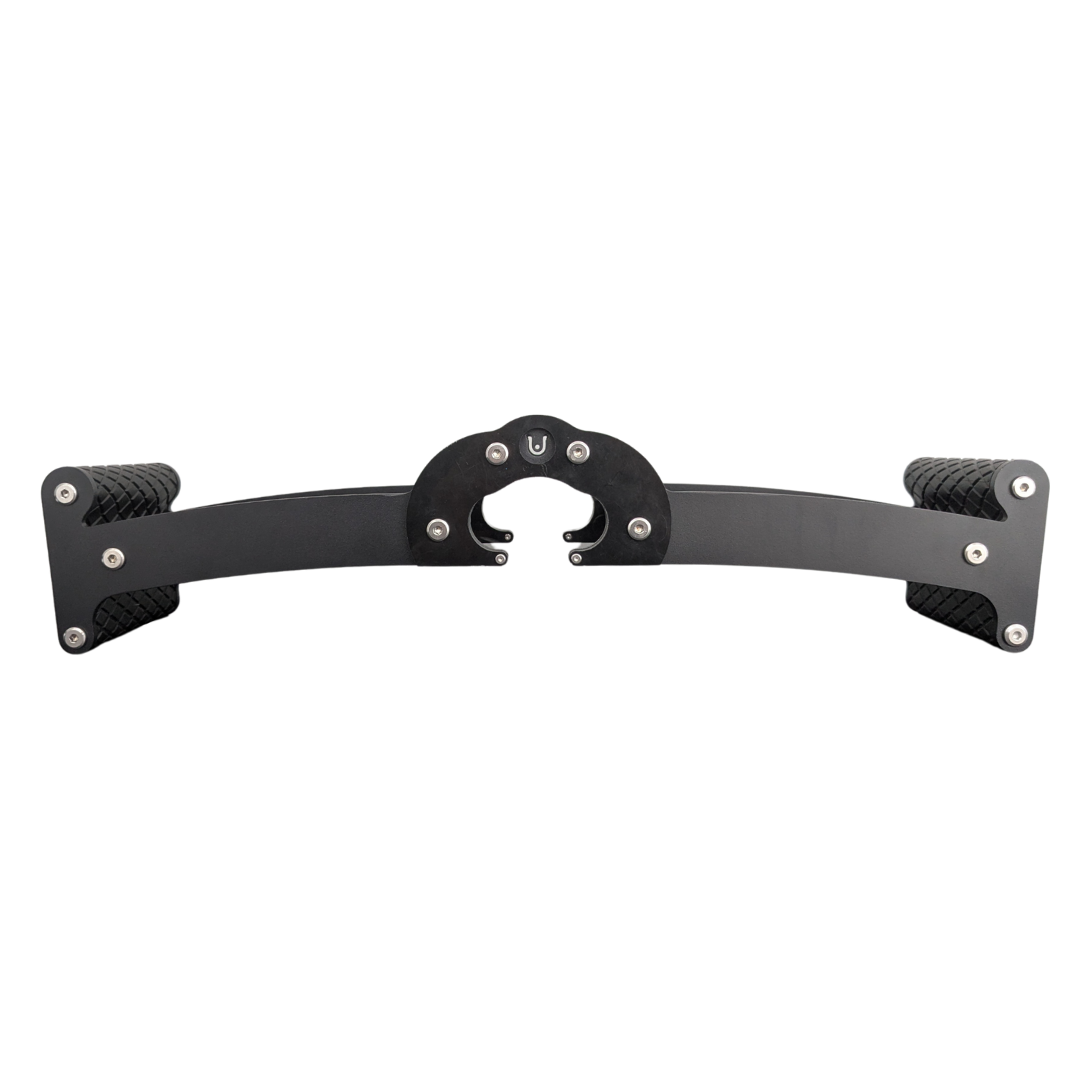
Multi-grip cable and landmine bar with a built-in deadlift jack.

W Grip
Angled cable grip for comfortable rows, pushdowns, and curls.
Horizon Grip
Ergonomic V-style cable grip for rows and back training.
U Clips
Versatile gym clips for barbell, landmine, and attachment setups.
Pull with high elbows, then own the forward reach
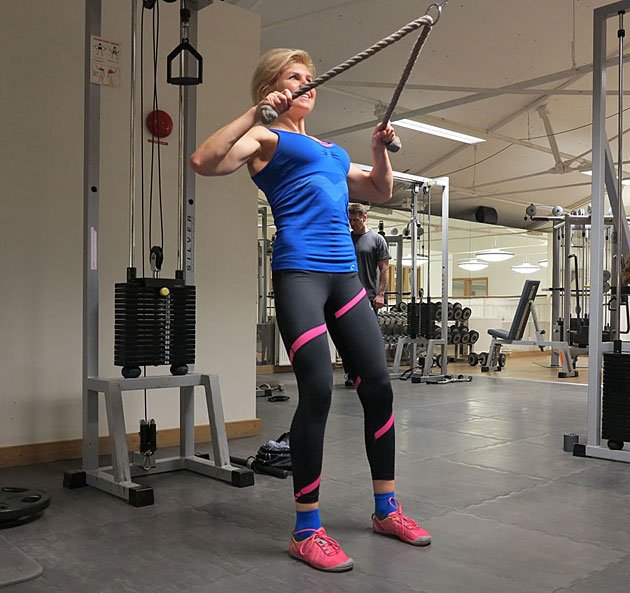
Initiate the repetition by bringing the upper arms backward while the shoulder blades follow naturally. Think elbows toward the rear walls, roughly around shoulder height, rather than hands downward toward the stomach. Let the rope ends spread just enough for a comfortable hand and wrist position. Most lifters will finish with hands near the shoulder or upper-chest line. There is no universal finish point that perfectly fits every shoulder, but a personally consistent one makes progression meaningful.
Pause briefly at the finish. A controlled one- to two-second hold tells you more about the load than a dramatic neck-tensing squeeze. Keep the chin long, the ribs quiet and the knees steady. If the shoulders climb toward your ears, consider whether the stack is too heavy, the pulley is misplaced or the chosen finish is beyond your comfortable shoulder range. You do not earn extra gains by forcing an uncomfortable end position.
Return smoothly to the start. The elbows straighten, and the shoulder blades may move forward around the rib cage. Do not let the stack slam or the cable snap your elbows straight. The return phase is part of the working repetition. A practical rhythm is a deliberate pull, a brief pause, then roughly two seconds of controlled return. You need not count every second aloud, but the last repetition should resemble the first.
Watch for three common substitutions. Leaning back turns a torso-rock into extra cable travel and inflates the apparent load. Curling the rope with only the forearms moves the hands without enough upper-arm motion. Dropping the elbows switches to another rowing pattern. Film one set from a side or three-quarter angle. Examine the hand target, elbow height and trunk position, not your appearance. When all three stay similar from rep one to rep twelve, the load is finally worth recording.

Bodybuilding Shirts & Workout Gear
Bodybuilding shirts, tanks and gym gear for lifters chasing muscle, size, symmetry and the pump.

Gym Dost Thou Even Pull Medieval Knight Back Day Crewne T-Shirt
Show some gym-day personality with “Dost Thou Even Pull Medieval Knight Back”.


Lat Man Big Back – With Huge Lats – Vest Back Day Tank Top
Your gym-day look, with a playful “Lat Man Big Back” twist.

Demon Back Big Back Sweater & Lat Gains Meme T-Shirt
Add a playful “Demon Back” touch to your casual rotation.

Strong Back Bodybuilder | Meme Muscle Shirt | The Simps Tank Top
Train hard, laugh a little, and rep “Strong Back Bodybuilder”.


Wide Privilege – Wide Back Meme Decal for Water Bottles Sticker
A fun “Wide Privilege” touch for bottles, laptops, and lockers.

Nice Traps Big Back Tee
Heavy lifts, good laughs, and a little “Nice Traps Big Back” energy.

Shirt Pull Day – Back & Biceps Meme Top T-Shirt
Heavy lifts, good laughs, and a little “Pull Day Graphic” energy.

Train Back You Must Gym | Funny Yoda Bodybuilding Meme Sticker
A fun “Train Back You Must” touch for bottles, laptops, and lockers.
High rope rows are not low rows, lat rows or pulldowns
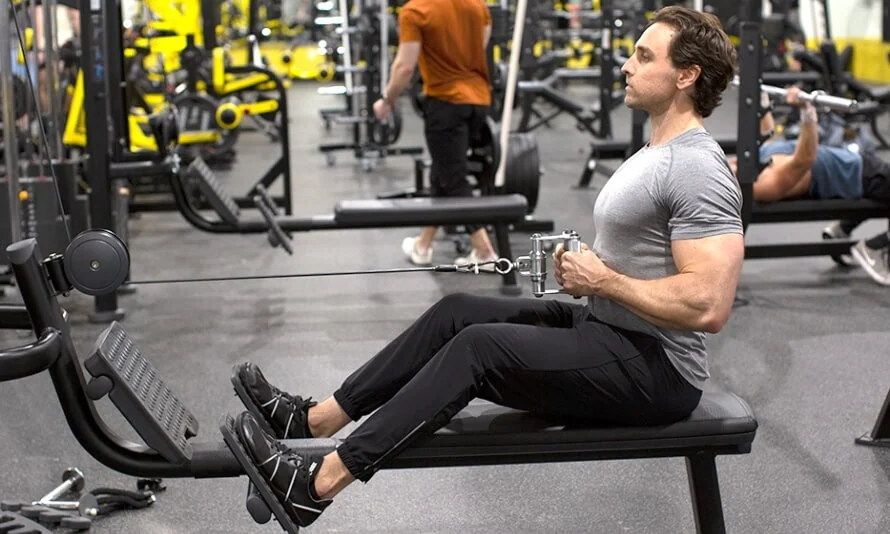
A conventional seated low cable row begins from a low pulley. With a narrow neutral handle, many lifters pull toward the waist or lower ribs while the elbows travel close to the torso. That is a useful back movement, but it is mechanically different from standing tall, keeping the elbows high and pulling shoulder-level rope ends toward the upper chest. Someone may lift more weight in one variation simply because equipment, posture and leverages differ, not because that variation makes the back stronger.
A lat pulldown moves largely downward from overhead. A high-to-low single-arm cable row can also start overhead, but it finishes with the elbow closer to the hip instead of wide around shoulder height. The words high cable describe a starting angle, not the whole exercise. A plate-loaded machine named high row introduces yet another resistance profile and often provides a chest pad or fixed seat. Treat these as separate logbook entries.
Do you require all of these angles for a complete back? No. If you already train heavy chest-supported rows and pulldowns, a high rope row may offer a manageable accessory for a higher elbow pattern. If you dislike the shoulder position, consider a supported rear-delt row, reverse pec deck or a comfortable face-pull variation. Choose based on movement quality, joints and existing weekly volume, not an assumption that every new handle unlocks previously unused muscle fibers.
Name the lift in your training log: standing rope high row; shoulder-height pulley; elbows wide; upper-chest finish. Include stance and attachment when they change. You cannot compare two sessions carefully when one uses a tucked-elbow row and the other a high-elbow pull. Clear labels are a small habit with an outsized payoff.
Single-arm rows and plate-loaded high rows: what changes?
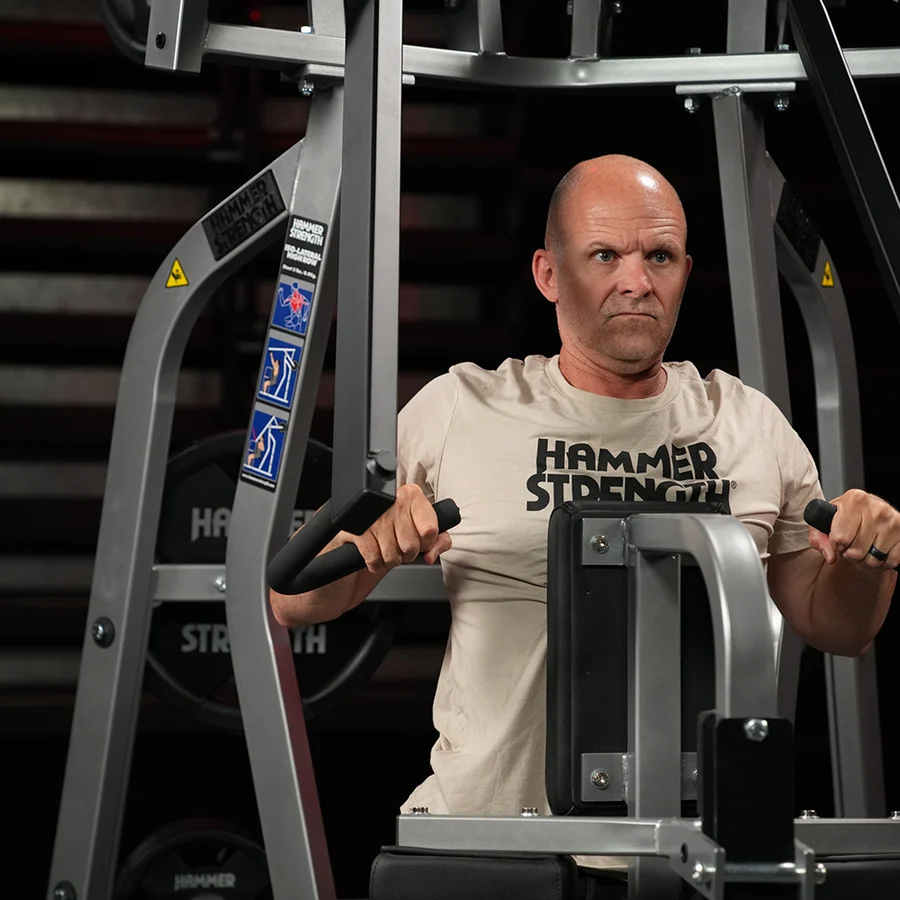
Some commercial high-row machines take the handles from overhead to the lower chest or waist. Their fixed seat, levers and chest support can make demanding back sets easier to stabilize. They do not automatically recreate the standing high-elbow rope pattern. Plate placement, machine geometry and changing lever arms can create different resistance profiles, so a plate-loaded kilogram is not interchangeable with a kilogram on a selected cable stack.
For a one-arm version of the standing high row, attach a single handle near shoulder height and stand square to the machine. Pull the working elbow backward and slightly outward while the trunk resists excessive rotation. The free hand can rest lightly against the ribs to help you notice movement. Natural small torso shifts are not failures, but if one side uses a dramatic twist, you are no longer comparing symmetrical repetitions. Start with a lighter load than you expect and give both arms the same target.
A chest-supported row can reduce the bracing task and make shoulder control more visible. Independent dual cables permit each arm to find its own path, while a single pulley and rope offer quick setup. For broad shoulders, a longer rope or separate handles might feel more comfortable than crowding the wrists together. There is no universal rule that one attachment recruits more muscle for every lifter. Make the arms travel through a stable, comfortable route and use progressively harder sets over time.
Never improvise an unsafe attachment stack to copy a video. Confirm actual compatibility with your cable unit, check each clip and keep the line of pull clear of your face. A cable system should be secure before it becomes heavy. The appropriate substitute for an awkward machine is not a more elaborate unsafe rig; it is a version you can repeat and control.
Equipment Worth Exploring
Explore equipment, accessories and gear from our carefully selected range.

VForce Lat Tower
Wall-mounted cable tower with pivot arms and adjustable 1:1 or 2:1 pulley ratios.

VForce Wall Trainer
Space-saving wall-mounted functional trainer with pivoting cable arms and variable resistance ratios.

VForce 2IN1
Half rack and pivot-arm functional trainer with switchable 1:1 and 2:1 pulley ratios.

Trinity Lat Machine LSW-850
Weight-stack pulldown tower offering three cable directions and adjustable seated support.

Multi Pull Smith Rack MPHR-780
All-in-one rack with a Smith machine, functional trainer, lat pulldown and low row.

48in Aluminum Lat Bar
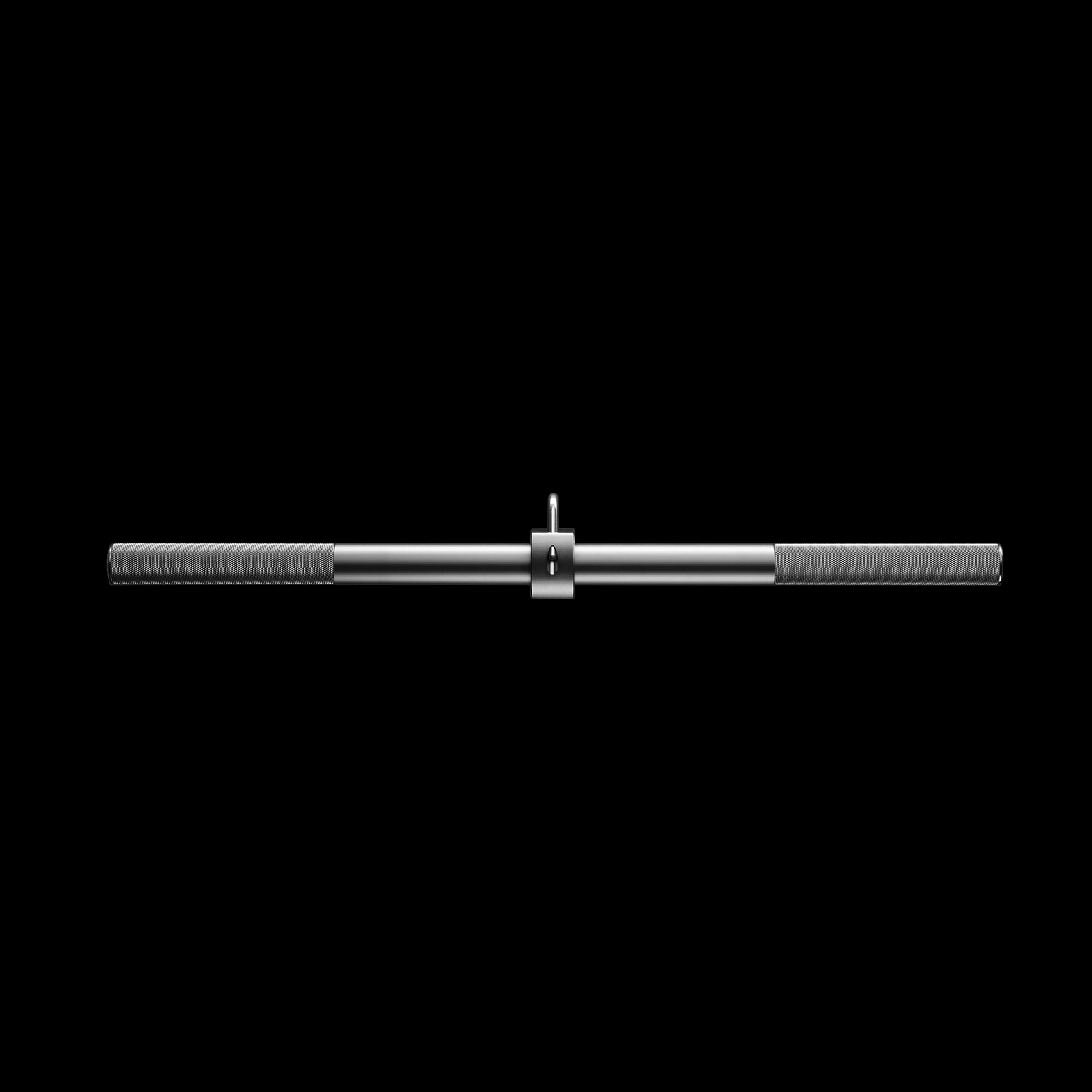
48-inch aluminum lat pulldown bar with knurled grip and rotating center swivel.

Lat Pulldown Set
Multi-grip cable attachment set for pulldowns, rows, and varied upper-body training.
Use a six-week high-row progression that you can measure
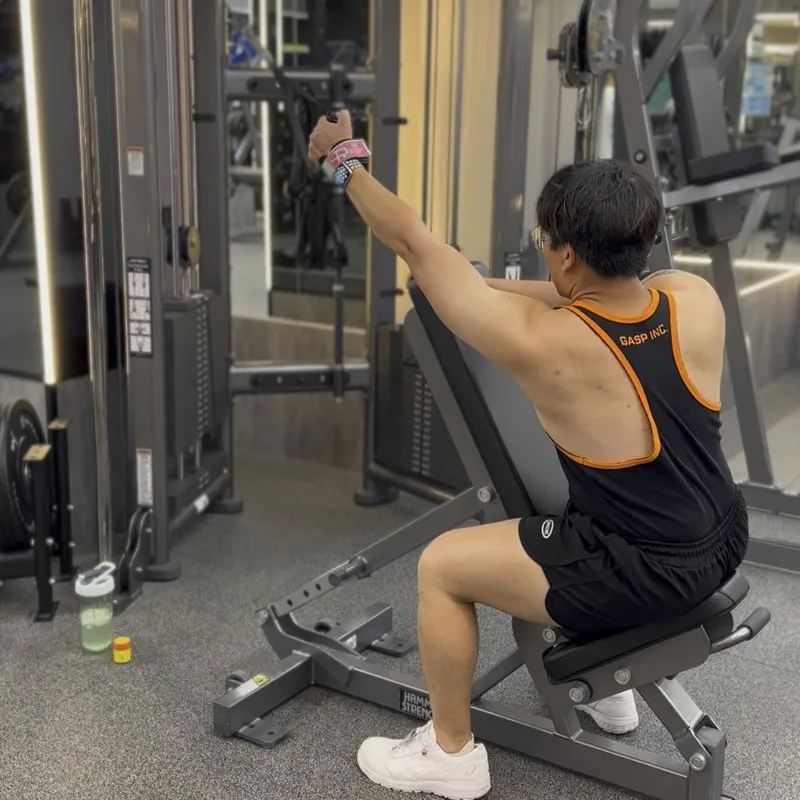
This is an original practical progression, not the protocol of a controlled six-week high-row trial. Start with two sessions per week after your main pull. In weeks one and two, perform two sets of 12–15 repetitions, leaving approximately three clean repetitions in reserve. Keep a short pause at the upper-chest target. Compare early and late repetitions on video to settle on a stance, pulley height and elbow route before chasing increases.
During weeks three and four, use three sets of 10–15 repetitions with the same handle and pulley. Work toward the top of the range before increasing the stack. When all three sets can reach 15 technically consistent repetitions at the intended effort, use the smallest practical load increment next time. If the stack jumps are too large, stay at the same weight and improve pauses and range instead. A heavier number with a completely new elbow path is not the same accomplishment.
For weeks five and six, keep three sets but aim for 10–12 clean repetitions. Add modest resistance only if your trunk remains still and your end point stays consistent. An easy audit is whether the final rep has the same elbow height, upper-chest hand target and slow return as the first. If it does not, log only the clean reps. Rest roughly 60–120 seconds between accessory sets, or longer when fatigue changes your technique. Consistency matters more than racing a timer.
Do not bolt three more back sets onto an already overcrowded pull session. If you perform several rows, replace an overlapping accessory first. Training fatigue and total pulling volume are real, even when a new movement looks light. A beginner might use one weekly high-row slot, while an experienced lifter can adjust according to recovery and which pattern needs work. Your weekly log should reveal whether the exercise adds quality work or just more noise.
Stop a version that produces sharp or persistent pain, tingling or instability instead of forcing the prescribed range. If symptoms persist, seek qualified individual guidance. The aim is a safe, repeatable rowing pattern, not proof that a shoulder-height rope is uniquely anabolic. Set it deliberately, keep your elbows honest and judge progress by the movement as well as the number.
Funny Gym Shirts & Workout Gear
Funny gym shirts, tanks, hoodies and workout gear for lifters who like training hard.

Grip Training Essential Gymbro Jumper & T-Shirt
For laid-back days and lifting humor: “Grip Training Essential”.

Grip Day Legend Essential Gymbro & T-Shirt
Rep “Grip Day Legend” humor in and out of the gym.

Grip Strength Fanatic Meme Hoodie
Show off your lifting humor in a laid-back “Grip Strength Fanatic” hoodie.


Grip Day Legacy Gymbro & Decal Sticker
Give your everyday gear a playful “Grip Day Legacy” twist.


Pumpeye Forearm Gains & Grip Strength Popeye Meme Hoodie
Keep it laid-back with a little “Pumpeye” attitude.

Slip Not Grip Training – Heavy Metal Workout Hooded Pul Hoodie
Make your off-duty look more fun with “Slip Not Grip Training”.

Brain and Biceps Tee
Make gym days more fun with “Mind Muscle Perfection Brain and Biceps” style.

Lift Smart Brain Plate Tee
Show some lifting attitude with a playful “Lift Smart Brain Weight Plate” tee.
Some product links may be affiliate links, which can support Mind Muscle Perfection at no additional cost to you.