Advertising disclosure: This page includes affiliate product links that may earn us a commission, as well as products from our own store.
The barbell rear-delt row is easy to turn into a different exercise. Add weight, tuck the elbows and start lifting the chest, and a shoulder-focused row becomes a general barbell pull. That does not make every other row wrong. It means you need a clear definition of the repetition you want to train. Use a modest load, a stable bent-over position and an elbow path you can repeat. Here is how to organize the movement, choose a supported alternative when useful and judge progress without relying on a bigger number alone.
Define the rear-delt row before choosing the weight
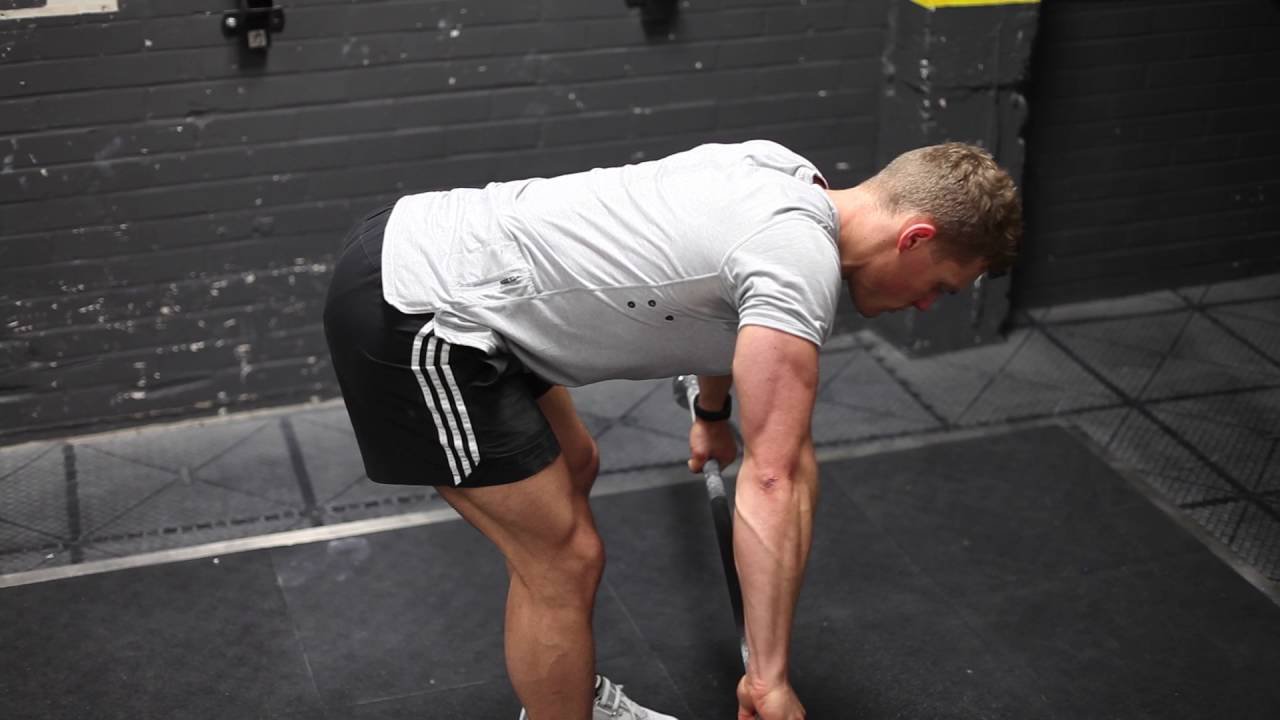
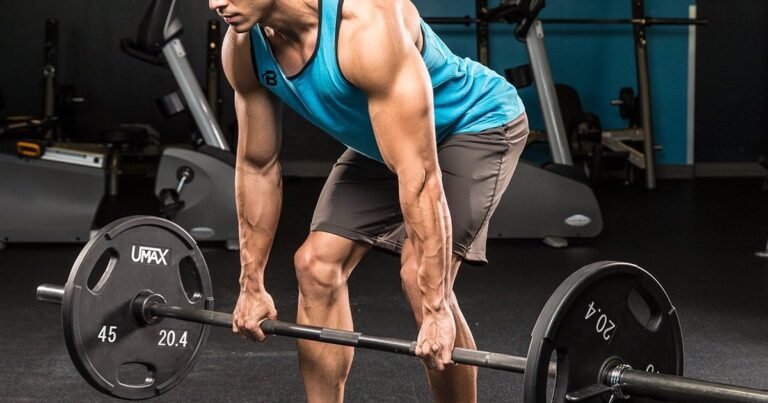
This is a bent-over row with a wide overhand grip and elbows traveling out to the sides. The bar moves toward the chest rather than being deliberately swept toward the hips. That combination gives the rear shoulders and upper back a different job from a tucked-elbow row. The arms still bend, and other muscles still contribute; the exercise does not isolate the rear deltoids completely.
Keep it separate from an upright row. In the rear-delt row, the torso is inclined forward and the arms move relative to that position. Standing tall and pulling the elbows upward creates a different movement. A heavier set is not necessarily a progression if you gradually stand up farther on each repetition.
Before loading, rehearse a few repetitions with an empty or lighter training bar. Pay attention to whether your hands can remain symmetrical and your elbows can travel outward without discomfort. There is no universally correct hand spacing measured in centimeters. Choose a position that allows the intended path, then record a knurling landmark so you can reproduce it.
Avoid treating a strong pump or soreness as proof that every detail was correct. Those sensations can inform your experience, but they do not show how much work each muscle performed. A useful early objective is simply to produce several similar repetitions and recognize when the movement starts changing.
Build the hinge and keep the elbow path clear
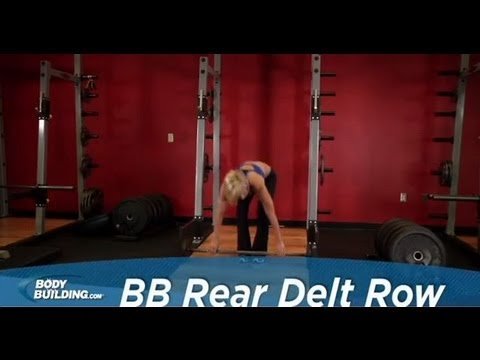
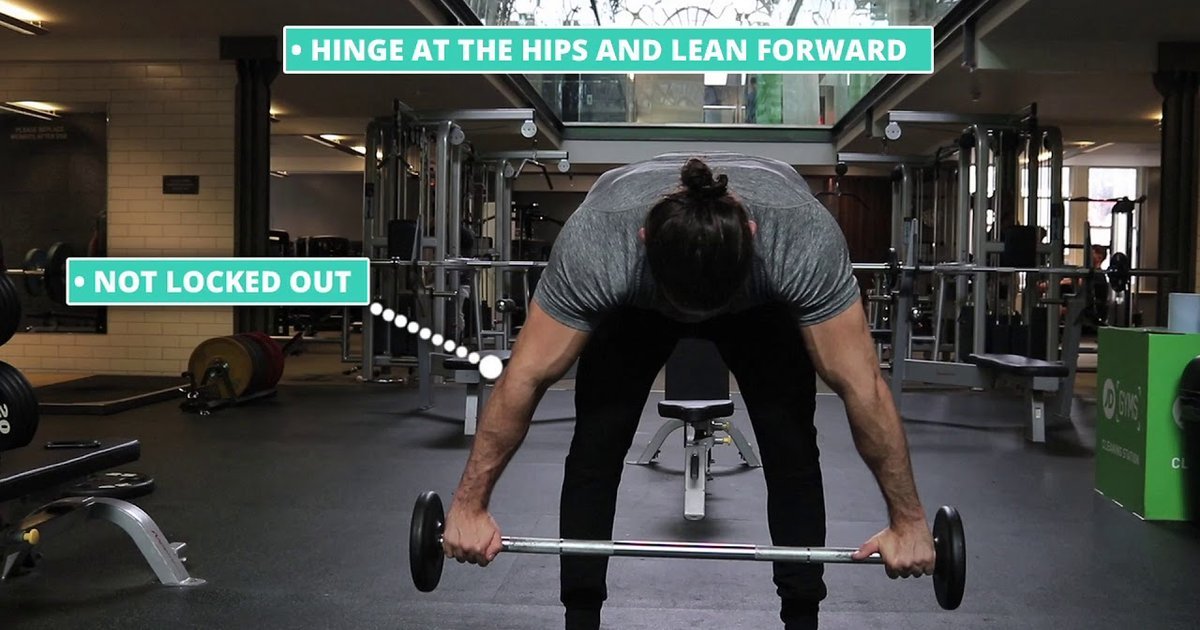
Stand with a stable stance, soften the knees and hinge at the hips. Bring the torso toward a near-horizontal position you can hold, rather than rounding down to reach an arbitrary angle. Let the bar hang below you. Keep the head aligned naturally with the torso instead of lifting the chin to watch a mirror throughout the set.
Row with the upper arms moving outward, using a chest-directed path. Do not force the bar into the neck or chase contact at the expense of shoulder comfort. Instructions sometimes use different contact landmarks; the more useful check is whether the elbow path and torso position remain consistent. Lower the bar under control until the arms are long again, without dropping into a loose bottom position.
A brief pause can help expose momentum. It need not be a theatrical hold on every repetition, but you should be able to stop the bar without an extra hip thrust or a sudden shrug. If pausing makes the whole setup collapse, the load or the chosen position needs another look.
Use a side-view recording to examine the torso and a rear-oblique view to inspect the elbow path. Do this with a light set first. Compare the final repetitions with the opening ones: elbows moving progressively inward, a rising chest or a faster uncontrolled descent are useful reasons to stop and reset. Change one setup detail at a time so you can tell what helped.
Choose the load and prepare the equipment deliberately
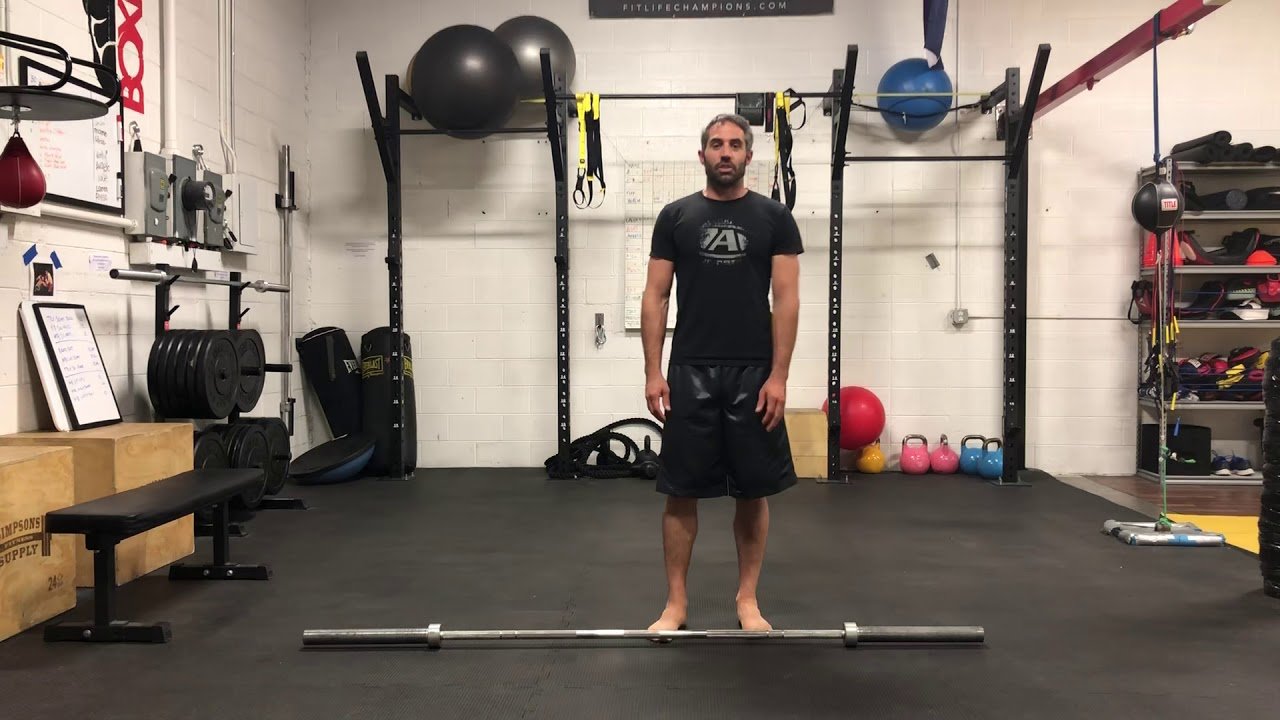
Start below the weight you normally use for a general bent-over row. The point is not to match that lift immediately. You are asking for a different upper-arm path while holding a forward-leaning position. If the empty standard bar is already difficult to control, a lighter bar or a dumbbell variation is a practical starting option.
Plan how the bar enters and leaves your hands before starting the set. A secure rack position can simplify pickup; a floor pickup adds a separate task. Leave sufficient space for the plates and your elbows, and avoid setting up where another lifter needs to walk through the bar's path. Return the bar deliberately after the final repetition instead of letting fatigue choose the landing.
Use compatible plates and collars, and make equal changes on both sides. Small change plates can be more useful than a large jump when the goal is to preserve a precise repetition. Check the actual sleeve and collar fit. Equipment that looks similar in a photograph is not automatically compatible.
Straps can help if holding the bar is the limiting factor, but they do not correct a moving torso or an unsuitable load. Practice attachment and release first, and record when you use them. If grip training is a separate priority, keep some appropriately loaded unstrapped work elsewhere rather than assuming this one accessory exercise must solve every goal.
Use chest support when holding the position limits the set
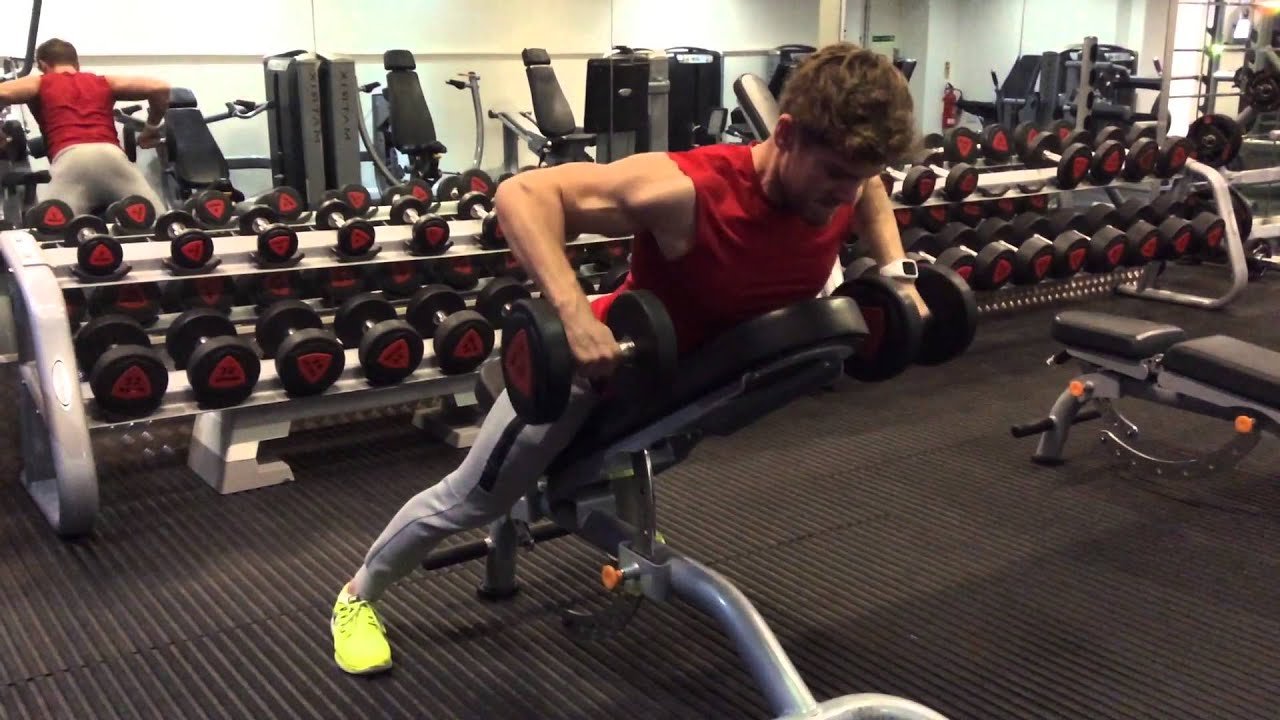
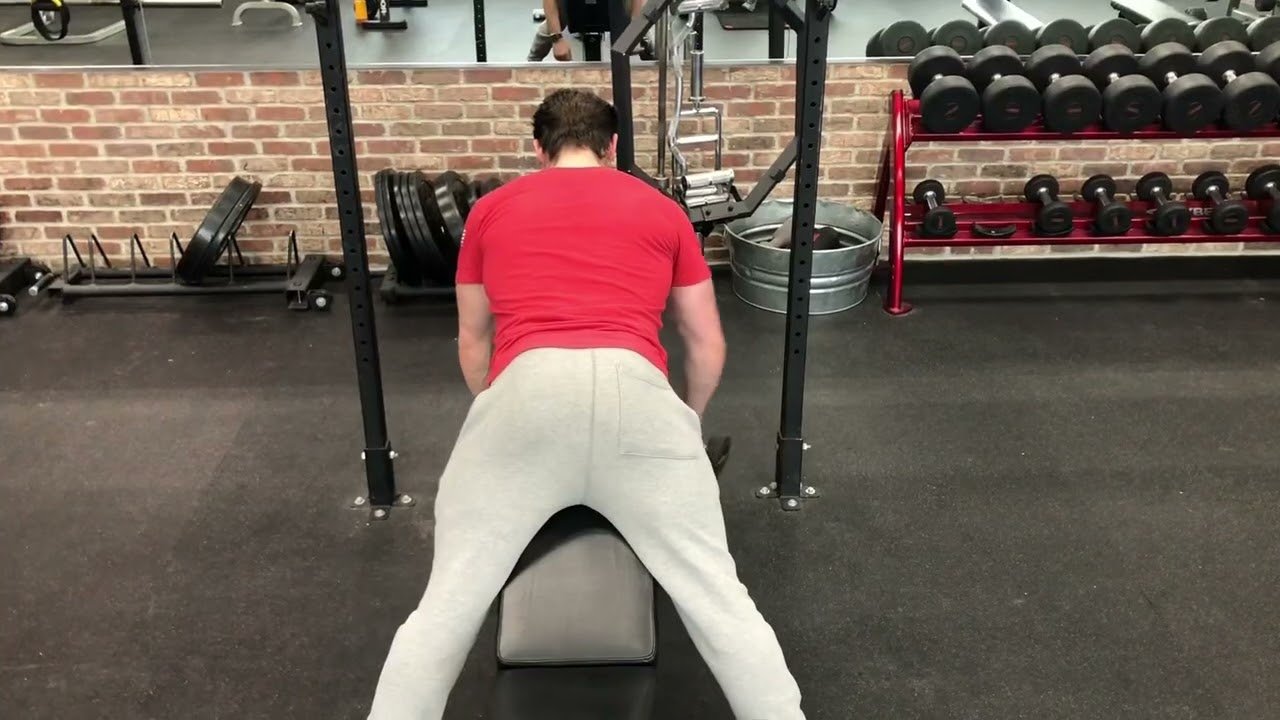
Sometimes the difficult part is maintaining the hinge rather than completing the intended shoulder movement. A chest-supported dumbbell rear-delt row changes that demand. Lie chest-down on an incline bench with the feet stable, let the dumbbells hang and row with the elbows out. Keep the chest on the pad instead of lifting away to finish the repetition.
Set the bench so your arms and dumbbells can move without striking the floor or frame. The useful angle depends on the bench, your proportions and the dumbbells. An adjustable backrest offers options, but the number printed on the adjustment mechanism does not tell you whether the whole setup fits. Test the path with light weights before committing to a working set.
This alternative also gives each hand its own implement. That can be helpful when a fixed straight-bar grip feels awkward, but it changes the exercise conditions. Do not compare a dumbbell pair's total directly with your barbell load and assume one version is stronger or better. Keep separate records for the two variations.
For this equipment choice, prioritize stable bench support, sensible dumbbell increments and enough clearance around the pad. Adjustable and fixed dumbbells can both work. A supported version reduces the need to hold a bent-over stance, but it is not a promise of zero strain or a treatment for pain. If an exercise hurts, stop forcing that version and choose an appropriate alternative.

Equipment Worth Exploring
Explore equipment, accessories and gear from our carefully selected range.


Leather Lifting Straps
Padded leather straps support grip during heavy rows, deadlifts and pulling exercises.





FID Bench MAX
Adjustable bench offering flat, incline, and decline positions + adjustable headrest.

Rubber Hex Dumbbells
Rubber-coated hex dumbbell pairs with a stable shape for home and commercial strength training.

Speed Collar
Quick-release collars designed to secure weight plates on standard two-inch Olympic bars.
Put repeatable rear-shoulder work into your pull day
A simple trial is two working sets of ten to fifteen controlled repetitions after your main pulling work. Treat that as an adjustable example, not an optimal prescription for everyone. Select a load that leaves a few good repetitions available. Rest long enough that breathing and the setup are ready for the next set rather than rushing into a worse position.
Keep either the barbell version or the chest-supported version stable for a short block. Record the implement, grip or bench setting, load and repetitions. Include a brief note about why the set ended: rear-shoulder fatigue, grip, inability to hold the torso or simply reaching the planned repetitions. Those notes explain more than the repetition total alone.
Progress first by repeating the same path for more of your chosen range. Once both sets reach the upper end with similar control, consider the smallest useful load increase. If the new load changes the exercise, return to the previous one. Consistency includes being willing to keep the weight unchanged while the execution becomes more dependable.
Review the rest of your back, biceps and shoulder work before adding more sets. A pull day already full of rows and rear-delt accessories may need a substitution rather than another exercise. Use the mind-muscle cue as a reminder to pay attention, not as a reason to ignore the rest of the program. The useful result is a rear-shoulder exercise you can set up, repeat and progress within the training you actually do.

Funny Gym Shirts & Workout Gear
Funny gym shirts, tanks, hoodies and workout gear for lifters who like training hard.

Shirt Pull Day – Back & Biceps Meme Top T-Shirt
Heavy lifts, good laughs, and a little “Pull Day Graphic” energy.

Unbreakable Gains Back Tee
Make gym days more fun with “Unbreakable Gains: Strong Back Greek God” style.

Gymhead Mind Muscle Connection Bodybuilders & Bros Tank Top
Show some personality between sets with “Gymhead”.

Consistency King Tee
Make gym days more fun with “Consistency King Stoic Greek God Marble” style.

Progress Stoic Bodybuilder Greek God Marble Sculpture T-Shirt
Heavy lifts, good laughs, and a little “Progress Stoic Bodybuilder Greek God Marble” energy.

I’m Strong Barbell Heartbeat Hooded Pullover for Streng Hoodie
Make your off-duty look more fun with “I’m Strong Barbell Heartbeat”.


Stronger Than Excuses Tank
Show some personality between sets with “Be Stronger Than Your Excuses”.

Lifting Is In My DNA Shirt – & Meme T-Shirt
Rep “Lifting Is In My DNA” humor in and out of the gym.

Meme Shirt – The Ultimate Lifting Is Life Top T-Shirt
Show some bodybuilding attitude with a playful “The Ultimate” tee.