Advertising disclosure: This page includes affiliate product links that may earn us a commission, as well as products from our own store.
Nordic curls are often presented as a single bodyweight exercise, but the way your ankles and knees are supported can change what the hamstrings actually do. An experiment from April 2026 tested three arrangements with 42 participants and measured different knee positions and muscle-activation readings. That does not mean one commercial machine is automatically the best buy. It does challenge the assumption that one Nordic rep is mechanically identical to any other.
The more useful question for lifters is whether the anchor stays secure, the movement is repeatable and the lowering phase can be controlled. Before chasing a dramatic floor-level repetition, it is worth understanding the leverage, what the research measured and how to scale the difficulty without accumulating soreness that disrupts the rest of your training.
Nordic curls load the hamstrings in a different direction
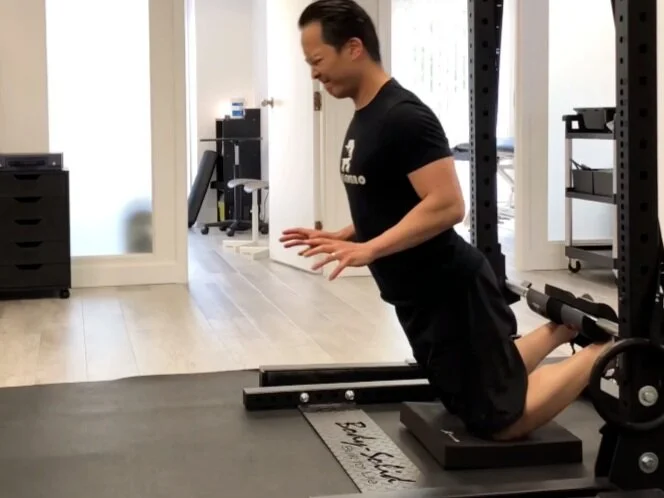
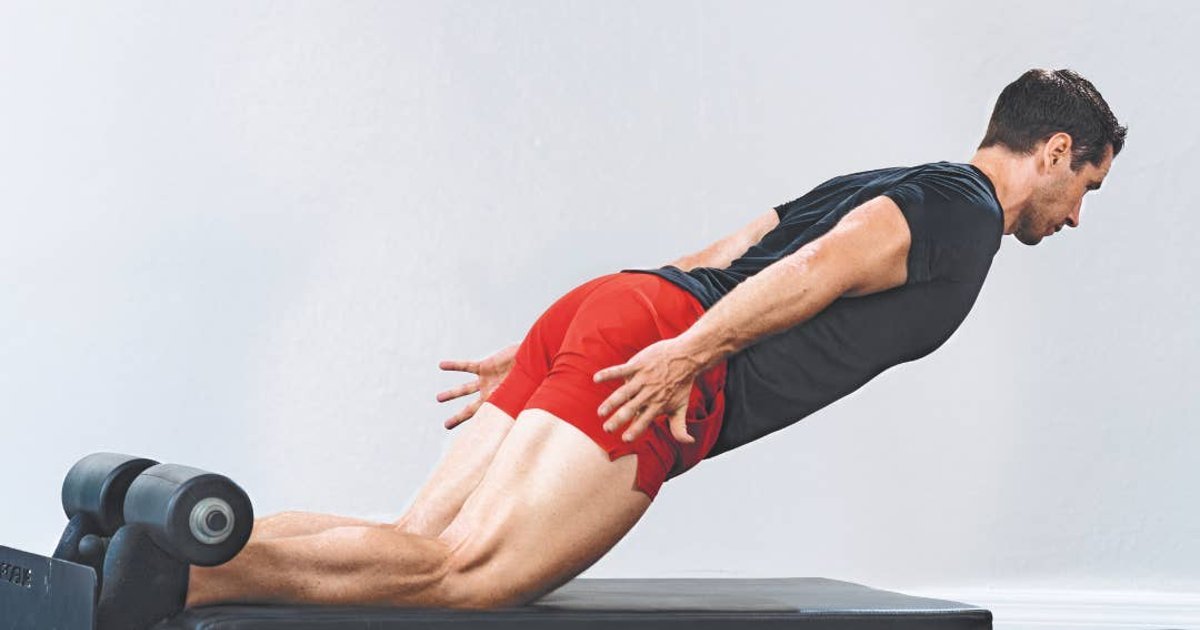
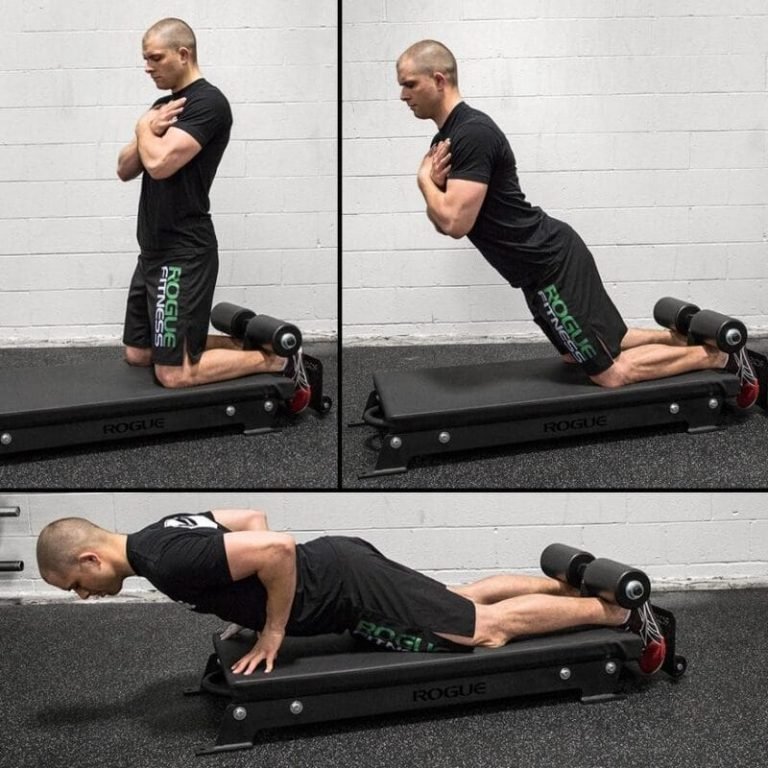
A Nordic curl is a controlled fight against gravity. Kneel on a pad, fix the heels, keep the hips fairly straight and allow the knees to open as the trunk leans forward. The hamstrings attempt to resist that descent. Their job is not identical to a Romanian deadlift, where most visible movement occurs at the hips while the knees are held in a relatively constant position. Nordics impose a demanding knee-flexion challenge, particularly during lowering.
That difference explains why a lifter with an impressive deadlift can struggle to perform a few clean bodyweight Nordic repetitions. As the shoulders travel farther from the knees, the effective lever becomes more challenging. Near the bottom, many people cannot produce enough force to prevent the body from dropping. Catching yourself with your hands is not necessarily a failed rep. A deliberate eccentric followed by a hand-assisted return is a useful early variation.
The hamstrings are a collection of muscles rather than a single cable. Several cross both hip and knee joints, and different tasks place them in different mechanical situations. A Nordic does not replace hip-extension exercises, nor should an athlete assume it trains every region of every hamstring muscle equally. A useful program can combine one knee-dominant movement with a hinge without claiming they are interchangeable.
The most important baseline is repeatability. Pad the knees, hold the heels securely, position the shins consistently and choose how much controlled lowering qualifies as a rep. Record whether you used assistance or caught yourself with the hands. Without those details, six repetitions one day and four on another may reflect different setup conditions, not a true loss of strength.
Range of motion matters only when it is earned. A short, slow descent that genuinely loads the hamstrings can be a better training repetition than a nearly horizontal collapse. Likewise, using assistance to gain more controlled range is legitimate. Progress should mean improved performance at a comparable setup and effort, not simply a more dramatic-looking fall.
What the 42-person comparison actually measured
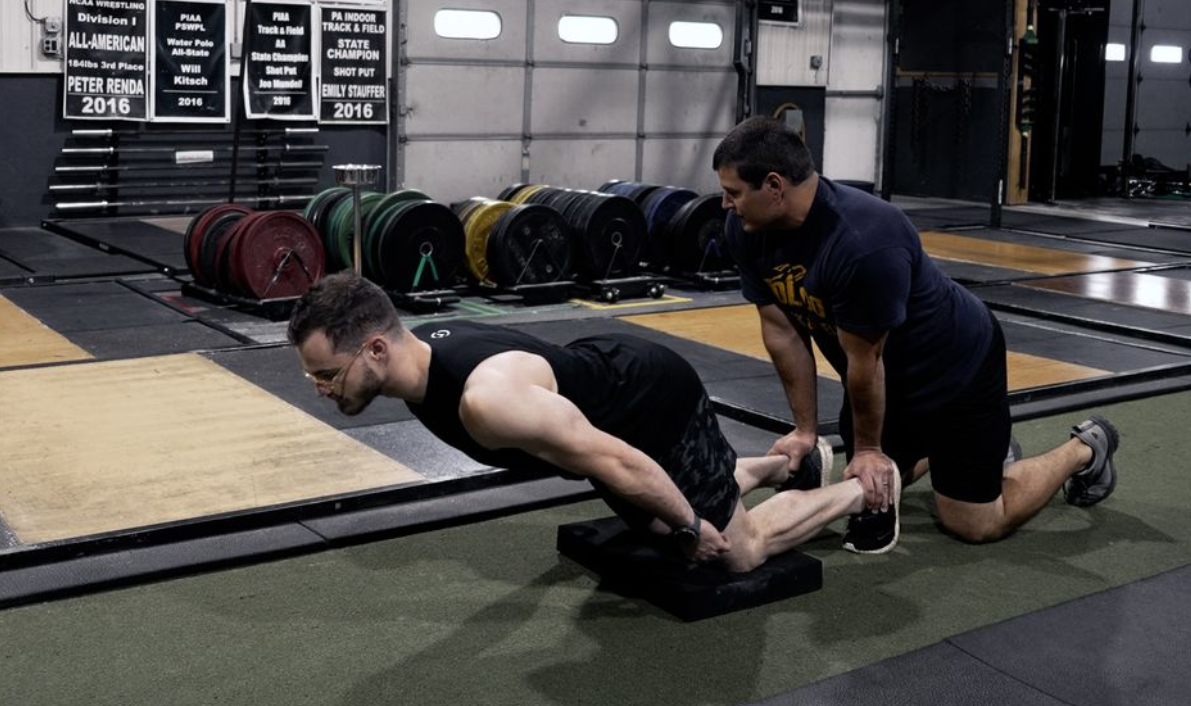
A 2026 exercise experiment compared three Nordic setups within the same group of 42 participants. After two familiarization sessions, they performed a partner-held version, a rigid heel-fixation version and a training-device version combining rigid heel fixation with standardized kneeling height and knee positioning. The investigators measured the point at which the lowering phase could no longer be maintained and recorded electrical activity over the biceps femoris and semitendinosus.
The device condition produced a mean break-point angle of 56.0 degrees, compared with 74.8 degrees under partner fixation and 74.3 degrees with rigid heel fixation. The comparisons were statistically significant under the reported analysis. The device condition also yielded higher measures of hamstring surface electromyography, or EMG. Within that measurement system, the smaller break-point angle represented a more extended knee position before the participant lost control.
Those details are interesting because the exercise name stayed the same while the measured performance changed. But it would be a mistake to translate the numbers directly into a mandatory target for all lifters. Different positioning and changes in the orientation of the thigh and shin accompanied the device condition. The three arrangements were not simply identical exercises with three cosmetic styles of ankle support.
EMG is a measure of recorded electrical activity during a task. It is not a direct measurement of muscle growth or a guaranteed predictor of long-term strength adaptation. This experiment did not follow three groups through months of training and did not measure future hamstring injuries. It therefore cannot prove that buying a specialized Nordic bench produces more hypertrophy or prevents more strains than an effective partner-assisted program.
The practical inference is more modest and useful: the conditions of the repetition matter. Fixation, knee height and the position of the ankle can change how the movement unfolds. When comparing your own sessions, keep those conditions stable and record deliberate changes. A repeatable anchor makes testing clearer, but a beginner can still perform productive assisted eccentrics with safe partner support.
Another small investigation that varied ankle position observed changes in some hamstring EMG measurements without finding a significant break-point-angle difference across its specific conditions. The studies are not interchangeable, but together they show why it is risky to reduce Nordic technique to one supposedly magic foot cue. Interpret exercise findings in the context of the exact setup and outcomes measured.
Partner, rigid anchor or specialist station: set up the feet
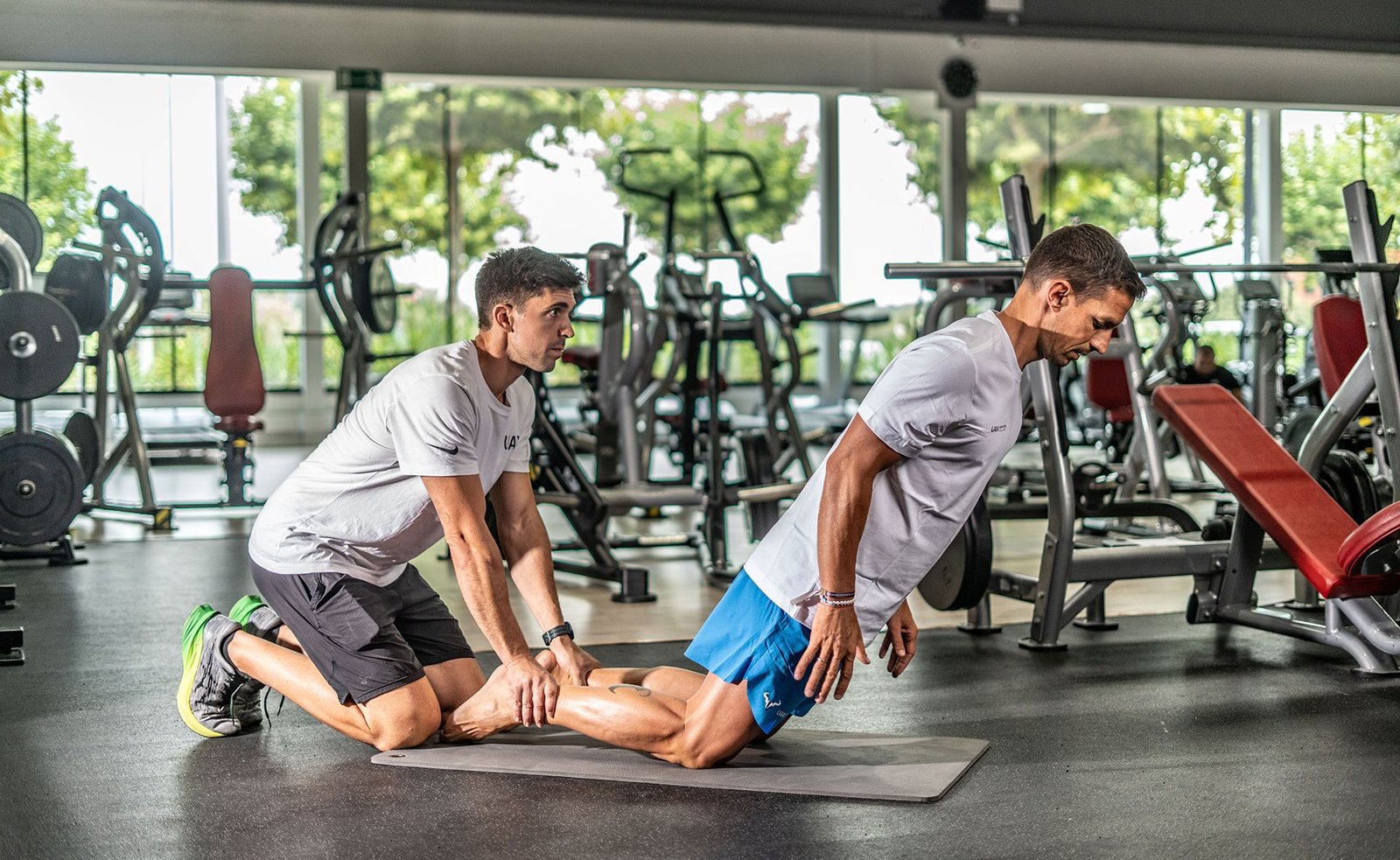
The weakest link in a Nordic rep is often not the muscle but the way the heels are restrained. With a partner, agree beforehand that both ankles will stay firmly stabilized while you lower. A partner should not unexpectedly change grip or release one side. Kneel on a pad that supports the knees without shifting, and leave enough clear space ahead to catch the body with the hands when the hamstrings stop controlling the descent.
On a purpose-built Nordic bench, check that the heel rollers and knee support match the intended exercise and that adjustments are locked. A rack-mounted roller is another possibility, but compatibility with a particular upright, mounting hole or bench cannot be assumed merely because the hardware looks similar. Follow the actual equipment instructions and inspect the load-bearing restraint before starting each set.
A stable ankle contact is necessary without crushing the heel or creating painful pressure over the joint. Also notice where the knees sit relative to the anchored ankles. Changing the knee-pad height or foot position modifies leverage and can change the task even if the displayed repetitions remain the same. Pick a repeatable arrangement and write down any adjustment that affects it.
Useful training notes include the anchor used, pad position, foot orientation, whether a band was attached, the tempo and the position at which your hands took over. A line such as ‘two sets of four; same roller setting; three-second eccentrics; hand catch near the end’ tells you far more than ‘Nordic curls: four reps.’ Photos of your own station can help reproduce setup but do not replace a physical safety check.
If your options are a secure partner or an unstable improvised restraint, choose the partner. An unsecured barbell, movable bench or untested strap can turn a normal loss of eccentric control into a dangerous fall. If no safe anchor is available, a seated or lying leg-curl machine remains a sensible way to train knee flexion until you have suitable support.

Equipment Worth Exploring
Explore equipment, accessories and gear from our carefully selected range.
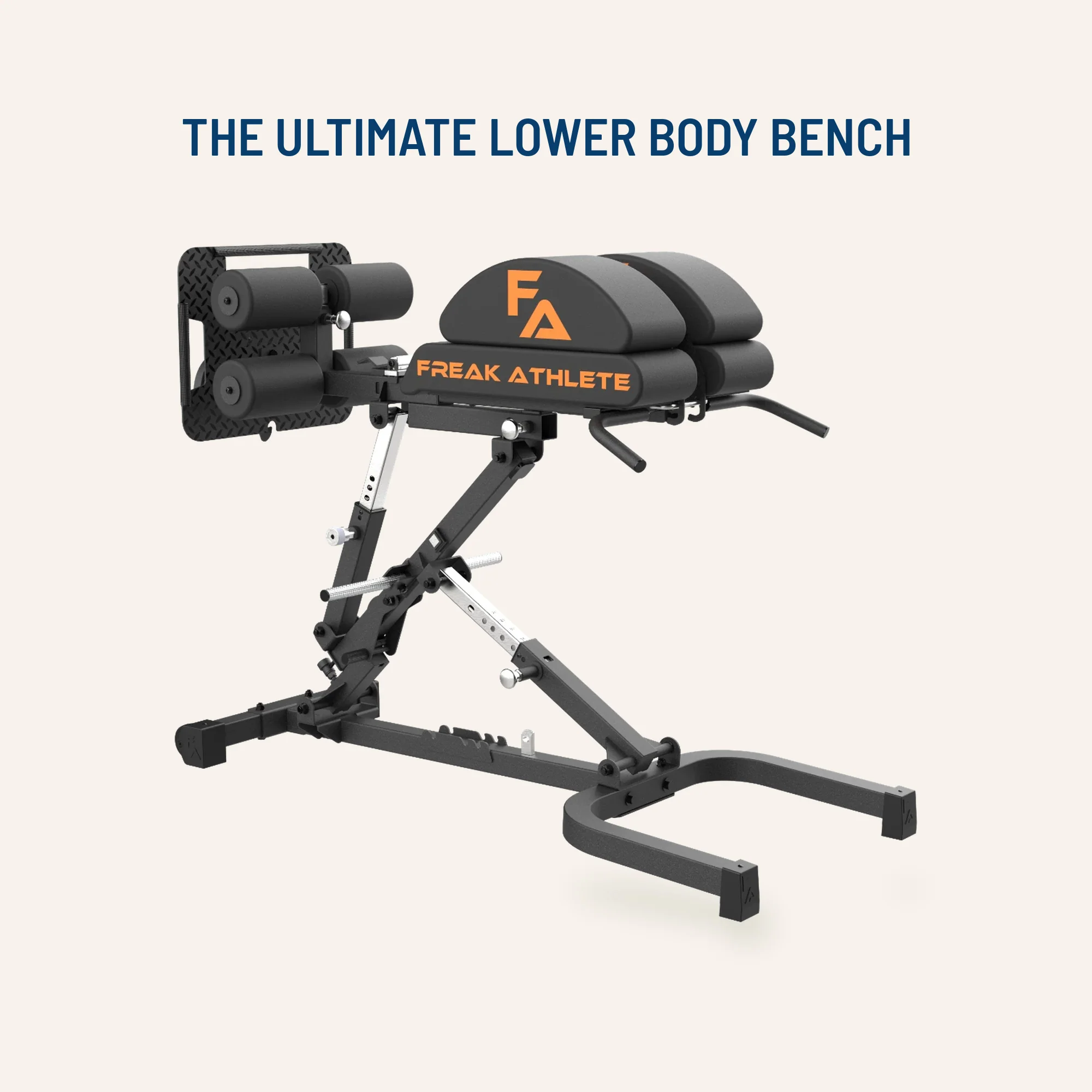


Glute Ham Developer GHD-820
Adjustable glute-ham developer with contoured pads and a fold-out knee support.


Leg Extension/Curl BCO-780
Leg extension and lying leg curl combo with plate loading, band pegs and a cable-loading option.

Seated Leg Combo BCO-680
Adjustable seated leg extension and leg curl machine with band pegs for added resistance.

45° Hyperextension HPX-650
Angled back-extension trainer with split padding, a ribbed footplate and resistance-band pegs.


Studio Glute Drive
Plate-loaded hip-thrust machine with supported back pad and adjustable foot platform.
Build the rep before chasing a full-range Nordic
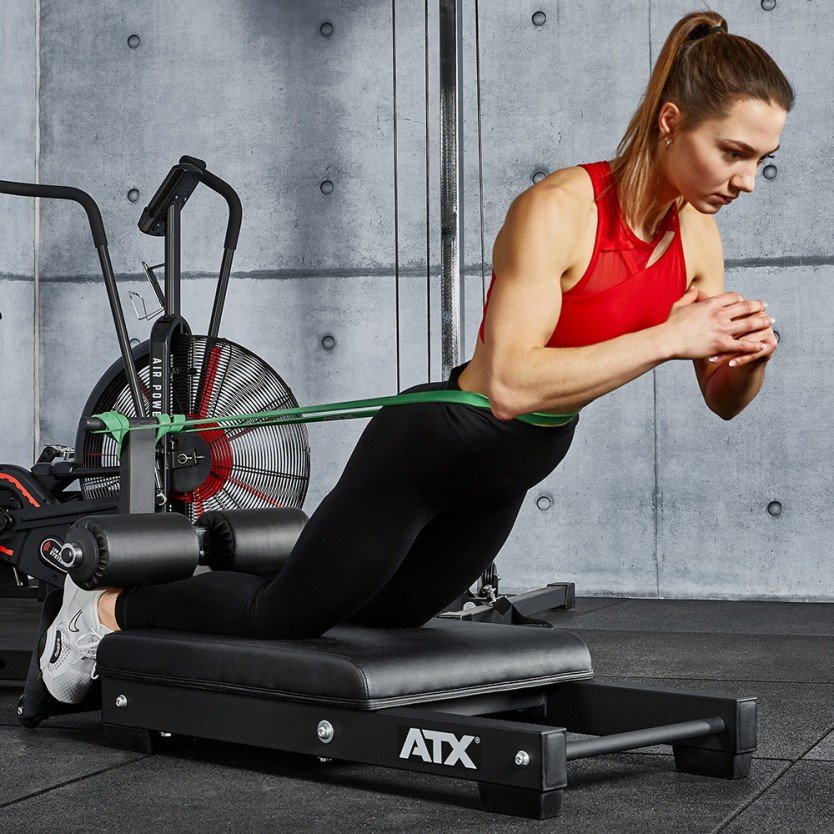
For most lifters, the difficulty increases faster than expected as the torso approaches the floor. Begin tall on the knees, lightly engage the glutes, brace the trunk and keep the arms ready to catch the descent. Let the shoulders move forward while the knees open. Do not simply fold at the waist to shorten the lever whenever the hamstrings feel overloaded; that changes the exercise rather than improving it.
Try to resist the fall for two to four controlled seconds, but stop counting tempo when control disappears. A real three-second eccentric is more useful than prescribing five seconds before dropping uncontrollably through half the range. When the hamstrings can no longer resist, use the hands to absorb the landing and help return to a kneeling start. Full unassisted concentric returns require a much higher level of strength.
A securely attached resistance band can assist the lowering and return. Its force depends on the attachment height and how far it stretches, so note the setup rather than claiming one color of band has a standard resistance for every gym. A stable partial-range variation can also make sense. The goal is a challenging but repeatable dose of work, not an arbitrary demonstration that demands more force than you can control.
Progress in stages. First reduce sudden dropping. Next extend the clean descending range while keeping the same assistance and tempo. Then add a small number of repetitions or modestly reduce the band support. Avoid removing help, doubling the volume and demanding a full-range return all at once. A small, well-tolerated progression makes the results easier to interpret.
Your body does not need to look like a perfect ruler at every moment, but major hip folding and twisting are clues that the intended loading has changed. Work within a pain-free, controlled range. If a partner, knee pad or roller changes the feeling dramatically, treat the adjustment as a new variation and progress from a manageable starting point.
Fit Nordics around deadlifts, leg curls and sprinting
Nordic curls are a high-effort knee-flexion exercise, and the soreness from new eccentric work can be substantial. Their placement in a training week should respect squats, Romanian deadlifts, other leg curls and speed sessions. A lifter already training hard does not need to add a second hamstring workout’s worth of Nordics. A few clean sets can be a more defensible introduction than aggressively chasing a large volume target.
Consider a lower-body program with two weekly sessions. One day might prioritize squats or deadlifts and then include a small dose of assisted Nordic eccentrics, provided you can still perform them with control. Another day can use Romanian deadlifts and a seated or lying leg curl for complementary work. The precise ordering depends on whether the goal is lifting performance, sprinting, recovery or practicing the Nordic itself.
Longer training studies suggest benefits from progressive exposure, but their prescriptions differ substantially. A review of Nordic programs found wide variation in repetitions, frequency and total duration. A smaller randomized six-week experiment of recreationally active adults introduced a low-volume Nordic program once weekly before moving to twice weekly. Neither result means every lifter must copy one exact prescription, nor does a small trial establish a universal optimal dose.
Those who sprint hard should consider the cost of residual fatigue. Heavy eccentrics placed just before maximal-speed running may compromise the quality of that field session. For lifters, hamstring soreness that makes the next hinge session miserable is a sign the new dose deserves adjustment. Recovery is part of an effective progression, not proof that the muscles were trained insufficiently.
For a person recovering from a hamstring injury, Nordic training is not an independent return-to-sport test. Exercise progression should follow pain-free movement, appropriate strength recovery and professional rehabilitation guidance. For healthy lifters, it is entirely reasonable to develop knee-flexion strength through machine leg curls and add Nordics only when the setup and recovery budget make sense.

Leg Day Shirts & Workout Gear
Leg-day gym shirts and workout gear for lifters who never skip squats, lunges and lower-body punishment.

My Leg Hurts Leg Day Sweater & Squat Meme Lovers T-Shirt
Keep things casual with a little “My Leg Hurts” attitude.

3 Plates Squat Club : Essential Meme & Leg Day T-Shirt
Make gym days more fun with “3 Plates Squat Club” style.

Deadlift Lovers Grim Reaper Skeleton Decal Water Sticker
Bring “Deadlift Lovers” attitude to your water bottle or laptop.

Squatzilla Meme Leg Day & Squat Fans Hooded Hoodie
Show off your leg-day humor in a laid-back “Squatzilla” hoodie.

Booty Building Mode Leg Day & Squat Gains Tank Top
Bring “Booty Building Mode” humor to your next lifting session.

Never Skip Legday – Chicken Legs Meme , , & Leg Day T-Shirt
Heavy lifts, good laughs, and a little “Never Skip Legday” energy.

Quadzilla Massive Quads Leg Day Squatting Meme Tank Top
Train hard, laugh a little, and rep “Quadzilla”.

Zombie Deadlift Deadlift Lovers & Leg Day Meme Hooded Hoodie
Make your off-duty look more fun with “Zombie Deadlift”.

Leg Day Squats Deadlifts Decal Meme Vinyl Sticker
Give your everyday gear a playful “Leg Day” twist.

Squats Leg Day Heavy Weights Meme – Essential Top T-Shirt
Bring “Squats Leg Day Heavy Weights” humor to your next gym day.
A four-week plan and the mistakes worth correcting
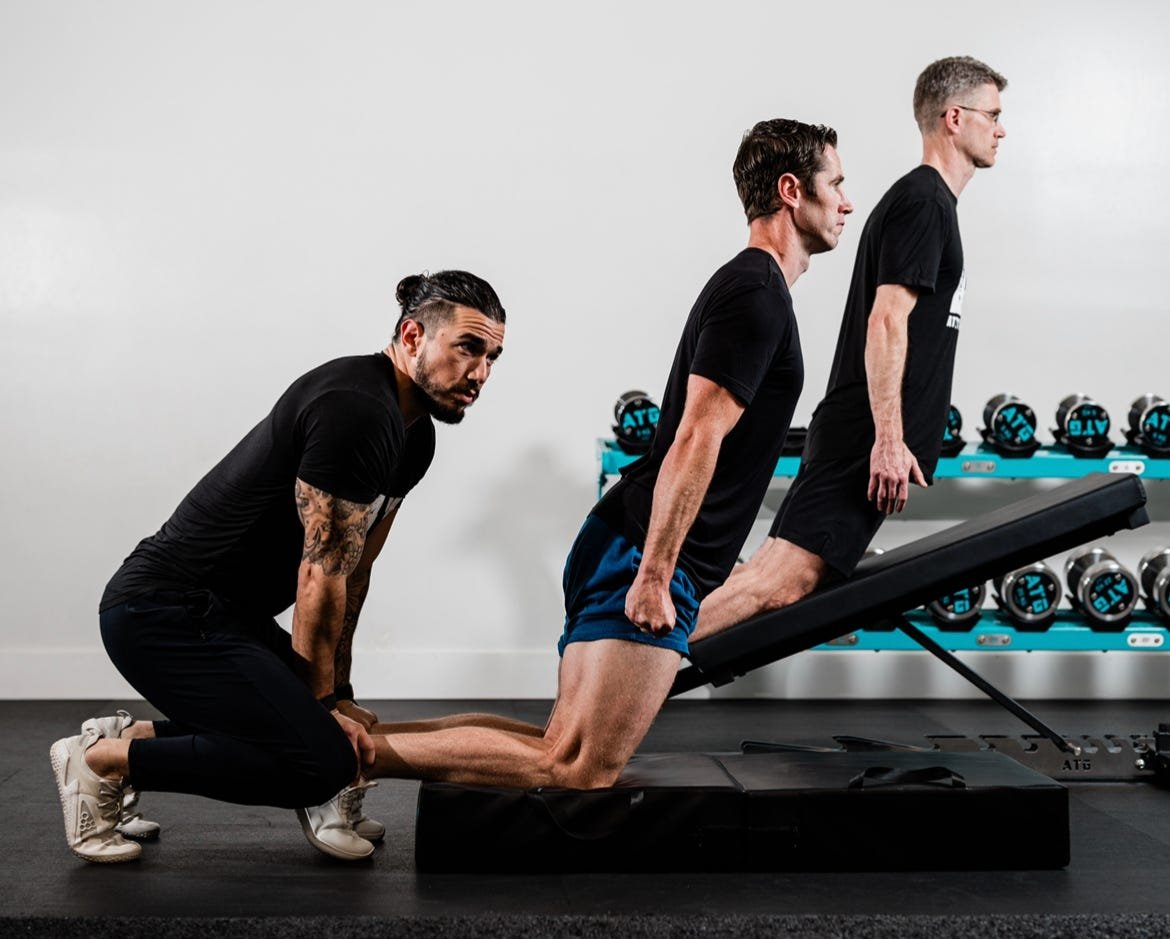
A conservative four-week entry plan is more useful than telling every lifter to attempt maximal full-range repetitions immediately. This is a practical coaching example rather than a dose tested in the 42-participant biomechanics experiment. Keep the same ankle support, padding and assistance within each comparison, rest sufficiently between efforts and repeat a clean technique standard before increasing difficulty.
- Week 1: One session of two sets of three controlled assisted eccentrics. Keep the lowering range comfortable and record next-day soreness.
- Week 2: One or two sessions of two sets of three or four reps, if the previous dose was tolerated without lasting excessive soreness.
- Week 3: Two sessions of two sets of four, or hold volume constant and slightly extend the clean range.
- Week 4: Two sessions of two to three sets of four, or modestly reduce assistance without sacrificing control.
The weekly steps are optional ceilings, not demands. If the hamstrings remain sore, maintain or reduce the volume. If a set produces sharp pain, a knee or ankle problem, or a rapid uncontrolled fall, end the attempt and revisit the setup. A little delayed soreness can accompany new eccentric training; escalating pain or functional impairment should not be treated as a badge of progress.
Several errors can be spotted before a training block stalls. Loose fixation allows the feet to lift. A collapsing torso or large hip hinge shortens the lever and changes the movement. A violent hand catch suggests the lowering range exceeds current control. An assistance band can be so strong that almost no eccentric tension remains, or so weak that it does not prevent the uncontrolled portion of the descent.
Record the changes that actually influence a rep: heel restraint, knee-pad height, band level, range, time under control, hand catch and total clean repetitions. Two extra reps are meaningful only when the exercise conditions are comparable. A sturdy setup and consistent criteria make it possible to tell real progress from a technique change.
Nordic curls can complement hinges and leg curls without replacing them. Their strongest practical argument is the unusual knee-flexor challenge they provide at long lever lengths. Earn that challenge gradually and let the repetition quality, not an online clip or a particular brand of bench, guide the next step.