Advertising disclosure: This page includes affiliate product links that may earn us a commission, as well as products from our own store.
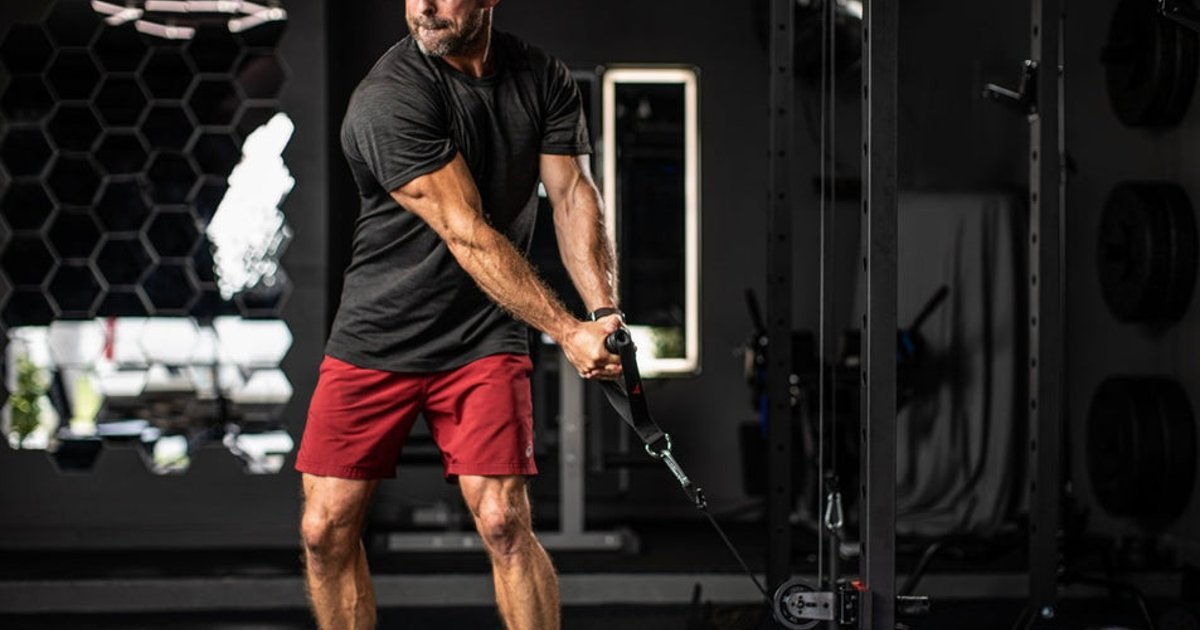
A cable woodchop can look like somebody swinging a handle from one hip toward the opposite shoulder. Done well, the low-to-high variation is much more deliberate: the pulley sets the line of resistance, your feet provide a base, and your ribs and hips turn together while your hands guide the handle along a diagonal. If the arms do all the moving, you have turned a rotational exercise into an awkward front raise. If the feet refuse to move while the trunk twists aggressively, the knees and lower back can take more of the turn than you intended.
This guide makes the setup repeatable. You will learn where to place the pulley and your feet, how to control the upward phase and the return, how the reverse chop differs from other cable chops, and how to add it to a training week without inventing a magic weight or rep prescription.
Set the low pulley, choose a handle and build your stance
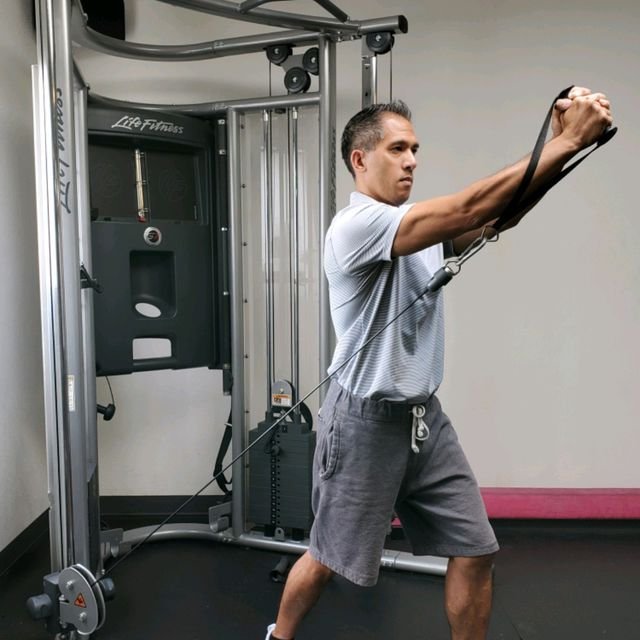
Put the adjustable pulley near its lowest usable position and attach a single D-handle or a rope that allows a secure two-handed grip. Check that the connection is fully closed and the cable can travel without scraping a rack upright, crossing your shoes or touching another attachment. Start with the lightest resistance that gives steady tension. A rope changes hand spacing and wrist orientation; a single handle keeps the hands together. Neither attachment automatically makes the movement more effective. Choose the one that lets you move smoothly without gripping painfully or bending your wrists.
Stand roughly side-on to the pulley, far enough away that the stack remains under control at the start and the cable is not slack. Place your feet around hip- to shoulder-width apart, knees unlocked, with your hands together outside the hip nearest the machine. The pulley should be to the side of your body, not directly behind you. If the handle is already pulling your shoulders around before you begin, step closer, reduce the load or alter your angle.
Your opening position can include a small athletic hip hinge and knee bend, but it is not a squat. Set your ribs over your pelvis, look across the space into which you will rotate and feel both feet contacting the floor. Test the exact diagonal without weight before your first loaded repetition. The practical check is simple: can you raise the handle and return it without the cable hitting the stack’s end stops or pulling you toward the machine?
For a rack-mounted pulley or a cable trainer with multiple anchor points, verify the anchor is designed for the load and the chosen direction of pull. Do not assume a high-only lat-pulldown point can reproduce a low cable chop. A fixed-height system may need a different exercise rather than an improvised unsafe redirect.
Drive the low-to-high diagonal with your hips and torso
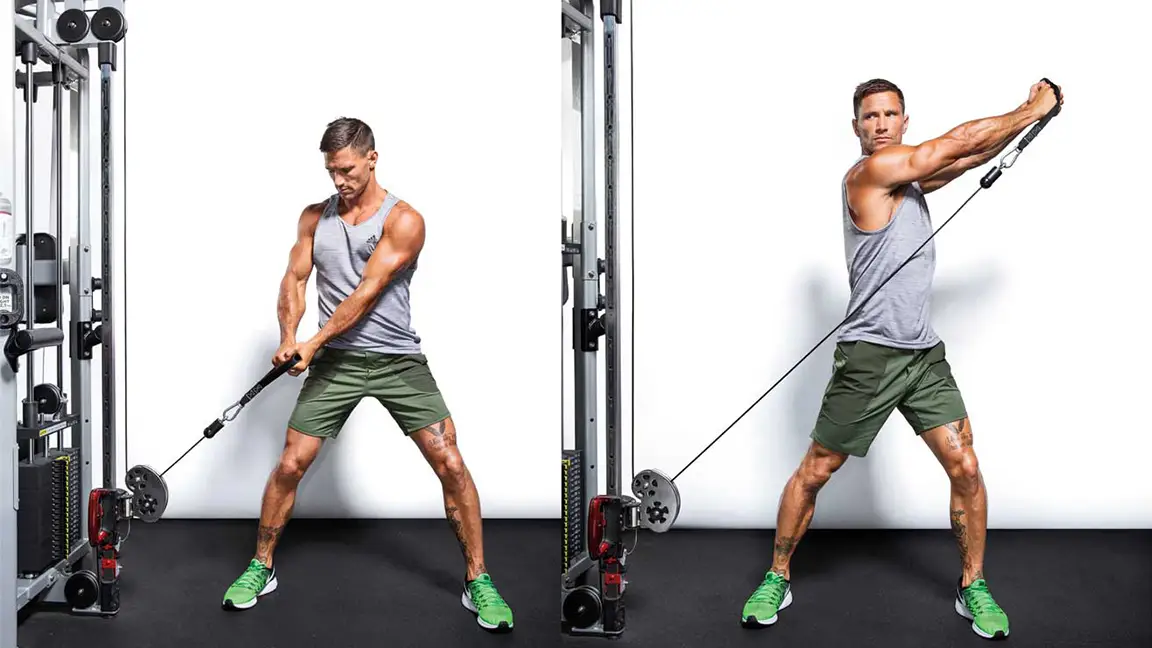
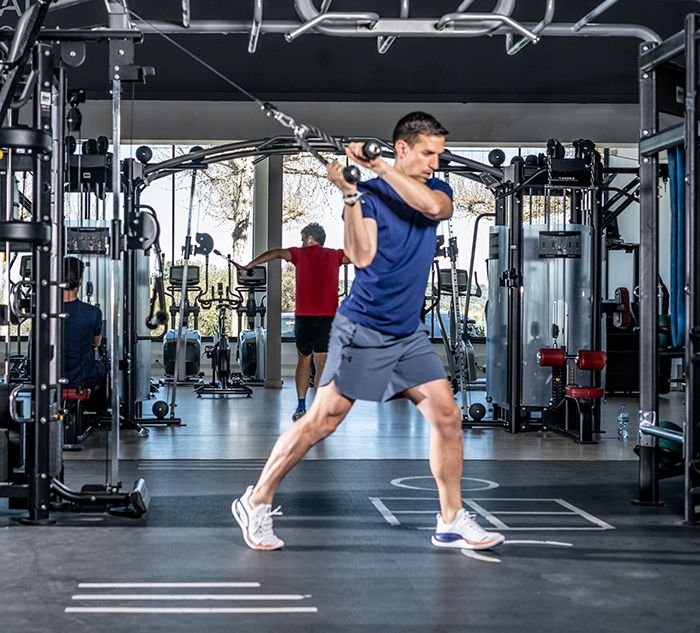
From that stable starting position, brace as you would for a controlled standing press. Begin turning away from the cable. Let the pelvis and rib cage rotate in the same broad direction while your hands travel diagonally from the cable-side hip toward a position in front of, or slightly above, the far shoulder. The exact finishing height depends on your shoulder comfort and the line of the machine. It is not necessary to reach as high as possible or to arch your lower back to finish.
Keep your elbows softly extended rather than rigidly locked or deliberately curled. The arms transmit force; they should not be the engine of the repetition. Imagine your sternum and belt buckle turning together. When your shoulders move but the hips stay frozen, you often see a sudden side bend, an exaggerated arm lift or a grimace through the lumbar area. Reduce resistance and use a smaller, coordinated arc before adding range.
A small heel pivot may make the turn more comfortable, especially with an athletic stance. Think about the knee following the direction of the foot instead of twisting a planted knee against the floor. Some controlled variations keep the feet almost stationary and limit the turn; others allow a modest pivot. Both can be useful if the motion is pain-free and the trunk remains organized. You do not need to spin the feet dramatically or chase maximum speed.
Finish for a brief moment with the shoulders level, the handle controlled, and your weight distributed through the stance rather than dumped onto one toe. If the handle cannot pause without a jerk, the stack is probably too heavy or your finish is too far outside the range you can control. That is your cue to adjust before another rep.

Equipment Worth Exploring
Explore equipment, accessories and gear from our carefully selected range.

VForce Wall Trainer
Space-saving wall-mounted functional trainer with pivoting cable arms and variable resistance ratios.

VForce 2IN1
Half rack and pivot-arm functional trainer with switchable 1:1 and 2:1 pulley ratios.

VForce 3IN1
All-in-one rack combining an adjustable Smith machine, functional trainer, and free-weight station.
VOLTRA
Compact digital cable trainer with smooth, adjustable resistance.

Go-Tone Pro
Portable digital cable trainer with up to 66 lb (30 kg) of adjustable resistance.


GymPin Ergo Handles
Pair of ergonomic cable handles shaped for comfortable triceps and pulling exercises.
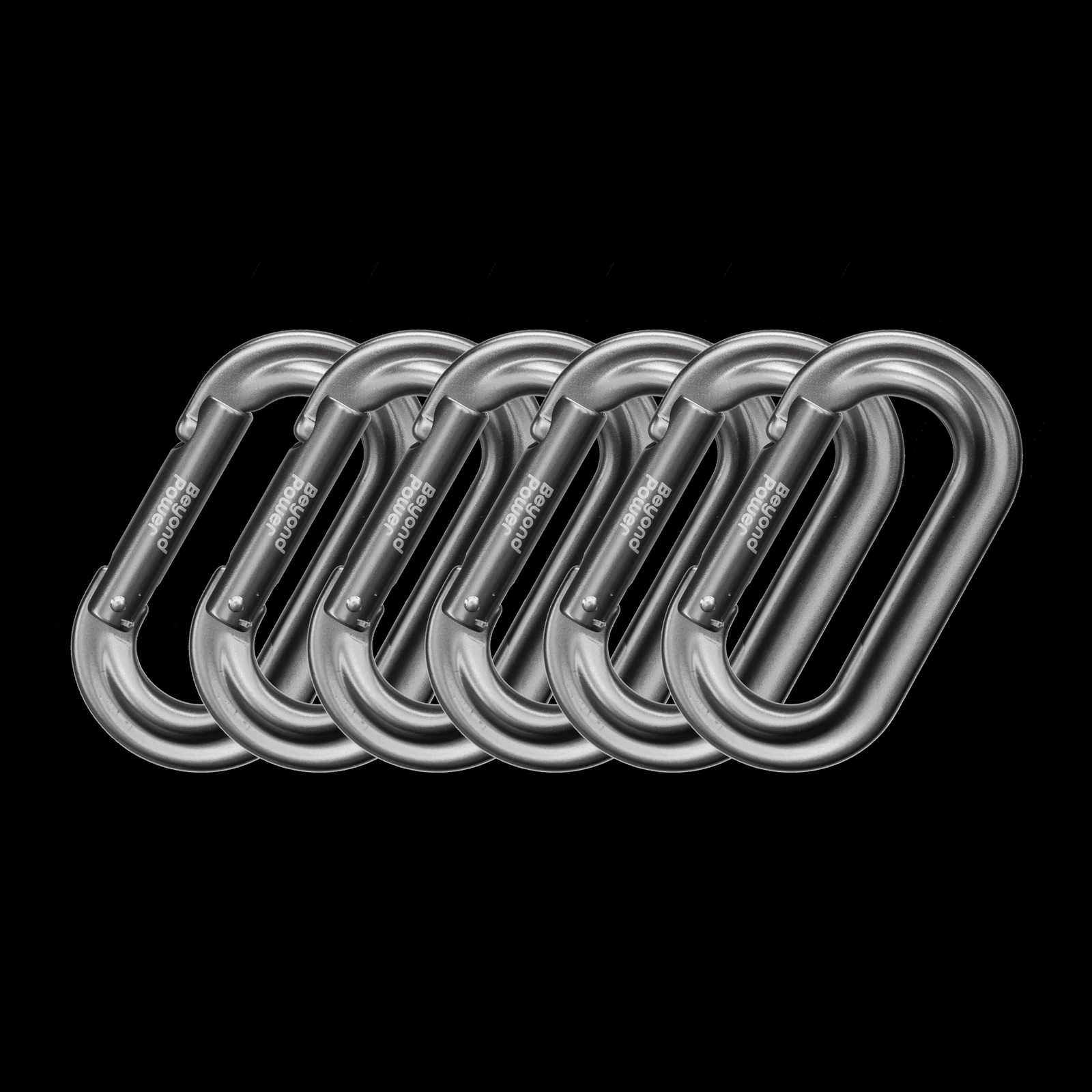
Premium Carabiner
Durable carabiner for connecting cable attachments and training accessories.
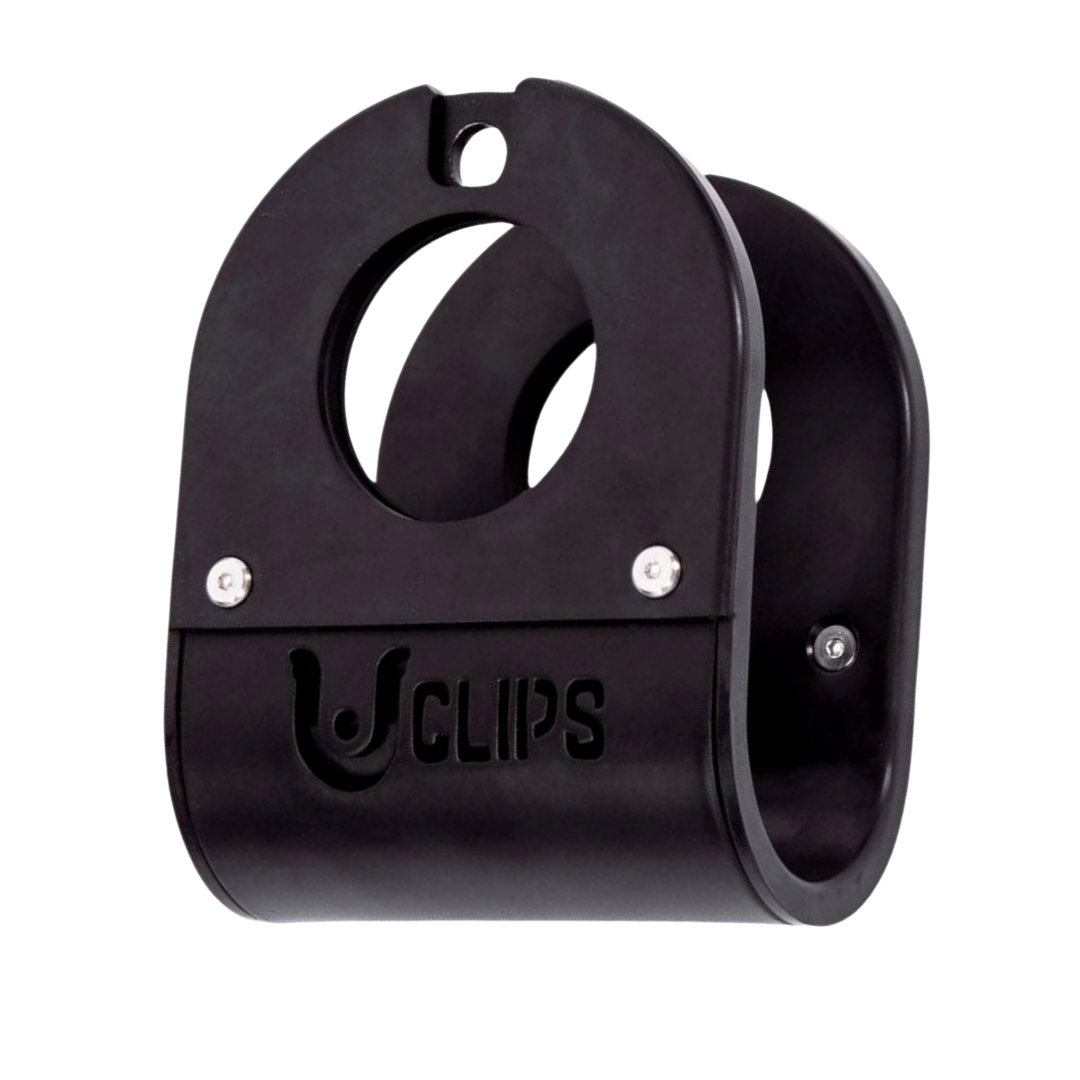
U Clips
Versatile gym clips for barbell, landmine, and attachment setups.
Own the return instead of letting the stack pull you back
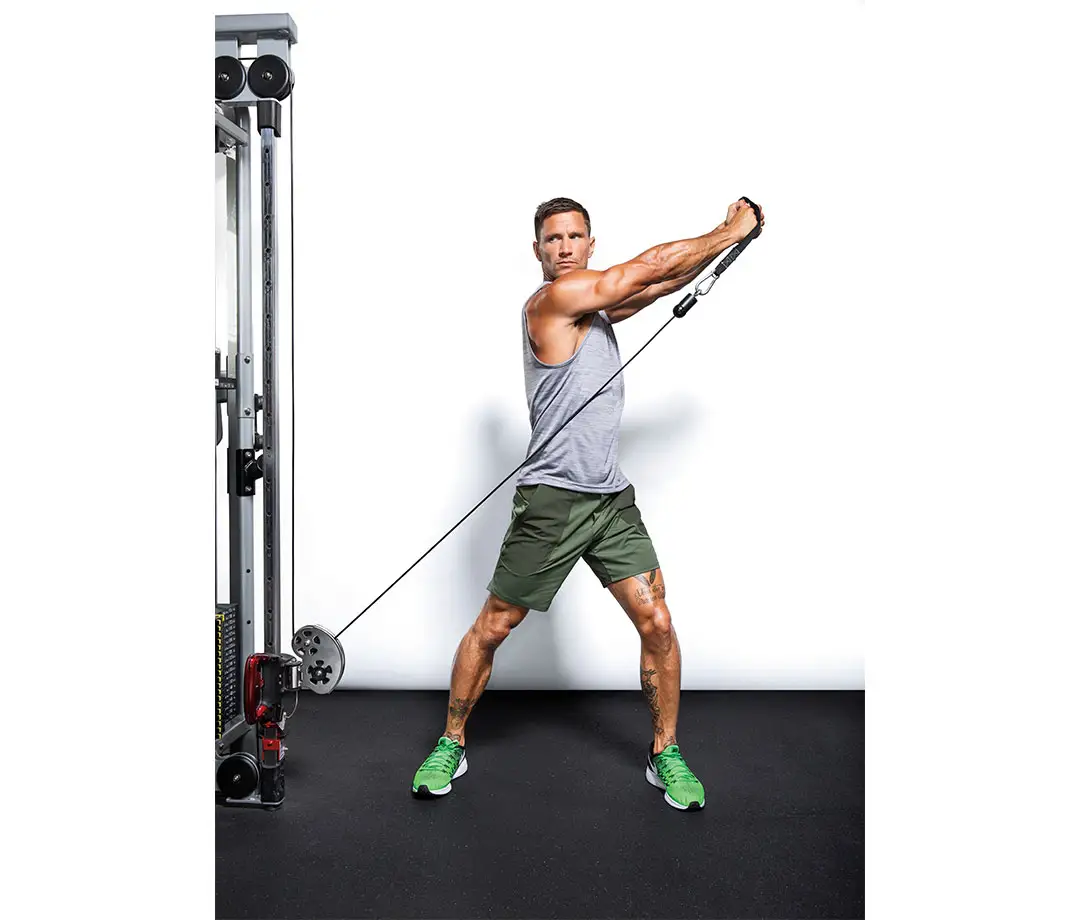
The lowering phase is a major part of the exercise, not a break between repetitions. Reverse along approximately the same diagonal, letting the shoulders and hips return together as the handle comes back toward the cable-side hip. The hands stay connected to the torso’s motion. Avoid snapping your arms back first, allowing the shoulders to tip toward the stack, or dropping into a deeper squat to make the last inches easier.
For general strength and control, begin with an upward phase of roughly one to two seconds and a return that takes two to three seconds. Those timings are practical coaching choices, not proven universal requirements. A deliberate return lets you see whether each side has the same reachable range and whether your feet are stable. Stop just before the weights crash together, reset your breathing, and repeat with the same path. There is no prize for keeping the stack suspended at the cost of posture.
Count a rep only when the handle follows the intended path, your trunk turns without violent side bending, your arms do not take over, and the return stays controlled. This is especially useful if you track progressive overload. A move from one weight setting to the next is not progress if the heavier version is all shoulder shrugging and momentum. Use a mirror or occasional side-on video to assess the cable angle, not to judge how theatrical the turn looks.
One side may initially feel less coordinated. Match the number of clean repetitions on both sides, begin on the side that feels less reliable, and give it exactly the same opportunity to learn the pattern. Training asymmetry is not automatically an injury or a diagnosis, but large differences in pain, range or stability justify backing off and getting individualized guidance.
Know when to choose low-to-high, high-to-low or horizontal chops
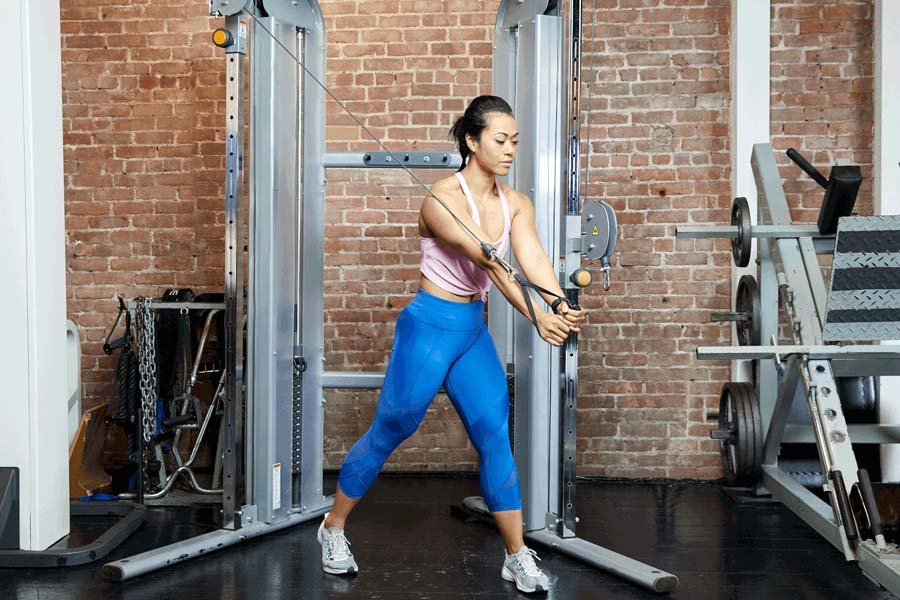
The cable height changes the line of resistance, the working arc and how the movement feels. With a low-to-high chop, the hands move upward as you turn away from a low anchor. With a high-to-low chop, you start near the opposite shoulder and guide the handle diagonally toward the lower hip or thigh. A horizontal cable rotation generally starts from a chest-height pulley and moves across the body at roughly the same elevation. These are different movement tasks, not interchangeable names for one exercise.
A low-to-high variation can be a useful way to train diagonal rotation and control while the hands rise. High-to-low chops can emphasize the opposite diagonal and feel more natural for certain throwing or striking patterns. A chest-height version makes it easier to observe whether the pelvis and ribs are turning together without the complication of raising or lowering the arms. None has a guaranteed superior effect on oblique hypertrophy, abdominal definition or sports performance for every lifter.
The first choice should be the pattern you can perform cleanly at an appropriate load. A cable chop is not an isolated oblique exercise: hips, trunk, shoulders and grip all contribute to the movement and stability. It also does not replace heavy compound lifting, an appropriately dosed anti-rotation exercise or the basic nutrition needed for visible abs. Use the variation to address a training function rather than promising it will remove fat from your sides.
If you alternate directions in one workout, treat them as separate exercises with their own loads and rep standards. A high-to-low chop may feel stronger or weaker even on the same machine because the joint positions and cable leverage have changed. Record the pulley position, handle, stance and direction so you can compare future sessions accurately.
Fix common mistakes and pick a variation you can control
The handle rises but the chest does not turn: you are probably lifting with your shoulders and arms. Practice a few unloaded reps with hands held together in front of the sternum, then reattach a light cable. Lead with a coordinated trunk turn and let the hands follow.
The finish becomes a backward lean: reduce the high target and resist the urge to flare the ribs. A diagonal finish near shoulder level is fine if a higher finish demands lumbar extension. You should not need to throw the hips forward to complete the repetition.
The planted knee twists: soften the knees and allow a controlled foot pivot when appropriate, or shorten the range until the whole-body turn is comfortable. A wider stance is not automatically safer if it pins the feet in place.
The stack jerks or the cable goes slack: the start position may be too close or too far away, the selected weight may be too high, or the cable may be contacting the frame. Stop and correct the mechanical setup rather than accelerating harder through the problem.
You feel sharp discomfort rather than normal effort: end the set. Reduce load and movement range if a pain-free pattern is available; seek individual evaluation for persistent or significant symptoms. Training through a sudden twisting pain is not a way to toughen the core.
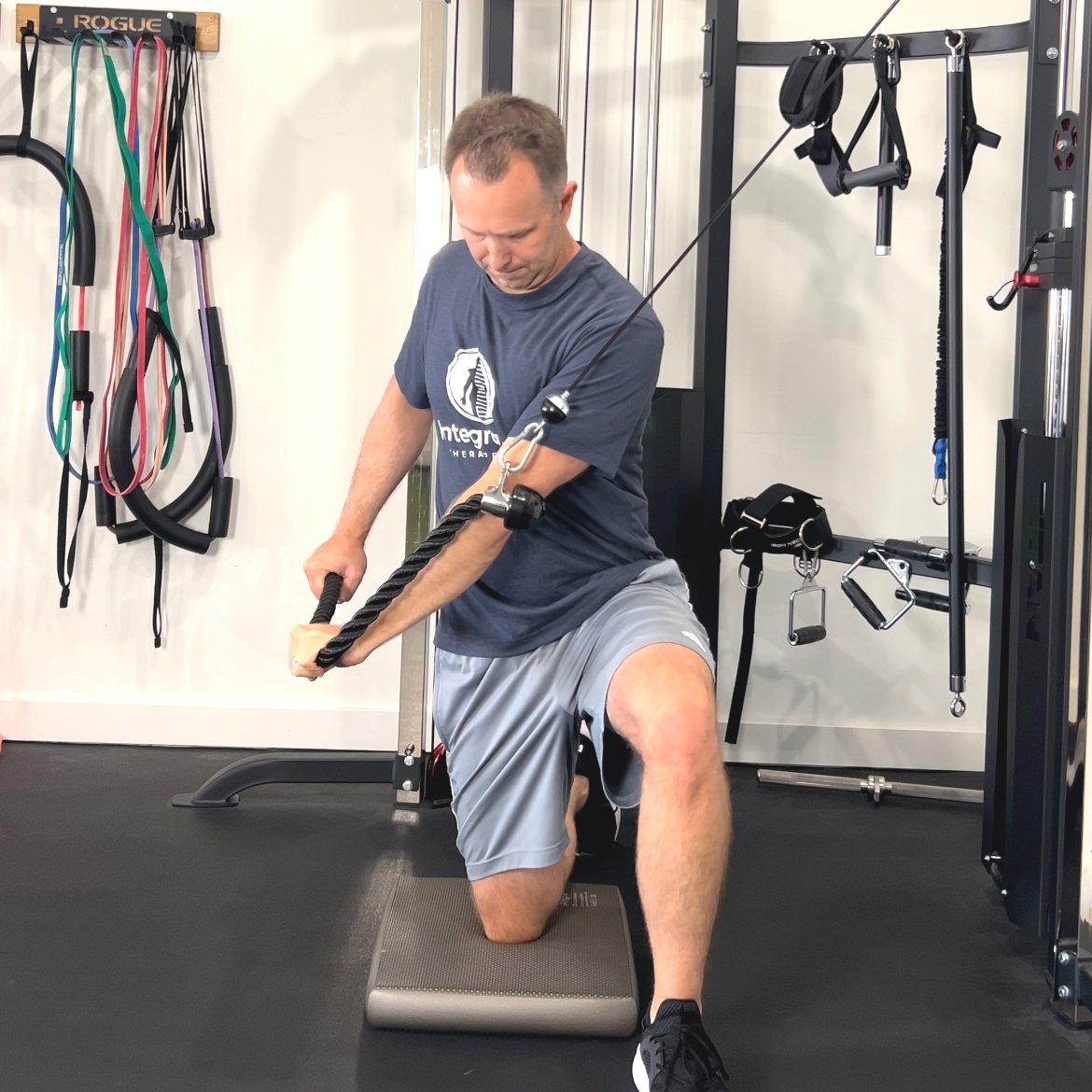
For variety, a half-kneeling cable chop can make the stance more constrained and let you notice rib and pelvis movement. The high-to-low half-kneeling photograph illustrates that alternative direction, not the main standing low-to-high technique. A tall-kneeling variation removes some stepping and pivoting but may not suit everybody’s hips or knees. You can also start with a chest-height cable anti-rotation hold if turning under load feels difficult. Keep the goal of each variation explicit.
Program four weeks of clean rotational work
For most recreational lifters, two brief sessions per week are sufficient to learn the pattern and decide whether it deserves a permanent spot in a program. Place controlled chops after heavy squats, deadlifts and presses if you find that prior trunk fatigue makes bracing harder. If you are specifically training rotational speed, use lighter, crisp repetitions while fresh, but do not sacrifice control for a faster-looking rep.
Week 1: use two sets of eight smooth reps per side with a deliberately easy load. Keep the pulley at one exact setting, use the same handle and film one set if possible. Choose a finish height you can repeat without leaning.
Week 2: perform two sets of ten to twelve per side if every Week 1 rep looked alike. Maintain the same return tempo and stop one or two reps before the form becomes inconsistent. Do not increase the weight merely because the listed rep range is higher.
Week 3: try three sets of eight to ten per side at the existing load. The extra total volume should be manageable; if control declines on the third set, stay with two sets and build consistency instead.
Week 4: progress only one variable. Add the smallest machine increment and return to eight reps, add a few clean reps at the same load, or improve the smoothness of the return. Select whichever option lets you keep the hip-to-shoulder arc, balance and breathing unchanged.
Rest about 45 to 90 seconds between sides or rounds as needed to maintain technique. Keep a simple log with pulley height, attachment, stance, load, reps and perceived quality. Numbers from different cable machines may not compare directly because pulley ratios, friction and cable geometry vary. The goal is reproducible work on your actual setup, not a misleading universal strength benchmark.
One practical pairing is a heavy lower-body lift, followed by an anti-extension or anti-rotation movement, then the low-to-high chop for controlled diagonal work. If you already do demanding medicine-ball throws, rotational sport practice or frequent trunk work, you may need fewer chop sets, not more. Most people benefit from leaving the session with the trunk tired but not so fatigued that the next workout’s main lift suffers.
Reassess after four weeks: is the cable moving along a consistent path? Can you finish on both sides without an unwanted lean? Have the reps become smoother at the same resistance? Those changes are tangible progress, even if the weight stack has not moved. The best low-to-high cable woodchop is the one you can control from the first inch to the last and then repeat honestly next week.

Funny Gym Shirts & Workout Gear
Funny gym shirts, tanks, hoodies and workout gear for lifters who like training hard.

Vive La Resistance Bands Painting Meme – Resistance Ban Sticker
Bring “Vive La Resistance Bands” attitude to your water bottle or laptop.

Hybrid Athlete – Built Different Crewneck for HYROX, Cr T-Shirt
Show some gym-day personality with “Hybrid Athlete”.

Grip Strength Fanatic Meme Hoodie
Show off your lifting humor in a laid-back “Grip Strength Fanatic” hoodie.

Shirt – Pain Train Gains Bros Muscle Train & Meme T-Shirt
Rep “Pain Train Gains” humor in and out of the gym.

Repetition Stoic Sigma : Meme & Greek God T-Shirt
Rep “Repetition Stoic Sigma” humor in and out of the gym.

Doctor Discipline Tank
Train hard, laugh a little, and rep “Doctor Discipline Gym Villain”.

Strength Stoic Sigma Greek God Marble Sculpture – T-Shirt
Rep “Strength Stoic Sigma Greek God Marble” humor in and out of the gym.

Progressive Overload Milo Tee
Bring “Progressive Overload Milo Bull” humor to your next gym day.

Shirt – I'M Strong Barbell Heartbeat , Gymbro , & T-Shirt
Bring “I'm Strong Barbell Heartbeat” humor to your next gym day.