Should you stop every repetition halfway through a movement to keep a muscle under tension in its stretched position? Lengthened partials have become one of lifting’s most debated techniques, partly because they sound like a shortcut to more growth. A new October 2026 experiment offers a useful reality check: trained men grew their thigh muscles over eight weeks whether they used lengthened partial repetitions or full-range repetitions, without a clear advantage for either approach.
That does not make range of motion irrelevant. The more useful question is which part of a movement challenges the target muscle, what adaptation you want, and how you can train that position consistently. This distinction matters for squats, leg presses, curls, rows and many other exercises. It also matters when interpreting research: a shortened repetition is not one standardized technique, and the same joint angle can produce different resistance depending on the equipment.
What the October 2026 experiment actually tested
The new research included two separate experiments, not one giant training trial. In an acute crossover experiment, eight resistance-trained men performed leg-extension sessions using lengthened partial and full ranges of motion. Muscle biopsies taken before exercise and at several points over the next day tracked molecular responses. In a second experiment, 16 men with substantial lifting experience trained their lower bodies twice weekly for eight weeks. Each participant trained one leg with full-range repetitions and the other with lengthened partial repetitions.
The chronic program used three familiar exercises: leg press, leg extension and lying leg curl. That matters because the comparison was not limited to a single-joint exercise. The primary muscle-size outcome was cross-sectional area of the vastus lateralis, one of the quadriceps muscles, assessed with MRI across five slices of the thigh. Muscle tissue was also examined for changes in fiber size and several cellular measures.
Comparing limbs within the same participant controls some differences between people. But the eight-week intervention still involved only 16 men, and the main imaging outcome concerned one thigh muscle. It cannot establish that every partial-rep variation works equally well for every muscle, exercise, age group or training goal. Nor does it establish that either method is ideal compared with every other sensible programming option.
Practical reading: this is evidence about a specific comparison in trained men, not permission to replace every full repetition with an arbitrary half repetition. The location of the partial range, the exercise setup and the outcome being measured all matter.
The MRI result: growth happened, but neither method clearly won
Across the eight-week intervention, vastus lateralis cross-sectional area increased. The reported mean change was approximately 9.3 square centimeters across training conditions, with a confidence interval consistent with a positive overall change. Crucially, the difference between lengthened partials and full repetitions was not statistically clear: the estimated between-method difference was about minus 1.4 square centimeters, with a confidence interval stretching from minus 6.1 to plus 3.8 square centimeters.
That distinction is easy to miss. A non-significant difference does not prove the methods are identical. A small study may lack the precision to detect modest effects. What we can say is that this experiment did not demonstrate superior thigh growth from lengthened partials over eight weeks. The estimate leaves uncertainty about smaller differences that a larger or longer trial might detect.
The biopsy data point in a similar direction. The acute experiment detected changes over time in molecular signaling associated with training, but few convincing interactions showing that one repetition style created a distinctly superior response. The longer experiment also did not identify clear differences in muscle-fiber cross-sectional area, myonuclear measures, satellite cells or total RNA content. None of these markers should be treated as a stand-alone scoreboard for future hypertrophy.
For lifters, the takeaway is reassuring rather than sensational. You do not need to abandon well-executed full repetitions because a new technique is fashionable. Nor must you dismiss lengthened partials as useless: the participants using them still trained and adapted. Consistent hard work in a suitable range remains more important than choosing a technique because it sounds advanced.

Equipment Worth Exploring
Explore equipment, accessories and gear from our carefully selected range.

HUSLA Leg Extension Pad
Pad attachment designed to increase usable range of motion on compatible leg-extension machines.

GymPin Squat Wedges
Non-slip 15-degree squat wedges help elevate the heels for deeper quad-focused squats.


Safety Squat Handles
Barbell squat handles that reduce shoulder positioning demands during high-bar squats.


Why the stretched portion of a lift attracts so much attention
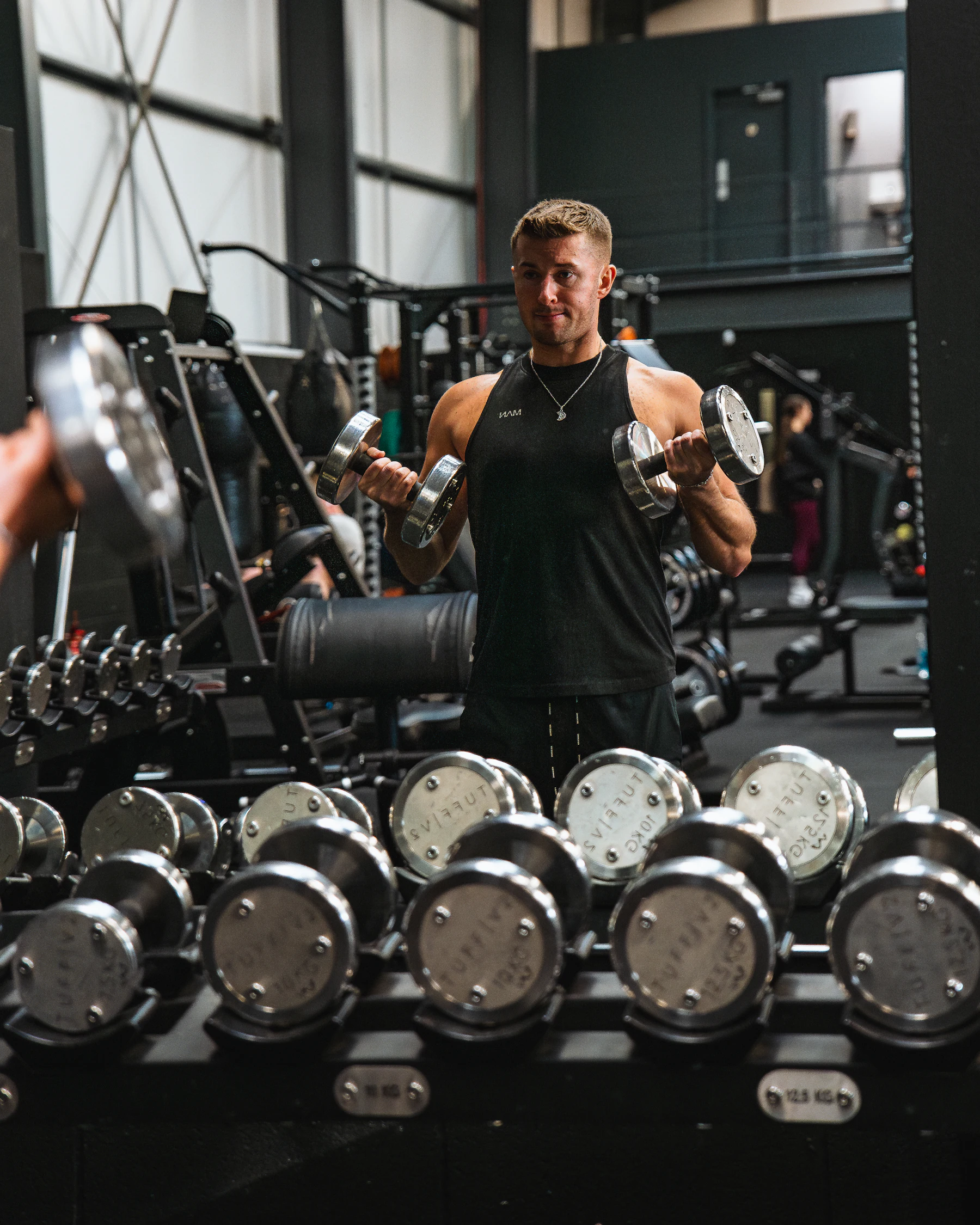
A muscle can produce force at many lengths, but the tension it experiences changes with joint position, exercise geometry and external resistance. A lengthened partial deliberately concentrates work near a position where the target muscle is relatively stretched. In a dumbbell curl, that usually means the lower portion of the movement; in a leg extension, the interpretation depends on knee angle and machine setup. Simply moving a weight through the bottom half of any exercise does not guarantee that the intended muscle experiences its highest useful tension there.
Earlier experiments and evidence reviews have found that emphasizing longer muscle lengths can be productive for hypertrophy. A 2025 within-person upper-body trial followed 30 resistance-trained participants for eight weeks, comparing lengthened partials with full-range work. Both approaches produced broadly similar improvements in the measured arm-muscle outcomes. A separate 2026 knee-extension experiment found that lengthened partial training with a lighter relative load produced muscle-thickness gains comparable to heavier full-range training at the measured locations.
These findings challenge the simplistic belief that the greatest possible joint excursion must always outperform a smaller excursion. But they also challenge the opposite slogan: that the stretched half is automatically superior. The more defensible interpretation is that training at useful long muscle lengths matters, while the best way to reach and load those lengths can vary.
Do not confuse a challenging stretch with pain. Joint irritation, uncontrolled bouncing and forcing a position beyond your available mobility are not requirements for growth. The goal is repeatable muscular loading with stable technique, not chasing the deepest imaginable position on every repetition.
Why full-range repetitions still deserve a place in your program
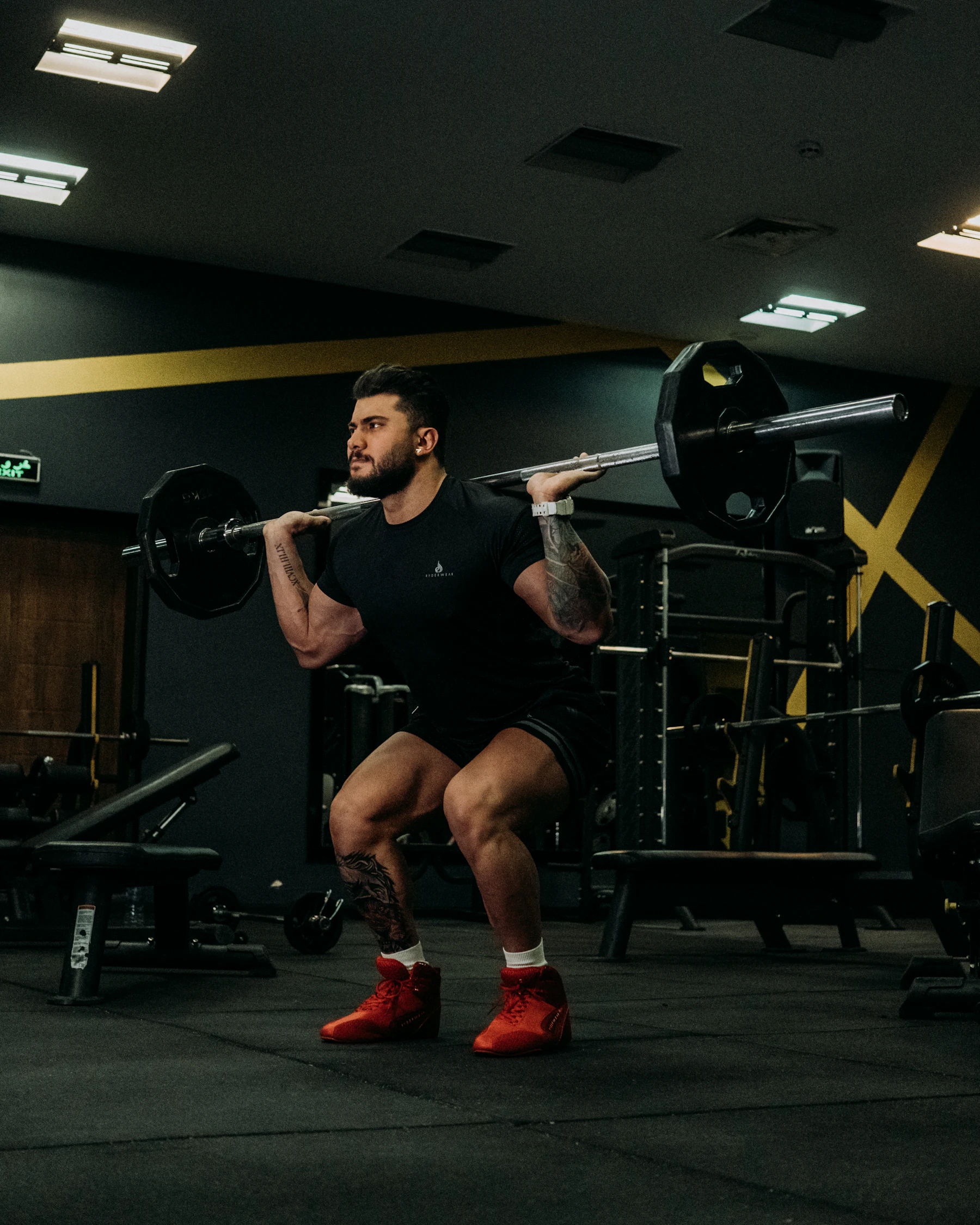
Full-range training develops the ability to control force across more of an exercise’s available movement. That is useful when your goal includes strength through a specific lift, technical consistency, coordination or simply being capable across the positions you regularly use. Reviews of range-of-motion training generally find small advantages for fuller ranges across several outcomes, although the size and certainty of the differences vary by exercise and outcome.
Strength also follows a specificity principle. If you practice only a short segment of a squat, you may become particularly strong in that segment without improving the bottom position to the same extent. If your sport or strength goal requires a defined competition depth, training only the easier portion would be an obvious mismatch. Conversely, partial-range work can target a sticking region, accommodate a temporary limitation or allow additional controlled work when a full-range set would become sloppy.
Another overlooked issue is comparability. Ten partial repetitions are not the same work as ten full repetitions, and the load you can move through a shortened path may be much higher. Rep counts, volume load and perceived effort can all become misleading if you change range of motion without recording it. A heavier number on the stack does not automatically mean a greater stimulus to the muscle you care about.
For most lifters, a sensible default is to keep a comfortable, repeatable full range on primary movements, then consider selective lengthened partials where they have a clear purpose. That protects skill practice while allowing you to experiment with a different tension profile. It also makes your training log easier to interpret: the same exercise name continues to mean the same movement rather than a different range every week.

Leg Day Shirts & Workout Gear
Leg-day gym shirts and workout gear for lifters who never skip squats, lunges and lower-body punishment.

Legday Gains Squats & Deadlifts , Top & Bros T-Shirt
Bring “Legday Gains” humor to your next gym day.

Shirt Never Skip Leg Day NSLD Meme – Chicken Legs & T-Shirt
Show some leg-day attitude with a playful “Never Skip Leg Day NSLD Meme” tee.

Leg Day Is Calling You Sweater Squats & Deadlifts T-Shirt
Add a playful “Leg Day Is Calling You” touch to your casual rotation.

5 Plates Deadlift Club Meme Shirt – Motivational T-Shirt
Bring “5 Plates Deadlift Club” humor to your next gym day.

Squat You Must – Leg Day Meme , Top Gains T-Shirt
Heavy lifts, good laughs, and a little “Squat You Must” energy.

Leg Day No Thanks – Skip Legday Meme , Squats & T-Shirt
Heavy lifts, good laughs, and a little “Leg Day No Thanks” energy.

Heavy Squatter Wizards Leg Day Meme , & Gains T-Shirt
Make gym days more fun with “Heavy Squatter Gym Wizards” style.

Negative Leg Day Review Leg Day Sucks Meme Squats, T-Shirt
Show some leg-day attitude with a playful “Negative Leg Day Review” tee.

Deadlift Snake Skull – Hardcore Powerlifting Gym Shirt T-Shirt
Make gym days more fun with “Deadlift Snake Skull” style.

Squat Here Adult Humor With Meme Pickup Line , & T-Shirt
Make gym days more fun with “Squat Here” style.
Exercise-by-exercise: where partials may help and where they mislead
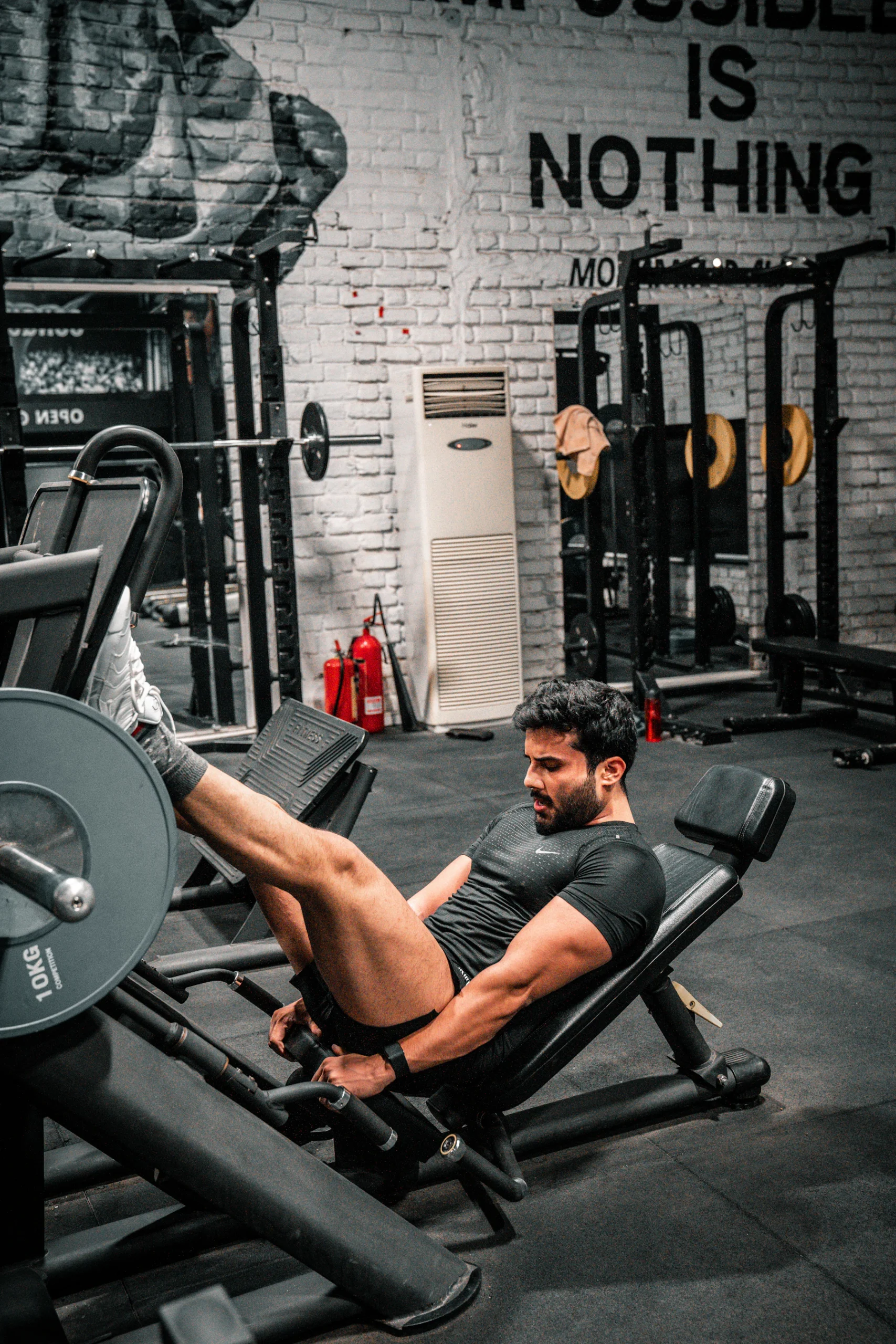
Leg press: A controlled lower segment can challenge the quadriceps in deeper knee flexion, but machine geometry and hip position affect what is actually loaded. Keep your pelvis stable against the pad, use a depth you can control and avoid forcing the knees toward the chest at the cost of lumbar position. If you shorten the range, record the setup and approximate stopping points rather than comparing the new load directly with full-range personal bests.
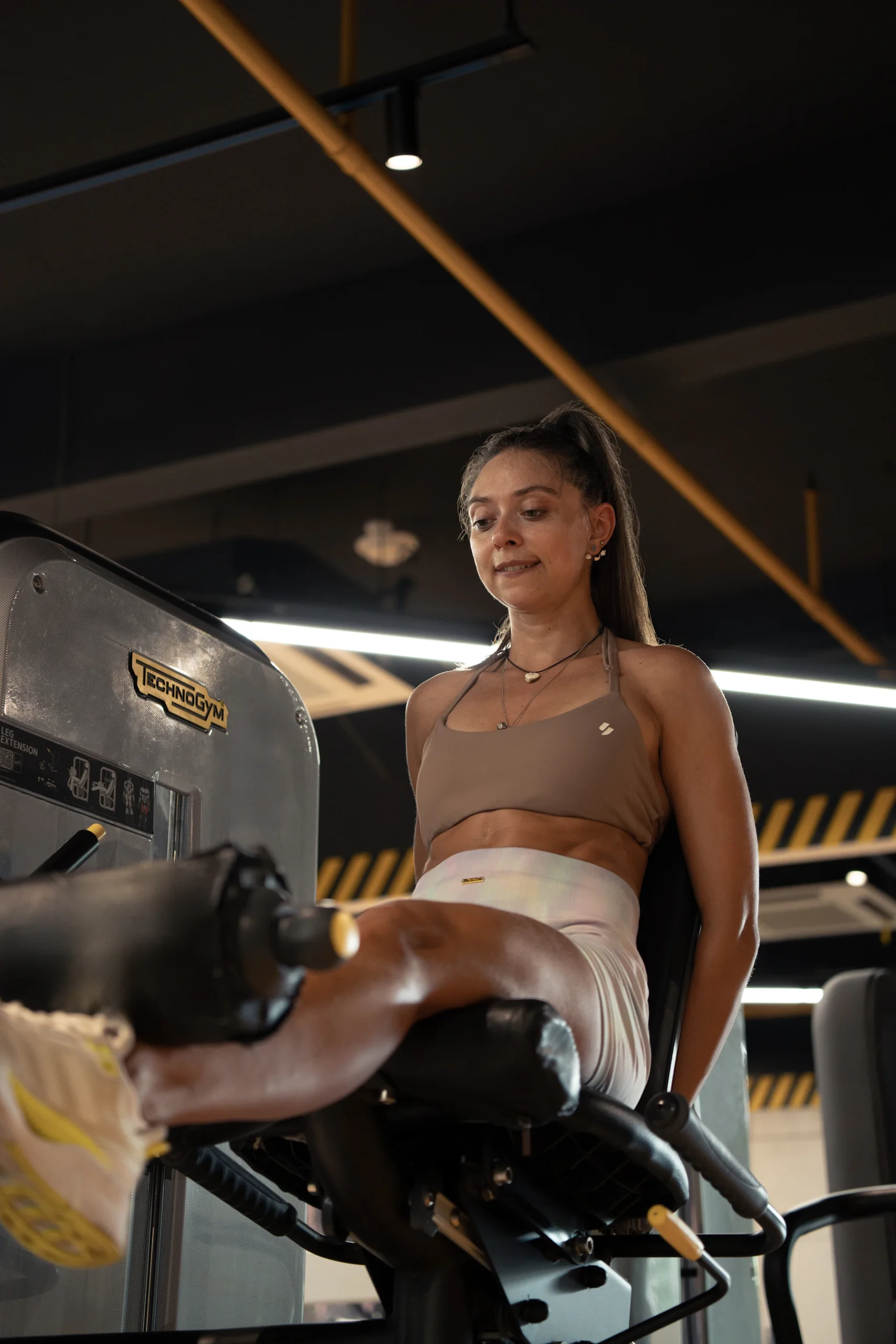
Leg extension: A partial emphasizing the more flexed-knee region can offer a different challenge than the terminal lockout region. The resistance curve differs between machines, so the heaviest-feeling section may not be the same everywhere. Keep the pad correctly positioned and avoid aggressive jerking at the knee. Because the quadriceps were measured in the new trial, this exercise is especially relevant to interpreting its findings, but the result still does not settle every possible machine setup.
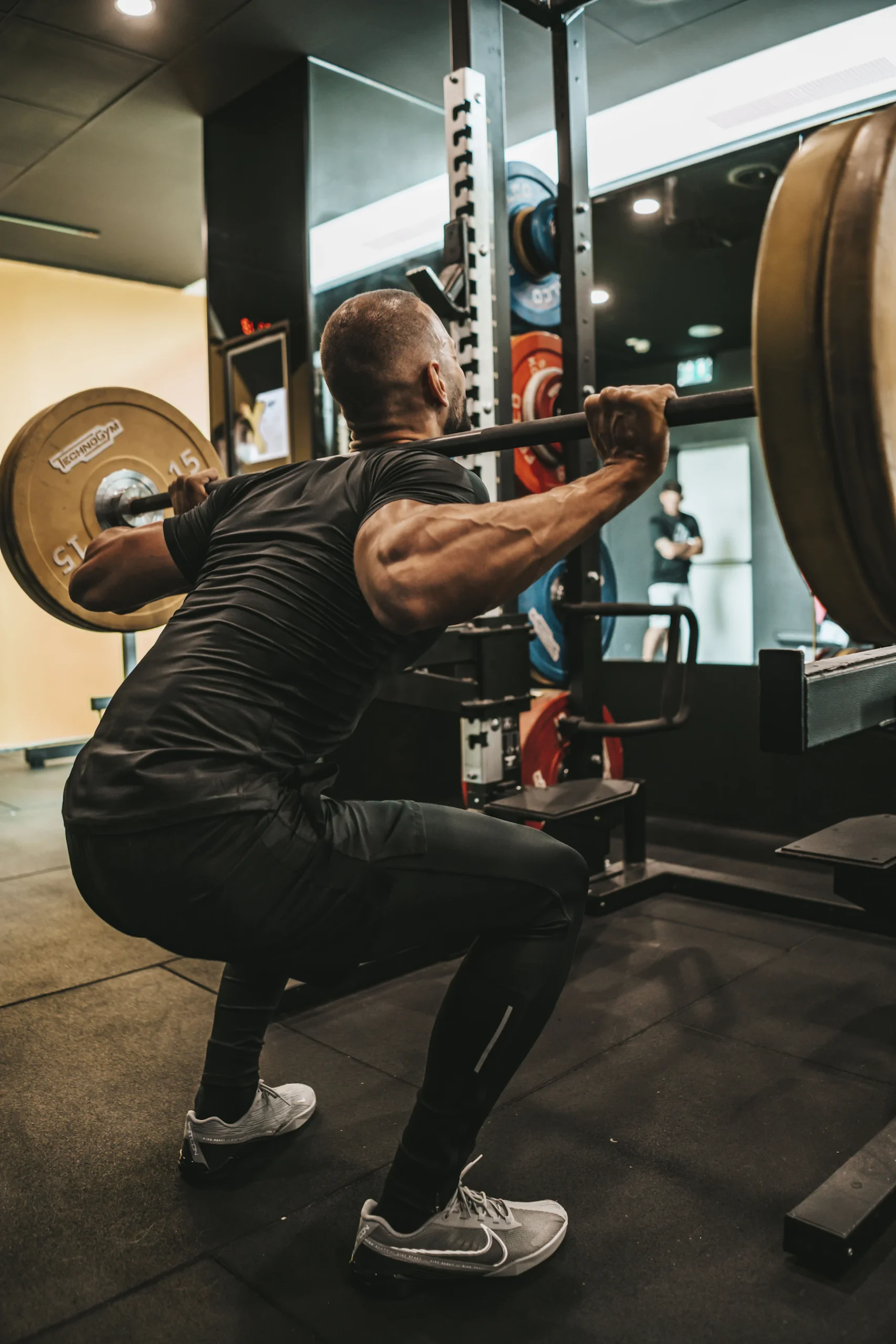
Lying leg curl: The hamstrings cross both the hip and knee, making body position important. A lengthened emphasis on one curl machine is not interchangeable with another hamstring exercise. Use a stable pelvis and smooth return rather than allowing the stack to crash. Squat: a bottom-half partial is not necessarily safer or more effective than a full squat; load selection, balance, joint tolerance and bracing matter more than a catchy rep label.
Upper-body lifts: A curl can emphasize the region near elbow extension, and some rows or pulldowns can be adapted to challenge longer muscle positions. But avoid claiming that a fixed partial range always means a fixed muscle length: shoulder position, elbow angle, grip and the line of pull change the mechanics. Pick exercises where you can clearly identify and reproduce the intended position.
How to add lengthened partials without losing the basics

Start with one or two exercises rather than converting an entire program overnight. A useful trial might be two conventional working sets followed by one carefully controlled partial-range set on a leg extension or curl. Choose a load that allows smooth repetitions and a stable endpoint. Treat the new set as an experiment, not a license to use the heaviest load on the machine.
Keep your training effort consistent. If your normal working sets finish with roughly one to three good repetitions left, your partial set should also stop before form breaks down. Near-failure effort is not the same as deliberately slamming into a joint limit. Record the exercise, load, approximate range, reps, perceived effort and any joint discomfort. Repeat the setup for several weeks so you can judge whether it adds value rather than merely novelty.
For a simple lower-body session, use a full-range squat or leg press as the main movement, a hinge or hip-dominant lift, then a knee-extension or leg-curl accessory. On one accessory, try a short block of lengthened partials. Continue to practice full repetitions elsewhere in the week. If performance on the main lift deteriorates, soreness becomes excessive or you cannot reproduce the partial range, reduce the extra work.
Equipment matters less than control. A stable bench, appropriate free weights, a cable setup or a well-adjusted machine can all be useful depending on the exercise. None of them makes partials automatically superior. Favor setups that let you maintain tension without relying on momentum, especially when fatigue makes it tempting to shorten reps unintentionally. You can keep the experiment small enough that it does not overwhelm your normal training.
Equipment Worth Exploring
Explore equipment, accessories and gear from our carefully selected range.

VOLTRA
Compact digital cable trainer with smooth, adjustable resistance.

Go-Tone Pro
Portable digital cable trainer with up to 66 lb (30 kg) of adjustable resistance.

Squat Harness
Wearable harness for hands-free cable squats, sled work, and lower-body training.

FID Bench MAX
Adjustable bench offering flat, incline, and decline positions + adjustable headrest.


Belt Squat Collar
Heavy-duty collar adapter for compatible belt-squat and landmine bar setups.
A four-week test and the bottom line for muscle growth
Use a four-week comparison to learn whether this technique earns a place in your routine. In week one, establish your usual full-range performance on the chosen accessory: load, reps, effort and the position where the set becomes difficult. Keep your main lifts unchanged. In weeks two and three, add one controlled lengthened-partial set after the standard work, maintaining similar overall training frequency and recovery. In week four, review performance and comfort rather than judging the method by soreness or a single pump.
Ask three questions. First, can you reproduce the same start and end positions without drifting into shorter and shorter reps? Second, does the set challenge the intended muscle while remaining comfortable at the joint? Third, are your other lifts, recovery and motivation at least as good as before? If the answers are yes, the variation may be worth keeping. If not, return to conventional repetitions; you are not missing a proven hypertrophy secret.
Do not attempt to infer actual muscle growth from four weeks of mirror checks. Measurements fluctuate with hydration, training-induced swelling, body composition and lighting. For a meaningful long-term comparison, look at performance over months, use consistent measurement methods and remember that individual responses vary. If an exercise causes sharp pain, reduce the range or load and choose a tolerable alternative.
The current evidence does not justify a universal winner between lengthened partials and full-range repetitions. The October 2026 thigh experiment found substantial growth with both approaches but no clear between-method difference. Broader findings suggest that loading muscles at useful long lengths can work well, while full-range work remains valuable for strength and movement skill. Use partials as a deliberate tool, not a replacement for sound programming.
Bodybuilding Shirts & Workout Gear
Bodybuilding shirts, tanks and gym gear for lifters chasing muscle, size, symmetry and the pump.

Progressive Overload Milo Bull : Greek Mythology T-Shirt
Show some bodybuilding attitude with a playful “Progressive Overload Milo Bull” tee.

Hypertrophy Stoic Sigma Greek God Marble Sculpture T-Shirt
Bring “Hypertrophy Stoic Sigma Greek God Marble” humor to your next gym day.

Strength Stoic Bodybuilder Greek God Marble T-Shirt
Bring “Strength Stoic Bodybuilder Greek God Marble” humor to your next gym day.


Skeleton Meme If You'Re Not Scared Sweater Top T-Shirt
Show some gym-day personality with “Gym Skeleton Meme”.

Safety Practice Safe Sets Sweater Jumper T-Shirt
Show some gym-day personality with “Gym Safety”.

Patriotic – Two More Reps Nixon 4th Of July & Gymbros T-Shirt
Rep “Patriotic” humor in and out of the gym.


Hardcore Gains Gym | Funny No Pain No Gain Workout Swea T-Shirt
For laid-back days and lifting humor: “Hardcore Gains”.