Advertising disclosure: This page includes affiliate product links that may earn us a commission, as well as products from our own store.
Can the censored version of a favourite song change a bench session? A small experiment offers an interesting result, but the useful takeaway is more precise than turning explicit lyrics into a strength supplement. Separate the musical choice, the work you complete and the way the session feels, then keep the practical setup simple.
What the eleven-lifter comparison actually tested
A 2025 crossover experiment compared explicit and censored versions of a chosen song in eleven resistance-trained men. They completed brief explosive bench-press sets and then three sets of repetitions to failure at 60% of their one-repetition maximum. The censored condition produced fewer total repetitions, lower motivation and arousal ratings, and a higher perceived effort rating. Measured barbell velocity did not differ between conditions.
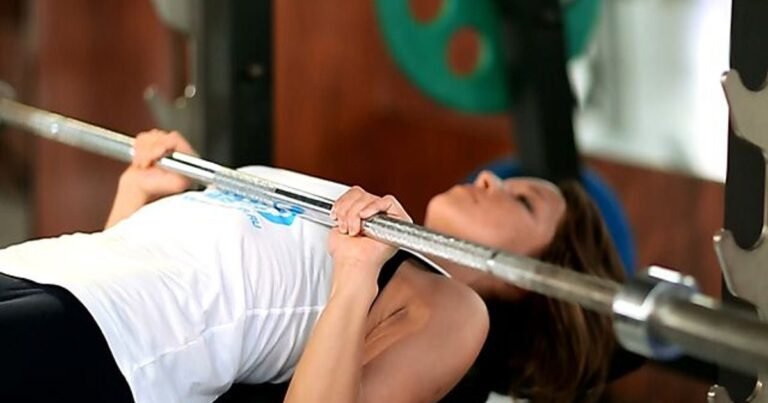
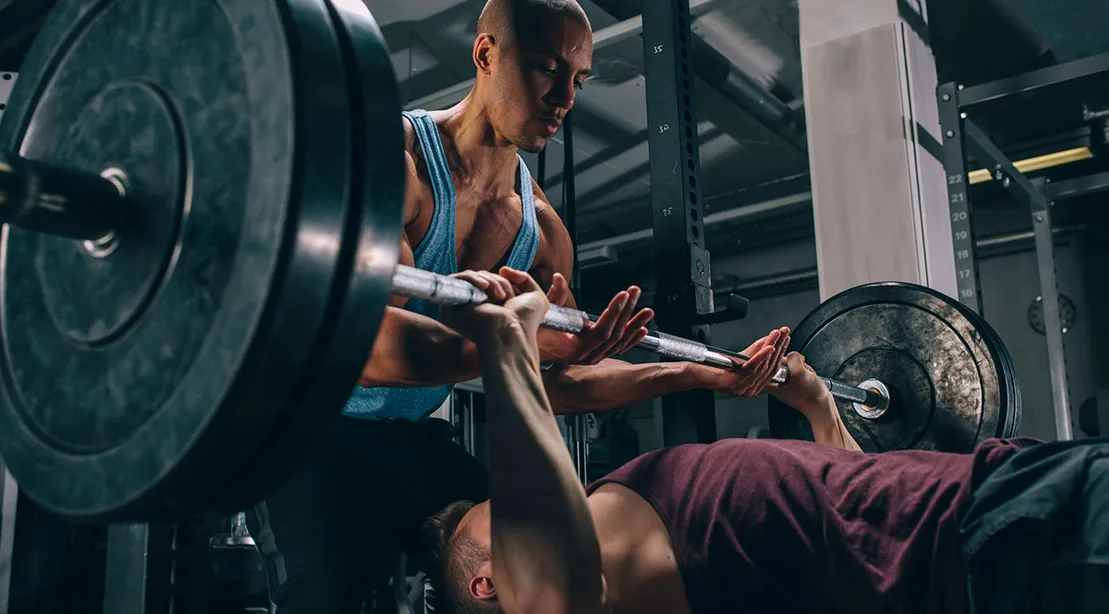
That result concerns a specific comparison, not proof that every clean song weakens every lifter. There was no silent control condition. The sample was small and limited to trained men, and a short experiment cannot establish long-term muscle growth. The photograph illustrates a bench-press setting with a spotter; it does not show a participant or equipment identified from that experiment.
The distinction matters because several everyday listening choices are often bundled together. Switching from your favourite uncensored track to a censored version is one change. Switching to a completely different genre is another. Removing music altogether is another. A result from one comparison cannot be transferred automatically to all the others.
You also do not need to recreate repetitions to failure to decide whether a playlist is pleasant or distracting. The experimental test was a way to measure performance under controlled conditions. It is not an instruction to abandon your usual stopping point, turn an ordinary session into a test day, or perform extra fatigued repetitions under a barbell.
Keep the practical question small enough to answer. Does this particular version help you arrive at the set focused and keep your attention on the lift? That is a useful personal observation. Calling it a proven percentage increase in strength, or a requirement to listen to offensive lyrics, goes considerably beyond it.
Keep motivation, repetition volume and bar speed separate

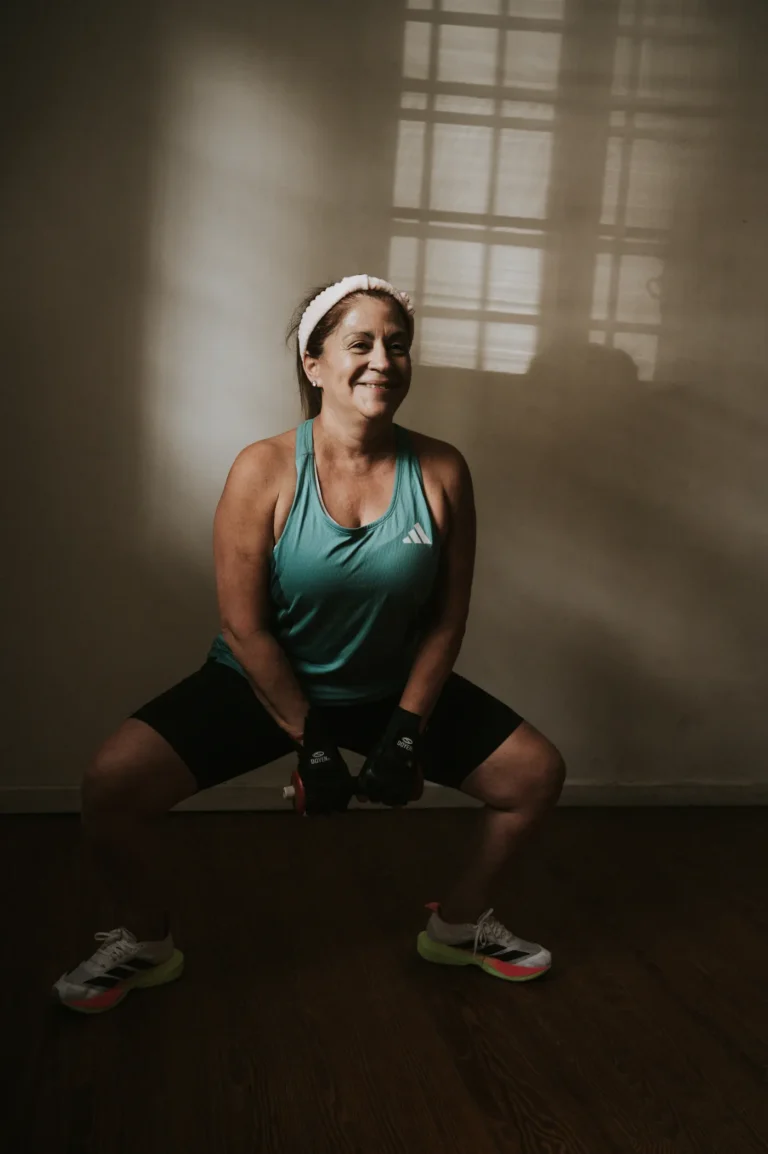
A song can make a session feel more exciting without proving that your maximum strength has changed. Repetition count, movement speed, perceived effort and willingness to train are different observations. A smiling athlete adjusting headphones illustrates listening and mood; the expression is not a measurement of motivation or evidence of an exercise result.
Separate the entries in your own notes as well. Write the load and completed repetitions as numbers, then add a short description such as focused, distracted or unusually rushed. If you used help from a spotter, record that. Do not turn an assisted repetition into an unassisted personal best because the last chorus felt particularly convincing.
For example, suppose two familiar sessions use the same exercise, load, planned rest and stopping rule. One feels more enjoyable but produces the same repetitions. Enjoyment may still be worthwhile, especially if it helps you look forward to training. You do not have to invent a performance improvement to justify liking the soundtrack.
The opposite situation also deserves care. More repetitions on one day could reflect better sleep, a different range of motion, longer rest, a lighter actual barbell or a less demanding earlier exercise. Music is one possible contributor among several. A tidy note preserves those alternatives instead of telling a stronger story than the session supports.
Be particularly cautious with speed claims made by eye. A repetition that feels aggressive is not necessarily moving faster, and a phone video filmed from a new angle is not the same as a consistent velocity measurement. Use the observations you actually have. For most recreational lifters, a clear record of work and execution is already more useful than an imaginary laboratory score.
Choose the version before the first working set

Preference deserves a place in the decision. A separate bench-press experiment in twelve trained men found better performance and motivation with preferred rather than nonpreferred music. That comparison supports taking individual taste seriously. It does not identify a universal best artist, genre, song speed or lyrical style for every gym session.
Rock, rap, rhythm and blues, pop and electronic dance music can all mean different things to different listeners. Some people enjoy an aggressive vocal delivery. Others find gaps in a censored edit distracting, or simply prefer a clean recording. Choose material that suits you and the setting rather than treating someone else’s playlist as a training obligation.
Check the actual version before training. A live recording, remix, shortened edit and studio track can have different introductions, breaks and changes in level. If you intend to compare two versions, note which ones you used. Otherwise, a changed arrangement may become mixed up with the effect you hoped to observe.
The practical advantage of preparing a short queue is that the phone can then stay out of the lift. Download or load what you need beforehand when the connection is unreliable. Arrange the next track while the bar is secured. A favourite chorus is less useful if reaching for it interrupts your setup or makes you hurry a handoff.
Treat the music-themed training clothing here as an expression of taste, not a performance tool. A heavy-metal graphic does not require maximum volume, and an extra-repetition slogan does not override your planned stopping point. The relevant link is simply the combination of lifting culture and personal listening preferences.

Bodybuilding Shirts & Workout Gear
Bodybuilding shirts, tanks and gym gear for lifters chasing muscle, size, symmetry and the pump.

Listen Heavy Lift Heavy Gym | Heavy Metal Workout Vest Tank Top
Train hard, laugh a little, and rep “Listen Heavy Lift”.

Liftin Metal – Heavy Metal Rock Music Workout Hooded Pu Hoodie
Show off your metalhead humor in a laid-back “Liftin Metal” hoodie.

Lifting Skull Hardcore Gym | Heavy Metal Workout Sweate T-Shirt
Keep things casual with a little “Lifting Skull Hardcore” attitude.

Heavy Metal Gym – Funny Gymbro Rock Music Pullover Jump T-Shirt
Add a playful “Heavy Metal” touch to your casual rotation.

Heavy Metal Gym – Funny Rock Music Workout Vest Muscle Tank Top
Bring “Heavy Metal” humor to your next lifting session.

Heavy Metal Gym – Funny Kettlebell Rock Music Decal for Sticker
Put “Heavy Metal” gym humor on your laptop, bottle, or gym gear.

Heavy Metal – Rock & Pullover Sweater & Bodybuilding Fa T-Shirt
Keep things casual with a little “Heavy Metal” attitude.

Heavy Metal – Rock On Workout Hooded Pullover Hoodie
Make your off-duty look more fun with “Heavy Metal”.

Chest Day Sweater Bench Press & Meme T-Shirt
Add a playful “Chest Day” touch to your casual rotation.

One More Rep Shirt: Motivational & T-Shirt
Make gym days more fun with “One More Rep” style.
Make headphones fit the bench setup and the people around it
Before lying down, check whether the headphones remain comfortable against the bench and whether a headband shifts during your normal setup. Secure the phone away from the bar, plates and walking route. Finish adjustments while the bar is safely supported, rather than reaching toward an ear or pocket with a loaded bar in your hands.
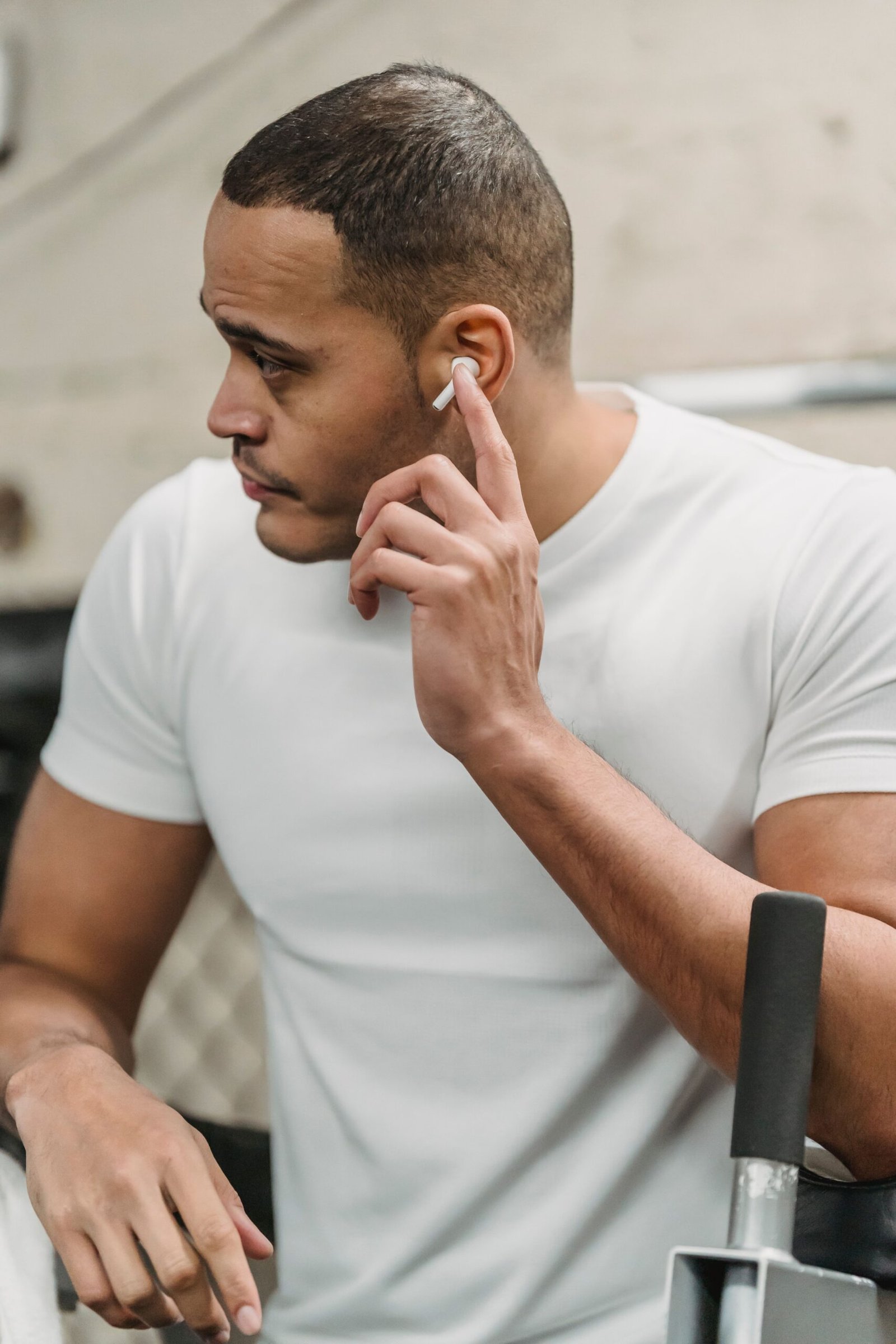
Communication comes before the soundtrack. Agree with your spotter about a lift-off, the cue for help and the finish of the set. Make sure you can actually hear each other. If the audio prevents that exchange, reduce it or pause it. The earbud photograph illustrates a listening choice, not proof of its volume or how clearly someone could hear a spotter.
Choose a stable bench, suitable rack and appropriate barbell setup before worrying about the perfect track. The equipment shown in the shopping selection offers alternatives for a pressing station, alongside personal listening options. Different benches and racks are not interchangeable automatically: check compatibility, support positions and the manufacturer’s instructions for your own setup.
Do not try to make a motivating song more effective by repeatedly increasing loudness. Hearing risk depends on sound level and exposure time. Well-fitting headphones, suitable noise reduction and your device’s exposure-monitoring features can help you avoid competing with every background sound in a noisy gym. Take breaks from loud listening rather than treating constant audio as essential.
Sound isolation also needs to fit the situation. A quieter personal listening environment can reduce the temptation to turn the music up, but you still need awareness of people, instructions and moving equipment. Remove or pause the headphones when that awareness is compromised. A useful listening setup supports the session without becoming another task to manage under load.

Equipment Worth Exploring
Explore equipment, accessories and gear from our carefully selected range.

Beats Studio Pro
Over-ear wireless headphones with active noise cancellation and USB-C audio.

Powerbeats Fit
Secure-fit wireless workout earbuds with active noise cancellation and a charging case.


FID Bench MAX
Adjustable bench offering flat, incline, and decline positions + adjustable headrest.


Multi Bench MBX-650 2.0
Adjustable multi-bench with roller adjustment, 15 backrest positions and accessory mounts.


Use a short training record before drawing a big conclusion
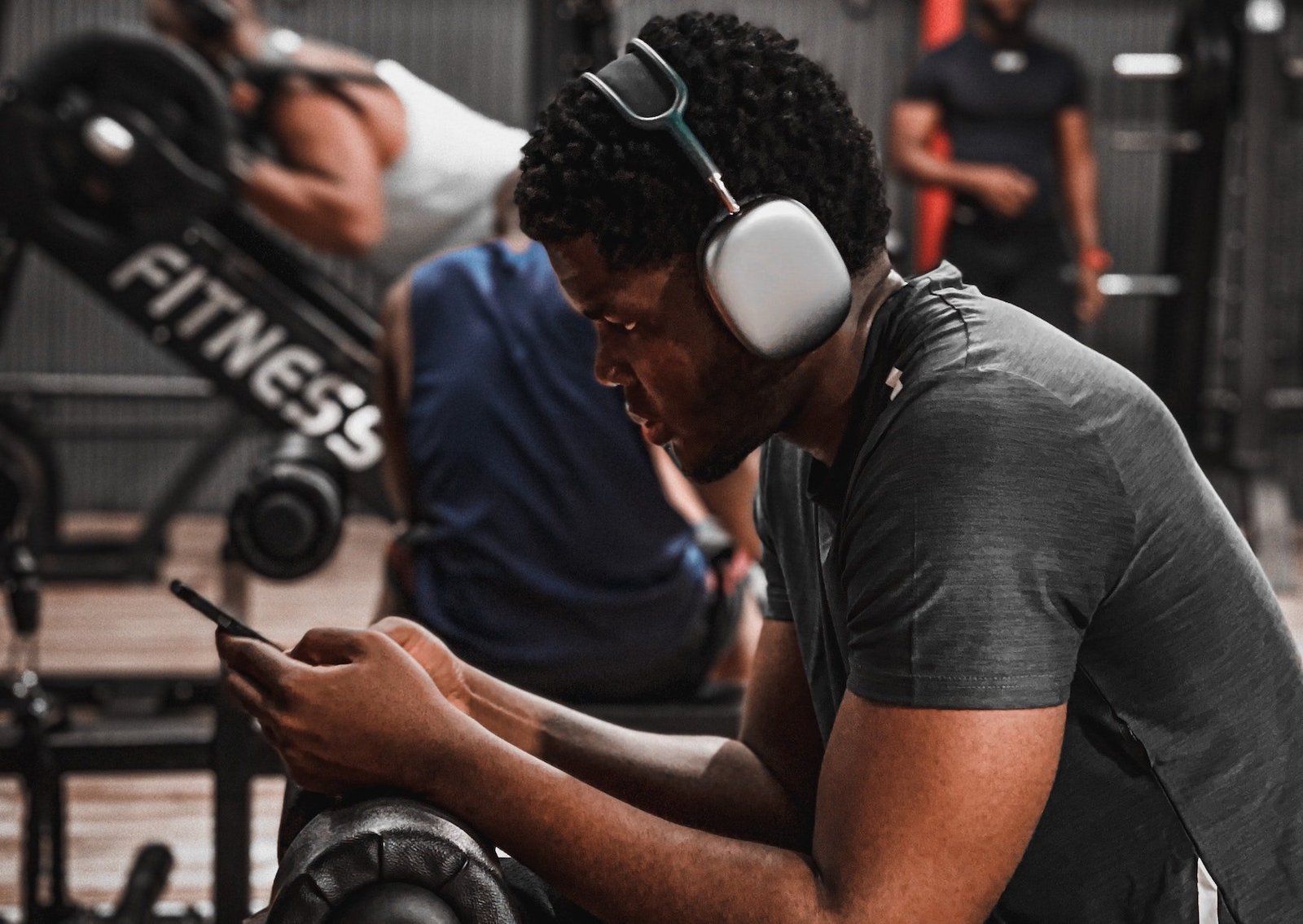
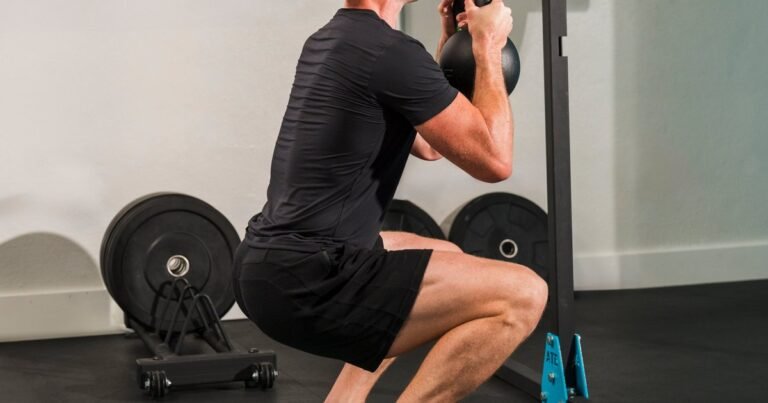
A simple record can include the date, exercise, load, working-set repetitions, planned rest and stopping rule. Add the song version and a brief note on concentration if that is the question you are exploring. The athlete using a phone illustrates a convenient pause between sets; no particular app, screen content or measurement is being claimed from the photograph.
Keep the notes short enough to use consistently. An entry such as familiar bench setup, same load, same rest, distracted by repeated track changes is informative. A paragraph written from memory several days later may contain more confidence and less detail. Paper and a phone can both work if the record remains accessible and the device stays outside the equipment’s working area.
Look for a repeatable practical preference over ordinary comparable sessions. If one version repeatedly leaves you fiddling with controls, it may be a poor choice regardless of whether it contains explicit language. If a playlist is enjoyable and requires little attention, that may be enough reason to keep it. Neither observation needs to be presented as a controlled scientific experiment.
Keep the rest of the programme recognisable while you observe it. A new exercise, changed bench angle, unfamiliar load and shorter rest all make interpretation harder. You can still change those things when training requires it; just acknowledge that the session is no longer a clean comparison of soundtracks. The log is there to clarify what happened, not to prevent sensible adjustments.
Finally, keep hearing comfort and training quality outside the competition. Persistent ringing, difficulty hearing or other hearing concerns deserve professional assessment. Pain, unstable equipment or an unclear spotting arrangement deserve attention before another set. No song earns a special exemption because it produced a good workout once.
Use music as a personal part of the routine: choose a version you like, set it up in advance, keep listening sensible and record the work honestly. The worthwhile outcome may be better focus or a more enjoyable session. Let any claim about repetitions, speed or strength remain tied to what was actually observed.