Advertising disclosure: This page includes affiliate product links that may earn us a commission, as well as products from our own store.
The squeeze press is easy to recognise and easy to change accidentally. The dumbbells stay together while you press, but the exercise still needs a stable setup, controlled wrists and a sensible load. Use the contact as a clear training constraint rather than turning a chest sensation into a maximum-weight challenge.
Identify the squeeze rather than just a narrow grip
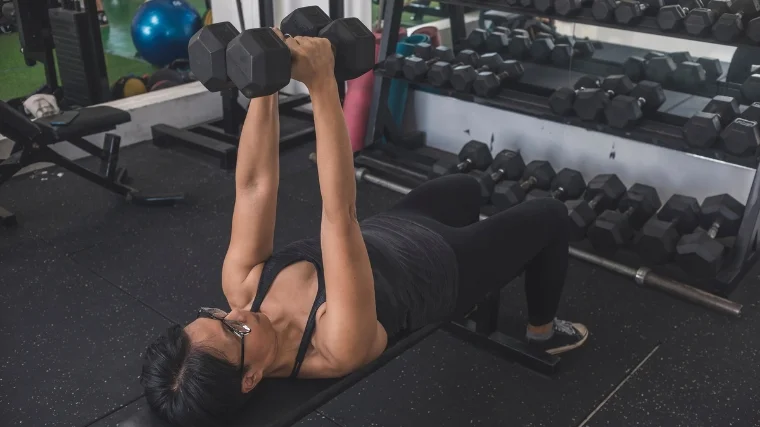
The dumbbell squeeze press, also called a crush press or hex press, combines an upward press with pressure between the weights. Your palms face one another and the dumbbells remain in contact as the arms bend and straighten. A neutral-grip press with space between the weights is a related movement, but it does not include the same contact requirement.
This distinction is useful when choosing an exercise from a training plan. A narrow hand position alone does not tell you whether the writer expects continuous contact. Before loading up, identify the intended variation and practise it with manageable dumbbells. Otherwise, the first few repetitions may be a squeeze press and the last few an ordinary press without that change being recorded.
The pectoralis major contributes to moving the upper arm, while the triceps extend the elbow. Pressing is therefore not an exercise in which only the chest works. Feeling the triceps does not automatically mean that the repetition has failed. Equally, an intense chest sensation does not independently establish that the movement is superior to other presses for long-term growth.
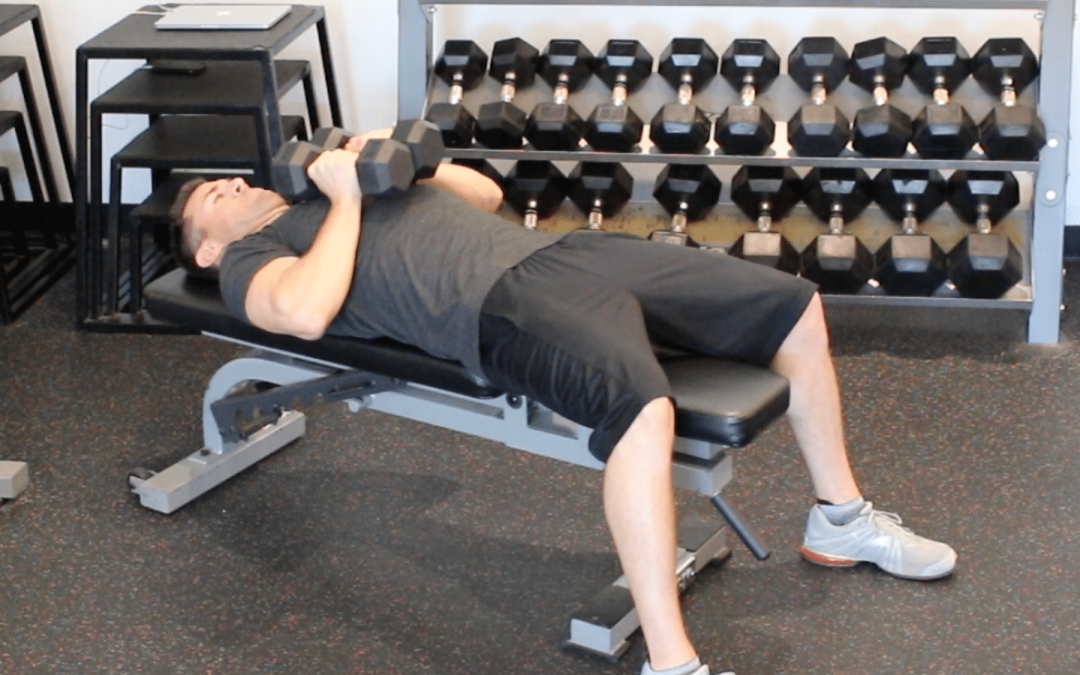
The photograph shows the weights held together above a flat bench. It illustrates the exercise’s contact, not the amount of force being applied between the dumbbells. A still image cannot establish how consistently that pressure was maintained through an entire set or whether the lifter used the same range on every repetition.
Give the exercise a clear name in your log and add the defining constraint: neutral grip, continuous contact. That short description makes later comparisons more useful. It is more informative than treating every press performed with the hands close together as the same exercise.
Make the setup and finish part of the exercise
Choose a stable bench and a pair of dumbbells that you can position and remove under control. Flat-sided hex dumbbells provide a straightforward contact surface. Other designs can have different head shapes, moving parts or adjustment mechanisms, so inspect where the weights will meet before deciding that any pair can be pressed together in the same way.
Check that adjustable dumbbells are securely configured according to their instructions. Do not use a selector or exposed mechanism as the surface you force against the other weight. The contact should not depend on a small edge balancing against a rounded surface. If the equipment makes the movement awkward, choose a different pair or a different press.
Set your feet and body support before starting. Keep the head, upper back and hips supported on the bench, with a stable lower-body position. Avoid spending the first repetition searching for balance while the weights are already over you. A manageable setup load is more appropriate for learning than the weight you can use in a familiar ordinary dumbbell press.
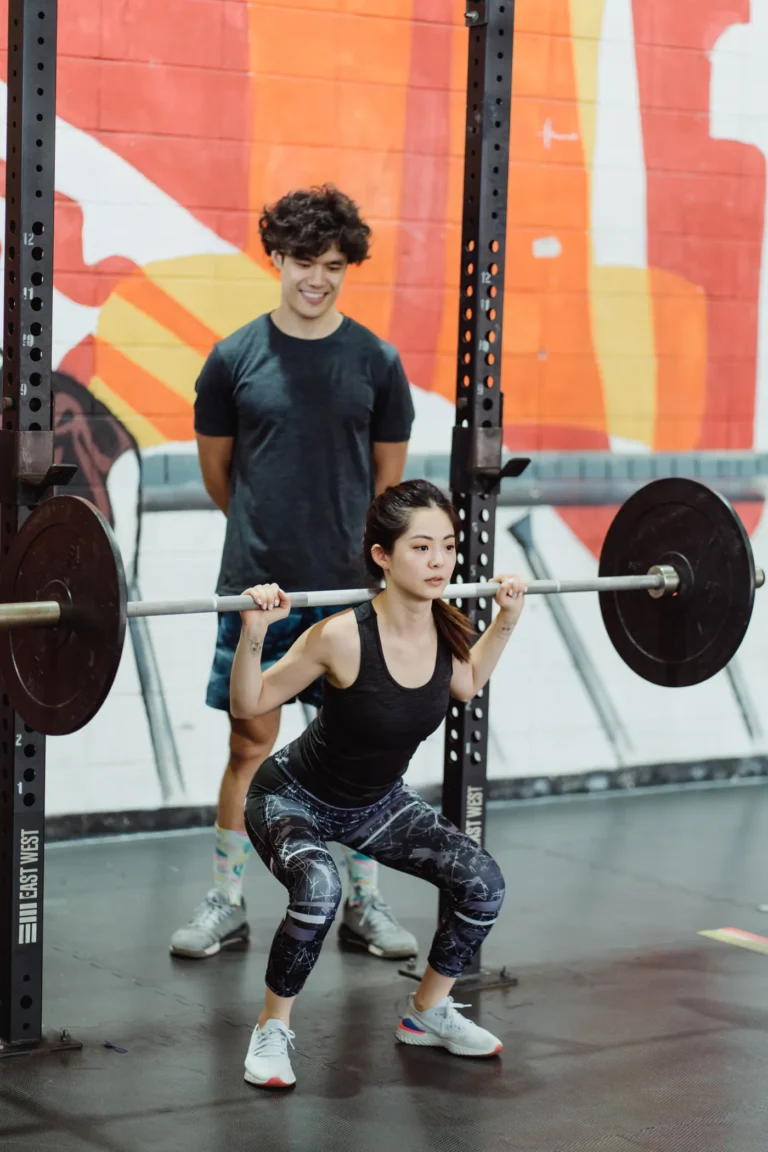
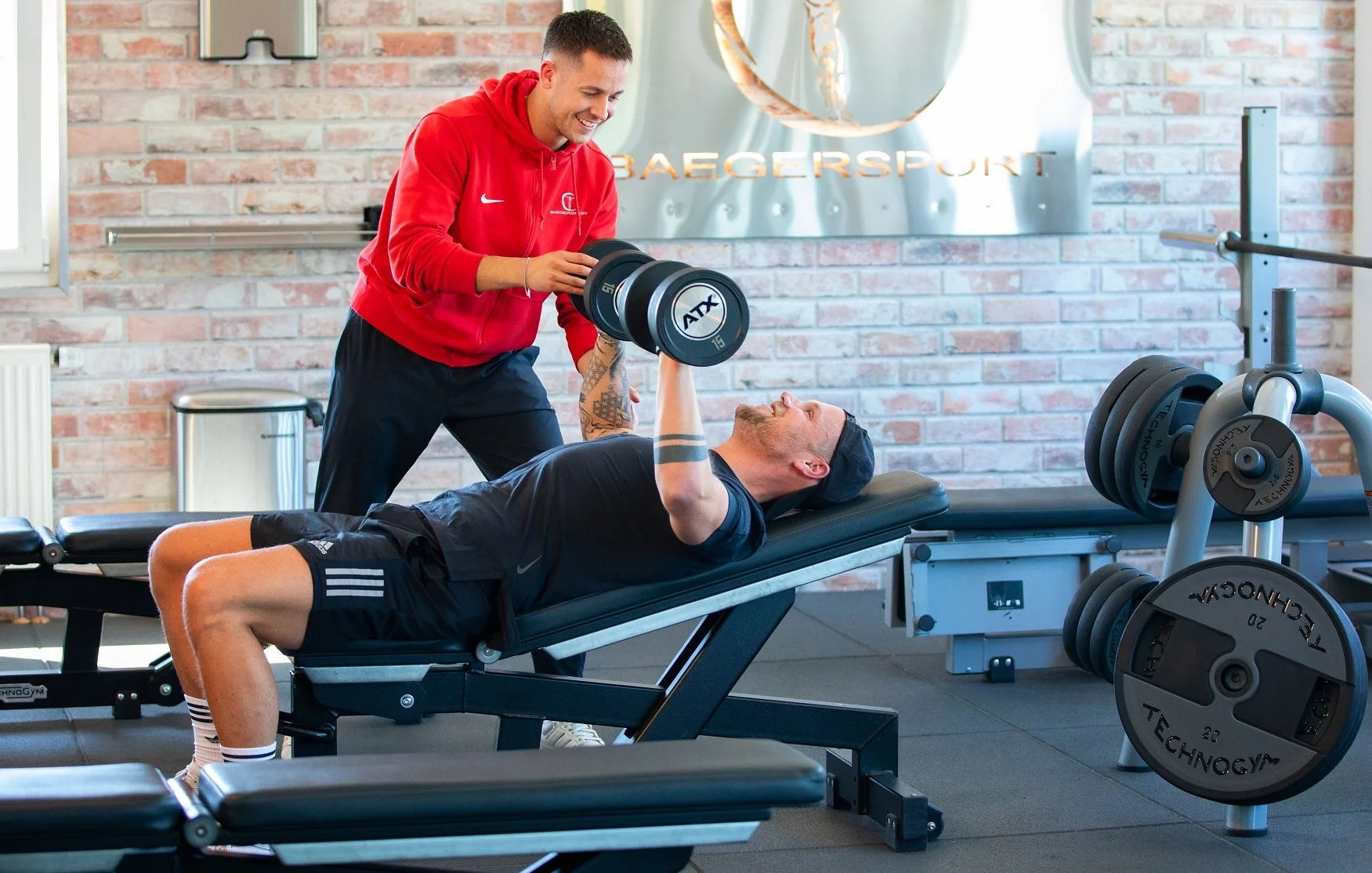
The photograph shows a trainer assisting a separate dumbbell-press variation. The dumbbells are apart and the bench is inclined; this is not a squeeze-press demonstration. It illustrates why assistance and communication belong in the setup discussion. Tell a helper which movement you intend, when help is wanted and how the weights will be taken back.
Plan the finish before the set begins. Use a controlled exit or appropriate assistance rather than dropping the weights unpredictably beside the bench. Leave clear floor space, and do not rely on being able to improvise a safe exit after exhausting the grip or pressing muscles.
Keep contact without making the wrists solve the problem
Bring the dumbbells together over the chest and establish a firm, controlled grip. Press them upward together, then lower them under control through a comfortable range while preserving contact. The purpose is a repeatable pressing action, not to make the dumbbells collide at the top or bounce against the torso at the bottom.
Use enough inward pressure to maintain the intended squeeze without letting the wrists fold or the hands slide around the handles. More effort is not automatically better if it changes the movement into a struggle to balance the heads. Reset or reduce the load when contact depends on a wrist position you cannot maintain comfortably.
Pay attention to the relationship between the two weights. If one side repeatedly rises ahead of the other, do not force the dumbbells against each other to disguise that difference. A lighter, controlled repetition gives you more useful information than a heavier repetition held together by uneven pressure and compensating movement.
Lowering deserves the same attention as pressing. Keep the descent deliberate enough to recognise whether contact is being lost, and avoid chasing extra depth by moving into an uncomfortable shoulder position. The photograph shows a lifter with the weights together near the chest; it is a reference for contact rather than a universal depth target.
Try a simple quality check between sets: did the weights remain together, did the wrists stay controlled, and did the final repetition resemble the first? If one answer changes, write that down. These observations are concrete enough to guide the next set without pretending to measure muscle activation from the feeling of a squeeze.
Progress the work while preserving the defining constraint
Treat the squeeze press as an accessory you can execute consistently rather than as an immediate maximum-strength test. The contact requirement changes the task, so do not copy your usual dumbbell-press load and assume the same repetitions will be appropriate. Begin with a load that lets you learn the movement and finish the set safely.
Choose a repetition range and effort target that fit your existing programme, then record the load per dumbbell and the repetitions actually completed with contact. For example, a log might say continuous-contact squeeze press, controlled descent, followed by the load and each set’s result. The example describes what to record; it is not a universal prescription for every lifter.
When the intended work becomes repeatable, consider a small progression while keeping the same execution. Adding repetitions or increasing load are possible changes, but neither counts as an identical-task improvement if you simultaneously shorten the range, lose contact or add assistance. Change one main variable at a time so the comparison remains understandable.
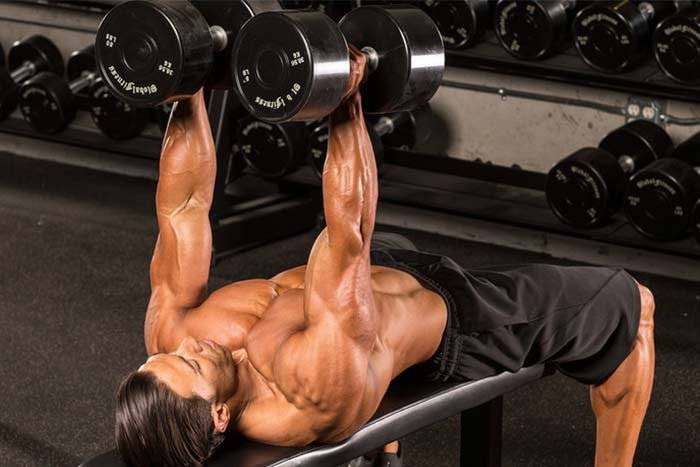
The neutral-grip press pictured in this section has space between the dumbbells. That is a useful contrast: it can be a valid exercise in its own right, but it should not silently replace the squeeze press halfway through a set. If you intentionally change the variation, label the change rather than merging the results.
Keep sufficient recovery to perform the next planned set. A stronger pump, a longer set or more discomfort is not a score that overrides execution. If the exercise hurts rather than simply feeling challenging, stop and reassess the movement and load; persistent symptoms deserve individual assessment instead of repeated attempts to squeeze through them.

Bodybuilding Shirts & Workout Gear
Bodybuilding shirts, tanks and gym gear for lifters chasing muscle, size, symmetry and the pump.

Gymhead Meme Mind Muscle Connection Hooded Hoodie
Make your off-duty look more fun with “Gymhead”.

Shirt – Dumbbell Heartbeat Gymbros, & Meme Lovers T-Shirt
Show some bodybuilding attitude with a playful “Dumbbell Heartbeat” tee.

Dumbbell Meme Shirt – Essential & Gymbros Seeking T-Shirt
Make gym days more fun with “Dumbbell Gym Meme” style.

Heart And Brains Dumbbell Meme : The Ultimate T-Shirt
Make gym days more fun with “Heart and Brains Dumbbell Gym Meme” style.


Shirt – Liftionaire Golden Dumbbell Gymbros & Gains T-Shirt
Make gym days more fun with “Liftionaire Golden Dumbbell” style.

Chest Day Sweater Bench Press & Meme T-Shirt
Add a playful “Chest Day” touch to your casual rotation.

I Love Bench Press | Heart Weight Plate Hooded For Ches Hoodie
Keep it laid-back with a little “I Love Bench Press” attitude.

Gym Dost Thou Even Fly Medieval Knight Chest Fly Muscle Tank Top
Bring “Dost Thou Even Fly Medieval Knight Chest” humor to your next lifting session.

Choose it for a role rather than a special promise
A squeeze press can offer a different task within chest training, but it does not need to replace every other press or fly. Choose it because you want to practise that controlled pressing variation and can use suitable equipment. Avoid building the entire session around the idea that one special sensation guarantees a better result.
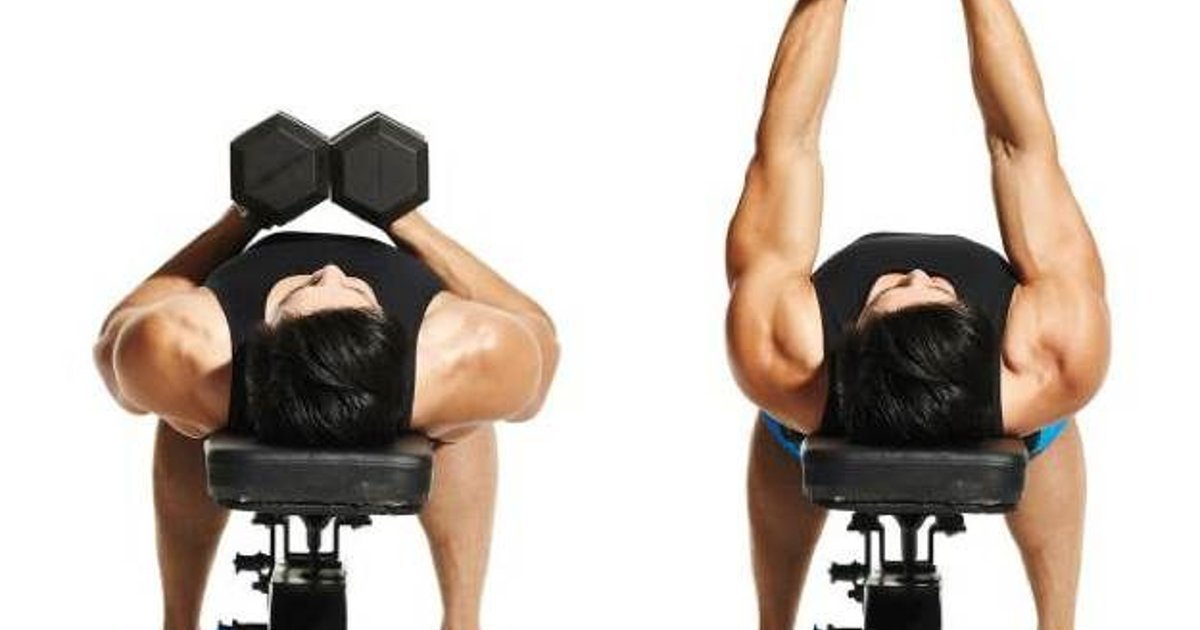
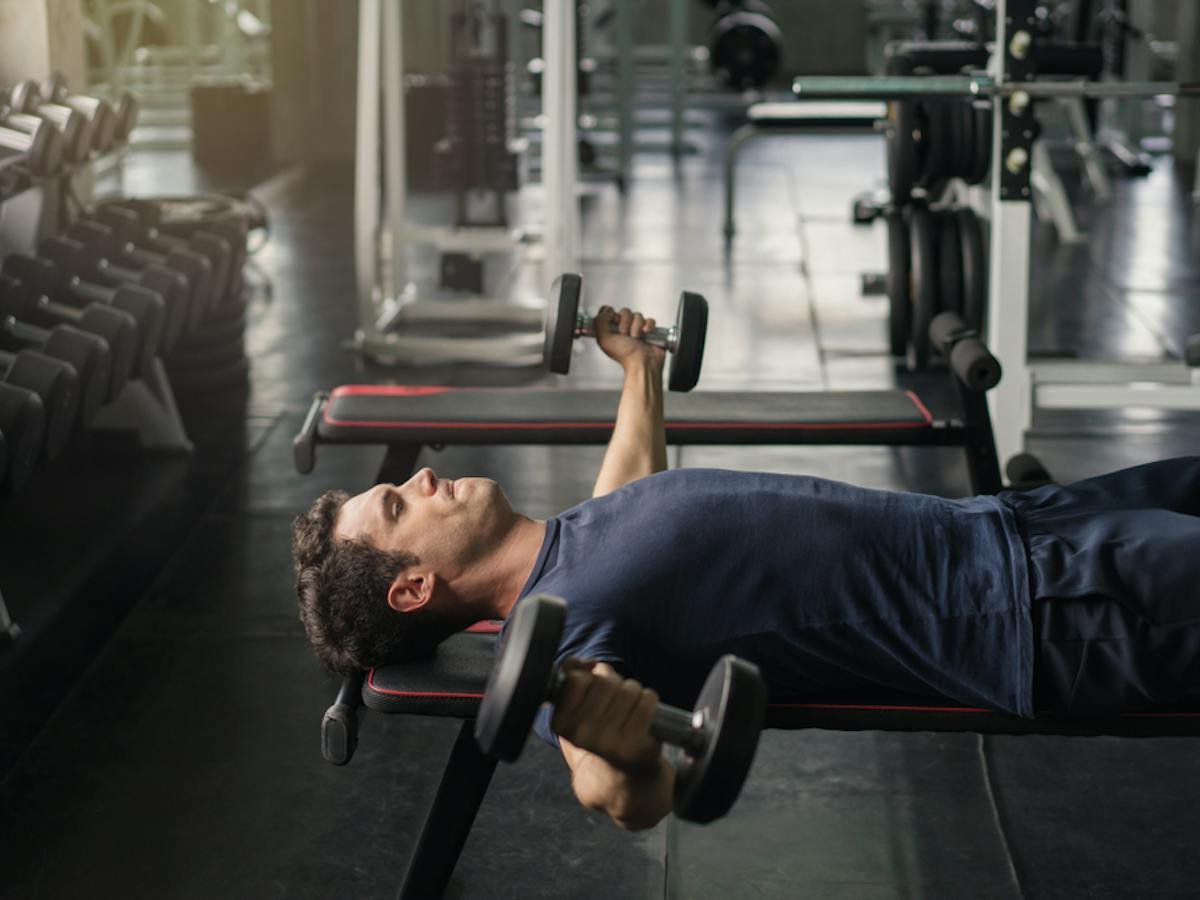
A conventional dumbbell press allows the weights to move separately. A dumbbell fly uses a different arm path with a comparatively fixed elbow bend; the photograph illustrates that distinction. Do not combine the widest fly position you can reach with a squeeze-press load and assume the exercises are interchangeable. Each variation needs its own appropriate setup and loading.
Equipment choices follow the exercise choice. Benches and dumbbells support the squeeze press itself. Chest-press machines, fly machines and cable handles are alternatives for other pressing or adduction work, not accessories that turn a machine movement into a dumbbell squeeze press. Check the actual machine’s adjustments and instructions rather than copying a dumbbell path onto it.
Keep the rest of your training visible when deciding where the exercise belongs. If you already have demanding pressing work, adding another variation increases the session rather than automatically improving its balance. A substitution may be more useful than an extra exercise when time, recovery or consistency are the limiting factors.
After a few comparable sessions, assess the practical outcome: can you set it up safely, maintain its defining contact, record progress clearly and recover for the rest of your programme? Keep it when it earns a useful role. If another press fits better, choosing that movement is a reasonable programming decision rather than evidence that you failed to discover the right squeeze.

Equipment Worth Exploring
Explore equipment, accessories and gear from our carefully selected range.



FID Bench MAX
Adjustable bench offering flat, incline, and decline positions + adjustable headrest.


Rubber Hex Dumbbells
Rubber-coated hex dumbbell pairs with a stable shape for home and commercial strength training.

Multi Bench MBX-650 2.0
Adjustable multi-bench with roller adjustment, 15 backrest positions and accessory mounts.

Standing Chest Press SCP-760
Standing chest-press machine with adjustable handle positions for chest and close-grip pressing.

Lever Arm Multi Press LMP-650
Multi-press with independent lever arms and an integrated adjustable bench for upper-body training.

Pec Fly/Rear Delt PEC-650
Combination machine with adjustable movement limits for chest fly and rear-delt exercises.