Advertising disclosure: This page includes affiliate product links that may earn us a commission, as well as products from our own store.
The chest-supported T-bar row gives back training one advantage that is easy to appreciate and easy to waste: a pad that helps keep the torso in the same place. With the chest braced, you can concentrate on the elbows, shoulders and loaded lever instead of spending every repetition fighting to hold a bent-over position. But that support does not magically make every repetition strict.
Set the footplate too high, shorten the bottom stretch, yank the elbows back or let the chest bounce away from the pad, and the machine becomes much less consistent. A clean session is built from a repeatable setup, a grip that suits your shoulders and an honest range of motion. Here is how to make those decisions without turning simple rows into complicated rituals.
What chest support changes—and what it does not
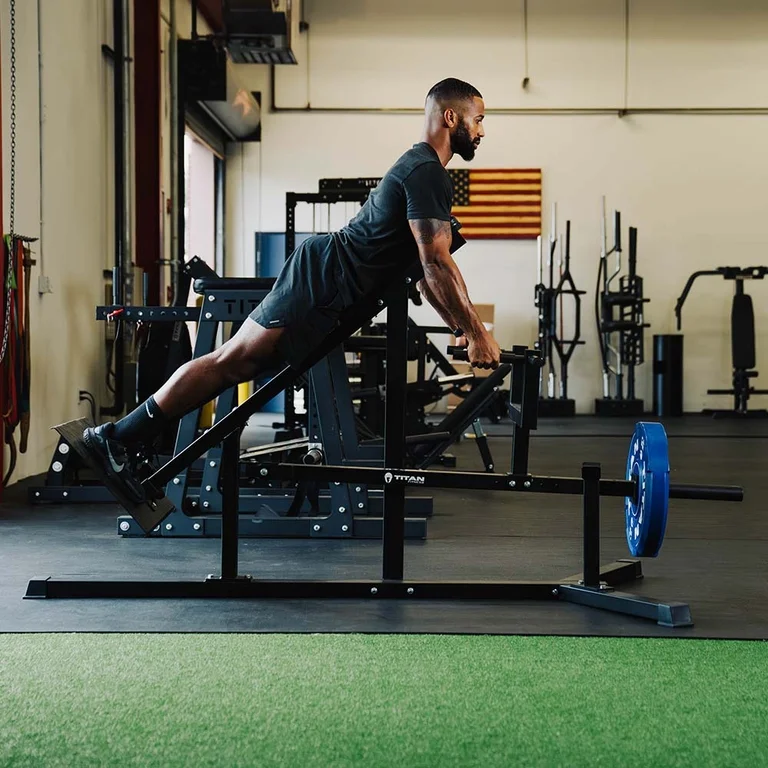
A free-standing barbell or landmine row asks the hips, spinal erectors and trunk to maintain a bent-over posture while the arms pull. On a supported machine, much of that stabilizing demand is transferred to the pad and frame. That can be useful when you want the upper back and lats to be the primary limitation, especially after squats, deadlifts or another demanding hinge.
The back still works through several overlapping jobs. The latissimus dorsi contributes to bringing the upper arm back toward the torso. Other muscles around the shoulder blade help guide and stabilize the scapula, while the rear delts and elbow flexors contribute during the pull. Calling one handle ‘all lats’ and another ‘all upper back’ would exaggerate the separation; a change in elbow path only shifts emphasis.
Chest support also changes what counts as cheating. A lifter can still rebound the weight against a stop, lift the chest at the hard point, shrug into the ears or cut the bottom range short. The pad gives you a useful reference for avoiding these compensations, but it does not guarantee that they disappear.
Think of this exercise as a controlled horizontal pull rather than a test of how many plates fit on the weight horn. The lever length, handle geometry and machine design change the feel of each plate. Loads are useful for tracking progress on the same station, not for comparing numbers between entirely different machines.
If your back feels worked while you can preserve the same torso position from the first repetition to the last, the basic choice is sound. If your lower back, wrists or front shoulders become the limiting factor, adjust the fit and load before assuming you need a different back exercise.
Set the chest pad and footplate before adding plates
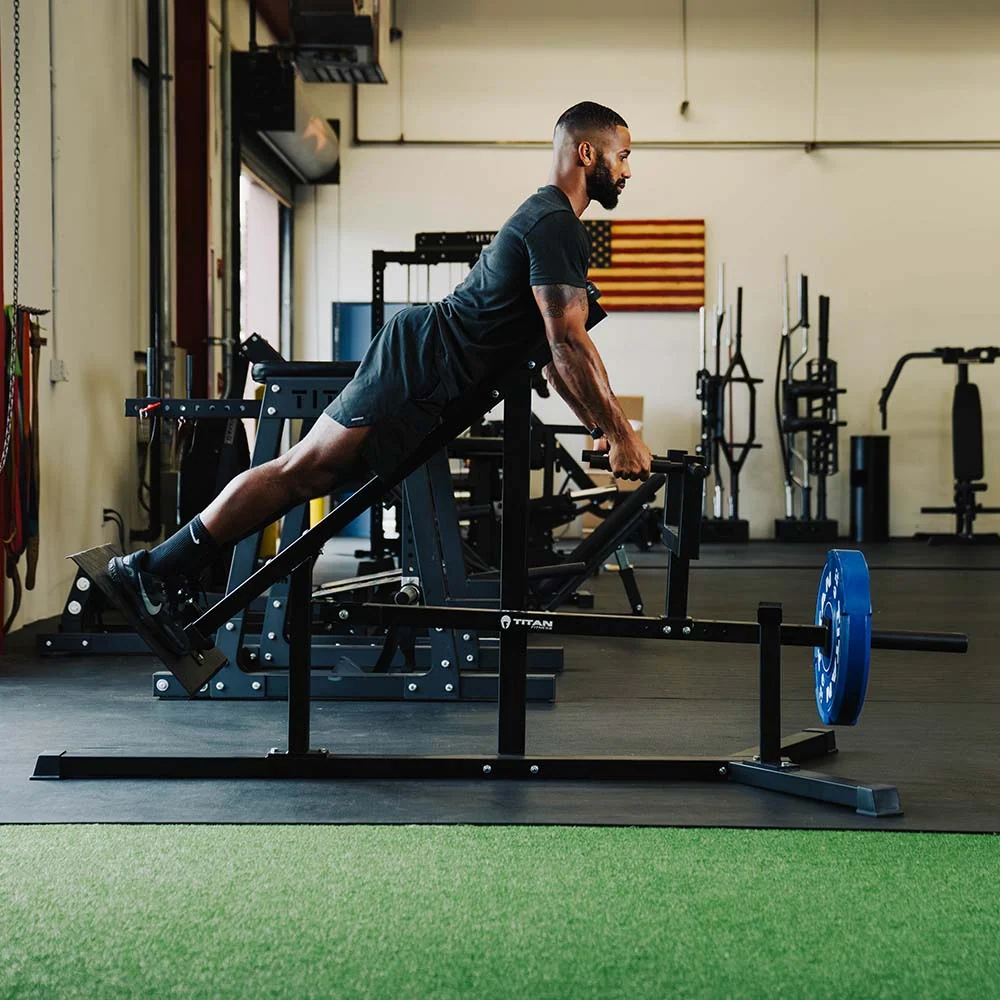
Start with the machine unloaded or lightly loaded. Place both feet securely on the platform and lean forward until the pad supports the chest comfortably without compressing the throat or forcing the head upward. Where the support touches depends on your torso length and the shape of the pad; you want stability without being pinned into an awkward position.
Reach for the handles with the elbows straight, then check whether you can initiate the first repetition without your shoulders slipping off the edge of the support. If the pad or platform is adjustable, change one setting at a time. Some machines adjust the footplate rather than the pad, so do not assume the numbered setting means the same thing everywhere.
Your feet should contribute a firm base, not a leg drive. Avoid rising onto the toes or bouncing through the knees to start each pull. A soft knee bend is fine if the machine permits it, but keep it consistent. If you are tall and the machine gives you too little room for the legs, do not force your body into a position that makes breathing or chest support uncomfortable.
At the bottom, let the arms reach naturally while maintaining contact with the pad. The shoulder blades may move forward around the rib cage as the lever lowers. You do not have to hold them squeezed together for the entire set; natural scapular movement is part of a controlled row.
Before the working set, rehearse three slow repetitions and note the handle choice, footplate setting and approximate elbow destination. That small record can matter more than a dramatic weight increase, because it makes your next session an actual comparison instead of a different variation.

Equipment Worth Exploring
Explore equipment, accessories and gear from our carefully selected range.

Linear Row LRX-750
Dual-sided rowing machine for supported rows, bent-over rows and varied pulling movements.

Lateral Row Machine LRM-720
Rowing machine with independent lever arms, an adjustable seat and chest support.

T-Bar Row Attachment
Welded barbell attachment that connects a D-handle bar for landmine and T-bar rows.

GymPin Barbell Row Handle
Heavy-duty handle attachment for barbell, landmine and T-bar rows.


Trinity Lat Machine LSW-850
Weight-stack pulldown tower offering three cable directions and adjustable seated support.

VForce Lat Tower
Wall-mounted cable tower with pivot arms and adjustable 1:1 or 2:1 pulley ratios.


Choose your grip by elbow path, not muscle-isolation slogans
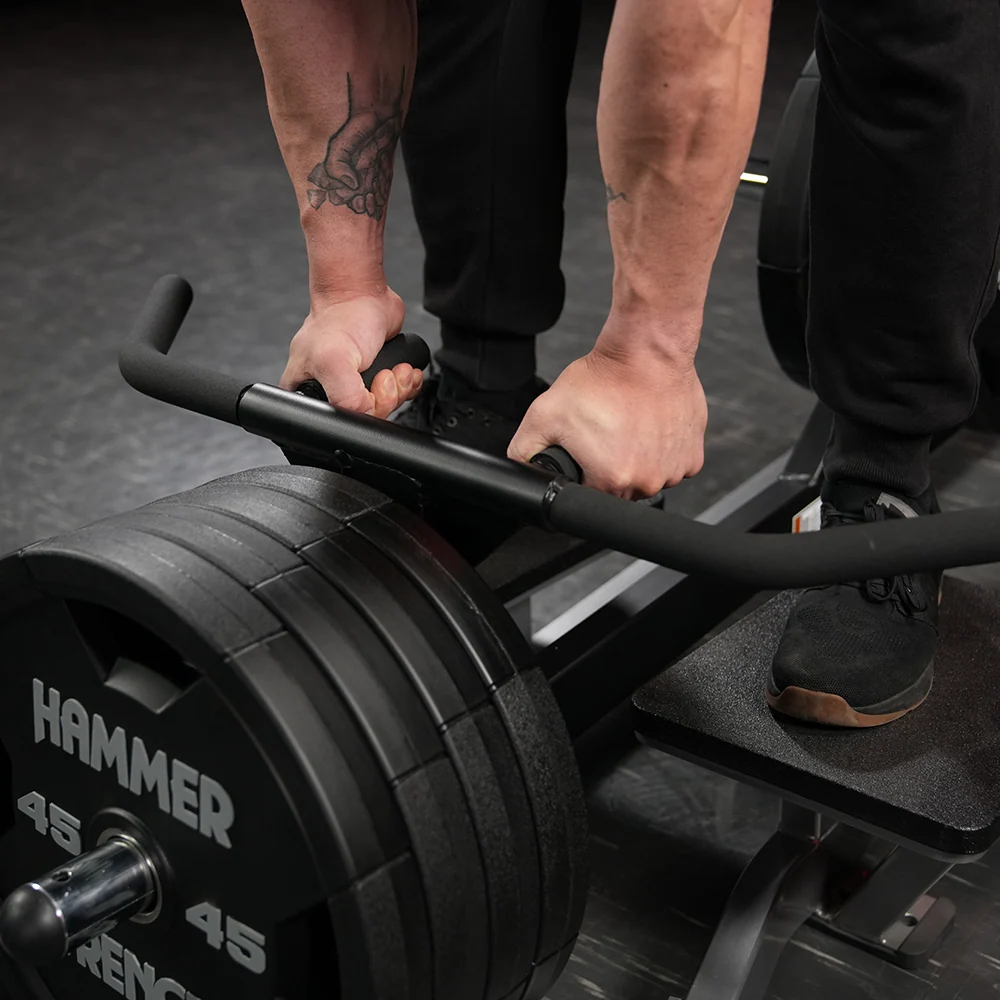
Many chest-supported T-bar machines offer narrow neutral handles and wider pronated or angled options. A closer neutral grip generally lets the elbows travel nearer the ribs. A wider position commonly sends the elbows farther outward. Both are back exercises; neither removes the biceps, rear delts or lats from the movement.
Try the narrow handles first if you want an elbow path that follows the sides of the torso. Pull toward the lower ribs or upper abdomen as the handle geometry permits, without twisting the wrists to chase an imaginary target. The exact finish will depend on your arm length, the pad angle and where the machine’s lever pivots.
A wider grip may feel more natural when you deliberately drive the elbows outward and back, emphasizing movement around the upper back and rear shoulder. It may also shorten the practical range for some lifters. Do not force a very wide grip just because someone promises it will create a completely different set of muscles.
Start with whichever grip allows the longest comfortable, repeatable movement. Use a load light enough to pause briefly at the top without lifting off the pad. If one grip aggravates the wrist, elbow or shoulder, switch to another comfortable option or reduce the range to one you can actually control.
To test grip preferences fairly, use comparable effort, the same machine and nearly identical torso setup. Do a set of eight to twelve deliberate reps with one grip, rest, then test the other. Record where the fatigue accumulates and whether the bottom and top positions remain consistent. Feeling a different burn is useful feedback, but not proof that one setup builds more muscle in the long term.
Make every repetition count: reach, row, pause, return
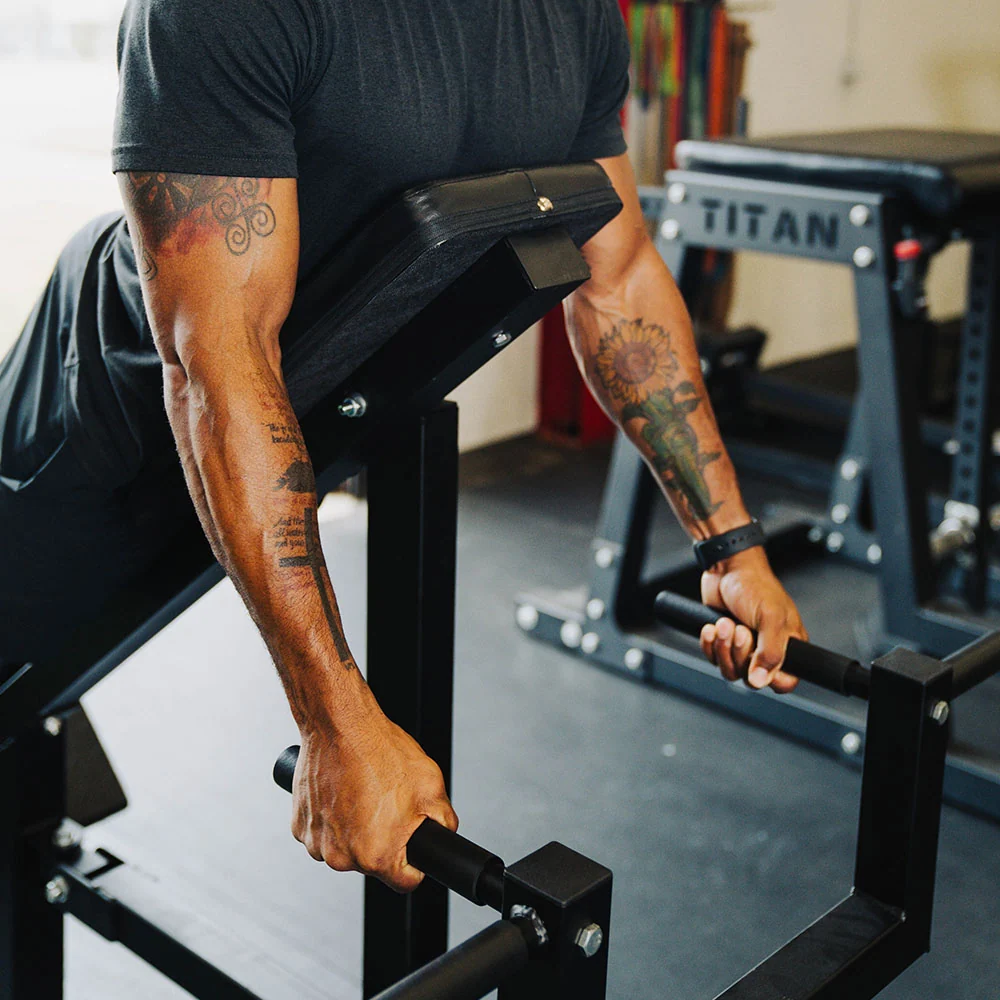
Begin with the lever settled at the start position and the chest still against the pad. Let the arms extend without dropping into a loose shoulder shrug. Start the row by bringing the elbows backward, keeping the hands as connections to the handles rather than trying to curl the machine toward your face.
As the handle rises, allow the shoulder blades to move with the upper arms. You can think about the elbows approaching or passing the torso, but the exact stopping point depends on the equipment and your proportions. End the upward phase when you have reached a solid contraction without needing to peel the chest off the support or wrench the shoulders forward.
Hold that top position briefly. A one-second pause on the early warm-up sets is a revealing test: if the load instantly falls away, the weight might be too heavy for the range you intended. If your head jerks back or your rib cage leaves the pad, reduce the load and repeat the rep with less momentum.
Lower deliberately, allowing the elbows to straighten and the shoulder blades to travel forward again while the torso remains supported. The return need not be artificially slow, but the weight should not free-fall into a hard stop. A controlled two-second lowering phase is an easy starting cue, not a mandatory tempo for all lifters.
Count only repetitions performed to a common standard. Ten strict rows and ten bouncy half-rows are not interchangeable numbers in the training log. If the final two reps become progressively shorter, note them honestly; next session, prioritize reclaiming the original motion before celebrating an extra plate.
Equipment Worth Exploring
Explore equipment, accessories and gear from our carefully selected range.


FID Bench MAX
Adjustable bench offering flat, incline, and decline positions + adjustable headrest.


Multi Bench MBX-650 2.0
Adjustable multi-bench with roller adjustment, 15 backrest positions and accessory mounts.


Rubber Hex Dumbbells
Rubber-coated hex dumbbell pairs with a stable shape for home and commercial strength training.


GymPin Ergo Handles
Pair of ergonomic cable handles shaped for comfortable triceps and pulling exercises.

Compare the supported machine with dumbbells, cables and landmine rows
A chest-supported T-bar machine is convenient because the pad, handles and lever create a stable pulling station. But machine paths differ. Some allow independent left-right arms, some have rotating handles, and others place both hands on one shared lever. The machine’s footprint and range may matter more than small claims about which attachment is ‘optimal’.
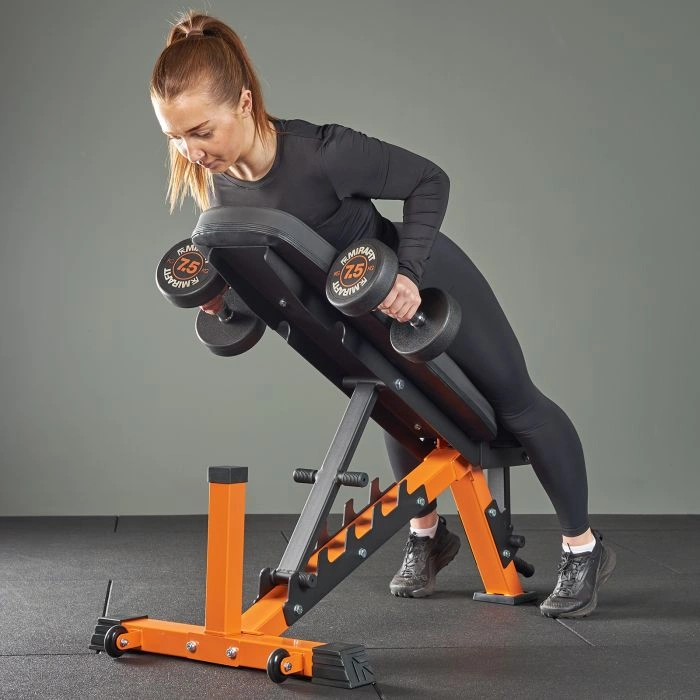
An incline bench with two dumbbells is a strong substitute when a dedicated T-bar station is unavailable. Set the bench so the chest is supported, feet reach the floor securely and dumbbells can hang freely without striking the frame. Individual dumbbells offer each arm its own path; heavier pairs can become awkward to set down, so choose a manageable weight and a clear exit.
Standing barbell and landmine rows offer a different tradeoff. They challenge the hinge and trunk more, which can be useful when that is part of the training goal. They can also be limited by spinal erector fatigue long before the upper back feels finished. It is not a contest over which version is universally superior; choose based on what the session needs to stress.
Cable rows and chest-supported selectorized machines let you change resistance without loading plates. Their pulley geometry, grips and resistance curves differ from those of a T-bar lever. For a fair comparison, match the elbow path, range, proximity to failure and consistency rather than assuming equal numbers on two stacks mean equal difficulty.
The practical rule is to pick one primary row to progress for several weeks, then use a complementary variation for what it does differently. You might pair a supported machine row with pull-ups or pulldowns for vertical pulling, or with a light single-arm dumbbell row for side-to-side control. More machines do not necessarily mean better programming.

Bodybuilding Shirts & Workout Gear
Bodybuilding shirts, tanks and gym gear for lifters chasing muscle, size, symmetry and the pump.


Growth Stoic Bodybuilder : Meme & Ancient Greek God T-Shirt
Rep “Growth Stoic Bodybuilder” humor in and out of the gym.

The Incredible Pump Hulk Bodybuilding Muscle Humor Hoodie
Keep it laid-back with a little “The Incredible Pump Hulk” attitude.

Iron Maiden Heavy Metal Gym Athletic Vest Muscle Shirt Tank Top
Add some metalhead attitude to training with “Iron Maiden Heavy Metal”.


Mike Mentzer Heavy Duty Old School Bodybuilding Gym Gif Hoodie
Make your off-duty look more fun with “Hoodie Mike Mentzer Heavy Duty Old School”.

Hallowed Be Thy Gains Iron Maiden Heavy Metal for Rock T-Shirt
Show some gym-day personality with “Hallowed Be Thy Gains”.


MUSCLE Metallica Heavy Metal Meme – & Gymbros T-Shirt
Show some metalhead attitude with a playful “MUSCLE Metallica” tee.

Shirt – Bulk Gympson – Meme , & Gains T-Shirt
Make gym days more fun with “Bulk Gympson” style.
Build a four-week back-day progression you can reproduce
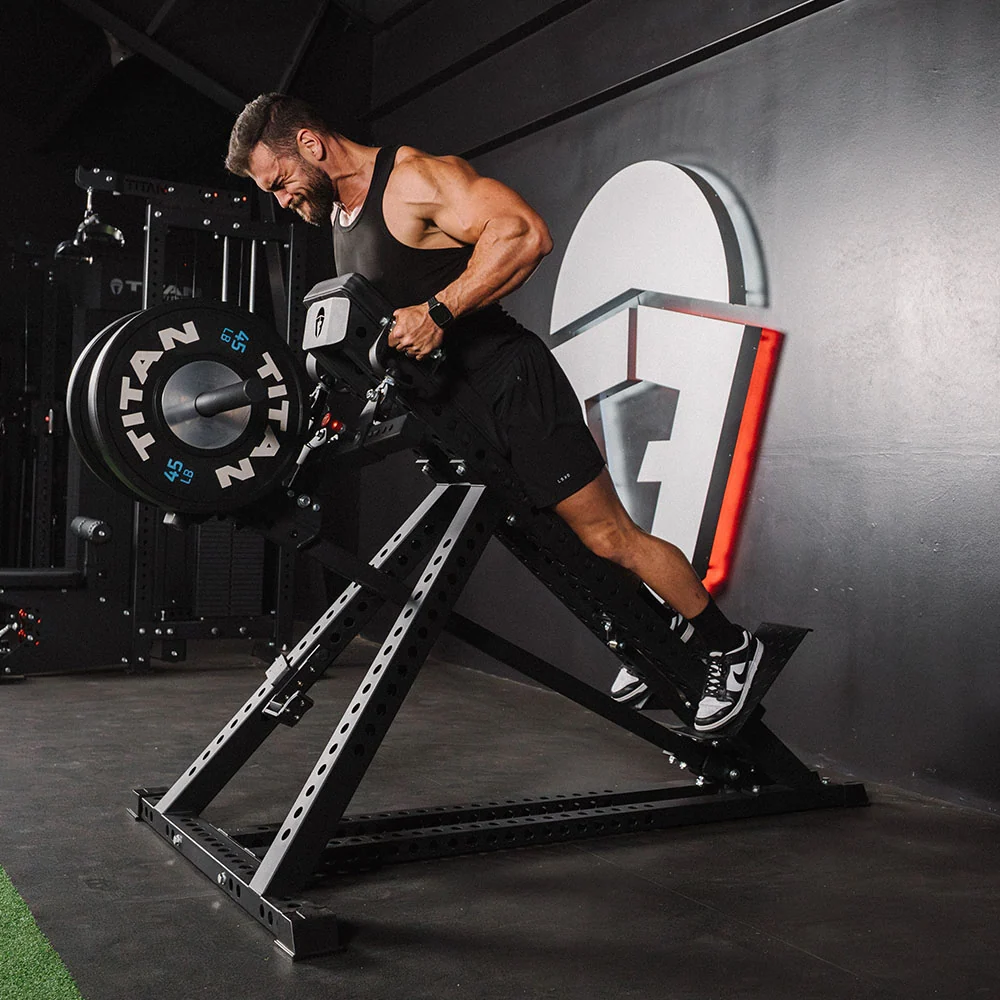
For week one, use two or three work sets of eight to twelve reps with roughly two to three reps left in reserve. Rest about ninety to one hundred and twenty seconds, or longer if your breathing and performance have not recovered. Find the grip and pad setting that stay comfortable throughout. Film one set from the side if it helps you see chest lift or truncated range.
In week two, keep the same setup and aim to add one controlled repetition to one or more sets, without letting the top contraction disappear. Avoid increasing the load merely because the first rep feels easier. A steady sequence of clean reps is more useful than an impressive first rep followed by nine increasingly short ones.
For week three, if all sets reach the top of your chosen rep range with the same technique and a similar level of effort, increase the load by the smallest sensible increment available. If the smallest plate jump is too large, stay at the old load and improve quality, add a repetition or gain consistency before trying again.
In week four, repeat the chosen variation and compare your performance under the same conditions: position, grip, warm-up, rest and rep standard. An increase in clean repetitions or load with unchanged control is meaningful progress. A technique breakdown simply because the machine now has more plates is not.
Place the supported T-bar row near the beginning of the back session when it is a priority. After a heavy hinge it can serve as the stable row that lets the back work without demanding another long isometric brace. Pair it with a vertical pull and one accessory if desired; do not add endless redundant rowing sets just to chase soreness.
Finally, respect individual comfort. Persistent pain, numbness or symptoms that travel down an arm are reasons to stop and obtain qualified assessment rather than forcing the handles into a supposedly perfect path. The best variation is one you can train hard, recover from and repeat with honest form.