A hard wall sit can make your quadriceps shake without a single repetition. That raises a useful home-gym question: can a static hold actually build muscle, or is it just a way to make leg day uncomfortable? A 2025 randomized trial compared quadriceps training performed as long-muscle-length isometric contractions with conventional full-range knee extensions. The researchers found broadly similar muscle-growth outcomes, with some uncertain regional differences. That is promising for people with limited equipment, but it is not proof that every plank or wall sit can replace squats.
Here is what the trial measured, how it fits the wider evidence, and how to combine static holds with ordinary lifting. The example exercises and four-week plan are practical programming illustrations, not a reproduction of the laboratory protocol or a treatment plan for knee pain.
What the 2025 quadriceps experiment actually found
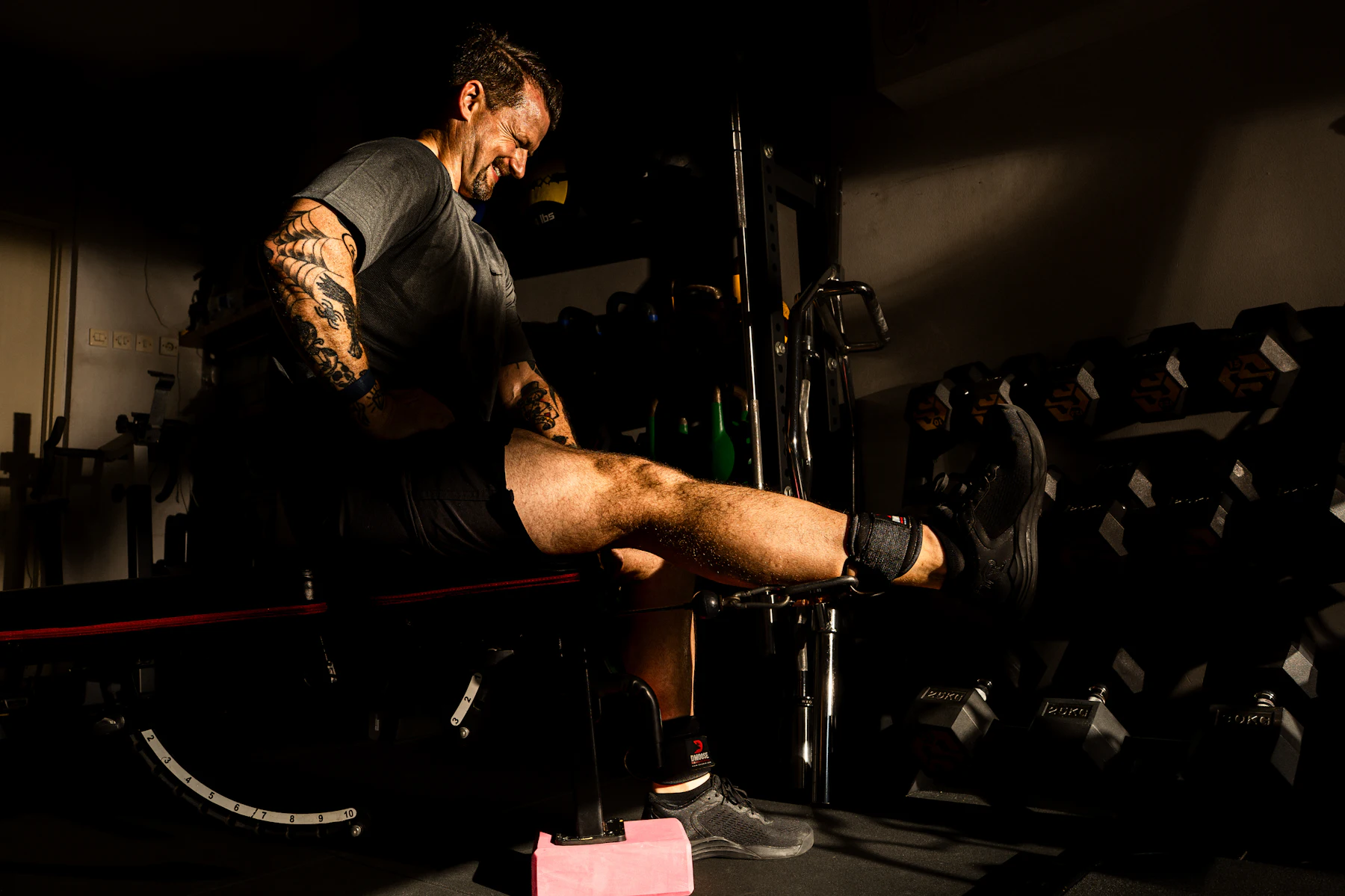
The 2025 trial recruited 23 healthy, resistance-trained men and women. Each person trained one leg using long-muscle-length isometric knee extensions and the other using full-range dynamic knee extensions. The intervention lasted six weeks, with training twice per week. This within-person design is useful because each participant serves as their own comparison for factors such as sleep, diet and general training background.
Researchers measured muscle thickness at several positions along the front and side of the thigh, rather than relying on one circumference measurement. Across the summed anterior-thigh measurements, the between-condition estimate was small and uncertain; the credible interval crossed zero. Both approaches produced broadly similar quadriceps hypertrophy. The analysis suggested a possible advantage for the isometric condition near the upper part of the anterior thigh, but the uncertainty was too large to call it a reliable win.
That distinction is central. The result does not show that static training beats full-range repetitions for everybody. Nor does it establish equal effects for hamstrings, glutes, chest or back. The study was short, involved a modest number of trained adults and used a particular knee-extension setup. A wall sit, a split-squat hold and a machine knee extension do not automatically impose the same joint angles or resistance curves.
Still, the study challenges an overly simple rule that muscle can only grow when a joint visibly moves. Muscle experiences tension during an isometric contraction, and a sufficiently challenging hold can provide a training stimulus. For home-gym owners, the practical question becomes how to apply that tension in a measurable, repeatable way while keeping normal movement training in the program.
Muscle growth and strength are different questions
A muscle can increase in size without improving every test of strength to the same degree. Strength also reflects skill, coordination, joint position and the exact contraction being tested. That is why it matters whether a study measures a static force test, a moving knee extension, a squat or a jump. Similar hypertrophy does not mean identical athletic performance.
A 2025 meta-analysis of 32 studies involving 621 adults found that isometric resistance training improved static strength and often produced greater gains on isometric tests than dynamic training. When strength was assessed dynamically using isokinetic tests, the review did not find a statistically clear advantage for either method. That pattern is consistent with training specificity: you become especially good at the task you practice.
Imagine two home-gym trainees with similar quad development. One practices controlled squats through a deep, comfortable range; the other mainly holds a bent-knee position against a fixed resistance. Both can train the quads hard, but the first has also practiced balancing, bracing and moving a load through the squat. If the goal is a stronger squat, moving squats should remain the foundation. If the goal includes holding force at a particular angle, static work may add a useful quality.
The same logic applies outside leg day. A long-duration plank can improve your ability to resist trunk extension in that position, but it does not teach the complete mechanics of a loaded deadlift. A cable-row hold can train scapular and elbow-position control, yet full rows are still useful for moving through the pull. Think of isometrics as an additional tool for producing and sustaining force, not a universal substitute for repetitions.

Equipment Worth Exploring
Explore equipment, accessories and gear from our carefully selected range.


FID Bench MAX
Adjustable bench offering flat, incline, and decline positions + adjustable headrest.


HUSLA Leg Extension Pad
Pad attachment designed to increase usable range of motion on compatible leg-extension machines.

GymPin Squat Wedges
Non-slip 15-degree squat wedges help elevate the heels for deeper quad-focused squats.

Why joint angle and muscle length change the stimulus
Two holds that look almost identical can load a muscle differently. Joint position changes muscle length, leverage and the amount of force needed to resist an external load. A wall sit with shallow knee flexion is not mechanically equivalent to a deeper wall sit. Likewise, an elbow-flexion hold near the top of a curl may feel different from a hold nearer the bottom, even with the same dumbbell.
A systematic review of isometric training adaptations reported that longer-muscle-length positions often produced greater hypertrophy than shorter-length positions in the studies it examined. That does not mean the deepest possible position is always best. Some joints or tissues may not tolerate a maximal end-range contraction comfortably, and different exercises create different torque demands. The sensible target is a challenging position you can hold with control, not a forced stretch under load.
Evidence also argues against turning muscle length into a magic rule. A 2025 meta-analysis of 12 studies found broadly similar regional hypertrophy when comparing training at different mean muscle lengths, with small trends that were uncertain and sometimes practically trivial. The studies also differed in how much muscle length actually changed. Taken together, the findings support experimenting with long-length loading without declaring every shorter-position hold useless.
For a home setup, choose the position deliberately and document it. Record the bench setting, band anchor height, cable pulley height, foot position or approximate knee angle. Use the same position for several weeks before comparing performance. If a hold becomes easier, that may reflect better strength or endurance at that angle; if you silently change the angle every session, your progress log becomes harder to interpret.

Leg Day Shirts & Workout Gear
Leg-day gym shirts and workout gear for lifters who never skip squats, lunges and lower-body punishment.

My Leg Hurts Leg Day , Meme Lovers & Bros Casual T-Shirt
Bring “My Leg Hurts” humor to your next gym day.


Deadlift Lovers – Grim Reaper Skeleton , Bros & Leg T-Shirt
Rep “Deadlift Lovers” humor in and out of the gym.

Brains Beauty Booty – , Gains & Glutes T-Shirt
Heavy lifts, good laughs, and a little “Brains Beauty Booty” energy.

Motivation – Squats & Booty Builder Leg Day – Strong T-Shirt
Bring “Gym Motivation” humor to your next gym day.

Bunny – Cutie With A Booty – Squats & Gains Meme Top T-Shirt
Heavy lifts, good laughs, and a little “Gym Bunny” energy.

Motivation – Mermaid Leg Day Meme Strong , & Lovers T-Shirt
Show some leg-day attitude with a playful “Gym Motivation” tee.

Let It Grow Girl – Bootybuilder, Leg Day & Hip T-Shirt
Heavy lifts, good laughs, and a little “Let It Grow Gym Girl” energy.

Adventure Girl Booty Builder Leg Day Meme Squats & T-Shirt
Heavy lifts, good laughs, and a little “Gym Adventure Girl” energy.

Praise The Deadlift Holy Lifting Meme , & T-Shirt
Show some deadlift attitude with a playful “Praise The Deadlift” tee.
Four lower-body isometrics worth considering at home
Wall sit: Slide down a stable wall until your knees reach a comfortable bend, keep the feet planted and hold without bouncing. A shallower position can make the exercise more approachable; a deeper position often changes the demand. Stop if the position produces sharp knee pain or makes you dizzy. Wall sits are convenient for building tolerance to a sustained bent-knee effort, but they are not identical to the machine contractions used in the 2025 hypertrophy trial.
Split-squat hold: Take a stable staggered stance, lower to a controlled midrange position and pause with the torso balanced. Holding a rack upright lightly can reduce the balance requirement and let you focus on leg effort. This is useful when a home gym lacks a leg-extension machine. It loads several muscles and requires more stabilization than a supported knee extension, so the stimulus is less isolated.
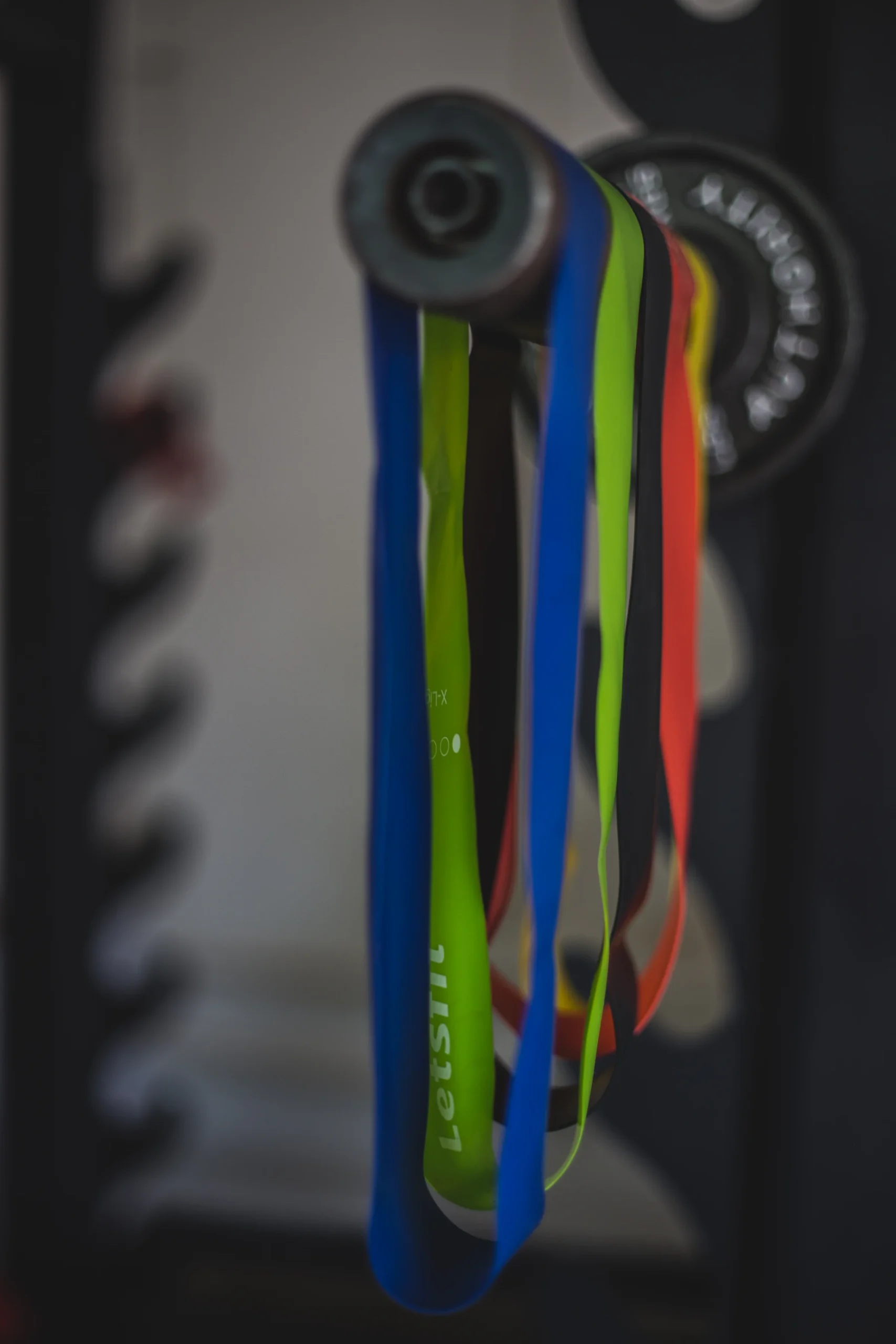
Supported band-assisted squat hold: A sturdy, manufacturer-approved anchor and appropriate resistance band can help support an upright torso while you hold a squat position. Check the anchor, band condition and the direction of force before loading it. Do not loop a band around a fragile fixture or assume a doorway is safe simply because it is convenient. If the setup feels unstable, choose a wall sit instead.
Leg-extension hold: If you own a suitable machine or properly engineered attachment, pause at a reproducible knee angle under moderate resistance. The important variables are actual force, comfort, duration and consistent positioning. Do not improvise a heavy ankle-cable rig that can jerk the knee or detach under load. Start with shorter holds and build confidence before increasing resistance.
None of these requires an all-out maximal effort on day one. Use a controlled contraction, steady breathing and a safe exit from the position. A challenging hold should feel like targeted muscular work, not like a contest to ignore warning signs.
How to use static holds with cables and upper-body equipment
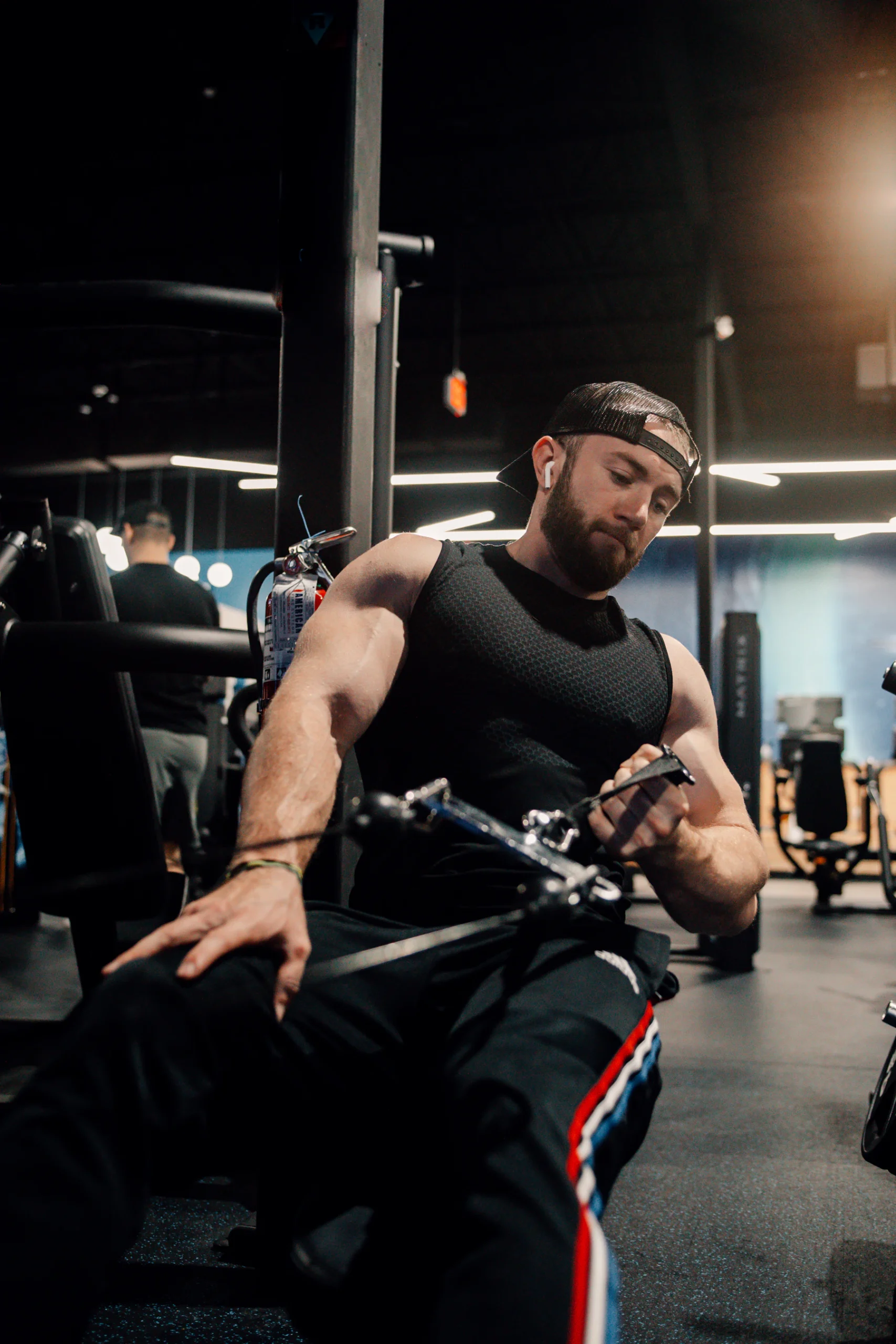
Cables are especially versatile because the resistance direction can be changed by moving the pulley. For a row hold, sit or stand in a stable position, draw the handle toward your torso and maintain the chosen elbow and shoulder position for a short interval. For a curl hold, set the pulley so the cable stays under tension at the selected elbow angle. For a press hold, use a load and stance that do not pull you off balance.
Digital resistance trainers and conventional weight stacks can both supply resistance, but their behavior is not necessarily identical. A motorized unit may offer several modes, each with different responses to movement or changes in force. Use only manufacturer-supported mounting arrangements and a mode suitable for controlled static work; never assume a device will maintain constant resistance at every position. Confirm the cable path stays clear of edges and the anchor remains stable.
A useful distinction is between overcoming and yielding isometrics. In an overcoming contraction, you push or pull against an object that does not move, such as a correctly positioned safety pin. In a yielding contraction, you resist an external load while holding a position, as with a dumbbell or cable. Both can be hard, but they are not interchangeable for measuring progress. A fixed bar can let you produce substantial force without visible movement; a loaded hold gives you a specific resistance to maintain.
For shoulders, avoid forcing an overhead hold into an uncomfortable range. A neutral-grip row hold, chest-supported position or lower cable press may be easier to control. Keep breathing rather than performing a prolonged breath hold, especially during difficult static contractions. A brief isometric accessory can complement rows, pulldowns, curls and presses, but the moving versions should remain in the program when your goal includes full-range strength and coordination.
Equipment Worth Exploring
Explore equipment, accessories and gear from our carefully selected range.
VOLTRA
Compact digital cable trainer with smooth, adjustable resistance.

Go-Tone Pro
Portable digital cable trainer with up to 66 lb (30 kg) of adjustable resistance.

Squat Harness
Wearable harness for hands-free cable squats, sled work, and lower-body training.


GymPin Ergo Handles
Pair of ergonomic cable handles shaped for comfortable triceps and pulling exercises.

Programming holds without turning every session into a grind
The research does not provide one universal prescription for every exercise, muscle and goal. A reasonable starting experiment for a healthy lifter is two or three controlled holds of roughly 10–30 seconds, placed after the main dynamic exercise. Rest long enough that each hold begins with stable technique. Those durations are a practical coaching starting point, not the exact protocol used in the 2025 quadriceps experiment.
Progress only one variable at a time. First make the position repeatable; then increase hold duration within your chosen range; finally add a small amount of resistance if the setup allows it. For example, a 15-second split-squat hold that feels difficult in week one might become a 25-second hold at the same position in week three. Once you can hold the position comfortably for the planned duration, a slightly heavier dumbbell may be more informative than extending every set to a minute.
Keep static work proportional to the rest of your training. If you already perform challenging squats, lunges and knee extensions, adding six maximal wall-sit sets after every leg day can increase fatigue without a clear payoff. Start with one or two exercises per week and track how your next session feels. If squat performance drops or your knees remain unusually sore, reduce the accessory dose rather than insisting more is better.
For strength, a mix of dynamic repetitions and brief position-specific holds is often easier to justify than an isometric-only plan. A 2025 review of dynamic training specificity found that improvements transfer more strongly to the type of strength test practiced. That supports keeping your main lift specific to your goal. Isometrics can address a position you want to strengthen, provide variety when equipment is limited or offer a lower-motion accessory when full repetitions are temporarily impractical.
Be cautious about treating static holds as injury rehabilitation. Knee pain, tendon symptoms and post-surgical restrictions require individualized load decisions. High-effort isometrics can also create substantial cardiovascular strain, particularly when paired with breath holding. People with relevant cardiovascular conditions should seek exercise-specific guidance rather than copying maximal-effort internet challenges.
A practical four-week hybrid home-gym plan
Here is an example for someone who already trains twice weekly and wants to test whether isometrics add value without replacing productive dynamic work. Leave at least a day between lower-body sessions. Select loads that allow controlled repetitions with about two reps in reserve; the holds should feel challenging but stable. This is an illustrative plan, not a validated intervention that promises a particular amount of muscle growth.
Session A — squat pattern: Warm up with easy movement and progressively loaded practice sets. Perform three sets of six to ten squats or goblet squats, then two sets of eight to twelve Romanian deadlifts. Finish with two wall sits or supported split-squat holds of 15–25 seconds. Rest between holds until you can repeat the same position. If the first hold is far more demanding than expected, shorten it rather than letting the next one become sloppy.
Session B — unilateral and knee extension: Perform three sets of eight to twelve split squats per leg and two or three sets of eight to fifteen controlled knee extensions if you have a suitable machine. If you do not, use a stable step-up or another knee-dominant movement. Add two isometric holds per leg at a repeatable split-squat position for 10–20 seconds. A short plank can finish the session if trunk endurance is also a goal, but it is optional and should not replace lower-body work.
Week 1: Establish technique, angles and comfortable durations. Record the load, hold time and perceived effort. Week 2: Repeat the same positions and aim for cleaner control or a few extra seconds. Week 3: If recovery is good, increase one hold slightly or add a modest load increment. Week 4: Compare the same position and duration against week one while keeping the main lifts consistent. Progress on a static hold is useful information, but also check whether your squats and split squats continue improving.
The bottom line is measured optimism. The 2025 knee-extension trial suggests that demanding long-length isometrics can support quadriceps growth, yet its results do not establish that static work is superior or that every bodyweight hold duplicates a loaded machine. Keep the movements that build the strength you want, use holds where they solve a real problem, and let repeatable training—not a novelty exercise—drive the program.
Bodybuilding Shirts & Workout Gear
Bodybuilding shirts, tanks and gym gear for lifters chasing muscle, size, symmetry and the pump.

Mind Muscle Connection Tee
Show some lifting attitude with a playful “Mind Muscle Connection” tee.

Meme – Shhh I’m Doing Math Plate Math Weightlifting T-Shirt
Heavy lifts, good laughs, and a little “Shhh I’m Doing Math Plate Math” energy.

Meme Installing Muscles & Lifting Shirt Bros & T-Shirt
Bring “Installing Muscles” humor to your next gym day.

Dost Thou Even Hoist Sir? – Do You Even Lift, Bro? T-Shirt
Make gym days more fun with “Dost Thou Even Hoist Sir?” style.

Everything Hurts And I’m Tired Duck Meme , Lifting & T-Shirt
Heavy lifts, good laughs, and a little “Everything Hurts And I’m Tired” energy.

Everything Hurts And I’m Hungry – Motivation Lifting T-Shirt
Show some lifting attitude with a playful “Everything Hurts And I’m Hungry” tee.

Lift Eat Repeat – Weightlifting & – Meme Bros & T-Shirt
Make gym days more fun with “Lift Eat Repeat” style.

Gymhead Skull Plate – , Meme Shirt Bros & T-Shirt
Make gym days more fun with “Gymhead Skull Plate” style.

Dino-Sore – Dinosaur , Meme Shirt Sore Muscles & T-Shirt
Bring “Dino-Sore” humor to your next gym day.

Dadlift Meme Dads, & Dad Strength Gains Lifting T-Shirt
Show some powerlifting attitude with a playful “Dadlift” tee.