Advertising disclosure: This page includes affiliate product links that may earn us a commission, as well as products from our own store.
Suspension Triceps Extensions: Set the Angle Before Adding More Reps
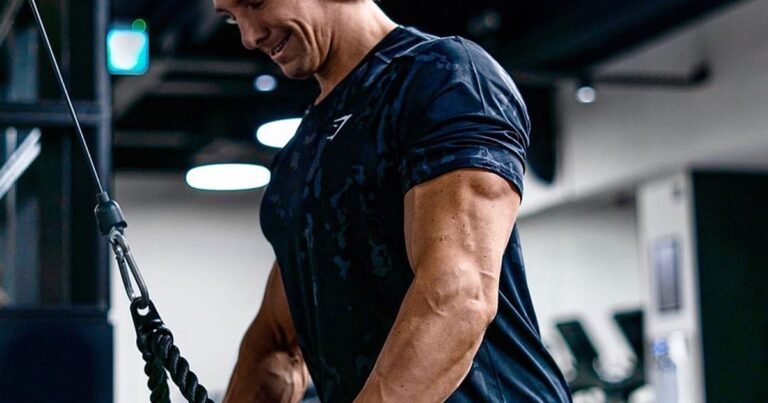
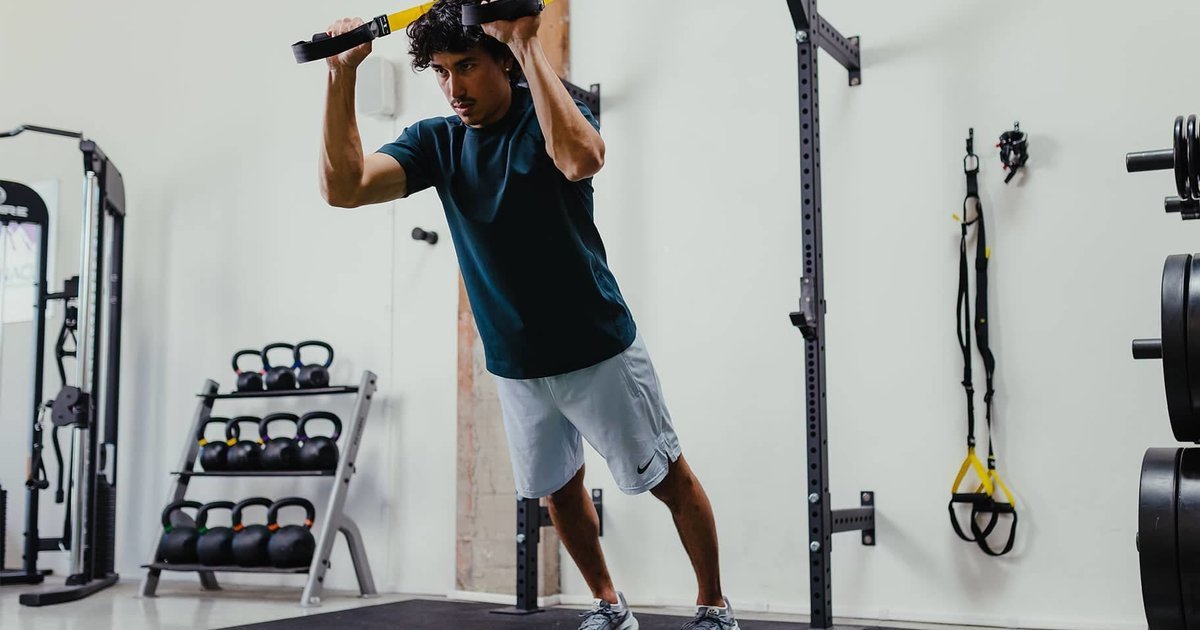
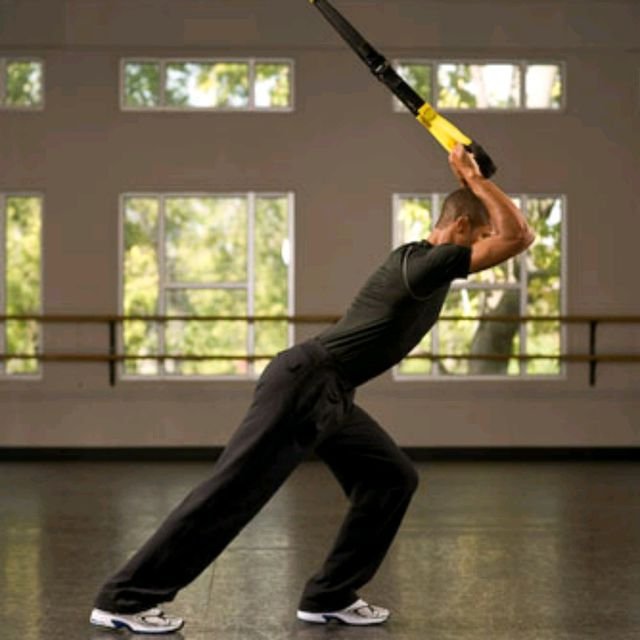
A suspension triceps extension turns your body into the moving resistance. With the handles supported by an overhead anchor, you bend and straighten your elbows while keeping the rest of your body organised. The exercise can fit an arm day or follow your main pressing work, but a steeper lean is useful only while you can control the return.
The practical challenge is repeatability. Two sets labelled “12 reps” can be very different if the strap length, foot position and elbow depth change between them. Establish a setup you can reproduce, then make the exercise harder through a deliberate adjustment rather than a gradual collapse in technique.
1. Start with the anchor, straps and floor
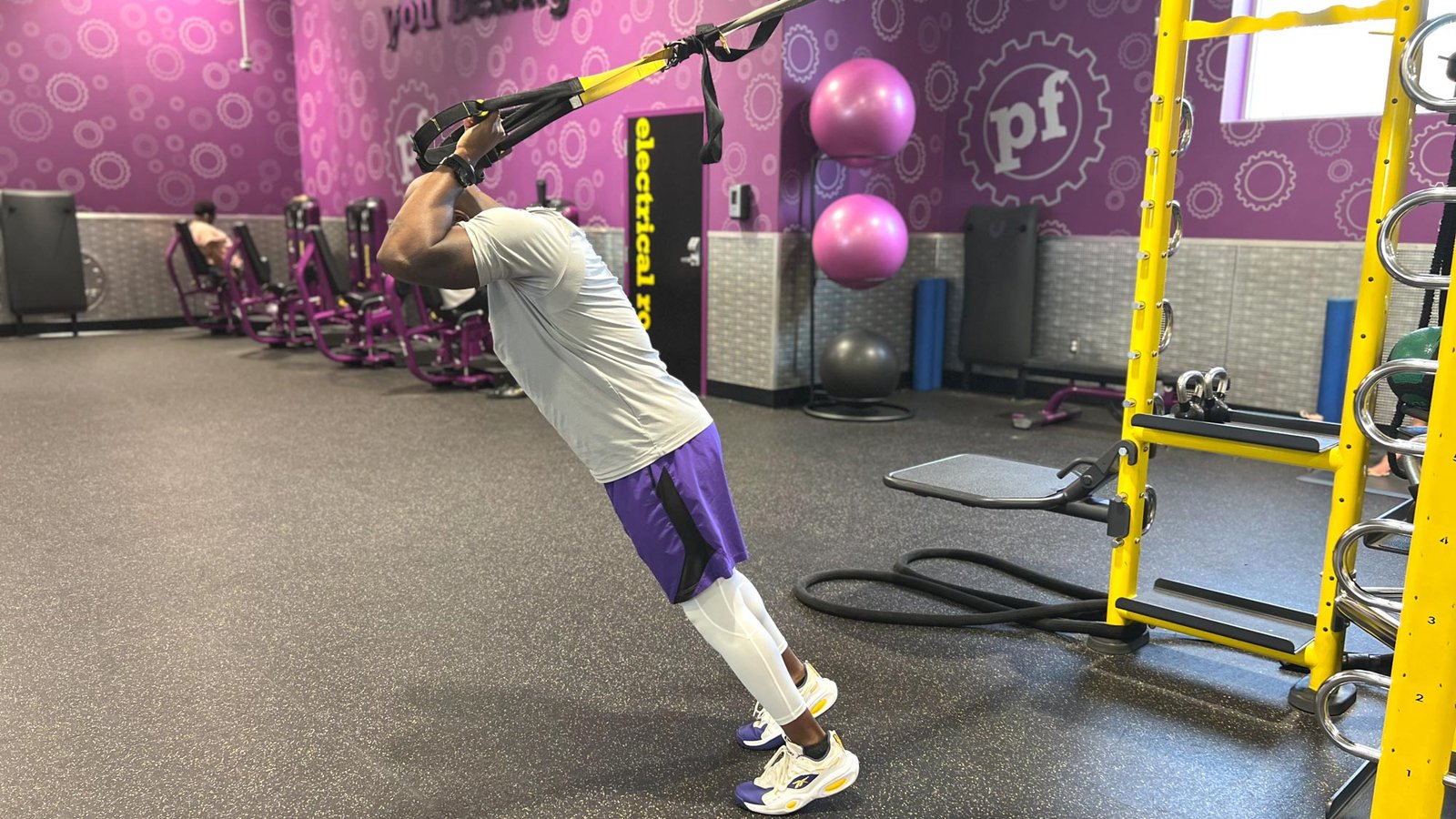
Use a suspension trainer and anchoring system intended to support bodyweight exercise. Follow the instructions for that exact trainer and mounting arrangement. A rack, door or overhead beam is not automatically suitable because it looks solid; the attachment method, structure and direction of loading all matter.
Before leaning into the handles, inspect the webbing and attachment points. Do not train on frayed straps, sharp contact edges or a mount that moves under load. Test the installation as the manufacturer directs. Check the floor too: your shoes need traction, and the space ahead must let you recover to standing without hitting another station.
Set both handles evenly, face away from the anchor and take up the slack gently. Begin relatively upright. A staggered stance can make an initial practice set easier to organise; use the same stance for the repetitions you want to compare. Keep the straps clear of your face and neck.
Make a short setup note before the first working set. For example: “same rack bay, same strap mark, right foot forward.” That is more useful than photographing only the final pump. If you change gyms or trainers, treat the new arrangement as a fresh setup rather than assuming your old repetition count transfers exactly.
2. Choose a body angle you can hold
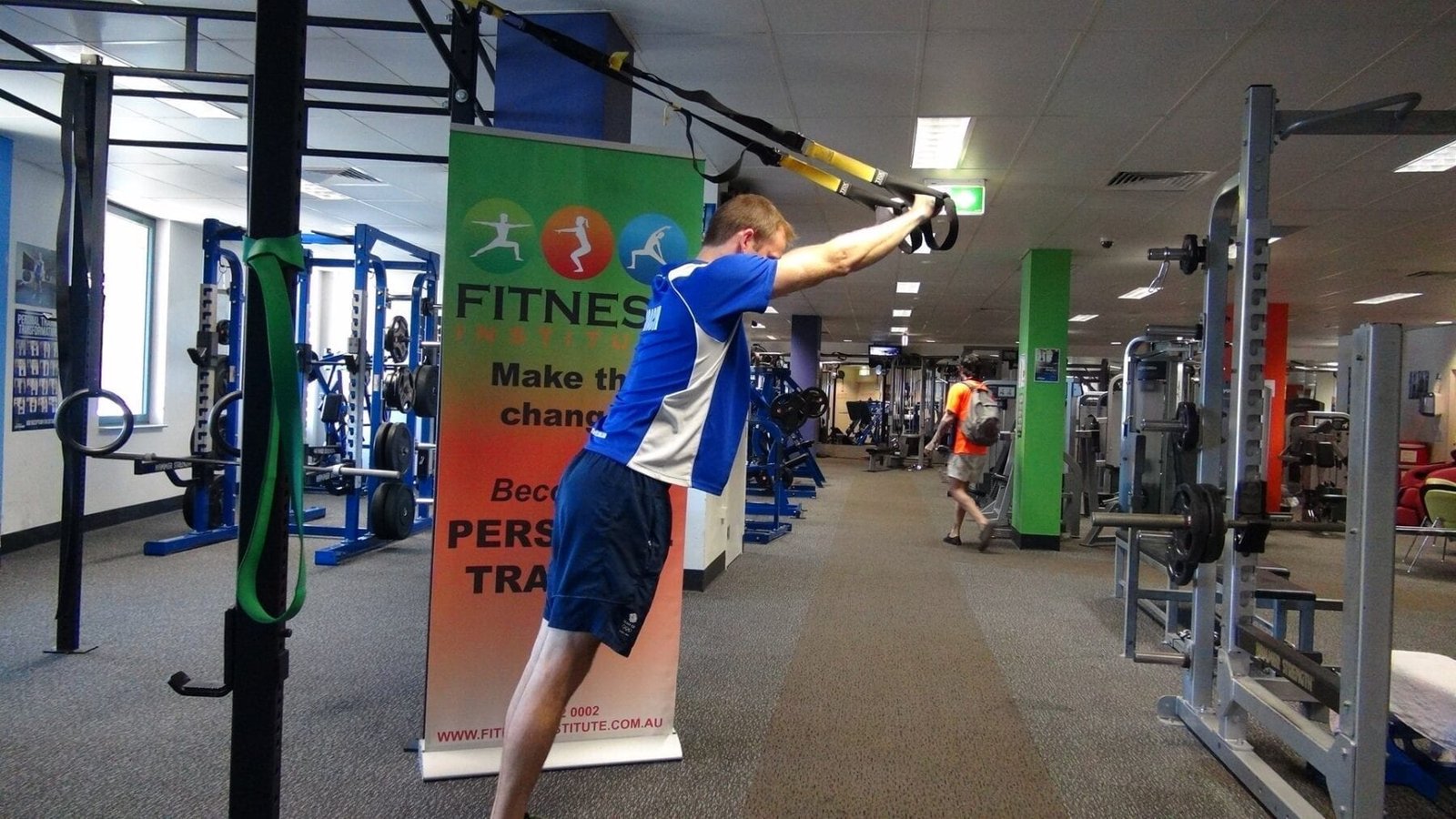
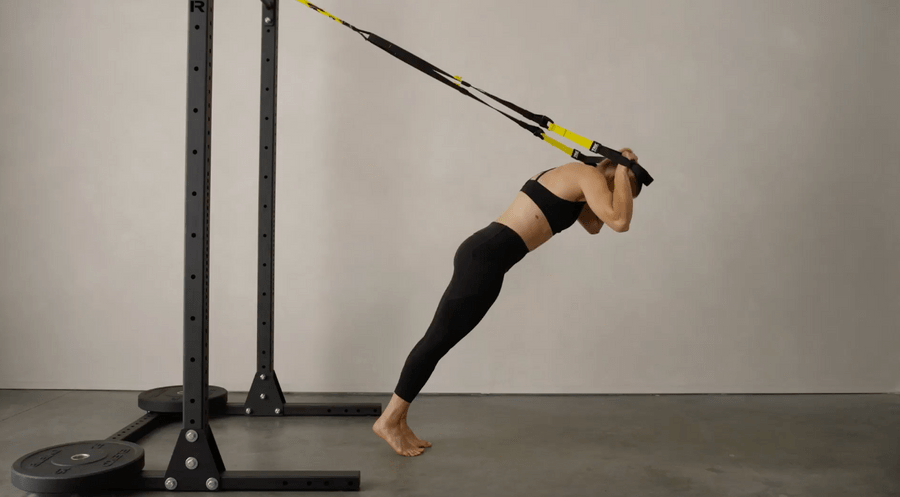
Your trunk should travel as a controlled unit while the elbows do the obvious bending and straightening. Brace your midsection, keep your head aligned with your torso and avoid letting the hips sag behind the movement. You should be able to breathe while maintaining that position.
The body angle helps determine the challenge. With a given setup, a more upright position is generally easier to control than a deeper forward lean. Find the easier position first, perform several practice repetitions and adjust gradually. Do not chase a particular angle from somebody else’s photograph: anchor height, strap length, stance and body proportions affect the result.
A useful test is whether repetition three resembles repetition one. If the first rep is controlled but the next two require a large back arch or a sudden lunge, the setup is already too demanding for the version you are trying to perform. Reduce the lean before adding more work.
Keep a simple distinction in your log: setup difficulty versus repetitions completed. “Ten at the usual mark” and “ten with a deeper lean” are different entries. Recording both prevents accidental progress claims when you have actually made the exercise easier to finish the set.
3. Bend at the elbows instead of turning it into a chest press
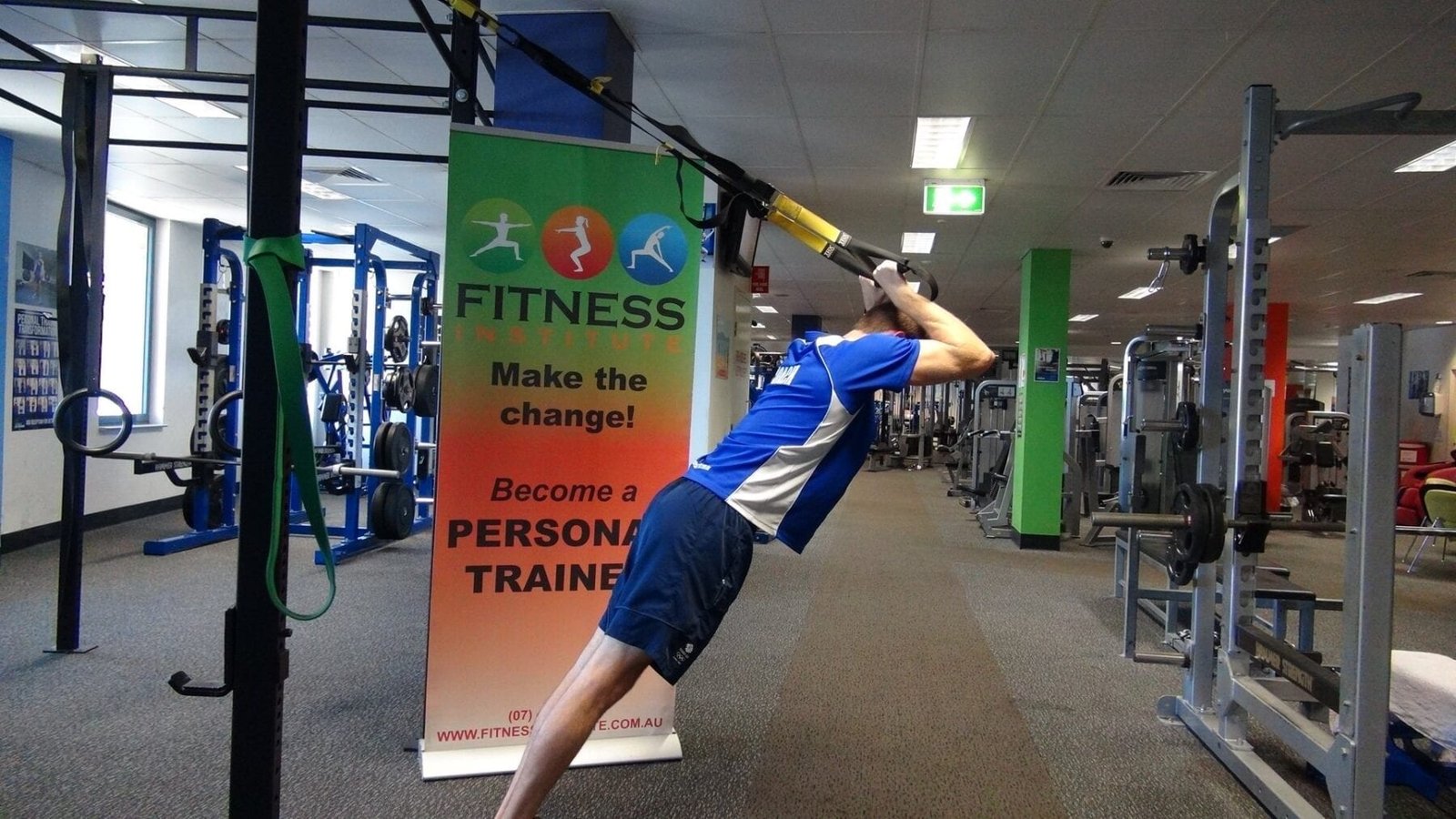
Hold the handles firmly with wrists close to neutral. Let your elbows bend so your hands approach the sides of your forehead, then straighten the elbows to move your body away from the handles. Keep the movement smooth in both directions, with the upper arms relatively steady rather than repeatedly sweeping them forward and back.
There is a clear difference between an extension and a suspension chest press. In the extension, the hands stay nearer the head and elbow motion is central. If your hands drop toward the chest and the upper arms swing substantially, you have changed the movement. A chest press can be a valid exercise, but it should not quietly replace the extension halfway through a set.
Use a comfortable, controlled range. Do not force your head between the handles or turn the bottom position into a neck stretch. Finish by straightening the elbows without aggressively snapping them into lockout. Stop if the movement causes pain rather than treating a painful position as something to push through.
For a technique check, film a short set from the side. Review the body line and upper-arm position at the start, middle and end. Compare your own repetitions before comparing your shape with another lifter’s. The aim is an identifiable movement you can repeat, not a perfect freeze-frame at one point in the set.
4. Fix the limiting factor before changing exercises
When a set becomes untidy, identify what changed first. A slipping foot calls for a surface or footwear correction. Slack straps call for a setup reset. A drifting torso or uncontrolled drop calls for an easier position, fewer repetitions or more recovery before the next set. Adding effort does not solve every problem.
Use one correction at a time. Suppose your first set reaches ten smooth reps, but the second becomes a chest press after seven. Rest longer and try the original setup again, or intentionally choose an easier lean. Do not simultaneously alter the strap length, stance, tempo and target count: you will lose track of which adjustment helped.
A cable extension or lying dumbbell extension is another option when the suspension setup is difficult to reproduce. Each has a different resistance arrangement, so start with an appropriate load and learn its technique. An exercise change is a programming choice, not proof that one tool is universally better.
The equipment below covers those alternative arm-training setups: cable ropes and handles, dumbbells, a bench and a cable station. Cable attachments are not bodyweight suspension straps and must not be used as substitute anchors. You do not need to buy this equipment to perform an extension on an already suitable suspension trainer.

Equipment Worth Exploring
Explore equipment, accessories and gear from our carefully selected range.

Multi-Length Tricep Strap
Adjustable-length cable strap for triceps, biceps and upper-body cable exercises.
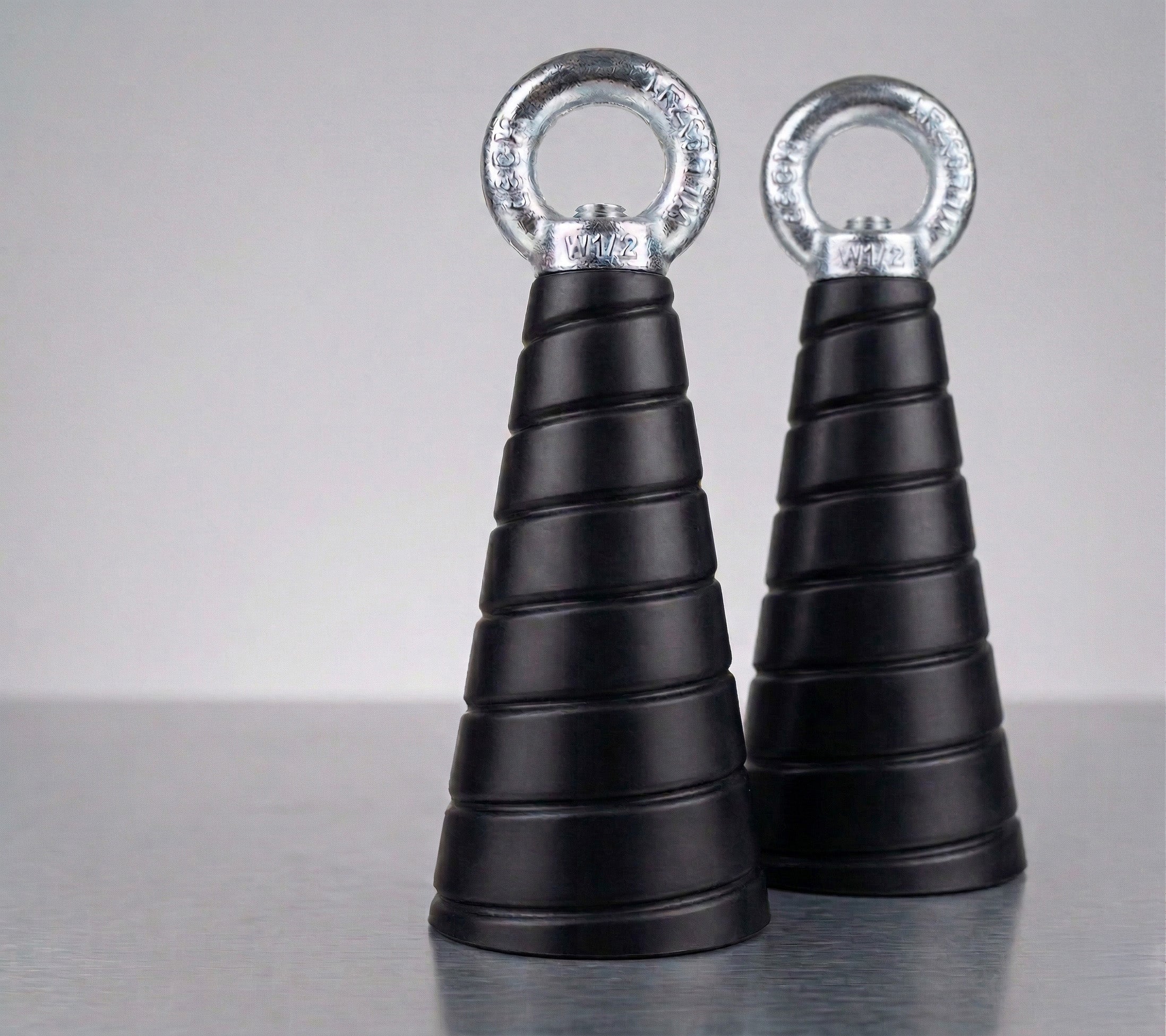
Tapered Tricep Cone
Tapered rubber cable grip for triceps extensions, face pulls and hammer curls.
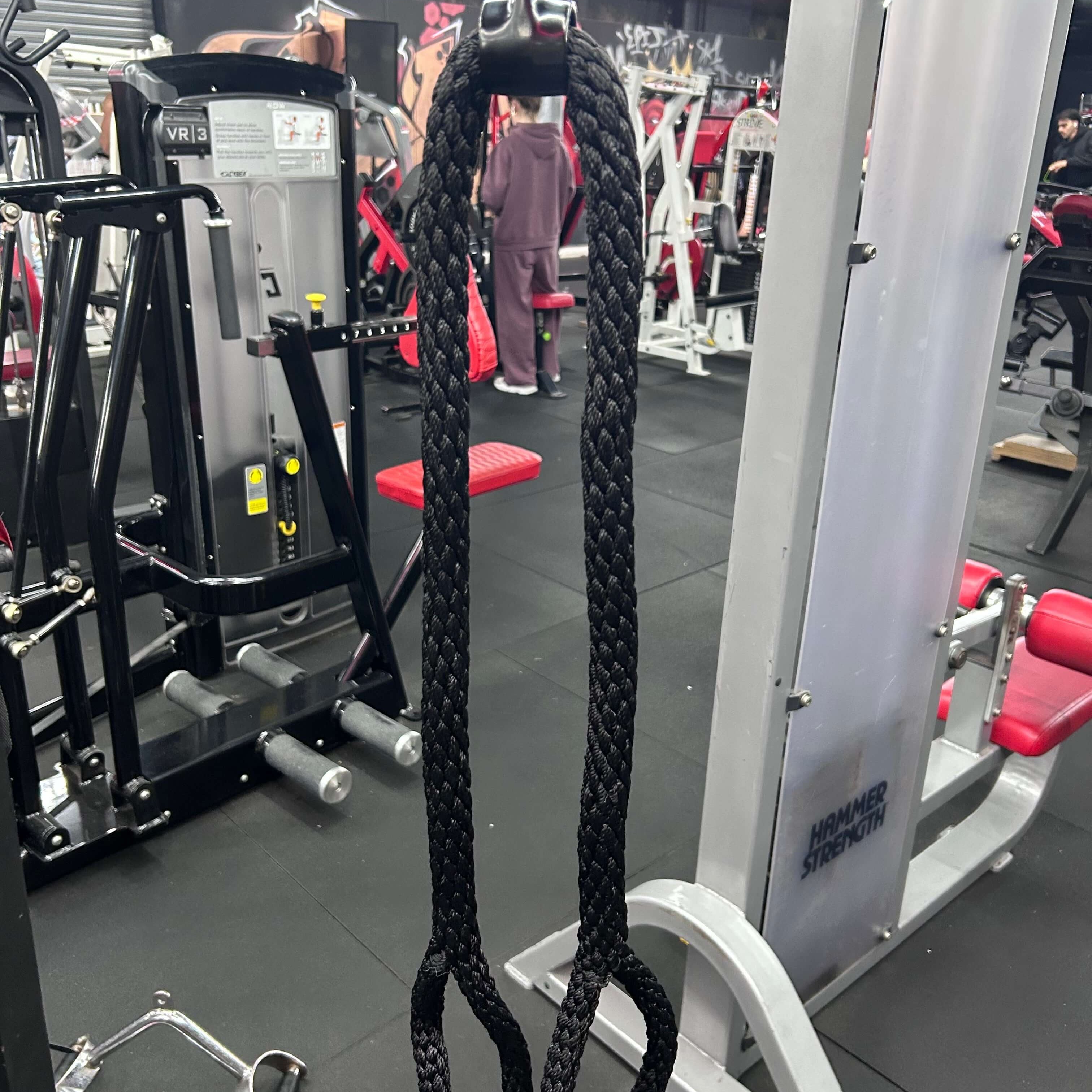
Super Long Tricep Rope
Extra-long looped cable rope for triceps pressdowns and overhead extensions.

Long Tricep ERGO Ropes
Extended triceps ropes with ergonomic grips for cable pressdowns and overhead extensions.
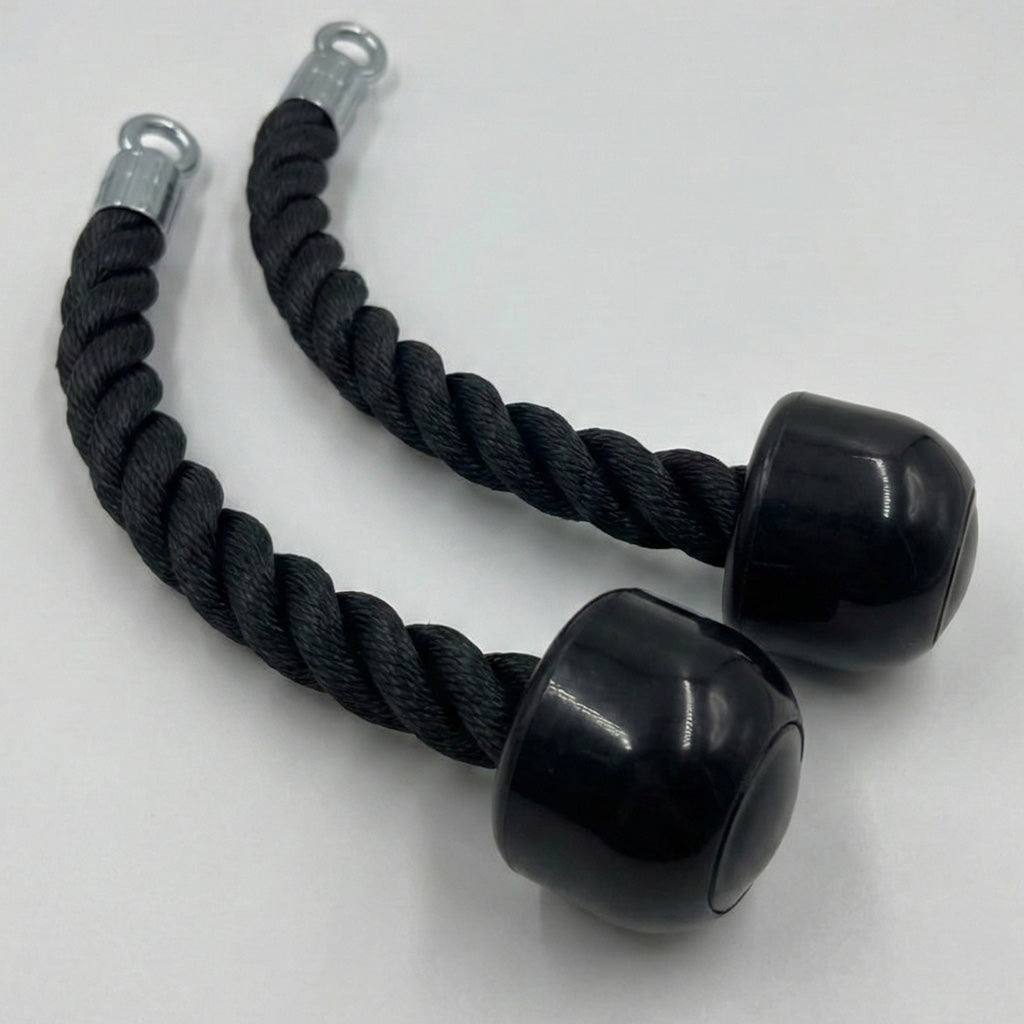
Individual Tricep Ropes
Pair of individual cable ropes for triceps pressdowns and cable hammer curls.

Multi Bench MBX-650 2.0
Adjustable multi-bench with roller adjustment, 15 backrest positions and accessory mounts.


Rubber Hex Dumbbells
Rubber-coated hex dumbbell pairs with a stable shape for home and commercial strength training.


VForce Lat Tower
Wall-mounted cable tower with pivot arms and adjustable 1:1 or 2:1 pulley ratios.
5. Build a small progression you can actually compare
Start with a manageable amount of direct triceps work alongside the pressing already in your programme. A simple practice example is two controlled sets in an 8–12 repetition range, leaving a little capacity rather than chasing a failed rep. This is a starting template to adjust, not a tested promise of a particular amount of muscle growth.
On the first session, record the setup and the number of clean repetitions. At the next comparable session, try to add one clean rep somewhere while keeping the setup unchanged. Once both sets comfortably reach the top of your chosen range, make one small difficulty adjustment and allow the repetition count to fall again.
For example, you might log 10 and 9, then 11 and 10, and later 12 and 12. Only then change the lean and establish a new baseline. These numbers illustrate a decision process; they are not targets every lifter must hit on consecutive workouts. If performance falls, examine fatigue, rest and setup consistency before rewriting the plan.
Fit the exercise into the arm day or push day you already have. Keep room for biceps work elsewhere rather than confusing more direct triceps sets with a complete arm programme. The best next step is often boring and measurable: reproduce the same position, complete the planned repetitions and leave with a clear note about what to change next time.

Funny Gym Shirts & Workout Gear
Funny gym shirts, tanks, hoodies and workout gear for lifters who like training hard.


Big Gun – AC/DC Rock Music Big Biceps & Gains – Meme T-Shirt
Rep “Big Gun” humor in and out of the gym.

The Real Rocky Mountains – Bicep Mountain Meme Hooded Hoodie
Bring “The Real Rocky Mountains” gym humor to lazy days and post-workout plans.

Big Biceps Theory Meme Sweater Bro Science T-Shirt
Add a playful “Big Biceps Theory” touch to your casual rotation.

Dost Thou Even Curl Tank
Bring “Dost Thou Even Curl Medieval Knight Bicep” humor to your next lifting session.

Right to Bare Arms George Washington Patriotic Muscle S Tank Top
Bring “Right to Bare Arms” humor to your next lifting session.

Gundalf The Grey Big Guns – Lord Of The Rings Meme Deca Sticker
Stick a little “Gundalf The Grey Big Guns” humor on your favorite gear.


OnlyGains Big Biceps Tee
Rep “OnlyGains Only Gains Big Biceps” humor in and out of the gym.