A small home gym forces useful decisions. You might have dumbbells, a bench and enough floor space for a long step, but not the budget for a dedicated squat station. Does that mean your leg training is compromised? A July 2026 systematic review and meta-analysis gives a more useful answer than the usual debate about whether single-leg exercises are “better” than squats: it depends on the outcome you want.
Across 24 randomized controlled trials, unilateral training favored unilateral strength and unilateral jump performance, while bilateral training favored bilateral strength. The researchers did not detect a clear between-group advantage for muscle hypertrophy, bilateral jumping, sprinting or change-of-direction performance. Those findings do not mean every split squat replaces a heavy barbell squat. They do mean that limited space and equipment need not prevent productive leg training.
Here is how to apply the evidence without confusing balance practice, muscle growth and maximal strength.
What the 2026 research actually found about one leg versus two
The 2026 review pooled 24 randomized trials covering strength, jumping, muscle size, sprinting and change of direction. For unilateral strength, the pooled effect favored unilateral training (Hedges’ g = 0.42, 95% confidence interval 0.23–0.60). Unilateral jump performance also favored unilateral work (g = 0.35, 95% CI 0.14–0.56). Bilateral strength favored bilateral training, reported as g = −0.28 under the paper’s effect-direction convention (95% CI −0.54 to −0.02). These are standardized pooled differences, not percentage gains promised to every lifter.
For hypertrophy, the review found no statistically significant difference between the training approaches. An earlier 2025 systematic review, with nine included studies, also found no clear muscle-growth advantage while reporting strength gains that reflected the movement trained. Agreement between reviews is useful, but “no detected difference” is not proof that all exercises, loading schemes and training populations are interchangeable.
The most actionable principle is specificity. If you want a heavier two-legged barbell squat, practice that pattern. If you want better force production in a one-leg task, give unilateral patterns a meaningful place. If you mostly want larger, stronger legs in a small room, either approach can contribute when the working sets are challenging and progressed consistently.
Most trials were conducted in defined groups under controlled conditions. They cannot establish a perfect exercise ratio for every recreational home-gym owner or prove that split squats prevent injury. Use the evidence to make better decisions, not to turn one movement into a universal solution.

Equipment Worth Exploring
Explore equipment, accessories and gear from our carefully selected range.

Squat Harness
Wearable harness for hands-free cable squats, sled work, and lower-body training.

GymPin Squat Wedges
Non-slip 15-degree squat wedges help elevate the heels for deeper quad-focused squats.

Belt Squat Collar
Heavy-duty collar adapter for compatible belt-squat and landmine bar setups.


FID Bench MAX
Adjustable bench offering flat, incline, and decline positions + adjustable headrest.


Why unilateral work makes limited weights feel heavier
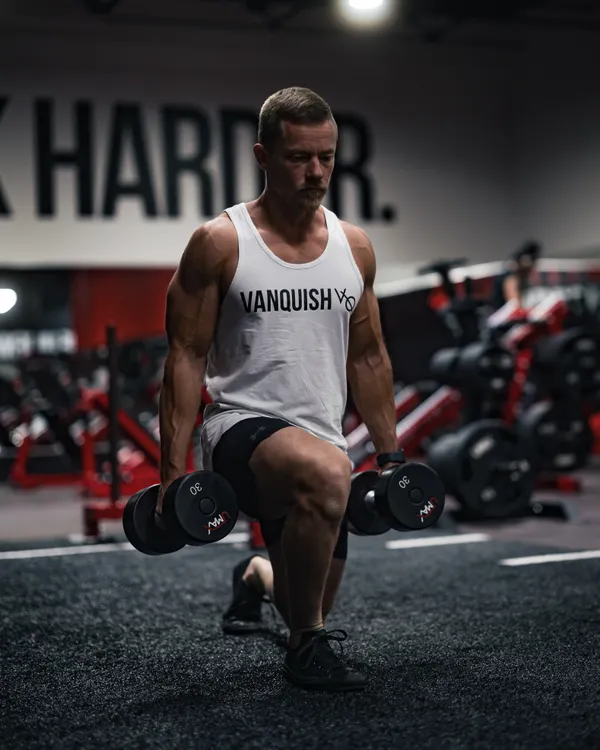
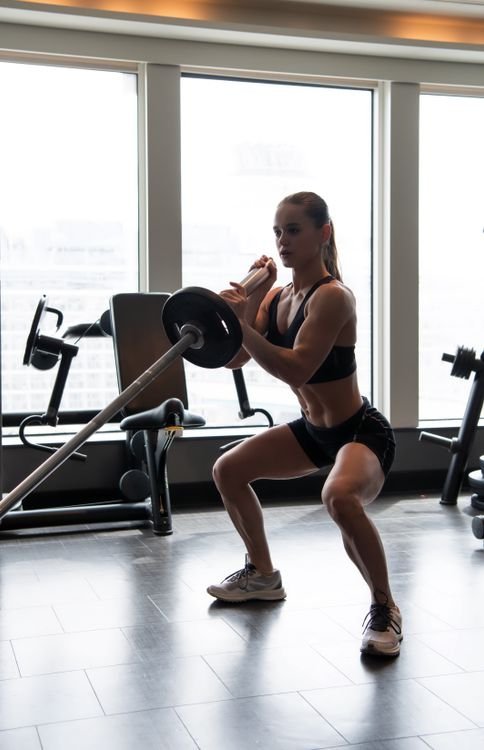
Consider a goblet squat with a single dumbbell. Both legs share the work, so your grip, upper back or the heaviest available dumbbell may become the limiting factor before your quads and glutes are sufficiently challenged. A split squat shifts more of the task to the front leg while the rear leg contributes support and balance. This often makes a modest external load surprisingly demanding, although exactly how much the rear leg helps depends on technique.
That is useful if your home gym tops out at a modest pair of adjustable dumbbells or a compact cable machine. Before buying more weight, you can increase the repeatable range of motion, use a controlled lowering phase, pause near the bottom or progress from a supported split squat to a harder version. Each change should have a reason. Deliberately making an exercise unstable can reduce the force you can apply to the muscles you are trying to train.
Unilateral exercises also make side-to-side differences more visible. Start with the less capable side, then match its clean repetitions with the stronger side. Record the load and reps for each leg separately. Small asymmetries are common; a difference is not automatically an injury diagnosis, and trying to erase every difference may be unnecessary.
There is a cost: single-leg sets take time because both sides must work. Three sets per leg means six working efforts to organize. For a short session, one bilateral main lift followed by one unilateral accessory is often more practical than making every exercise single-leg. The goal is not to maximize novelty; it is to make enough useful work possible with the equipment and time you have.
Build a split-squat progression that trains muscle, not wobbling
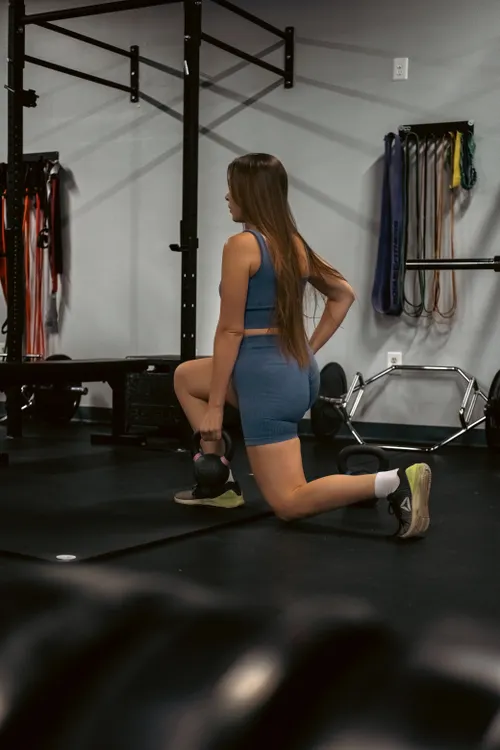
Start with a supported split squat. Stand in a staggered stance, lightly hold a rack upright or stable support, descend through a comfortable range and drive through the front foot. Two sets of eight to twelve controlled repetitions per side can be a reasonable starting point. Keep enough assistance that the working leg, rather than loss of balance, limits the set.
Once that movement is repeatable, hold a dumbbell at your side or use two lighter dumbbells. A reverse lunge introduces a step and requires you to re-establish your stance. A rear-foot-elevated split squat can increase the movement challenge and available knee and hip flexion, but it is not automatically better for everyone. Begin with a low, secure support and avoid forcing a depth that irritates the knees or hips.
Technique changes emphasis. A relatively upright torso and comfortable forward knee travel can increase the demand on knee extensors, while a longer stride and more hip hinge can shift emphasis toward the hip extensors. Neither is an absolute rule: limb proportions, mobility and the load position alter mechanics. Research comparing single-leg squat variations has found differences in muscle activation, so movements sharing a name should not be assumed to produce identical stimuli.
For progression, record the stance, depth, load and repetitions. Increase one variable at a time. Ten clean reps at the same depth are more meaningful than fifteen shaky reps with changing technique. If the rear leg cramps or your balance collapses, shorten the range, lighten the load or use more support. You are trying to train the legs, not win a balancing competition.

Leg Day Shirts & Workout Gear
Leg-day gym shirts and workout gear for lifters who never skip squats, lunges and lower-body punishment.


Legday – Squats & Deadlifts , Meme Top Bros & T-Shirt
Bring “Legday” humor to your next gym day.

Never Skip Legday – Chicken Legs Meme , , & Leg Day T-Shirt
Heavy lifts, good laughs, and a little “Never Skip Legday” energy.

Leg Day Is Calling You Squats, Deadlifts & Gains T-Shirt
Rep “Leg Day Is Calling You” humor in and out of the gym.

Negative Leg Day Review Leg Day Sucks Meme Squats, T-Shirt
Show some leg-day attitude with a playful “Negative Leg Day Review” tee.

Heavy Squatter Meme Squats & Gains Leg Day Wizard Top T-Shirt
Heavy lifts, good laughs, and a little “Heavy Squatter” energy.


Never Skip Leg Day Squats & Deadlifts Meme , Top T-Shirt
Show some leg-day attitude with a playful “Never Skip Leg Day” tee.

Squatbucks & Coffee Meme Leg Day, & Gains Top T-Shirt
Show some leg-day attitude with a playful “Squatbucks Gym & Coffee” tee.
Step-ups, lunges and single-leg hinges fill different gaps
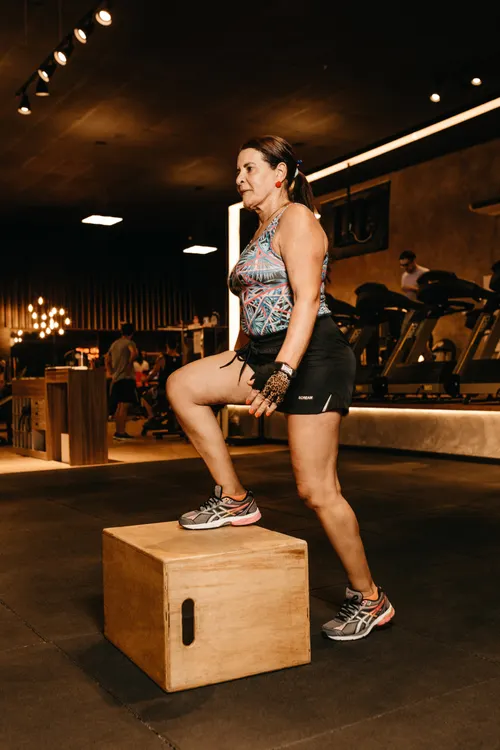
A complete lower-body routine does not need to revolve around one unilateral movement. Step-ups train rising onto a stable platform with one leg doing much of the work. Choose a box height that lets you move smoothly without launching yourself off the trailing foot. Lower under control. A taller box is not automatically more effective if it forces your pelvis to twist or your torso to collapse forward.
Reverse lunges work well in small rooms. You step backward and return to the same starting point, so you do not need the long floor space required by walking lunges. Keep the stepping distance consistent, control the descent and hold dumbbells or a kettlebell when bodyweight repetitions become too easy. Walking lunges are fine in a larger space, but they are not necessary for leg development.
Single-leg Romanian deadlifts emphasize a hip hinge instead of a deep knee bend. Begin with a light weight and one hand on a rack for balance. Reach your hips backward, keep a soft bend in the stance knee and maintain a stable trunk. The purpose is to load the hamstrings and glutes through a controllable hinge, not to touch the dumbbell to the floor at any cost. A kickstand RDL can be a useful bridge if balance prevents meaningful loading.
These exercises share muscles but impose different skill demands. A 2024 biomechanical study of a laterally resisted split-squat variation found its force direction more closely resembled a change-of-direction task than some comparison squats. That is interesting for athletes, but it does not mean an ordinary split squat automatically improves cutting speed or replaces sport practice. Exercise transfer depends on what you actually train.
Equipment Worth Exploring
Explore equipment, accessories and gear from our carefully selected range.
VOLTRA
Compact digital cable trainer with smooth, adjustable resistance.

Go-Tone Pro
Portable digital cable trainer with up to 66 lb (30 kg) of adjustable resistance.


HUSLA Leg Extension Pad
Pad attachment designed to increase usable range of motion on compatible leg-extension machines.

Safety Squat Handles
Barbell squat handles that reduce shoulder positioning demands during high-bar squats.


Equipment choices for small home gyms: versatility beats clutter
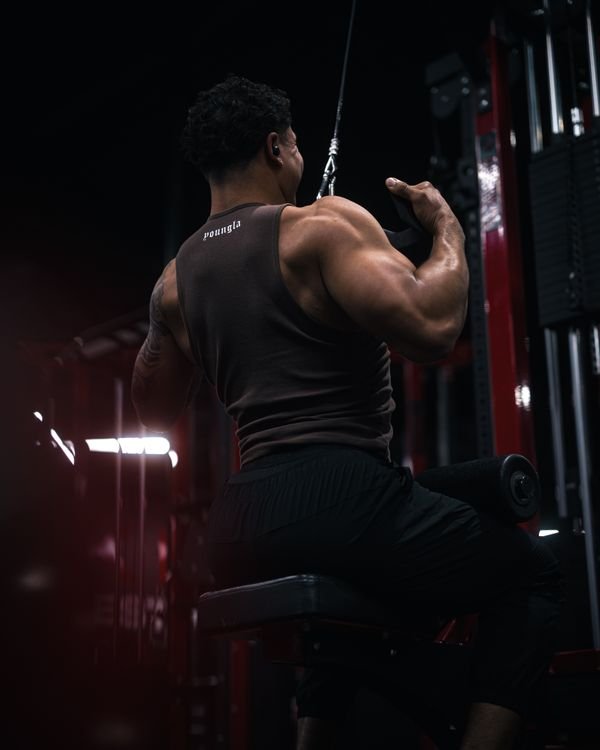
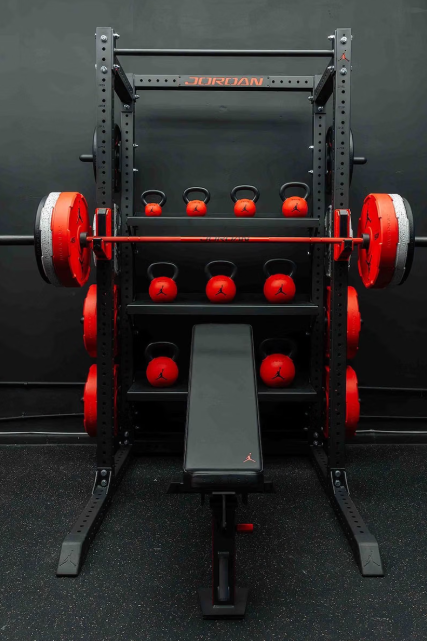
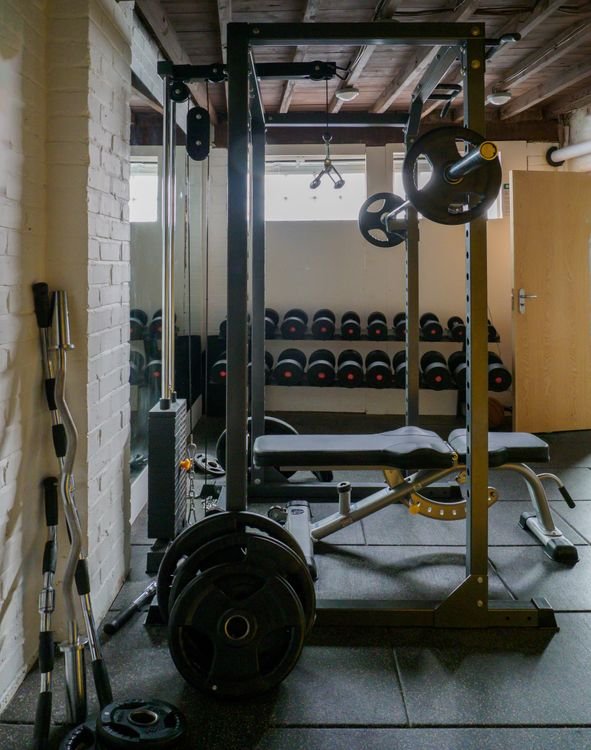
You do not need a specialist single-leg machine to use these findings. Adjustable dumbbells and a stable bench can cover split squats, reverse lunges, step-ups, kickstand hinges and plenty of bilateral movements. A kettlebell is another compact option for goblet loading and suitcase carries. Before using a bench for step-ups, confirm it is stable and intended for that type of dynamic load; some adjustable benches are not safe platforms.
A power rack provides a handhold for supported exercises and, with a barbell, a way to practice bilateral squats using correctly positioned safeties. A landmine attachment creates a different loading angle. A cable machine lets you adjust resistance direction, but its pull is not identical to a hanging dumbbell: the force vector and leverage change throughout the movement. Test cable-based leg exercises at light resistance first, ensure the cable path stays clear and avoid any setup that pulls you off balance.
Heel wedges can make some squat positions more comfortable, but they are optional tools rather than a universal solution for knee or ankle problems. A belt-squat collar or squat harness can let you load the legs without gripping heavy dumbbells, provided the rack, anchor, pulley and attachments are compatible and rated for the forces involved. Do not improvise unverified anchors just to imitate an exercise seen online.
Buy equipment to remove a real bottleneck. Secure footing, predictable resistance, enough range of motion and a sensible way to add load matter more than collecting accessories. A machine that duplicates movements you already perform effectively is usually less valuable than a simple tool that makes your existing program easier to progress.
A two-day lower-body plan that works with limited equipment
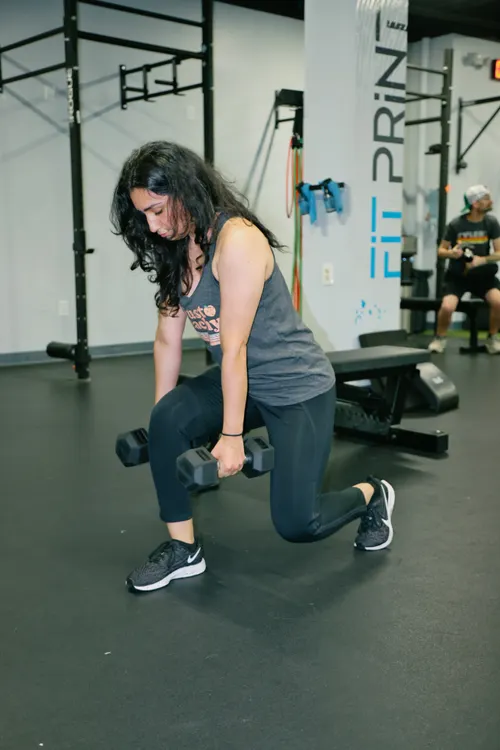
The following is an illustrative two-day template, not a routine directly tested in the 2026 meta-analysis. Space sessions according to recovery and the rest of your training. Start most working sets with roughly one to three repetitions left in reserve, then adjust effort as your technique and experience improve. Beginners may need fewer total sets than the example below.
Day A — bilateral strength plus unilateral volume: start with a barbell squat or challenging goblet squat for three sets of five to eight repetitions. Follow with supported split squats for three sets of eight to twelve per side. Add a hip-hinge movement, such as an RDL, for two or three sets of six to ten. Finish with a calf raise or another accessory only if it supports your goals and recovery.
Day B — unilateral emphasis: begin with a loaded step-up or rear-foot-elevated split squat for three sets of six to ten per side. Perform reverse lunges for two sets of eight to twelve per side, then a kickstand or single-leg RDL for three sets of eight to twelve. If your priority is improving a heavy barbell squat, retain some bilateral squat practice on this day too: strength gains generally favor the skill practiced.
When you write three sets of split squats, that means three working sets on each leg, not six sets per leg. Rest long enough to maintain useful effort and stable technique. Demanding leg sets may require around two minutes or more; lighter accessories may need less. These are practical starting points, not rigid physiological thresholds. The 2026 ACSM position stand emphasizes matching resistance-training prescriptions to outcomes and individual circumstances.
Reduce volume or range when technique deteriorates. Persistent joint pain, loss of control or unusually poor recovery is a reason to adjust the exercise, not push through to complete a spreadsheet target.
Powerlifting Shirts & Lifting Gear
Powerlifting shirts and gym gear for squat, bench and deadlift lifters who live for heavy numbers.


Deadlift Lovers – Grim Reaper Skeleton , Bros & Leg T-Shirt
Rep “Deadlift Lovers” humor in and out of the gym.

Skeleton Deadlift – Meme Deadlift Lovers, Leg Day & T-Shirt
Heavy lifts, good laughs, and a little “Skeleton Deadlift” energy.

Praise The Deadlift Holy Lifting Meme , & T-Shirt
Show some deadlift attitude with a playful “Praise The Deadlift” tee.

Heavy Enough Tee
Bring “If You’re Not Scared It’s Not Heavy Enough” humor to your next gym day.

Bending Bars Meme – Barbell Squat Bench Deadlift, & T-Shirt
Heavy lifts, good laughs, and a little “Bending Bars Gym Meme” energy.


SIUUU Deadlift – Meme Soccer & Football Fans – & T-Shirt
Bring “SIUUU Deadlift” humor to your next gym day.

Nice Try Gravity Astronaut Deadlift – , Gymbros & T-Shirt
Rep “Nice Try Gravity Astronaut Deadlift” humor in and out of the gym.
How to progress, measure results and choose the right mix
Progress is easier to interpret when the variables stay consistent. Log the exercise, load, repetitions, depth or range of motion and a brief effort rating. For unilateral movements, record left and right separately. A simple double-progression method works well: choose a range such as eight to twelve repetitions, build both sides toward twelve at the same load and technique, then increase resistance modestly and return to the lower end of the range.
Judge a split squat by more than the dumbbell number. If you shorten the range, bounce at the bottom or push harder through the rear leg, a heavier set may not reflect a better training stimulus. Likewise, a stronger single-leg lift does not guarantee a larger barbell squat. The 2026 review suggests that strength improvements often reflect the movement trained. A separate 2026 review of unilateral versus bilateral work for sprint and change-of-direction tasks reported selective small advantages in some tests, not a universal speed benefit.
If you care about maximal bilateral strength, put a barbell squat or similar bilateral pattern first and use unilateral accessories to add useful volume. If you care about single-leg force or sport-specific tasks, practice relevant unilateral movements deliberately while keeping enough bilateral work for general strength. If you care mostly about hypertrophy with minimal equipment, choose exercises that let your target muscles work hard through a repeatable range without balance or grip becoming the main limitation.
Review your training log after four to six weeks. Are repetitions or loads increasing with comparable technique? Are you recovering between sessions? Does each exercise still fit your room and equipment? If yes, there is little reason to replace an effective routine just because a different movement looks more advanced.
Bottom line: the 2026 evidence does not crown single-leg training or bilateral squats as the winner for every outcome. A practical home gym combines the specificity of bilateral lifts with the compact loading options of unilateral work, then uses consistency and progression to make both productive.