Advertising disclosure: This page includes affiliate product links that may earn us a commission, as well as products from our own store.
Faster Workout Music Does Not Guarantee a Stronger Morning Session
A favourite track can make an early workout more inviting. That does not mean accelerating the song will accelerate the bar. Music preference, musical tempo, movement speed and how a session feels are separate things. Treating them as one performance boost makes a playlist sound more powerful than the evidence can justify.
A small October 2026 experiment tested preferred music, a faster version of the same music and silence during morning strength tasks. It did not find a reliable improvement in the main strength and power measures. The useful takeaway is not to abandon your headphones. It is to choose music for a clear purpose, keep the lifting task consistent and avoid turning a more exciting session into an unsupported strength claim.
1. Ask what the workout actually tested
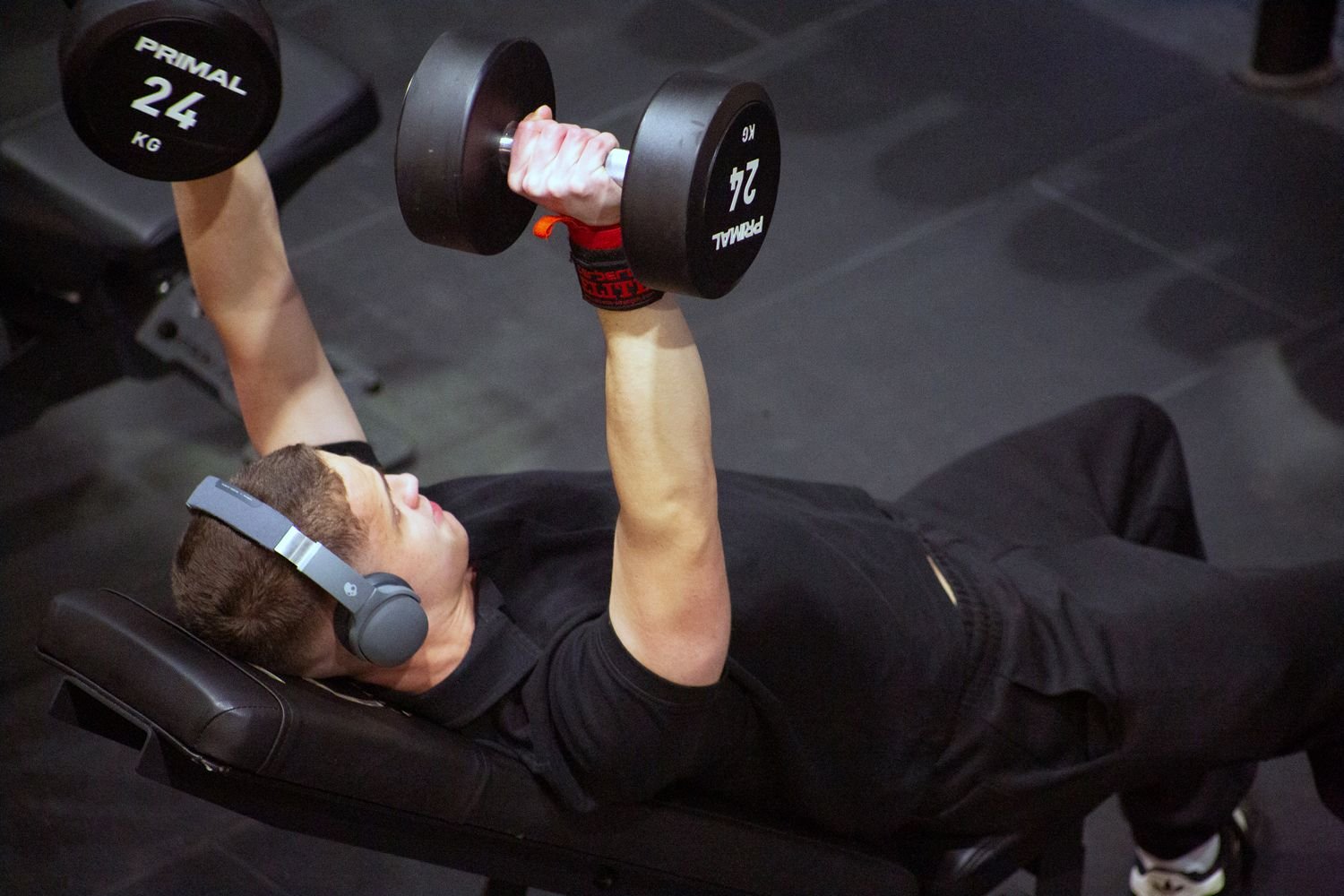
Fourteen recreationally active men completed a counterbalanced comparison of preferred music at its original tempo, the same music accelerated by 15%, and no music. The morning protocol included isometric contractions and three-repetition bench-press and back-squat tasks at 40%, 60% and 80% of one-repetition maximum. Key strength and power outcomes did not improve significantly with either music condition. The sample was small, so this is not proof that every possible effect is exactly zero.
Notice the difference between a brief test and a normal training week. Three repetitions at a prescribed load do not ask the same question as finishing a demanding set, enjoying a long session or maintaining a routine for months. An observation about one task should not quietly become a promise about all of them.
Before applying a music headline to your training, name the outcome. Are you interested in a heavier successful single, more technically consistent repetitions, better enjoyment or less time spent deciding whether to start? Each can matter, but they need different evidence. A playlist that makes the warm-up pleasant may have earned its place without changing your measured lifting performance.
The same distinction protects you from dismissing a comfortable preference. You can enjoy training with music without claiming it improves every lift. You can also prefer silence without assuming you are leaving guaranteed gains behind. Make the practical choice first, then keep the performance claim proportional to what was actually measured.
2. Song tempo is not a lifting instruction

Increasing a song’s beats per minute changes the audio. It does not tell you how quickly to lower a bar, where to pause or when a repetition has lost control. A familiar chorus should not override the technique and pace you intended to use. If you want to change repetition tempo, treat that as a deliberate programming choice rather than an accidental consequence of the playlist.
Imagine two bench-press sessions at the same load. In one, you pause consistently and use the same range throughout. In the other, you bounce the last few repetitions because the song feels urgent. Even if the second set ends with a larger number, it is not a clean comparison of music conditions. The task changed alongside the soundtrack.
Use the music as background while keeping your setup recognisable. Complete the usual warm-up, check the rack and safeties, and take the rest you planned. Do not begin a heavy set just because the beat drops before you are ready. Equally, there is no need to spend another minute searching for a perfect opening moment once your preparation is complete.
If a track makes you rush, choose something less distracting or pause it for that set. That is a sensible response to the situation, not a claim that one genre is universally best. A calm song, a fast song and silence are all options. The movement still needs to follow your training plan rather than an improvised musical countdown.
3. Preference and the exercise protocol can change the answer

Other experiments have produced different results. In one study of 15 resistance-trained men, music alone and music combined with performance feedback increased bench-press repetitions and average velocity compared with control under a velocity-loss protocol. A separate 15-person experiment found no significant music effect on power during three-repetition squat and bench sets at 50% of maximum, with music used during rest intervals. These are different tests, not interchangeable estimates of a universal boost.
For a lifter, that means “music works” is too vague to guide a useful decision. Music during the set is different from music between sets. Comparing a chosen playlist with silence is different from comparing it with songs someone dislikes. Changing the task, comparison or timing can change the question before anyone counts a repetition.
Prepare a short list of tracks you actually want to hear. Heavy metal, rock, hip-hop, electronic music or quieter choices can all reflect preference; the genre label alone is not evidence that a session will improve. There is no need to adopt an aggressively fast playlist because it looks more serious than your own selection.
Keep the preparation small. Select the playlist before training or during a safe break, then put the phone away. If the search for the next song becomes the main activity, simplify it. A convenient soundtrack should support the session rather than create another task to manage between every set.
Music and lifting also share a lot of gym humour. The following designs reflect that rock-and-metal training culture. A slogan about lifting heavy is not a volume recommendation or a scientific claim that a particular style of music produces superior results.

Bodybuilding Shirts & Workout Gear
Bodybuilding shirts, tanks and gym gear for lifters chasing muscle, size, symmetry and the pump.

https://nextcultbrand.com/products/shred
Show off your metalhead humor in a laid-back “Shred Zeppelin” hoodie.

Movin Metal – Heavy Metal Rock Music Workout Jumper T-Shirt
For laid-back days and metalhead humor: “Movin Metal”.

Listen Heavy Lift Heavy Gym | Heavy Metal Workout Vest Tank Top
Train hard, laugh a little, and rep “Listen Heavy Lift”.

Heavy Metal Gym – Funny Gymbro Rock Music Pullover Jump T-Shirt
Add a playful “Heavy Metal” touch to your casual rotation.

Heavy Metal Gym – Funny Rock Music Workout Hooded Hoodie
Show off your metalhead humor in a laid-back “Heavy Metal” hoodie.

Heavy Metal – Rock On Workout Pullover Jumper & Gymbros T-Shirt
Bring “Heavy Metal” humor to your everyday gym style.
Heavy Metal Lift Heavy – Hardcore Powerlifting Gym Shir T-Shirt
A t-shirt featuring the Heavy Metal Lift Heavy – Hardcore Powerlifting Gym Shirt for Bodybuilders and Lifters artwork, bringing lifting-inspired humor and distinctive gym graphics to your everyday gear.

Shredded – Heavy Metal Gym Decal for Hardcore Bodybuild Sticker
Give your everyday gear a playful “Shredded” twist.

Barbells and Suffering – Demonic Heavy Metal Gym Crewne T-Shirt
Show some gym-day personality with “Barbells and Suffering”.

Whole Lotta Reps AC/DC Heavy Metal Rock Music Workout f Hoodie
Make your off-duty look more fun with “Whole Lotta Reps”.
4. Keep loudness separate from motivation

Sound exposure depends on both level and duration. Keeping device volume below 60% of maximum, using exposure-monitoring or volume-limiting features, and taking quieter breaks are practical ways to reduce risk. The percentage is a useful guideline rather than a precise decibel measurement across every phone and headphone combination. Well-fitting or noise-cancelling headphones can reduce the temptation to compete with background noise, but they do not make unlimited loud listening safe.
Check those settings before the session instead of increasing volume repeatedly whenever the gym gets busier. If you already use a sound-exposure display, look at the accumulated listening rather than judging only one favourite song. The warm-up, working sets, rest periods and journey to the gym all contribute to the time you spend listening.
Keep communication possible where it matters. Pause the music when arranging a spot, listening to a coach or confirming that equipment is free. Do not assume someone has heard you simply because you can hear them through your headphones. Establish the plan before lying under a bar, and use the same agreed signals you would use without music.
Persistent ringing, muffled hearing or difficulty following conversation should not be treated as evidence of a successful workout atmosphere. Reduce exposure and seek appropriate hearing advice when symptoms persist. The aim is to enjoy music over many years, not to make today’s soundtrack compete with every plate being dropped nearby.
5. Compare recognisable sessions, not your best musical memory
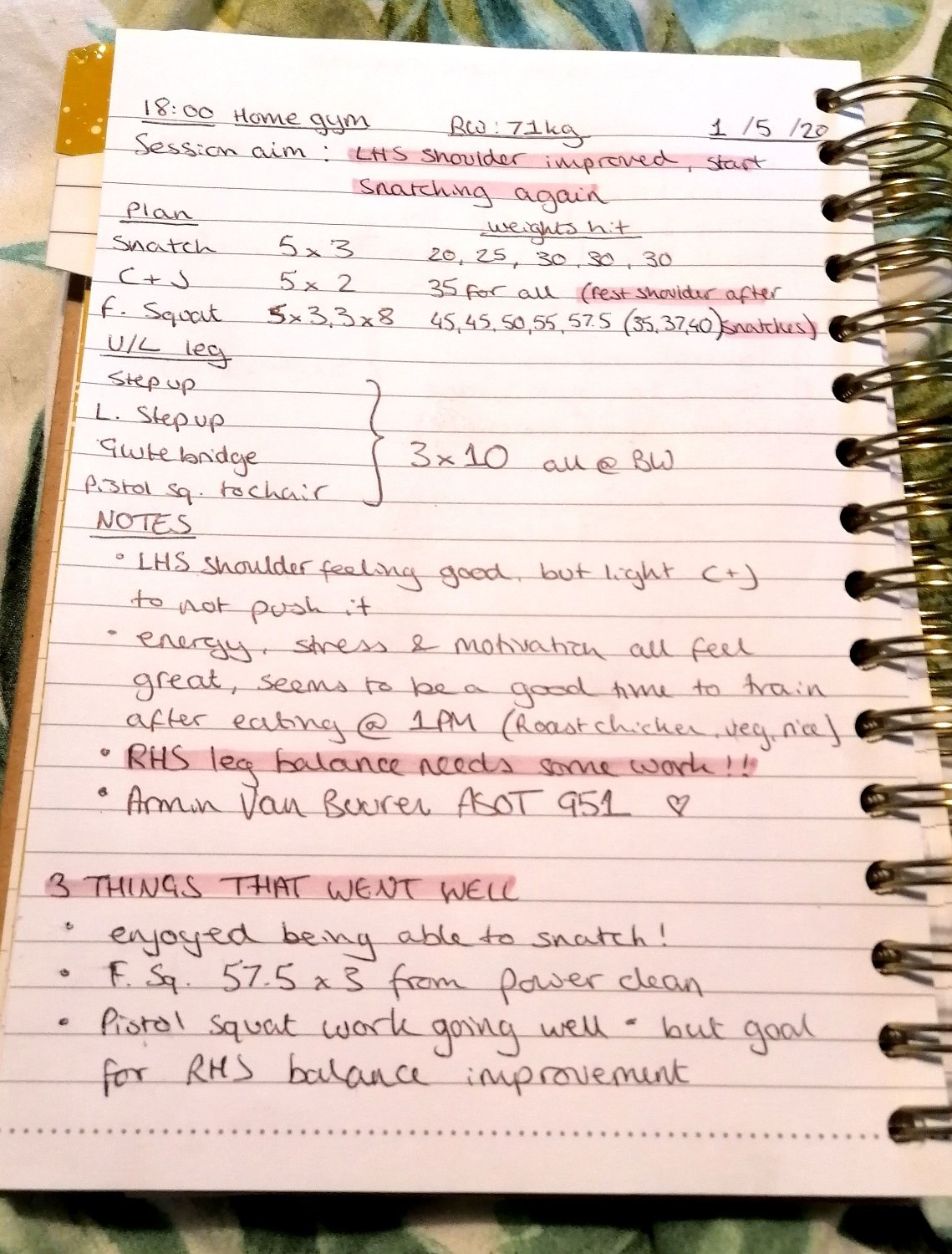
If you want to know whether music suits a particular workout, choose an ordinary session you already understand. Keep the exercise order, load, range, rest periods and equipment settings reasonably consistent. Record what you completed and how the session felt. This is practical observation, not a blinded experiment or proof that a playlist caused a change.
Separate the records into a few useful categories. Note the soundtrack or silence, the planned work, completed repetitions, perceived effort and enjoyment. Add unusual circumstances such as a poor night’s sleep, a different training time or an interrupted warm-up. That helps you avoid crediting a song for a day that was different in several other ways.
For bench presses, squats or familiar dumbbell work, stick with a setup you can reproduce. A different bench position, cable ratio or machine is another change to consider. The equipment below supports those ordinary strength sessions; it does not establish an effect of music. Use what you already have when it gives you a stable, consistent workout.

Equipment Worth Exploring
Explore equipment, accessories and gear from our carefully selected range.



Multi Bench MBX-650 2.0
Adjustable multi-bench with roller adjustment, 15 backrest positions and accessory mounts.


Rubber Hex Dumbbells
Rubber-coated hex dumbbell pairs with a stable shape for home and commercial strength training.


Competition Plates
Competition-style bumper plates for Olympic lifts and loaded strength training.

Grip Plates
Rubber-coated weight plates with handholds for loading barbells and machines.

Multi Pull Smith Rack MPHR-780
All-in-one rack with a Smith machine, functional trainer, lat pulldown and low row.
Do not turn the comparison into a test of how far you can push past your intended stopping point. Keep your usual safety arrangements and end a set when the movement no longer meets your standard. An extra repetition with a different range or outside assistance should not automatically count as a soundtrack benefit.
After several comparable sessions, ask a practical question: is this music helpful enough to keep? It might improve enjoyment without changing the numbers. It might distract you during technical lifts but suit easier work. It might make no noticeable difference. All three observations are useful when they are recorded honestly.
Choose a playlist you like, control the listening level and let the training plan set the task. Faster music is an option, not an upgrade you need to unlock. A good soundtrack can be part of a good workout without carrying the responsibility for making you stronger.