Advertising disclosure: This page includes affiliate product links that may earn us a commission, as well as products from our own store.
Antagonist Stretching Before Lifting: No Clear Performance Shortcut
Stretching the opposite muscle sounds like an appealing way to make a lift easier: loosen whatever resists the movement, then let the working muscle produce more force. The idea is tidier than the evidence. Before adding another ritual to your warm-up or filling every rest period with stretching, separate three questions: which joint action you mean, what outcome you want, and whether the comparison actually shows an improvement. You can value flexibility or enjoy a familiar stretch without treating either as proof that the next set will be stronger.
1. What the acute stretching review actually found
A review published on 9 July 2026 examined acute stretching of antagonist muscles. Nine eligible trials involved 302 healthy participants overall; seven investigated performance and two investigated range of motion. The main pooled performance estimate was 0.22 standard deviations, with a 95% confidence interval from −0.10 to 0.56. It did not establish a statistically significant improvement.
Stretching technique and duration did not identify a clear overall performance advantage. An exploratory analysis that added studies with weaker designs produced a more favourable estimate, alongside concerns about publication bias. That sensitivity matters: a positive result from a broader, less secure analysis does not erase the limitations of the main comparison.
This was an acute-performance question, not evidence that stretching an antagonist builds more muscle over a training block. The small and varied evidence base also does not prove that every possible protocol has exactly zero effect. The restrained interpretation is that a reliable performance shortcut has not been established.
For a lifter, that leaves room for a simple decision: do not reorganise a productive session around a benefit you are assuming. First identify whether the stretch serves a separate, useful purpose.
2. Name the joint action before naming the opposite muscle
An agonist contributes to the action you are considering; an antagonist has an opposing action. These labels depend on the movement. Around the elbow, the biceps contributes to flexion and the triceps to extension. Around the knee, the quadriceps extend the knee while the hamstrings flex it. Change the action and the roles change.
That is why “stretch the opposite muscle” is not a complete instruction. Opposite to what: bending the elbow, straightening it, moving the shoulder or moving the hip? In a multi-joint lift, more than one joint action is involved. A simple muscle-pair label should not be mistaken for a complete explanation of a squat, press or row.
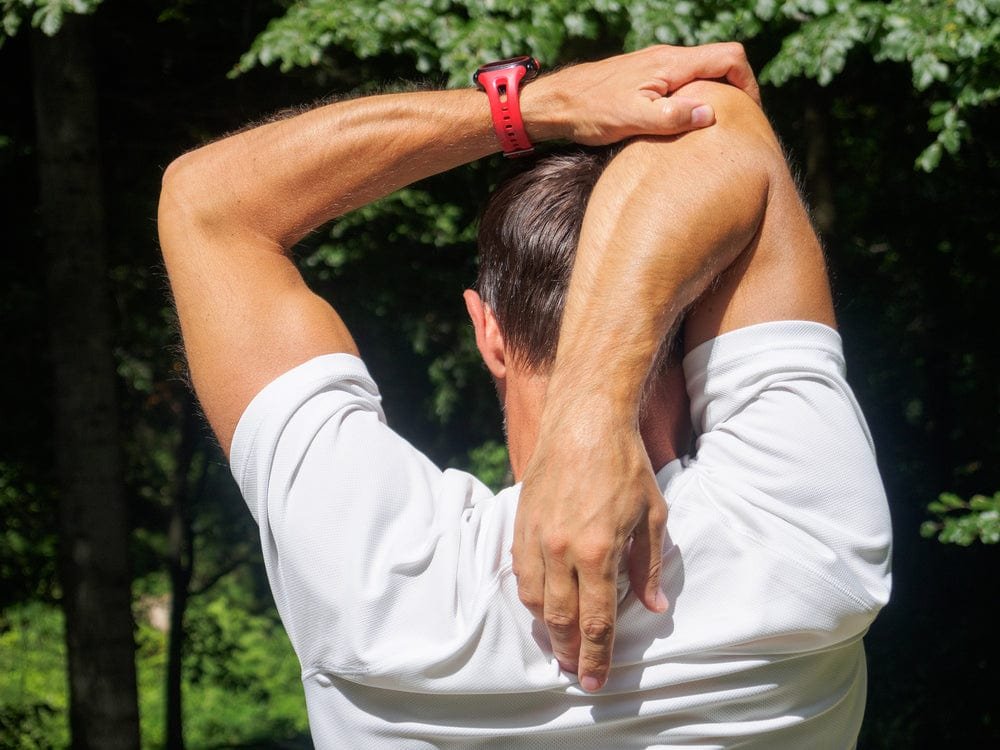
The photograph shows an overhead triceps stretch. It illustrates the back-of-upper-arm muscle discussed in the elbow example; it is not a recommendation to perform that stretch before curls. Naming the pictured muscle and the intended lifting action keeps an illustration from silently becoming a prescription.
Antagonists are also not unwanted enemies that should be switched off. Muscles with opposing actions help control movement and maintain position. The useful training goal is a coordinated repetition, not the greatest possible relaxation of every structure that might oppose one phase of it.
Before trying any claim, write down the proposed pair and movement. “A particular triceps stretch before an elbow-flexion task” describes a testable idea. “Unlock my arms” does not. You do not need a complicated anatomy vocabulary, but you do need enough precision to notice when advice changes the subject halfway through.
3. Keep warming up, stretching and lifting readiness distinct
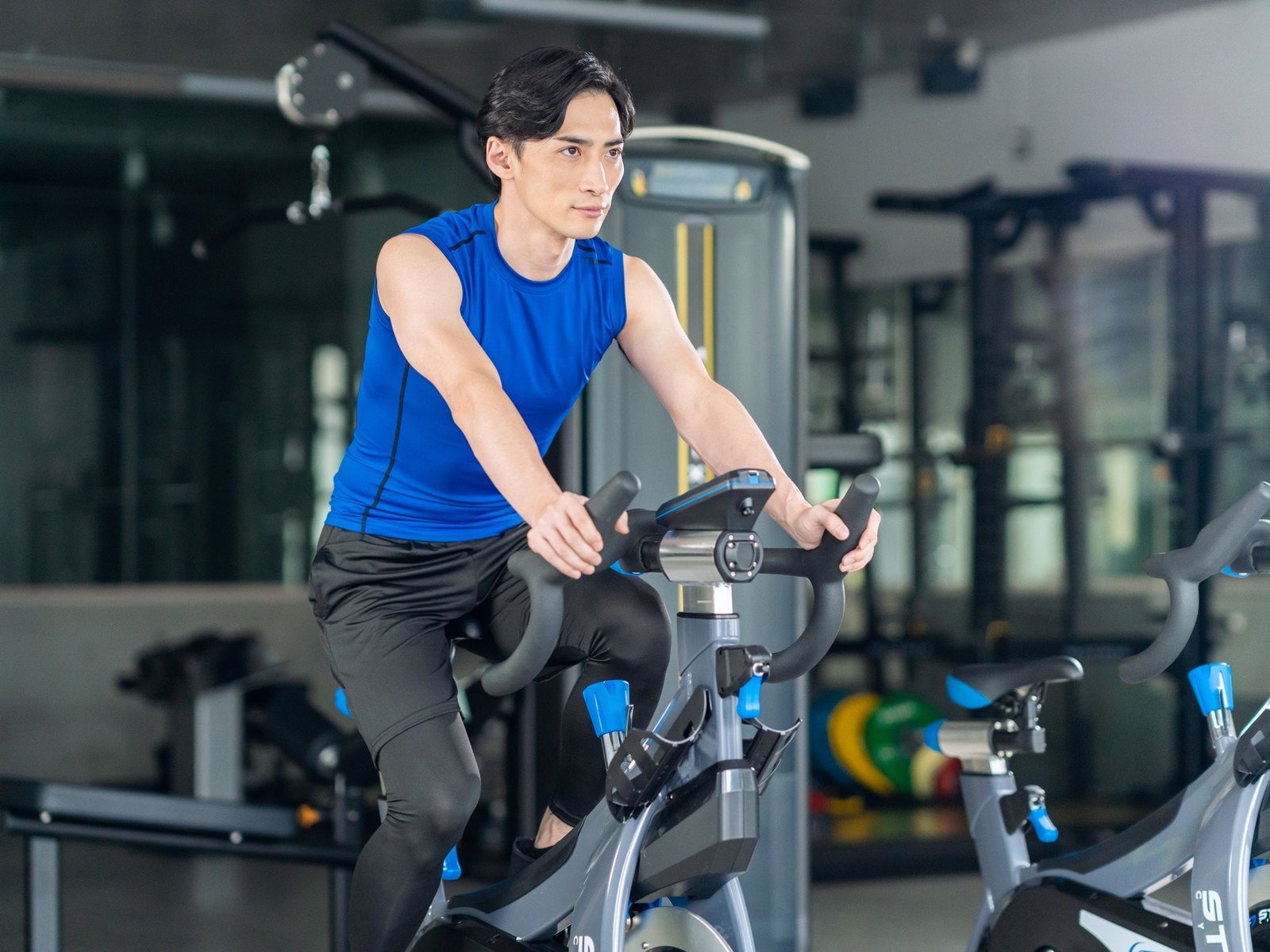
Easy movement can be part of warming up, while a held stretch is a different activity. Light walking or cycling for roughly five to ten minutes is a common starting point before stretching. That does not mean every lifter needs an identical bike routine, and it does not make stretching itself equivalent to the whole warm-up.
Think about the task you are preparing for. An easy cycling bout can raise activity gradually. Rehearsing a planned lift with a manageable load lets you check its stance, grip and path. A flexibility exercise addresses a position or range. Those activities can coexist, but they answer different questions.
For example, feeling warmer after cycling is not evidence that a particular antagonist stretch improved force. Reaching farther in a stretch is not the same observation as completing a cleaner working set. Describe the result you actually noticed rather than allowing a general sense of readiness to stand in for every outcome.
If you stretch, move gently and avoid bouncing or forcing pain. A stretch should not become a competition to reach the most extreme position. Existing injuries or medical concerns can change what is appropriate, so use individual guidance when needed. Stretching also does not guarantee that an injury cannot occur.
Keep a useful routine proportionate. If the warm-up becomes so complicated that you cannot remember what prepares you for the lift and what is simply a preferred ritual, simplify the record. A short list of activities and their purpose is more informative than a long list of movements labelled essential.
4. Do not let the stretch quietly change your rest comparison
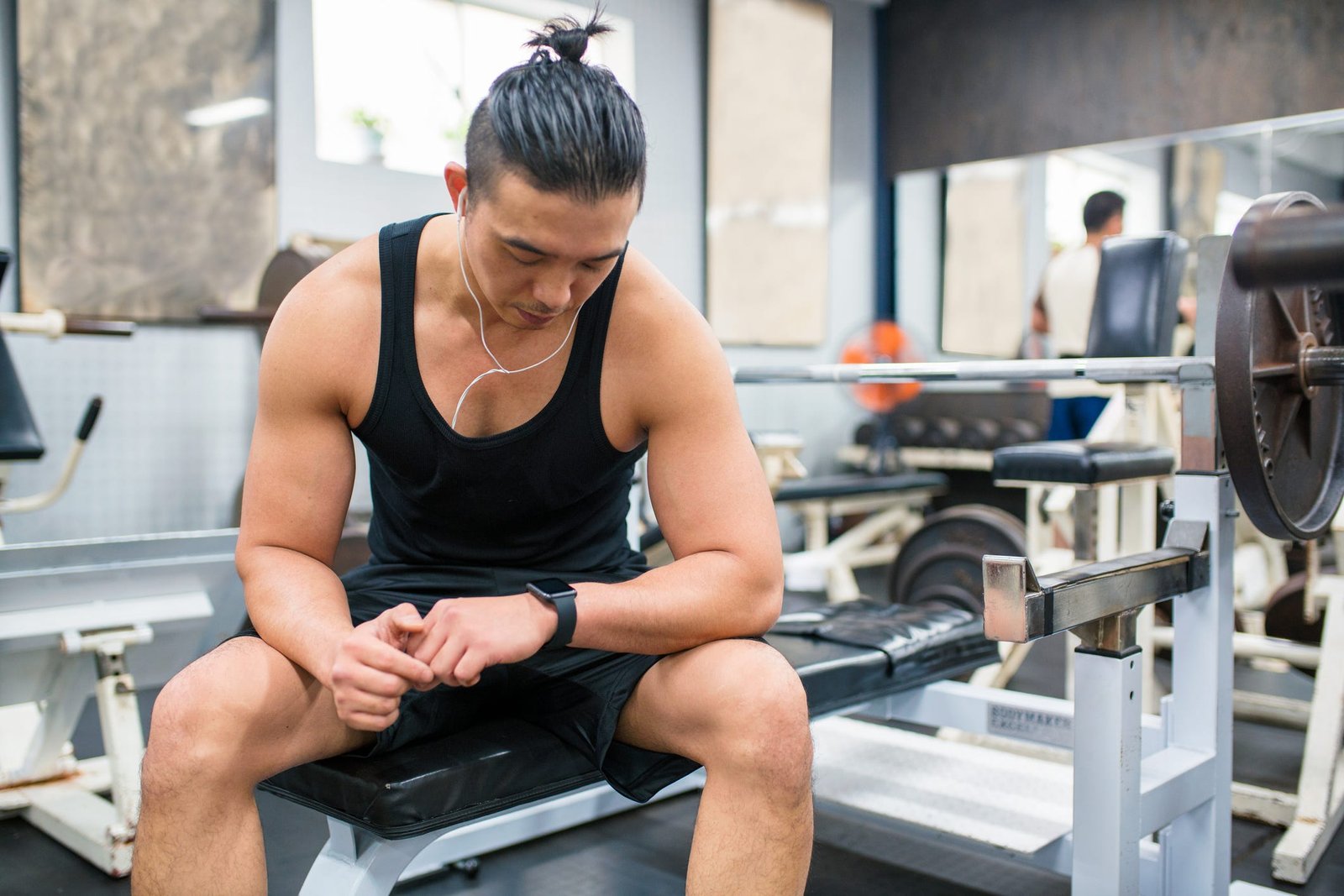
Putting a stretch between sets changes how you spend the break. It can also change the length of that break. If you add a stretch, fetch a mat, talk to somebody and then start the next set later than usual, several things changed together. A better result afterward cannot automatically be assigned to the stretch.
Consider an illustrative log with two sessions. In one, you take two minutes between comparable sets. In the other, the new routine stretches the interval to four minutes. Even if you complete more repetitions in the second session, you have not isolated the effect of antagonist stretching. The elapsed time is part of the comparison.
Record when a set ends and when the next begins, rather than relying on how long the break felt. Use the same timing convention each time. If a stretch is included, note where it starts and ends inside that interval. This is a way to describe your session honestly, not a claim that a particular interval or stretching duration is optimal.
The lift itself needs comparable conditions too. Keep the apparatus, grip, range, load and assistance clear. Switching from dumbbell curls to a cable variation, or changing the bench angle, creates a different task. A clean training record should make those differences visible instead of hiding them behind one exercise name.
The equipment below covers common dumbbell and barbell training setups. Consistent apparatus and manageable loading increments can make your records easier to interpret. Buying equipment does not establish a stretching benefit, and no particular item is required to apply the comparison principles.

Equipment Worth Exploring
Explore equipment, accessories and gear from our carefully selected range.


Rubber Hex Dumbbells
Rubber-coated hex dumbbell pairs with a stable shape for home and commercial strength training.


Competition Plates
Competition-style bumper plates for Olympic lifts and loaded strength training.



Multi Bench MBX-650 2.0
Adjustable multi-bench with roller adjustment, 15 backrest positions and accessory mounts.

5. Give an optional habit an honest place in the programme
If a familiar stretch is comfortable and useful for your flexibility routine, record that purpose. You do not have to promise a stronger next set to justify every activity you enjoy. Equally, an optional habit should not displace the working sets, recovery time or basic preparation that your programme actually requires.
Choose one outcome before interpreting a change. You might care about a comfortable position, repetitions at a consistent load or the quality of a movement. Keep those observations separate. A session can feel smoother without producing more repetitions; a higher repetition count can occur without a noticeable change in comfort.
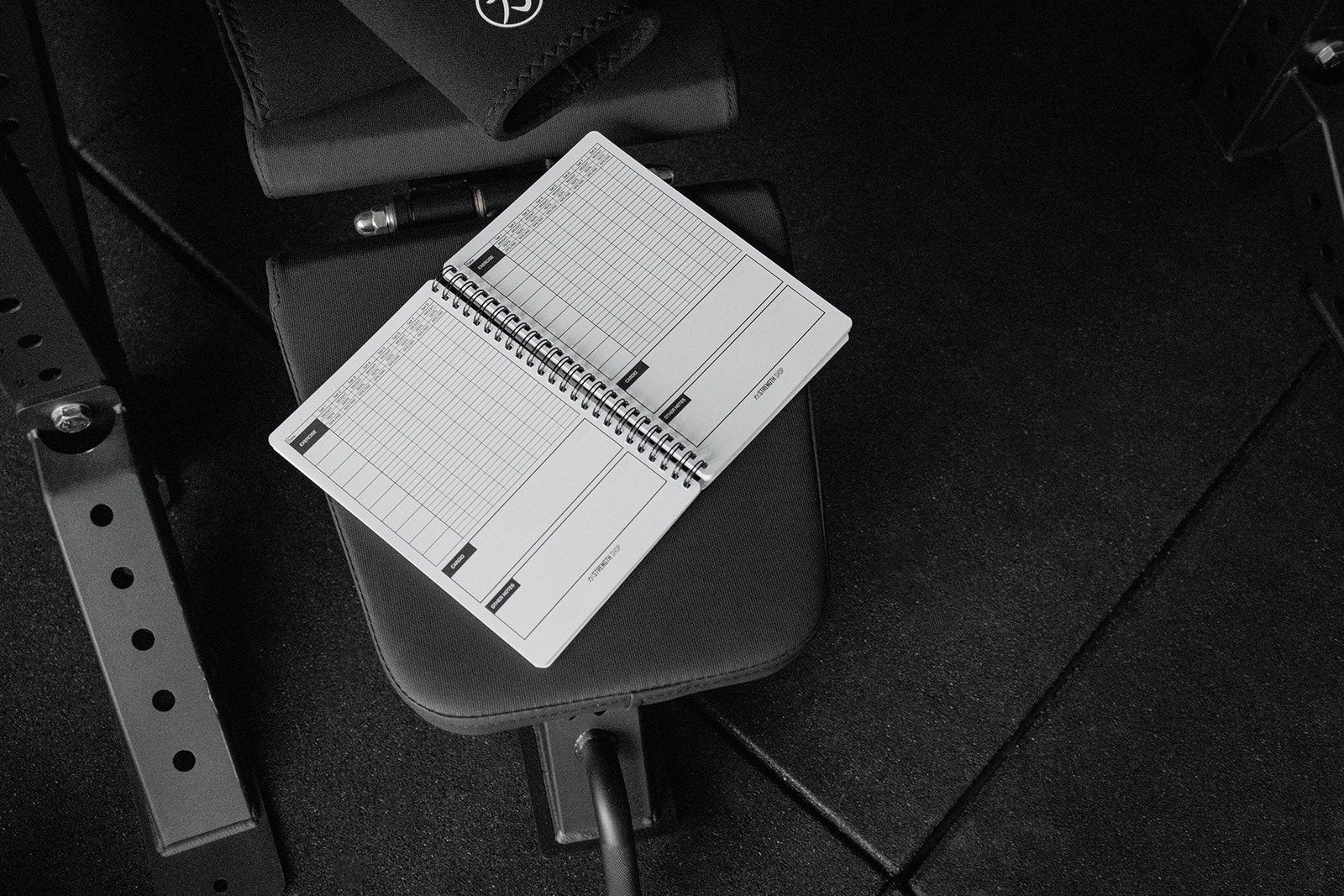
Use the blank log to capture the details that matter: exercise, load, repetitions, timing and a short note about the preparation. If you change several variables at once, write that down. An honest “different setup today” is more useful than a confident explanation that the available information cannot support.
Repeated personal observations can help you recognise normal variation, but a training notebook is not a blinded controlled experiment. Sleep, prior workload, motivation and ordinary day-to-day differences still matter. One unusually good set should not become a universal rule for every lifter or every muscle group.
The practical priority is consistency without superstition. Keep useful movement and flexibility work for their actual roles, preserve clear rest and exercise records, and let the evidence limit the claim. Antagonist stretching may remain a personal preference; it has not earned a guaranteed-performance label. Thoughtful lifting and repeatable habits deserve more attention than adding another supposed shortcut.

Bodybuilding Shirts & Workout Gear
Bodybuilding shirts, tanks and gym gear for lifters chasing muscle, size, symmetry and the pump.

Consistency Is Key Stoic Greek God Marble Sculpture T-Shirt
Make gym days more fun with “Consistency is Key Stoic Greek God Marble” style.

Everything Hurts and I'm Tired Tee
Make gym days more fun with “Everything Hurts And I'm Tired” style.

Lift Eat Sleep Repeat Hoodie
Make your off-duty look more fun with “Lift Eat Sleep Repeat”.


Mind Muscle Perfection Brain and Biceps Gym for Science Sticker
Give your everyday gear a playful “Mind Muscle Perfection Brain and Biceps” twist.

Lift Smart Brain Weight Plate Mind Muscle Connection 45 Hoodie
Keep it laid-back with a little “Lift Smart Brain Weight Plate” attitude.

Off-Season Rest Day Sweater & Bros Meme T-Shirt
For laid-back days and powerlifting humor: “Off-Season Rest Day”.

Gym Is My Happy Place Happy Weights Smiley Face Weight Tank Top
Bring “Gym Is My Happy Place” humor to your next lifting session.

45LB Metal Weight Plate Funny Gym T
Show some metalhead attitude with a playful “45LB Metal Weight Plate” tee.

Rest Day Sloth – Essential T-Shirt
Show some bodybuilding attitude with a playful “Rest Day Sloth” tee.