Advertising disclosure: This page includes affiliate product links that may earn us a commission, as well as products from our own store.
Walking Lunges: Stride Length, Dumbbell Loading and a Six-Week Leg Plan
Walking lunges are not simply split squats performed while traveling. Each repetition asks one leg to absorb the descent, help drive the body upward, and then hand the work to the other leg without losing balance. That combination makes them a useful lower-body accessory, but it also makes technique and fatigue harder to standardize than on a machine.
You do not need a heroic stride, a barbell on your back, or a finish-line collapse to benefit. A repeatable lane, comfortable range of motion, and load you can control are more productive starting points. The goal is to make each leg do honest work while keeping steps comparable from the first repetition to the last.
1. What walking lunges train—and why the transition matters
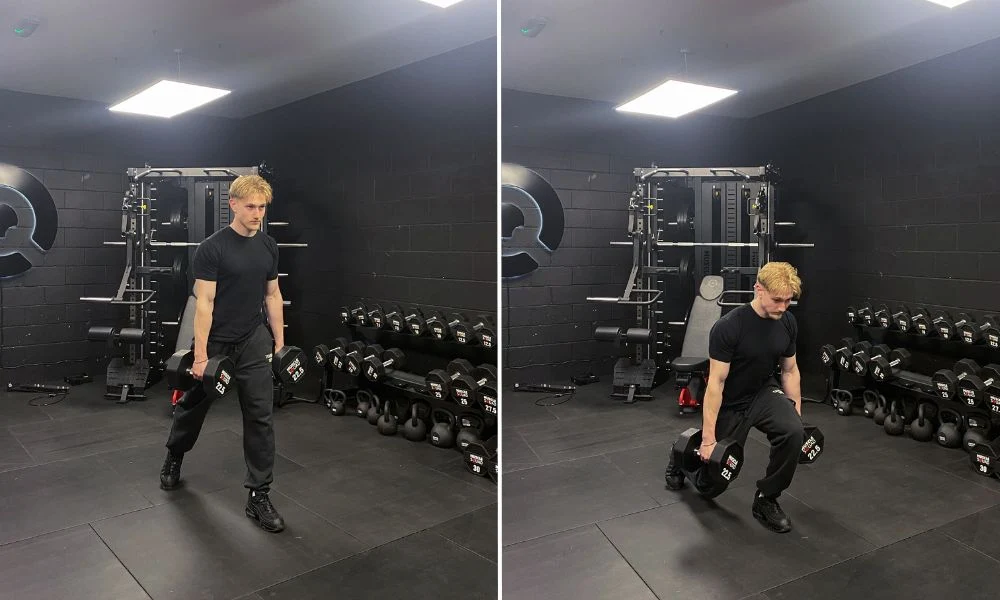
A walking lunge begins from standing. Step forward, plant the entire front foot, bend both knees, and lower your center of mass under control. Push through the front foot to rise, bring the trailing leg forward, then alternate. Unlike a stationary split squat, you move from one repetition into a new stance, so the transition is part of the task rather than a break between repetitions.
The quadriceps extend the front knee as you rise, while the glutes contribute to hip extension and pelvic control. Hamstrings, adductors, calves, trunk muscles and muscles around the hips support the movement. It is misleading to call this a pure glute or pure quad exercise: step length, depth and load all affect the challenge.
Because the legs alternate, the weaker or less coordinated side is difficult to hide. That makes an even left-right rhythm more useful than racing across the floor. A set of 10 steps per leg is 20 total lunges; counting the two sides separately prevents accidental under- or over-counting.
Use walking lunges after your main squat, leg press or hinge if lower-body strength is the priority. A light bodyweight set can also serve as preparation earlier in the workout. The exercise is not uniquely necessary for growth: split squats, reverse lunges and step-ups can provide similar unilateral training when floor space or balance is limited.
2. Find your stride length, foot width and knee path
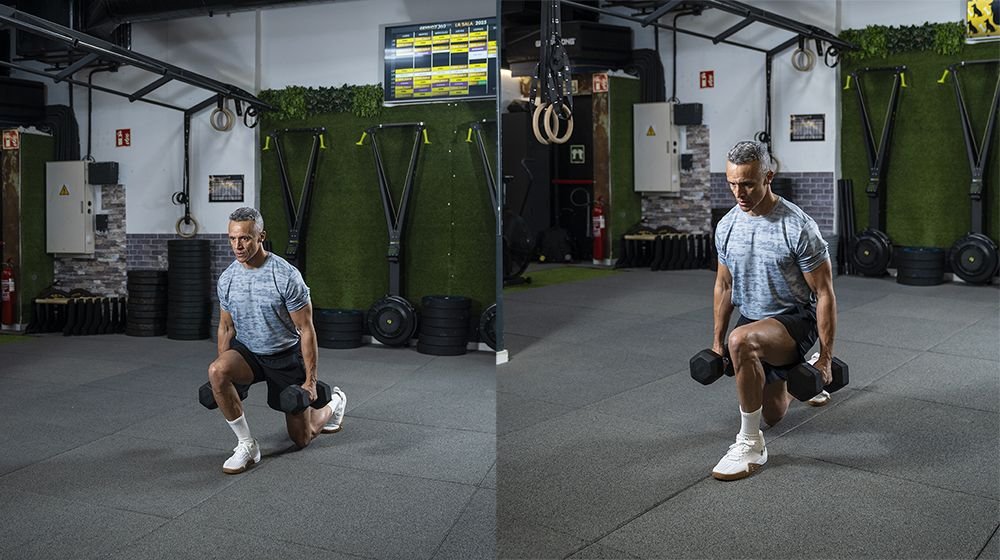
Begin with a natural stride rather than reaching as far as possible. You should be able to lower with the front heel planted, maintain contact through the whole foot and finish without twisting your pelvis. The front knee may pass the toes; that is not automatically an error. What matters is whether the knee follows the foot and motion stays comfortable and controlled.
A shorter stride generally allows more forward knee travel and may feel more quadriceps-dominant. A somewhat longer stride can increase hip-extension demand, but excessive distance turns the movement into a balancing act and may pull the trailing hip into an awkward position. Studies of other lunge variations show stride length changes joint demands; those findings are not an exact prescription for walking lunges.
Keep your feet on two parallel tracks about hip-width apart, not in a tightrope line. A narrow step invites side-to-side wobble, especially with dumbbells. Point the front knee in roughly the same direction as the toes and allow a small natural torso inclination rather than rigidly forcing a vertical body. Look ahead without craning your neck.
Choose a depth that you can repeat. Let the rear knee approach the floor without slamming it down; touching the ground may be a competition standard, but is not required for a productive gym set. If one side reaches a very different depth, reduce load or range, then build consistency.
For your first work set, mark out a clear lane and walk it without weights. Notice where each heel lands, whether you lean or rotate, and whether both knees bend at a similar speed. Repeat the same route and surface next time so changes in distance do not masquerade as strength progress.

Equipment Worth Exploring
Explore equipment, accessories and gear from our carefully selected range.


Rubber Hex Dumbbells
Rubber-coated hex dumbbell pairs with a stable shape for home and commercial strength training.


Cast Iron Kettlebells
Textured cast-iron kettlebells for swings, squats, carries, and full-body training.


3. Bodyweight, dumbbells, kettlebells or a barbell?
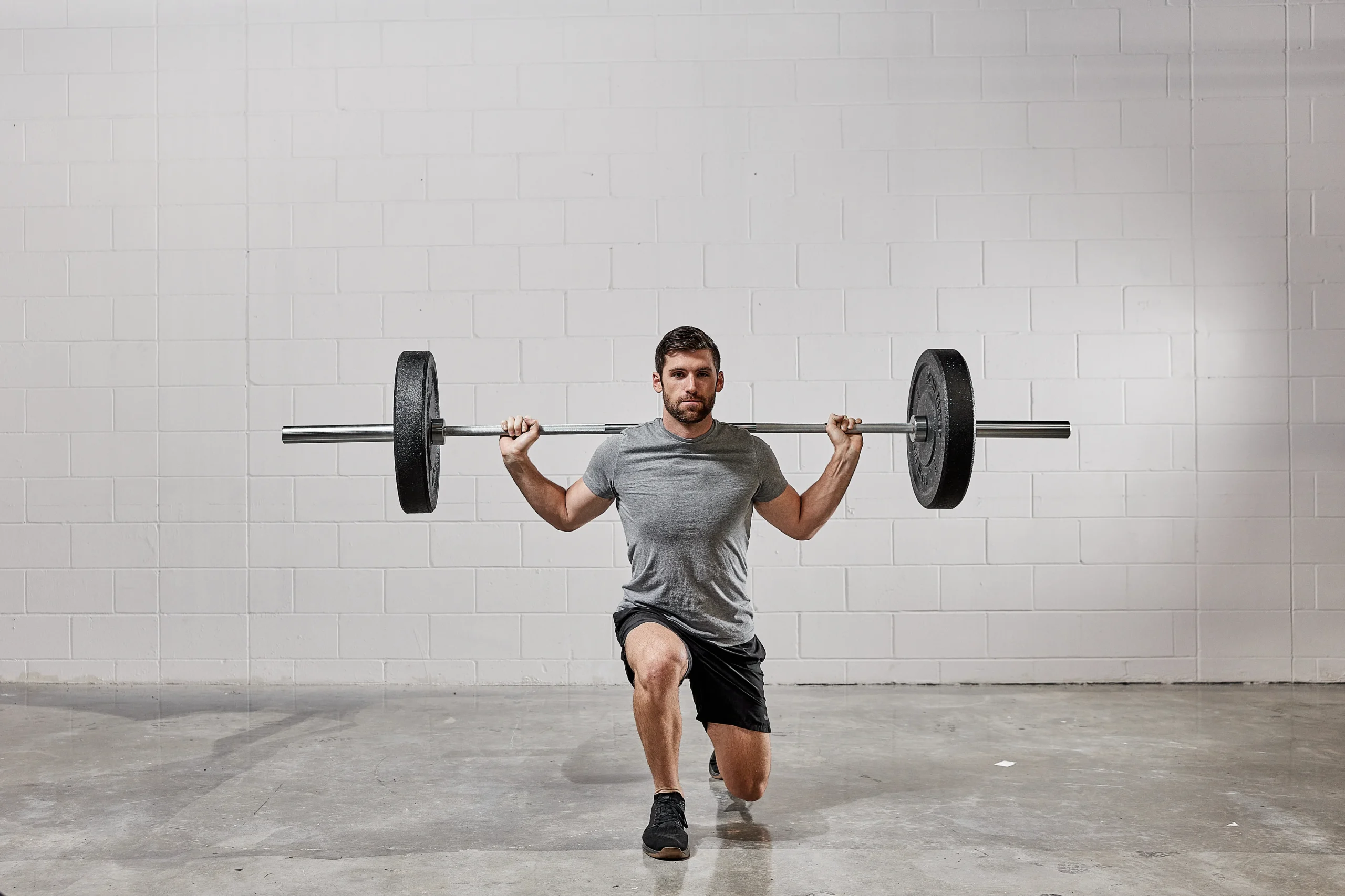
Bodyweight walking lunges are the cleanest way to learn the transition. Once you complete the planned steps without stumbling, a pair of dumbbells at your sides is a straightforward first loading option: the weights are easy to set down, the torso stays relatively free and increments can be small. You do not need squat-level loads for this exercise to be difficult.
Kettlebells at the sides serve a similar purpose but may swing against the legs. A goblet or front-rack hold increases the challenge to the trunk and upper back. Choose based on what you want to train: if hands or shoulders fail before the legs, changing the hold or reducing load may make the intended leg work easier to assess.
A barbell allows heavier loading but complicates bail-outs and amplifies balance errors. Reserve it for experienced lifters with an unobstructed path, adequate headroom and a reliable way to unload. Overhead lunges require separate shoulder mobility and overhead-control skills; they are not an automatic next step.
For hypertrophy, use a load that makes the last few steps challenging while leaving roughly one to three clean reps in reserve per leg. Do not chase maximal dumbbells if the set turns into short, lurching steps. If grip fatigue limits you first, lighter dumbbells, shorter sets or a different unilateral exercise may be more useful than pretending the legs failed.
Plan the turn before starting. A narrow gym aisle, cluttered plates or another lifter crossing the route are reasons to shorten the lane or use stationary split squats, not to improvise a loaded turn while exhausted.

Leg Day Shirts & Workout Gear
Leg-day gym shirts and workout gear for lifters who never skip squats, lunges and lower-body punishment.

I Only Do Butt Stuff At The Meme Glute Lovers, Hip T-Shirt
Heavy lifts, good laughs, and a little “I Only Do Butt Stuff At” energy.

Big Heart Bigger Ass – Booty , & Meme T-Shirt
Bring “Big Heart Bigger Ass” humor to your next gym day.

Thick Thighs Crush Guys Shirt Leg Day Meme & Gymbros T-Shirt
Show some leg-day attitude with a playful “Thick Thighs Crush Guys” tee.

Brozilla Gym | Funny Godzilla Gym Meme Workout | Monste Hoodie
Keep it laid-back with a little “Brozilla” attitude.

Thicc AF Booty Lovers & Glute Gains Meme Athletic Tank Top
Train hard, laugh a little, and rep “Thicc AF”.

Freedom To Skip Leg Day – Patriotic Statue of Liberty J T-Shirt
Show some gym-day personality with “Freedom To Skip Leg Day”.

Leg Day The Day That Never Comes — Metallica Rock Music Sticker
Bring “Leg Day The Day That Never Comes” attitude to your water bottle or laptop.

Patriotic Eagle Stars Stripes and Squats Gym Shirt for T-Shirt
Make gym days more fun with “Patriotic Eagle” style.


I Want You To Squat Uncle Sam Patriotic – Funny 4th of T-Shirt
Bring “I Want You To Squat Uncle Sam Patriotic” humor to your everyday gym style.
4. Fix the mistakes that make lunges feel unstable
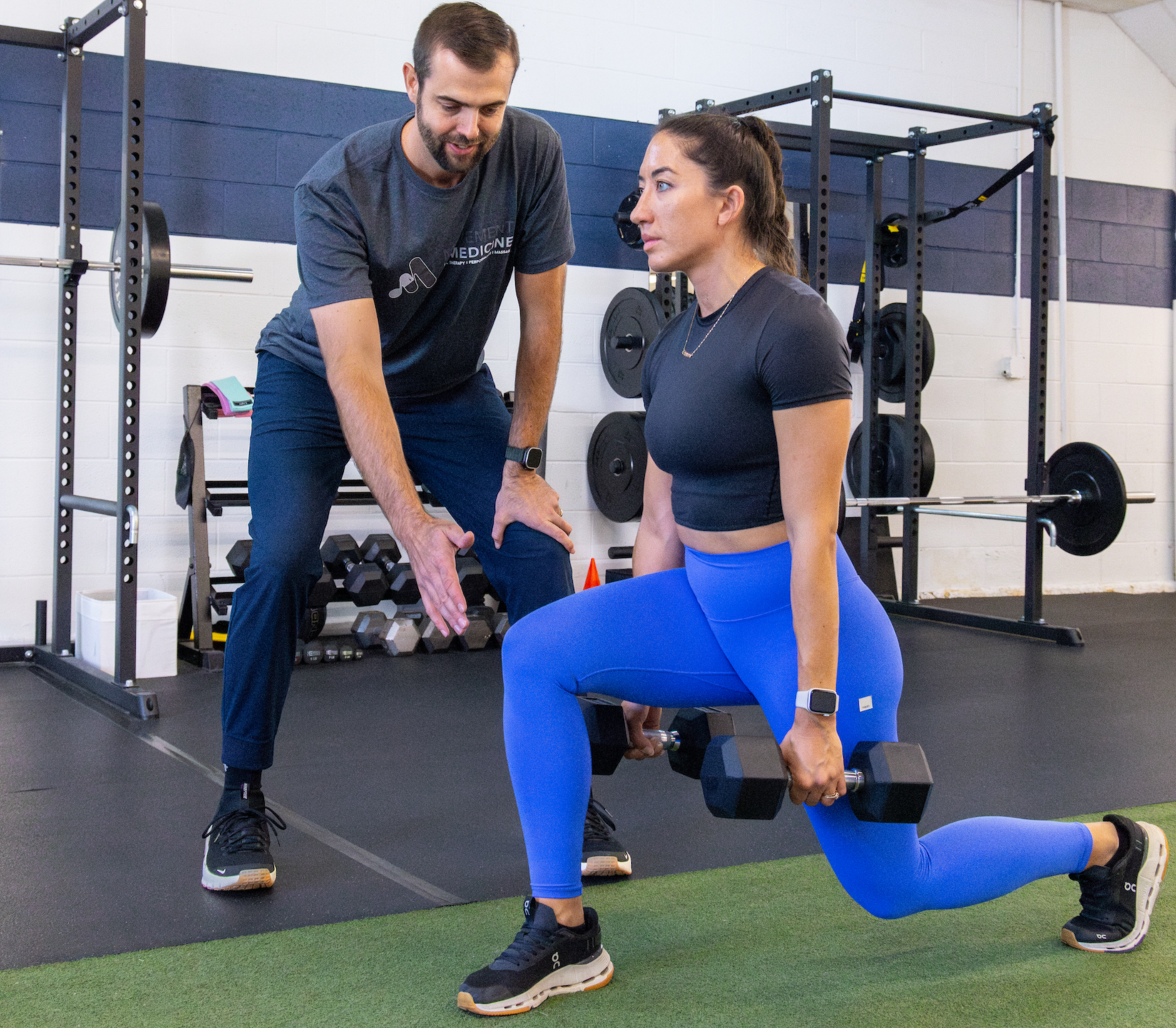
Side-to-side wobbling: steps may land on one line, or the pace may be too quick. Use hip-width tracks as a reference, pause briefly at the top and step deliberately. Rehearse a few unloaded steps near a wall or rack if you need support.
Slamming the trailing knee: slow the lowering phase and choose a shallower depth that you control. A pad may protect the floor or knee during a light touch, but it cannot fix an uncontrolled descent. Treat each step as a rep, not a fall followed by a recovery.
Front heel lifting or knee collapsing inward: adjust stride length, make room for the hips and distribute pressure across the foot. Some forward knee movement is normal. Pain or repeated loss of control is a reason to reduce load and reassess range rather than force a rigid geometry rule.
Rushing the walk: speed can mask a weak position. Take roughly one or two seconds to lower, rise without bouncing and reset your stance when needed. A brief top pause is fine; walking lunges do not have to look like continuous marching.
Persistent discomfort: stop forcing the setup. A lower step count, reverse lunge, stationary split squat or supported variation might be more suitable. New pain, instability or symptoms following an injury warrant appropriate professional assessment. An online form guide cannot diagnose the cause.
5. A six-week walking-lunge progression for leg day
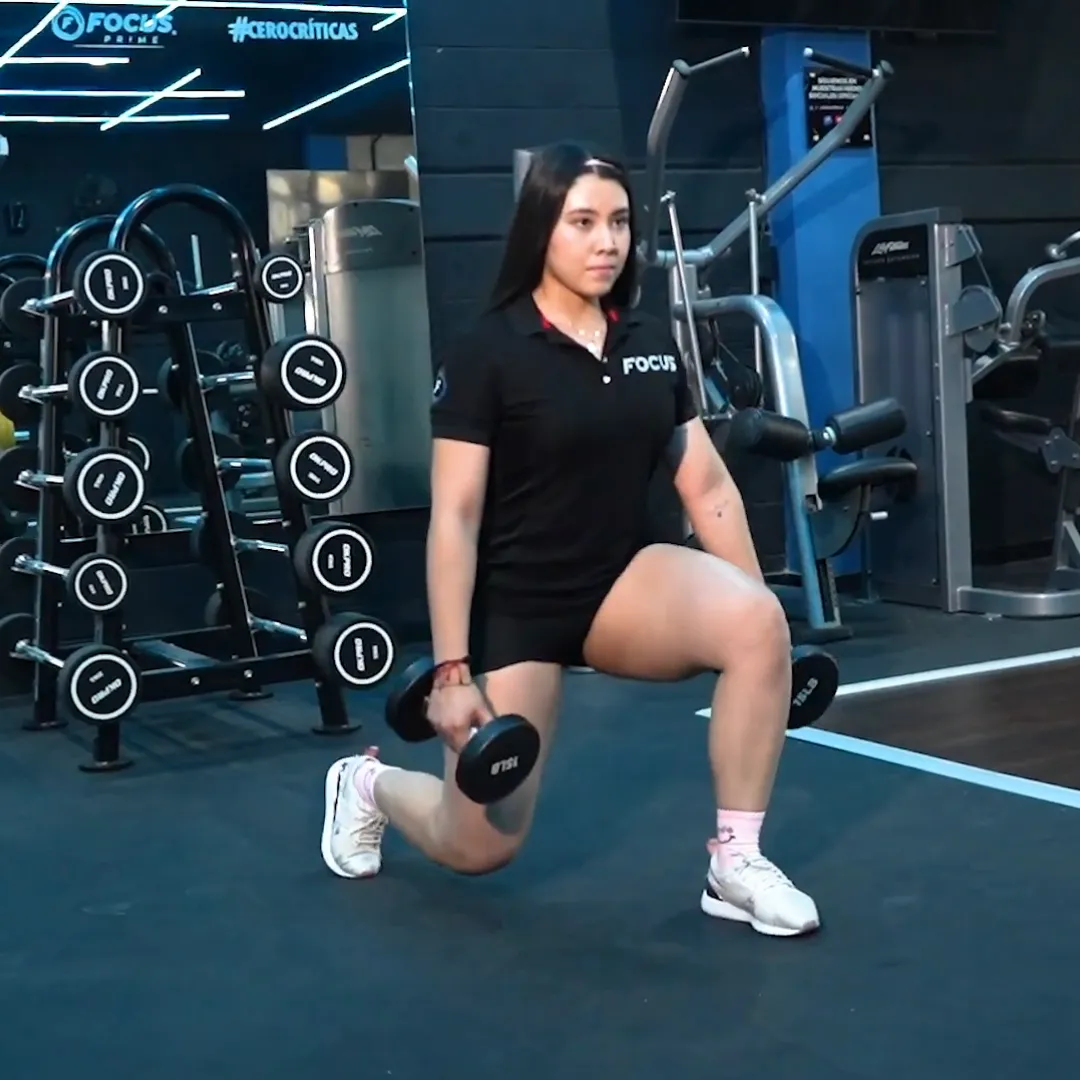
Train walking lunges once or twice weekly as an accessory. This example assumes you already perform at least one other lower-body exercise. Steps are counted per leg; eight on each side means sixteen total. Rest roughly 90–150 seconds between sets, longer if balance or breathing has not recovered.
| Weeks | Walking lunge prescription | Progression cue |
|---|---|---|
| 1–2 | 2 sets × 6–8 steps per leg, bodyweight or very light dumbbells | Same depth, even stance and sides |
| 3–4 | 3 sets × 8–10 steps per leg | Increase steps first, then load |
| 5–6 | 3 sets × 10–12 steps per leg | Add modest weight only if form holds |
Progress one variable at a time: steps, load or control. If three sets of ten with equal stride length feel manageable, add the smallest practical weight increment and return to the low end of the range. If you are also raising squat volume, hold lunge work steady until you know how your legs recover. This sample is not a research-proven universal dose.
Place lunges after heavier squats or hinges, before lower-priority isolation exercises, unless unilateral strength is your focus. An example leg day could begin with three sets of squats, continue with two or three controlled lunge sets, then use hamstring curls and calf raises. Avoid stacking every lower-body exercise to failure.
Log steps per leg, weight in each hand, approximate stride and depth, and whether you paused between reps. If floor space is short, reverse lunges or split squats are practical substitutes. Chasing distance is not the goal.
The best set is repeatable without staggering, shortening the final steps or losing knee control. Build clean strides first, then choose whether weight or repetitions serve the next training goal.
Equipment Worth Exploring
Explore equipment, accessories and gear from our carefully selected range.


Competition Plates
Competition-style bumper plates for Olympic lifts and loaded strength training.

GymPin Squat Wedges
Non-slip 15-degree squat wedges help elevate the heels for deeper quad-focused squats.

Studio V-Squat
Plate-loaded V-squat machine for supported lower-body strength training.

Leg Press/Hack Squat BPR-790
Convertible 45-degree leg press and hack squat machine with a broad footplate and band pegs.

Compact Leg Press CLP-700
Compact reverse-style leg press with a moving seat carriage and an adjustable footplate.

Open Hex Bar
Open-frame trap bar with multiple handles for deadlifts, carries, and lower-body training.
Some product links may be affiliate links, supporting Mind Muscle Perfection at no additional cost to you.