Advertising disclosure: This page includes affiliate product links that may earn us a commission, as well as products from our own store.
Dumbbell Flyes: Find Your Elbow Bend, Control the Range and Progress Cleanly
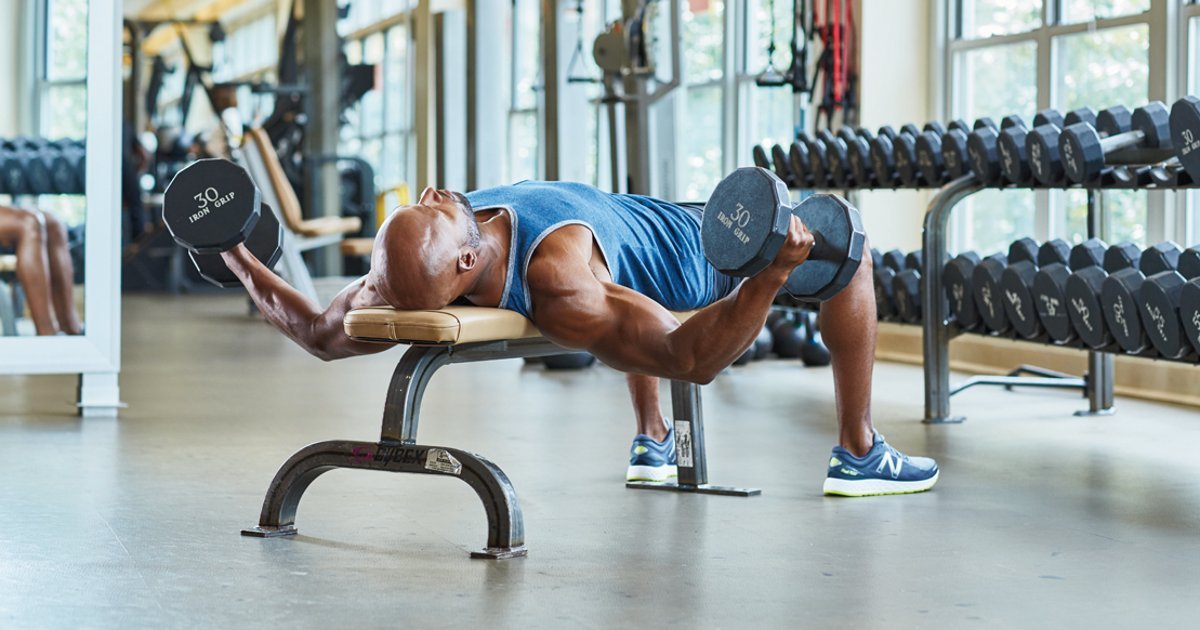
A dumbbell fly is not a bench press performed with straighter arms. The weights travel through a wide arc while the elbow bend stays fairly consistent, making a relatively light pair of dumbbells demanding near the bottom. That difference is useful, but it also means that reaching farther or borrowing your pressing weight can change the exercise quickly.
The practical aim is a controlled chest movement with a repeatable range. Start with a stable bench setup, choose an arm position you can manage and judge progress by comparable repetitions. A bigger stretch sensation or a heavier label is not enough on its own.
Set Up the Bench Before You Open Your Arms
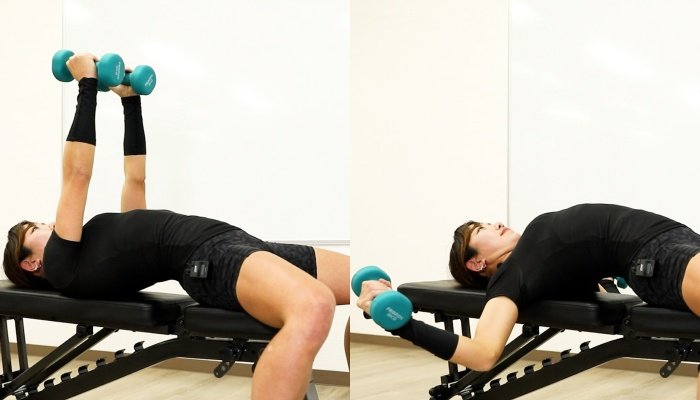
Use a stable flat bench with the adjustment mechanism secured. Lie with your head, upper back and hips supported, and place your feet firmly on the floor. If the bench is so tall that you cannot establish reliable foot contact, choose another bench or an appropriate stable foot support. Avoid balancing on your toes simply to use a particular piece of equipment.
Begin with light dumbbells that you can bring into position and return safely. With a secure grip and palms facing each other, hold them above your chest before opening the arms. Do not start by dropping into the deepest position and trying to work out how to lift from there. The first repetition should begin from a position you already control.
Keep your wrists reasonably straight and your grip closed around the handles. Arrange your shoulders comfortably against the pad without forcing an exaggerated arch or lifting your hips. A small natural curve through the lower back is different from changing your entire torso position to rescue the weights.
Plan the finish before starting. After the last controlled repetition, bring the dumbbells back above your chest and use a familiar, manageable return to sitting, with assistance when needed. Do not throw them sideways off the bench. If you cannot handle the entry and exit reliably, reduce the load and ask a competent trainer to help organise the setup.

Equipment Worth Exploring
Explore equipment, accessories and gear from our carefully selected range.


Rubber Hex Dumbbells
Rubber-coated hex dumbbell pairs with a stable shape for home and commercial strength training.




Multi Bench MBX-650 2.0
Adjustable multi-bench with roller adjustment, 15 backrest positions and accessory mounts.


Choose an Elbow Bend You Can Keep Throughout the Arc
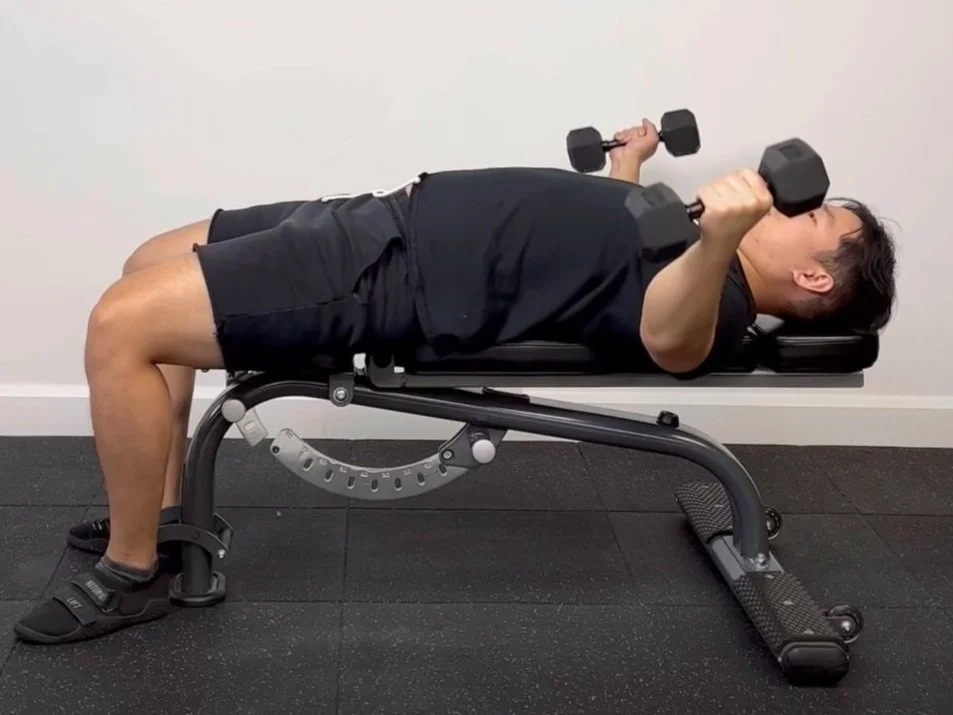
A soft bend at the elbows shortens the lever compared with completely straight arms. Keep approximately that same bend while the arms open, then bring the dumbbells back together through the same broad path. Think about moving the upper arms toward the centre of your chest rather than straightening your elbows to push the weights away.
The important detail is consistency, not matching an exact angle from a photograph. Arm length, dumbbell shape and your starting position affect what the movement looks like. If your elbows bend much more as the dumbbells descend and then straighten hard on the return, the exercise is becoming a press. That is a useful signal to reduce the weight or shorten the range.
Lower both sides at a pace you can stop. They do not need to touch the floor or pass far below the bench. Keep the hands and elbows moving in a coordinated arc rather than twisting the wrists to point the dumbbell heads at a target. Your chest and front shoulders contribute to the movement, while your arms and grip help maintain the shape.
At the top, bring the weights close without banging them together. With dumbbells, gravity acts downward: as the arms become more vertical, the external turning demand around the shoulder generally decreases. Clashing the weights or forcing a long squeeze does not automatically make that position more heavily loaded. Finish the arc smoothly, then control the next descent.
Let Your Controlled Range Decide the Bottom Position
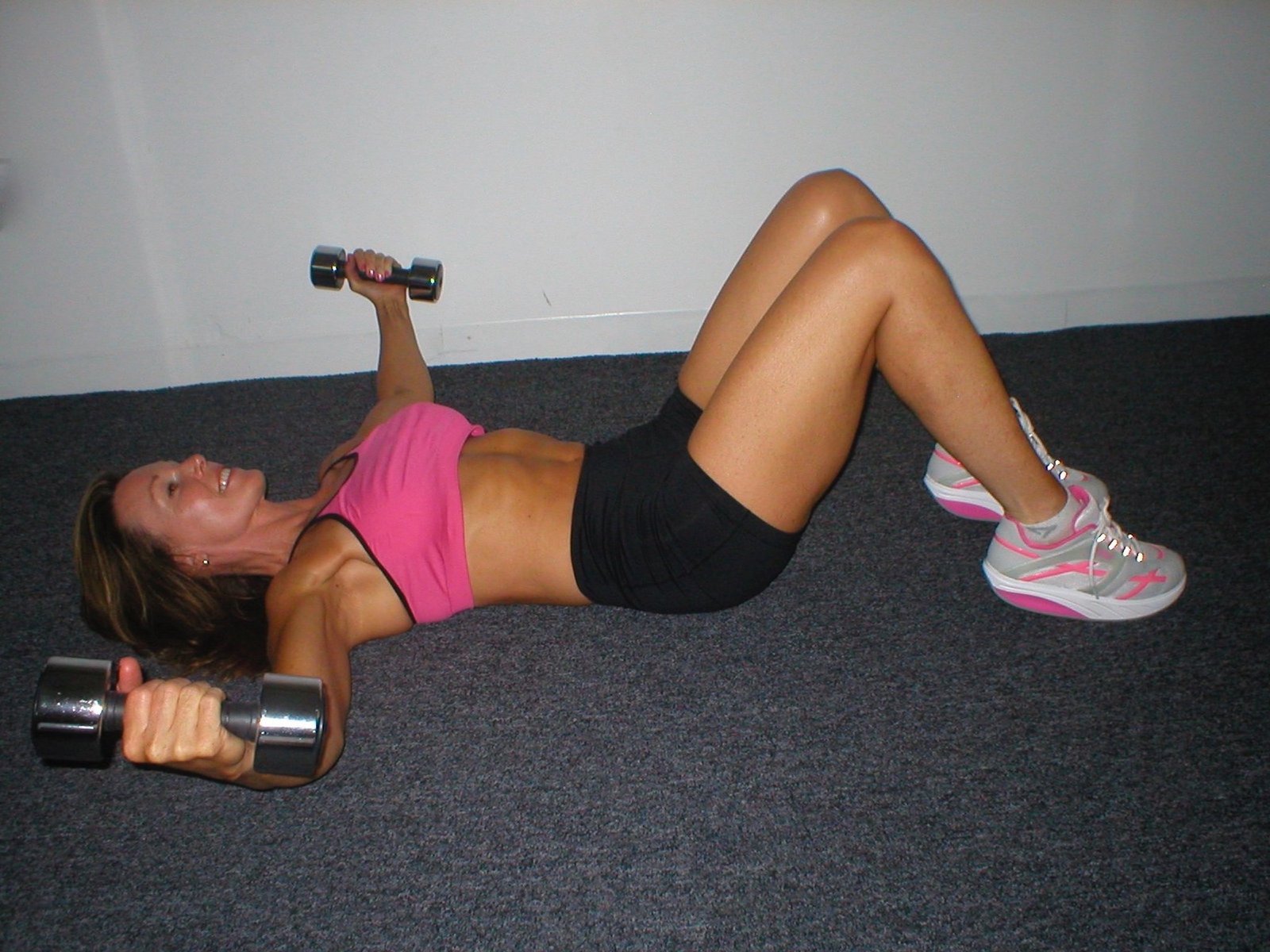
A common reference is to lower until the upper arms approach the level of the torso, but it should not become an instruction to force everyone to the same depth. Stop earlier if you lose shoulder position, cannot reverse smoothly or feel uncomfortable joint pressure. The endpoint should be something you can repeat without bouncing.
The bottom often feels hardest because the dumbbells are farther horizontally from the shoulder. That longer external lever means a small increase in load can make the same arm position considerably more demanding. If the new weights only move after you bend the elbows much further, you have changed both the load and the mechanics.
A floor fly offers a different boundary: the upper arms approach the floor sooner, limiting how far they can travel behind the torso. Lower gently and do not crash your elbows into the ground. Use a comfortable floor surface, keep your knees bent and your feet planted, and retain control of the weights. The floor limits the available range; it does not make any weight or technique automatically safe.
Record whether you use the floor, a flat bench or an incline bench. Changing the support changes the movement you can perform, so compare like with like. A shorter controlled range can be a sensible starting point. Gradually adding a little comfortable range is progress only if the arm path and return stay organised, not because the bottom position looks more dramatic.

Bodybuilding Shirts & Workout Gear
Bodybuilding shirts, tanks and gym gear for lifters chasing muscle, size, symmetry and the pump.

Gym Dost Thou Even Fly Medieval Knight Pec Fly for Body Hoodie
Show off your medieval humor in a laid-back “Dost Thou Even Fly Medieval Knight Pec Fly” hoodie.

The Chestfather Arnold Meme Sweater Big Chest T-Shirt
For laid-back days and lifting humor: “The Chestfather”.


Kanye Chest Gym Meme | Bodybuilding Rap Parody Decal Sticker
Stick a little “Kanye Chest Gym Meme” humor on your favorite gear.

If You're Reading This Its Chest Day
Keep things casual with a little “If You're Reading This Its Chest Day Drake” attitude.


Bench Press and Chill Funny Gym T
Make gym days more fun with “Bench Press and Chill” style.

for Chest Day | I Love Bench Press Muscle Shirt with Pi Tank Top
Add some lifting attitude to training with “for Chest Day”.


Gym Sir Swole of Benchalot Medieval Knight Chest Day Mu Tank Top
Bring “Sir Swole of Benchalot Medieval Knight” humor to your next lifting session.
Understand What Changes With Cables or a Pec-Fly Machine
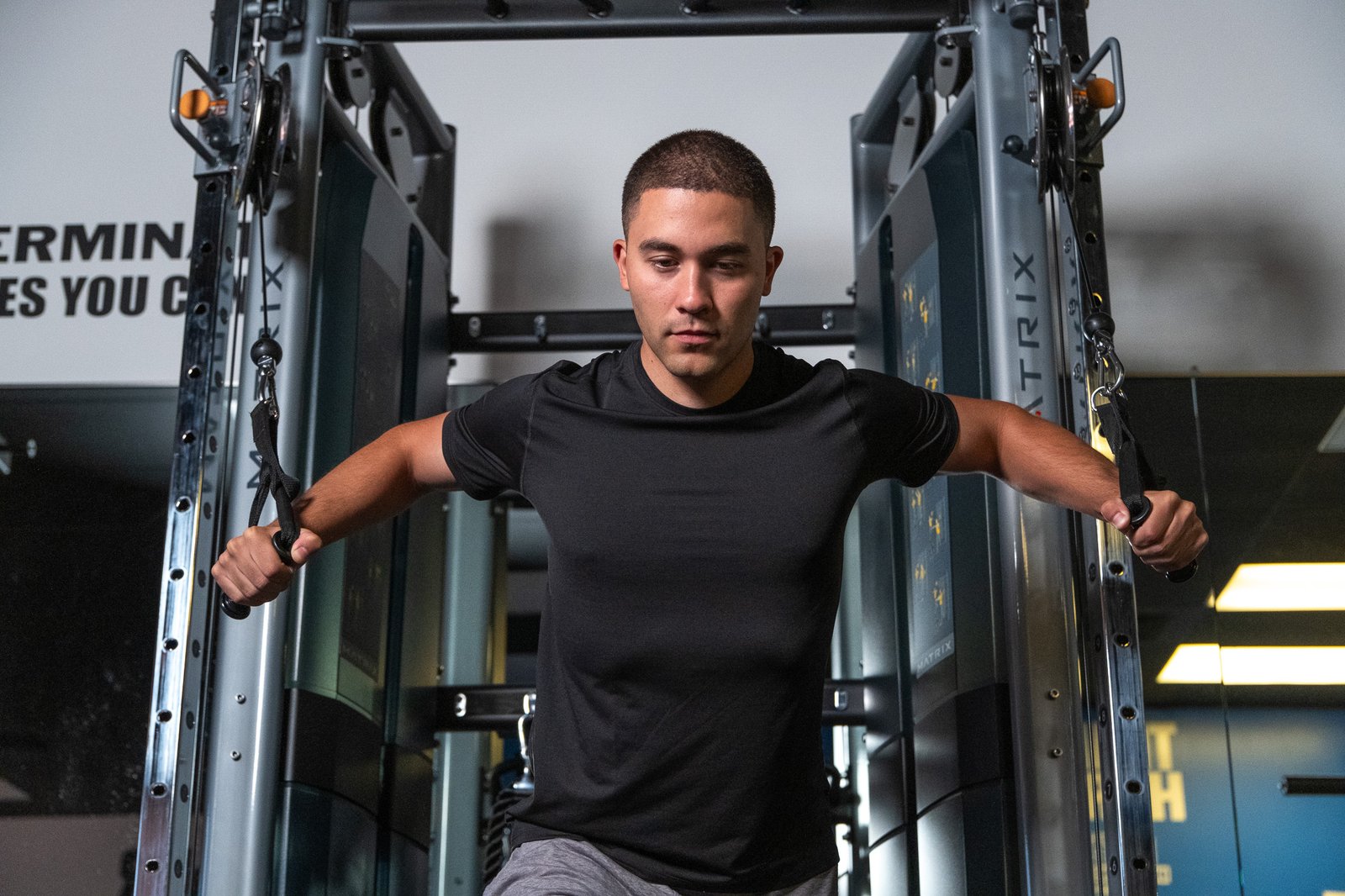
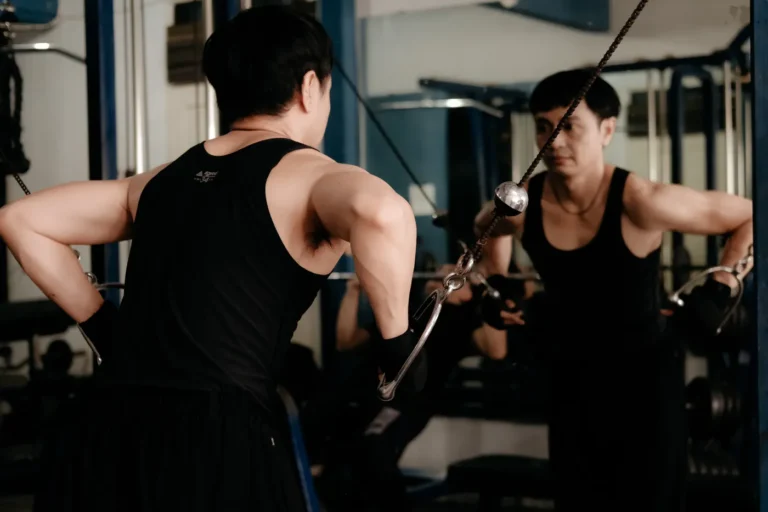
A cable fly is a useful alternative when you want a different line of resistance or prefer standing to lying on a bench. The pulley position and your position relative to it determine the direction of pull. Unlike a dumbbell, a cable does not simply pull straight down at every point, so equal weight labels do not describe an equal exercise.
Start a cable variation with manageable resistance and a stable stance. Keep the elbows softly bent, move through a controlled arc and avoid using a large forward body swing to finish the repetition. A low-to-high fly, high-to-low fly and roughly horizontal fly are different paths. They are options to test, not a requirement to perform every angle in one session.
A dual-pulley functional trainer, rack-mounted cable system or compatible portable resistance unit can supply cable resistance. A single-sided unit may require a unilateral version rather than pretending it has two independent outputs. Choose handles that fit securely; compatible cuffs are another loading arrangement, not proof of better chest growth or a solution for pain.
A pec-fly machine adds a guided path. Adjust the seat and starting position so the handles or pads suit your proportions, and do not assume the deepest available setting is appropriate. Machines, cables and dumbbells can all be useful, but their resistance profiles and stability demands differ. If one setup consistently feels awkward, choose a suitable alternative instead of forcing the same position under more load.
Equipment Worth Exploring
Explore equipment, accessories and gear from our carefully selected range.
VOLTRA
Compact digital cable trainer with smooth, adjustable resistance.

Go-Tone Pro
Portable digital cable trainer with up to 66 lb (30 kg) of adjustable resistance.

VForce Wall Trainer
Space-saving wall-mounted functional trainer with pivoting cable arms and variable resistance ratios.

VForce 2IN1
Half rack and pivot-arm functional trainer with switchable 1:1 and 2:1 pulley ratios.

VForce 3IN1
All-in-one rack combining an adjustable Smith machine, functional trainer, and free-weight station.

VForce 3IN1 Max
Six-post all-in-one rack with Smith machine, functional trainer, and variable-force cables.

Multi Pull Smith Rack MPHR-780
All-in-one rack with a Smith machine, functional trainer, lat pulldown and low row.

Pec Fly/Rear Delt PEC-650
Combination machine with adjustable movement limits for chest fly and rear-delt exercises.

GymPin D Cuffs
Adjustable wrist cuffs with textured grips for supported cable-machine exercises.

GymPin Ergo Handles
Pair of ergonomic cable handles shaped for comfortable triceps and pulling exercises.
Place Flyes in Chest Training and Make Progress Comparable
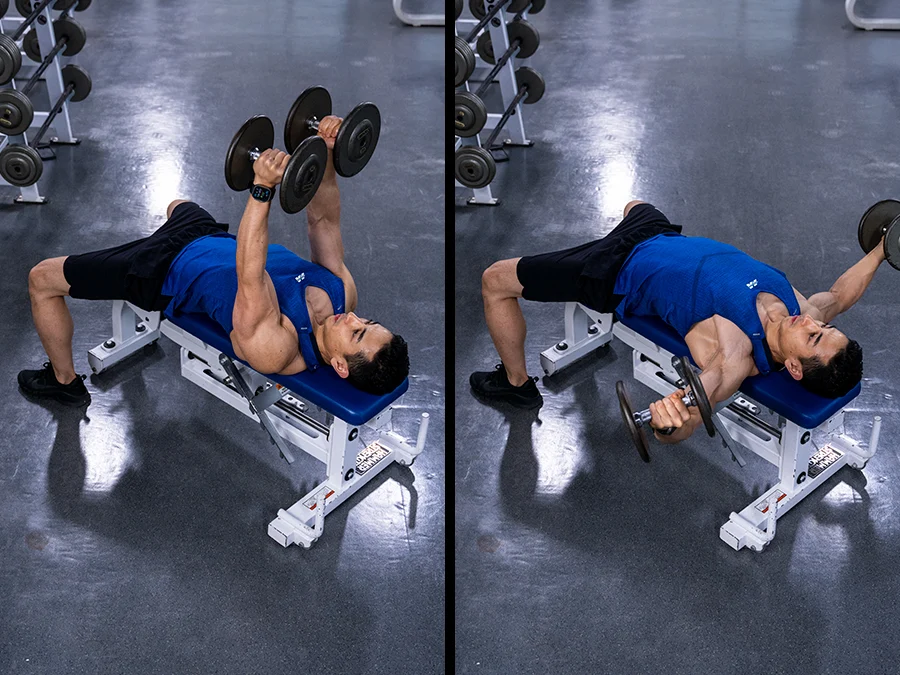
Decide what the fly is adding to your programme. For many lifters it works as an accessory after a main press, giving the chest another movement without trying to use pressing loads. If you place it before pressing, recognise that the resulting fatigue may change your later performance. That is a programming choice, not automatic evidence that the workout became more effective.
As an adjustable starting example, use two sets of around 10–15 controlled repetitions once or twice per week, leaving a few good repetitions in reserve. Rest until you can repeat the intended movement. This is a practical example, not an experimentally established optimal dose. Account for the chest work already coming from presses, push-ups and other fly variations.
- Choose your baseline: Use the same bench position, elbow bend, endpoint and comfortable tempo for several sessions.
- Add clean repetitions: Build within your chosen range while keeping the last repetition similar to the first.
- Increase load cautiously: Use a small available increment and return toward the lower end of the repetition range.
- Review the change: If the movement becomes a press, the range shortens sharply or the shoulders become uncomfortable, reduce the load and rebuild.
For example, two steady sets of 12 can become two sets of 13 or 14 before you change dumbbells. If the next pair is a large jump, there is no obligation to take it immediately. Small change plates or plate-loaded handles may offer finer adjustment where the equipment allows secure loading. Keep any add-on clear of your body and follow the manufacturer’s loading limits.
A simple log can include the load per hand, bench angle, repetitions, approximate endpoint and whether discomfort occurred. The same numbers with a smoother return or less unwanted elbow bending can be meaningful improvement. Avoid adding repetitions by bouncing, using a partner to force the weights upward or turning every set into a contest for the deepest stretch.
Finally, no fly variation can promise a particular chest shape or a line carved through the centre of the pecs. Muscle development depends on the wider training programme, nutrition and consistency. Stop for sharp or increasing pain and seek an appropriate assessment if symptoms persist. Choose the variation you can train well, then build its workload with the same care you would give a heavier press.
Funny Gym Shirts & Workout Gear
Funny gym shirts, tanks, hoodies and workout gear for lifters who like training hard.

Dumbbelldore | Swole Wizard Workout Pullover | Harry Po Hoodie
Keep it laid-back with a little “Dumbbelldore” attitude.

Kanye Dumbbell Parody Gym | Funny Workout Vest Tank Top
Train hard, laugh a little, and rep “Kanye Dumbbell Parody”.

Dumbbell Gauntlet Muscle Shirt Athletic Vest Thanos Inf Tank Top
Train hard, laugh a little, and rep “Dumbbell Gauntlet”.


Funny I Love Gym Valentine's Day – Gym Lovers Workout P T-Shirt
Show some gym-day personality with “I Love Gym Valentine's Day”.

Vitruvian Man With Dumbbells Shirt: Leonardo Da T-Shirt
Bring “Vitruvian Man With Dumbbells” humor to your next gym day.

Shirt – Dumbbell Heartbeat Gymbros, & Meme Lovers T-Shirt
Show some bodybuilding attitude with a playful “Dumbbell Heartbeat” tee.

Superhero Dumbbell Press Tee
Heavy lifts, good laughs, and a little “Superman Dumbbells Logo” energy.

The Boy Who Lifted Shirt | Harry Spotter & Dumbbelldore T-Shirt
Rep “The Boy Who Lifted” humor in and out of the gym.

Shirt – Liftionaire Golden Dumbbell Gymbros & Gains T-Shirt
Make gym days more fun with “Liftionaire Golden Dumbbell” style.