Advertising disclosure: This page includes affiliate product links that may earn us a commission, as well as products from our own store.
Chest-Supported Dumbbell Rows: Fit the Bench, Find Your Path and Progress Cleanly
A chest-supported dumbbell row gives your torso somewhere to rest while your arms and shoulder blades perform the pull. That support can make a row easier to organise, but it does not automatically make every repetition strict. You can still bounce off the pad, lift your chest to finish the movement or shorten the lowering phase as the dumbbells become heavier.
The useful starting point is a setup that fits your proportions. From there, choose a comfortable pulling path and keep it consistent enough to measure progress. This guide focuses on the incline-bench dumbbell version: how to position yourself, what to watch during the repetition and how to decide whether an increase in weight is actually an improvement.
1. Fit the bench to your chest, arms and available floor space
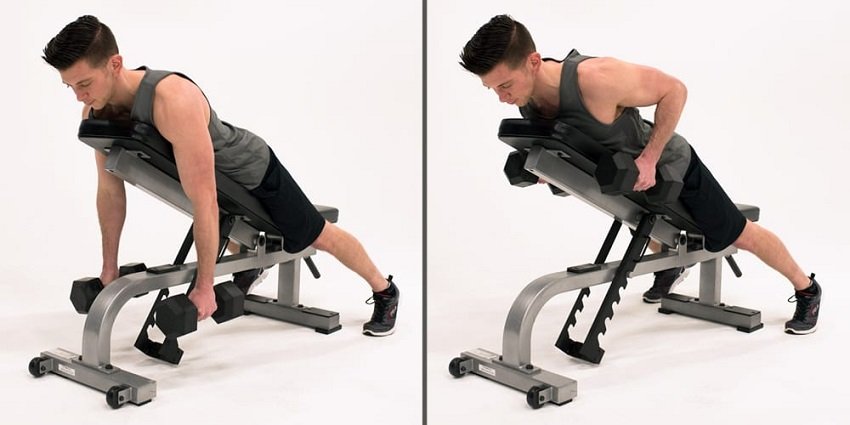
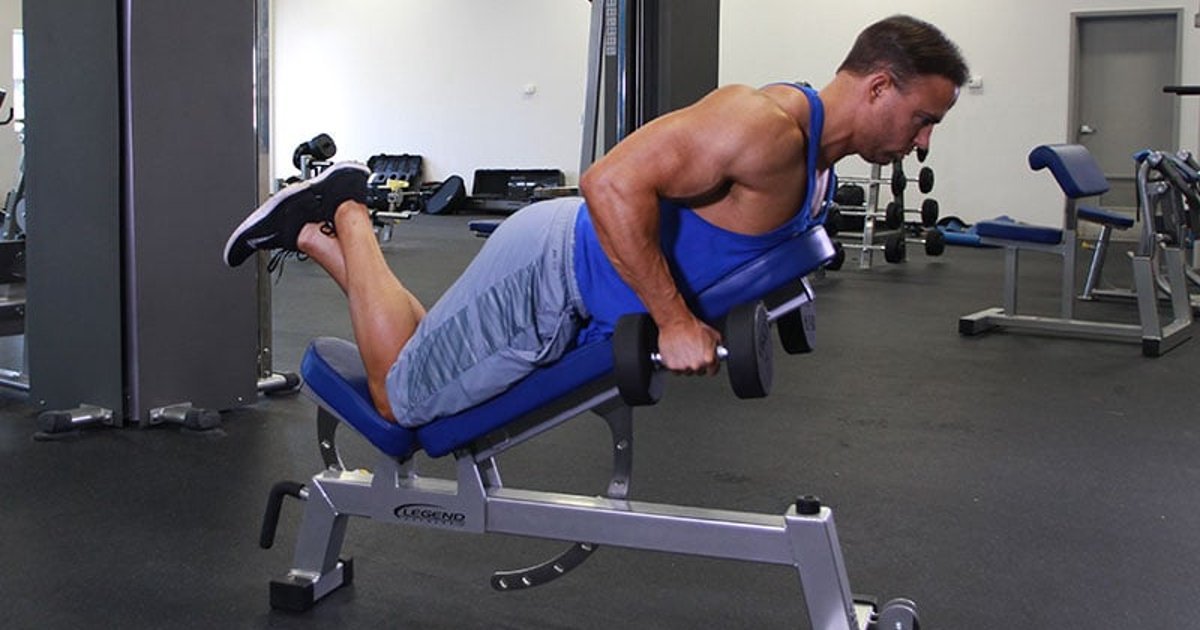
Use a stable adjustable bench with its backrest securely locked. An incline around 45 degrees is a common starting point, rather than a compulsory setting for every lifter. The practical question is whether your chest can rest on the pad while your arms hang far enough down for the dumbbells to move freely.
Check the bottom position before choosing your working weight. Long arms, large dumbbell heads and a low bench can bring the weights into the floor before your elbows straighten comfortably. Moving to a different bench or changing the incline slightly may solve that problem more effectively than deliberately shortening every repetition.
Place your feet where you can maintain a stable position without sliding forward. Depending on the bench and your proportions, the seat may support part of your lower body. Do not force a knee position copied from a photograph if it leaves your chest crowded or your lower back uncomfortable.
Leave your face clear of the top edge and avoid pressing the throat into the pad. You should be able to breathe throughout the set. If the position feels compressed before you even begin rowing, adjust it while the dumbbells are still light.
Plan the entry and exit too. Put the weights where you can collect them without reaching awkwardly around the bench frame. After the set, return them under control. A stable rowing position is only part of the exercise if getting into it requires an uncontrolled twist with heavy dumbbells.
2. Start with a comfortable grip and a clear elbow path
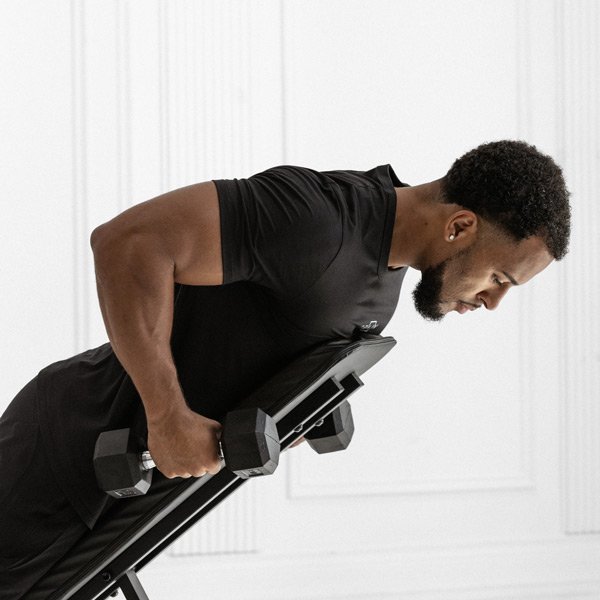
A neutral grip, with the palms facing each other, is a straightforward place to begin. Keep the handles secure in your hands and the wrists broadly aligned with the forearms. The grip should let you concentrate on rowing rather than repeatedly correcting a bent wrist.
Draw the elbows back toward your torso while allowing the shoulder blades to move naturally. Do not clamp the shoulder blades down so firmly that only the arms can move. Likewise, you do not need to chase an exaggerated squeeze by forcing the elbows as far behind your body as possible.
Stop the pull at a position you can reach without lifting your chest away from the support. The exact endpoint depends on your proportions, bench angle and arm path. A dumbbell touching the bench or ribs is not a universal requirement for a completed repetition.
Changing the elbow path changes the movement you are practising. A more tucked path and a wider path will not feel identical. Neither needs to become a claim that one small adjustment completely isolates a single muscle. Start with the option that feels comfortable, then keep it stable long enough to assess.
If one dumbbell travels farther than the other, first check your position on the pad and whether both weights have equal clearance. A small difference is a reason to observe the movement, not to diagnose an imbalance from one set. Reduce the load and compare several deliberate repetitions before changing the exercise.
If you experiment, make the change deliberately with a manageable load. Note the grip and approximate elbow path in your log. Comparing two differently performed rows as if only the weight changed can make your progress look better or worse without telling you what actually improved.
3. Keep the support useful without making your torso rigid
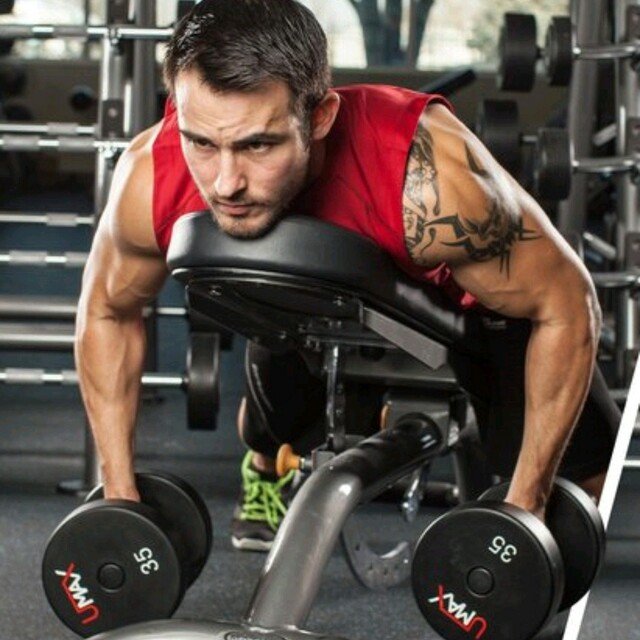
The pad is a reference point, not a launch surface. If your chest repeatedly lifts away as the dumbbells rise, you are adding torso movement to complete the pull. Reduce the load and see whether you can finish the same arm path while keeping comfortable contact with the bench.
Some movement of the shoulder blades and upper back is normal. The goal is not to freeze every part of your body. Distinguish that movement from a large backward arch that turns the last few repetitions into a different exercise.
Keep your head in a comfortable continuation of your torso rather than craning forward to watch a mirror. A side-view recording can show whether the neck position changes as the set becomes difficult. Review it after the set instead of turning toward a phone while holding the weights.
A useful technique check is to compare the opening and closing repetitions. Does the chest stay in contact? Do the elbows follow a similar path? Does the bottom position remain available? Those observations are more specific than deciding whether the set looked intense.
Support reduces the demand to hold a bent-over position, but it does not make the exercise automatically pain-free or suitable for every back problem. If the position repeatedly causes pain, stop forcing it. Another bench, a lighter load or a different rowing setup may be the better practical choice.
4. Own the lowering phase and identify the real limiting factor
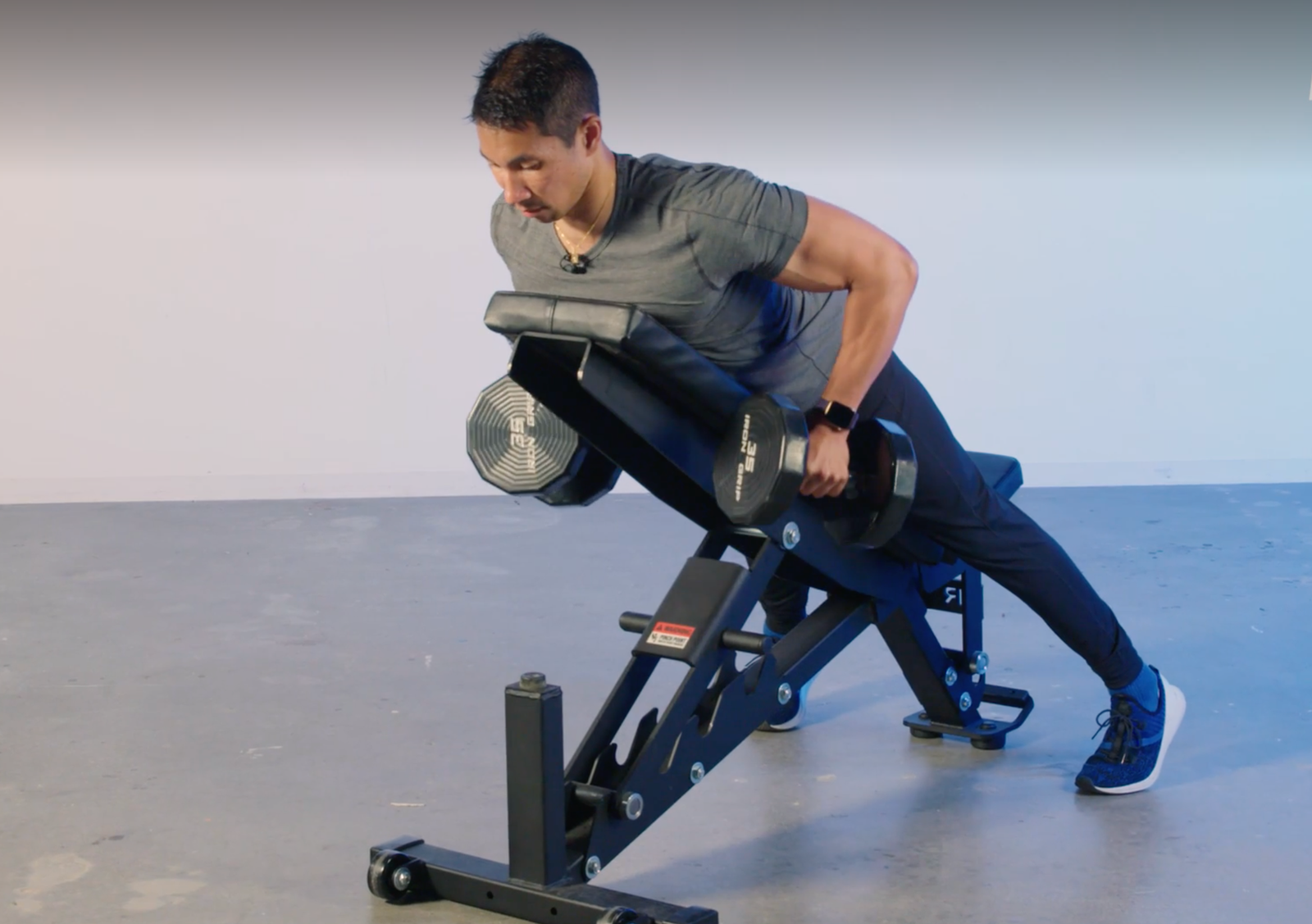
Return the dumbbells deliberately until the arms reach your chosen comfortable starting position. Let the shoulder blades move with the reach rather than dropping the weights abruptly. The bottom of the row should be a repeatable position, not a bounce that launches the next pull.
If the dumbbells touch the floor, pause and reassess the setup. You may have lost position, selected a bench that is too low or chosen oversized weights for the available clearance. Do not treat repeated floor contact as evidence that you have found a special extended range.
Your hands can also end the set before the intended pulling muscles are sufficiently challenged. If the handles slip while the rest of the movement remains controlled, identify that as a grip limitation. Lifting straps may help when back training is the priority, but learn their use with lighter weights first.
Keep the holding method consistent when comparing sessions. Adding straps, changing handles and increasing weight together makes it difficult to judge what produced the extra repetitions. If grip training matters too, retain some appropriate unassisted work elsewhere instead of expecting every row set to accomplish everything.
For example, your log might show ten controlled repetitions followed by eight, with the final set stopped by slipping hands. That is different information from eight repetitions stopped because you could no longer complete the pull without lifting your chest. Record the reason, not only the number.

Bodybuilding Shirts & Workout Gear
Bodybuilding shirts, tanks and gym gear for lifters chasing muscle, size, symmetry and the pump.


Lat Man Big Back – Hooded With Huge Lats – Jumper Hoodie
Stay casual and show some superhero attitude with “Lat Man Big Back”.


Wide Privilege – Wide Back Meme Vest Muscle Shirt for A Tank Top
Show some personality between sets with “Wide Privilege”.

Shirt Pull Day – Back & Biceps Meme Top T-Shirt
Heavy lifts, good laughs, and a little “Pull Day Graphic” energy.

Back Sabbath Back Day Heavy Metal Back Training Workout T-Shirt
Bring “Back Sabbath Back Day” humor to your next gym day.

Dost Thou Even Pull Tee
Make gym days more fun with “Dost Thou Even Pull Medieval Knight Lat” style.

Dumbbell Heartbeat Decal for Water Bottles Laptops Gym Sticker
Bring “Dumbbell Heartbeat” attitude to your water bottle or laptop.

Dumbbell Meme Shirt – Essential & Gymbros Seeking T-Shirt
Make gym days more fun with “Dumbbell Gym Meme” style.

Vitruvian Man With Dumbbells Shirt: Leonardo Da T-Shirt
Bring “Vitruvian Man With Dumbbells” humor to your next gym day.
5. Progress the same row before replacing it with a heavier version
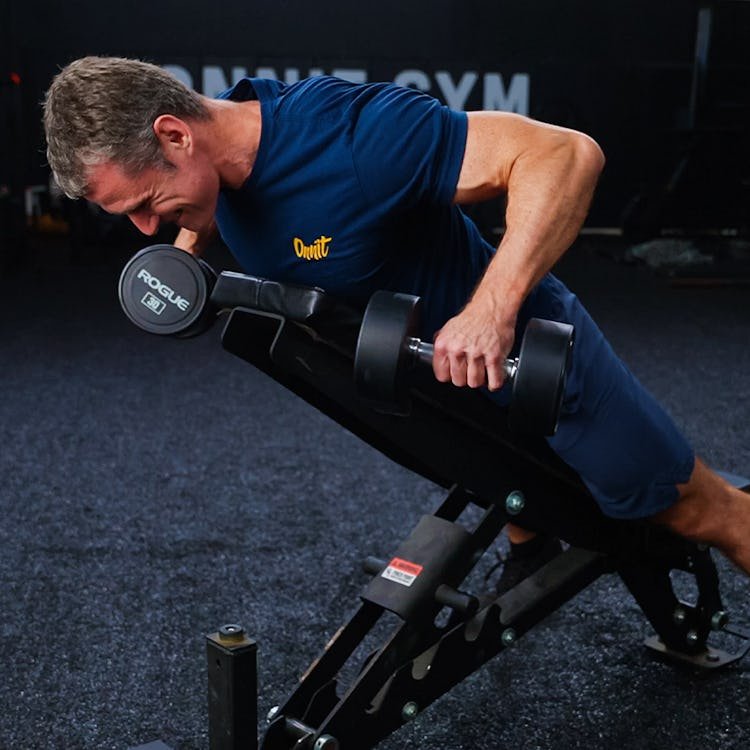
As an adjustable starting example, use two sets of eight to twelve controlled repetitions, leaving a small margin before your technique limit. This is a practical template, not a proven optimal prescription. The rest of your back session, your priorities and your ability to recover should influence the amount of work.
When both sets repeatedly reach the upper end of your chosen range with the same setup, try the next sensible dumbbell increment. If the increase removes your bottom position or makes every pull lift the torso, return to the previous load and build consistency there.
Rest long enough to reproduce the position and effort. Rushing the second set can reduce its repetition count even when the load is appropriate. Keep a note of your rest, especially if you alternate rows with another exercise or train during a crowded session.
A useful entry records bench angle, dumbbell weight, repetitions and whether straps were used. Keep the same bench when possible; two benches set to the same printed angle can have different pad heights and shapes. Those details explain performance changes that a simple exercise name can hide.
Other supported rows are useful alternatives, not identical tests. A plate-loaded row machine provides its own pad and handle path. A cable setup changes the direction of resistance and may require different seating or chest support. Choose equipment that fits the task, rather than assuming a matching weight label creates an equivalent load.
You do not need a collection of specialist machines to practise the dumbbell version. A suitable adjustable bench and controllable dumbbells are enough. Keep the movement clear, the setup comfortable and your comparisons honest; that makes this row easier to learn from than a succession of heavier, less recognisable repetitions.

Equipment Worth Exploring
Explore equipment, accessories and gear from our carefully selected range.


FID Bench MAX
Adjustable bench offering flat, incline, and decline positions + adjustable headrest.


Multi Bench MBX-650 2.0
Adjustable multi-bench with roller adjustment, 15 backrest positions and accessory mounts.


Rubber Hex Dumbbells
Rubber-coated hex dumbbell pairs with a stable shape for home and commercial strength training.

Linear Row LRX-750
Dual-sided rowing machine for supported rows, bent-over rows and varied pulling movements.

Lateral Row Machine LRM-720
Rowing machine with independent lever arms, an adjustable seat and chest support.