Advertising disclosure: This page includes affiliate product links that may earn us a commission, as well as products from our own store.
Dumbbell Reverse Lunges: Step Length, Knee Control and a Six-Week Leg Plan
Dumbbell reverse lunges can turn an ordinary pair of weights into serious quad and glute work, but the details matter. Stepping too narrowly, throwing your weight onto the rear foot or chasing a fixed knee angle can make the exercise feel harder for the wrong reasons. Here is a practical way to set the step length, balance the front leg, compare variations and build a six-week progression that fits a normal lifting program.
Why Stepping Backward Changes the Lunge
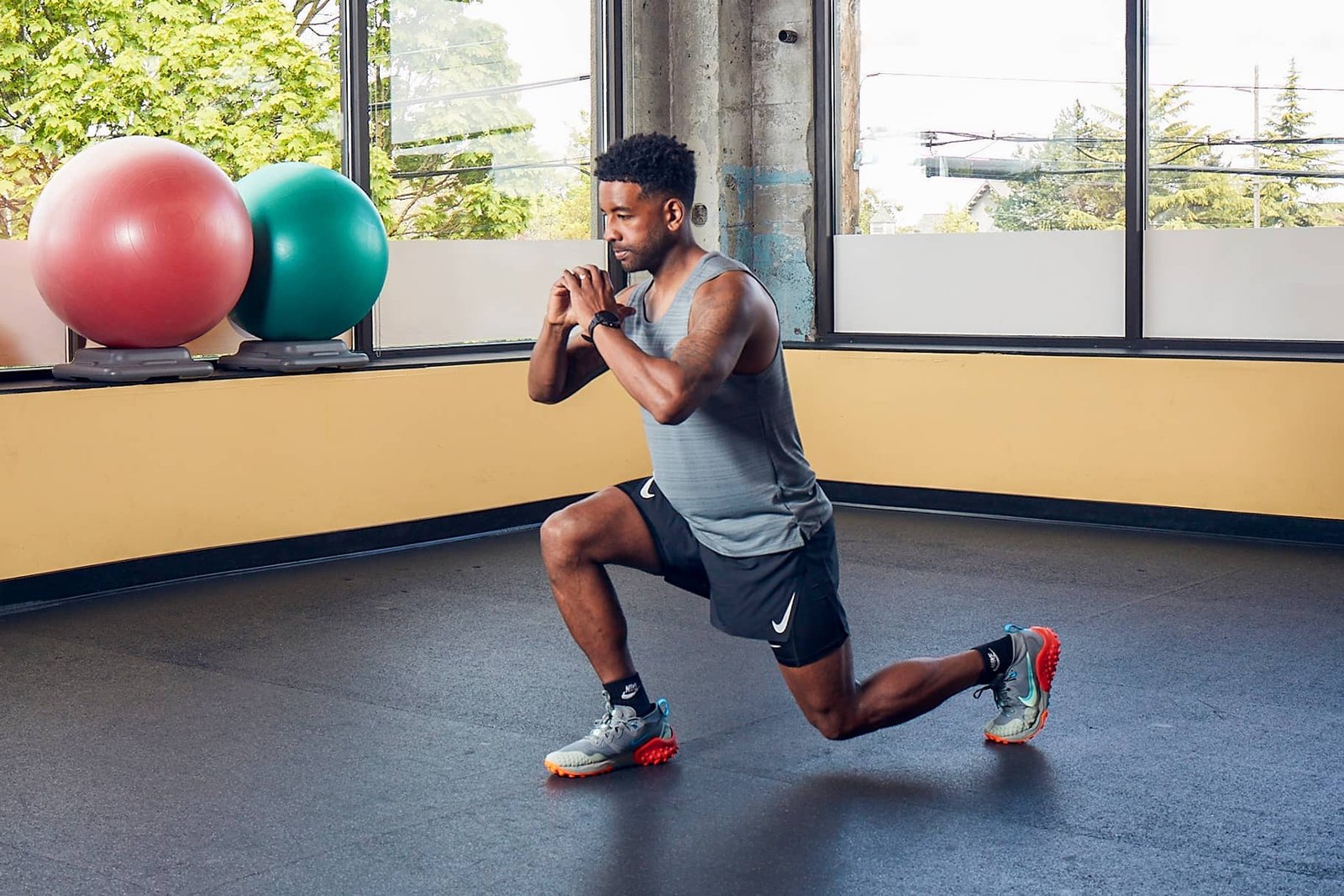
A reverse lunge looks like a simple switch in direction, but it changes the coordination problem. In a forward lunge, the moving leg steps out and absorbs the landing. In a reverse lunge, the working front foot remains planted while the other foot reaches behind. That stationary foot gives you a repeatable reference for balance, knee position and how much pressure you apply through the floor.
Your lead-leg quadriceps extend the knee as you stand, while the gluteus maximus helps extend the hip. The hamstrings and adductors contribute to control and stabilization, and the trunk must prevent you from tipping or rotating under the dumbbells. It is a compound lower-body movement rather than a magical isolation exercise for any one muscle.
The step back is often easier to coordinate than a hard forward landing, but that does not make it universally easier on every knee. A small laboratory comparison of nine men found lower hip-joint moments during reverse than forward lunges, with different loading demands across unilateral variations. Those measurements are not evidence that one version produces more muscle or prevents injuries over time. They simply remind us that changing the task changes where work is expressed.
Think of the reverse lunge as a repeatable single-leg strength tool: you can use it after squats, as the main loaded leg movement when you have dumbbells, or as a skill drill before experimenting with deeper and more demanding split-stance exercises.
Build a Stable Dumbbell Setup Before the First Rep
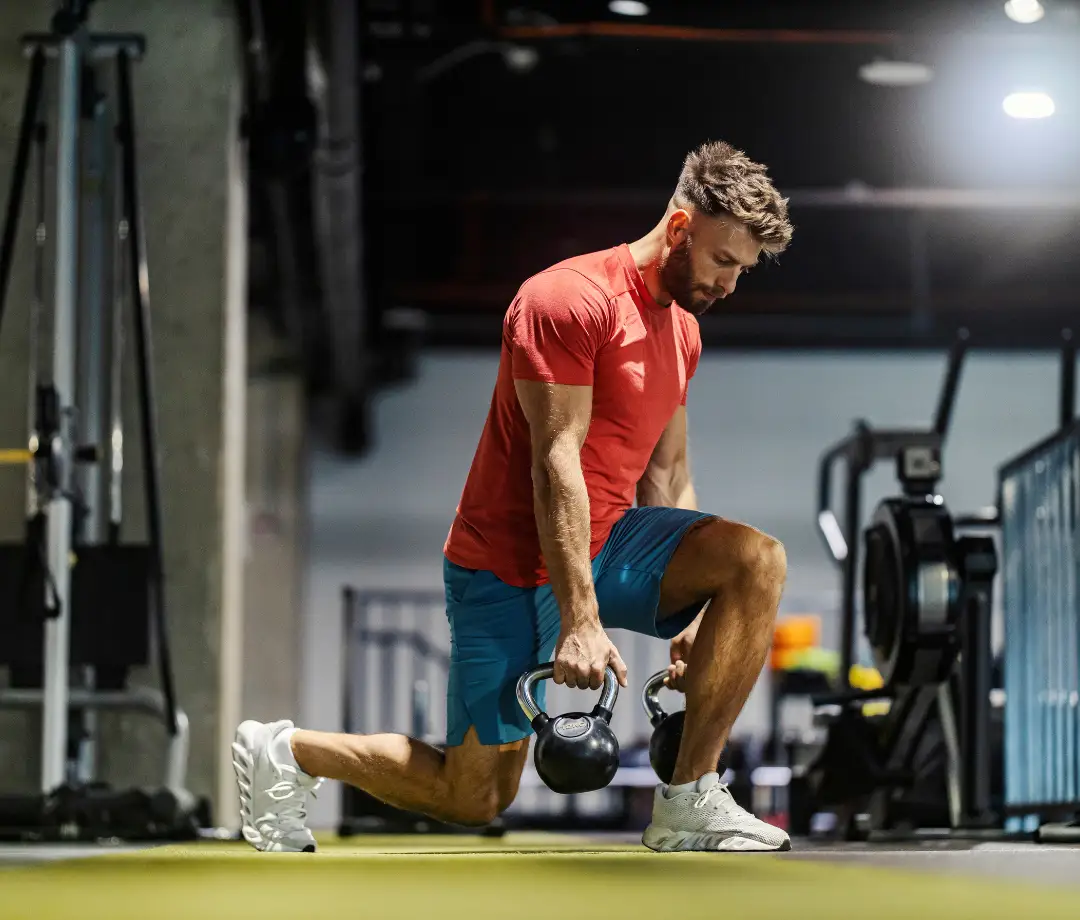
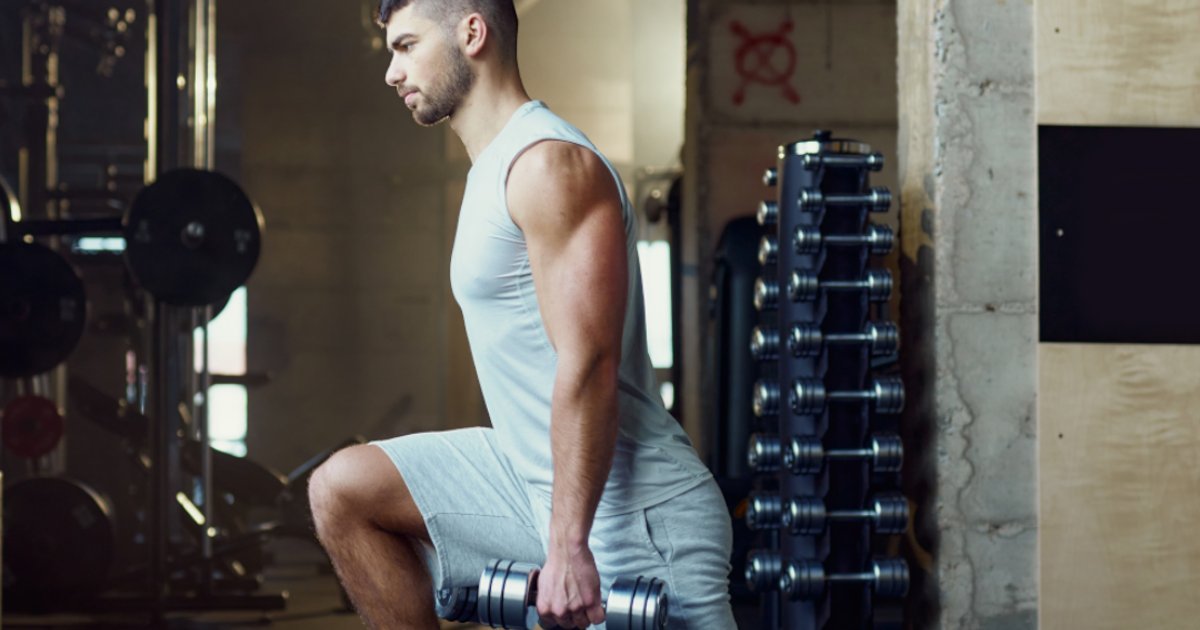
Start with a clear patch of floor and a dumbbell in each hand. Let your arms hang naturally beside your hips with palms facing inward. Stand about hip-width apart, not heel-to-toe on a tightrope. Look ahead, lightly brace your abdomen, and place pressure evenly through the standing foot rather than rocking onto the toes or heel alone.
- Shift a little more of your weight to the leg that will stay in front.
- Reach the other foot backward onto the ball of the foot, keeping a little side-to-side space between your tracks.
- Bend both knees under control, lowering the rear knee toward the floor without crashing it down.
- Press through the front midfoot and heel to rise, bringing the back foot forward with minimal push-off.
- Reestablish balance before starting the next repetition; do not rush the reset.
You can do all repetitions on one leg and switch, or alternate legs. Same-side sets make it easier to notice whether one leg is weaker; alternating sides may feel less fatiguing locally. Both are valid. Begin with bodyweight or modest dumbbells that leave at least two or three clean reps available, and film a side and front view if you struggle to identify your stepping pattern.
If the dumbbells swing forward, shorten the arc of your arms rather than shrugging them into place. If your rear foot lands directly behind the front foot, widen the track slightly. A controlled two-second descent and brief pause near the bottom make errors easier to feel than fast, bouncing reps.

Equipment Worth Exploring
Explore equipment, accessories and gear from our carefully selected range.


Rubber Hex Dumbbells
Rubber-coated hex dumbbell pairs with a stable shape for home and commercial strength training.


Cast Iron Kettlebells
Textured cast-iron kettlebells for swings, squats, carries, and full-body training.
VOLTRA
Compact digital cable trainer with smooth, adjustable resistance.

Squat Harness
Wearable harness for hands-free cable squats, sled work, and lower-body training.

GymPin Squat Wedges
Non-slip 15-degree squat wedges help elevate the heels for deeper quad-focused squats.
Step Length, Torso Lean and Front-Knee Tracking
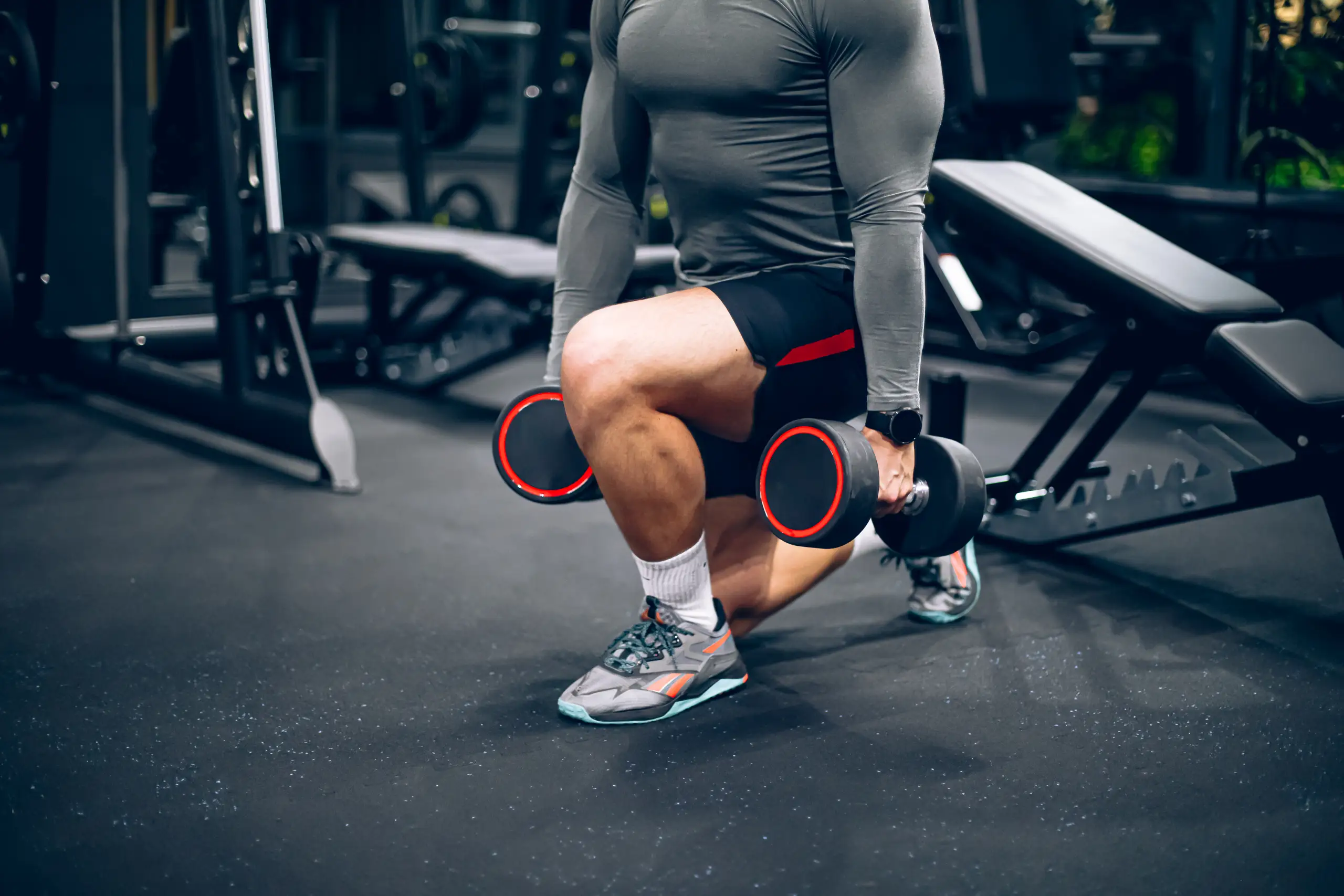
There is no universal centimeter-perfect step length. Your height, hip mobility, ankle motion, footwear and intended training emphasis all affect where the rear foot should land. A very short step can crowd the front knee and make the rear knee uncomfortable; a huge step can force the pelvis to rotate or the lower back to arch. Search for a position where the lead foot stays flat, the hips can lower smoothly, and you can stand without lunging forward.
For a more knee-dominant repetition, keep a relatively upright torso and allow the lead knee to bend naturally while the heel stays grounded. For more hip involvement, a slightly longer controlled step with a modest forward torso inclination can increase the hip-extension demand. These are emphases, not switches that turn one muscle off and another on. Your quads still contribute on glute-focused reps, and your glutes still work during upright reps.
The front knee does not need to remain perfectly vertical, and passing the toes is not automatically a form error. What matters more is whether the knee follows the general direction of the toes and whether you can control the motion under the load you are using. Avoid forcing the knee inward to reach a deeper position. Try keeping your foot tripod planted: base of the big toe, base of the little toe, and heel.
Two simple checkpoints help. First, freeze near the bottom: can you breathe and brace without twisting? Second, stand up slowly: does the front leg do most of the work, or does the back foot launch you? Adjust step length a few inches at a time instead of replacing your whole technique every set.
Reverse vs Forward Lunges, Split Squats and Step-Ups
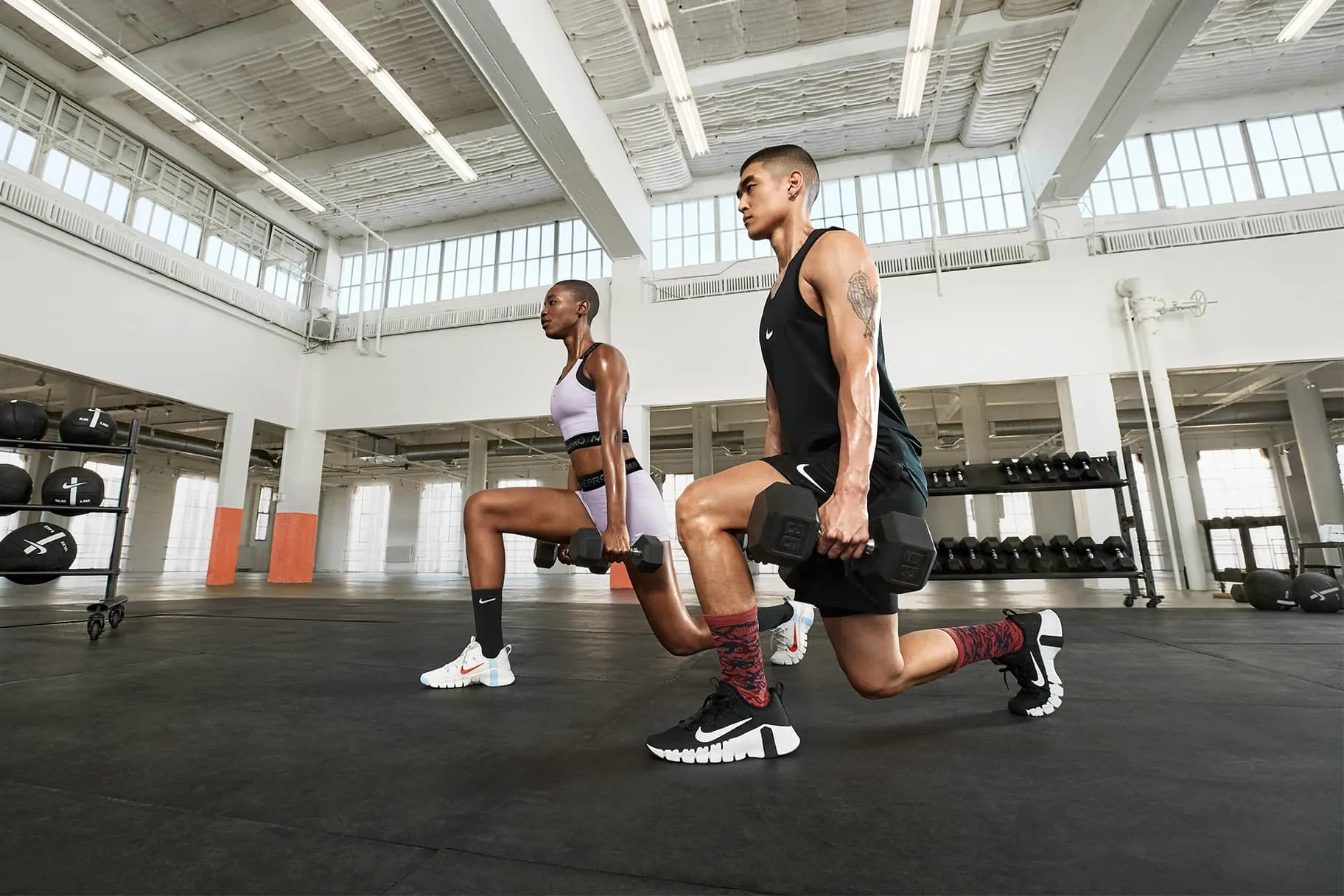
Forward and reverse lunges share much of the same lower-body anatomy, but their stepping direction and braking demands are not identical. With a forward lunge, you step onto a new front contact point and must decelerate the moving body. With a reverse lunge, the front foot stays still while you move the other leg backward. Some lifters find the stationary lead foot easier for balance, especially when learning to handle two dumbbells.
A split squat removes the step between repetitions: set the feet once and rise and lower in place. That simplicity can make load progression easier if your limiting factor is coordination rather than leg strength. A Bulgarian split squat elevates the back foot, increasing the mobility and balance requirements for many people; it is not a compulsory upgrade. Step-ups emphasize lifting the body onto an elevated platform, and the box height changes the challenge significantly.
The best variation is the one that lets you train the intended muscles with a stable, reproducible range of motion and recover for the next session. Knee discomfort does not automatically identify a bad movement, and no single variation is a guaranteed pain-free replacement. Reduce load or depth, try supported reps, or stop if symptoms persist, worsen or are sharp.
For a practical comparison, use the same moderate load and effort across reverse lunges and split squats on separate sessions. Compare balance, range, target-muscle effort and next-day recovery, rather than treating one set of shaky repetitions as proof that an exercise is ineffective.

Leg Day Shirts & Workout Gear
Leg-day gym shirts and workout gear for lifters who never skip squats, lunges and lower-body punishment.

Booty Building Mode Leg Day & Squats Meme Top Tank Top
Add some leg-day attitude to training with “Booty Building Mode”.

Girl Booty Builder Squats Leg Day Sweater Meme T-Shirt
Keep things casual with a little “Gym Girl Booty Builder” attitude.

I Love Booty Peach – Valentine's Leg Day Meme Hooded Pu Hoodie
Show off your leg-day humor in a laid-back “I Love Booty Peach” hoodie.

SwoleBob Squatpants Meme – Leg Day, & Gains – Top T-Shirt
Rep “SwoleBob Squatpants Gym Meme” humor in and out of the gym.

Santa Quads Funny Christmas Gym – Festive Workout Vest Tank Top
Show some personality between sets with “Santa Quads Funny Christmas”.

We Don't Need No Leg Day – Pink Floyd Meme Hooded Pullo Hoodie
Make your off-duty look more fun with “We Don't Need No Leg Day”.

Leg Day Gains Gym | LEGO Parody Workout Decal for Water Sticker
Give your everyday gear a playful “Leg Day Gains” twist.

I Want You To Squat Uncle Sam Patriotic – Funny 4th of Hoodie
Make your off-duty look more fun with “I Want You To Squat Uncle Sam Patriotic”.

Gym Iron Before Honor Medieval Knight Lifting Shirt for T-Shirt
Make gym days more fun with “Iron Before Honor Medieval Knight Lifting” style.

Christmas – I'M Still Gonna Squat You Monster T-Shirt
Show some gym-day personality with “Christmas”.
Choose Dumbbells, Goblet Loads, Barbells or Cable Resistance
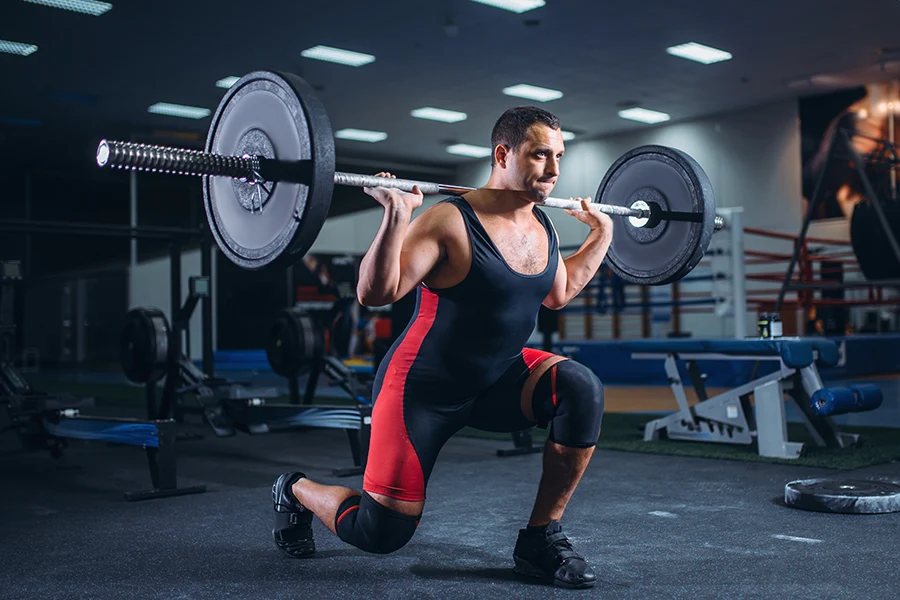
Two dumbbells held at your sides are a natural starting point because they keep the load close to your center of mass and let each arm hang independently. They can become limited by grip strength, however, well before your legs have exhausted their capacity. A single kettlebell or dumbbell held goblet-style may feel easier to control, although the upper body can fatigue first during longer sets.
For a suitcase reverse lunge, carry one dumbbell on one side. This creates a side-to-side anti-lean challenge; begin lighter than with two dumbbells and keep your rib cage stacked rather than leaning away from the weight. A barbell provides more total loading potential but introduces demands on upper-back positioning and stability during every step. Before trying heavy barbell lunges, demonstrate balanced bodyweight and dumbbell repetitions and use an appropriate rack environment.
A cable or band can change the direction of resistance, depending on where the anchor sits. It may suit people who want a lightly assisted movement or an additional challenge in the hip, but the feel will not match a straightforward vertical dumbbell load. Foot-elevated reverse lunges increase available depth and therefore should be treated as a harder range-of-motion progression, not a beginner default.
Do not assume that more equipment produces a better exercise. For most lifters, adding one rep per leg, improving the controlled depth, or using a slightly heavier dumbbell pair provides enough progressive overload for weeks. If grip is the limit, consider whether the exercise can be paired with separate grip training instead of immediately changing all lower-body programming.
Equipment Worth Exploring
Explore equipment, accessories and gear from our carefully selected range.


Grip Plates
Rubber-coated weight plates with handholds for loading barbells and machines.

Open Hex Bar
Open-frame trap bar with multiple handles for deadlifts, carries, and lower-body training.

VForce 3IN1
All-in-one rack combining an adjustable Smith machine, functional trainer, and free-weight station.


Studio Glute Drive
Plate-loaded hip-thrust machine with supported back pad and adjustable foot platform.

Standing Abductor
Plate-loaded standing hip abductor for targeted outer-glute and hip-stability training.

Seated Leg Combo BCO-680
Adjustable seated leg extension and leg curl machine with band pegs for added resistance.

Leg Extension/Curl BCO-780
Leg extension and lying leg curl combo with plate loading, band pegs and a cable-loading option.
Fix Wobbling, Knee Discomfort and Reps That Feel Uneven
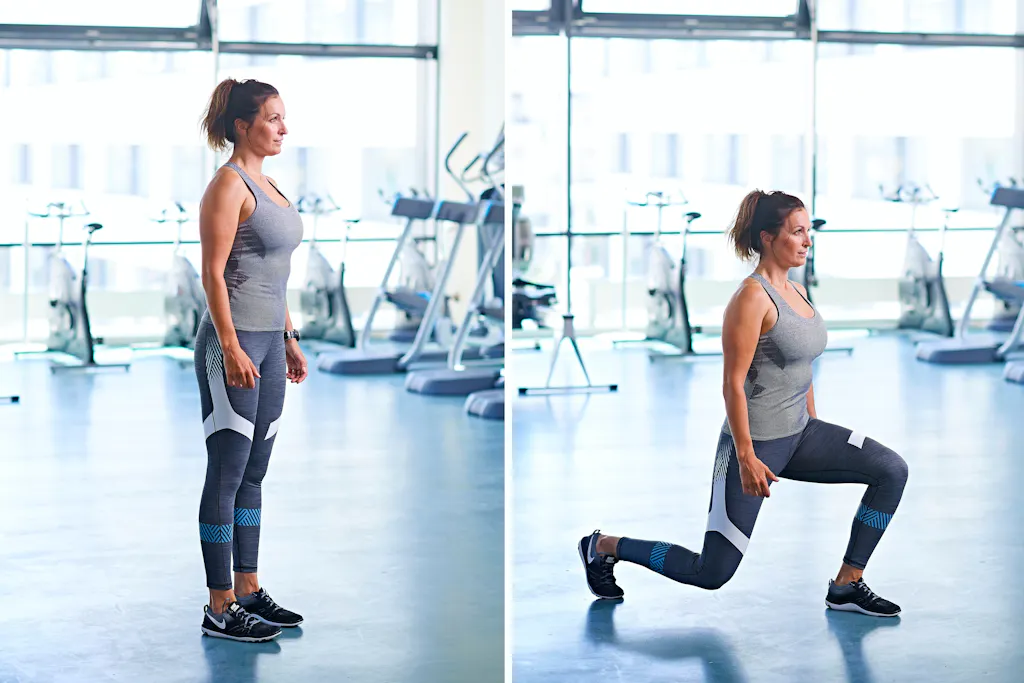
A reverse lunge can feel dramatically different between legs. That difference is useful feedback, not a reason to load the weaker side aggressively. Start each working set on the less coordinated leg, choose a range you can perform evenly, and match the same clean repetitions on the other side. If one side consistently loses balance, use a wall, rack upright or handrail lightly for support before increasing load.
- Front heel pops up: try a slightly shorter or more stable step, reduce depth temporarily and ensure the entire foot is not rolling inward.
- Rear knee slams down: reduce the load and control the final part of the descent; a folded pad can serve as a soft depth reference rather than a surface to rebound from.
- Hips twist or the front knee caves: widen your front-to-back tracks, slow the repetition and use a load you can stabilize.
- Lower back tightens excessively: shorten the step, exhale between reps, re-brace and avoid a forced arch as the back leg reaches.
- The rear leg pushes you upward: think about standing through the front foot and use a brief pause at the bottom to expose the habit.
Muscle effort in the quadriceps and glutes is expected; joint pain, numbness or instability is a different signal. Do not push through sharp pain. If symptoms are recurrent or affect daily activity, have a qualified clinician assess them rather than diagnosing the problem from a form checklist.
A useful self-check is to record three final reps from two working sets. Watch the size of the backward step, front-foot contact, knee track and whether your pelvis tilts on one side. One repeatable improvement beats ten cues shouted at once.
A Six-Week Reverse-Lunge Plan for Stronger Legs
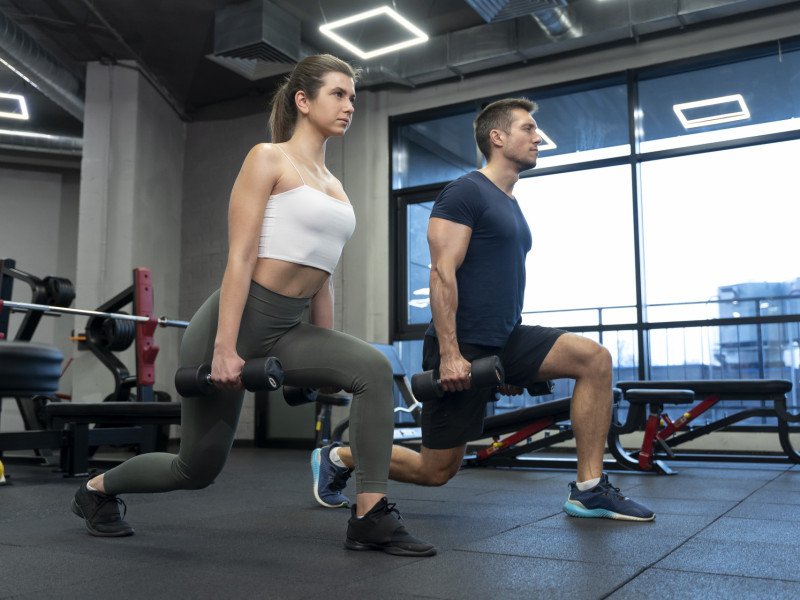
Use this plan twice weekly on nonconsecutive days as a secondary leg exercise after your main squat, hinge or machine movement. Keep other hard lower-body sets in mind; adding lunges on top of an already high-volume leg program may require reducing something else. A repetition means one completed lunge on one side, so a set of eight per leg is sixteen total steps.
| Weeks | Working sets | Reps per leg | Progression goal |
|---|---|---|---|
| 1–2 | 2 each session | 8–10 | Establish identical step length, balance and controlled depth. Leave 3 reps in reserve. |
| 3–4 | 3 each session | 8–10 | Add one set, then build toward the upper end of the rep range with stable technique. |
| 5 | 3 each session | 10–12 | Increase repetitions before load. Keep about 2 good reps available. |
| 6 | 2–3 each session | 8–12 | When all clean sets reach 12 per leg, add the smallest practical load increment and return to 8–9. |
Warm up with a short walk or cycle, a few bodyweight reverse lunges and a lighter practice set. Rest around 90–150 seconds after both sides have been trained, longer if breathing or stability has not recovered enough for comparable reps. During loaded sets, take a few seconds between sides if that improves technique; you do not need to race the stopwatch.
Log the dumbbell weight per hand, sets, repetitions per leg and a short note on how steady the steps felt. For example, two 12-kilogram dumbbells for three sets of nine per leg is not the same as 12 kilograms total; clear records prevent misleading jumps. If you are still wobbling on week three, repeat the preceding week instead of forcing the progression.
You can combine this movement with a bilateral squat or leg press, a hamstring curl and a calf exercise. Two well-controlled reverse-lunge sessions support consistent practice without assuming that unilateral work must replace every other leg exercise. Progress is the ability to reproduce good positions with greater reps, range or load over time, not simply how sore you feel the next morning.
Bodybuilding Shirts & Workout Gear
Bodybuilding shirts, tanks and gym gear for lifters chasing muscle, size, symmetry and the pump.

Booty Builder Harley Quinn Squats & Leg Day Meme Hoodie
Make your off-duty look more fun with “Booty Builder”.

Rep God Swole Shady Gym | Funny Rap Music Bodybuilding Tank Top
Your gym-day look, with a playful “Rep God Swole Shady” twist.

Uncle Sam Squats Funny Patriotic Gym – USA Meme Jumper T-Shirt
Bring “Uncle Sam Squats Funny Patriotic” humor to your everyday gym style.

Heavy Squatter Harry Potter Leg Day Squat Meme Tank Top
Bring “Heavy Squatter” humor to your next lifting session.


Yesterday I Skipped Leg Day – Beatles Music Meme Decal Sticker
Give your everyday gear a playful “Yesterday I Skipped Leg Day” twist.

Gym Sworn to the Iron Oath Medieval Knight Lifting Shir T-Shirt
Make gym days more fun with “Sworn to the Iron Oath Medieval Knight” style.


Broccolift Eat Broccoli Lift Sweater Gains Meme T-Shirt
For laid-back days and meal-prep humor: “Broccolift”.

I Want You To Stop Skipping Leg Day Patriotic Gym – Unc Tank Top
Bring “I Want You To Stop Skipping Leg Day” humor to your next lifting session.