Advertising disclosure: This page includes affiliate product links that may earn us a commission, as well as products from our own store.
Incline dumbbell curls look straightforward: lean back, let the arms hang and curl. But the bench angle, shoulder comfort and resistance curve can change what you feel from rep to rep. Here is a practical way to build biceps without turning the exercise into a shoulder swing, along with a six-week progression you can track.
What the incline curl changes in your biceps
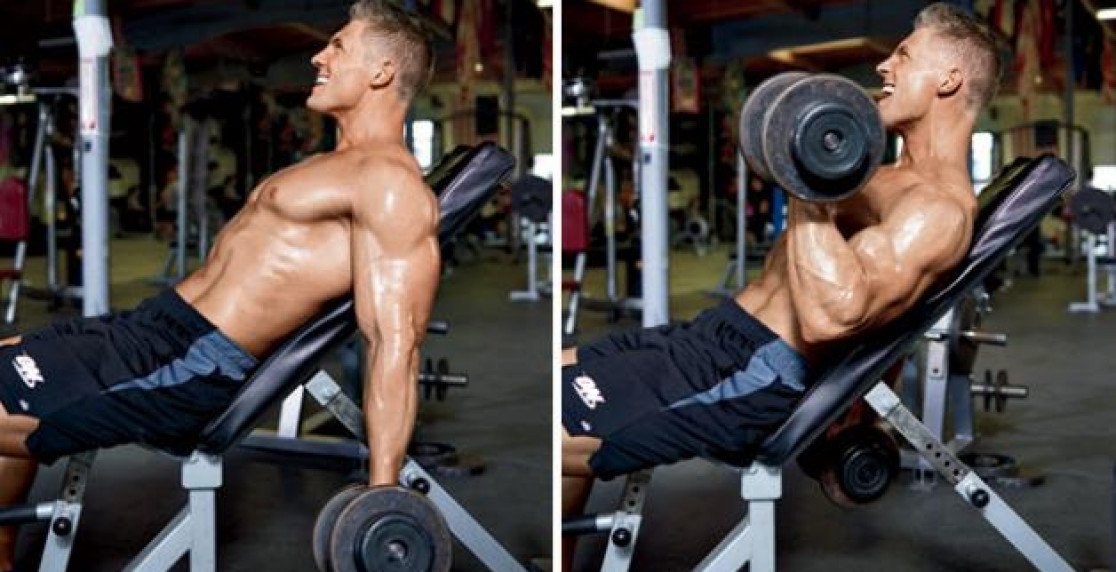
A standing curl and an incline curl both involve bending the elbow, but the shoulder starts in a different position. Reclining against a bench allows the upper arms to hang behind the torso. The biceps brachii crosses both the elbow and the shoulder, so moving the arm back can lengthen this muscle at the start of the rep. The brachialis and brachioradialis also contribute to elbow flexion, while the hand and forearm muscles keep the weights secure.
That does not mean the incline curl isolates one particular biceps head or automatically beats a standing curl. Both biceps heads help move the elbow. Differences in shoulder position, resistance and personal anatomy can alter the feeling of a lift, but muscle growth depends on a much larger collection of factors: quality sets, consistent effort, progressive loading, food and recovery.
A useful technical distinction often gets lost in arm-training advice: muscle length is not the same as external torque. When a dumbbell hangs almost directly under your elbow, gravity has a short lever arm about that joint. The biceps can be lengthened while the weight produces relatively little elbow-flexion torque. As the forearm moves toward horizontal, the turning demand generally increases. Cables can produce a different loading profile depending on pulley position.
For most lifters, the best reason to include this exercise is practical. A bench provides support, reduces body swing and creates a distinctive shoulder angle. Use it as one good biceps tool rather than a compulsory or uniquely effective growth hack.
Find a bench angle your shoulders tolerate
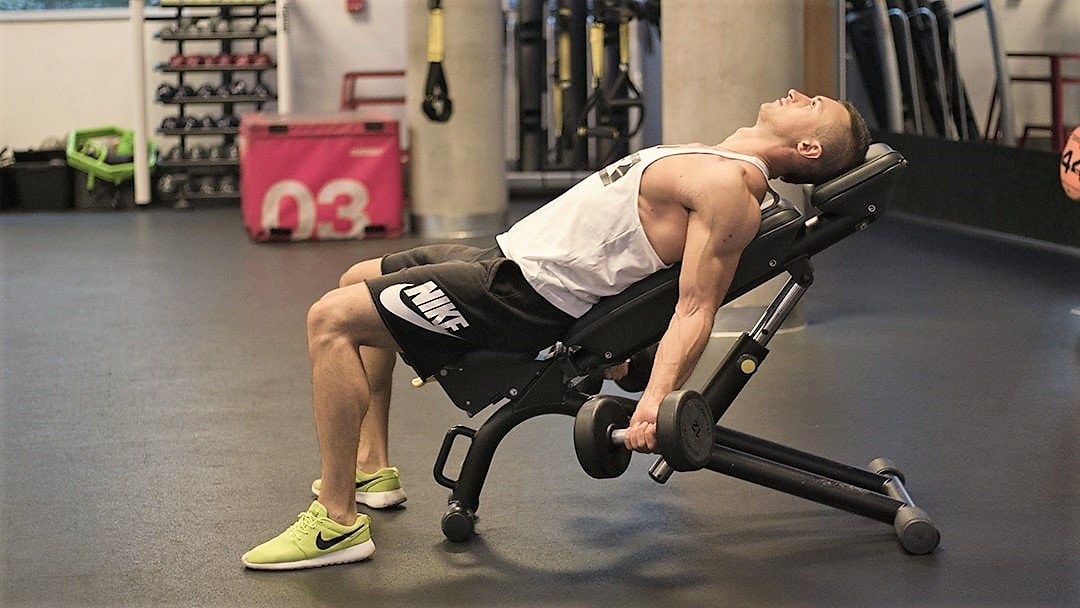
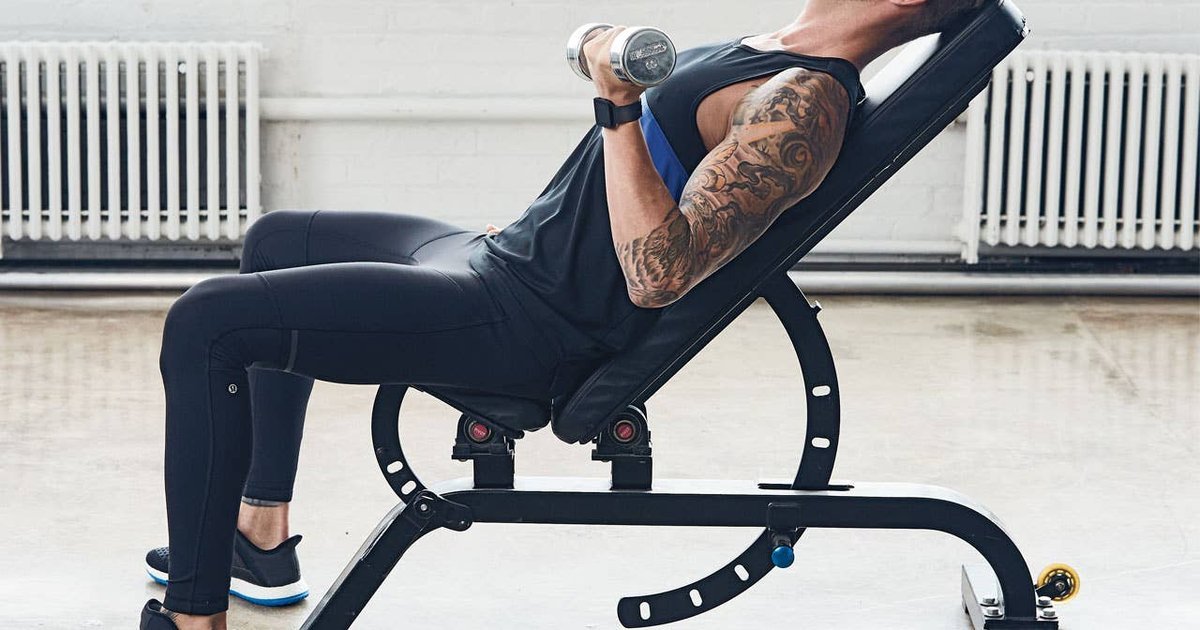
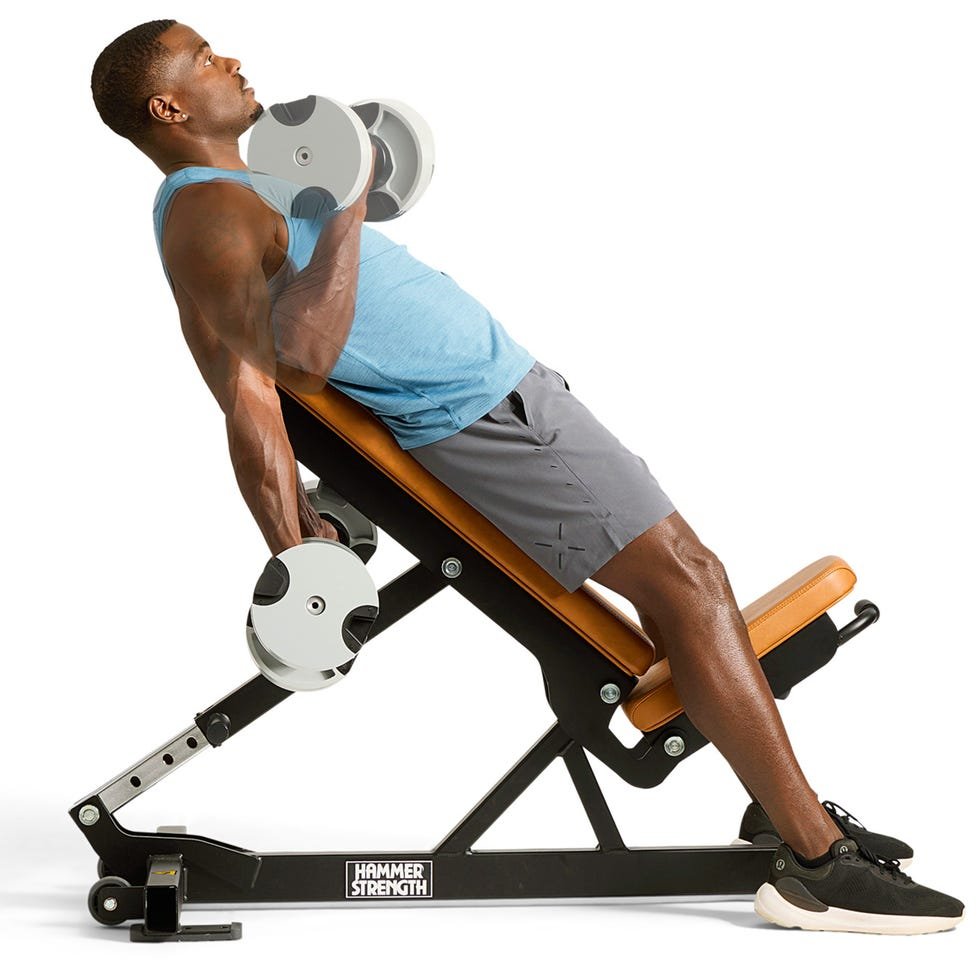
Begin with an adjustable bench near 60 degrees above horizontal. Sit back with the upper back supported, feet flat and hips stable. Hold a light dumbbell in each hand and let the arms hang naturally toward the floor. Confirm the weights clear the seat, frame and your legs before beginning. There is no prize for starting with a load you can barely lift.
Experiment in the approximate 45 to 65 degree range. Reclining farther usually places the arms more behind the body and can intensify the stretch. Sitting more upright reduces that shoulder extension, which may be useful if the front of your shoulder feels pinched. The exact backrest notch matters less than a repeatable, comfortable position with enough room for an honest curl.
Do not force the shoulders down and back into an uncomfortable posture. Allow a natural supported upper-back position; avoid actively shrugging or rolling forward to move the dumbbells. If your arms do not hang freely because of the bench width or your proportions, adjust the seat, use one arm at a time or select a different exercise.
- Start position: shoulders and back supported, head relaxed, feet planted.
- Arm clearance: dumbbells hang beside the torso without hitting the pad.
- Joint comfort: no sharp pinching at the front of the shoulder.
- Load: light enough to pause at the bottom and lower under control.
Check a few practice reps without chasing a particular stretch sensation. If discomfort persists even at a more upright setting and lighter load, substitute a comfortable seated, standing or supported curl. You will not lose your gains because one exercise disagrees with your shoulders.

Equipment Worth Exploring
Explore equipment, accessories and gear from our carefully selected range.



Rubber Hex Dumbbells
Rubber-coated hex dumbbell pairs with a stable shape for home and commercial strength training.


FID Bench MAX
Adjustable bench offering flat, incline, and decline positions + adjustable headrest.


Multi Bench MBX-650 2.0
Adjustable multi-bench with roller adjustment, 15 backrest positions and accessory mounts.


EZ Curl Barbell
Olympic EZ curl bar with angled grips for curls and triceps exercises.
How to perform one clean incline curl repetition
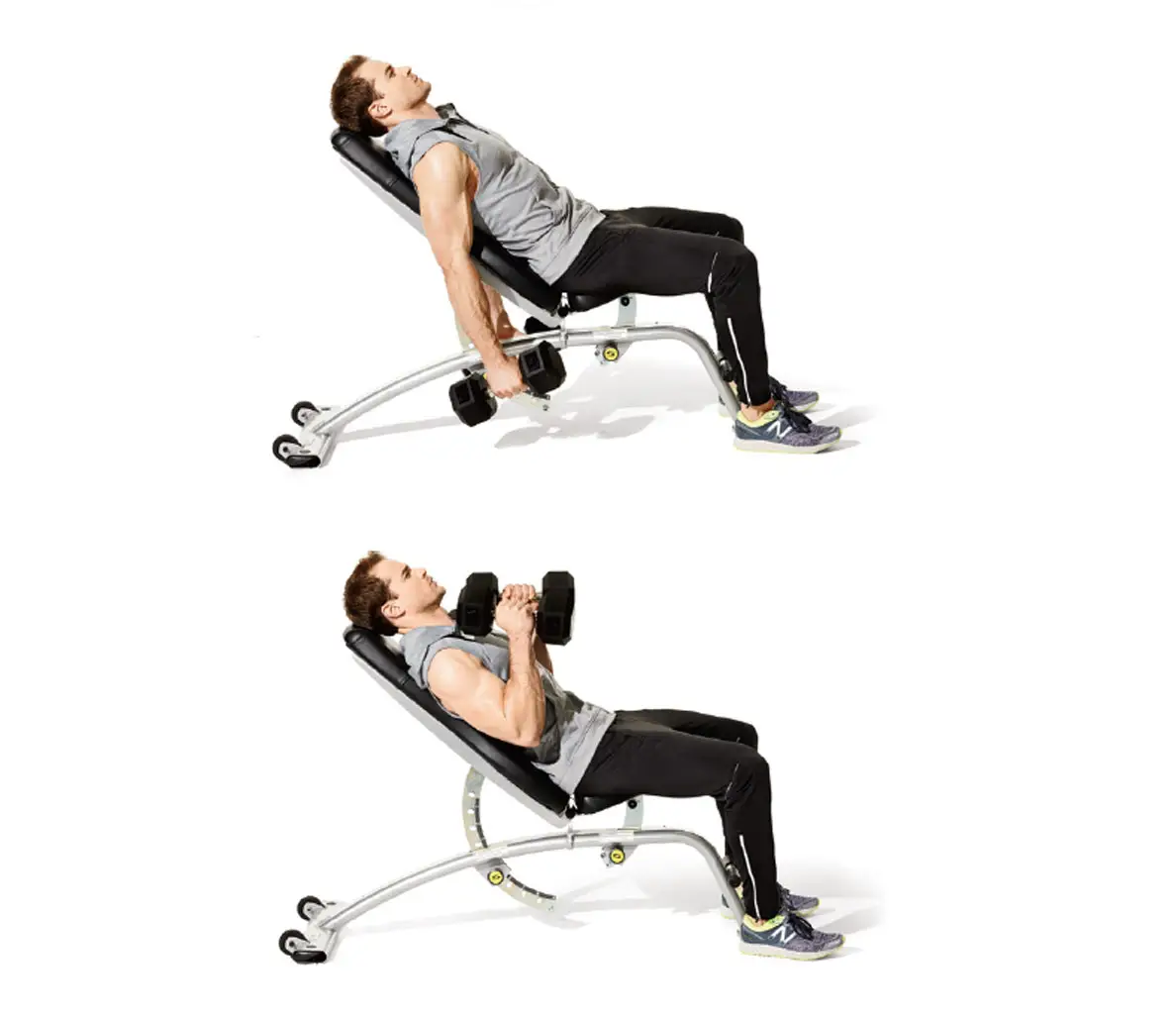
Begin with the arms hanging and the elbows slightly behind the side of the torso. A palms-up position emphasizes the supinated curl; alternatively, start with the hands somewhat neutral and turn them gradually as you lift. Keep the wrists roughly straight rather than bending them backward to finish the rep.
Curl both dumbbells smoothly by flexing the elbows. Keep the upper arms relatively quiet. They need not be frozen in space, but a large forward swing changes the exercise into a partly shoulder-driven movement. Finish the rep at a position where the biceps still feel responsible for the motion; you do not need to touch the dumbbells to your shoulders.
Now lower the weights for approximately two to three seconds. Do not let gravity pull the arms suddenly into an uncomfortable stretch, and do not bounce to start the next repetition. Reach an elbow position you can control without pain, pause briefly, and repeat. Breathe naturally: many lifters exhale on the way up and inhale on the controlled return.
- Recline, brace gently and confirm the dumbbells can hang freely.
- Curl with a smooth elbow bend while minimizing shoulder swing.
- Finish before the upper arms rush forward to rescue the rep.
- Lower deliberately and reset without bouncing.
- Stop the set when the rep path changes substantially.
Use an easy test set of about ten reps before your first real working set. If you cannot complete clean reps without lifting the shoulders or changing your back position, choose lighter weights. Incline curls often require smaller dumbbells than standing curls; load is a tool for stimulating the target muscles, not a contest.

Funny Gym Shirts & Workout Gear
Funny gym shirts, tanks, hoodies and workout gear for lifters who like training hard.

Right to Bare Arms George Washington Patriotic Gym Shir T-Shirt
Make gym days more fun with “Right to Bare Arms” style.

Gym If You're Reading This It's Arm Day Drake Parody & T-Shirt
Keep things casual with a little “If You're Reading This It's Arm Day Drake” attitude.

Welcome To The Gun Show Bro Meme Hooded Weightlifting Hoodie
Bring “Welcome to the Gun Show” gym humor to lazy days and post-workout plans.

Every Day Is Arm Day
Make gym days more fun with “Every Day is Arm Day Octopus Gym Meme” style.

Micro Biceps Club President Gym | Funny Workout Decal | Sticker
Stick a little “Micro Biceps Club President” humor on your favorite gear.

The Real Rocky Mountains – Bicep Mountain Meme Vest Mus Tank Top
Train hard, laugh a little, and rep “The Real Rocky Mountains”.

For Whom The Bell Curls Dumbbell Metallica Workout Heav T-Shirt
Rep “For Whom The Bell Curls” humor in and out of the gym.

Mind Muscle Perfection Embroidered Brain and Biceps Gym Hat
A playful “Mind Muscle Perfection Embroidered Dad” cap for workouts and weekends.

– Flex Armstrong Astronaut Moon Huge Arms Muscle Shirt Tank Top
Bring “Flex Armstrong Astronaut Moon Huge Arms” humor to your next lifting session.

Five common errors and how to correct them
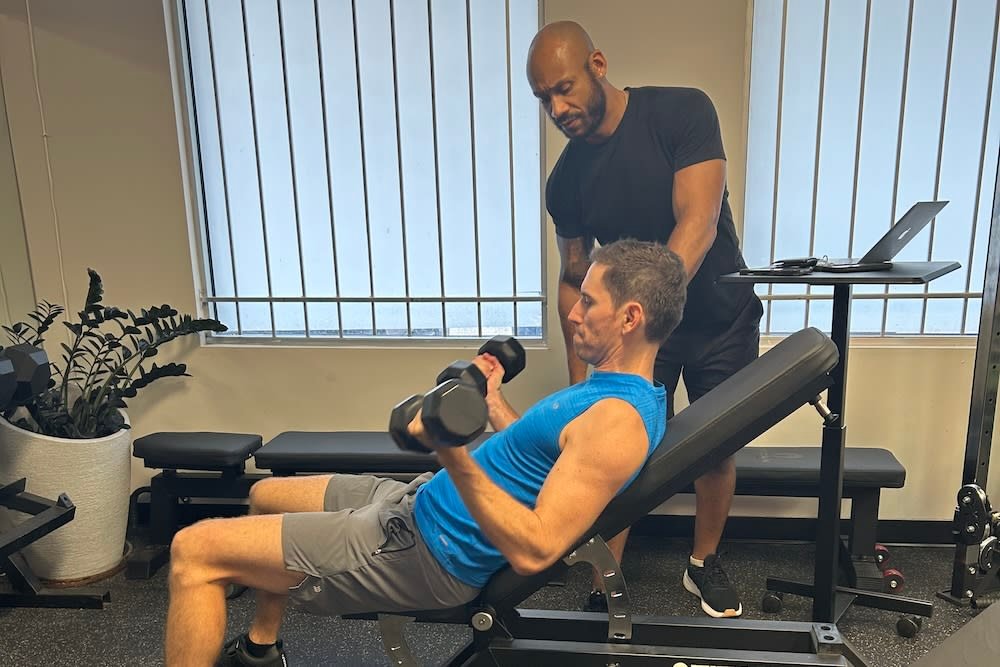
1. Elbows swinging forward. The weight feels easy near the top, so the lifter throws the arms forward to finish. Film the set from the side. Keep the upper arms quieter and stop the rep a little earlier if the shoulders are taking over.
2. Reclining too far. A very low bench can turn a productive stretch into an irritated anterior shoulder. Raise the backrest a notch, reduce the dumbbells and test whether the curl remains stable. A modest stretch you can train consistently beats a dramatic stretch that produces pain.
3. Dropping into the bottom. A quick eccentric may save effort, but it also hides your ability to control the most extended position. Slow the final part of the descent, pause and reverse direction deliberately. If elbow extension is uncomfortable, use the pain-free range rather than forcing a joint lockout.
4. Comparing numbers with standing curls. Standing and incline movements differ in stability, shoulder angle and opportunities for assistance. Record them separately. Do not increase the load merely because a heavier pair felt manageable while standing and swaying.
5. Treating every set like a one-rep-max attempt. More load can make the forearms or shoulders compensate. Early in a training block, leave around one to three technically sound reps in reserve. Near-failure work is optional, not required on every set.
Another overlooked problem is changing the bench angle every week. Even if the weight goes up, a more upright setting may make the reps easier. Write down the angle, grip, rep range and any discomfort. That makes improvements in the log more meaningful.
Incline, preacher, standing and hammer curls compared
Incline dumbbell curls put the shoulder behind the body and make torso swinging difficult. They are an effective choice when you can maintain the reclined position comfortably. Their particular muscle-length demands do not make them universally superior to every alternative.
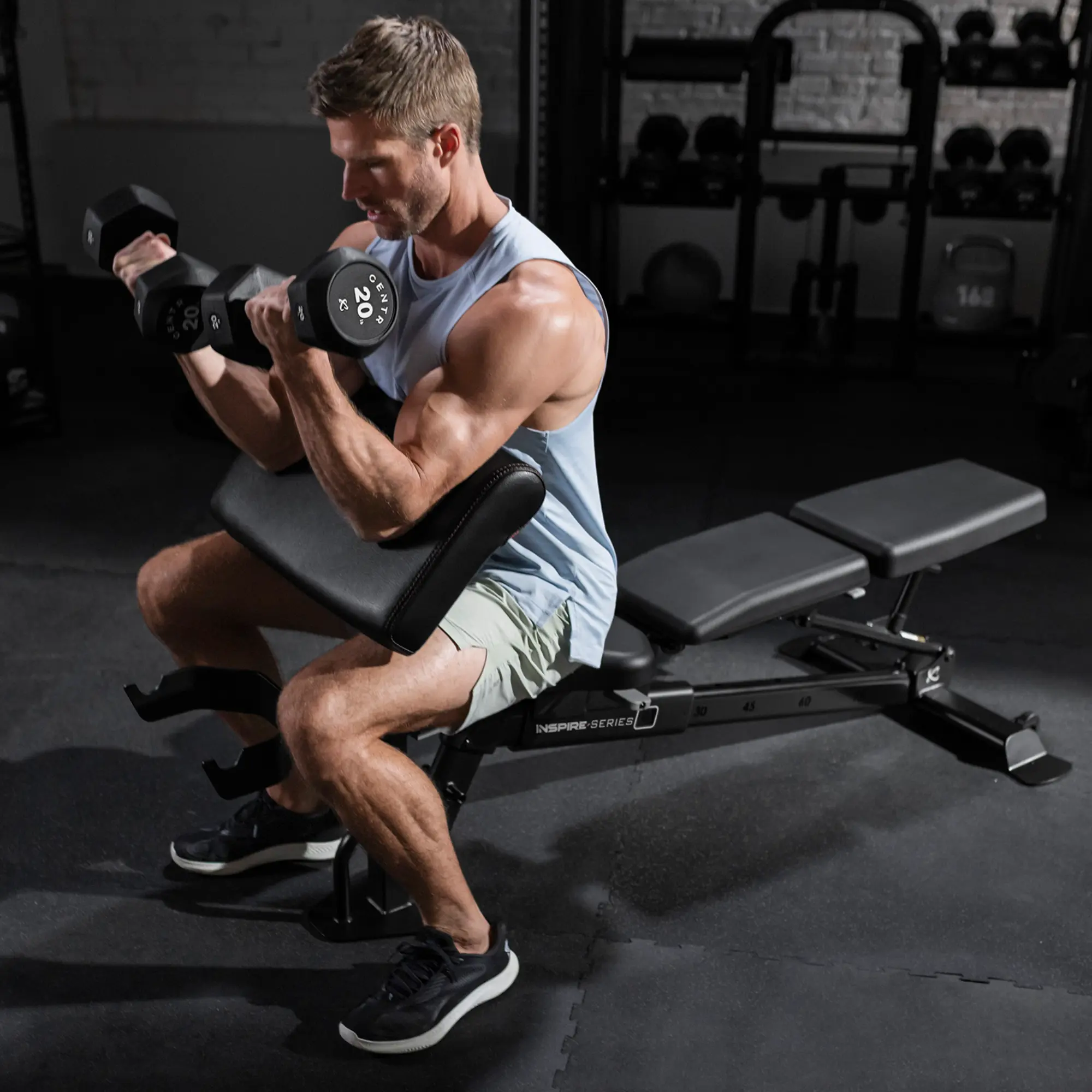
Preacher curls support the upper arm in front of the torso. The pad limits swinging, but it changes the shoulder position and the way the weight acts through the range. Some lifters prefer this stability or find the shoulder position more comfortable. Small comparative growth studies can inform a program, yet they do not establish a single best exercise for every biceps head, population and training goal.
Standing dumbbell or EZ-bar curls allow more freedom to adjust shoulder position and sometimes heavier loads. They remain excellent elbow-flexion work when performed without excessive leaning. The drawback is that cheating can creep in when fatigue rises, making load records harder to interpret.
Hammer curls keep the palms facing inward. They still use the elbow flexors, including the brachialis and brachioradialis, and can be friendlier to some wrists. Include a neutral-grip variation if it adds comfort or variety, not because every muscle requires a separate exercise every day.
Rather than stacking four curl types in a single arm workout, choose one incline-focused movement and another variation for the week. For example, perform two incline sets after one pull session, and two or three neutral-grip or preacher sets after another. The training value comes from high-quality, recoverable work, not from collecting names of exercises.
Equipment Worth Exploring
Explore equipment, accessories and gear from our carefully selected range.
VOLTRA
Compact digital cable trainer with smooth, adjustable resistance.

Go-Tone Pro
Portable digital cable trainer with up to 66 lb (30 kg) of adjustable resistance.

Dual Hook EZ Curl Bar
Angled aluminum dual-hook cable bar for biceps curls and pulldown variations.
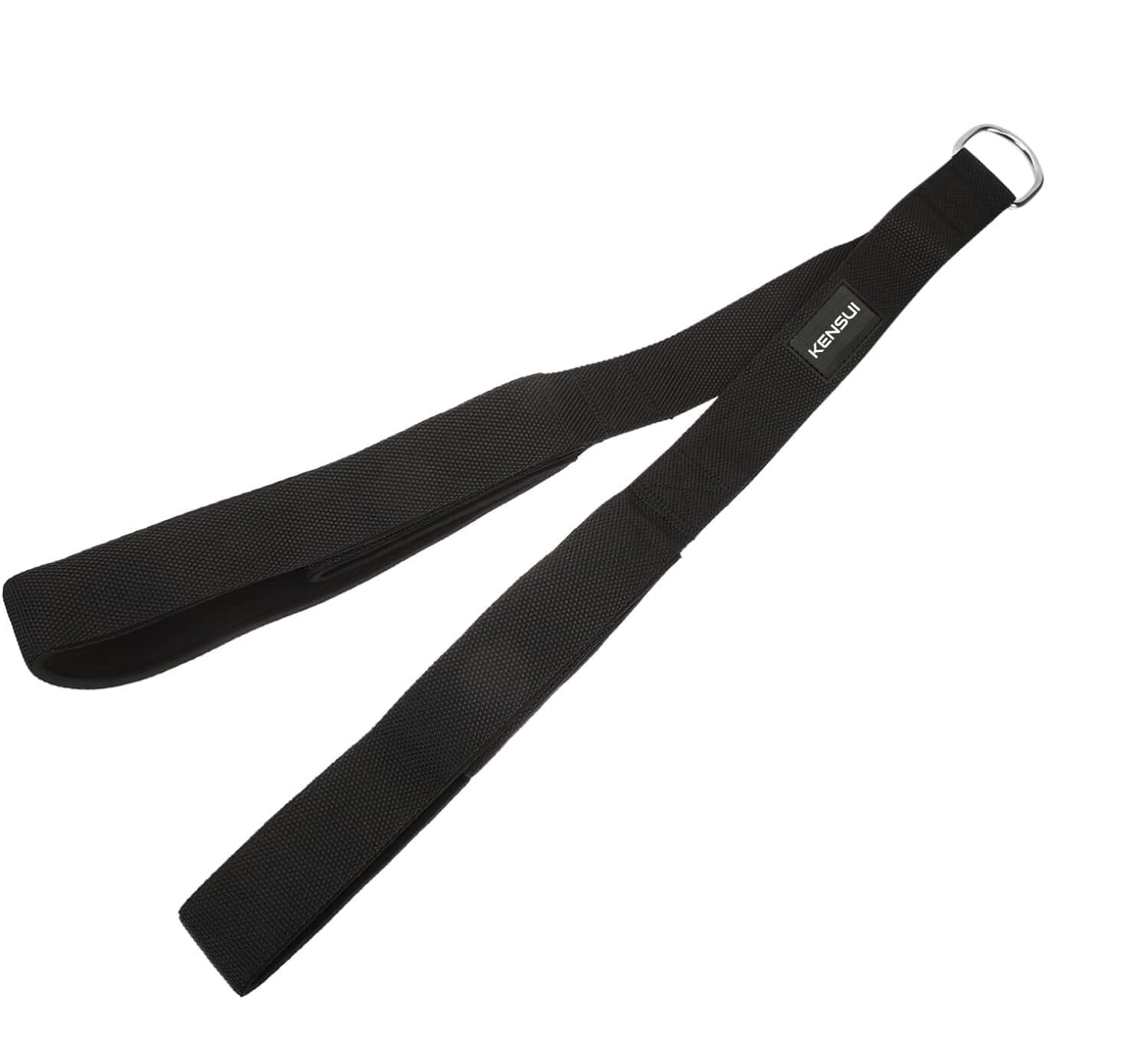
Multi-Length Tricep Strap
Adjustable-length cable strap for triceps, biceps and upper-body cable exercises.
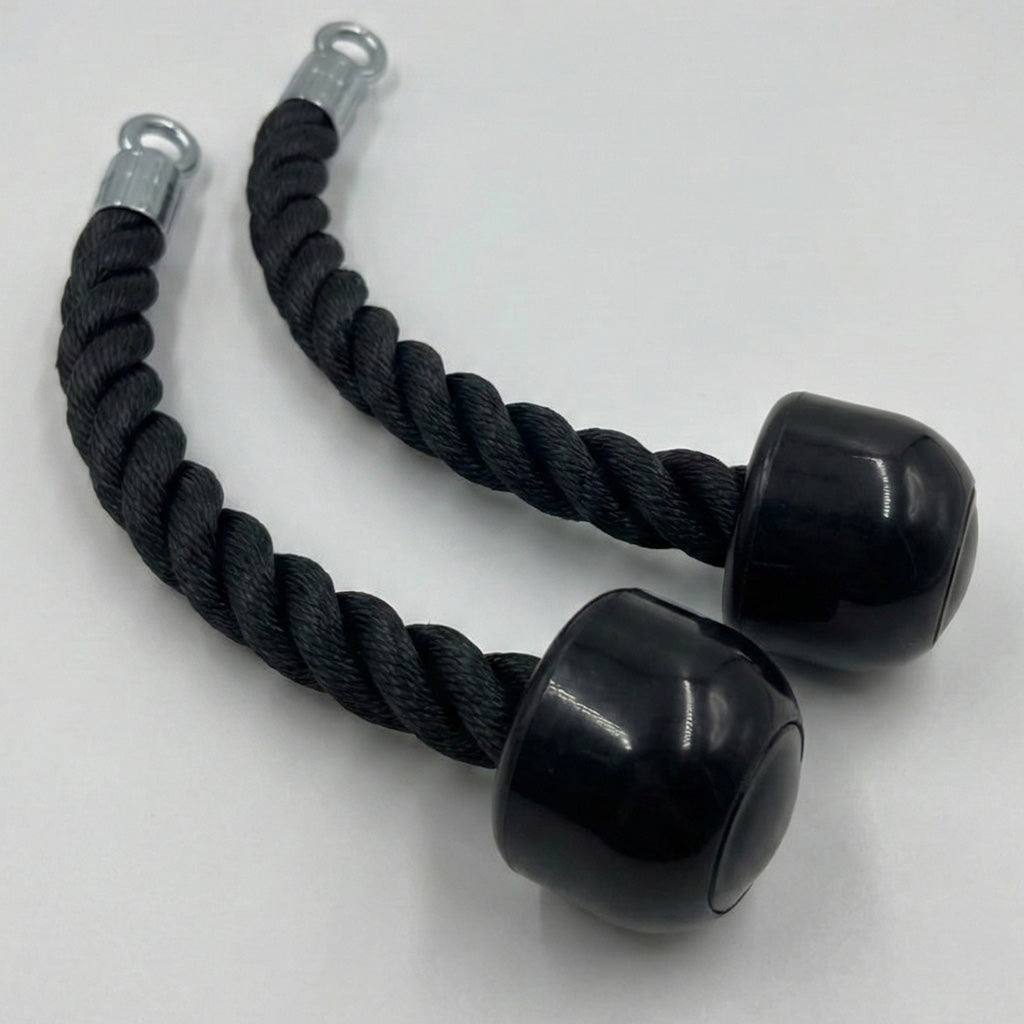
Individual Tricep Ropes
Pair of individual cable ropes for triceps pressdowns and cable hammer curls.
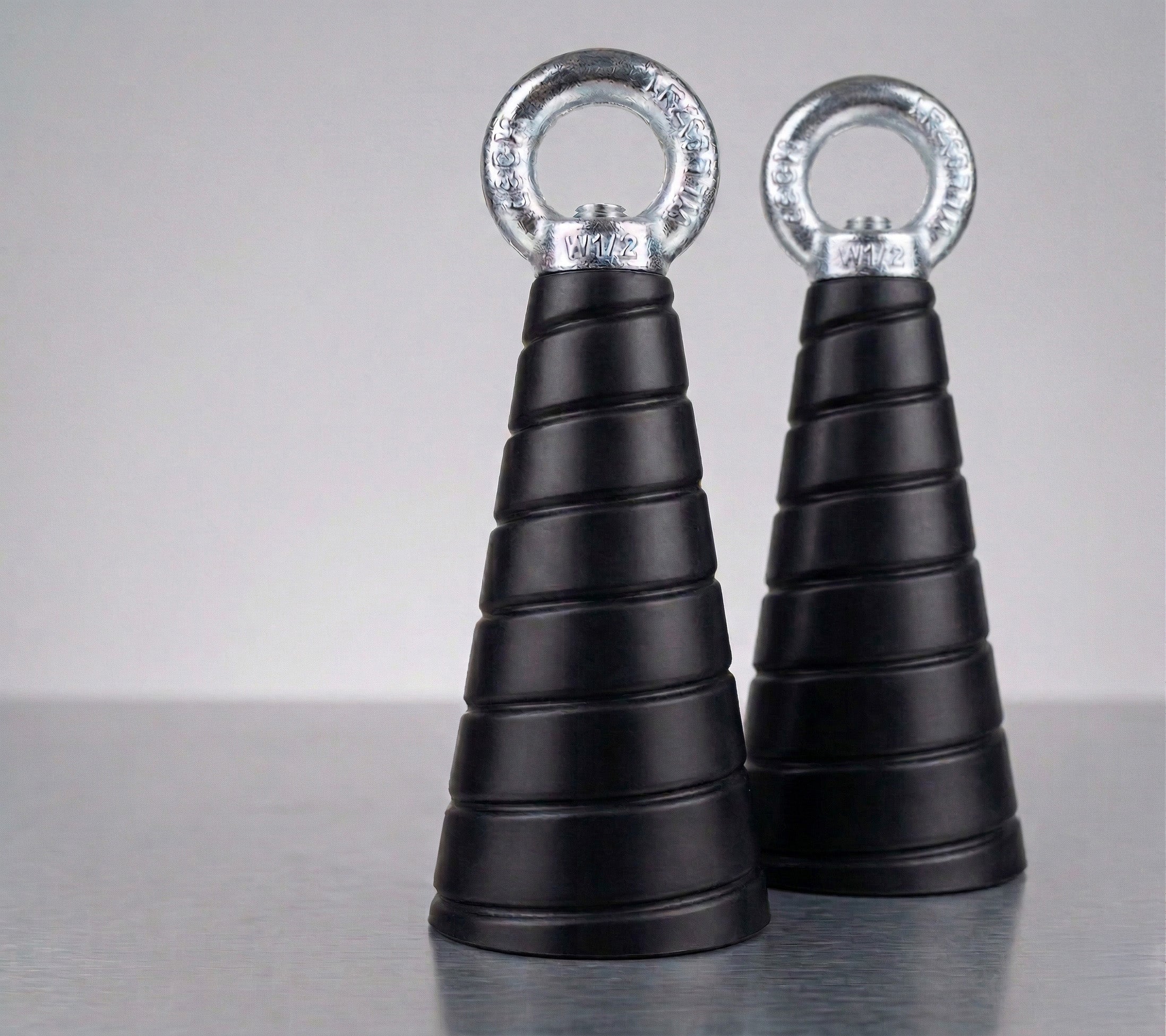
Tapered Tricep Cone
Tapered rubber cable grip for triceps extensions, face pulls and hammer curls.
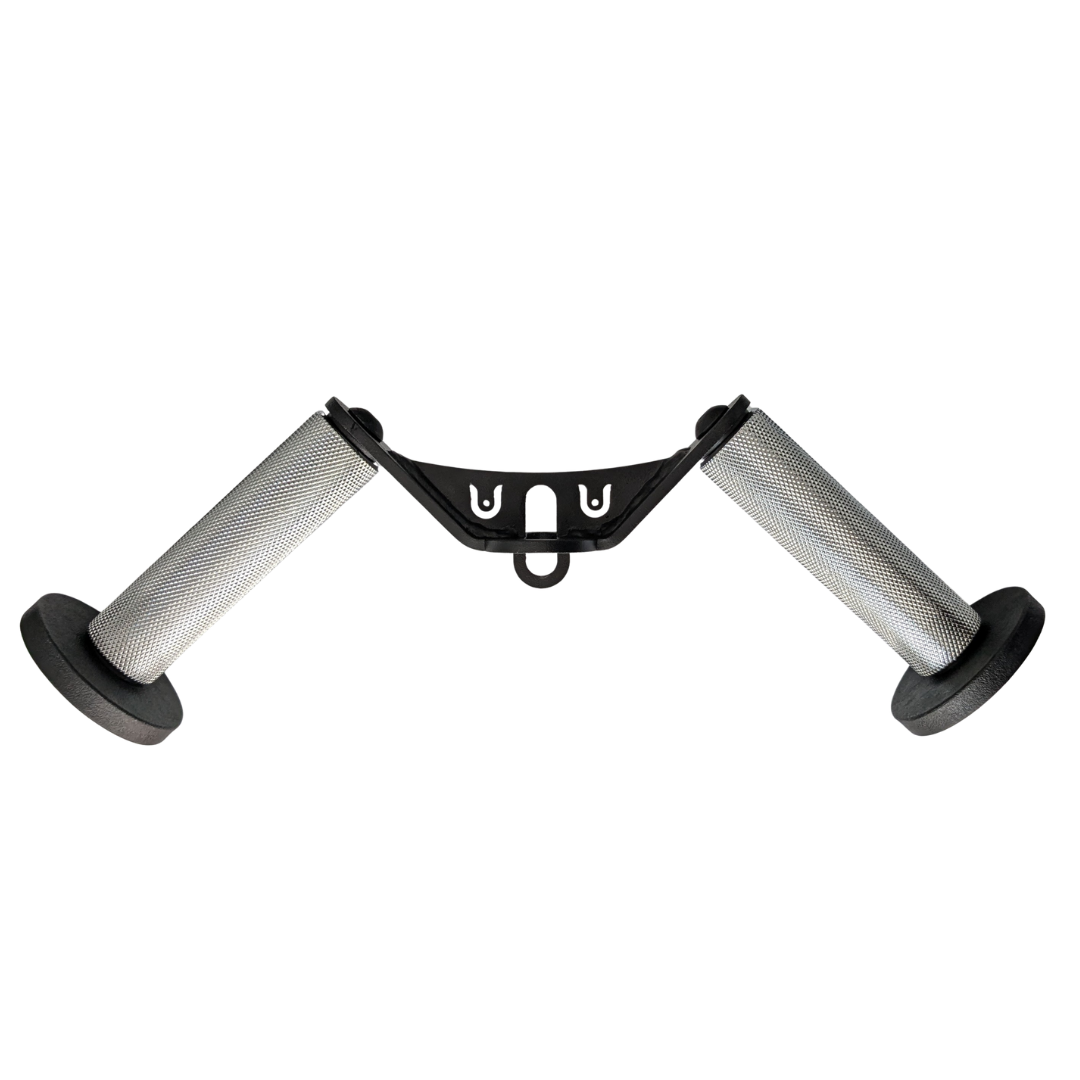
W Grip
Angled cable grip for comfortable rows, pushdowns, and curls.

Alternatives when you lack a suitable bench or dumbbells
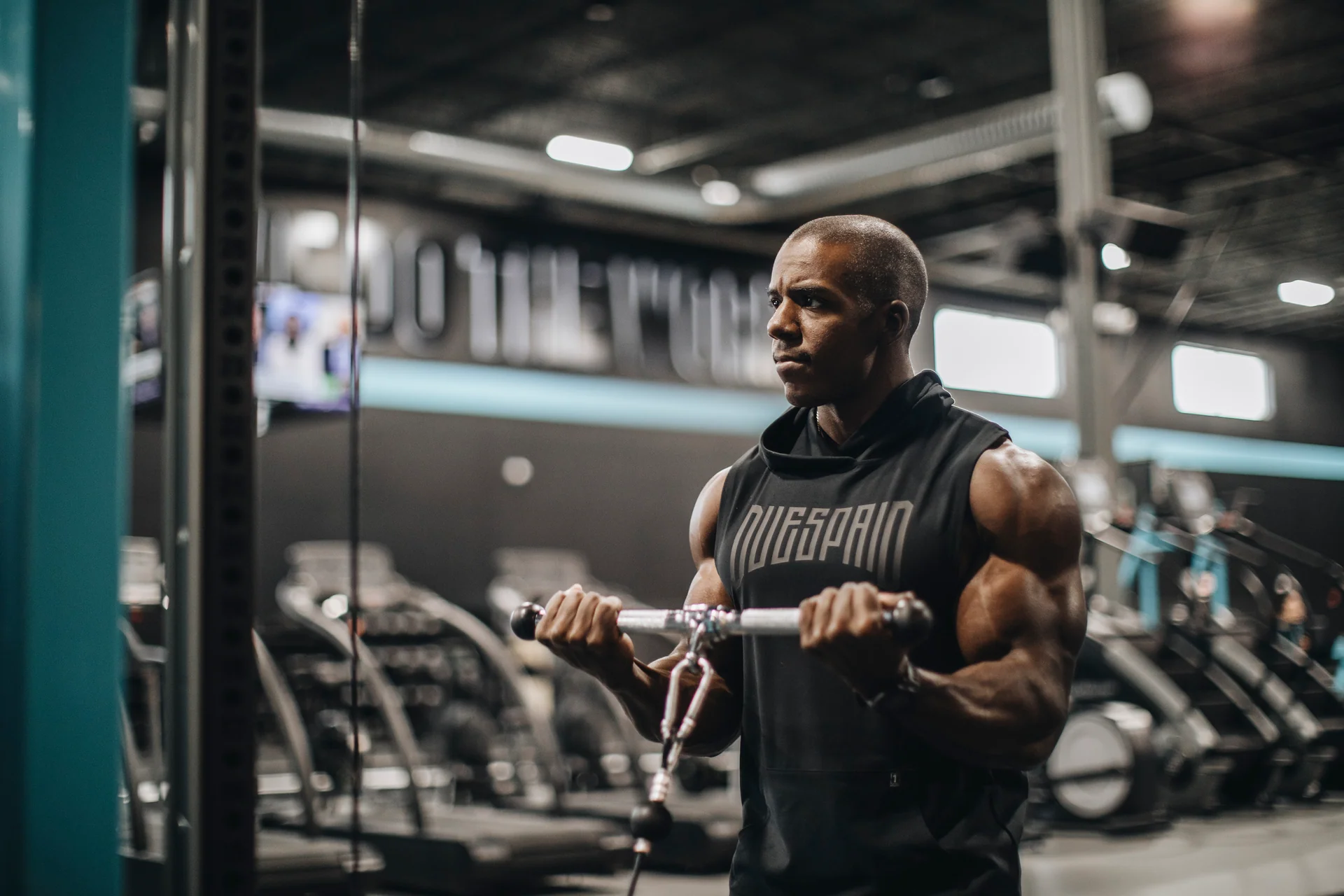
An adjustable bench is convenient, but it is not mandatory for growing the biceps. If you lack one, use strict standing dumbbell curls or a cable exercise with a comfortable elbow path. You can still train through an effective range and progress over time without copying the exact incline position.
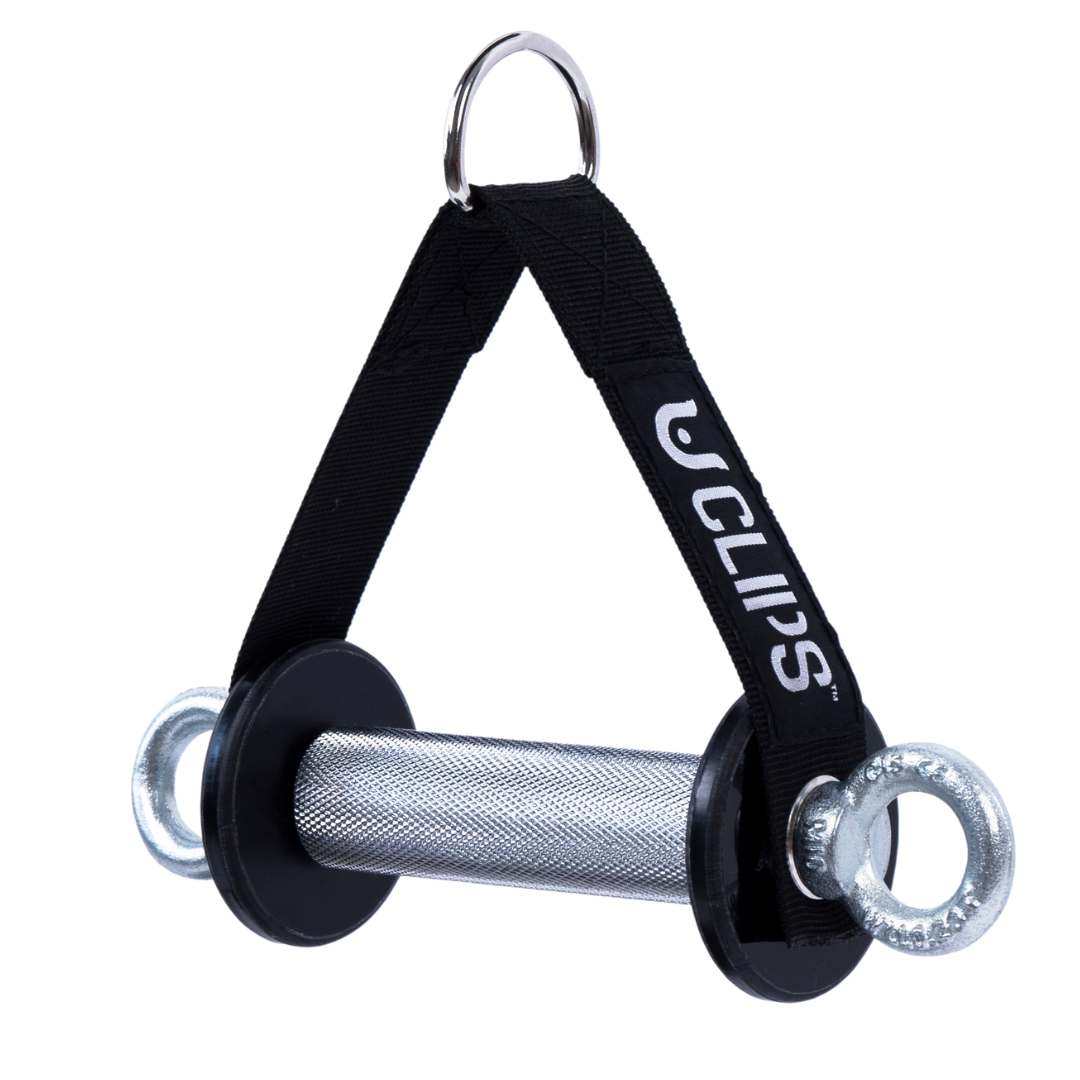
For a behind-the-body cable curl, stand facing away from a low pulley with a single handle. Take a step forward until the arm can rest gently behind the torso without the cable rubbing against you. Keep the weight light, upper arm mostly stable and wrist comfortable. This changes the line of pull compared with gravity acting on a dumbbell, so the hardest point in the range may feel different. It is not automatically superior, just another useful tool.
A straight-bar low-cable curl keeps both hands connected and may be easier to set up in some gyms. A rotating grip or EZ-style attachment can accommodate your wrists. Select a handle and cable height that allow smooth movement without collisions. If a free weight is more convenient, a supported preacher curl or strict seated curl is a reasonable alternative.
For home gyms, check the bench width, dumbbell size and side clearance before trying a reclined curl. Oversized adjustable dumbbells may touch the padding near the bottom. If the next dumbbell increment is too large, increase reps at the current load or try one-arm sets instead of abandoning control. Keep equipment selection specific to your space and body proportions.
Persistent shoulder or elbow discomfort is a reason to change the exercise or consult a qualified clinician, not to insist that discomfort is evidence of a better stretch.
Bodybuilding Shirts & Workout Gear
Bodybuilding shirts, tanks and gym gear for lifters chasing muscle, size, symmetry and the pump.

Curls The Girls Shirt – Bicep Curls Top & Gymbros T-Shirt
Rep “Curls For The Girls” humor in and out of the gym.

Big Biceps Theory & Weightlifting Bro Science Hoodie
Stay casual and show some lifting attitude with “Big Biceps Theory”.

OnlyGains Big Biceps Tee
Rep “OnlyGains Only Gains Big Biceps” humor in and out of the gym.

Biceps of the Caribbean Gym | Funny Pirate Workout Swea T-Shirt
Bring “Biceps of the Caribbean” humor to your everyday gym style.

Muscle Mountain – Bicep Mountain Meme Vest Muscle Shirt Tank Top
Add some lifting attitude to training with “Muscle Mountain”.

Beauty And The Biceps Meme Hooded Hoodie
Stay casual and show some gym-girl attitude with “Beauty And The Biceps”.

Ha Ha Hammer Curls Joker Gym Funny Workout Villain Meme Sticker
Stick a little “Ha Ha Hammer Curls Joker” humor on your favorite gear.


I Love Gym Bicep Heart | Bodybuilding Meme Pullover For Hoodie
Bring “I Love Gym Bicep Heart” gym humor to lazy days and post-workout plans.

Gym Dost Thou Even Curl Medieval Knight Arm Day Crewnec T-Shirt
Show some gym-day personality with “Dost Thou Even Curl Medieval Knight Arm Day”.
A practical six-week biceps progression
Train the incline curl twice each week, ideally with at least one rest day between exposures. Begin with two sets of eight to twelve controlled repetitions per session and about two reps in reserve. Rest 90 seconds to two minutes between sets; take longer if grip or breathing fatigue reduces rep quality. Record the bench setting, load per hand and completed reps so your sessions are comparable.
Weeks 1-2: establish consistency. Use a comfortable bench angle, film your technique briefly and control the lowering phase. Aim to add a repetition across one or both sets when the same weight and form allow it. Do not rush to add dumbbell weight.
Weeks 3-4: progress reps before load. Work toward two sets of twelve in both weekly sessions. Once the reps are repeatable with no shoulder swing, add the smallest available load increment and move back toward eight or nine reps. If the jump is too large, keep the same dumbbells and focus on more consistent control or another clean rep.
Weeks 5-6: earn more work selectively. Add a third incline-curl set on just one weekly session if you are recovering well and your other rows, pull-ups and curls are not already creating excessive volume. Keep the second day at two sets. If soreness or elbow irritation accumulates, stay at two sets or briefly reduce the load.
Pair the incline curl with another elbow-flexion pattern on a different day. Beginners can make progress with a modest number of direct biceps sets because pulling exercises also train the arms; experienced lifters may use more weekly volume based on recovery. Track total weekly work instead of counting only incline sets. Reassess discomfort, sleep and the quality of your other pulling workouts alongside the numbers.
The goal at the end of six weeks is simple: more clean reps or slightly more weight at the same bench angle, with shoulders and elbows still comfortable. That is a stronger result than chasing the most dramatic pump in one workout.