Advertising disclosure: This page includes affiliate product links that may earn us a commission, as well as products from our own store.
Hanging knee raises look simple, but knee height tells you less than the motion of your pelvis. A controlled repetition combines hip flexion, abdominal bracing and a deliberate pelvic curl. This guide shows how to earn stricter reps, manage grip fatigue and progress toward more challenging core work in six weeks.
What Hanging Knee Raises Actually Train
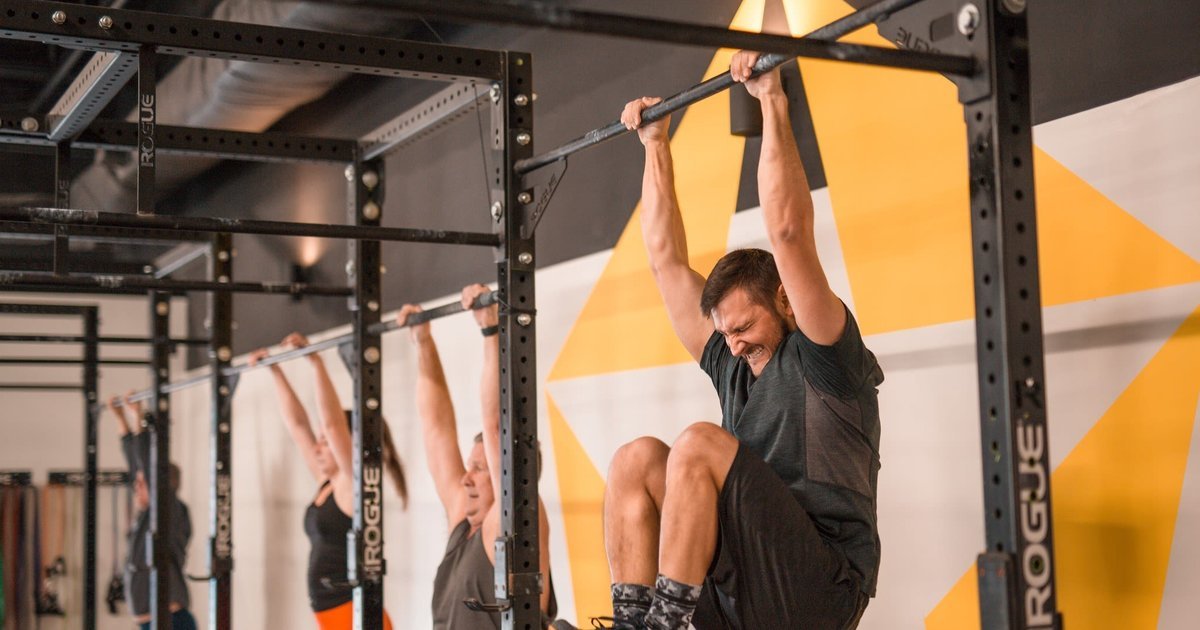
Hanging knee raises combine three demands that are easy to confuse: raising the thighs, controlling the pelvis and keeping the shoulders stable while suspended. The iliopsoas and other hip flexors bring the thighs forward. The rectus abdominis helps curl the pelvis toward the ribs, while the obliques assist with trunk control and resisting rotation. Your grip, forearms, shoulders and lats work to hold and stabilize the upper body rather than directly lifting the knees. Understanding the different roles makes the exercise more useful than a contest to raise the knees highest.
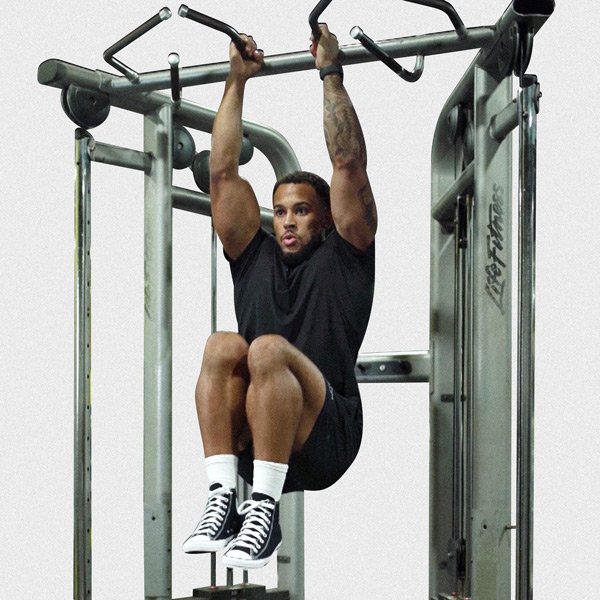
When your thighs reach approximately hip level, you can keep moving by creating a modest posterior pelvic tilt: imagine drawing your belt buckle toward your lower ribs. That extra controlled curl adds trunk movement to the hip-flexion portion of the rep. If you only lift the knees but keep the pelvis fixed, hip flexion is doing more of the visible work. A deliberate pelvic curl should not require yanking, a violent spinal bend or lifting so high that you lose control.
The popular phrase “lower abs” is also imprecise. The rectus abdominis is one continuous paired abdominal muscle, not two isolated upper and lower muscles. Different positions can change activation demands, but no single hanging variation can spot-reduce stomach fat. Visible abdominal definition depends on overall muscle development and body composition, while this exercise offers a practical way to train repeatable trunk and hip control.
Use observable standards: controlled knees, a comfortable and stable hang, pelvic motion you can feel rather than momentum you can see, and a descent that does not send the body swinging into the next repetition. Those are improvements you can track whether or not you ever advance to straight-leg raises.
Set Up the Grip, Shoulder Position and Clearance
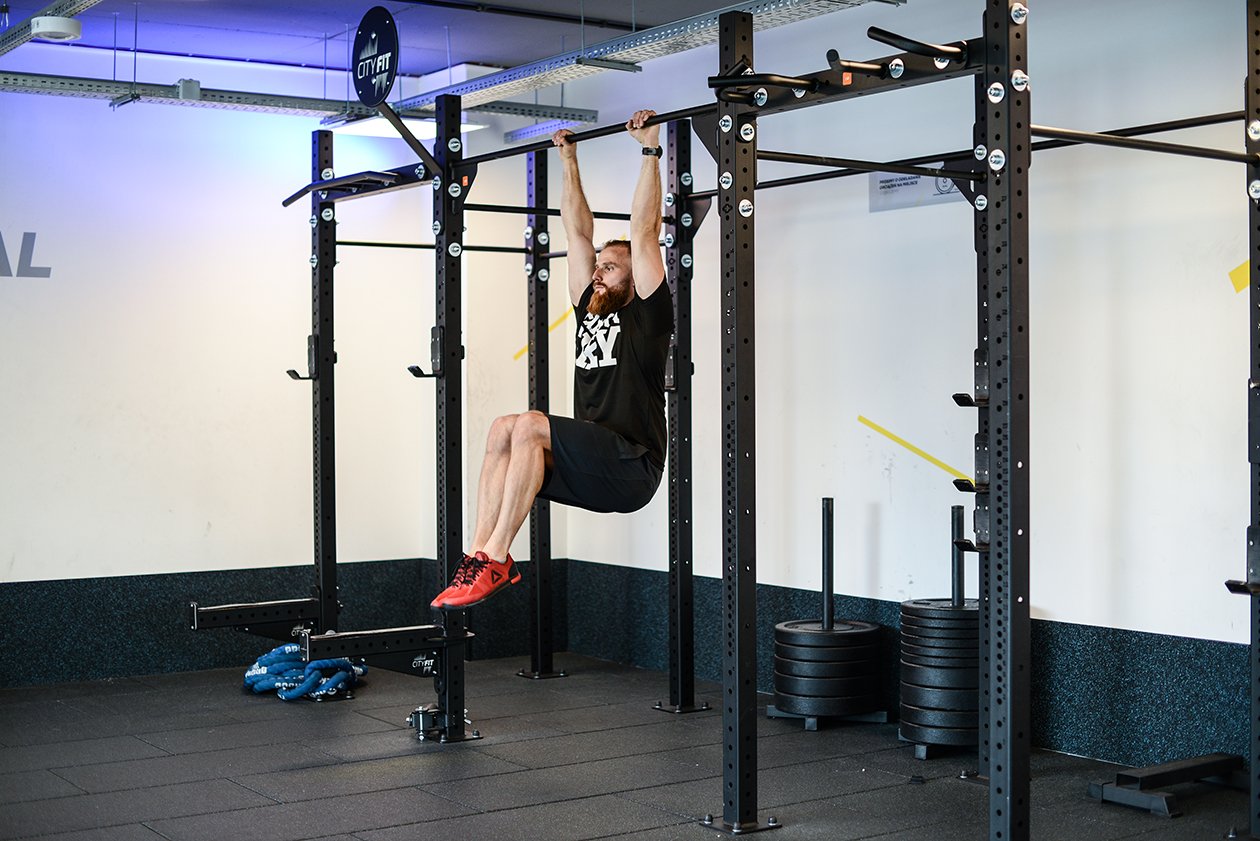
Choose a solid pull-up bar with adequate height for the knees and feet to clear the floor. Wrap your thumbs around it in an overhand grip around shoulder width. The bar does not have to be especially wide, and a grip that places your shoulders or wrists in an uncomfortable position is not a badge of better training. Step onto a secure platform if necessary so you can take hold of the bar without jumping or landing awkwardly after a set.
Allow the body to settle. Maintain straight arms if comfortable, lightly engage your upper back and lats, and keep the neck relaxed. This is an active but not rigid hang. The goal is to make the torso quiet enough that movement at the hips and pelvis can be controlled. You do not need to squeeze the shoulder blades into an extreme position or forcibly depress them throughout the exercise.
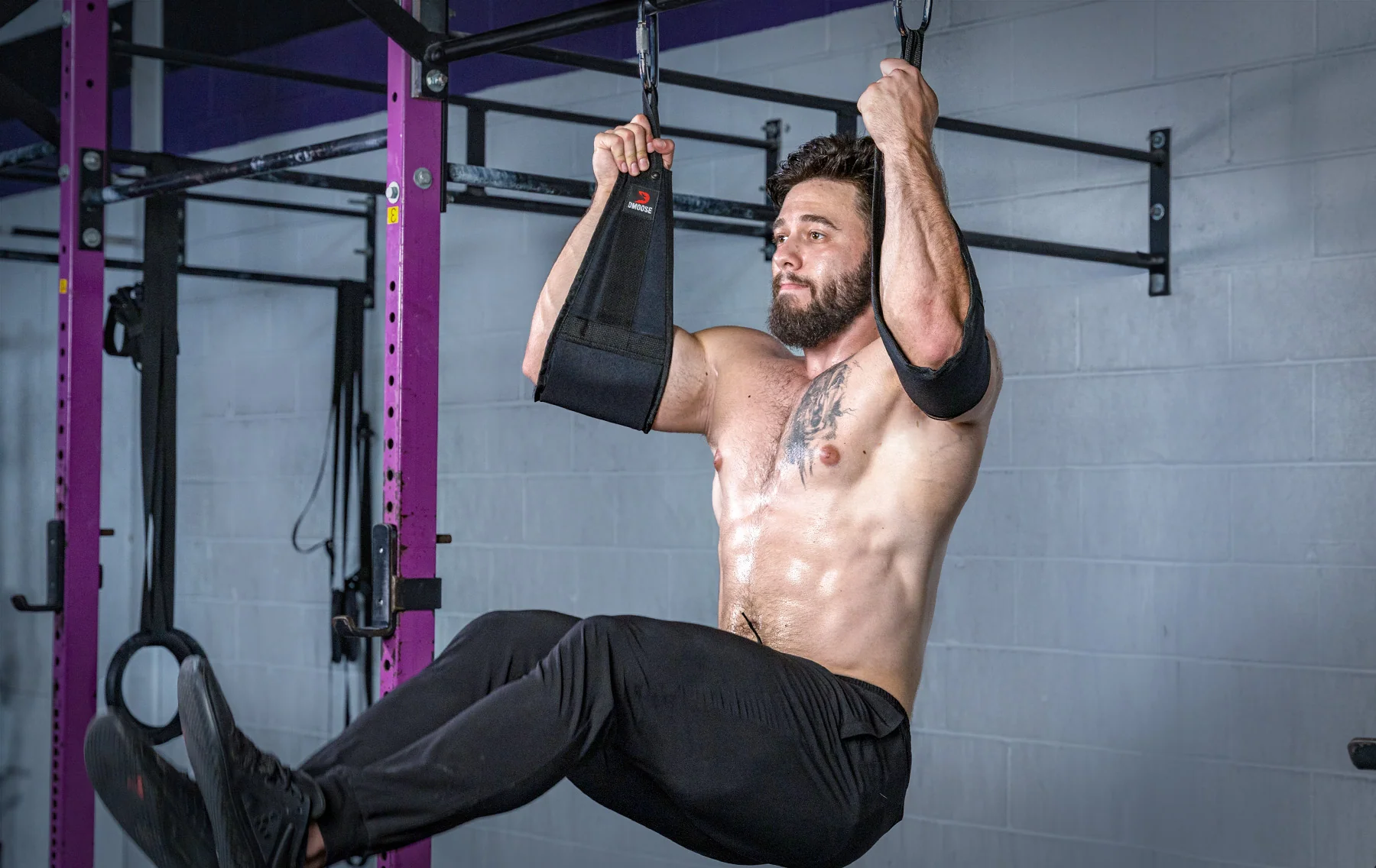
A bar placed too low can leave the feet brushing the floor. In that case, bending the knees more is a reasonable solution; do not reflexively start kicking the legs behind you. When grip endurance is the limiting factor, a stable captain’s-chair station or properly rated padded ab straps can shift some work away from the hands. Supported alternatives still require a deliberate abdominal curl, and they should not be confused with identical strength demands.
Test the starting position with a single practice rep. Can you pull the knees forward, pause at the top and descend while remaining nearly still? If the answer is no, work with a smaller range, fewer repetitions or a supported reverse crunch first. Sharp shoulder pain, tingling, weakness or dizziness are reasons to stop, not signals to push through another set.

Equipment Worth Exploring
Explore equipment, accessories and gear from our carefully selected range.

Power Tower
Freestanding pull-up and dip station with adjustable handles for bodyweight training.


Foldable Wall Rack
Wall-mounted folding squat rack designed to save floor space between workouts.


Leather Lifting Straps
Padded leather straps support grip during heavy rows, deadlifts and pulling exercises.

Angles 90 Grips
Flexible grip attachments that allow natural wrist movement during pulling exercises.

Leather Wrist Grips
Padded leather lifting grips help support the hands and wrists on heavy pulling exercises.

How to Perform One Strict Repetition
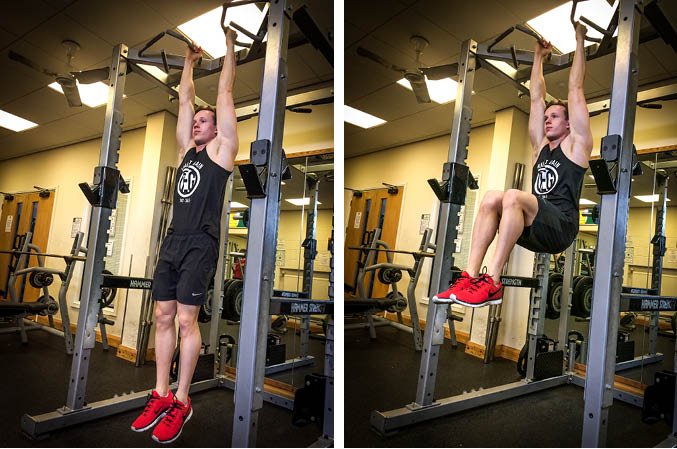
Begin from a quiet hang with the knees slightly bent. Brace the abdomen as though preparing for a firm exhale and raise both knees by flexing at the hips. Keep the movement smooth: there is no need to lean far backward, kick or pull the bar down dramatically. As the thighs approach hip level, deliberately curl the pelvis upward so the lower ribs and front of the pelvis move a little closer together.
Pause briefly at the top without losing the shoulder position. Exhale comfortably rather than holding the breath for an entire high-repetition set. Reverse the movement under control, gradually uncurling the pelvis and lowering the knees without letting the feet whip far behind the hips. Taking roughly two or three seconds to descend can help a beginner learn control, but the exact tempo is a coaching tool, not a proven universal optimum for growth.
- Secure the bar with a comfortable overhand grip and settle the swing.
- Brace gently while keeping the ribs and pelvis organized.
- Raise bent knees together without kicking the torso backward.
- Add a small pelvic curl and pause at the top.
- Lower smoothly, wait for stillness, then begin the next rep.
Consider setting a quality threshold: a repetition counts only if its starting position, knee travel, pelvic curl and lowering are comparable with the first good rep. This removes the temptation to call ten sloppy pendulum movements a personal record. If you can currently perform six consistent repetitions, that is a better training baseline than claiming fifteen while swinging uncontrollably through the final half.
Some lifters find the pelvic curl easier with a gentle exhale during the upper part of the rep. Others need a few floor reverse crunches before hanging to learn what the pelvis should do. Neither cue changes anatomy; choose the one that produces movement you can repeat without pain.

Calisthenics Shirts & Street Workout Gear
Calisthenics and bodyweight-training gear for pull-ups, dips, handstands and street-workout athletes.


Lord of the Calisthenics Rings Gym | Funny Jesus Lifter Hoodie
Keep it laid-back with a little “Lord of the Calisthenics Rings” attitude.

Calisthenics Pullups Heartbeat Hoodie
Bring “Calisthenics Pullups Heartbeat” gym humor to lazy days and post-workout plans.


Calisthenics Hanging Out Hoodie
Make your off-duty look more fun with “Calisthenics Hanging Out”.

Always Pull Yourself Up Tank
Show some personality between sets with “Always Pull Yourself Up”.

Turn Off Gravity Funny Calisthenics Gym Hooded for Huma Hoodie
Show off your lifting humor in a laid-back “Turn Off Gravity Funny Calisthenics” hoodie.

Funny Calisthenics Gym Muscle Shirt Athletic Vest for B Tank Top
Train hard, laugh a little, and rep “Calisthenics”.
Five Mistakes That Make Reps Less Useful
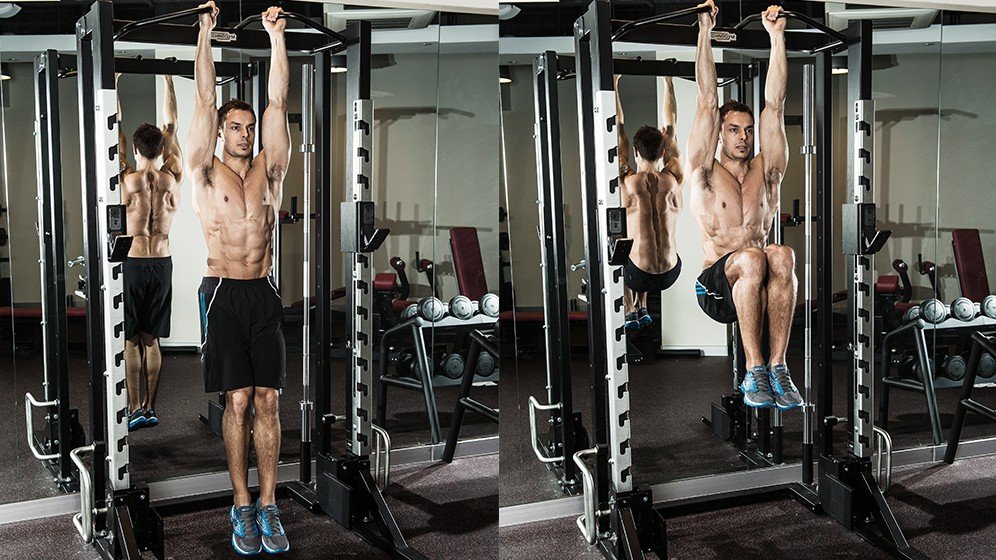
1. Throwing the legs upward. When the lower body swings behind you and then accelerates forward, momentum supplies part of the rise. Take a brief dead-stop between reps, use shorter sets and stop before the motion becomes uncontrolled. Strict core work and intentionally kipping for a sport-specific skill are different training goals.
2. Ignoring the pelvic curl. Raising the knees to hip height without adjusting the pelvis is not useless: the hip flexors are working. It simply misses an opportunity to involve more deliberate abdominal trunk flexion. Practice a controlled belt-buckle-to-ribs motion at the top or use reverse crunches to learn it.
3. Arching hard at the bottom. Letting the legs swing far backward and the lower ribs flare can make successive reps inconsistent. Bring the legs down smoothly, keep enough trunk control to avoid a forceful arch and start from stillness. Do not confuse movement through a comfortable range with permanently bracing the spine rigidly.
4. Staying on the bar after grip or shoulder control disappears. Forearm fatigue can arrive before the abs are meaningfully challenged. Stop the set, allow recovery or switch to a supported version. Sharp pain, neurological symptoms or a shoulder that repeatedly feels unstable warrant stopping and assessing the exercise.
5. Progressing only by counting faster repetitions. A higher number is not progress if the knee height shrinks, the pelvis stops moving or every descent becomes a drop. Keep notes on the actual variation, the quality of the last repetition and the time required to settle between reps. A short side-view video can expose the swing that is hard to sense while hanging.
Reverse Crunches, Supported Knees and Straight Legs
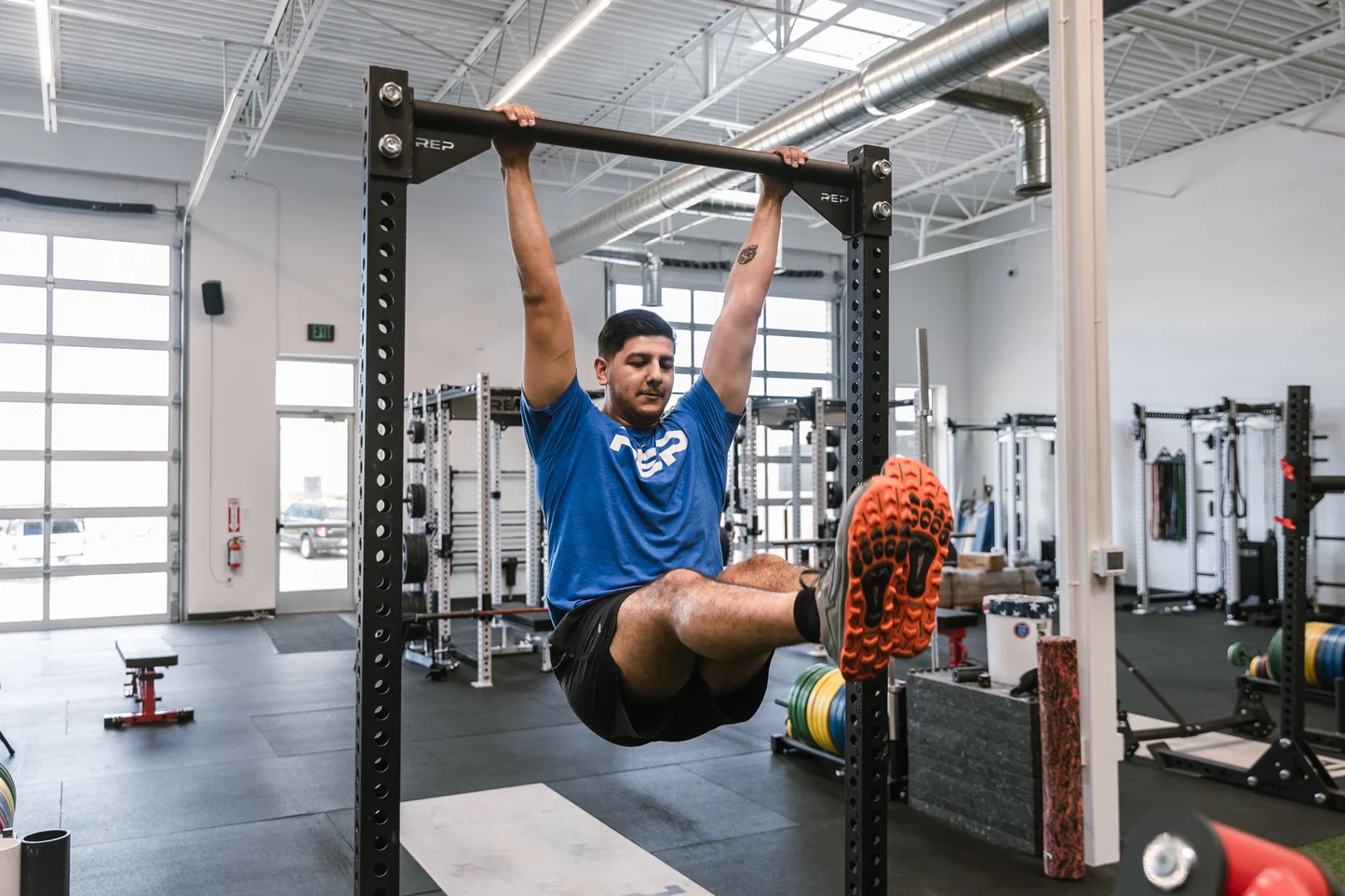
The bent-knee version is an intermediate choice between floor-based abdominal work and harder suspended movements. Bent knees shorten the lever arm compared with straight legs, which generally makes hanging raises easier to control. That does not automatically mean the bent-knee raise is inferior: it may let you practise an active hang, deliberate pelvic movement and clean eccentric control more consistently.
Reverse crunches train the pelvis-to-ribs curl with the upper body supported on the floor. They are useful when grip or shoulder comfort prevents good hanging reps. Keep the motion small and controlled instead of throwing the legs overhead.
Captain’s-chair knee raises support your forearms and usually the back. They preserve a similar hip-flexion and abdominal-control pattern while reducing the grip challenge. Avoid rocking the upper body away from the pads to obtain more knee height.
Strict hanging knee raises combine the above trunk mechanics with unsupported hanging. They are the main movement in this plan. Improve repetition quality before forcing more height or adding load.
Hanging straight-leg raises lengthen the lever and demand greater control. Begin with slightly straighter knees or reduced range before attempting legs horizontal. If the hip flexors fatigue first, that is not surprising: they remain important movers.
Toes-to-bar adds still more range and skill. A strict version is not the same as a kipping competition repetition. Neither toes-to-bar nor a weighted knee raise is necessary to gain useful benefit from the basic exercise. Choose progressions because you can perform them well, not because they look more impressive.
Equipment Worth Exploring
Explore equipment, accessories and gear from our carefully selected range.


GymPin Ergo Handles
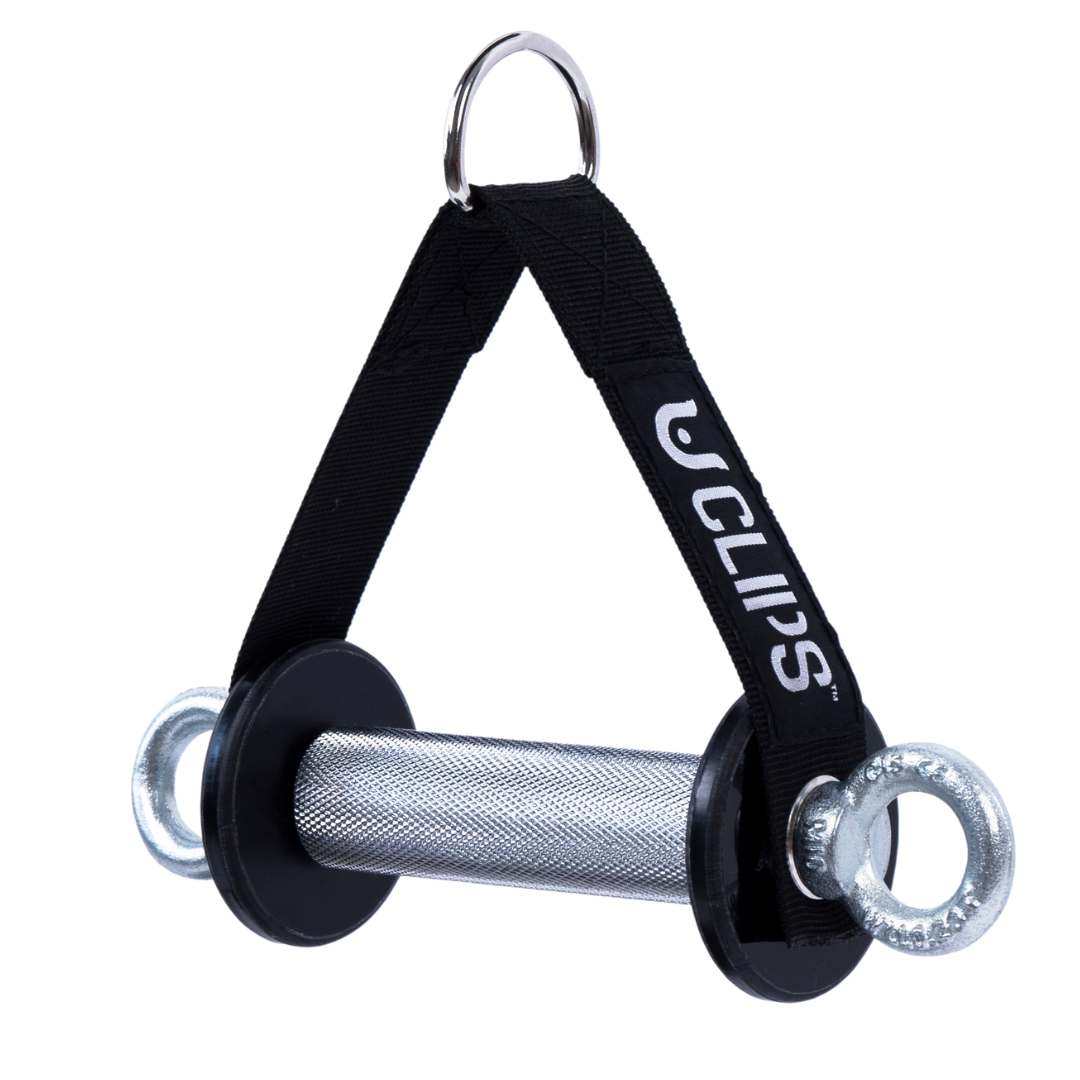
Pair of ergonomic cable handles shaped for comfortable triceps and pulling exercises.
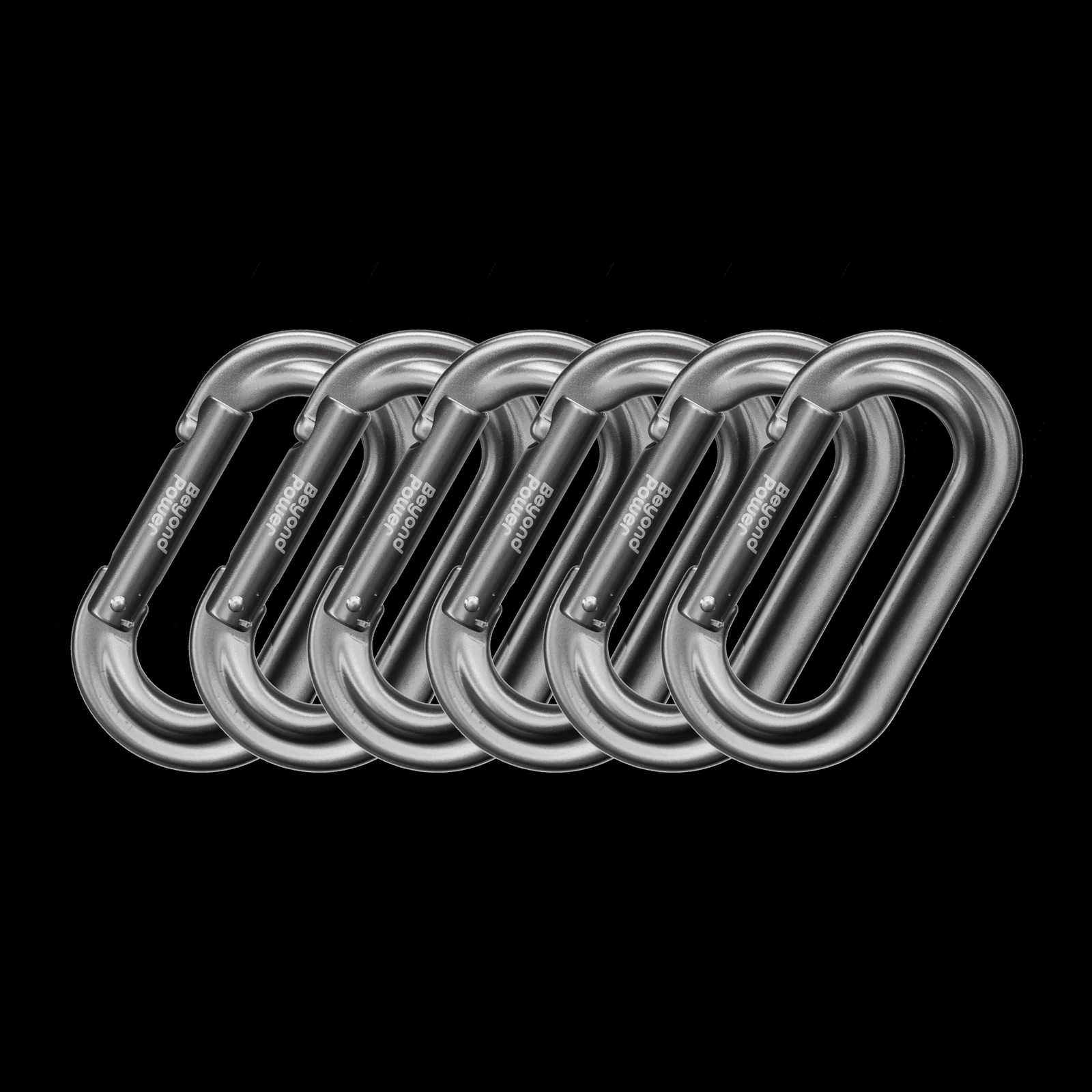
Premium Carabiner
Durable carabiner for connecting cable attachments and training accessories.


GymPin D Cuffs
Adjustable wrist cuffs with textured grips for supported cable-machine exercises.
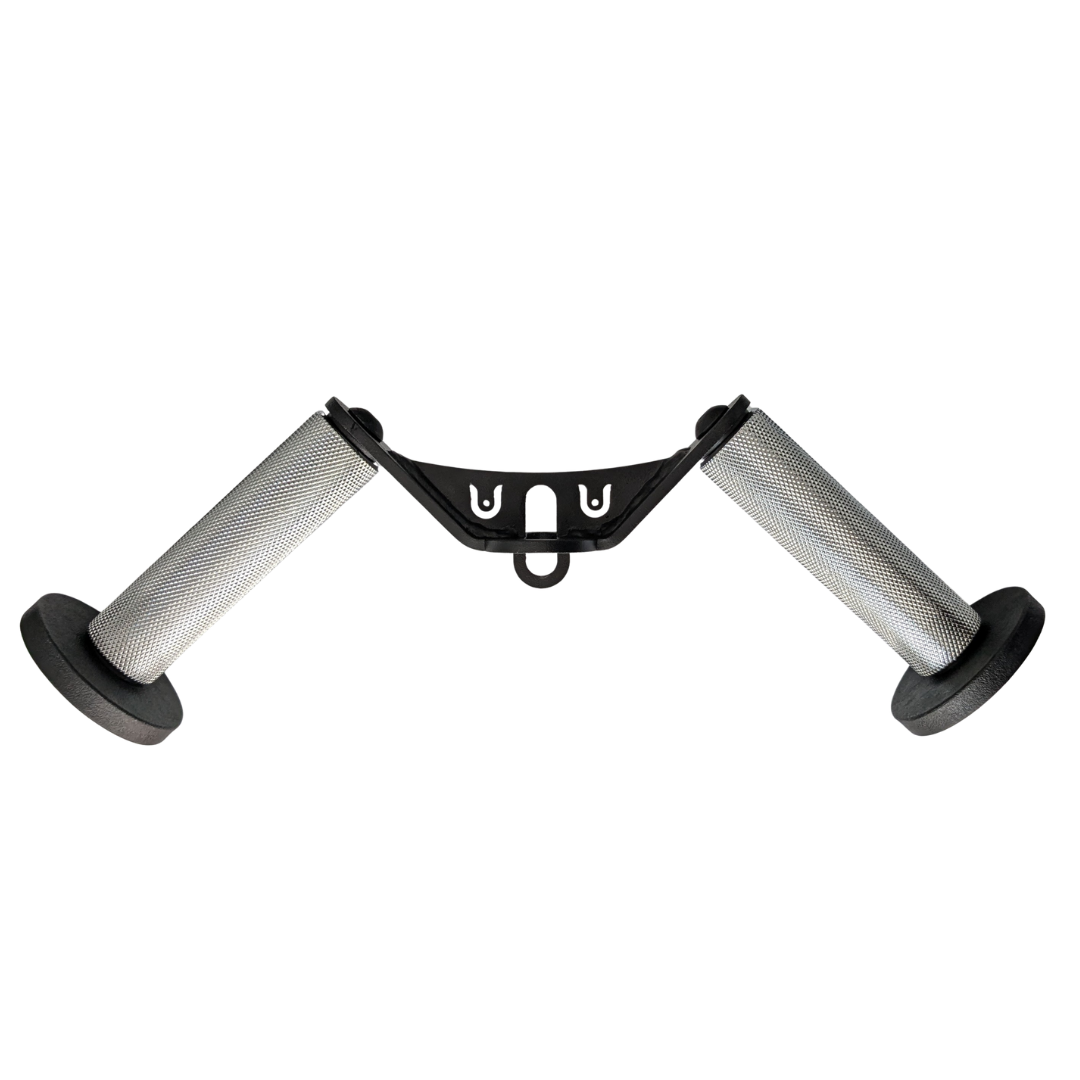
W Grip
Angled cable grip for comfortable rows, pushdowns, and curls.
VOLTRA
Compact digital cable trainer with smooth, adjustable resistance.

VForce Lat Tower
Wall-mounted cable tower with pivot arms and adjustable 1:1 or 2:1 pulley ratios.
Equipment Choices, Training Volume and Grip Fatigue
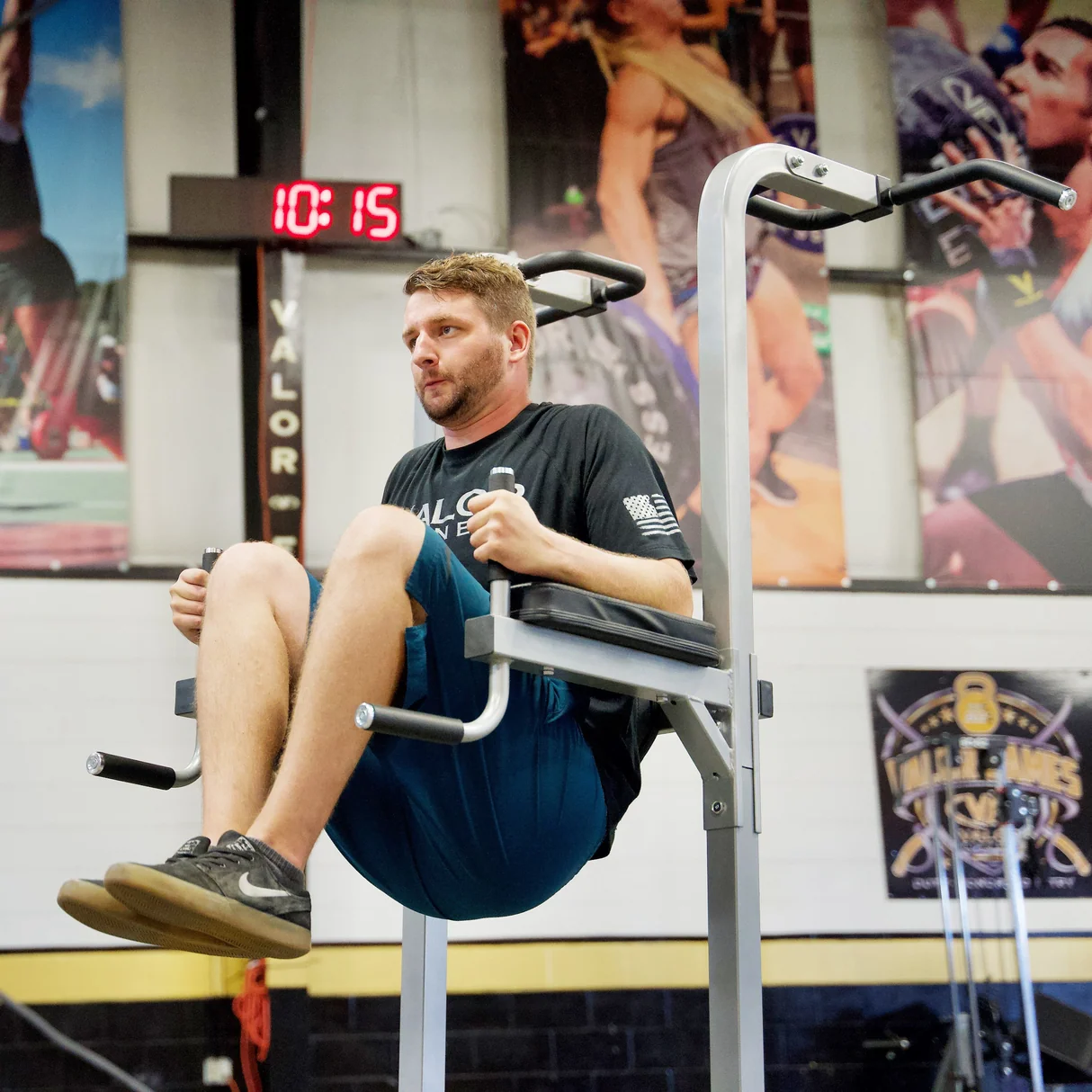
The basic exercise needs a secure overhead bar and sufficient clearance. A rack-mounted pull-up bar, rated wall bar or dedicated power tower can all work when installed and used to the manufacturer’s requirements. Rings and rotating handles change how the hands and shoulders stabilize; they can be useful for some people but should not be treated as compulsory or as automatically kinder to every joint.
Start with two weekly direct-core sessions and two or three working sets of approximately six to twelve good repetitions. Leave one or two clean reps in reserve at first, and rest around sixty to ninety seconds, or longer if the hands, breathing or shoulders need it. These numbers are practical entry points rather than a specifically validated optimal hanging-knee-raise prescription.
If you also train pull-ups, heavy rows or deadlifts, decide where grip fatigue belongs in your session. Put knee raises after demanding pulls when hanging endurance is the constraint, or use them earlier when improving the suspended skill is the priority. A supported captain’s chair is a reasonable alternative on a day when the forearms are exhausted but the ab work still matters.
External load is a late-stage option. Clamping a weight between the feet creates a dropping hazard and often changes the exercise before sufficient control is built. Most lifters will have plenty of room to progress by pausing, adding consistently performed repetitions, adjusting the knee lever and eventually trying controlled straight-leg partials. There is no requirement to purchase specialist equipment to begin.
Train the trunk as part of a broader routine, not in isolation. Other exercises can challenge bracing, rotation and side-bending control differently. If the hanging version provokes repeated shoulder or back symptoms, select a tolerable alternative and seek individualized advice when appropriate.
Funny Gym Shirts & Workout Gear
Funny gym shirts, tanks, hoodies and workout gear for lifters who like training hard.


Shirt – Check Out My Six Pack Donut – Meme & Bros T-Shirt
Heavy lifts, good laughs, and a little “Check Out My Six Pack Donut” energy.

Check Out My Six Pack Tacos – Taco Six Pack Hooded Pull Hoodie
Bring “Check Out My Six Pack Tacos” gym humor to lazy days and post-workout plans.

Check Out My Six Pack Beer – Gym Meme Decal for Coolers Sticker
Bring “Check Out My Six Pack Beer” attitude to your water bottle or laptop.

6Pac Shakur Muscle | Vest for Bodybuilding & Six Pack A Tank Top
Train hard, laugh a little, and rep “6Pac Shakur”.


T-Rex Hates Push Ups Muscle Shirt Athletic Vest for Cal Tank Top
Add some lifting attitude to training with “T-Rex Hates Push Ups”.

Calisthenics – Meme & Lovers – Top & Gains T-Shirt
Heavy lifts, good laughs, and a little “Calisthenics” energy.

Funny Calisthenics Gym Decal for Water Bottles Laptops Sticker
Bring “Calisthenics” attitude to your water bottle or laptop.

Calisthenics Lovers & – Gains & Meme Vibes T-Shirt
Heavy lifts, good laughs, and a little “for Calisthenics Lovers & Lifters” energy.
A Six-Week Progression Built Around Strict Reps
Use two sessions per week, leaving an easier day between them. Before each session, check whether your bar grip and shoulder position feel steady during a brief controlled hang. The calendar gives structure, but technique determines when to progress. If the current version makes you swing or causes pain, repeat the previous level rather than pushing onward merely because a new week has started.
Weeks 1–2: Establish the pattern
Perform two sets of five to eight supported or free-hanging knee raises. Start each rep from a quiet position and practise a small pelvic curl. Add one or two sets of eight to twelve reverse crunches if the curl is difficult to sense. Note how many repetitions remain consistent; the final few may need to be removed from the next session’s target.
Weeks 3–4: Build repeatability
Move toward three sets of six to ten free-hanging repetitions. Add a short pause at the top and maintain a calm descent. If the hands give up first, keep one day as a captain’s-chair session or reduce the hanging volume. Consistent motion matters more than accumulating time in a tired and unstable hang.
Weeks 5–6: Challenge a longer lever
Attempt three sets of eight to twelve strict reps. Once you can finish all sets without swinging and with a deliberate pelvic curl, test several reps with the knees a little less bent or a very modest straight-leg partial. Keep most working repetitions in the variation you still control well. Do not assume that reaching straight-leg raises in six weeks is guaranteed.
At the end of the sixth week, compare the best controlled set, the amount of swing you need to settle and the consistency of pelvic movement. Those measurable skills provide a more useful progress check than knee height alone. Continue progressively training your whole body and trunk; visible abdominal changes depend on more than one isolated exercise.