Advertising disclosure: This page includes affiliate product links that may earn us a commission, as well as products from our own store.
Can you get more muscle or strength by adding blood-flow-restriction cuffs to already-heavy sets? A 2026 synthesis examined eight longer-term and 34 short-term studies. The answer for muscle and maximal strength was less exciting than the sensation of a cuffed workout: no dependable extra gain was demonstrated. Here is how to interpret the results without confusing heavy training with low-load rehabilitation.
What changes when you add restriction to heavy sets?
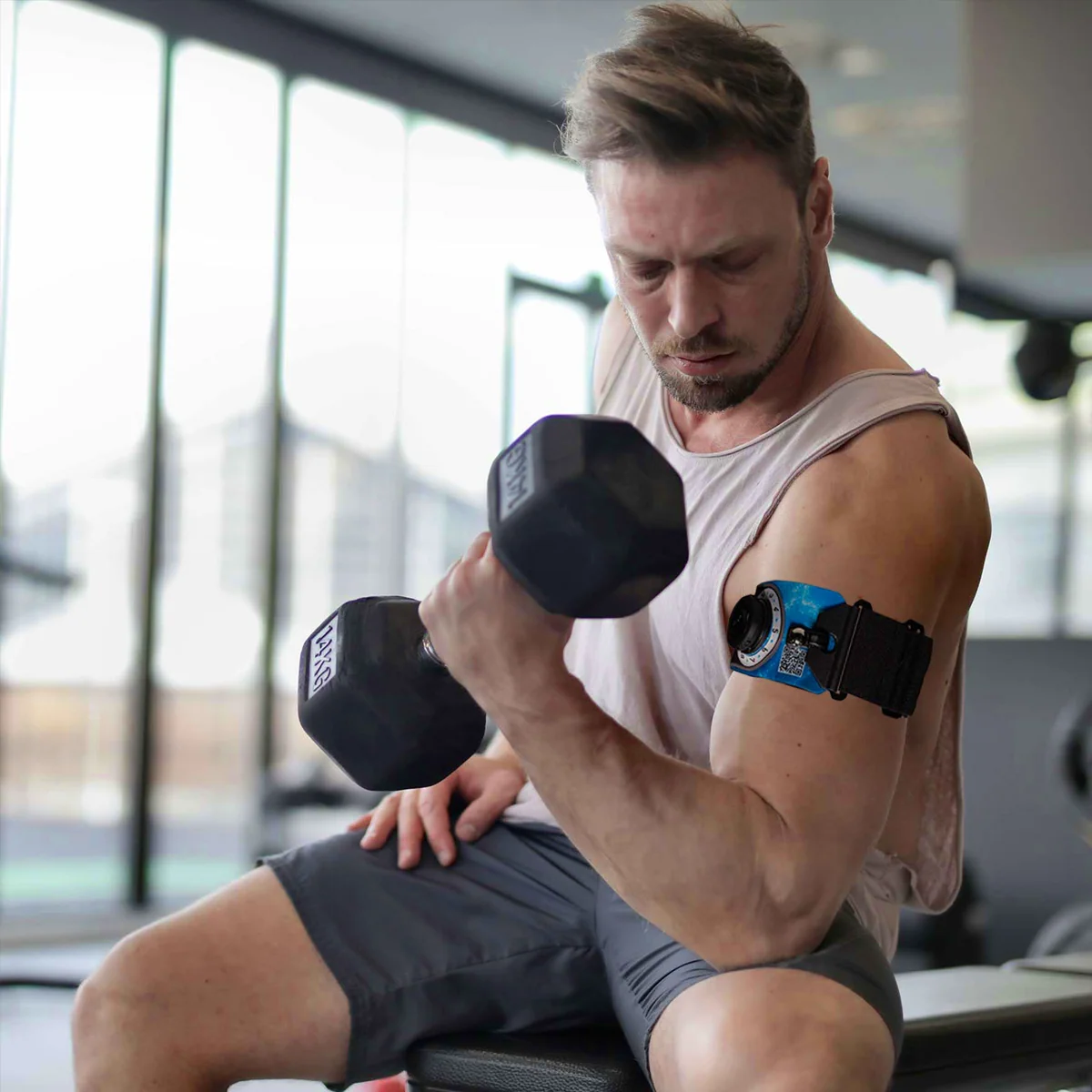
Blood flow restriction, or BFR, uses a specialized cuff placed near the top of a limb to modify blood flow during exercise. That makes an ordinary set feel different: local fatigue and discomfort may rise even though the weight has not changed. But a harder-feeling set is not automatically a more productive one. The crucial distinction is whether you are trying to make light resistance useful or trying to increase the results of an already demanding heavy session.
For this discussion, heavy-load training means loads at or above roughly 60% of a person’s one-repetition maximum. That is not the same intervention as the familiar low-load BFR sessions using much lighter weights and repeated contractions. Mixing these categories leads to misleading headlines: evidence favoring BFR with light loads cannot simply be transferred to squats or presses that are already challenging under conventional loading.
Consider an experienced lifter who already squats for sets of six at a demanding load. The normal set delivers considerable mechanical tension, demands coordination and may limit repetitions through fatigue. Adding cuffs may change local sensation, but it has to produce an additional meaningful adaptation before it deserves a place in the program. More difficulty is not itself proof of greater gains.
The 2026 evidence: chronic gains versus acute effects
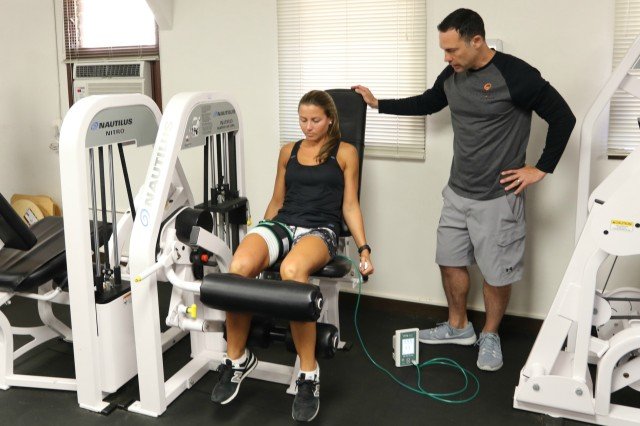
A 2026 evidence synthesis examined two related questions: whether cuffs add muscle or strength over weeks of heavy training, and what happens immediately during a cuffed set. Its longer-term analysis drew from eight training studies; the short-term synthesis covered 34 studies. Those are different outcomes and must be interpreted separately. A temporary change in bar speed, muscle activity or soreness does not establish a larger muscle several months later.
Across the longer-term comparisons, additional changes in maximal strength and muscle size were small and statistically uncertain. The pooled strength effect was 0.11 with a 95% confidence interval from -0.11 to 0.33, and the muscle-size estimate was 0.08 with a 95% interval from -0.18 to 0.34. Because the intervals cross zero, these data do not demonstrate a reliable advantage to cuffing heavy training. The overall certainty was rated very low, so the conclusion should not be inflated into proof that no individual could ever benefit.
Importantly, the analysis evaluated healthy adults rather than every rehabilitation or clinical population. Protocols differed in cuff pressure, width, duration and exercise choice. It would be a mistake to interpret a pooled average as a universal prescription for every lifter, every muscle group and every cuff device. The useful practical conclusion is narrower: if you already lift heavy effectively, the evidence does not justify expecting extra hypertrophy or strength merely because you added restriction.

Equipment Worth Exploring
Explore equipment, accessories and gear from our carefully selected range.
VOLTRA
Compact digital cable trainer with smooth, adjustable resistance.


Rubber Hex Dumbbells
Rubber-coated hex dumbbell pairs with a stable shape for home and commercial strength training.


EZ Curl Barbell
Olympic EZ curl bar with angled grips for curls and triceps exercises.


GymPin D Cuffs
Adjustable wrist cuffs with textured grips for supported cable-machine exercises.

Why extra discomfort does not guarantee extra muscle
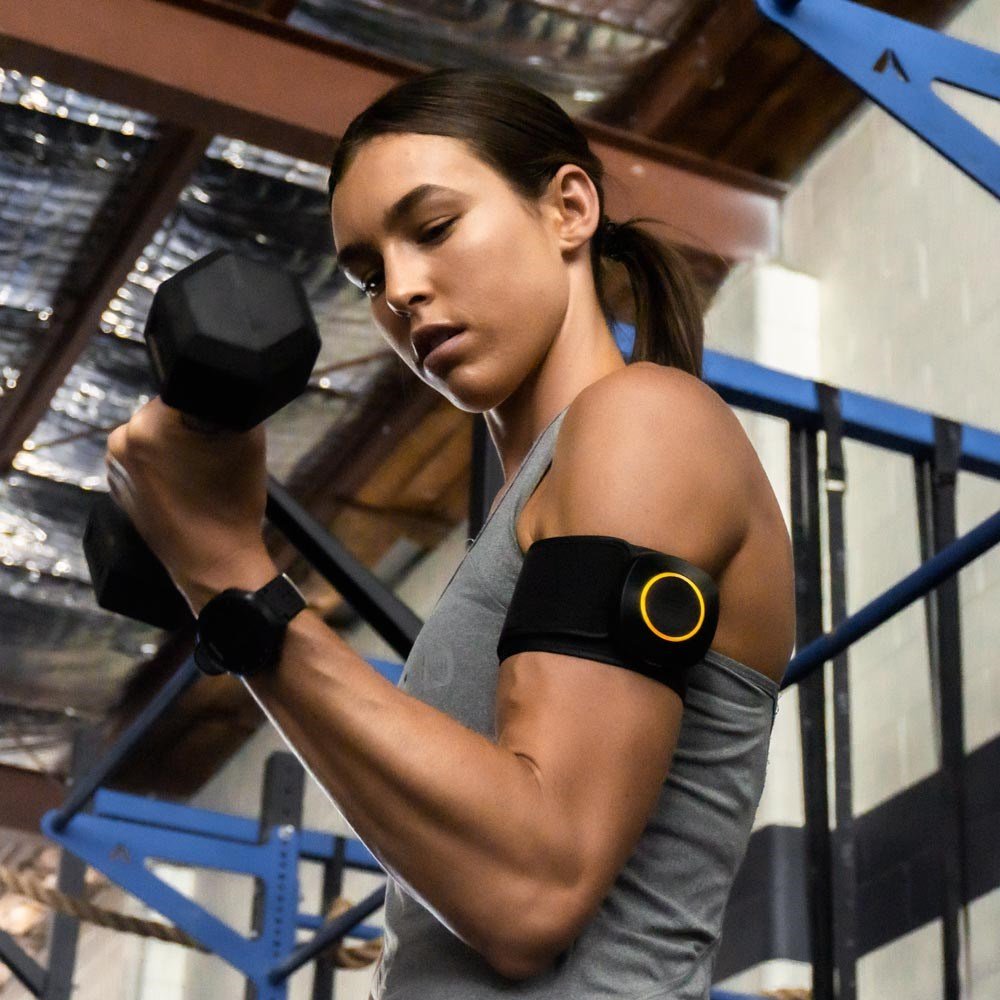
Hypertrophy is a long-term adaptation to a sufficient training stimulus that can be repeated and progressed. Heavy conventional sets already generate substantial force and muscle tension. A cuff can increase the feeling of effort or change local metabolic conditions, yet it does not necessarily create useful tension that was missing from the set. The point is not that metabolic stress is irrelevant, but that an additional stressful sensation may offer little beyond a well-structured heavy routine.
Suppose your regular pressing session includes three challenging working sets at a controlled range of motion. You can add a fourth well-recovered set, progress the load gradually or improve technique. Those choices have measurable outcomes: completed repetitions, total weekly hard sets and sustainable performance. Putting BFR on top of those sets is harder to justify when the best available comparison has not shown consistent extra growth. The same logic applies to squats, rows and curls: first ask whether the fundamentals are already working.
Think about the opportunity cost as well. If heavy BFR makes a later accessory set unpleasant or reduces adherence, the session might become less productive even though the earlier sets felt more intense. Training variables interact: load, effort, exercise selection, range, recovery and progression all matter. Prioritize a repeatable plan rather than chasing the strongest pump in a single session.
The interesting exception: faster repetitions in some tests
The short-term findings were more intriguing. Some experiments observed a faster concentric phase when heavy exercise was performed with restriction, especially when relatively wide cuffs and higher pressures were used. Concentric means the lifting part of a repetition. Speed under load matters to strength-and-power athletes because moving a given weight faster can be a useful performance marker.
However, that observation must be kept in scale. Acute experiments measure what happened in the session, not whether eight or twelve weeks of cuffed training produced superior jumps, sprints or maximal lifts. The findings also did not establish a consistent rise in several other measured responses. Repetition counts and subjective effort varied across protocols. You cannot therefore turn a short-term bar-speed signal into a guaranteed power-training method.
For a lifter who tracks bar velocity, this can be a question for supervised testing rather than a reason to change every heavy session. If you alter both the cuffs and the bar speed, fatigue, breathing and repetitions, it becomes difficult to tell why any number changed. Conventional explosive intent with appropriate loads, rest and technique remains a clearer foundation for power work. If coaches investigate this niche, they should separate within-session speed from meaningful changes in performance across a full block.

Powerlifting Shirts & Lifting Gear
Powerlifting shirts and gym gear for squat, bench and deadlift lifters who live for heavy numbers.

3 Plates Squat Club – Motivational Meme & Ultimate T-Shirt
Rep “3 Plates Squat Club” humor in and out of the gym.

More Plates More Dates Gym Meme | Funny Bodybuilding Mu Tank Top
Show some personality between sets with “More Plates More Dates Gym Meme”.

USA Barbell Flag Patriotic Gym | Funny Muscle Shirt & B Tank Top
Add some lifting attitude to training with “USA Barbell Flag Patriotic”.

Happy Weights Emoji Weight Plate Smiley Face Weight Wor Sticker
Give your everyday gear a playful “Happy Weights Emoji Weight Plate” twist.

Shirt & Barbell Heartbeat , Gymbros & Meme Lovers T-Shirt
Heavy lifts, good laughs, and a little “Funny Gym Shirt & Pump” energy.

Lift Heavy Be Happy Meme Bros & Gains Top T-Shirt
Show some powerlifting attitude with a playful “Lift Heavy Be Happy” tee.

Grim Reaper Deadlift Powerlifters & Leg Day Meme Hoodie
Stay casual and show some leg-day attitude with “Grim Reaper Deadlift”.


I Love Weights Funny Valentine's Day Gym – Gym Lover Ho Hoodie
Show off your powerlifting humor in a laid-back “I Love Weights Funny Valentine's Day” hoodie.

Barbell Heartbeat Decal for Water Bottles Laptops Power Sticker
Stick a little “Barbell Heartbeat” humor on your favorite gear.
Low-load BFR answers a different question
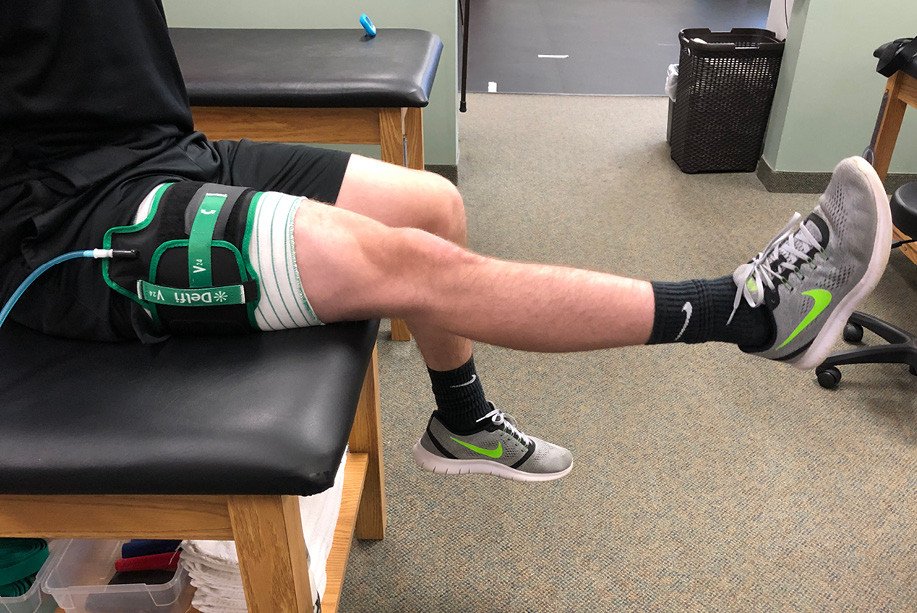
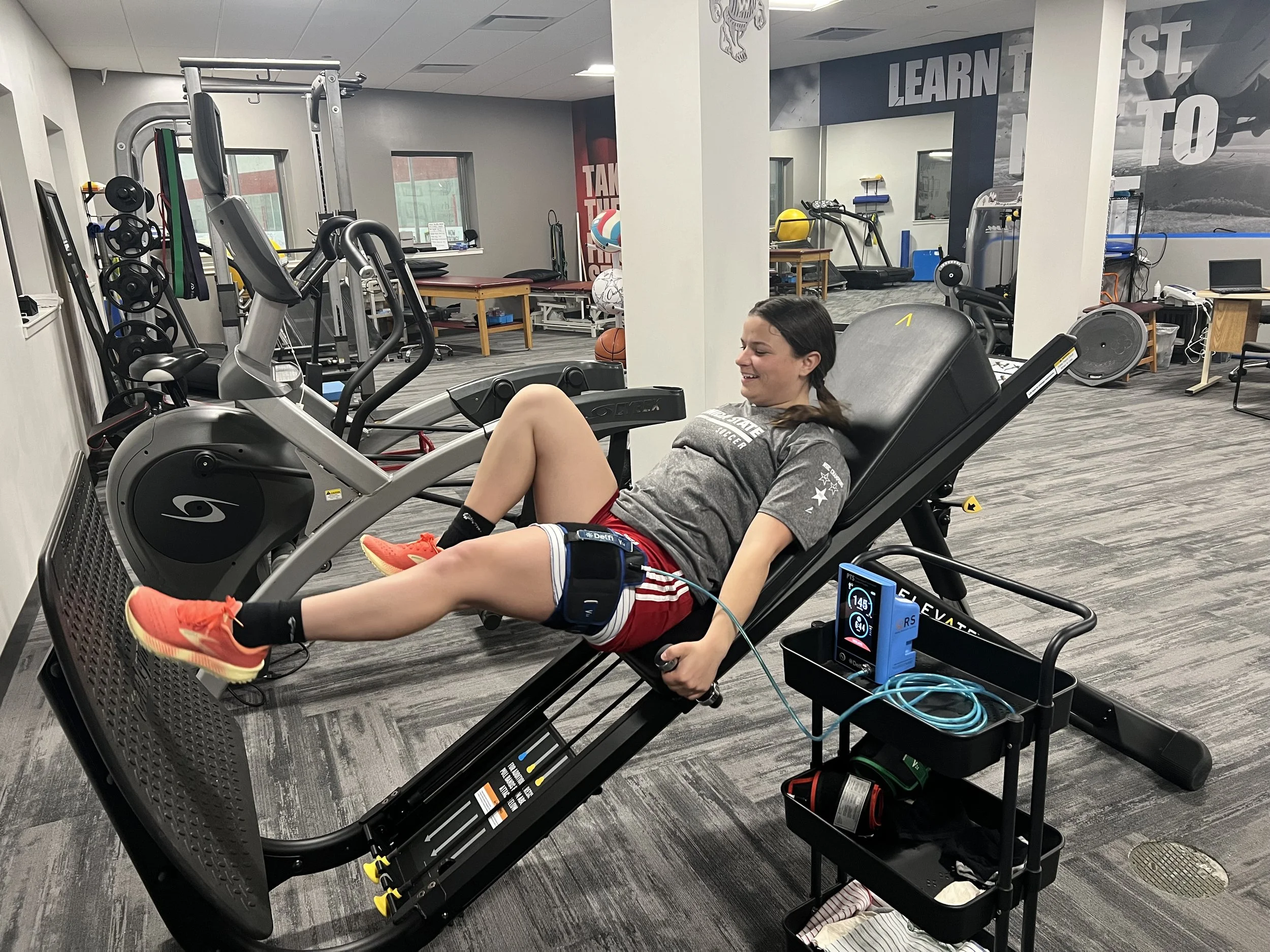
The strongest reason to consider blood flow restriction is often not that it upgrades heavy lifting, but that it may make lighter training more useful. Low-load BFR has been studied for people who cannot or do not want to expose a joint or recovering tissue to high mechanical loading. In that situation the comparison is not heavy-with-cuffs versus heavy-without-cuffs. It may be light-with-cuffs versus light-without-cuffs, or light-with-cuffs versus conventional heavy resistance.
Evidence from separate comparisons suggests low-load BFR can improve muscle size relative to light training alone. Against conventional heavy lifting, some analyses find broadly similar hypertrophy changes, while high loads often retain an advantage for maximal strength. Results differ by exercise, participant experience, training duration and how cuff pressure is controlled. None of this means light BFR equals maximal-strength preparation for a competitive squat, or that a comfortable recovery exercise replaces skill practice with a heavy bar.
A sensible training decision depends on the constraint. If you can lift normally and your goal is to increase a heavy one-rep maximum, keep loading and practicing the relevant lift. If load tolerance is limited, a supervised light-load approach may be worth discussing with an appropriately trained clinician or coach. Those are distinct use cases, and the cuff is a tool rather than an automatic upgrade to any program.
Cuff selection and safety come before programming
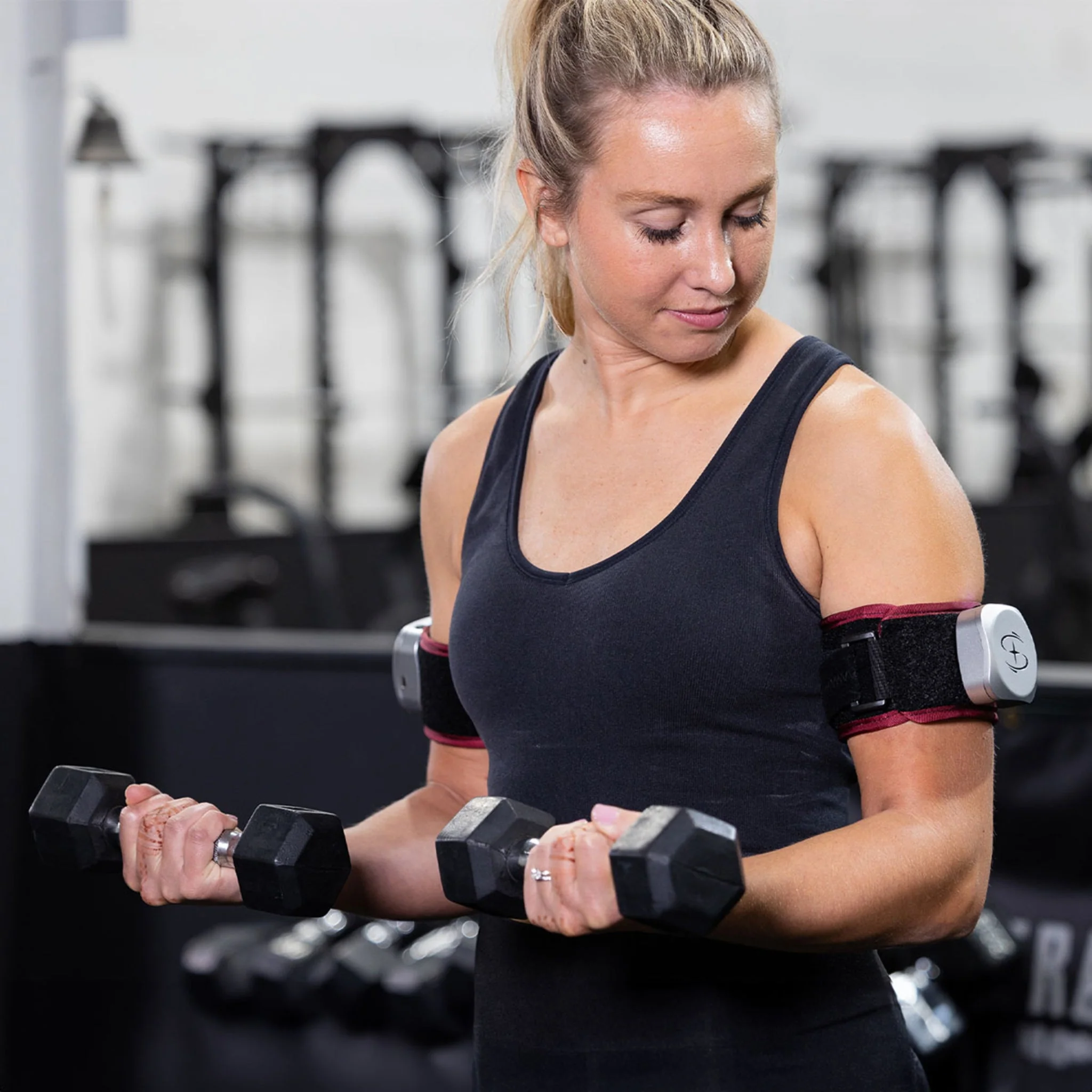
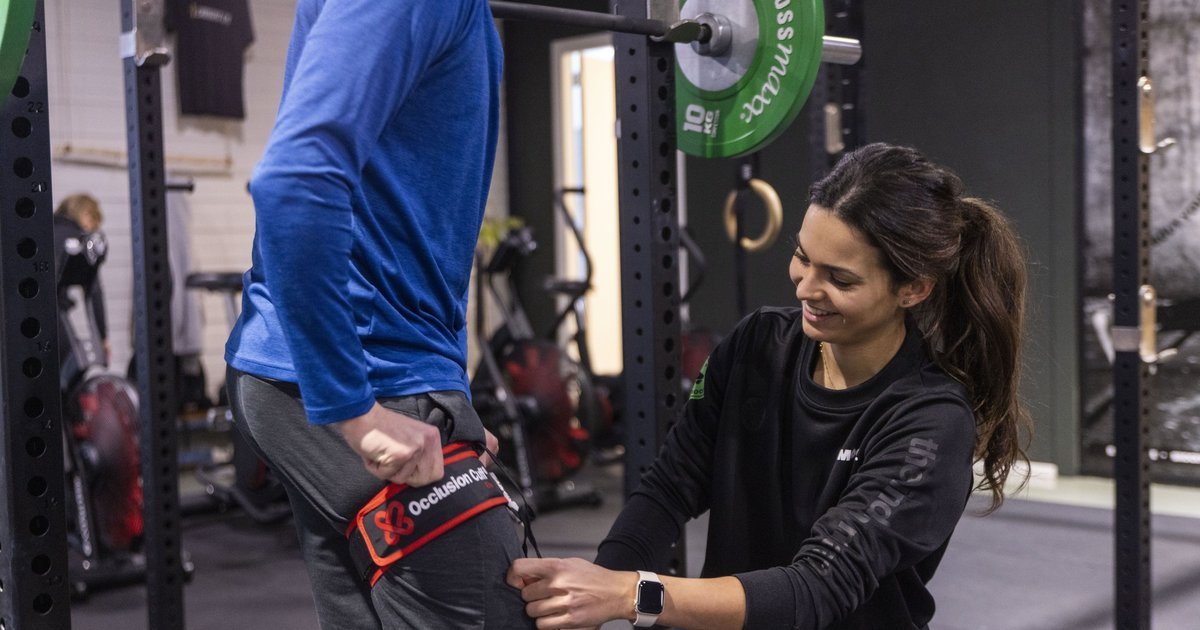
BFR is not a standard lifting strap. Cuff width, placement and individualized pressure can change the physiological response. A narrow elastic band tightened until it ‘feels right’ is not equivalent to a calibrated device that can measure limb occlusion pressure. The pressure used for one person or limb should not be copied directly from somebody else’s routine. Heavy exercise itself also increases cardiovascular demands, which makes improvised restriction a poor experiment.
Anyone considering BFR should first check whether it is appropriate for their health history. People with a history of clotting, vascular disease, uncontrolled blood-pressure problems or concerning cardiovascular symptoms should obtain medical advice before attempting it. Sudden significant pain, unusual numbness, loss of sensation, discoloration or dizziness are reasons to stop and seek appropriate help. This article is an evidence discussion, not a cuff-pressure protocol.
If you already have a sensible training plan, there is no requirement to buy cuffs to make it legitimate. For many healthy lifters the most useful safety decision is simply to keep heavy sessions unrestricted and use proven progressions. If restriction is being considered during rehabilitation, have a qualified practitioner select equipment, assess risks and prescribe the intervention. Comfort, safety and repeatability outweigh any tempting short-term performance novelty.
Equipment Worth Exploring
Explore equipment, accessories and gear from our carefully selected range.


FID Bench MAX
Adjustable bench offering flat, incline, and decline positions + adjustable headrest.


VForce 2IN1
Half rack and pivot-arm functional trainer with switchable 1:1 and 2:1 pulley ratios.

Squat Harness
Wearable harness for hands-free cable squats, sled work, and lower-body training.

Competition Plates
Competition-style bumper plates for Olympic lifts and loaded strength training.

Grip Plates
Rubber-coated weight plates with handholds for loading barbells and machines.


Leather Lifting Straps
Padded leather straps support grip during heavy rows, deadlifts and pulling exercises.

A practical decision tree for your next training block
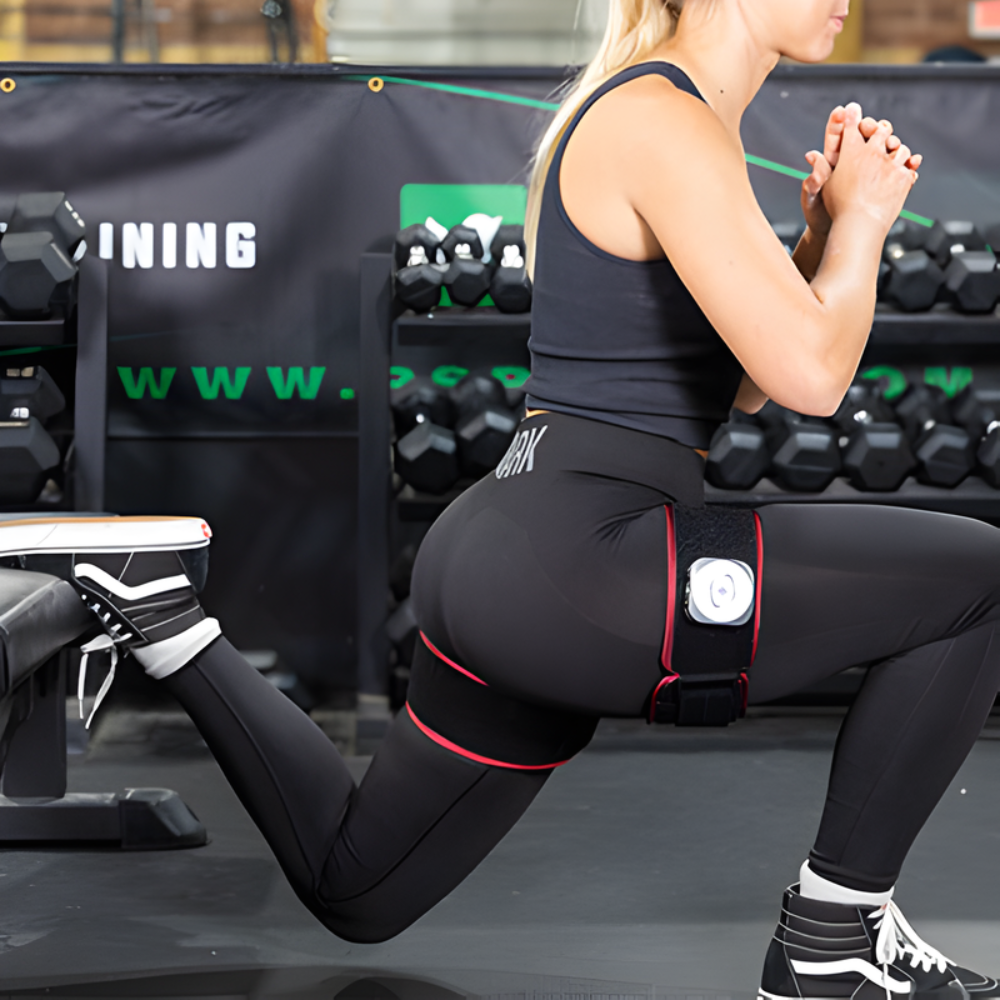
Start by identifying your real goal rather than starting with the device. For maximal strength, establish repeatable heavy work on the lift you care about. Record load, clean repetitions, rest and effort, then progress when performance supports it. For hypertrophy, track weekly hard sets per muscle group, exercise quality and recovery. For an injury-related loading limitation, seek a qualified assessment; a supervised low-load approach may belong in the discussion, but self-prescribed heavy BFR should not become the shortcut.
Consider a four-day upper/lower schedule. On upper days you might perform a pressing pattern, a row or pulldown, then a small amount of shoulder and arm work. On lower days you might squat or hinge, add a second knee- or hip-dominant movement, and finish with accessory work. Keep each workout’s main exercises progressive and technically consistent. If your progress slows, examine weekly volume, nutrition, sleep and the quality of your repetitions before layering on new techniques.
If you are already satisfied with your main lifts, the most useful question is not ‘How can I make this session burn more?’ It is ‘What change will improve performance or help me train consistently over the next month?’ The 2026 findings support a simple answer for heavy sets: BFR has not demonstrated a dependable extra muscle or strength payoff. That leaves conventional heavy resistance training firmly in the driver’s seat, while low-load restriction remains a separate, carefully selected tool for different circumstances.
Bodybuilding Shirts & Workout Gear
Bodybuilding shirts, tanks and gym gear for lifters chasing muscle, size, symmetry and the pump.

Brain and Biceps Tee
Make gym days more fun with “Mind Muscle Perfection Brain and Biceps” style.

Gold Skull Uplift Iron Club Lifters Gym Style Powerlift T-Shirt
For laid-back days and powerlifting humor: “Gold Skull”.

Flaming Skull Gym Decal Bottles Lockers Uplift Iron Clu Sticker
Stick a little “Sticker Flaming Skull” humor on your favorite gear.

Lightning Skull Gym Decal Bottles Lockers Uplift Iron C Sticker
Stick a little “Sticker Lightning Skull” humor on your favorite gear.

Donuts and Weights Vintage Cartoon for Donut Lovers Hoodie
Show off your donut-loving humor in a laid-back “Donuts and Weights Vintage Cartoon” hoodie.

Pizza and Weights Retro Cartoon Muscle Shirt and Foodie Tank Top
Bring “Pizza and Weights Retro Cartoon” humor to your next lifting session.

Trap Bar Deadlift Behold Thee Trap Bar Medieval Knight T-Shirt
Show some gym-day personality with “Trap Bar Deadlift”.

Thicc Boys Club Official – & Thicc Boys T-Shirt
Make gym days more fun with “Thicc Boys Club Official” style.

Massquatch Bigfoot Sasquatch & Meme Jumper Hoodie
Make your off-duty look more fun with “Massquatch Bigfoot”.

Funny LEGO Bodybuilder | Gym Meme Crewneck for Bodybuil T-Shirt
Show some gym-day personality with “LEGO Bodybuilder”.