Advertising disclosure: This page includes affiliate product links that may earn us a commission, as well as products from our own store.
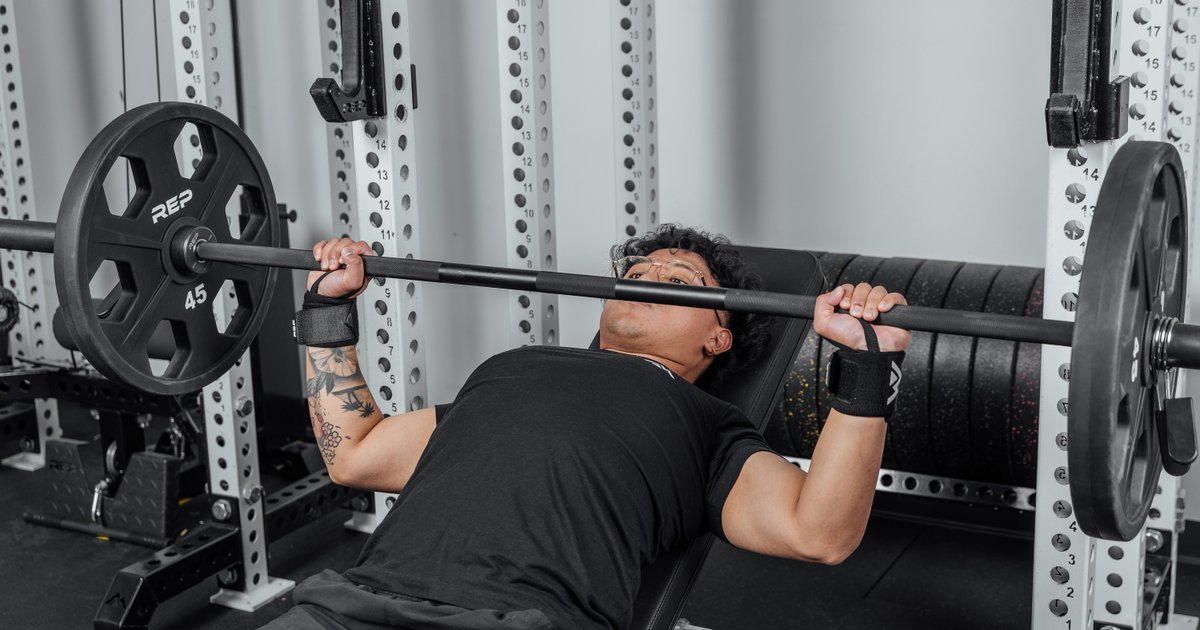
Wrist wraps can make a heavy bench press feel more secure. But do they actually help you lift more? A comparison of 18 trained lifters found a gap between perceived wrist stability and measured bench performance. Here is what to do with that evidence when choosing wraps, setting your grip and planning your pressing.
What 18 trained lifters actually did in the comparison
Wrist wraps are common equipment on a heavy bench day, but the important question is whether they change barbell performance or only the feeling of support. A controlled crossover comparison recruited 18 resistance-trained participants, nine men and nine women, who tested flexible wrist wraps, stiff wrist wraps and no wraps over three separate visits. Because each participant tried every condition, the comparison was not simply between naturally stronger and weaker groups of people.
At the visits, participants performed one-repetition-maximum bench press testing, with instrumentation assessing the bar’s power and velocity. Researchers did not detect a statistically significant effect of wrap condition on bench 1RM, power or velocity. In practical terms, neither flexible nor stiff wraps reliably supplied an extra few kilos on the bar for this particular trained sample. A wrap that looks more supportive did not automatically translate into a higher measured strength output.
Their subjective responses told a different story. With either type of wrap, participants felt greater wrist stability than when pressing unwrapped. They also rated their wrists as less comfortable than in the no-wrap condition. The improvement in the perception of support was real within this test, but perception and measured performance were separate outcomes. That distinction matters when a lifter buys gear based on how it feels during a heavy unrack.
Eighteen people tested on three occasions is not a lifetime training study. The findings do not show whether months of wrapping improve progress, whether every lifter responds the same way or whether someone managing a diagnosed wrist injury should use a wrap. Equally, the experiment does not establish that wraps prevent injury. It provides a useful reality check against selling wrist support as a guaranteed immediate strength boost.
Support, strength and discomfort are three separate things
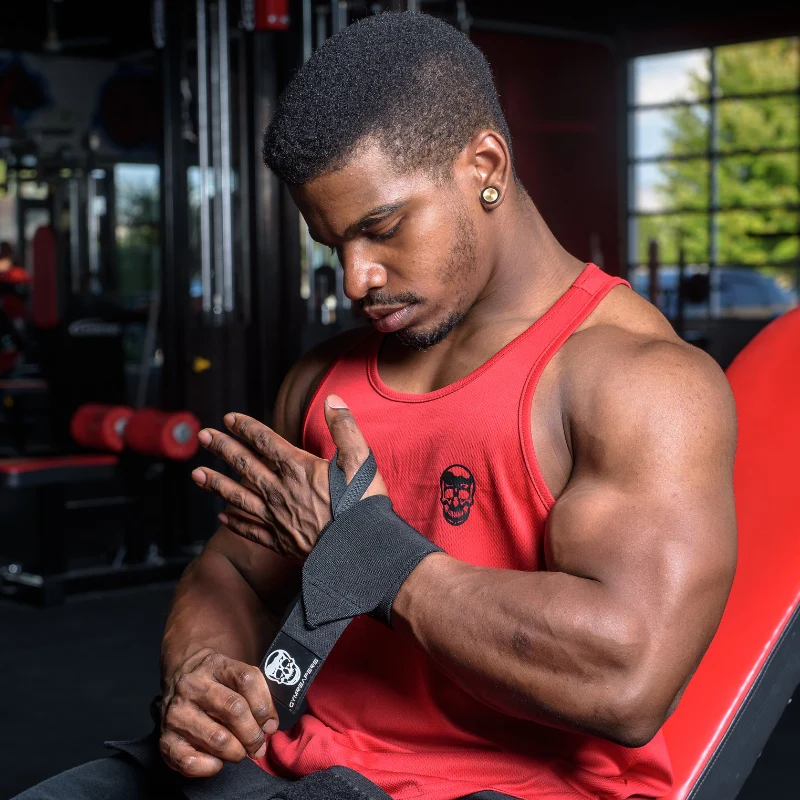
A wrist wrap is a strip of fabric tightened around the joint to resist some movement when the hand presses against a load. Its pressure depends on material, overlap, length and how firmly the wearer fastens it. It can encourage the wrist to remain in a familiar position, but the fabric cannot set the bar correctly in the palm or replace strong shoulder and upper-back control. Those positions still have to be established by the lifter.
Feeling stable may matter to confidence. A lifter who distrusts the unrack could welcome the extra sensation of constraint, particularly on a heavy single. Yet improved confidence is not the same as improved force production. The comparison found no clear performance difference between flexible wraps, stiff wraps and no wraps. Choosing a stiffer, more expensive pair would therefore be a comfort-and-preference choice, not a proven route to a larger personal record.
Wrist wraps are different from lifting straps. Straps connect the hand to a bar during pulling movements to reduce a grip-related limitation. Wraps support the wrist without attaching the hand to the implement. A lifting belt is yet another tool, primarily used with trunk bracing strategies. Treating all supports as a single category exaggerates what any one item can do. Their mechanics and the exercises they serve are not interchangeable.

Equipment Worth Exploring
Explore equipment, accessories and gear from our carefully selected range.


Competition Plates
Competition-style bumper plates for Olympic lifts and loaded strength training.

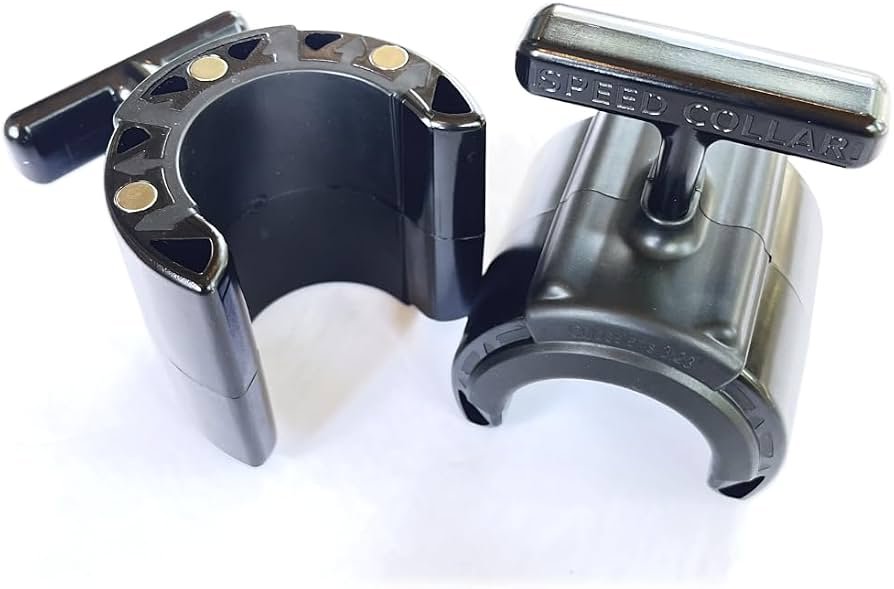
Speed Collar
Quick-release collars designed to secure weight plates on standard two-inch Olympic bars.


FID Bench MAX
Adjustable bench offering flat, incline, and decline positions + adjustable headrest.


Foldable Wall Rack
Wall-mounted folding squat rack designed to save floor space between workouts.
The discomfort result is easy to overlook. If a wrap causes numb fingers, tingling, sharply concentrated pressure or trouble closing your hand, remove it and retry at lower tension. More compression is not necessarily more useful support. On ordinary work sets, some lifters prefer the wrist completely free. On a top single, the same person might enjoy a firm wrap. Both choices can coexist without making a universal performance claim.
How to stack the bench press bar over your forearm
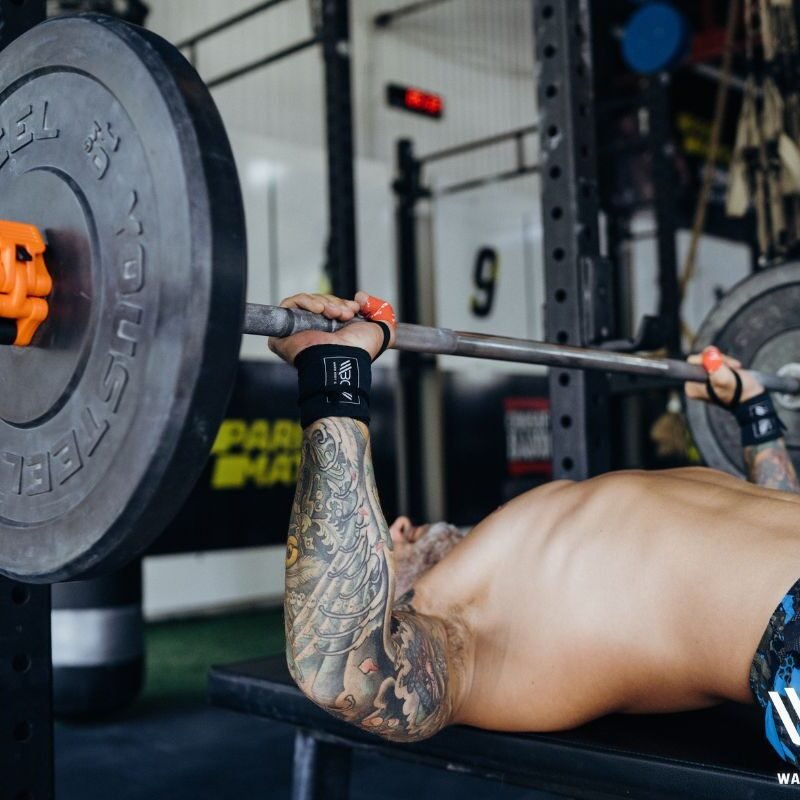
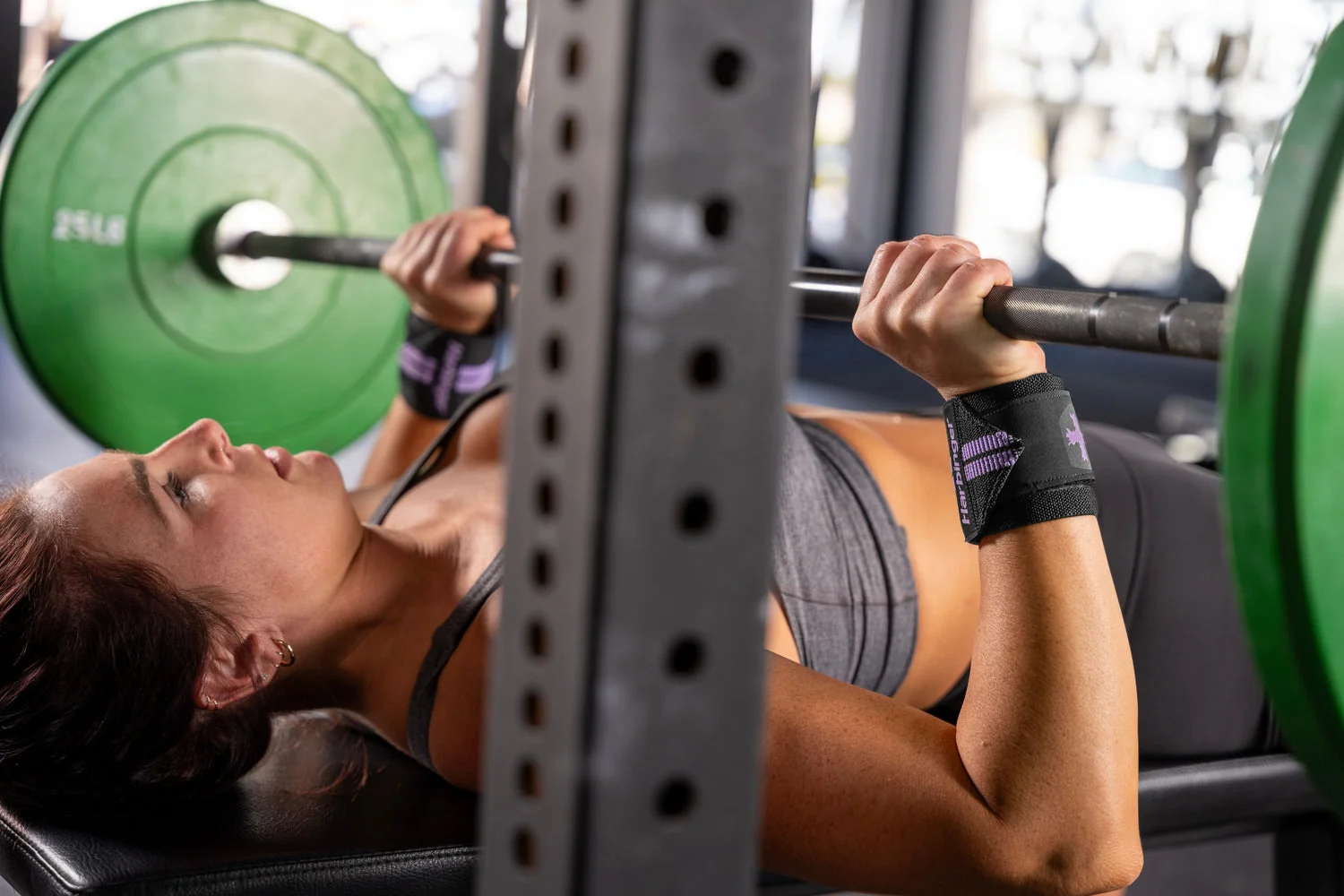
Before tightening any accessory, establish a grip that transfers the bar’s load through the hand into the forearm. Put the bar low enough in the palm that it does not roll toward the fingertips and wrench the wrist backward. Viewed from the side, the heel of the hand and forearm should support a relatively direct line of force. Some extension is normal, but an uncontrolled, collapsed wrist is not a strength technique worth preserving.
Close your hand firmly around the knurling and use a secure, repeatable grip. Set your shoulder blades against the bench, keep the upper back engaged and unrack without allowing the bar to drift behind the forearm. During the descent, the elbow and wrist should follow a coordinated path. If the grip goes loose and the bar rotates in your palm, the wrap may hide the problem while the press remains technically inconsistent.
Grip width changes elbow position, range of motion and shoulder demands. A very wide grip may shorten the travel distance while affecting shoulder angles; a narrower grip usually asks more elbow extension from the triceps. Neither becomes safe or effective solely because your wrists are compressed. Start with a width that allows controlled lower-arm positioning near the bottom and a touch point you can repeat without wobbling.

Powerlifting Shirts & Lifting Gear
Powerlifting shirts and gym gear for squat, bench and deadlift lifters who live for heavy numbers.

I Love Bench Press | Heart Weight Plate Hooded For Ches Hoodie
Keep it laid-back with a little “I Love Bench Press” attitude.

Four Plates Bench Club Tee
Show some powerlifting attitude with a playful “4 Plates Bench Club” tee.

Chest Day Sweater Bench Press & Meme T-Shirt
Add a playful “Chest Day” touch to your casual rotation.


Icy 45LB Weight Plate Frozen Barbell Lifting Workout Co Hoodie
Keep it laid-back with a little “Icy 45LB Weight Plate” attitude.

Bar Breaker Barbell Breaker Ballbreaker Album Parody He Sticker
Put “Bar Breaker Barbell Breaker” gym humor on your laptop, bottle, or gym gear.

Flaming 45LB Weight Plate Fire Barbell Lifting Apparel Tank Top
Add some powerlifting attitude to training with “Flaming 45LB Weight Plate”.

Hit The Weights Metallica Heavy Metal — Rock Music Work T-Shirt
Rep “Hit The Weights Metallica Heavy Metal” humor in and out of the gym.

Pink 45LB Weight Plate Barbell Lifting T-Shirt
For laid-back days and gym-girl humor: “Pink 45LB Weight Plate”.

Up The Weights Iron Maiden Gym Decal Workout for Liftin Sticker
A fun “Up The Weights Iron Maiden” touch for bottles, laptops, and lockers.
Use simple filming rather than guesswork. Record a light set from the side and compare your palm-over-forearm alignment on the first and last repetitions. If the bar shifts, lower the weight and reset the grip. Persistent wrist pain or weakness calls for assessment rather than a tighter wrap. A properly fitted accessory is a finishing detail; it should never be used to push through an unexplained symptom.
Wrap placement and tension: a step-by-step setup
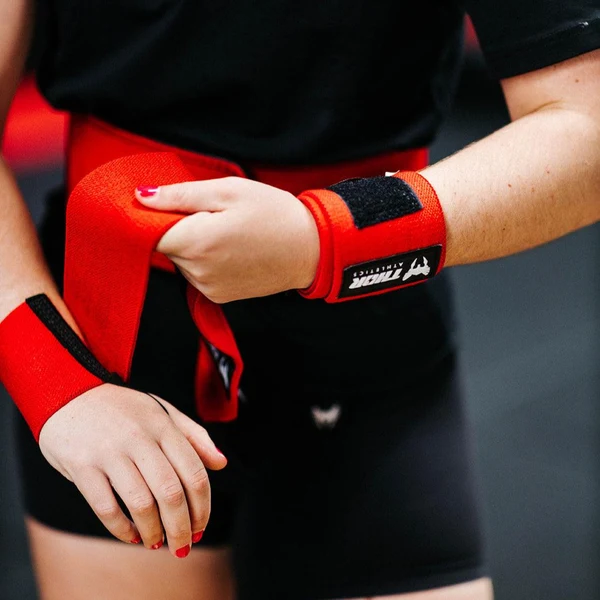
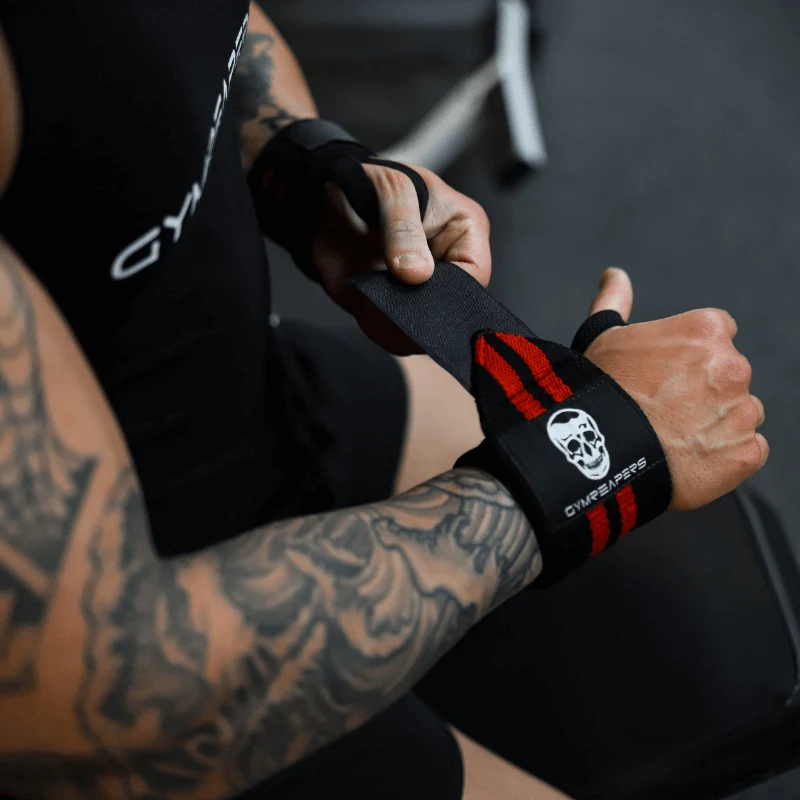
If your wraps have thumb loops, slip the loop over the thumb and center the fabric so it crosses the wrist joint rather than sitting wholly on the forearm. Begin a snug first turn and overlap the next turns evenly without twisting or bunching the fabric. Close the hook-and-loop fastening while your hand is in approximately the same position you will use to grip the bar. A wrap applied too low may feel tight but offer little resistance at the wrist.
Use a practical tension test. You should still be able to squeeze the empty bar, feel your fingers normally and unrack smoothly. Maximum tightness is not a goal in itself. For warm-up weights and long accessory sets, leave the wrap looser or take it off. For a demanding single, you might prefer more restriction, but never to the point where the hand becomes numb or the grip weakens.
Compare a few matched working sets both with and without wraps, keeping the load, rest period and pressing standard similar. Write down perceived stability, comfort and performance. A single better attempt proves little because technique, warm-up quality and motivation also change. Look for a pattern across multiple sessions. An athlete who presses exactly the same but feels more secure may still prefer wraps; a lifter who only feels pressure may be better without them.
Loosen the straps between heavy sets if sustained compression is uncomfortable. Inspect the fabric, seams and hook-and-loop closure for damage. Worn fasteners can release unpredictably when you take a heavy unrack, so replace failing equipment rather than overtightening it. Do not assume that soreness means the wrap is working. The purpose is optional support, not adding another source of pain to the workout.
When wraps make sense for overhead press and squats
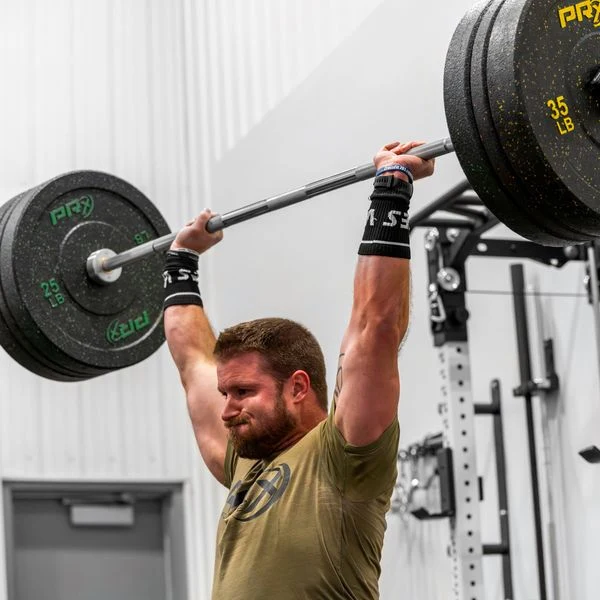
The bench findings should not be treated as proof about every barbell movement. Overhead pressing places the hand and bar in a different relationship to the shoulder; some lifters prefer a wrap as the load is stacked above the body. That preference may be sensible, but the bench experiment did not measure strict-press strength gains. It does not demonstrate that a wrist wrap will add repetitions to your overhead press.
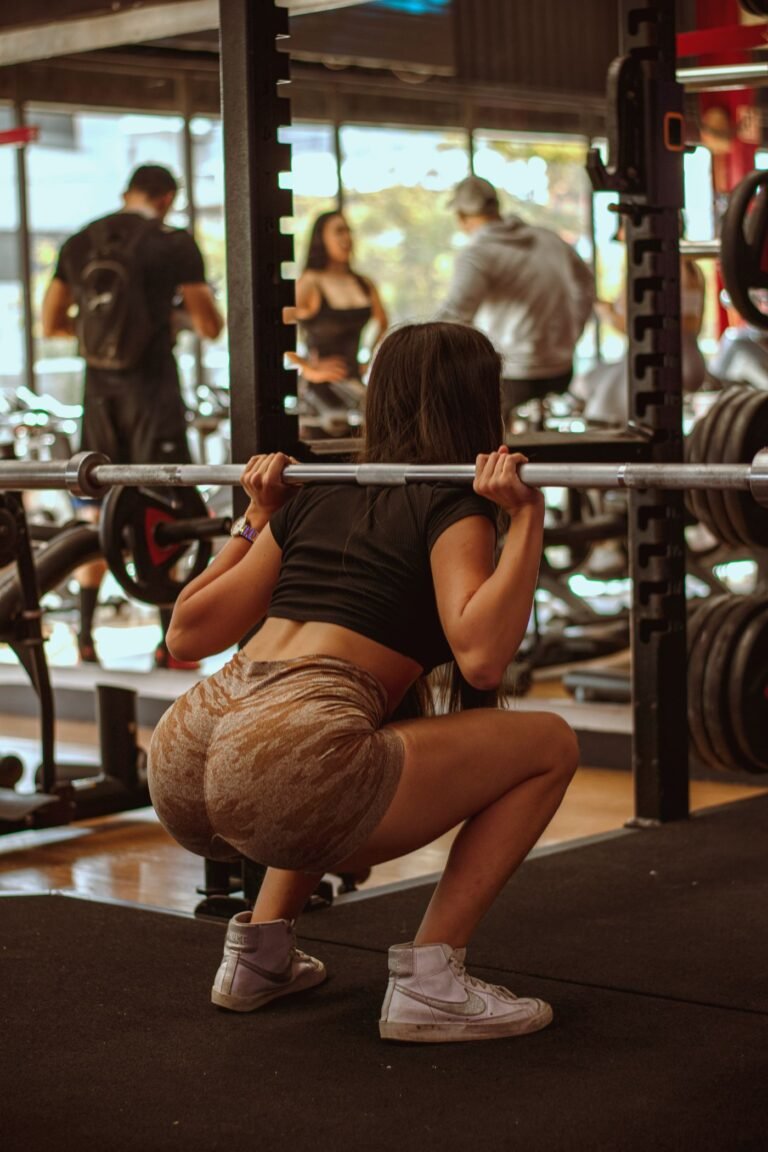
Back squats introduce another scenario. In some low-bar positions, a lifter may tolerate a heavily extended wrist while struggling to keep the bar fixed on the upper back. Wraps can make this contact feel less distracting, but the underlying setup still deserves attention. Adjust grip width, elbow position, rack height and shoulder positioning so the back, not the hands, carries the loaded bar. Fabric should not be a workaround for a bar that keeps sliding.
For chest machines, cable presses and lighter dumbbell work, a wrap often adds more setup time than training value. If the wrist feels comfortable and tracks steadily, there may be no need for any support. Conversely, if you routinely prefer wraps for high-load pressing and they do not compromise sensation or technique, using them selectively is reasonable. There is no special training reward for rejecting equipment purely to appear tough.
Equipment Worth Exploring
Explore equipment, accessories and gear from our carefully selected range.


Leather Wrist Grips
Padded leather lifting grips help support the hands and wrists on heavy pulling exercises.

Leather Lifting Straps
Padded leather straps support grip during heavy rows, deadlifts and pulling exercises.


Angles 90 Grips
Flexible grip attachments that allow natural wrist movement during pulling exercises.

Safety Squat Handles
Barbell squat handles that reduce shoulder positioning demands during high-bar squats.

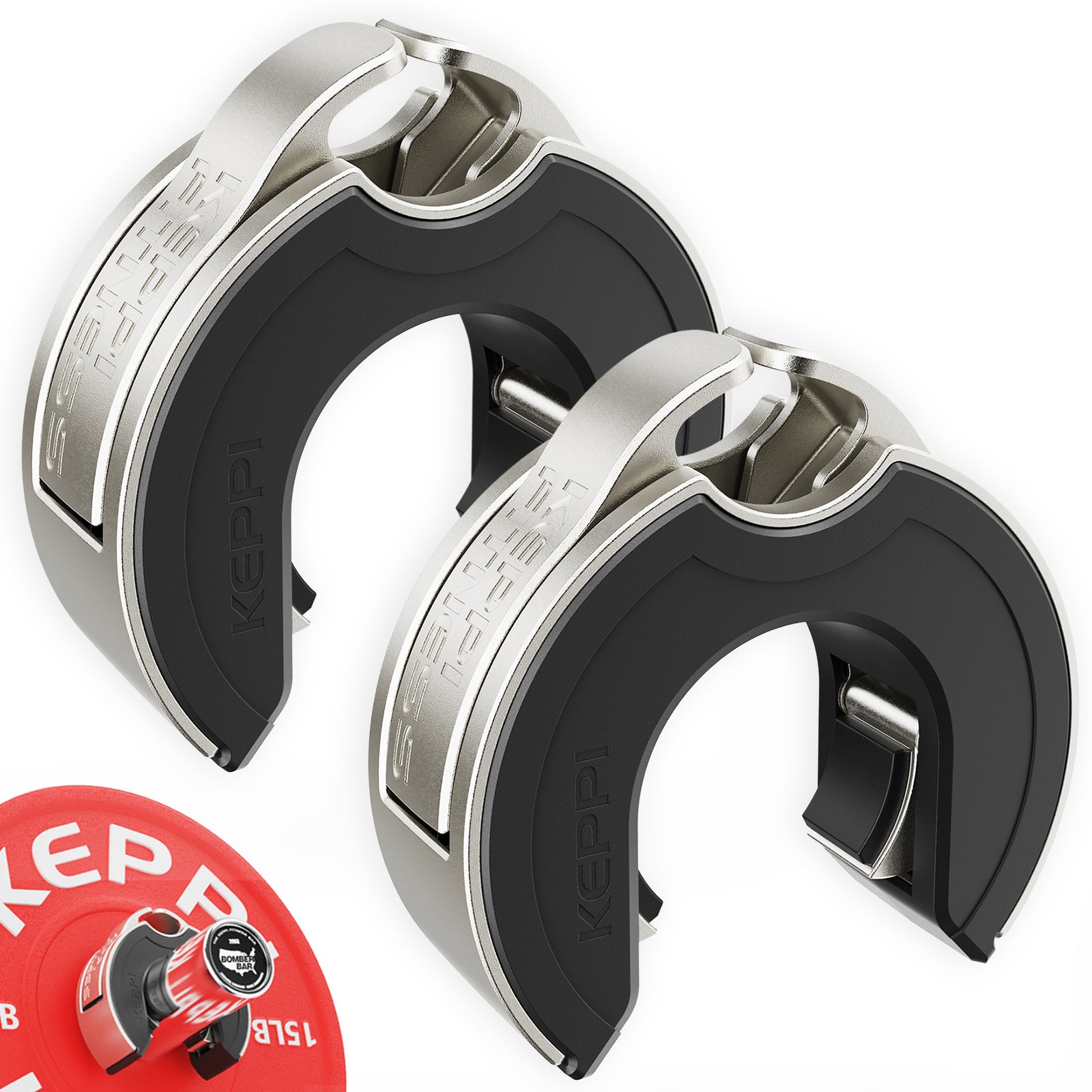
Keppi Open Collars
C-shaped magnetic Olympic barbell collars with a quick-lock mechanism and grippy lining.
The principle is to follow the actual force path. Ask where the load sits relative to your forearm, whether the grip is secure and whether the joint moves freely enough for that exercise. The answer can differ between bench, overhead press and squat. If pain is present, adjust training and consider professional evaluation before increasing compression or adding more load.
Flexible versus stiff wraps: what to buy and what to skip

Flexible wraps generally permit more wrist motion and may feel easier to live with for mixed training. Stiffer wraps resist movement more, which some powerlifters prefer for top-end attempts. Those preferences should not be confused with demonstrated bench performance benefits. In the 18-participant comparison, stiff wraps did not produce significantly better one-rep-max performance than flexible wraps or an unwrapped wrist.
Length affects how many overlapping layers you can make; width, weave, stretch and closure quality influence how the pressure is distributed. A longer wrap does not automatically outperform a shorter one if you apply it too loosely or put it below the joint. Try an option that allows a dependable grip and repeatable setup. If you compete, check your federation’s actual rules for equipment length, material and approval rather than relying on a seller’s label.
Before buying, ask whether you even have a problem to solve. Your first priorities for bench training should be a stable bench, a properly positioned bar, a safe rack with suitable spotter arms or pins, controlled repetitions and a progressive plan. Collars, plate loading and suitable bench height also matter to a reliable setup. A premium wrap cannot correct a poor unrack or an inconsistent touch point.
Hardcore Gym Shirts & Workout Gear
Hardcore gym shirts and workout gear for lifters who train heavy, intense and unapologetically old-school.

Blood Sweat and Tears Weight Plate 45LB Plate Blood & W T-Shirt
For laid-back days and Halloween humor: “Blood Sweat and Tears Weight Plate”.

Liftin Metal – Heavy Metal Rock Music Workout Hooded Pu Hoodie
Show off your metalhead humor in a laid-back “Liftin Metal” hoodie.

Heavy Metal – , Gymbros & Meme Fans T-Shirt
Bring “Heavy Metal” humor to your next gym day.

Lift And Bleed – Heavy Metal Workout Hooded Pullover Hoodie
Bring “Lift And Bleed” gym humor to lazy days and post-workout plans.

Skull Gym Decal Heavy Weights Gear Uplift Iron Club Sticker
Stick a little “Sticker Skull” humor on your favorite gear.

Is My Battle Shirt Warrior & Gymbros T-Shirt
Bring “Gym Is My Battle” humor to your next gym day.

Weighthead X-Ray Skull – Meme Shirt & Top T-Shirt
Bring “Weighthead X-Ray Skull Powerlifting” humor to your next gym day.

Preworkout – Death Metal Gym for Hardcore Bodybuilding Hoodie
Show off your metalhead humor in a laid-back “Preworkout” hoodie.

Heavy Metal Lift Heavy – Hardcore Powerlifting Gym Vest Tank Top
Bring “Heavy Metal Lift” humor to your next lifting session.

Gym Cult Occult Barbell Meme – Powerlifting Bodybuildin Tank Top
Bring “Gym Cult” humor to your next lifting session.
A useful purchase checklist is short: does the wrap stay fastened, cover the joint, allow normal sensation and leave you able to squeeze the bar? Does its stiffness fit the movements you actually train? Can you reproduce the same tension from one heavy set to the next? If yes, it may be a practical accessory. If no, a simpler pair or no wraps may be the better option.
A six-week personal trial instead of another gear myth
Use the first two weeks as an unwrapped baseline on two comparable bench days per week. Keep your grip, pause standard, touch point and planned training load consistent. Record the top working set, repetitions, perceived effort and any wrist discomfort. This is a technique-focused starting point, not an invitation to push through pain. If the wrist is already uncomfortable with light weight, address that problem before continuing the comparison.
In weeks three and four, introduce flexible wraps for the heaviest planned sets without changing all the other training variables. Keep rest periods and your approximate proximity to failure similar. Make a note of grip stability, wrist comfort, bar path and whether repetitions are completed cleanly. If the workout feels more secure but performance remains unchanged, record both facts. A better feeling is valuable information, but not evidence of extra strength.
In weeks five and six, either compare stiffer wraps at the same workload or return to unwrapped training to see whether the preference persists. If possible, alternate conditions across otherwise similar sessions rather than judging everything by a single personal record. Consider fatigue and ordinary adaptation: you can improve over six weeks for reasons that have nothing to do with the fabric around your wrists.
Decide based on repeatable experience. Some people use wraps only on near-maximal singles and heavy overhead work; others leave them off for every pressing set. Both approaches can work. The controlled comparison offers the central lesson: added perceived stability can accompany unchanged bench performance and greater discomfort. Learn the positions, progress the training and let accessories earn their place by solving a specific practical problem.
Bottom line: Wrist wraps are optional support, not an automatic strength increase. Prioritize bar position, repeatable technique and sensible programming. Use wraps only when they genuinely improve your own pressing setup without excess discomfort.