Advertising disclosure: This page includes affiliate product links that may earn us a commission, as well as products from our own store.
Cardio kills gains. Or at least that is what the joke says. Yet plenty of strong, muscular athletes also run, cycle, row or push a sled. The real question is not whether endurance exercise is allowed during a muscle-building program. It is how much you can combine, which adaptations you prioritize and whether your hardest sessions interfere with one another.
An October 2026 experiment followed 30 trained young men assigned to endurance-only, resistance-only or combined endurance-and-resistance training for 11 weeks. Both lifting groups gained thigh muscle size and improved measures of explosive performance. But the group lifting without endurance work had the clearer improvement in one maximal force test. That distinction offers a more useful answer than an all-or-nothing claim: you can make serious gains while doing cardio, but not every strength quality responds the same way.
This guide unpacks the numbers, explains how to interpret the limitations and turns the evidence into practical weekly training choices for lifters who want both muscle and a functioning engine.
What happened when 30 trained men combined cardio with lifting?

The intervention lasted eleven weeks and divided participants into three groups: endurance training, resistance training and concurrent training that combined the two. The strength plan itself changed emphasis during the study. The first five weeks focused on maximal strength; the final six weeks emphasized producing force rapidly. Researchers evaluated the legs before training, at the midpoint and after the full intervention. That timeline matters because early improvements in neural performance can differ from later improvements in explosive movement.
Tests included maximal voluntary isometric contraction on a leg press, several windows of rate of force development, countermovement-jump mechanics and measurements of the vastus lateralis muscle. An isometric test asks how much force a person produces without joint movement. Rate of force development asks how quickly that force is produced. Neither number is interchangeable with a squat one-rep maximum, a marathon time or total muscle mass. They answer related but different questions.
The resistance-only group improved maximal voluntary isometric contraction by an average of 18.4%, while the combined group did not show a statistically significant improvement on that specific outcome. Both groups increased peak rate of force development, and both improved positive impulse during a jump. Both groups also increased the cross-sectional area of the measured thigh muscle. If the headline is only that cardio ruined leg day, it ignores half the findings.
Thirty participants split among three conditions is a useful controlled comparison, not a guarantee that every lifter will follow the same path. Training background, exercise selection, actual endurance workload, food intake, sleep and individual responsiveness can influence what happens in another gym. The main value is the pattern across different measurements, not a single percentage treated as a universal promise.
Muscle growth: the combined group still built bigger quads
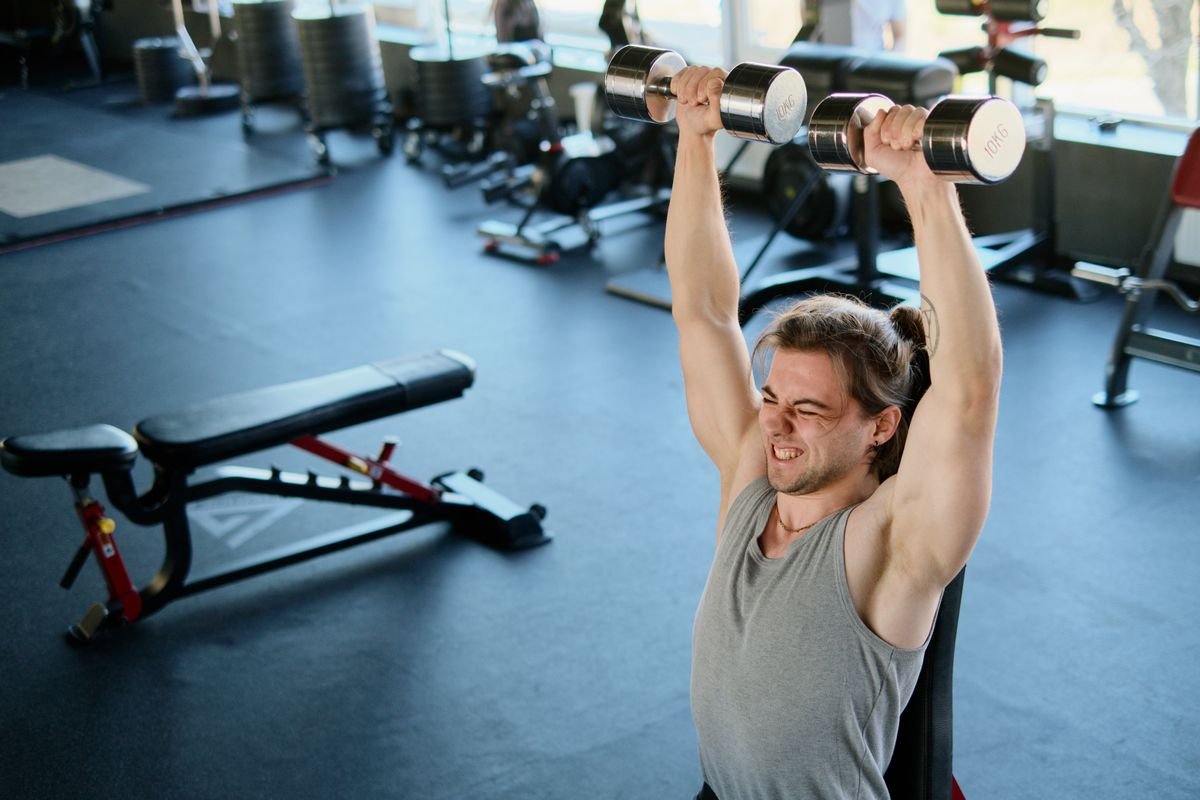
Thigh muscle cross-sectional area increased in both groups that lifted. The resistance-only group averaged a 17.0% rise in the measured vastus lateralis region, and the combined group averaged 8.8%. Their individual responses were widely spread: reported variation was 13.0 percentage points for the lifting-only group and 9.4 for the combined group. Those numbers justify attention, but they do not mean every athlete doing cardio will gain precisely half as much muscle.
The measured region is one quadriceps muscle, not the entire leg. Nor does the result automatically reveal the effect on chest, back, arms or glutes. A single study of trained young men over eleven weeks cannot settle every long-term hypertrophy question. It does, however, refute the extreme idea that adding endurance training makes muscle growth impossible. Participants performed both kinds of training and still grew the measured muscle.
Look at the broader pattern before changing your program. Across many controlled experiments, average whole-muscle hypertrophy has often looked similar when resistance training is performed alone or alongside aerobic training. Some analyses of individual muscle fibers suggest a small possible cost, and running may differ from cycling under some conditions. That is a reason to manage total stress, not a reason to ban cardiovascular work.
For a hypertrophy-first lifter, protect the sessions that provide progressive mechanical tension: hard, technically consistent sets, enough weekly volume and a recoverable progression. Add cardio in a dose that serves a real goal. If running volume climbs until leg performance and soreness continually deteriorate, the dose is probably too high for your current recovery capacity. If muscles, loads and work capacity are progressing together, there is no need to invent interference.

Equipment Worth Exploring
Explore equipment, accessories and gear from our carefully selected range.


Pro Sled System
Heavy-duty push-pull training sled for loaded conditioning, speed, and strength work.


Cast Iron Kettlebells
Textured cast-iron kettlebells for swings, squats, carries, and full-body training.
VOLTRA
Compact digital cable trainer with smooth, adjustable resistance.

Go-Tone Pro
Portable digital cable trainer with up to 66 lb (30 kg) of adjustable resistance.


Power Tower
Freestanding pull-up and dip station with adjustable handles for bodyweight training.

Maximum force and fast power are different adaptations

The clearest warning from this experiment concerns maximal isometric force, not every expression of power. Only the resistance-only group showed a significant gain in the static leg-press force test, averaging 18.4%. That does not prove the combined group lost strength; it means the expected improvement was not demonstrated on this test. Be careful with the distinction between no detected improvement and evidence of an actual decline.
Peak rate of force development increased by approximately 31.8% in the resistance-only group and 23.1% in the combined group. The timing differed. Lifting-only participants improved progressively through both training phases, while the combined group showed its most noticeable improvement in the later, explosive-focused block. The study also reported a delayed improvement in very early force development in the combined group. Those details suggest programming emphasis and time course matter.
Jump performance supplied an important counterweight to the interference story. Positive impulse in a countermovement jump increased by about 12.7% for resistance-only training and 8.8% for concurrent training, with no clear evidence of compromised jump-related explosive performance in the combined group. A lifter can therefore become better at one powerful movement while still showing less improvement on another force test.
This matters for sport and for exercise choice. A bodybuilder mainly concerned with muscle size may not care whether the first 50 milliseconds of leg force rise slightly more slowly. A sprinter, weightlifter or jumping athlete often does. Identify the target quality before borrowing someone else’s training rule. If maximal force is the priority, make heavy lower-body lifting the freshest and most carefully progressed part of the week.

Cardio Shirts & Workout Gear
Cardio and conditioning gym gear for runners, endurance athletes and anyone who earns the sweat.

Aquaman Gym Funny Sweater Crewneck Pullover Workout for T-Shirt
Show some gym-day personality with “Aquaman”.

Iron Man Triathlon – Superhero Comic Book Swimming, T-Shirt
Show some superhero attitude with a playful “Iron Man Triathlon” tee.

Cardio Speed Superhero Treadmill Workouts Gymbro T-Shirt
Make gym days more fun with “Cardio Speed Superhero” style.

Burpees Bad Breaking Bad Shirt – Meme & Cardio Haters T-Shirt
Show some cardio attitude with a playful “Burpees Bad Breaking Bad” tee.

Negative Cardio Review Cardio Sucks 1 Star Vest Tank Top
Bring “Negative Cardio Review” humor to your next lifting session.

Shirt – Cardio Is Hardio – & Gymbros T-Shirt
Show some cardio attitude with a playful “Cardio is Hardio” tee.

Cardio Is Calling Decline Vest Meme Tank Top
Show some personality between sets with “Cardio Is Calling”.

Meme Shirt – Two Things I Like Lifting Weights Not T-Shirt
Make gym days more fun with “Two Things I Like Lifting Weights Not” style.

Jigsaw'S Spin Class Horror Killer Cardio Hoodie
Show off your cardio humor in a laid-back “Jigsaw's Spin Class Horror” hoodie.

Burn Calories Human Torch Fantastic 4 Superhero Workout T-Shirt
Show some superhero attitude with a playful “Burn Calories Human Torch Fantastic 4” tee.
Which cardio is easiest to combine with heavy leg training?

Do not reduce the choice to a simplistic running-bad, cycling-good rule. Exercise mode changes where fatigue accumulates and how you recover, but the dose and placement are equally important. A relaxed 20-minute spin after an upper-body session is not the same stress as repeated all-out hill sprints after heavy squats. Both are called cardio, yet they differ greatly in eccentric loading, local muscle fatigue, breathing demand and the next day’s leg readiness.
Cycling and other low-impact options can make it easier to accumulate aerobic work while controlling additional pounding. Running has genuine value when running ability is the goal, but sudden increases in mileage or hard downhill work can add muscular soreness that competes with demanding squat and deadlift sessions. Rowing, ski erg intervals and sled work have their own fatigue profiles; they are not magically recovery-free because they are gym equipment.
A practical first step is to separate easy endurance from hard conditioning. Easy aerobic work should permit reasonably comfortable conversation and leave you able to train normally the following day. Hard intervals produce a greater immediate recovery bill. If your primary goal is strength or size, start with a manageable amount of easy work and add demanding intervals gradually, observing how the legs respond instead of assuming more intensity is automatically superior.
Also consider what the athlete actually needs. A lifter preparing for a hybrid race or team sport cannot replace every run with cycling and expect identical skill or economy. Sport-specific cardio earns its place even if it creates a recovery tradeoff. A recreational bodybuilder who simply wants better heart health and general fitness has much more freedom to pick the modality that fits the rest of the week.
The order and spacing of workouts can save your best sets

When cardio and heavy lifting share a day, order the session around the quality you refuse to compromise. If you are chasing squat strength, heavy sets performed after a draining run may involve lower loads, reduced bar speed or worse technique. Put the priority lifting first, then do easy endurance afterward, or use separate sessions. If a race-specific workout is the main target, the opposite order may be sensible during that phase.
Spacing matters as much as the label on the calendar. Research pooled across dozens of concurrent-training comparisons has found that explosive strength was more vulnerable when aerobic and strength sessions were completed together, whereas separating them by several hours was associated with less of that problem. Such findings describe group averages, not an ironclad three-hour timer. More separation, and sometimes another day entirely, can be useful when each session is genuinely demanding.
Do not turn this into a complicated scheduling religion. Ten minutes of easy cycling as a warm-up is unlikely to resemble a full endurance session. The concern is repeated interference from fatigue, not ordinary movement before lifting. Likewise, adding a short relaxed walk after training is not comparable to an interval workout that leaves your legs trembling. Classify the stress before rearranging the entire week.
If you have only four training windows, keep the hardest leg session away from the hardest run when feasible. A strength-first Monday might pair well with an easy Tuesday aerobic session. A hard conditioning workout could go after an upper-body day, followed by sufficient recovery before the next leg emphasis. The exact arrangement depends on your available time, exercise tolerance and whether your real priority is more weight on the bar or faster pacing.
Equipment Worth Exploring
Explore equipment, accessories and gear from our carefully selected range.


Rubber Hex Dumbbells
Rubber-coated hex dumbbell pairs with a stable shape for home and commercial strength training.




FID Bench MAX
Adjustable bench offering flat, incline, and decline positions + adjustable headrest.

Competition Plates
Competition-style bumper plates for Olympic lifts and loaded strength training.


Two weekly templates for lifters who want strength and stamina

Here is a four-day muscle-first example, intended as a starting structure rather than a protocol from the experiment. Monday: lower-body resistance work built around a squat or leg press, followed by accessory work. Tuesday: upper-body training plus 20 to 30 minutes of easy cycling or walking. Thursday: a second lower-body session with a hinge pattern, unilateral work and a modest amount of fast but controlled power practice before fatigue develops. Saturday: upper-body training and an optional 25 to 40 minutes of easy aerobic work. Add rest days or walking where they suit recovery.
For an athlete also pursuing running or mixed-modality performance, use five training windows with clearer separation. Monday is heavy lower-body strength. Tuesday is an easy run with technique and pace under control. Wednesday is upper-body strength. Friday is a shorter explosive lower-body session featuring jumps or fast lifts before demanding accessories. Saturday is the key conditioning session, which might include intervals, a tempo run or race-specific work. The two lower-body days and the hardest conditioning session should not all become maximal-effort tests.
The durations above are adjustable examples, not doses validated by the eleven-week trial. Start at a level you can repeat comfortably before increasing both mileage and resistance volume. If a five-day week already challenges sleep, appetite and performance, a four-day plan done consistently may beat an ambitious schedule you can only survive for ten days. Good training combines sufficient stimulus with enough opportunity to adapt.
Keep the progression simple: track a few representative lifting sets, total weekly endurance work and one conditioning performance measure. Increase either lifting difficulty or cardio challenge in a given week when possible, instead of pushing both aggressively every session. Doing the basics well is more valuable than treating each workout as a referendum on whether concurrent training works.
Functional Fitness Shirts & Workout Gear
Functional-fitness shirts, tanks and workout gear for athletes who train strength, conditioning and everything in between.

HYROX High Rocks Functional & CrossFit Tank Top
Your gym-day look, with a playful “HYROX High Rocks” twist.

Meme : Obi-Wan'S High Ground Box Jumps T-Shirt
Show some bodybuilding attitude with a playful “: Obi-Wan's High Ground Box Jumps” tee.

Anti HYROX HYROX Club Meme Shirt Gymbro T-Shirt
Make gym days more fun with “Anti HYROX HYROX Club” style.


Lift Together Grow Stronger for Workout Partners and Li Hoodie
Show off your powerlifting humor in a laid-back “Lift Together Grow Stronger” hoodie.

Watermelon Kettlebell – Fruit Themed Jumper Pullover T-Shirt
Keep things casual with a little “Watermelon Kettlebell” attitude.

Heavy Metal Skull Kettlebell Gym | Funny Workout Liftin Sticker
Put “Heavy Metal Skull Kettlebell” gym humor on your laptop, bottle, or gym gear.

Viva La Resistance Bands , Meme Shirt, Top T-Shirt
Make gym days more fun with “Viva La Resistance Bands” style.

How to tell whether cardio is actually costing you gains
Monitor your own indicators over several weeks rather than drawing conclusions from one unusually bad workout. Look for a repeated drop in load or repetitions at comparable effort, persistent leg soreness across the next strength session, worsening sleep and increasing difficulty completing work that used to feel manageable. An isolated poor set can reflect stress, hydration or simply a hard day; a trend across multiple sessions is more useful.
If performance stalls, change one variable first. Reduce the hardest endurance session, trim running volume, move intervals farther from heavy legs or shorten the lifting session’s lowest-value accessory work. Keep enough consistency to see whether performance rebounds. Reducing every kind of training at once makes the cause impossible to identify. A short adjustment period is more informative than declaring cardio the enemy.
Eat to support the entire workload. Adding running or cycling raises energy expenditure, so a lifter intending to gain muscle should not accidentally create a persistent energy deficit. Adequate dietary protein, sufficient total calories and carbohydrates around demanding sessions can all help preserve training quality. Hydration, sleep and realistic session density matter too. No supplement can reliably compensate for chronically underfuelled hard training.
The useful conclusion is balanced: concurrent training can build real thigh muscle and improve explosive performance in trained men, while maximal force gains or some early force-development measures may be less pronounced under certain conditions. If your goal is better health and a muscular physique, sensible cardio belongs in the plan. If every percentage point of maximal leg strength matters, be more deliberate about endurance dose, fatigue and scheduling. Choose a clear priority, track what actually changes and adjust the program rather than following a slogan.
Some product links may be affiliate links, which can support Mind Muscle Perfection at no additional cost to you.