Four exercises or ten? The number alone tells you very little
Imagine two home-gym sessions. One contains four exercises, each performed for four challenging sets. The other contains eight exercises, each performed for one easy set. The first has sixteen working sets and the second has eight. Merely counting exercise names would make the longer menu look more demanding, even though the training stimulus, fatigue and time requirements could be completely different. That is why a practical answer to how many exercises you need must start with the work each movement accomplishes.
For many lifters, four to eight exercises is a useful planning range, not a physiological rule. A minimalist three-movement full-body session can work when the lifts cover complementary patterns and the sets are hard enough. An eight-exercise upper-body day can also work when some movements are small accessories requiring little setup or systemic fatigue. Neither session wins just because it has more entries in a training app.
Before adding a movement, ask three questions: Which muscle or movement pattern is missing? Will the exercise contribute useful sets that I can recover from? Can I progress it or use it to solve a specific limitation? If the answers are unclear, another exercise may simply be a different way to accumulate fatigue. Conversely, if your program consists only of bench presses and curls, an additional lower-body or pulling movement may add more value than squeezing out another chest set.
The simplest training audit separates exercise selection, weekly set volume and effort. Selection tells you what receives attention; volume estimates how much work a muscle gets; effort determines whether those sets are meaningfully challenging. Recovery and progression then tell you whether the dose is sustainable. A notebook with five well-chosen movements and a record of weights, reps and sets often tells you more than a sprawling exercise list with no performance history.
That framework applies to a large commercial gym and to a compact home setup. You do not need a separate machine for every muscle to make a balanced program, but you do need enough distinct movements to cover the work you care about. The sections below turn that principle into actual exercise counts, sample sessions and a four-week adjustment process.
Build the workout around movement patterns before accessories
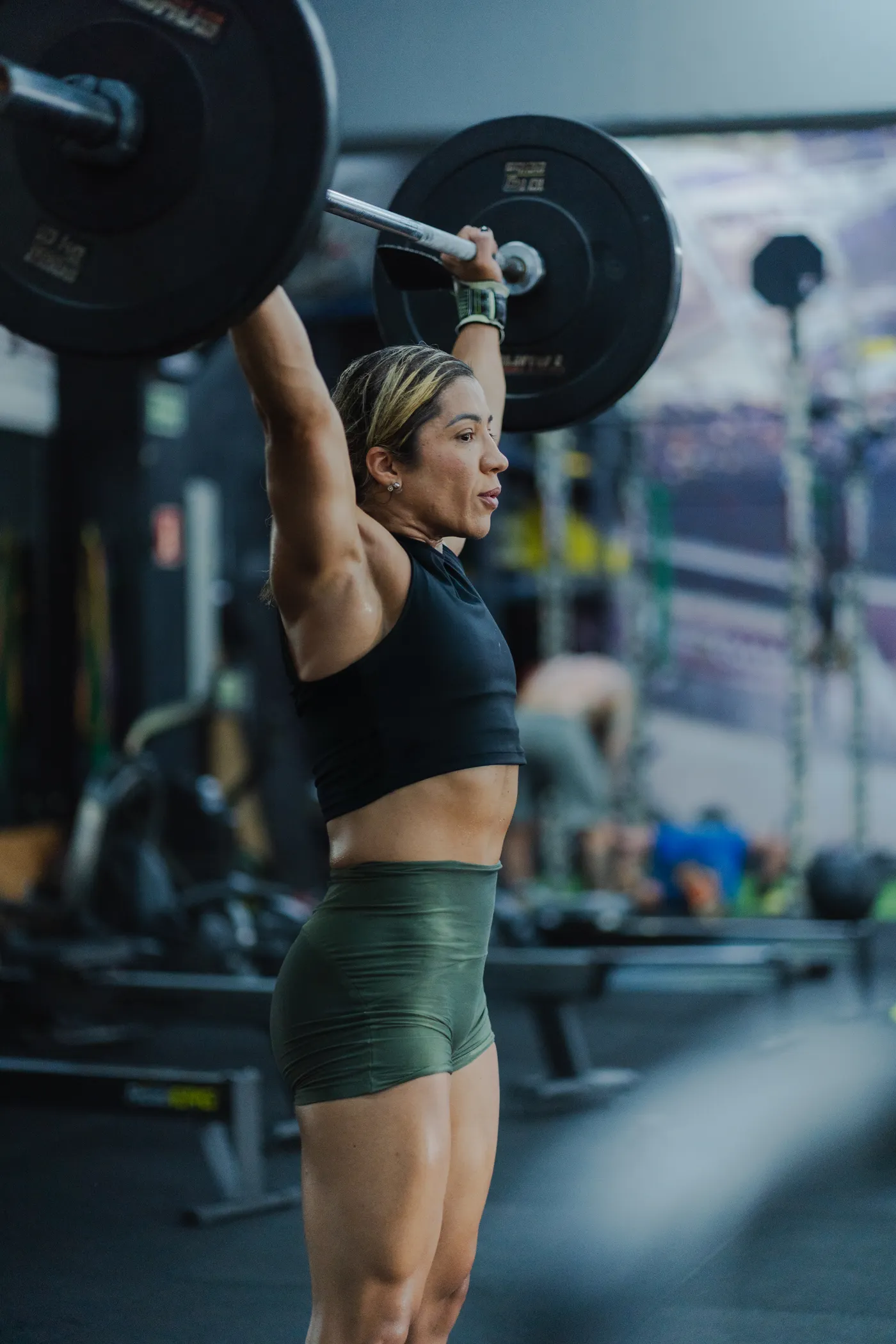
Begin with the main patterns rather than a target number. A full-body plan usually needs some form of squat or knee-dominant work, a hip hinge, a press and a pull. Depending on your goals, you may add single-leg training, direct core work, a carry or an isolation exercise. Those categories overlap: a squat trains more than the quadriceps, a row involves the elbow flexors and a press loads the triceps. Counting each compound exercise as if it trained only one muscle makes the program look emptier than it really is.
A practical four-movement foundation might be a squat variation, Romanian deadlift, dumbbell press and cable row. If you have a fifth slot, add vertical pulling or overhead pressing according to the pattern that is currently underrepresented. If you have a sixth, a leg curl, lateral raise or calf raise can address a specific muscle without requiring another heavy compound lift. This approach creates variety for a reason rather than for its own sake.
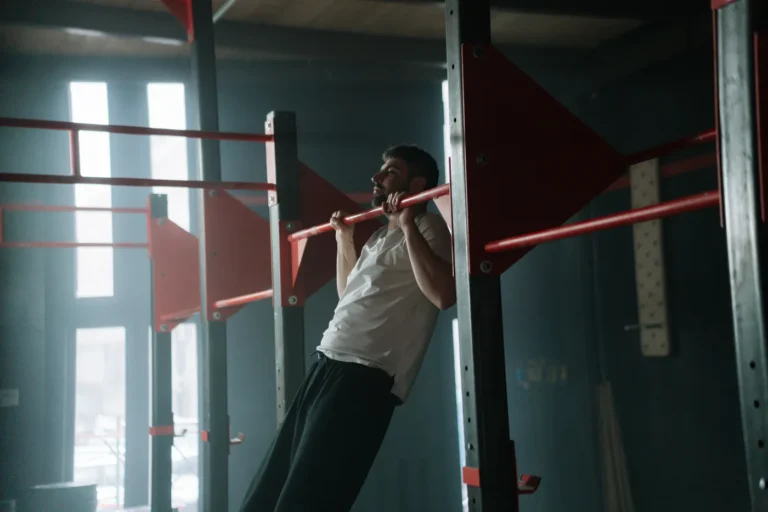
Prioritize the lift that matters most to your goal while you are fresh. Someone training for a stronger squat should normally squat before doing exhausting accessories. Someone bringing up back width might begin with pull-ups or pulldowns before rows. A person focused on general health can choose movements that feel stable, are easy to repeat and cover the major muscle groups without an elaborate sequence. There is no requirement to perform every conceivable variation in one session.
For a compact home gym, equipment flexibility matters more than equipment count. An adjustable bench and dumbbells can provide horizontal and incline presses, rows, split squats and Romanian deadlifts. A rack and barbell make heavier squats and presses easier to progress. A cable trainer can add pulldowns, rows, flyes, lateral raises and direct arm work without taking up another wall of machines. The point is not to buy everything; it is to have reliable ways to load the patterns your plan requires.
One caution: exercise categories are a planning aid, not an exact accounting system. A deadlift is a hinge but does not automatically replace every hamstring or upper-back exercise, and a bench press is not identical to direct triceps work. If a specific muscle lags or a joint dislikes one angle, a targeted accessory can be worthwhile. Keep the main lifts stable long enough to measure progress, then use accessories to fill genuine gaps.

Equipment Worth Exploring
Explore equipment, accessories and gear from our carefully selected range.


FID Bench MAX
Adjustable bench offering flat, incline, and decline positions + adjustable headrest.


VOLTRA
Compact digital cable trainer with smooth, adjustable resistance.


Go-Tone Pro
Portable digital cable trainer with up to 66 lb (30 kg) of adjustable resistance.
Use weekly working sets to set your exercise budget
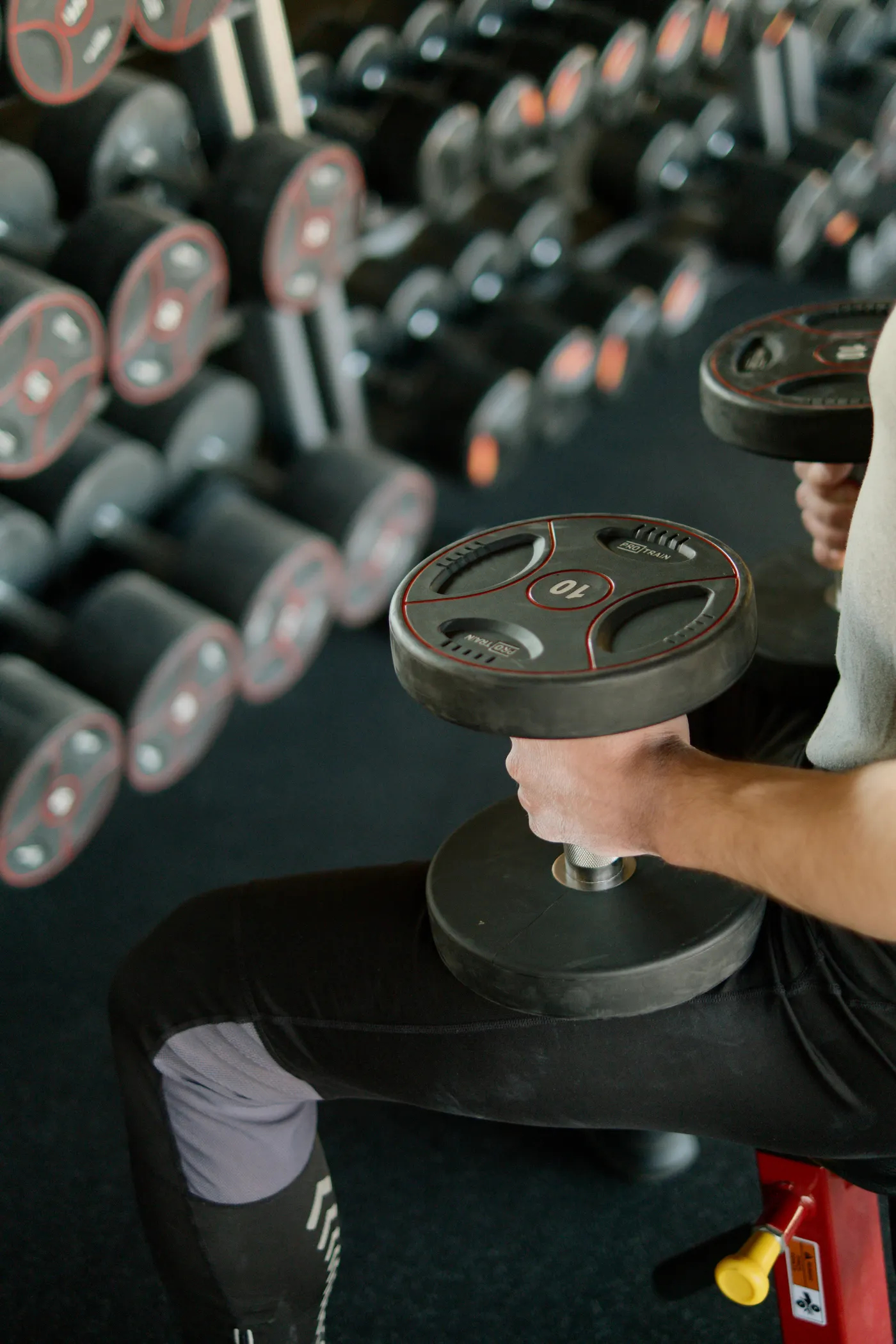
Recent evidence-based guidance places greater emphasis on regular resistance training and an appropriate amount of weekly work than on collecting exercise variations. Around ten challenging sets per muscle group per week is a reasonable reference point for many people seeking growth, not a mandatory minimum or universal optimum. New lifters can progress with less, while experienced lifters sometimes benefit from more. The relationship between volume and muscle gain appears to show diminishing returns rather than a single cliff where extra sets suddenly become useless.
Suppose you train chest twice weekly. Three sets of a flat press and two sets of an incline press on each day provide ten direct pressing sets across the week. You might add a fly if you want a different resistance profile or need more targeted chest work, but you do not automatically need four additional pressing variations. Similarly, two rows and a pulldown can cover a substantial portion of your back work without adding five nearly identical handles to the same session.
Count hard sets conservatively. A squat is primarily a quadriceps and glute exercise, but it also challenges the trunk; it should not be credited as a full direct set for every muscle involved. Bench pressing provides meaningful triceps work, yet its contribution is not always equivalent to a dedicated extension. Rather than inventing perfect fractional accounting, track direct sets and note the important overlap. Watch whether the target muscle actually progresses, whether technique remains consistent and whether soreness or fatigue begins to interfere with the next session.
Effort changes the equation. Three light warm-up sets are not interchangeable with three challenging working sets. For most hypertrophy accessories, stopping with roughly one to three clean repetitions in reserve can provide a useful effort target. Heavy compound lifts may warrant a slightly larger buffer when technique or fatigue is a concern. You do not need to take every set to failure, and you should not use a pump or exhaustion as your only proof of effectiveness.
As a planning example, five exercises at three working sets each produce fifteen working sets. Seven exercises at two sets each produce fourteen. Either may be appropriate depending on which muscles are trained and how often the session repeats. If you are adding a ninth movement because the workout feels too short, consider whether a better warm-up, longer rest for heavy lifts or a clearer progression target would help more. Count the stimulus, not just the menu.

Bodybuilding Shirts & Workout Gear
Bodybuilding shirts, tanks and gym gear for lifters chasing muscle, size, symmetry and the pump.

I Love Bench Press | with Pink Heart Weight Plate Desig Hoodie
Keep it laid-back with a little “I Love Bench Press” attitude.

Booty Building Mode Leg Day & Squats Meme Vest Tank Top
Your gym-day look, with a playful “Booty Building Mode” twist.

Gym Thou Art Not Yet Ripped Medieval Knight Deadlift Li T-Shirt
Show some gym-day personality with “Thou Art Not Yet Ripped Medieval Knight”.

Be Happy Lift Heavy Happy Weights Emoji Weight Plate De Sticker
Give your everyday gear a playful “Be Happy Lift” twist.

Muscle Mommy Pink Gym Girl Graphic for Women, Lifters, T-Shirt
Show some gym-girl attitude with a playful “Muscle Mommy” tee.

Whole Lotta Reps AC/DC Heavy Metal Rock Music Workout C T-Shirt
Add a playful “Whole Lotta Reps” touch to your casual rotation.

In My Muscle Mommy Era for Gym Girls, Lifters, Fitness Sticker
A fun “In My Muscle Mommy Era” touch for bottles, laptops, and lockers.

Flexter Dexter Gym Parody for Bodybuilding, Flexing and Tank Top
Bring “Flexter” humor to your next lifting session.

Muscle Mommy Pink Barbell Plate Gym Girl Shirt for Wome T-Shirt
Show some gym-girl attitude with a playful “Muscle Mommy” tee.

I Want You To Do One More Rep – Uncle Sam Patriotic Pul T-Shirt
Show some gym-day personality with “I Want You To Do One More Rep”.
Exercise variety is useful when it changes the stimulus
There are good reasons to rotate or combine exercises: different joint angles, muscle lengths, resistance curves, stability demands and movement skills can make a program more complete. There are also bad reasons, such as changing every movement each week because the last one stopped feeling novel. Research comparing exercise variation suggests that planned changes may help some regional adaptations, while excessive random variation can undermine skill practice and the ability to track progressive overload.
Think of a chest session. A flat press, incline press and cable fly are not identical: the torso angle and resistance characteristics differ. But flat barbell press, flat dumbbell press, flat machine press and a fourth flat press may largely duplicate the same pattern, particularly if you already have plenty of challenging sets. The extra variation is not inherently harmful; it simply needs a clear purpose. For some people, a different implement reduces discomfort or improves stability. For others, it is an unnecessary detour.
Direct arm exercises illustrate another nuance. Compound pulling and pressing can build the biceps and triceps, and small studies in untrained participants have not always found extra size gains from adding isolation exercises on top of a basic upper-body program. That does not mean curls or extensions are useless. It means the return depends on your training history, total volume, the muscle you want to prioritize and what the compounds already provide. An advanced lifter trying to improve arm size may reasonably add direct work; a beginner short on time can start with the big patterns.
Keep a core of repeatable movements for at least several weeks. Change an accessory when a muscle is not receiving adequate work, a movement is persistently uncomfortable, the equipment is unavailable or the training block has a specific new goal. Make one change at a time so you can tell whether it helped. Switching from a barbell row to a chest-supported row because your lower back is fatigued can be a thoughtful substitution. Swapping every row every session for novelty makes the comparison harder.
The practical test is simple: if two exercises train nearly the same pattern, ask whether the second adds a distinct benefit. If it does, keep it. If it only repeats the first with less energy and worse technique, you can often remove it without making the workout less effective.
Full-body, upper/lower and bodybuilding splits need different counts

Exercise count depends on how much of the body each session must cover. A three-day full-body plan might use four to six exercises because the main patterns repeat across the week. An upper/lower split often needs five to seven movements on an upper day and four to six on a lower day. A specialized bodybuilding day may use more direct isolation work, but the increase is a programming choice rather than proof that the split is superior.
Three-day full body: Monday can include a squat, bench press, row, leg curl and lateral raise. Wednesday can use a Romanian deadlift, overhead press, pulldown, split squat and curl. Friday can return to a squat or leg press, incline press, chest-supported row, calf raise and a trunk exercise. Each day has five movements, yet the week includes a broad range of work without a marathon session. Two or three working sets on most movements are enough to create a sensible starting workload.
Four-day upper/lower: On upper day one, use bench press, pulldown, incline dumbbell press, cable row, lateral raise and triceps extension. Lower day one might contain squat, Romanian deadlift, split squat, leg curl and calf raise. Repeat the pattern later in the week with small exercise or rep-range changes. Six upper-body movements and five lower-body movements provide room for accessories while leaving space for recovery.
Body-part emphasis: A dedicated back session could reasonably include a heavy row, vertical pull, chest-supported row, straight-arm pulldown and rear-delt movement. Five exercises are already substantial if most receive two to four demanding sets. A dedicated arm session might need more distinct movements because each exercise is less systemically demanding. The number is a consequence of the session’s purpose.
When weekly work is equated, research has generally found similar muscle-growth and strength outcomes from split and full-body routines. That means schedule, enjoyment and recovery can drive the choice. A three-day lifter does not need to imitate a six-day bodybuilding split, and a five-day lifter does not need to turn every workout into a full-body circuit. Pick the arrangement you can repeat, then distribute the working sets so no single day becomes an exercise graveyard.
Equipment Worth Exploring
Explore equipment, accessories and gear from our carefully selected range.


GymPin Squat Wedges
Non-slip 15-degree squat wedges help elevate the heels for deeper quad-focused squats.


GymPin D Handle Bar
Multi-use steel D-handle bar for cable rows, pulldowns and other cable exercises.

GymPin Ergo Handles
Pair of ergonomic cable handles shaped for comfortable triceps and pulling exercises.


Leather Lifting Straps
Padded leather straps support grip during heavy rows, deadlifts and pulling exercises.

Power Tower
Freestanding pull-up and dip station with adjustable handles for bodyweight training.

T-Bar Row Attachment
Welded barbell attachment that connects a D-handle bar for landmine and T-bar rows.
Time, recovery and equipment determine the practical ceiling
Time is a real constraint, but an extra exercise is not always the best use of another ten minutes. A heavy squat or deadlift may need several minutes of rest between demanding sets to maintain performance. A cable lateral raise or curl can often be completed with shorter rest and less setup. Consequently, a four-exercise strength session may take longer than a seven-exercise accessory session. Estimate the duration from sets, rest periods and equipment changes rather than from the number of names in the plan.
For a forty-five-minute workout, choose three or four priority movements and one optional accessory. For a sixty-minute session, four to six exercises often fit comfortably if you avoid unnecessary setup changes. With ninety minutes, there may be room for additional direct work, mobility or conditioning, but extra time should not be treated as an obligation to add volume. These are scheduling examples, not scientifically established exercise-count thresholds.
Supersets can help when the exercises do not compete heavily. Pair a row with a press, or a calf raise with a light arm movement, while preserving the rest required for each. Do not turn a demanding squat set into a breathless circuit merely to squeeze in more accessories. If the second exercise consistently reduces load or repetitions on the first, the time saving may be costing the quality you wanted.
In a small home gym, minimize changes between stations. One cable setup can serve pulldowns, rows and triceps work. Adjustable dumbbells and a bench can cover presses, split squats and curls. A rack can anchor the heavier movements. Choose attachments that genuinely improve the exercise rather than collecting handles that make the session longer to organize. Equipment should simplify a plan, not dictate how many movements you feel obliged to perform.
Recovery is the final ceiling. If your last three exercises are consistently rushed, your loads fall across weeks and you struggle to recover before the next session, the problem may be too much work or poor sequencing. Remove the least useful movement, reduce a few sets or distribute volume across another day before abandoning the whole program. Conversely, if progress is steady and you finish fresh, adding one targeted accessory can be reasonable. The right number is the smallest repeatable menu that covers your goals and produces measurable progress.
Funny Gym Shirts & Workout Gear
Funny gym shirts, tanks, hoodies and workout gear for lifters who like training hard.

Lifting Is My Therapy – Bodybuilding Powerlifting Meme T-Shirt
Add a playful “Lifting Is My Therapy” touch to your casual rotation.

Fitness Is My Therapy – Lifting Bodybuilding Powerlifti Tank Top
Your gym-day look, with a playful “Fitness Is My Therapy” twist.

My Therapy – Lifting Bodybuilding Powerlifting Meme Hoodie
Stay casual and show some powerlifting attitude with “My Therapy”.

Live Love Lift Decal for Water Bottles Laptops Gym Gear Sticker
Bring “Live Love Lift” attitude to your water bottle or laptop.

Coffee and Weights for Coffee Lovers, Bodybuilders and Hoodie
Show off your lifting humor in a laid-back “Coffee and Weights” hoodie.

Breathe In Between Sets – Pink Floyd Meme Vest Muscle S Tank Top
Show some personality between sets with “Breathe In Between Sets”.

Gym Thou Art Not Yet Ripped Medieval Knight Deadlift Fi Hoodie
Show off your medieval humor in a laid-back “Thou Art Not Yet Ripped Medieval Knight” hoodie.

Train Hard Gym | Funny Thomas The Tank Engine Workout D Sticker
Give your everyday gear a playful “Train Hard” twist.

Control Your Gains & Your Mind Stoic Sigma T-Shirt
Bring “Control Your Gains & Your Mind Stoic Sigma” humor to your next gym day.

This Is My Therapy Decal for Water Bottles Laptops Work Sticker
Bring “This Is My Therapy” attitude to your water bottle or laptop.
A four-week exercise-count audit you can actually follow
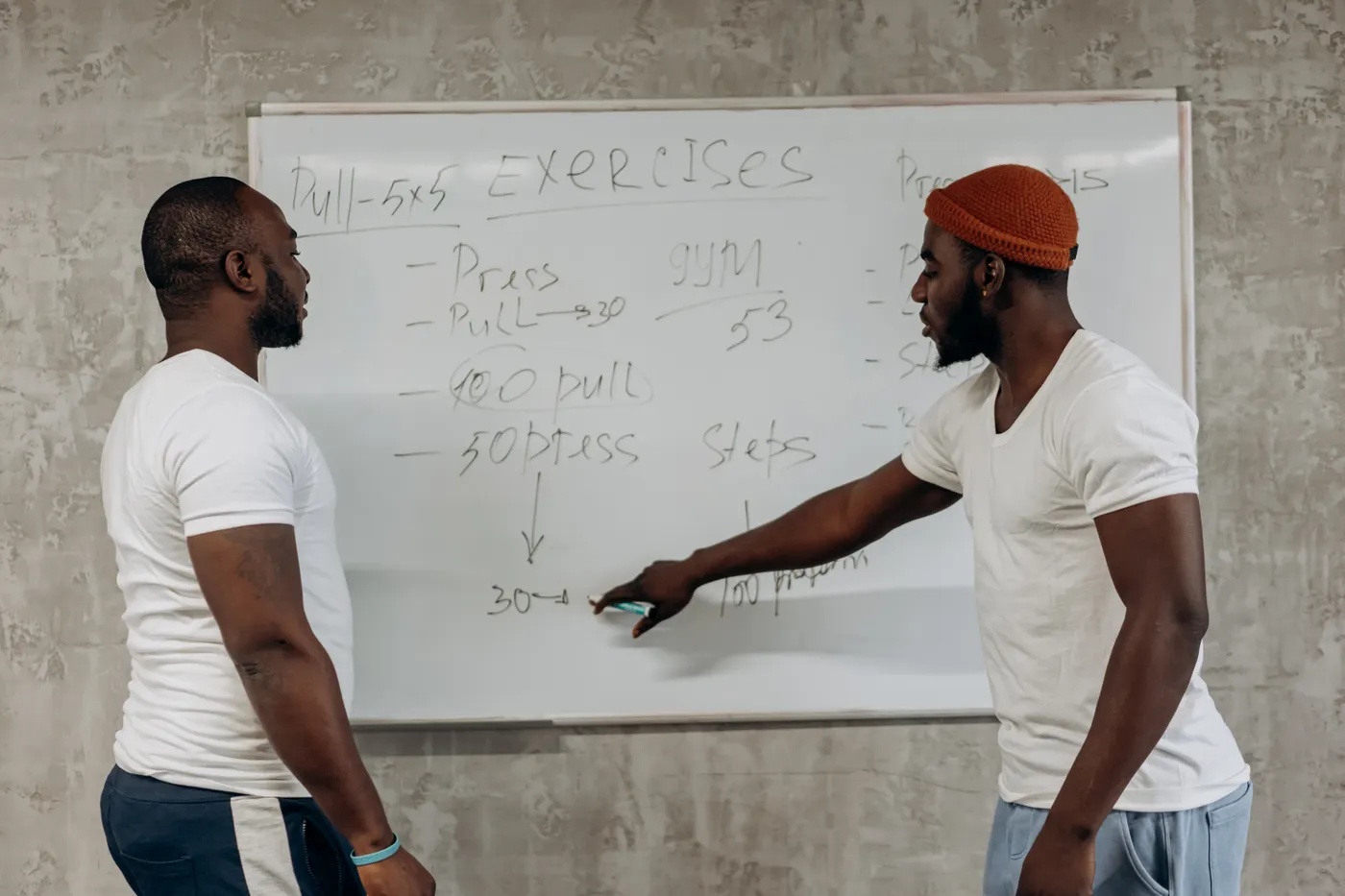
Use the next four weeks to test your current program rather than searching for a perfect universal number. Week one: write down each exercise, its movement pattern, working sets, repetitions, load and approximate reps in reserve. Flag repeated patterns and any major muscles that receive little direct work. Keep the workout otherwise unchanged so the log reflects what you really do.
Week two: choose one priority movement to improve. Keep it early in the session and use a stable technique standard. If the workout contains multiple nearly identical accessories, remove one and redistribute its sets only if a target muscle genuinely needs the work. For example, replace a fourth flat press with a row if pulling is underrepresented. Do not simultaneously change every exercise, set count and rest period.
Week three: examine weekly set totals and recovery. If a muscle receives only a handful of challenging sets and is not progressing, add one or two sets or a complementary movement. If it already receives ample work and performance is slipping, consider reducing volume instead. Watch the trend across several sessions rather than reacting to a single poor day caused by sleep, stress or an unusually difficult workout.
Week four: compare the same lifts using the same technique, range of motion and effort targets. Did you add a rep, lift a little more weight, improve control or recover more consistently? If yes, resist the urge to overhaul the program. If not, check whether the issue is exercise choice, insufficient effort, excessive fatigue or an unrealistic schedule. Change one variable and repeat the process.
For most general lifters, the final menu may settle near four to eight exercises per workout. A beginner might thrive on four; a strength specialist may prefer three major lifts with substantial rest; an experienced bodybuilder might use eight to target smaller muscles. There is no magic tenth exercise that unlocks growth, and no rule that a three-exercise workout cannot count. What matters is sufficient hard work, coverage of your goals, a schedule you can recover from and a clear record of improvement.
Some product links may be affiliate links, which can support Mind Muscle Perfection at no additional cost to you.