Can you really run faster after 50?

A birthday does not erase the ability to improve. The useful question for a runner in their fifties, sixties or beyond is not whether they can match their 25-year-old physiology. It is whether their current training leaves room to improve speed, endurance, movement efficiency and race execution. For many recreational runners, the answer is yes. A personal best is measured against your own previous performance, not against an age-group world record.
Endurance performance changes with age partly because maximal oxygen uptake, maximal heart rate and muscle characteristics change. In a comparison of 78 male recreational distance runners, those older than 50 had lower average oxygen uptake than younger runners, but measures of ventilatory threshold expressed relative to their capacity did not differ clearly. This is a group comparison, not a prediction of what any particular runner can achieve. Training history, injury status, opportunity to recover and race experience vary enormously.
Older athletes also bring advantages that do not appear in a VO2 max estimate: years of pacing experience, better knowledge of which workouts they tolerate, and an ability to recognize the difference between productive effort and an avoidable setback. An experienced runner can improve their result without becoming physiologically younger simply by distributing effort more intelligently and completing more consistent training blocks.
The practical target is a sustainable improvement in a specific event. A faster 5K requires a different emphasis from a first sub-two-hour half marathon, and a marathon goal should not dictate every training decision. Start with the distance you genuinely want to race, the time you can reliably train and the health constraints you actually have. Then build a plan around those facts instead of copying a professional athlete’s weekly mileage.
Set a useful baseline before chasing a personal best
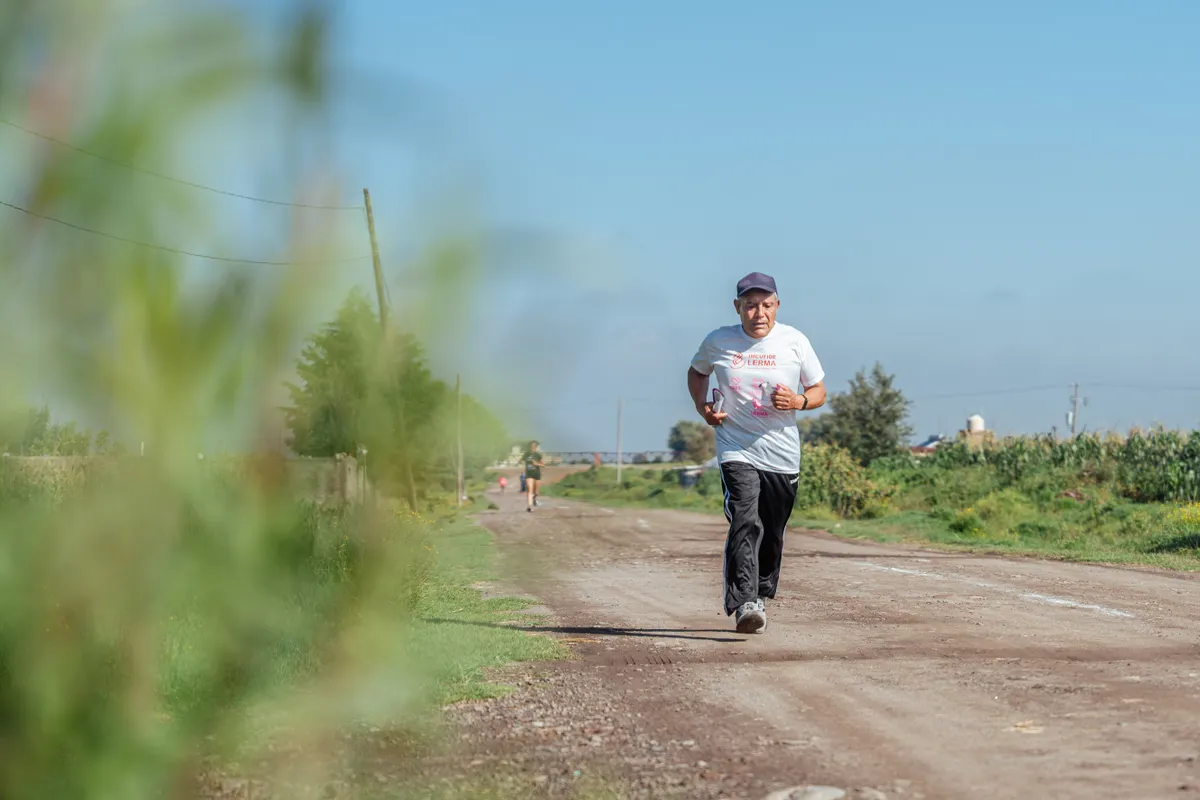
Choose one primary race distance and record a baseline you can repeat. That might be a recent race, a controlled 5K time trial or several weeks of steady training with comparable routes and conditions. A single unusually good watch estimate is not a reliable performance test. Heat, wind, hills, sleep and course measurement can all make one day’s pace look better or worse than your underlying fitness.
Track a small set of actionable numbers: weekly running minutes or distance, the duration of your longest easy run, one representative quality workout, average effort and how well you recover. Note persistent soreness, sleep disruption or a decline in enthusiasm alongside the numerical metrics. A smartwatch can make collection convenient, but its recovery score is a model-based estimate, not a medical diagnosis or a command to train harder.
Make the goal concrete. Instead of saying “get fit again,” choose something such as running a comfortable 30 minutes three times per week for four weeks, then improving a 5K time by a modest amount over the next training block. For a returning runner, simply completing uninterrupted training is a meaningful first milestone. A masters athlete already running 40 miles per week may need to improve workout quality rather than adding more distance.
Review trends every two to four weeks, not every morning. If easy runs feel smoother at similar effort and you can finish a quality session without dragging through the next two days, the plan may be working even before your race time changes. If performance is stagnant but fatigue is climbing, more mileage is not automatically the solution. The baseline should guide adjustments, not become another source of stress.
Protect the aerobic base while keeping a little speed

Most distance runners benefit from a foundation of genuinely easy running, with harder work added deliberately. Easy days should allow relaxed breathing and a conversation. They build repeatable training volume without requiring every session to become a race. For someone returning after a long break, a run-walk format can deliver the same consistency benefit while limiting the amount of continuous impact.
Once the baseline is stable, include one focused faster session in the training cycle. For a 5K runner this might be six repetitions of two minutes at a controlled hard effort with easy jogging between them. For a half-marathon runner, three blocks of six to eight minutes at a comfortably hard threshold-like effort may be more specific. These are examples, not mandatory pace prescriptions: warm up first, adjust to current fitness and avoid turning the final repetition into an all-out sprint.
Keep a longer easy outing if the race distance justifies it. Increase duration gradually, and repeat a comfortable workload before pushing farther. A long run is not valuable because it leaves you unable to walk downstairs the next day. Similarly, an interval workout is not superior because it produces a high heart-rate screenshot. The objective is to accumulate useful stimulus while remaining ready for the next session.
Age alone does not dictate an exact intensity split. Research on masters endurance athletes suggests that preserving an appropriate training stimulus can moderate some age-associated decline, but it does not establish a universal percentage of easy versus hard mileage. Let recent training, recovery, injury history and event demands determine the balance. Consistency across months usually matters more than a heroic week.

Equipment Worth Exploring
Explore equipment, accessories and gear from our carefully selected range.

Apple Watch Ultra 3
Rugged 49 mm smartwatch with cellular connectivity, GPS and fitness tracking.

Powerbeats Fit
Secure-fit wireless workout earbuds with active noise cancellation and a charging case.

GymPin Starting Blocks
Portable high-density foam blocks for adjusting machine starting positions and range of motion.


Power Tower
Freestanding pull-up and dip station with adjustable handles for bodyweight training.

Beats Studio Pro
Over-ear wireless headphones with active noise cancellation and USB-C audio.
Try a nine- or ten-day cycle when seven days feel crowded
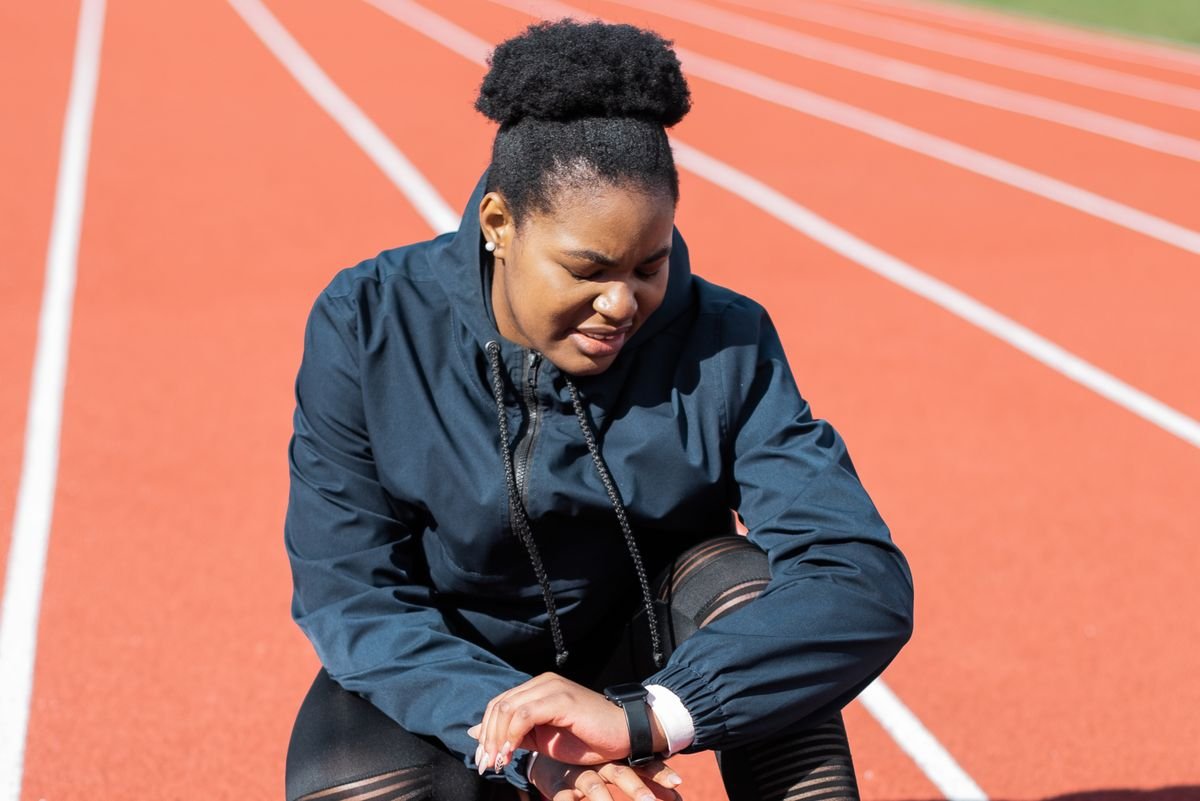
The calendar week is convenient for work and family, but it is not a biological law. If a hard workout on Tuesday leaves your legs heavy on Thursday, moving the next demanding session to Friday or Saturday may improve its quality. Some experienced masters runners use nine- or ten-day cycles so that long runs, faster work and strength sessions do not repeatedly collide.
One ten-day example is: day 1 easy run; day 2 quality intervals; day 3 recovery walk or rest; day 4 easy run plus short strength; day 5 easy run; day 6 rest or gentle cross-training; day 7 long easy run; day 8 recovery; day 9 easy run plus strength; day 10 optional relaxed strides or rest. This is a template, not a prescription to fit every activity into ten days. A runner currently training twice weekly should scale it down, not jump straight to eight sessions.
Place harder sessions far enough apart that they remain genuinely high quality. There is no universal 48- or 72-hour rule that applies to every runner. Training age, session duration, previous injuries, medications, illness, sleep and nutrition all change the recovery picture. A short hill session and a hard 25-kilometer run are not interchangeable stresses merely because both are labeled “hard.”
Recovery should be observable. You can walk normally, easy running feels easy again, and your next planned workout does not require unusual effort at a familiar pace. If fatigue or pain is accumulating, shorten or replace a session. A longer cycle works only when it improves training quality; using the extra days to cram in more hard work defeats its purpose.

Cardio Shirts & Workout Gear
Cardio and conditioning gym gear for runners, endurance athletes and anyone who earns the sweat.


Cardio Heartbeat Hoodie
Show off your cardio humor in a laid-back “Cardio Heartbeat” hoodie.

Track Panther Athletic Vest Muscle Shirt for Running Wo Tank Top
Train hard, laugh a little, and rep “Track Panther”.

Cardio Speed Superhero Gym Funny Treadmill Running Musc Tank Top
Show some personality between sets with “Cardio Speed Superhero”.

Hybrid Athlete – Iron Man Medieval Triathlon Gym Shirt T-Shirt
Make gym days more fun with “Hybrid Athlete” style.


Iron Man Triathlon – Superhero Comic Book Swimming, T-Shirt
Show some superhero attitude with a playful “Iron Man Triathlon” tee.

Cardio Is Calling You , Meme Top Answer Or Decline? T-Shirt
Make gym days more fun with “Cardio Is Calling You” style.

Shirt – Don'T Quit Do It – Meme & Gains T-Shirt
Show some lifting attitude with a playful “Don't Quit Do It” tee.

Wonder Woman Jump Rope | Superhero Cardio Workout Pullo T-Shirt
For laid-back days and superhero humor: “Wonder Woman Jump Rope”.
Lift for stronger strides, not just bigger gym numbers
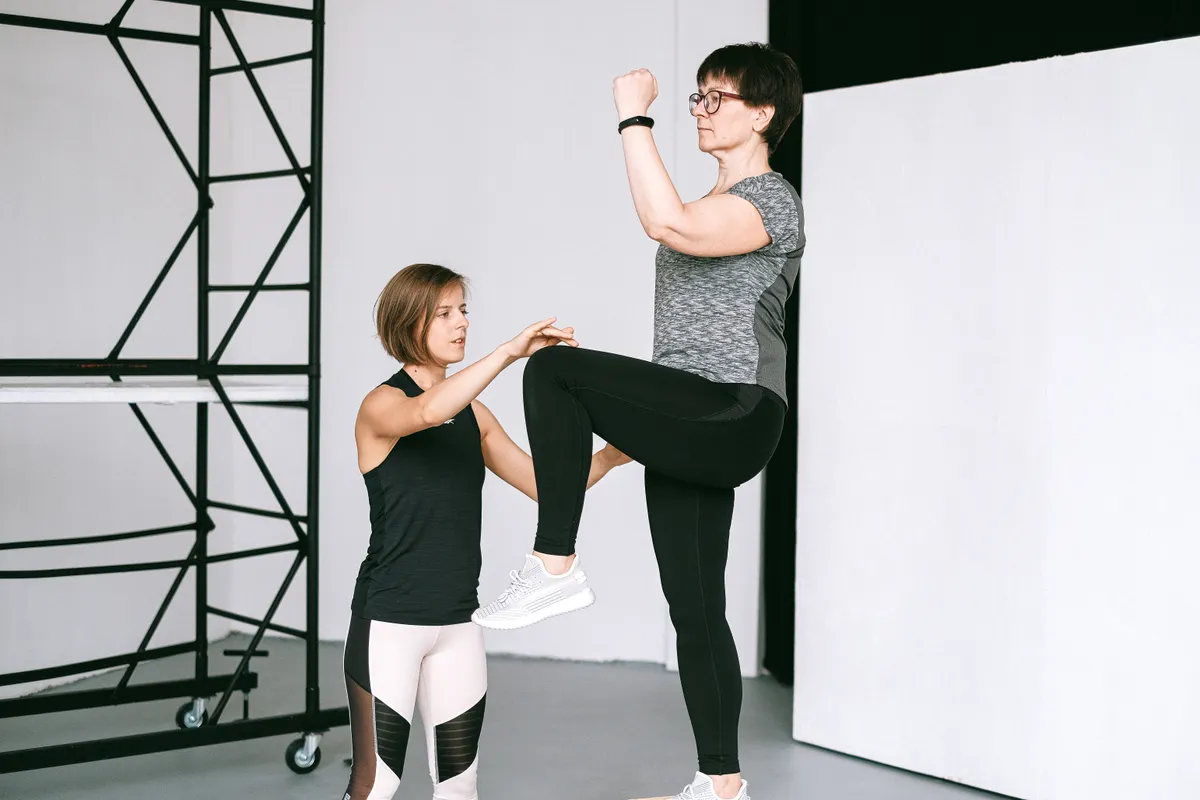
Running is an endurance skill, but strength training gives the legs and trunk another useful stimulus. A review of 38 studies involving 894 middle- and long-distance runners found that high-load strength work could improve running performance measures, and combining different strength methods might offer additional benefits. Importantly, the studied participants were 17 to 40 years old, so those findings cannot be transferred unchanged to every runner over 50.
Start with two manageable full-body sessions in a ten-day cycle, or roughly one to two each week. Cover a squat or sit-to-stand pattern, a hip hinge, a single-leg exercise, calf raises, a push or pull, and simple trunk stability. For example: goblet squat two sets of six to ten; Romanian deadlift two sets of six to ten; step-up two sets of six per side; calf raise two sets of ten to fifteen; and a side plank for two controlled holds. Use a resistance that permits clean repetitions and leave a little in reserve.
Progress only one variable at a time. Add a repetition before adding load, or improve balance and range before choosing a more demanding step height. Heavier training can be appropriate for experienced older lifters, but maximal attempts are unnecessary for most recreational running goals. A person with osteoporosis, recent surgery, significant joint pain or cardiovascular concerns may need individual exercise guidance before changing loads.
Keep strength sessions from ruining the key runs. If a heavy leg workout causes three days of soreness, reduce the exercise selection or volume. A shorter session completed consistently beats an elaborate one abandoned after a month. Think of strength as supporting running economy, force production and general physical capacity—not as proof that any particular exercise prevents injuries on its own.
Equipment Worth Exploring
Explore equipment, accessories and gear from our carefully selected range.


GymPin Squat Wedges
Non-slip 15-degree squat wedges help elevate the heels for deeper quad-focused squats.

FID Bench MAX
Adjustable bench offering flat, incline, and decline positions + adjustable headrest.



Squat Harness
Wearable harness for hands-free cable squats, sled work, and lower-body training.
VOLTRA
Compact digital cable trainer with smooth, adjustable resistance.

Go-Tone Pro
Portable digital cable trainer with up to 66 lb (30 kg) of adjustable resistance.
Improve cadence and technique without chasing a magic number
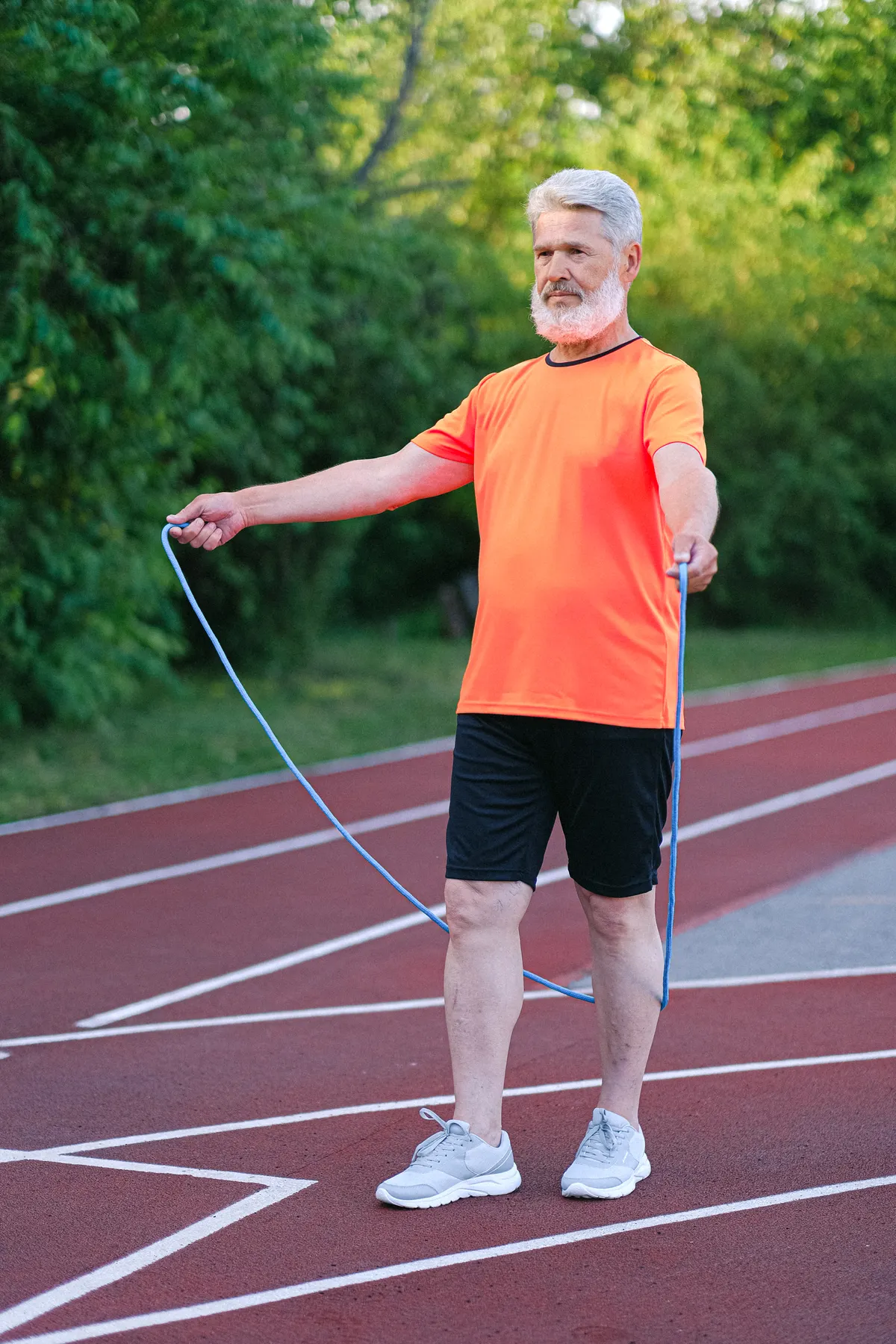
Cadence is simply the number of steps you take each minute. It is useful feedback, but the often-repeated target of 180 steps per minute is not a universal requirement. Your preferred step rate changes with speed, height, terrain and fatigue. A runner moving comfortably at a slow pace may have a lower cadence than the same person during a race, without anything being wrong.
A systematic review covering 37 studies found that increasing step rate can reduce some measures such as step length and knee loading mechanics, but evidence for better performance and injury outcomes was much more limited. This distinction matters: changing a biomechanical variable is not the same as proving that every runner will get faster or stop getting injured. Large abrupt changes may feel awkward and increase effort.
If you consistently overstride or land heavily ahead of your body, experiment with a small adjustment rather than forcing a complete gait rebuild. On an easy run, try four 20-second segments of slightly quicker, lighter steps while keeping speed similar, separated by plenty of normal running. A metronome can help, but you should be able to return to your natural rhythm whenever the drill feels strained.
Short strides, gentle uphill accelerations and low-volume skipping or jump-rope drills can support coordination when you already tolerate them. Begin with a few seconds, not hundreds of contacts. Painful Achilles tendons, balance difficulties or a recent fall history change what is sensible. Good technique is economical and repeatable; it should not turn every outing into a stressful form examination.
A practical six-week plan for faster, more consistent running
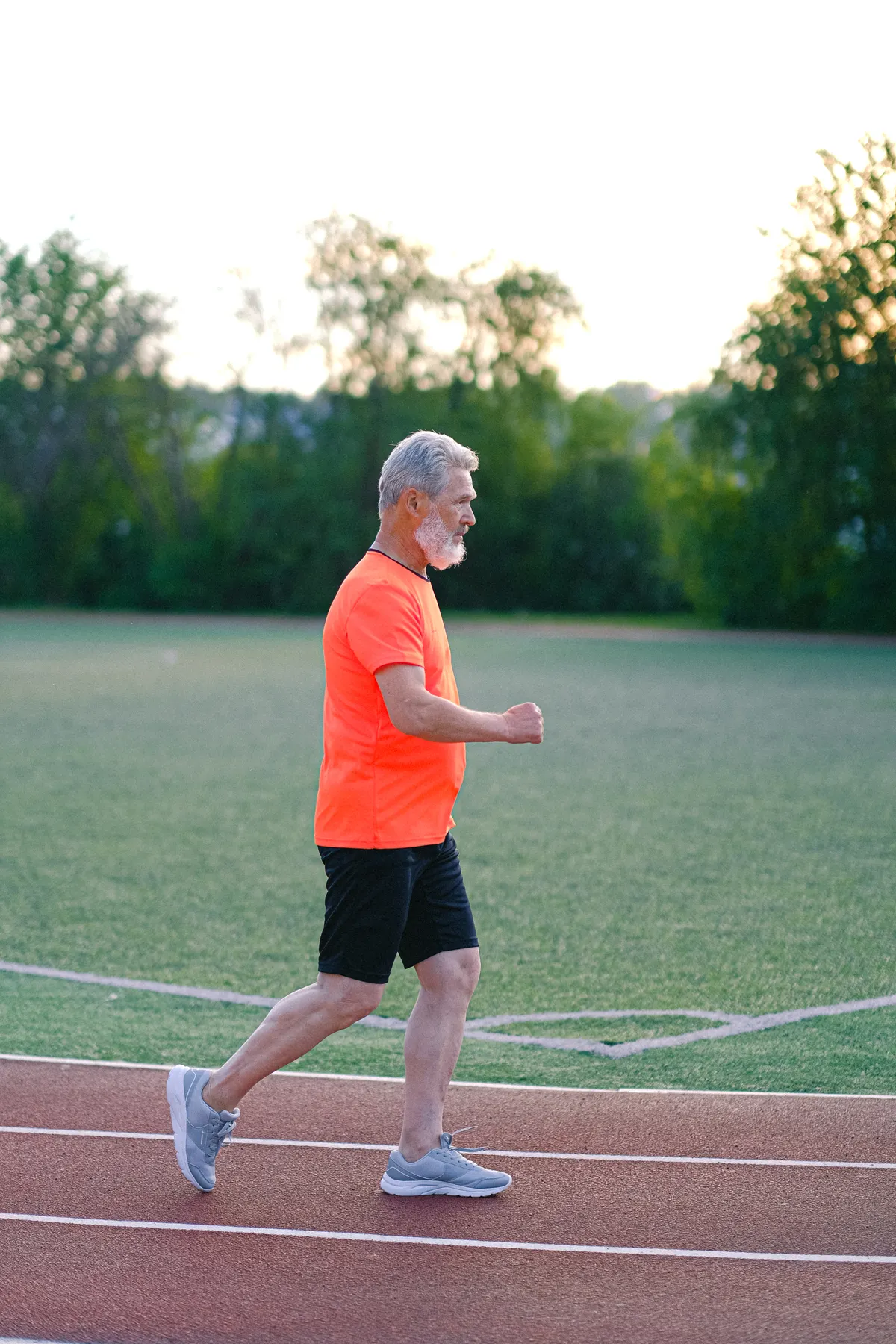
Use the first two weeks to establish a workload you can repeat. Complete two to four easy runs depending on your current baseline, with one slightly longer outing and one brief strength session. If you are returning from inactivity, substitute run-walk intervals and keep the long outing modest. Write down how the next day feels; a successful session should leave enough energy to train again.
In weeks three and four, retain the easy running and introduce one controlled quality session every seven to ten days. A beginner might use six one-minute quicker efforts separated by two minutes easy. A more experienced runner might use four five-minute steady efforts with two minutes easy between. Neither option needs to be maximal. Add a second short strength session only if the first is recovering well. If your running time rises, keep the increase modest rather than simultaneously extending the long run and making the intervals harder.
In week five, repeat a familiar quality workout and look for improved control: steadier pacing, less fade and a better recovery day. Avoid testing your fitness after every session. In week six, reduce total workload slightly before a comparable 5K time trial or a planned race. Use the same course or a properly measured event where possible, and note weather and effort so the result means something.
Fueling and sleep still count. Eat enough to support the workload, include protein across the day, and bring fluids appropriate to the duration and conditions. Runners with medical dietary restrictions should individualize the plan. Persistent localized pain, dizziness, chest discomfort or an unusual drop in exercise tolerance are reasons to stop and seek appropriate clinical advice rather than force the schedule.
The bigger lesson is simple: training after 50 should be ambitious and adaptable. Keep enough easy volume to develop endurance, enough speed to maintain race-specific skill, enough strength to support the whole body, and enough recovery to make the next session worthwhile. The best plan is the one you can execute for months—not the one that looks most impressive on a single day.
Functional Fitness Shirts & Workout Gear
Functional-fitness shirts, tanks and workout gear for athletes who train strength, conditioning and everything in between.

Hybrid Athlete Strength Tee
Show some lifting attitude with a playful “Hybrid Athlete” tee.


Wonder Woman Battle Ropes | Superhero HIIT Workout Pull Hoodie
Keep it laid-back with a little “Wonder Woman Battle Ropes” attitude.

Meme – You May Delay Time Will Not Next Cult Brand T-Shirt
Heavy lifts, good laughs, and a little “You May Delay Time Will Not” energy.

Handstand Walk Tee
Bring “: The Handstand Walk Beatles Graphic” humor to your next gym day.

Forged in the Gym Tee
Show some lifting attitude with a playful “Forged in the Gym: Hephaestus God of Fire” tee.

Dost Thou Even Pedal Tee
Make gym days more fun with “Dost Thou Even Pedal Medieval Air Bike” style.