Advertising disclosure: This page includes affiliate links that may earn us a commission at no additional cost to you.
Chris Hoy’s six Olympic gold medals came from a sport in which a race can turn on a few seconds of acceleration. Yet his reflections on training were remarkably practical: establish a measurable objective, understand the purpose of a session, and resist the temptation to do more merely because more sounds impressive. For someone who lifts weights and rides a bike, those principles are arguably more useful than any attempt to reproduce an Olympic training diary.
The key is to separate three tasks: increasing the force you can produce, learning to express that force at speed, and managing fatigue so that your next important effort is still productive. They overlap, but no one workout does all three equally well. This guide uses Hoy’s career as a starting point for building a manageable strength-and-cycling plan, not as a prescription of his personal routine.
Six Olympic golds, but no shortcut to power
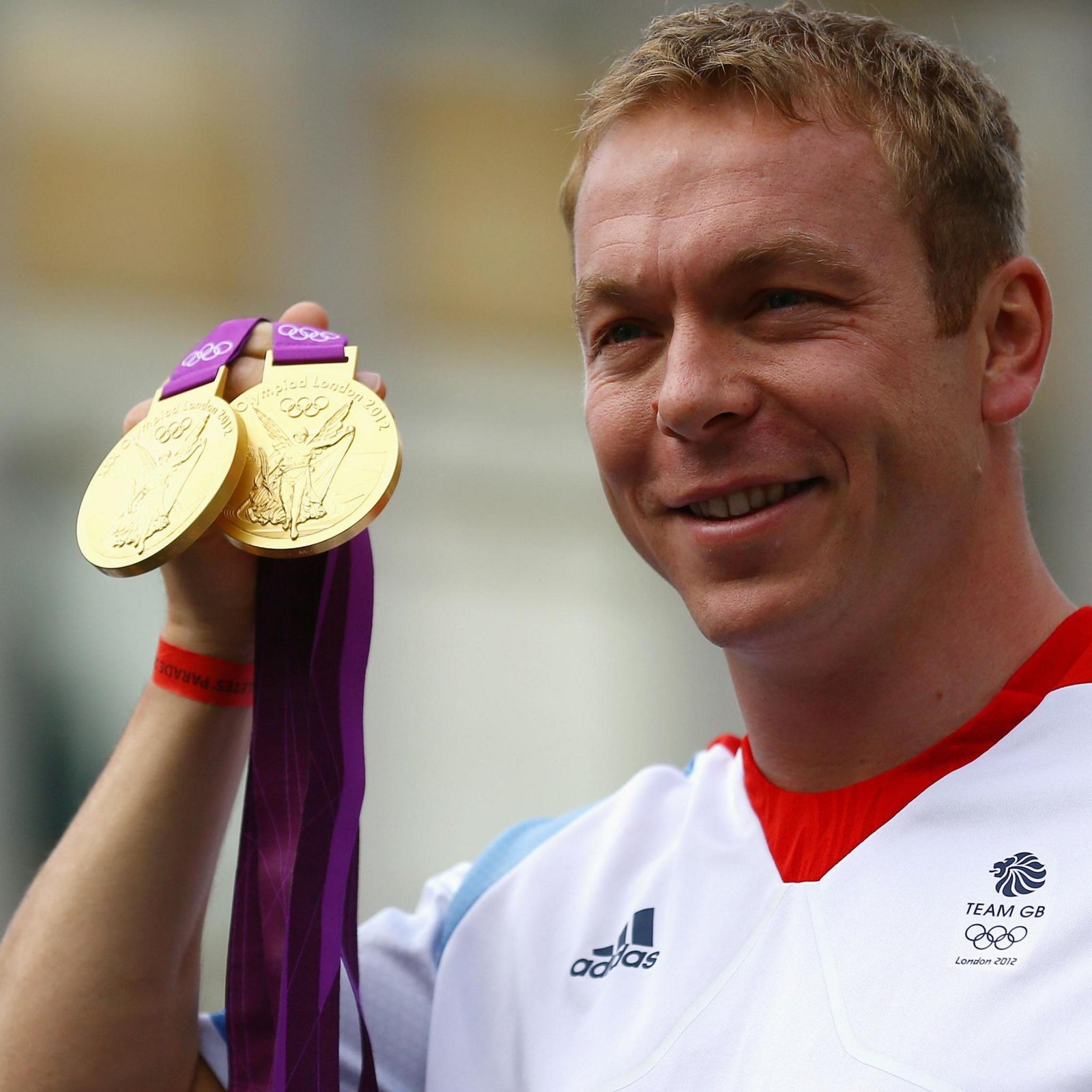
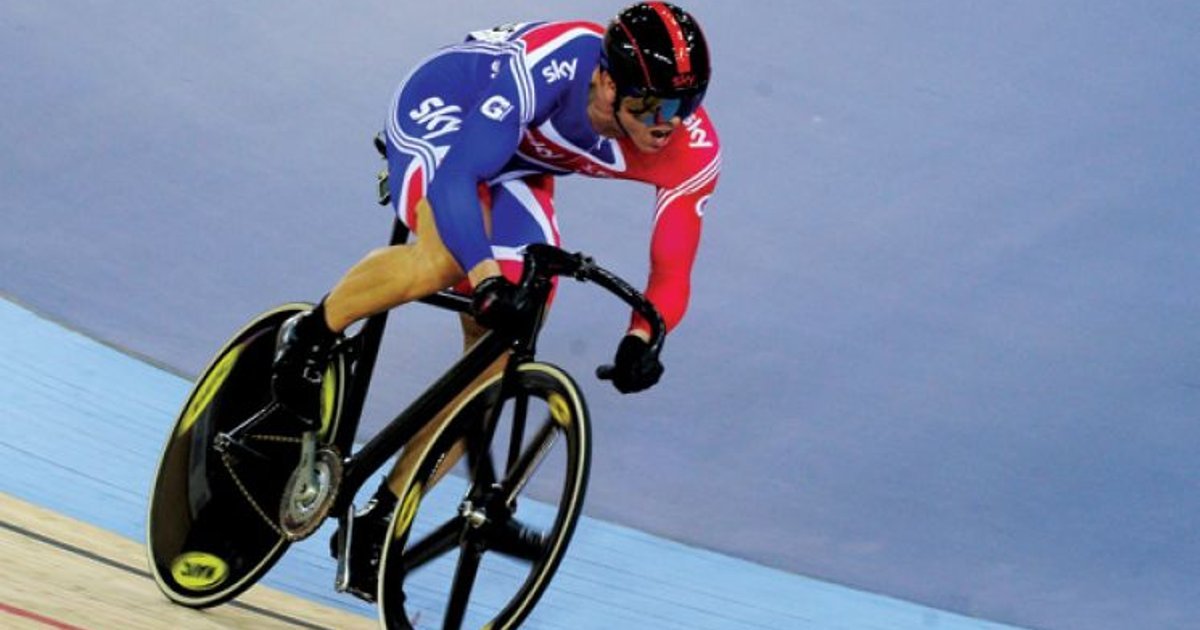
Hoy won the kilometre time trial at Athens in 2004, then took three golds in Beijing in 2008 across the individual sprint, team sprint and keirin. Two further golds in London in 2012 completed the Olympic tally, alongside a silver from Sydney in 2000. The range of events matters. A standing start, a timed kilometre and a tactical sprint against another rider do not reward precisely the same qualities.
The first few pedal strokes demand enough torque to accelerate a stationary bike. Once a rider is moving quickly, the challenge changes: producing force within shorter and shorter windows while retaining an efficient position. In a tactical event there is also the question of when to accelerate. A cyclist can have excellent laboratory power and still choose a poor moment to attack.
For recreational athletes, the important distinction is between strength and its application. A larger squat may expand your potential to accelerate, but the track or bike is where you practise using that potential. Neither discipline is a substitute for the other. If you only lift, your coordination at high cadence may lag behind your gym ability. If you only sprint, your strength reserve may become a limitation. The appropriate balance depends on your current weakness rather than on the training volume of a champion.
Build force in the gym without mistaking it for speed
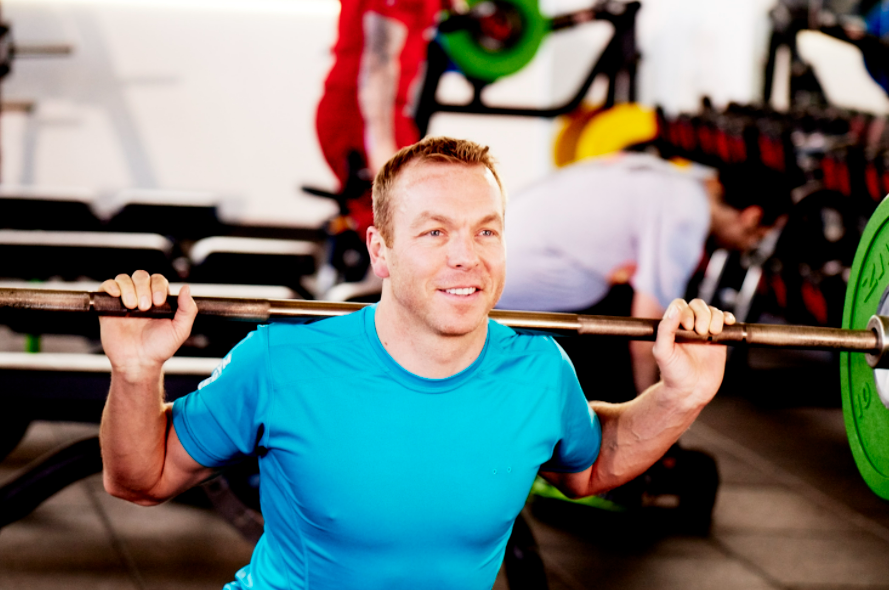
Lower-body strength work is a natural complement to sprint cycling. Squats train coordinated knee and hip extension; a hinge challenges the posterior chain; a split squat or step-up allows each leg to produce force independently. The point is not to accumulate every possible exercise. Two or three well-chosen movements can provide enough stimulus for an athlete who also has to recover for bike work.
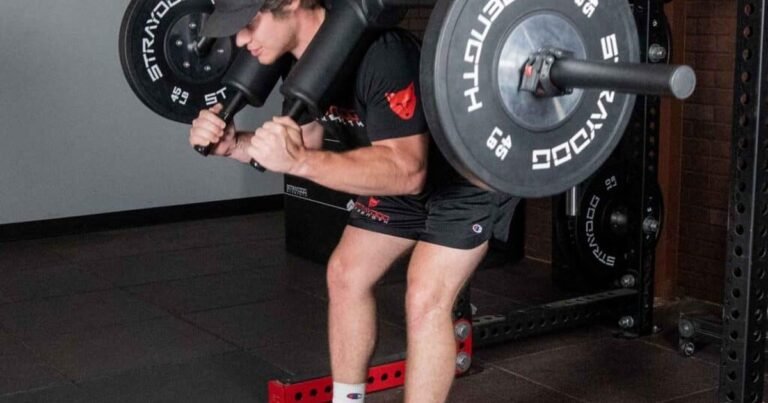
Start by selecting a squat pattern that you can repeat consistently. A barbell back squat is useful if you already know the movement and have a rack with correctly positioned safeties. A leg press or belt squat may be easier to organise if your equipment or upper-body mobility makes barbell work awkward. Use a comfortable range of motion and controlled lowering. Do not treat a progressively shorter squat as evidence of improved strength.
A simple session could contain three sets of five squats, two sets of six to eight Romanian deadlifts, and two sets of eight split squats per side. These are illustrative starting doses for healthy adults who have experience with resistance training. Beginners can use fewer sets and lighter loads. Keep roughly two repetitions in reserve on the main lift instead of forcing a maximum attempt each week.
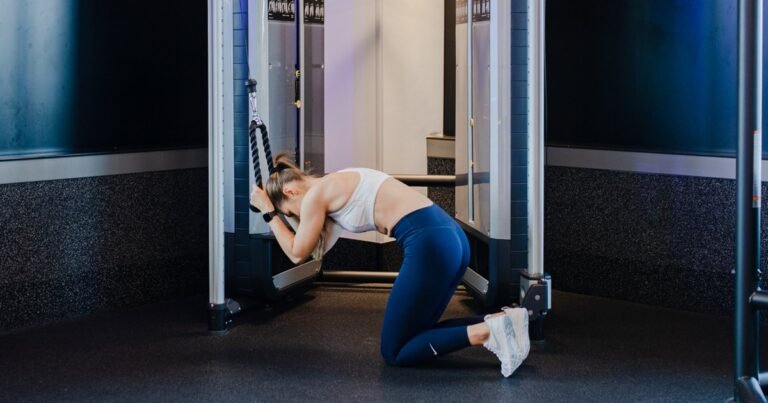
Trunk stability is another part of the job. A braced torso helps transmit the forces produced by the legs while keeping the upper body reasonably steady. Dead bugs, side planks or a controlled anti-rotation cable exercise can supplement your lifting. They need not become an exhausting workout of their own. If the goal is stronger pedalling, avoid adding so much accessory volume that the main squat session or the next ride suffers.

Equipment Worth Exploring
Explore equipment, accessories and gear from our carefully selected range.


Compact Leg Press CLP-700
Compact reverse-style leg press with a moving seat carriage and an adjustable footplate.


Studio V-Squat
Plate-loaded V-squat machine for supported lower-body strength training.

Different bike sessions solve different problems
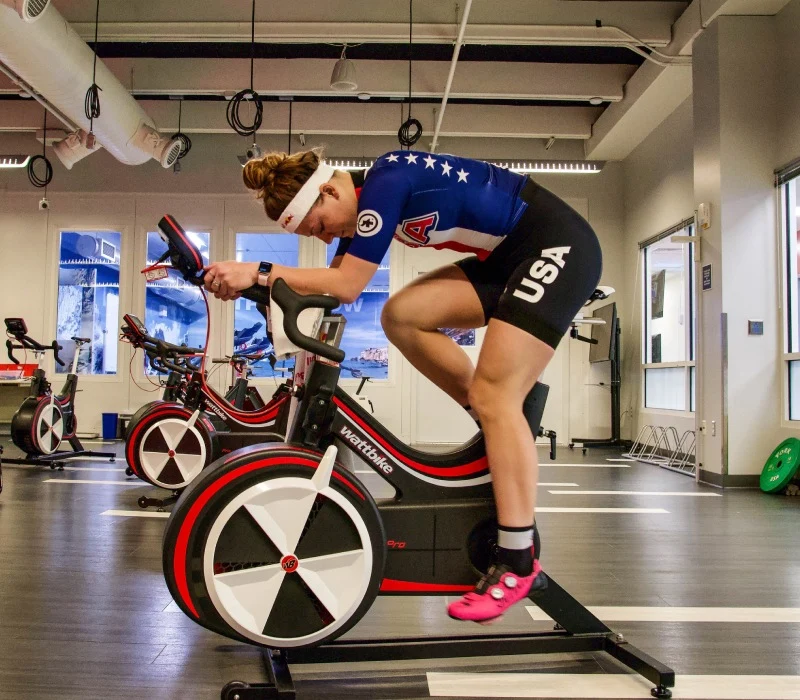
At low speed, a cyclist has relatively more time to apply force during each revolution. As cadence rises, the time available for each pedal stroke decreases. That is why a heavy gym movement does not fully reproduce sprint cycling. Bike work needs to address both the ability to push against resistance and the ability to coordinate fast revolutions.
Consider three different sessions. A short acceleration session practises producing high force and increasing cadence quickly. A cadence session practises smooth, fast pedalling at a resistance you can control. An easy aerobic ride supports general conditioning with much less fatigue than repeated maximal sprints. These sessions should look and feel different.
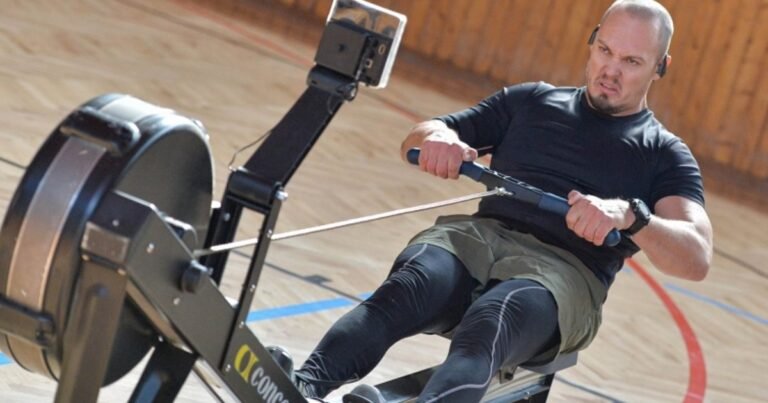
On an indoor bike, begin with a gradual warm-up, including two or three short increases in cadence. For acceleration practice, try four controlled efforts of six to eight seconds with a few minutes of easy spinning between efforts. Start below your maximum until you are comfortable with the machine and can remain stable throughout. For cadence practice, choose a resistance that lets you pedal quickly without bouncing in the saddle; aim for smoothness rather than an arbitrary revolutions-per-minute record. Use a familiar indoor bike or coached track environment rather than sprinting through traffic.
A hard thirty-second interval is a different stimulus. It creates substantially more metabolic fatigue than a brief acceleration and can make subsequent strength work difficult. Such intervals may have a place in a competitive programme, but a novice does not need to begin there. Build the capacity to execute short efforts well before adding longer or denser work.
Measure progress without chasing exhaustion
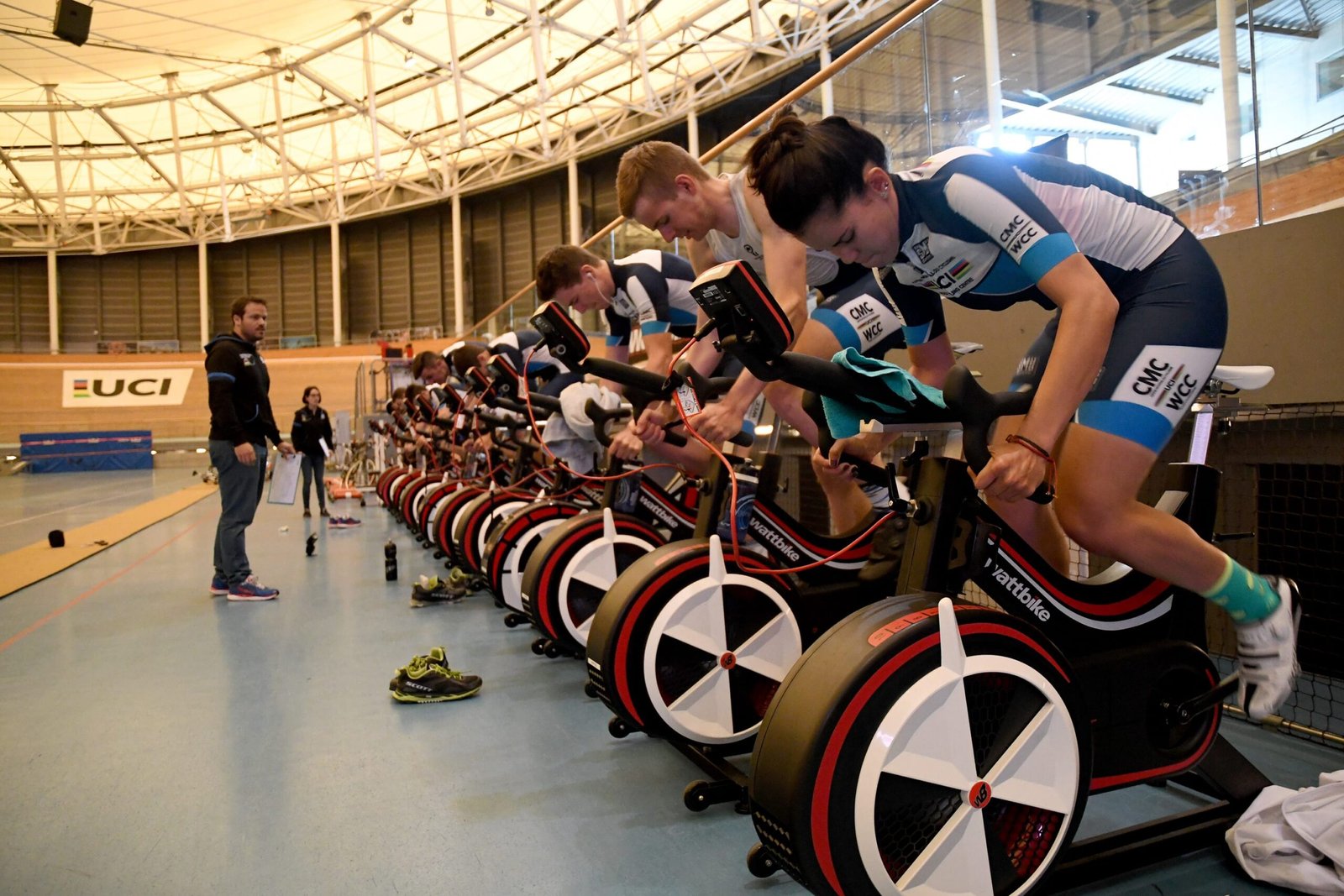
Hoy has described how unreliable stories about rivals’ training volumes could encourage him to attempt too much work early in his career. His later emphasis on objective measures offers a more useful alternative: decide what improvement means before you train. This prevents a session from turning into a competition with an imagined athlete.
Record three categories of information. First, keep a gym log with exercise, load, repetitions and an estimate of repetitions left in reserve. Second, record your cycling efforts using the same bike, resistance setting, starting cadence and test duration where possible. Third, write a brief note on how you recovered: sleep, unusual soreness and whether the subsequent session felt normal.
If your bike measures power, a short-effort average can be more repeatable than a single fleeting peak. If it does not, a consistent resistance and the distance or cadence achieved over a fixed interval can still provide a useful comparison. Do not compare displayed watts from different machines as though all were calibrated identically. Compare like with like, and look for a trend over several sessions rather than treating a small change as a personal breakthrough.
Quality matters more than the number of completed intervals. If your output falls sharply and your technique deteriorates despite normal rest, stop the hard efforts or reduce the planned intensity. Fatigue is information, not a moral failing. Persistent joint pain, dizziness or unusual symptoms are reasons to stop and seek appropriate professional advice, not to prove your commitment by finishing the set.

Funny Gym Shirts & Workout Gear
Funny gym shirts, tanks, hoodies and workout gear for lifters who like training hard.

Gym Dost Thou Even Pedal Medieval Air Bike Humor for Cr Tank Top
Bring “Dost Thou Even Pedal Medieval Air Bike” humor to your next lifting session.


Hybrid Athlete – Strength & Endurance Gym Decal for Run Sticker
Put “Hybrid Athlete” gym humor on your laptop, bottle, or gym gear.

Leg Day Squats Deadlifts Sweater Meme T-Shirt
Show some gym-day personality with “Leg Day”.

Shirt – Legendary Leg Day Meme Gymbros, & Fans T-Shirt
Make gym days more fun with “Legendary Leg Day Meme” style.

Never Skip Leg Day Squats & Deadlifts Meme , Top T-Shirt
Show some leg-day attitude with a playful “Never Skip Leg Day” tee.

Shirt Never Skip Leg Day NSLD Meme – Chicken Legs & T-Shirt
Show some leg-day attitude with a playful “Never Skip Leg Day NSLD Meme” tee.

2 Plates Squat Club Meme Shirt – Motivational Leg T-Shirt
Heavy lifts, good laughs, and a little “2 Plates Squat Club” energy.

Don'T Fart Squats & Leg Day Meme Hoodie
Show off your leg-day humor in a laid-back “Don't Fart Squats” hoodie.

Shirt – Train Hard Gains – Meme , & Workouts T-Shirt
Bring “Train Hard Gains” humor to your next gym day.
A four-week framework for ordinary riders and lifters
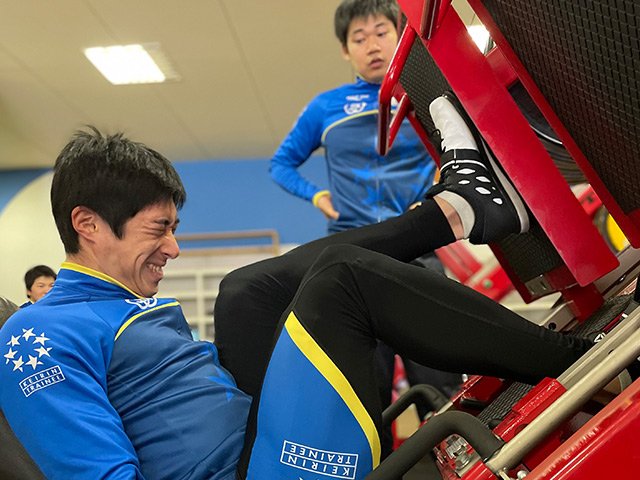
A balanced starting week might place strength training on Monday and Thursday, a short bike acceleration session on Tuesday or Friday, and an easy ride at the weekend. Adjust the days so that the most important session is not consistently performed on tired legs. If you are new to lifting or sprint work, start with one strength session and one bike session per week and build from there.
During week one, establish your baseline. Use a conservative squat load, record how the reps feel and complete four brief bike efforts at a manageable intensity. Do not test a new maximum. In week two, repeat the same exercise selection and bike setup, increasing the squat load slightly only if all previous repetitions were technically consistent. If the first week felt challenging, repeating it without an increase is a perfectly valid progression.
In week three, choose one variable to progress: either a small increase in lifting load or an additional short bike effort. Avoid increasing both simply because the calendar says so. In week four, reduce the overall workload and compare a familiar strength set and a short bike effort with your baseline. The goal is a cleaner, stronger performance, not exhaustion on test day.
Suppose your squat has improved, but your bike acceleration has not. That does not mean the strength work was wasted. It might suggest that the next block should emphasise technique or high-speed coordination. Conversely, if bike performance improves but strength falls steadily, review whether cycling intensity or insufficient recovery is compromising the gym sessions. The two measures tell you different things.
Hoy’s career illustrates the value of patient, purposeful preparation. The strongest lesson for most riders is not an elite workload, but a system that gives each session a clear job. Train force, practise speed, measure results, and leave enough room to return ready for the next session.