Advertising disclosure: This page includes affiliate links that may earn us a commission at no additional cost to you.
A preacher curl bench is a large answer to a fairly specific question: where do you rest your upper arms? The AbMat Preacher Pad takes a smaller approach. It supplies the angled cushion while your existing seat and body provide the surrounding setup. That makes it interesting for a gym that already has dumbbells and a bench, but little appetite for another permanent station.
The useful buying question is whether that arrangement fits your body and training space. This is a specification-led guide, not a hands-on MMP review. The pad’s listed dimensions explain its size; they cannot establish how comfortable or stable it will feel for every lifter.
Understand which part of a preacher station you are buying
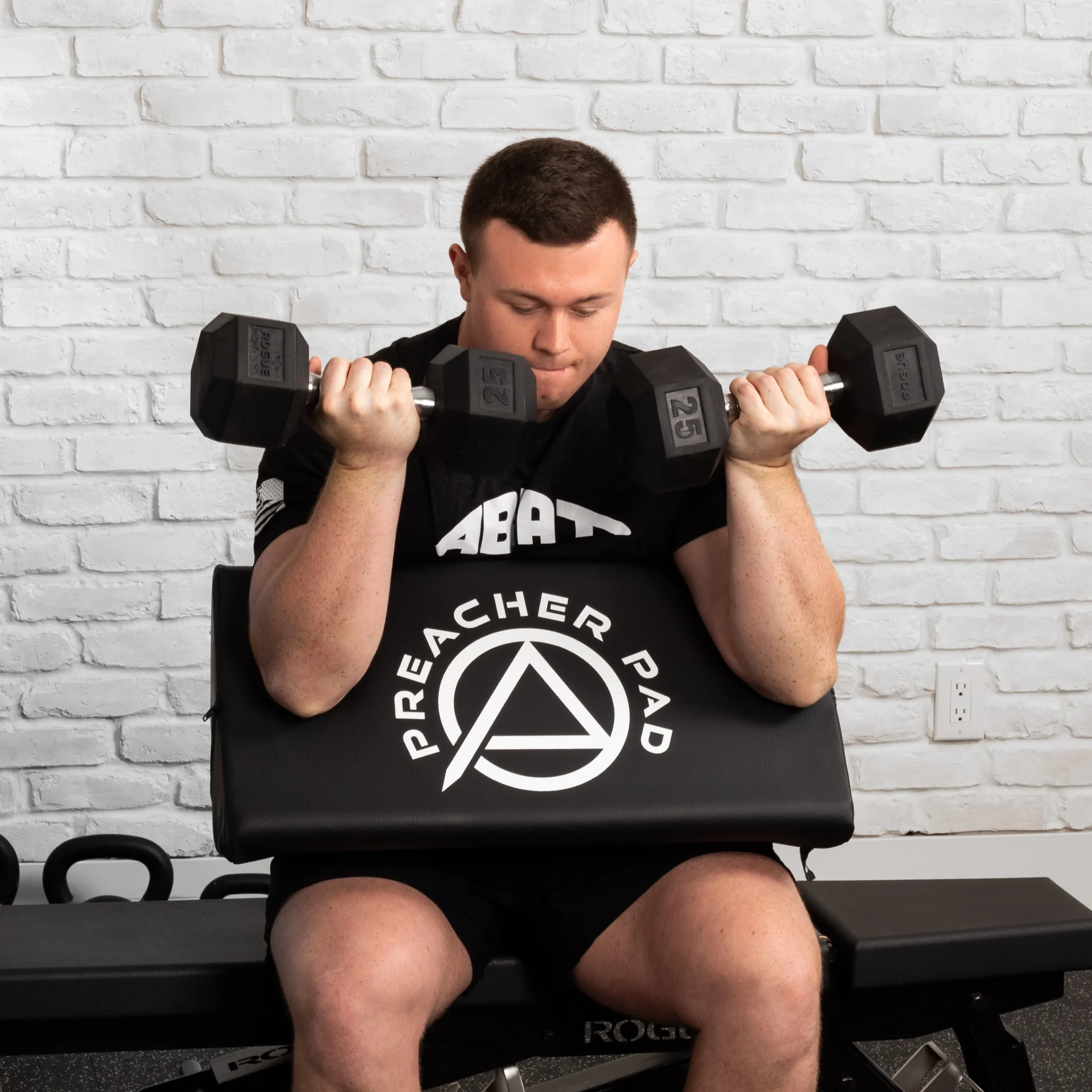
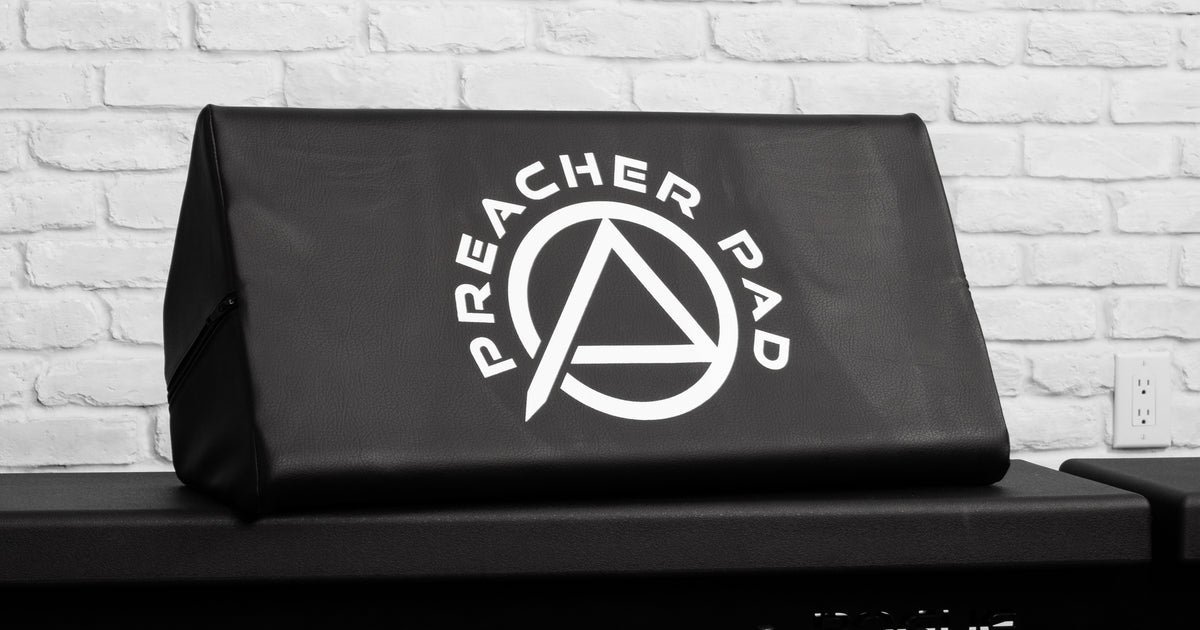
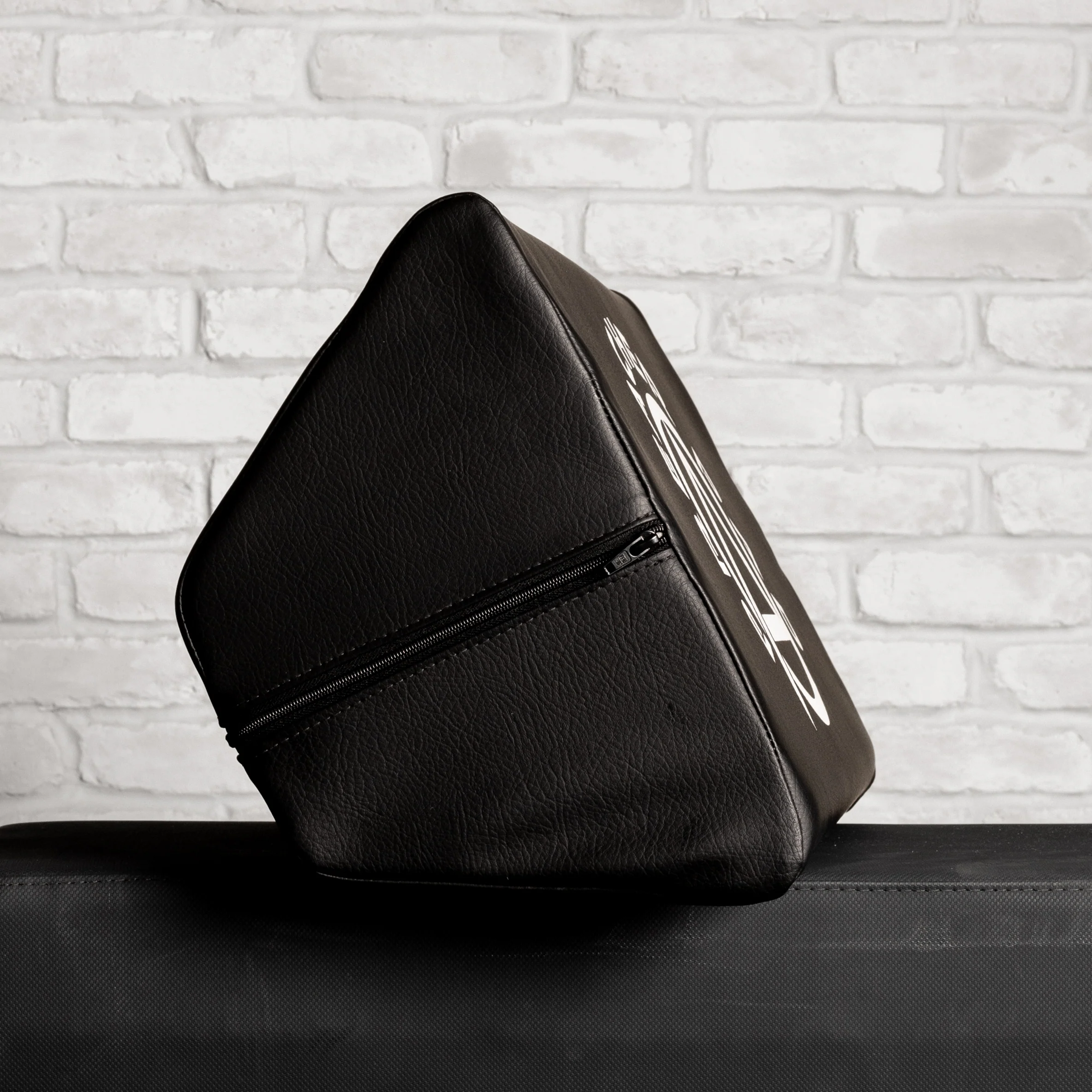
The Preacher Pad is a shaped foam cushion with a vinyl covering. It is intended to rest in your lap while seated, and can also be positioned on a bench top or suitable box. It does not include a steel stand, adjustable seat, bar holders or weights. Think of it as a portable arm-support surface rather than an entire curl station arriving in a smaller parcel.
That distinction affects your shopping list. Someone with a stable bench and suitable dumbbells may already own most of the surrounding equipment. Someone starting from an empty room still needs a sensible place to sit, room for the weights and a way to begin and finish each set. Comparing the pad’s price with a complete machine without accounting for those requirements gives an incomplete picture.
A dedicated preacher bench offers a different workflow: the seat, pad and often bar support belong to one frame. A removable pad trades that fixed arrangement for flexibility. Neither format automatically wins. The portable option makes most sense when moving the support out of the way is useful and the available seating produces a repeatable position.
Do not read arm support as a promise of effortless isolation or superior results. An acute comparison involving 22 men found different biceps electrical-activity patterns across standing, incline and preacher dumbbell curls. It did not test this pad or measure its long-term muscle-building advantage. The purchase should solve a practical setup problem before it becomes a claim about bigger arms.
Measure the seat, your reach and the space around the pad
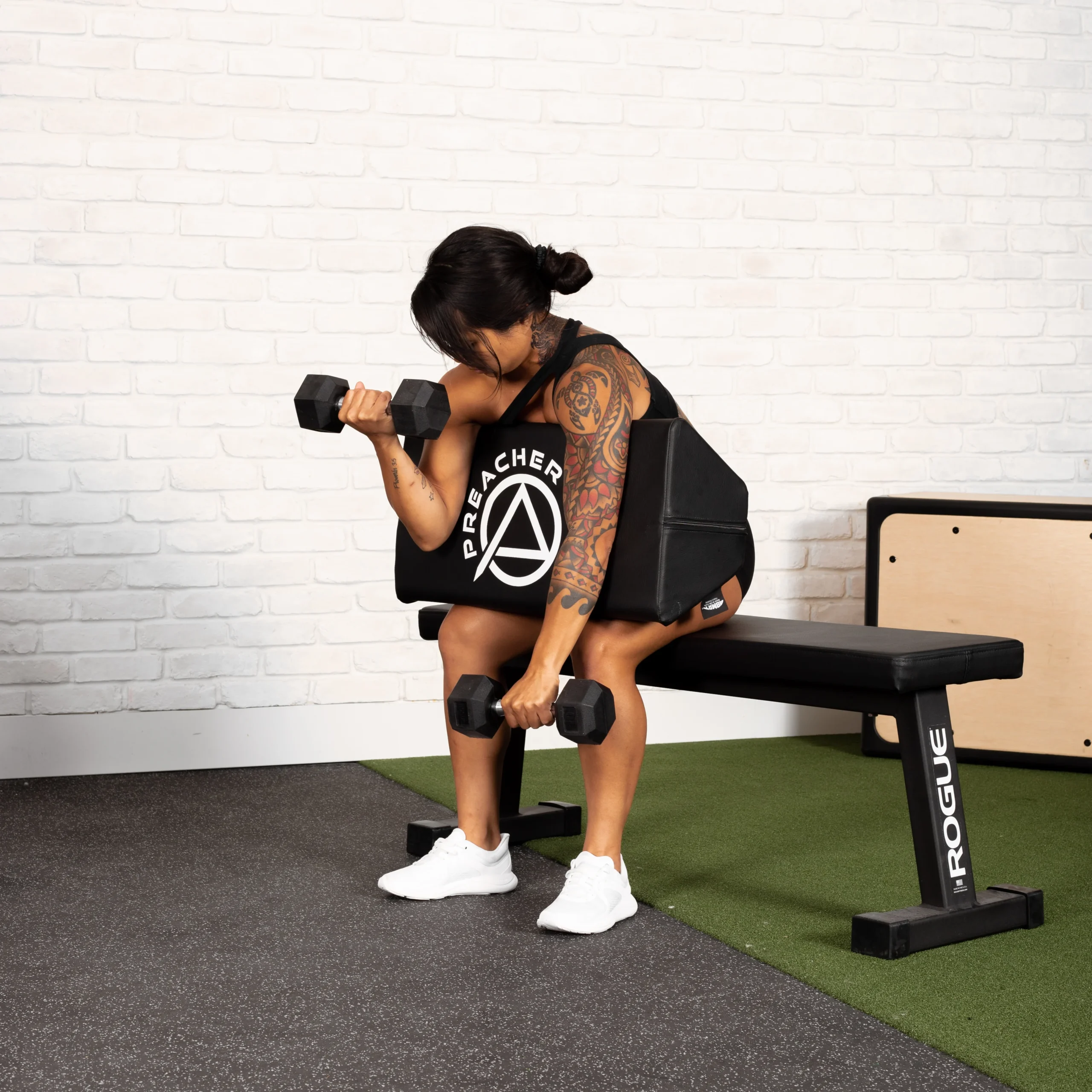
The listed pad size is 24 inches long, 13 inches wide and 8 inches high, with a listed weight of 3 pounds. Mark that volume against the bench and storage space you actually have. Its own weight describes portability; it is not a maximum barbell load rating. A photograph also cannot tell you the pressure you will feel where the pad meets your torso.
Seat height matters because it changes where your thighs, chest and upper arms meet the cushion. Before buying, sit on your intended bench with your feet supported and consider the position you would need to reach the working surface. A very tall lifter and a shorter training partner may need different seating arrangements. There is no reason to assume one product photograph demonstrates a universal fit.
Leave room in front of the seat for the implement’s complete path. Check where dumbbell heads or bar plates would pass your legs and where they would finish near the bottom. Also leave access for getting seated and standing up. A cushion that fits inside the room can still form an awkward exercise station when the person and weights are added.
If you cannot try the pad first, ask about the intended support arrangement, current return terms and any dimensions that are unclear. Measure your bench rather than buying another bench speculatively. The aim is a station you can reproduce without stacking unstable objects, balancing on an edge or forcing your body around the furniture.
Choose the implement and plan the first and last repetition
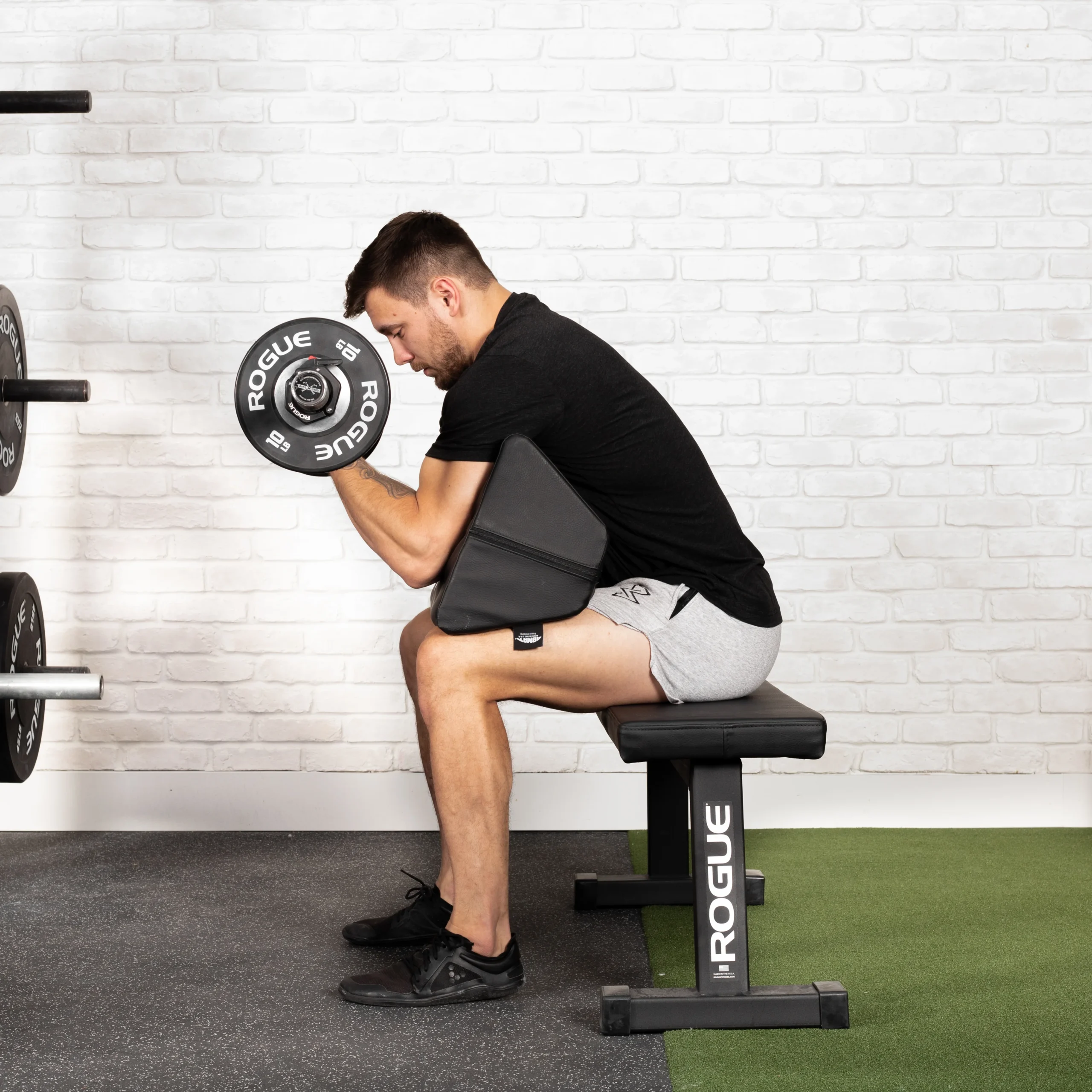
Dumbbells and a curl bar create different handling problems. One dumbbell lets you arrange one working arm at a time. Two dumbbells require a plan for both hands, while a loaded bar connects the hands and brings plates into the clearance calculation. The important comparison includes getting into position and returning the weight, not just the curl itself.
Begin a new arrangement with an unloaded or light implement. Check that the support stays in place and that the upper arm rests comfortably against it. Curl and lower under control without shifting the whole setup to rescue the repetition. If the cushion moves or the seat position becomes awkward, stop and change the arrangement before increasing resistance.
A portable pad does not supply bar hooks. Decide where the weight starts, whether you can pick it up while maintaining a stable position, and where you will put it down. Do not make throwing the weight or twisting out of the seat part of the plan. A helper’s availability should also be considered before choosing a load that depends on assistance to position.
Handle shape is another separate decision. An EZ bar fixes both hands along angled gripping segments, while dumbbells allow each hand more freedom. Our guide to straight-bar, EZ-bar and hammer-curl comparisons explains why grip and implement need to be considered together. An angled handle is an option to assess, not a guarantee of comfort or injury prevention.
Compare useful equipment without buying a second complete gym
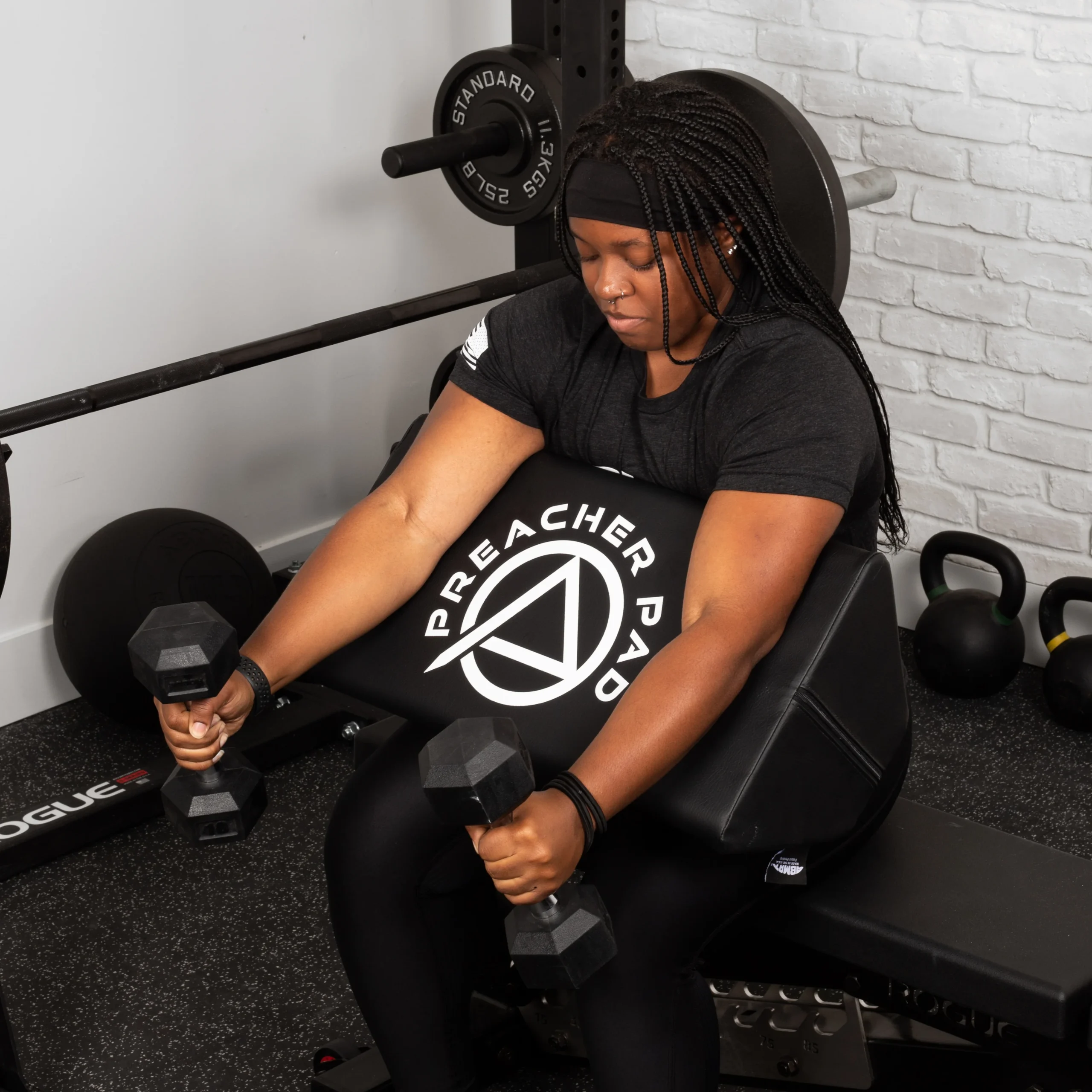
Start with the weights and seating you already own. If they offer suitable access, clearance and control, the pad may be the only additional item to consider. A more expensive bench does not automatically improve the curl. Buy replacement equipment to address an identified limitation rather than to reproduce every object visible in a promotional photograph.
For dumbbells, look beyond maximum capacity to handle length, head size and the available load increments. A manageable increase for a row can be a substantial increase for a curl. Our adjustable-dumbbell buying checks show why the actual sequence of settings and the return to the cradle matter. Those considerations remain useful even if you choose another system.
The equipment below offers curl bars, dumbbells, benches and plate-handling alternatives for comparison. These are separate product options, not a certified AbMat bundle. Check each manufacturer’s current dimensions, instructions and compatibility; a collar or change plate that fits one bar does not become suitable for every selector dumbbell or handle.

Equipment Worth Exploring
Explore equipment, accessories and gear from our carefully selected range.


EZ Curl Barbell
Olympic EZ curl bar with angled grips for curls and triceps exercises.

Rubber Hex Dumbbells
Rubber-coated hex dumbbell pairs with a stable shape for home and commercial strength training.


FID Bench MAX
Adjustable bench offering flat, incline, and decline positions + adjustable headrest.

Multi Bench MBX-650 2.0
Adjustable multi-bench with roller adjustment, 15 backrest positions and accessory mounts.


Keep the exercise’s role equally clear. Supported curls can be one choice within arm training without replacing every other curl. A separate 16-person electrical-activity comparison favoured concentration curls among its tested movements, but that acute result was not a long-term contest between products. Buying a support pad and choosing an entire training programme are different decisions.
If arm day is also where you enjoy a little gym humour, the optional apparel selection reflects biceps and curl themes. The designs are merchandise, not training instructions, performance claims or endorsements of the pad.

Bodybuilding Shirts & Workout Gear
Bodybuilding shirts, tanks and gym gear for lifters chasing muscle, size, symmetry and the pump.


Funny Micro Biceps Club President | Gym Humor Hooded | Hoodie
Bring “Micro Biceps Club President” gym humor to lazy days and post-workout plans.

Muscle Mountain – Bicep Mountain Meme Pullover Jumper T-Shirt
Keep things casual with a little “Muscle Mountain” attitude.

Every Day Is Arm Day
Make gym days more fun with “Every Day is Arm Day Octopus Gym Meme” style.

Curls The Girls Shirt – Bicep Curls Top & Gymbros T-Shirt
Rep “Curls For The Girls” humor in and out of the gym.


Shirt Pull Day – Back & Biceps Meme Top T-Shirt
Heavy lifts, good laughs, and a little “Pull Day Graphic” energy.

I Love Gym Bicep Heart | Swole Heart Decal for Gym Love Sticker
Stick a little “I Love Gym Bicep Heart” humor on your favorite gear.

Mind Muscle Perfection Embroidered Brain and Biceps Gym Hat
A playful “Mind Muscle Perfection Embroidered Dad” cap for workouts and weekends.

Muscle Mommy Lifting Club for Gym Girls, Lifting, Fitne Tank Top
Show some personality between sets with “Muscle Mommy Lifting Club”.
Decide whether a removable pad suits your routine
Consider the transition between exercises. Where will the pad sit while you press, row or use the same bench for something else? Its portability is helpful only if there is a practical place to put it. Keep it somewhere it will not obstruct walking routes or become a surface for storing sharp-edged plates and accessories.
Inspect the covering, seams and contact surfaces as part of ordinary equipment care, and follow the current cleaning instructions. Do not infer chemical compatibility from the word vinyl or assume every gym disinfectant is appropriate. Likewise, a soft cushion still needs a stable supporting arrangement; padding cannot correct a rocking bench.
The strongest buying case is straightforward: you already have suitable seating and weights, want a supported curl option, and value removing the support afterward. A dedicated station may suit someone who prioritises a fixed position and integrated bar storage. Keeping your current curls may be the sensible choice when there is no clear problem to solve.
Before ordering, answer four questions: does the listed size fit, can you establish a comfortable supported position, can you handle the weights from start to finish, and do the current purchase terms work for you? Those answers are more useful than an imagined universal pad angle or a promise of faster growth. The Preacher Pad is worth considering as a compact piece of equipment; the final test is whether it makes your actual curl setup simpler.