Advertising disclosure: This page includes affiliate links that may earn us a commission at no additional cost to you.
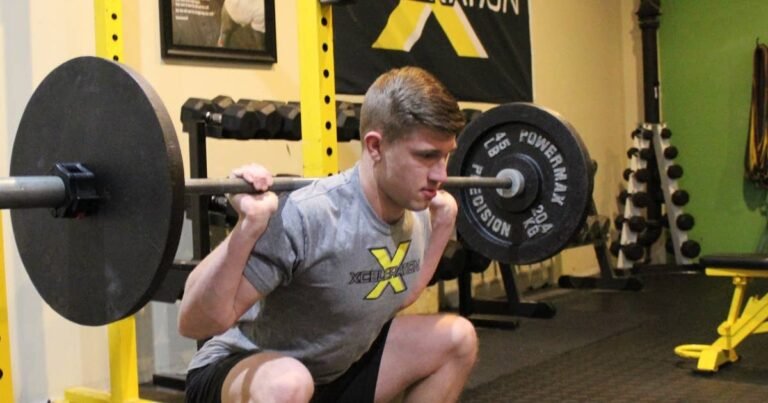
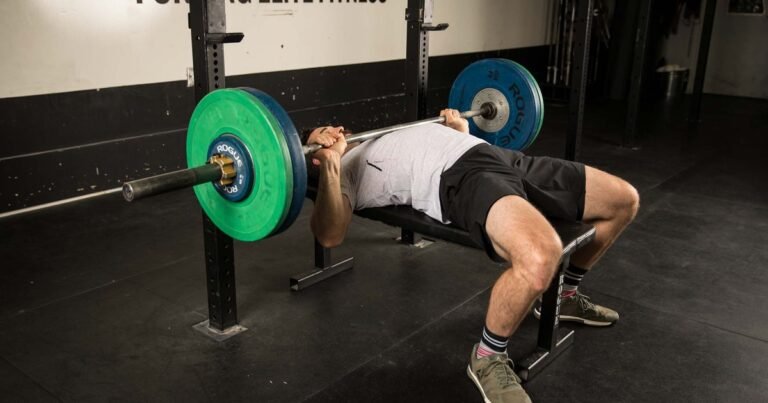
You have three hard sets of squats and three hard sets of bench press planned. Which should come first? The answer might seem obvious if you are a powerlifter rehearsing competition order, but a training session does not have to follow the sequence of a meet. Exercise order is a variable you can manipulate to protect the quality of the work that matters most.
A small 2024 crossover experiment provides an unusually specific example. Ten trained men performed the same Smith machine squat and bench press workouts in two different orders. The bench press was measurably slower when it followed squats. The reverse sequence did not produce a statistically clear change in squat velocity. That does not mean squatting first is a mistake, or that benching first will automatically build more strength. It means the order of two familiar exercises can change what you are able to deliver in the same nominal workout.
What the two workouts actually tested
The participants were young male sports science students with resistance training experience. Their average age was just under 21. Across four visits, they became familiar with the protocol, completed a load-velocity assessment to estimate their one-repetition maximum and performed both experimental conditions. The order of the conditions was randomized, with at least 48 hours between sessions.
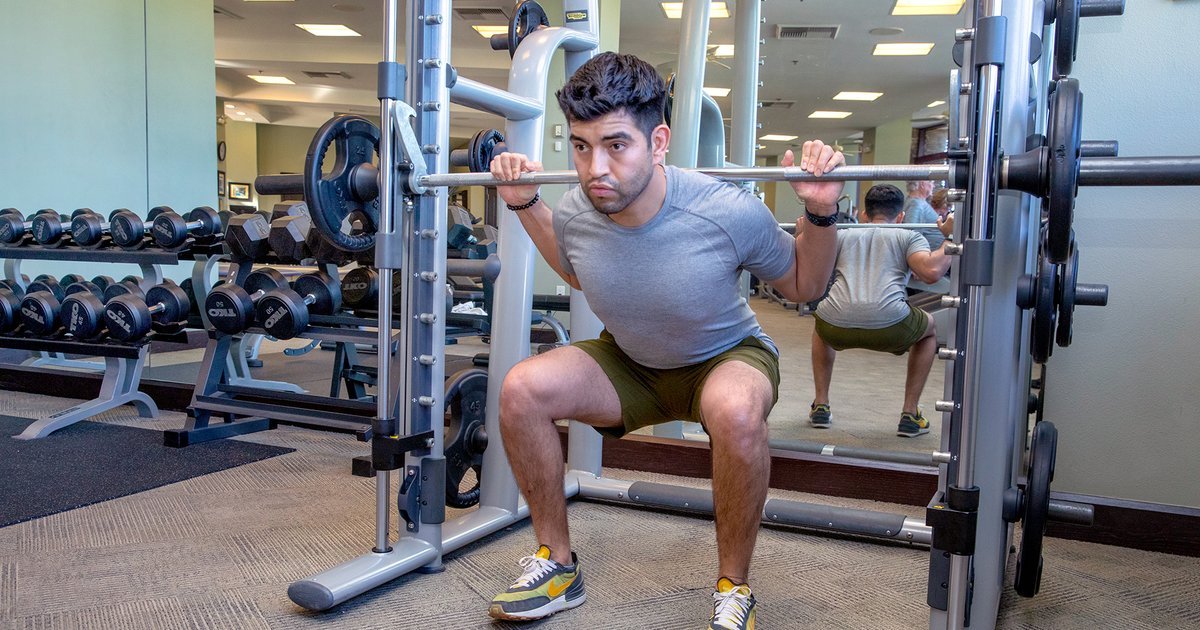
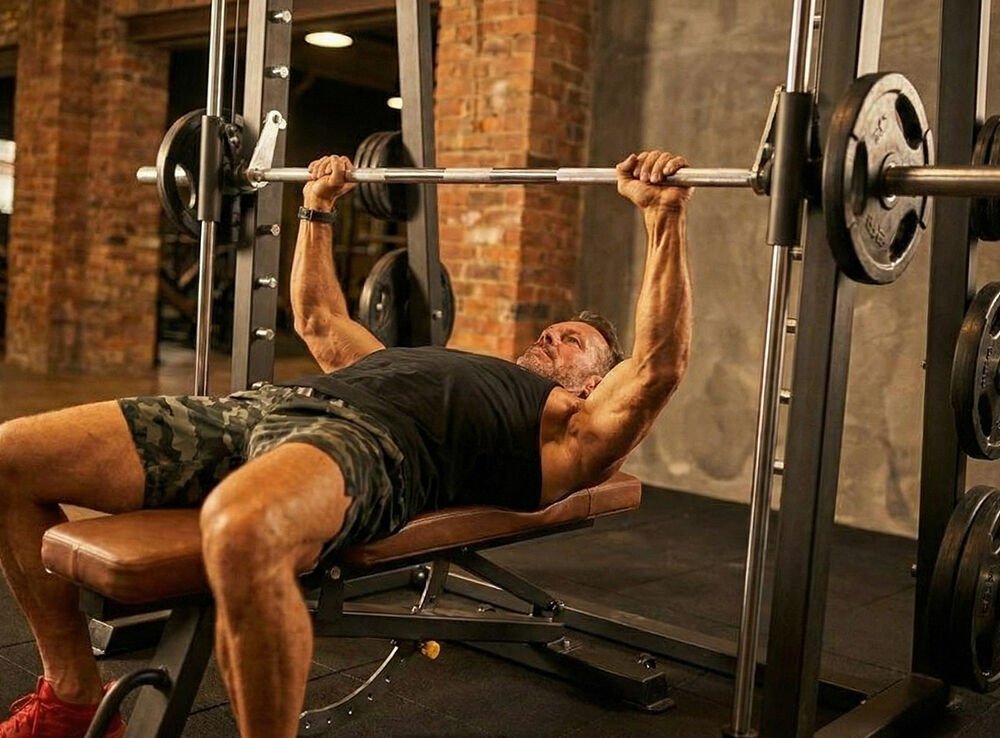
In each workout, both exercises were performed on a Smith machine. Each consisted of three sets of six repetitions at 80% of the estimated one-repetition maximum, with three minutes of rest between sets. The lifters were asked to perform the concentric phase with maximal intended speed. The bench press included a two-second pause at the chest, reducing the contribution of a quick rebound.
One condition began with the bench press and finished with the squat. The other began with the squat and finished with the bench press. The prescribed sets, repetitions and relative load were identical. By having the same lifters complete both versions, the experiment reduced the influence of differences in individual training experience or strength between groups.
The question was not whether participants could set a heavier personal record at the end of a workout. It was whether they could move a prescribed load as quickly in one sequence as in the other. Mean propulsive velocity describes the average velocity during the propulsive part of the lift, while peak velocity refers to the highest recorded speed. They are related measures, but neither is the same as a direct measurement of muscle growth or a new one-repetition maximum.
Why the bench press slowed when squats came first
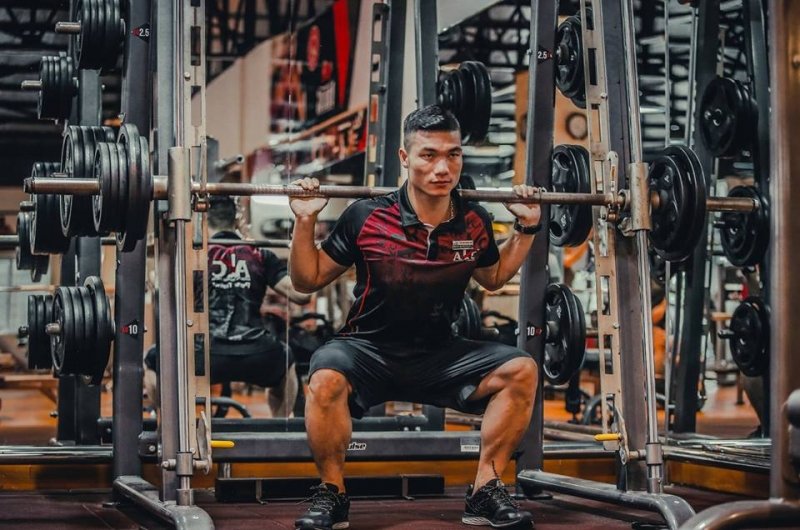
The first bench press set averaged 0.50 metres per second of mean propulsive velocity when bench press came first, compared with 0.42 metres per second after squats. The same difference appeared in the second set: 0.50 versus 0.42 metres per second. Both comparisons were statistically significant at p = 0.03. Peak velocity in the second set was also higher with bench first, at 0.74 versus 0.63 metres per second (p = 0.02).
That is a useful distinction for a lifter who treats the speed of heavy repetitions as a quality signal. You can finish six repetitions in both conditions and still have a different performance profile. A workout log that records only sets, repetitions and kilograms would miss that difference. In this experiment, the relative load was based on an estimated maximum; the velocity result should not be interpreted as a sixteen-percent loss in maximum strength.
Why might squats affect the subsequent press even though the main working muscles are different? Heavy lower-body work demands more than the quadriceps and glutes. It requires sustained effort, bracing and recovery between repetitions. General fatigue is a plausible contributor, but these data do not isolate a particular neural, metabolic or psychological mechanism. Heart rate and blood lactate did not differ significantly between the two sequences. Those measurements cannot establish the cause of the velocity difference.
Other acute exercise-order experiments have also found that performance can be affected by earlier work. In one involving trained men and different barbell and Smith machine pressing variations, order influenced the volume of work completed. In another involving experienced lifters doing upper-body exercises, movements positioned later in a session tended to lose repetitions. These are different protocols, but they reinforce the idea that completing the same exercises in a different sequence need not produce the same performance.
The squat result is not a free pass
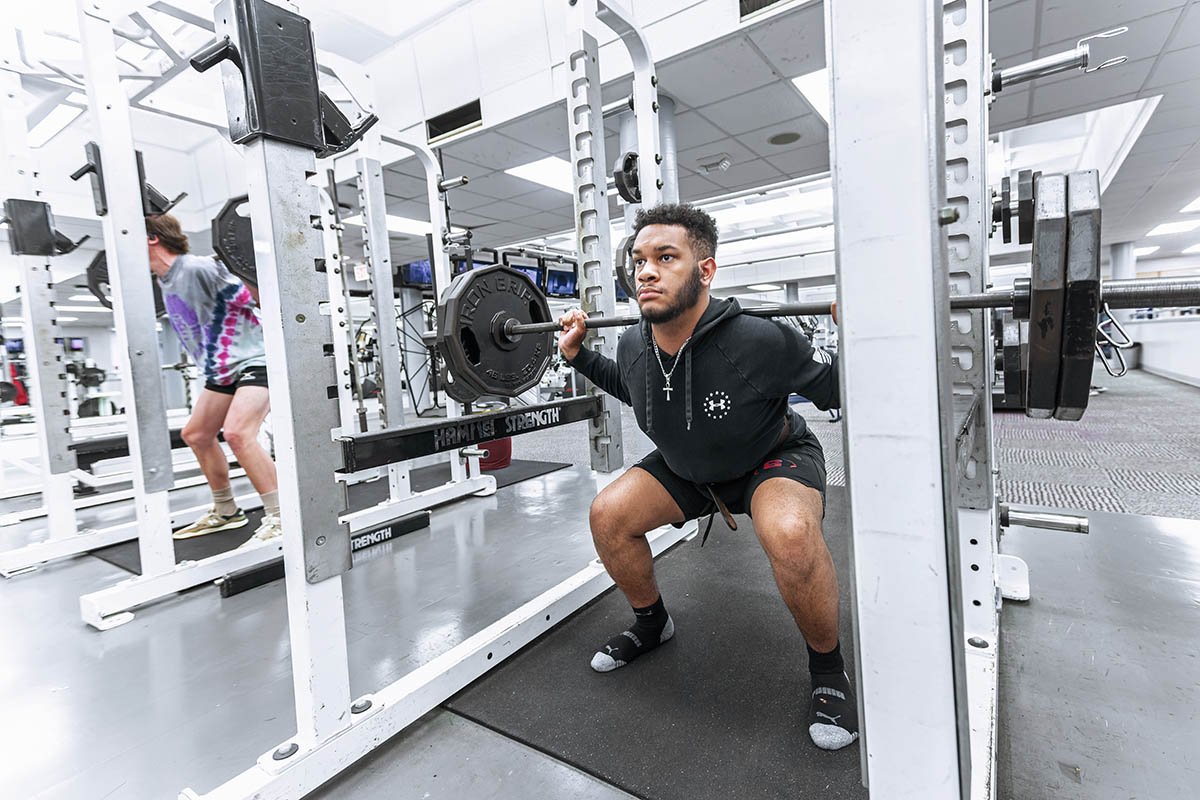
The squat measurements did not show a statistically significant difference between the two conditions. That is a less dramatic result than the bench press finding, and it should be interpreted carefully. A small sample can miss real differences. The absence of a statistically significant result is not proof that both sequences are interchangeable for every lifter, every load or every kind of squat.
Both exercises in the experiment were guided by the Smith machine. A free-weight squat requires the lifter to balance the bar over the base of support, and a free-weight bench press adds its own stabilization demands. The experiment therefore offers a useful hypothesis to test in free-weight training, not a measured prediction of free-weight performance.
There is also an important difference between training for a single session and training for several months. A 2020 review of eleven resistance-training studies found that strength gains tended to favor exercises performed earlier in the session, whereas the available hypertrophy comparisons did not establish a significant difference based on order. That longer-term evidence is a reason to prioritize an exercise for which strength progress is particularly important. It is not a reason to assume that every slower repetition is wasted or that a particular order maximizes muscle growth.
Equipment setup matters as well. A properly adjusted bench, predictable bar path and suitable safety stops allow you to focus on the intended work rather than dealing with a different setup every week. If you use free weights, learn the appropriate rack safety arrangements and use a spotter when required. A change in exercise order is not a substitute for safe execution.

Equipment Worth Exploring
Explore equipment, accessories and gear from our carefully selected range.

Multi Pull Smith Rack MPHR-780
All-in-one rack with a Smith machine, functional trainer, lat pulldown and low row.




Competition Plates
Competition-style bumper plates for Olympic lifts and loaded strength training.


Organize the session around the lift that matters
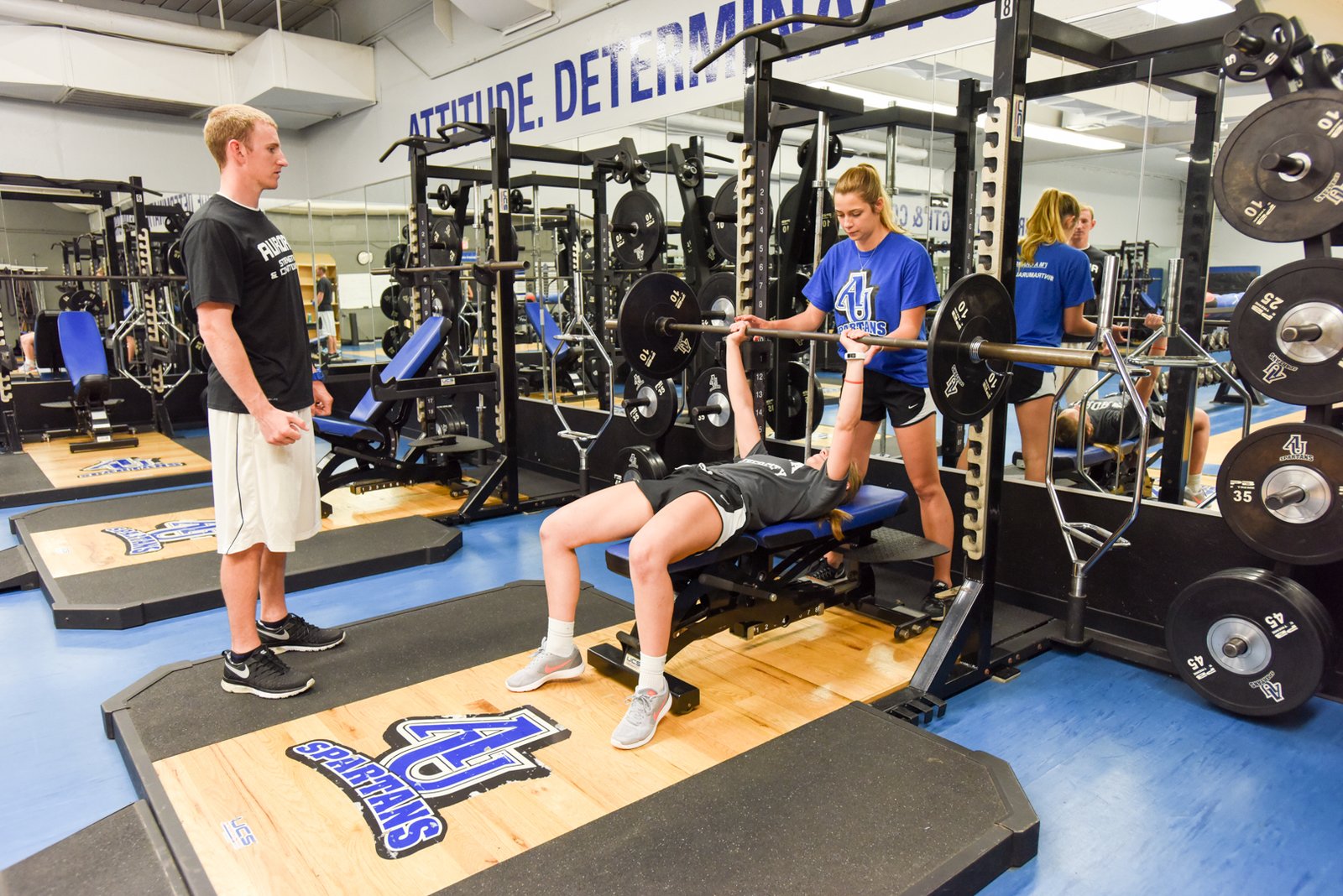
If your primary goal is to improve the bench press, perform your bench-specific warm-up and working sets before the demanding lower-body work. This is especially sensible when you are tracking the speed of a fixed load, practicing a pause or trying to keep heavy repetitions consistent. You can then squat with a sensible load and adjust it to the quality of your repetitions on that day.
If your primary goal is the squat, reverse that priority. You may accept some reduction in pressing performance because the most important work has already been completed. That trade-off is not a programming error. It is the point of assigning priorities. A powerlifter who needs to practice the competition sequence may also have a reason to put squats first, even if that is not the best arrangement for an isolated bench performance test.
A lifter training both movements twice each week has an additional option: alternate the priority. On Monday, perform the main bench work followed by moderate squats. On Thursday, perform the main squat work followed by moderate pressing. The important sets of each lift get a session in which they are first, while the other work supports practice and total weekly training volume.
For example, a bench-priority day might use three challenging bench sets at a load you can control, followed by three squat sets that leave a couple of repetitions in reserve. A squat-priority day might reverse those roles. The number of sets, effort and frequency should still fit your experience and recovery. You do not have to copy the experiment’s 80% load or six-repetition prescription to apply its central idea.

Powerlifting Shirts & Lifting Gear
Powerlifting shirts and gym gear for squat, bench and deadlift lifters who live for heavy numbers.


Bench Press and Chill Funny Gym T
Make gym days more fun with “Bench Press and Chill” style.

Shirt: Good Argument But I Bench More Than You – T-Shirt
Make gym days more fun with “: Good Argument But I Bench More Than You” style.


Squats R Us Shirt – Leg Day Gains & T-Shirt
Heavy lifts, good laughs, and a little “Squats R Us” energy.

Heavy Barbell – Meme Shirt & Top T-Shirt
Make gym days more fun with “Heavy Barbell Powerlifting Graphic” style.

Meme : Squat Rack Top Home T-Shirt
Make gym days more fun with “Powerlifting Gym Meme” style.

My Bench Press Is Stuck Horror Scary Movie Meme Hoodie
Show off your Halloween humor in a laid-back “My Bench Press Is Stuck Horror” hoodie.

Don'T Fart Squats Decal Water Bottles & Weight Sticker
Give your everyday gear a playful “Don't Fart Squats” twist.
Track performance before changing the program
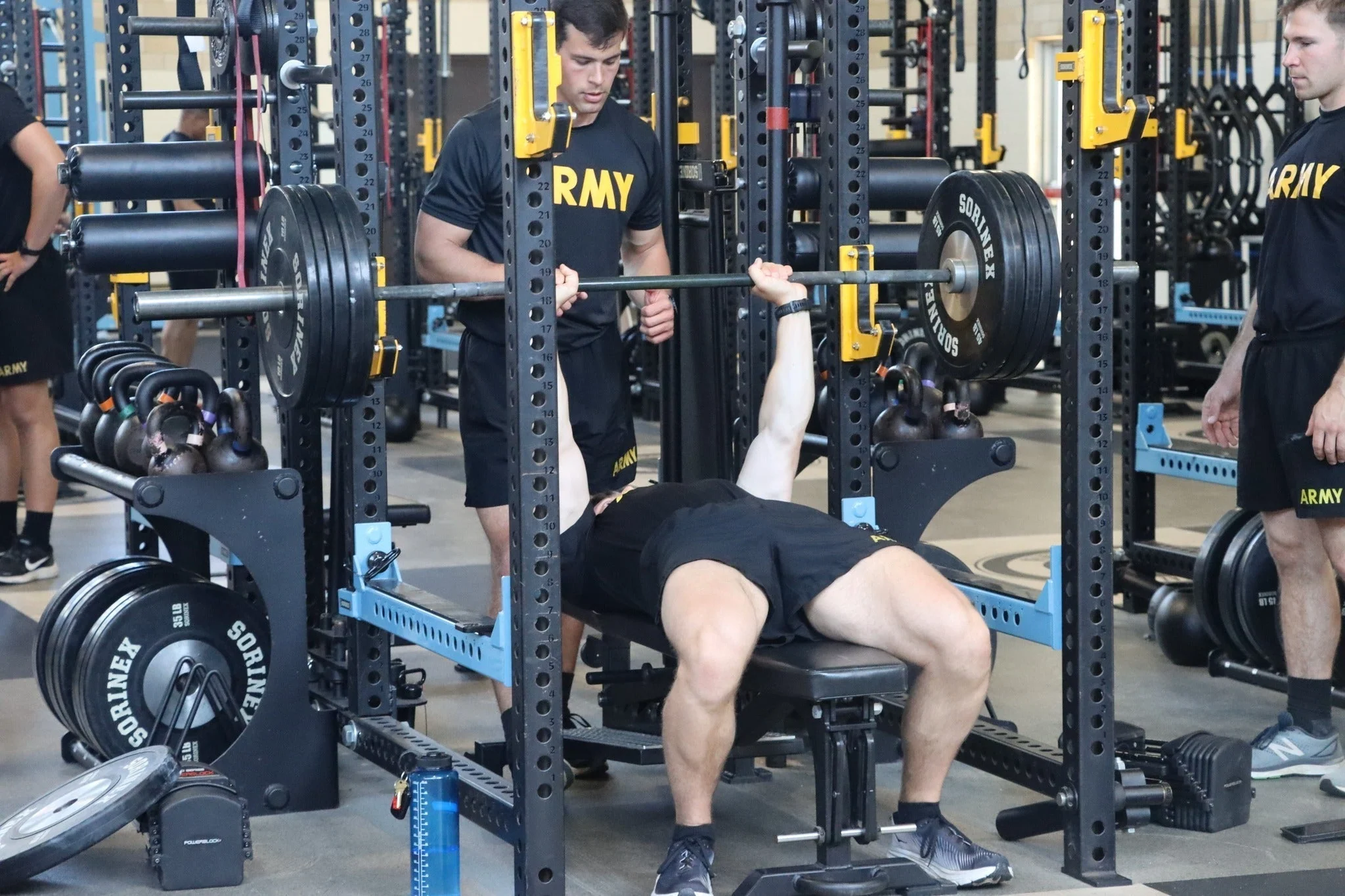
Try a simple comparison before restructuring your entire training program. Select a familiar working weight for each lift and record a few sessions with your current sequence. Keep warm-up, rest intervals, technique and the approximate time of day reasonably consistent. Then test the reverse order on comparable sessions. Do not compare a well-rested workout with one after an unusually demanding day and attribute the entire difference to exercise order.
If you have a reliable velocity device, compare the same velocity metric, the same load and the same repetition number. A first repetition is a different measurement from the average of six repetitions. Without a device, you can still record repetitions completed, perceived effort, whether the planned pause was maintained and how smoothly the final repetitions moved. A consistent camera angle can help you review technique, although ordinary video is not equivalent to calibrated velocity measurement.
Look for repeated differences rather than one disappointing set. If bench performance repeatedly falls when you squat first and the bench is your priority, the simpler solution may be to change the sequence rather than add another accessory exercise. If both lifts progress in your existing arrangement, there is no obligation to change it.
The study was small, acute and limited to young trained men using a specific Smith machine protocol. Its most valuable lesson is not a universal rule about the correct order. It is that exercise order can affect the performance you bring to a lift, even when the planned workload looks identical on paper. Put the movement that needs your best effort where you are most likely to deliver it, and use your own training records to check whether that decision is working.