Advertising disclosure: This page includes affiliate links that may earn us a commission at no additional cost to you.
More finger strength can help a climber tackle demanding holds. But a stronger short hang and a longer sustained hang are different outcomes. A controlled ten-week training study illustrates why the distinction matters when planning a week of climbing.
What a ten-week experiment actually measured
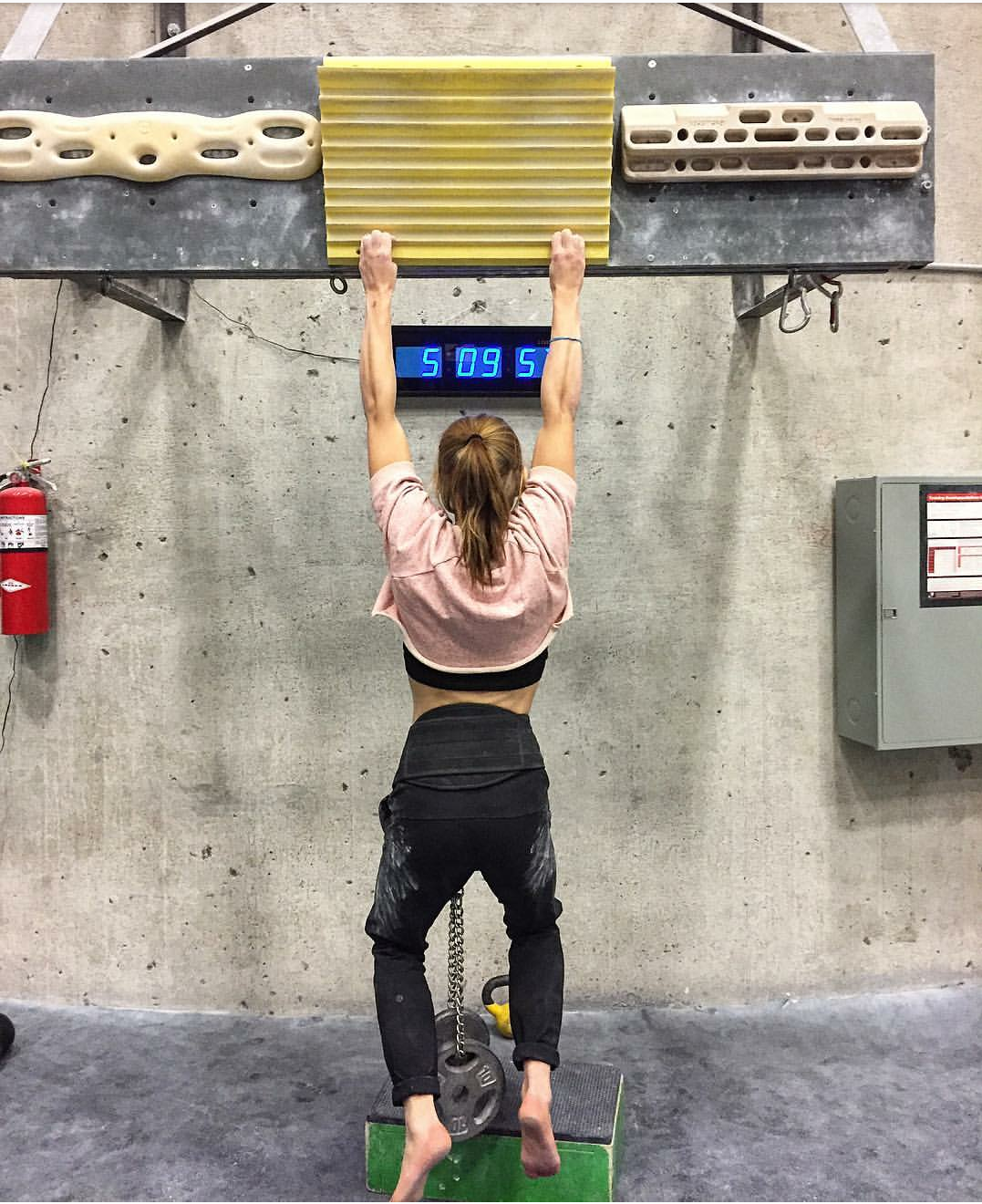
Climbing looks like an exercise in hanging on, but the ability to hold a small edge briefly and the ability to keep producing force across a long route are not interchangeable. A fingerboard makes it possible to train the former in a controlled environment. That is useful because a wall session includes decisions, footwork, body positioning and grip changes that are difficult to standardize.
A 2022 experiment followed 35 intermediate to advanced climbers for ten weeks. Eighteen were assigned supplemental hangboard training and 17 continued their ordinary climbing. The supplemental group was prescribed two sessions per week on a wooden board. A 23 mm edge was used for the finger-force assessments. The participants were already climbers, not people learning to hang for the first time.
The distinction between the intervention and the test matters. An edge depth, a grip position and a force measurement define a specific task. A test on a different edge or with a different thumb position might not produce the same number. Neither a short maximum-effort measurement nor a sustained hang alone captures everything that happens during a climb.
The strongest result was finger force, not longer hangs
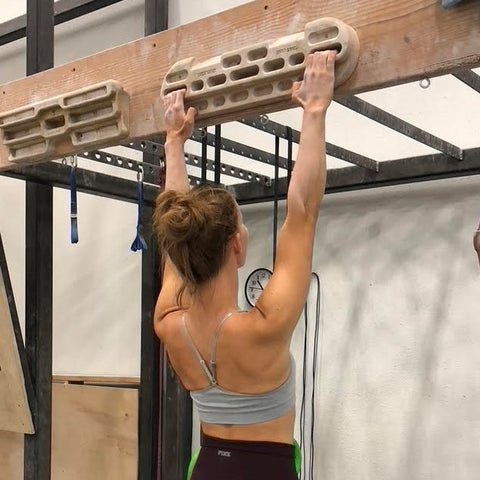
Peak finger force increased by roughly 90 newtons in the hangboard group, compared with about 20 newtons in the comparison group. Average force increased by roughly 61 versus 13 newtons. Those are changes in measured force, not kilograms of added weight on a dip belt and not increases in climbing grade. They support the idea that a targeted finger-strength stimulus can improve the quality it is designed to train.
The sustained-hang results were less convincing. Mean endurance increased by about seven seconds in the supplemental group and about two seconds in the comparison group, but the difference between groups was not statistically clear. The rate of force development also did not show a clear between-group advantage. A change within one group is not the same as demonstrating that the intervention beats the alternative.
That is a valuable result rather than a failure of the program. The test tells a climber what to expect with more confidence and what still needs separate work. It would be misleading to promise that a ten-week fingerboard block will automatically solve forearm pump on long routes. It would also be misleading to claim endurance never responds to hangboard work; this specific experiment did not establish a clear additional endurance benefit.
Why a stronger hang is not automatically better climbing
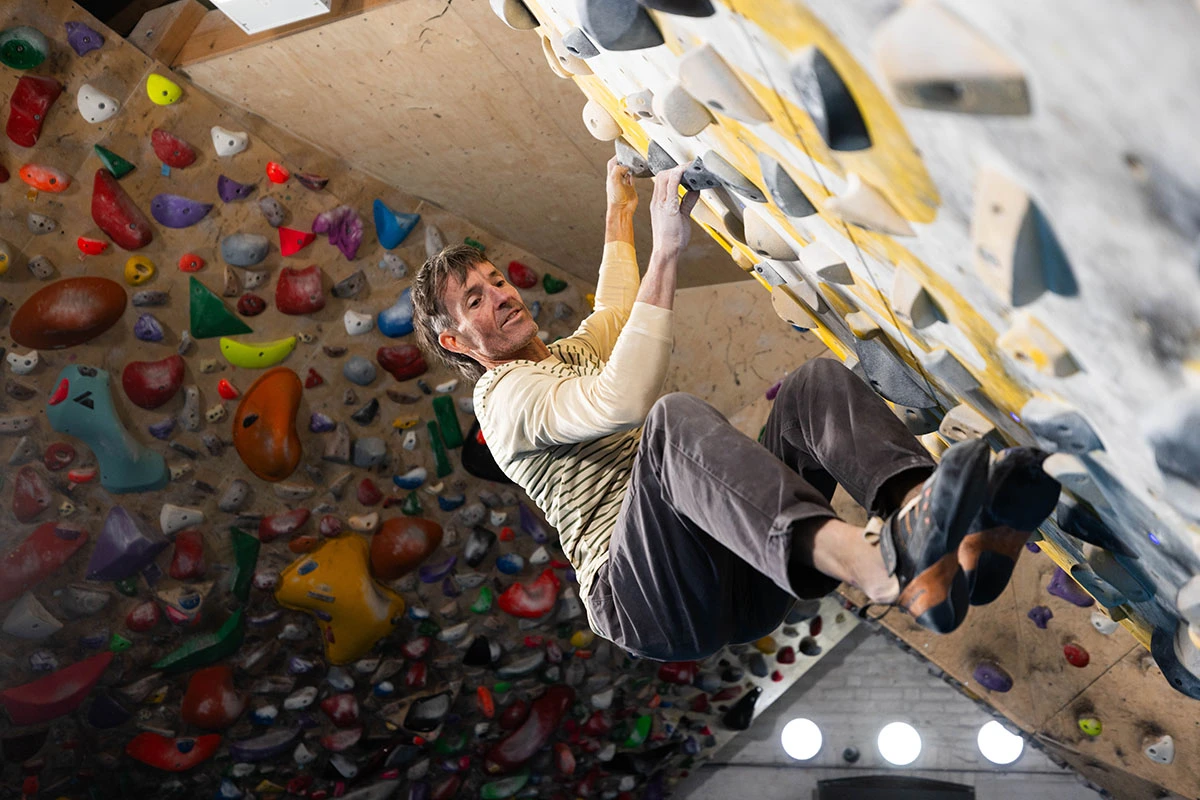
A climber who increases maximal force can potentially hold the same edge at a smaller fraction of their maximum. That may make a particular hold feel easier, but there is no guarantee that an improvement in isolated finger force produces an equivalent improvement in time on the wall. The athlete still needs to decide where to rest, when to change grip and how to use the feet to reduce demand on the arms.
Consider two climbers who fail a route at the same hold. One cannot generate enough force to establish contact on the edge even when fresh. The other reaches it comfortably in isolation but arrives with fatigued forearms after a long sequence. Their training problems are different. Maximum-strength practice is a plausible priority for the first climber. Repeated efforts, pacing and movement economy might deserve more attention for the second.
The experiment also involved a real trade-off: the supplemental group reported fewer regular climbing sessions than the comparison group. The finding is therefore not a clean demonstration of what happens when someone simply adds more training to an unchanged weekly schedule. It is better to view fingerboard work as part of the entire climbing workload, rather than as a free extra session that carries no fatigue cost.

Equipment Worth Exploring
Explore equipment, accessories and gear from our carefully selected range.


Power Tower
Freestanding pull-up and dip station with adjustable handles for bodyweight training.



Angles 90 Grips
Flexible grip attachments that allow natural wrist movement during pulling exercises.

How to add fingerboard work without burying your climbing
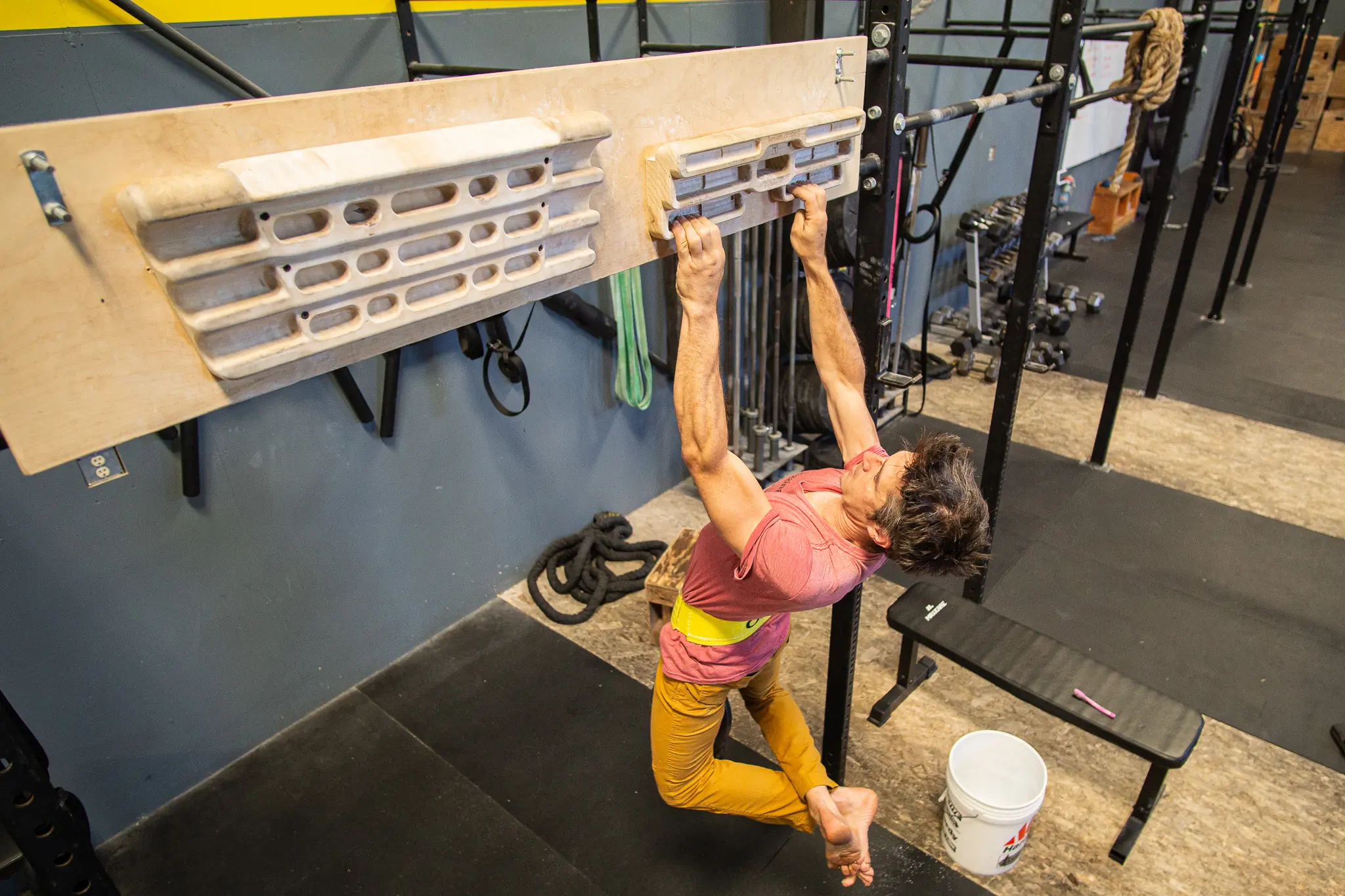
Start with the weakest quality you can identify, not the smallest edge you can tolerate. For an experienced climber with a clear finger-strength limitation, a short controlled block can be a reasonable addition to a week. Keep the sessions separated and place difficult gripping efforts when the hands are relatively fresh. The study used two weekly sessions, but that is a description of its intervention rather than a universal prescription.
Warm up with easy movement and gradually more demanding holds. On a stable board, use an edge and grip that allow a controlled effort without abrupt changes in finger position. Keep the shoulders supported by active muscular control rather than dropping into a painful or unstable position. Assistance from the feet or a suitable counterweight system can make the effort less demanding. Added weight is one progression option for experienced people, but it is not obligatory.
Keep other sources of gripping fatigue in view. Heavy pull-ups, rope work and long bouldering sessions compete for some of the same recovery resources. General upper-body pulling and grip accessories can complement climbing, but they cannot replace the specific edge contact of fingerboard training. Do not improvise a loaded hanging system with an unverified mounting surface or accessory.
If your fingers or elbows become painful, reduce or stop the provoking work. Persistent pain, sudden swelling or loss of function warrants appropriate clinical assessment. New climbers can develop a great deal of strength and coordination through gradually progressed climbing itself; the study’s experienced sample does not justify a maximal hang program for every beginner.

Funny Gym Shirts & Workout Gear
Funny gym shirts, tanks, hoodies and workout gear for lifters who like training hard.

Grip Training Get A Grip Hoodie
Show off your lifting humor in a laid-back “Grip Training” hoodie.

Pull Up Or Shut Up Hoodie
Bring “Pull Up Or Shut Up” gym humor to lazy days and post-workout plans.

Pullups Heartbeat Crewneck
Keep things casual with a little “Calisthenics Pullups Heartbeat” attitude.


Calisthenics Hanging Out Decal for Water Bottles Laptop Sticker
A fun “Calisthenics Hanging Out” touch for bottles, laptops, and lockers.

Pumpeye Sweater Forearm & Grip Training Popeye Meme T-Shirt
For laid-back days and bodybuilding humor: “Pumpeye”.

Grip Strength Fanatic Meme Hoodie
Show off your lifting humor in a laid-back “Grip Strength Fanatic” hoodie.

Grip Training Essential Gymbro Jumper & T-Shirt
For laid-back days and lifting humor: “Grip Training Essential”.

Slip Not Grip Training – Heavy Metal & Gymbros – T-Shirt
Heavy lifts, good laughs, and a little “Slip Not Grip Training” energy.
Measure progress without confusing strength with endurance
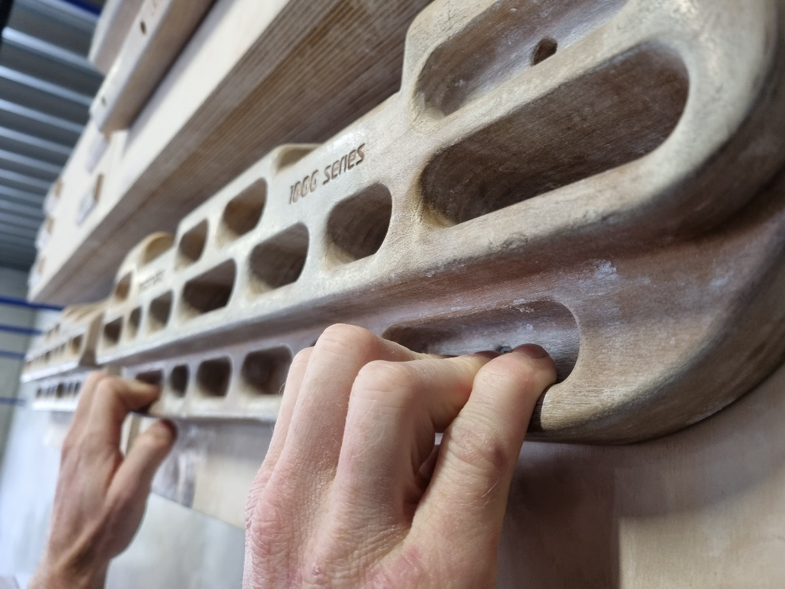
Pick a repeatable test before starting the block. Record the edge depth, grip style, whether one or both hands are used, any assistance or external load, and how the effort is timed. Retest under similar conditions, ideally after sufficient recovery. Small changes in testing setup can create apparent improvement without a meaningful change in capacity.
Keep an endurance measure separate. A fixed-load sustained hang or a reproducible repeated-effort protocol can tell you more about that specific quality than a maximum-force number. Record route or boulder performance separately as well, because a successful climb depends on movement skill and route characteristics. A stronger score on the board alongside stalled route performance is a reason to investigate, not to declare the entire program useless.
Over a training block, watch whether the intended strength improvement comes without sacrificing the climbing you value. If fingerboard performance rises but every wall session feels flat, reconsider weekly volume. If maximum force remains stable while route performance improves, that may be a successful outcome for a climber whose priority was endurance or technique.
The practical takeaway is deliberately narrow: targeted fingerboard training improved measured finger force in experienced climbers over ten weeks, while the evidence for a superior endurance change was not clear. Choose the quality you need, train it with a repeatable method, and let your climbing goals determine whether that extra strength is worth the time.