Advertising disclosure: This page includes affiliate product links that may earn us a commission, as well as products from our own store.
Most pull-up challenges are over after a few hard sets. Enrique Zapata’s January 2026 record attempt ended at 12,345 repetitions, turning an ordinary gym movement into an extreme endurance event. The more interesting story is the years of preparation, the surprisingly small sets, the counting and support system, and the lessons an ordinary lifter can use without attempting anything close to the same volume.
12,345 pull-ups in less than 11 hours: what happened
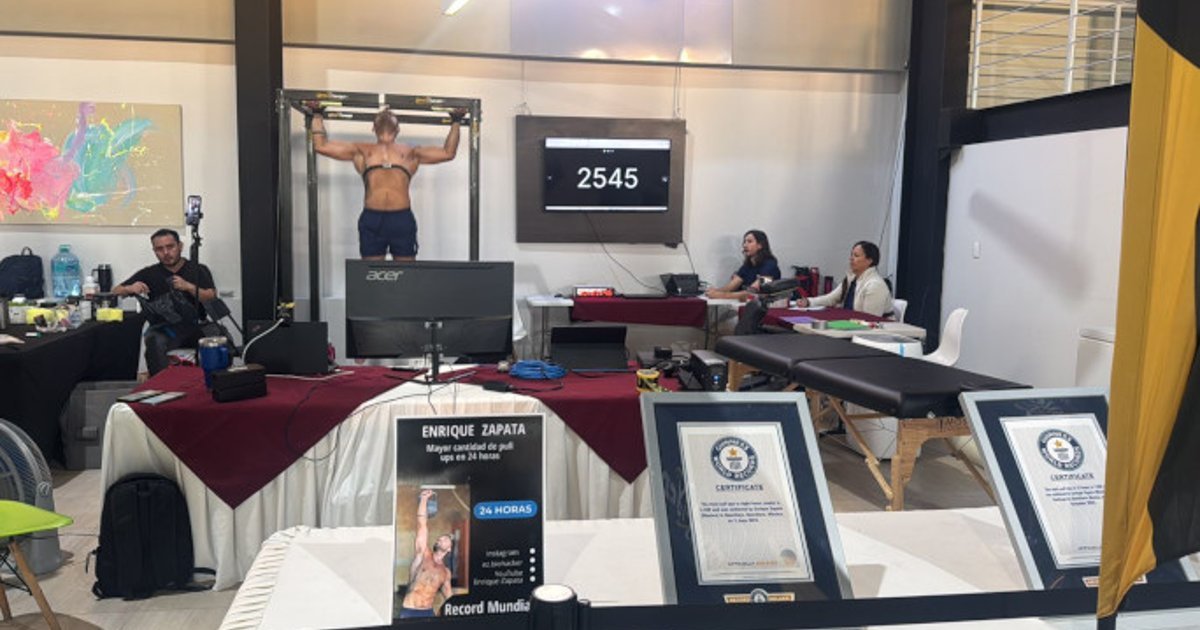
On January 31, 2026, Mexican athlete Enrique Zapata stepped onto a pull-up station at La Loma High-Performance Sports Center in Querétaro to pursue the men’s most-pull-ups-in-24-hours record. His verified total was 12,345. That number displaced Belgian athlete Lennert Schots’s previous benchmark of 11,900 by 445 repetitions. It was a result from January, not a new contest taking place this November.
The attempt reportedly began at 2:49 p.m. with ten quick repetitions. Zapata passed the prior mark after nine hours and 53 minutes, then completed his chosen final total within the following hour. So the relevant distinction matters: the record belongs to the 24-hour competition category, but his reported completion did not require performing pull-ups continuously for an entire day.
A regular gym member may spend several sessions accumulating 100 clean pull-ups. Zapata accumulated well over one hundred times that volume in one supervised effort. The achievement is exceptional muscular endurance and extreme repetition management, not a prescription to chase a five-figure workout. Understanding the difference makes the story more useful than simply staring at the final tally.
Five years of preparation, and a very personal transformation
The event did not begin when the clock started. Zapata had been building toward endurance pull-up records for more than five years, with previous certified achievements of 4,949 repetitions in eight hours and 7,100 in 12 hours. Those shorter-duration titles were subsequently surpassed by other athletes; owning a record once and holding it today are not the same thing.
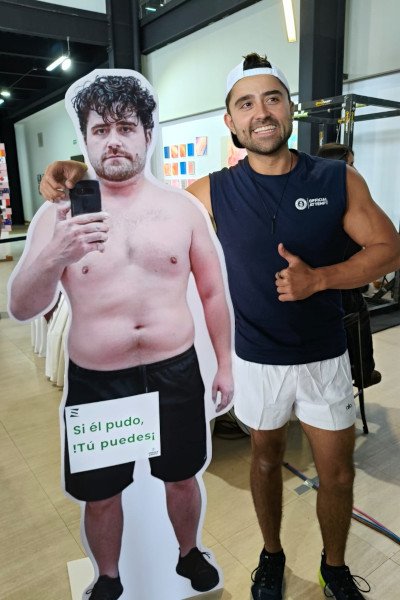
Beside the pull-up station, Zapata placed a cardboard cutout representing his earlier body before his fitness transformation. That visual is an unusually direct reminder that the public sees one extraordinary result, whereas the athlete lives through thousands of smaller, largely invisible decisions. His story also includes periods of difficulty with health and habits, which make a narrowly numerical explanation inadequate.
His team included his wife Mariana, a physiotherapist and coaches. The practical point is not that everyone needs a specialist crew to improve at calisthenics. It is that a record attempt of this duration is closer to an organized endurance event than a spontaneous gym challenge. Preparation, logistics, other people’s support and knowing when to stop all affect the outcome.

Equipment Worth Exploring
Explore equipment, accessories and gear from our carefully selected range.

Power Tower
Freestanding pull-up and dip station with adjustable handles for bodyweight training.


Foldable Wall Rack
Wall-mounted folding squat rack designed to save floor space between workouts.


Angles 90 Grips
Flexible grip attachments that allow natural wrist movement during pulling exercises.


Leather Wrist Grips
Padded leather lifting grips help support the hands and wrists on heavy pulling exercises.
Small sets made an enormous total possible
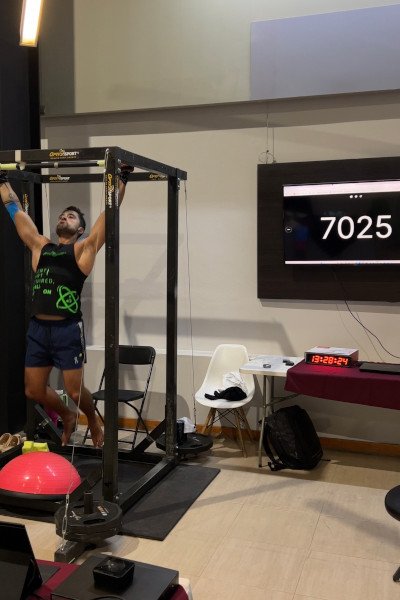
Zapata generally worked in clusters of seven or eight pull-ups, with periodic pauses to drink, replenish energy and adjust protective material on the bar. A spreadsheet tracked repetitions across the attempt. The individual sets were not spectacular high-rep bursts; their relentless accumulation was the spectacular part.
Consider the arithmetic without confusing it for his exact set ledger. At eight repetitions per set, 12,345 repetitions would represent more than 1,543 sets. At seven per set, it would take more than 1,763 sets. His real distribution varied, but this scale explains why counting accurately and controlling each short bout mattered more than showing off one maximal set.
Short sets also help illustrate a broader programming principle: a lifter can distribute a large workload across manageable exposures rather than forcing every set toward failure. That does not mean a 12,345-rep challenge becomes safe merely because sets are small. Repetitive strain, skin damage, hydration, nutrition, sleep deprivation and the cumulative load on tendons and shoulders all become serious considerations at extreme totals.
For ordinary strength and muscle-building sessions, total weekly quality work, sensible progression and recovery are far more relevant than copying an ultra-endurance tally. The lesson is how Zapata managed pace, not that everyone should reproduce his volume.

Calisthenics Shirts & Street Workout Gear
Calisthenics and bodyweight-training gear for pull-ups, dips, handstands and street-workout athletes.


Always Pull Yourself Up Funny Gym T
Heavy lifts, good laughs, and a little “Always Pull Yourself Up” energy.

Pullups Heartbeat Crewneck
Keep things casual with a little “Calisthenics Pullups Heartbeat” attitude.


Calisthenics Hanging Out Crewneck
Bring “Calisthenics Is My Idea of Hanging Out” humor to your everyday gym style.

Calisthenics Evolution Decal for Water Bottles Laptops Sticker
Put “Calisthenics Evolution” gym humor on your laptop, bottle, or gym gear.

Human Flag Calisthenics Hooded Workout Gymbro Pullover Hoodie
Make your off-duty look more fun with “Human Flag”.

Funny Calisthenics Gym Muscle Shirt Athletic Vest for B Tank Top
Your gym-day look, with a playful “Calisthenics” twist.

Big Dip Energy Hooded Pullover for Calisthenics Dips Fa Hoodie
Show off your lifting humor in a laid-back “Big Dip Energy” hoodie.

Calisthenics Heartbeat Hoodie
Keep it laid-back with a little “Calisthenics Heartbeat” attitude.
Pull-up standards, hands and fatigue: the details matter
Record categories are not interchangeable. A maximum repetition count in one minute, an eight-hour count and a 24-hour total reward different combinations of speed, repeatability and fatigue tolerance. Competition counting also depends on the governing record rules and their required movement standard. It is a mistake to compare two viral videos as if they necessarily use identical grip, lockout and chin-height criteria.
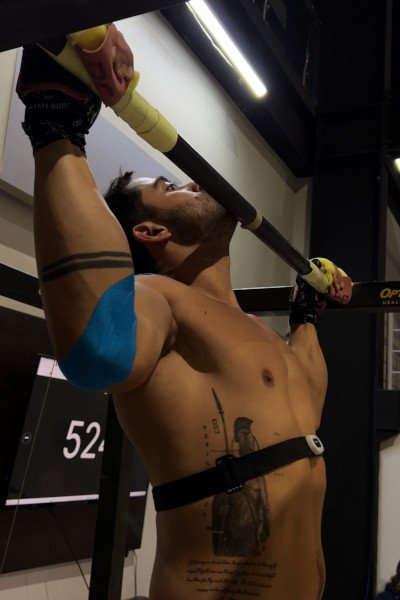
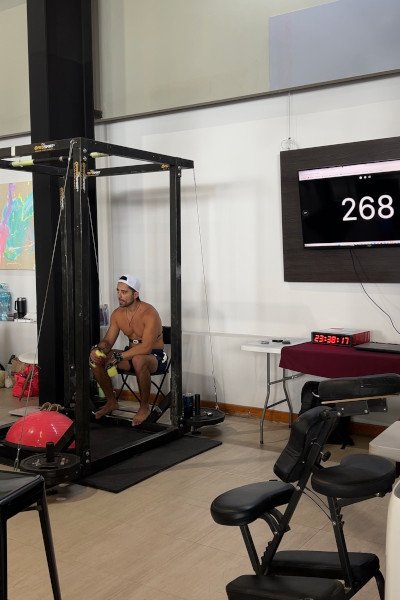
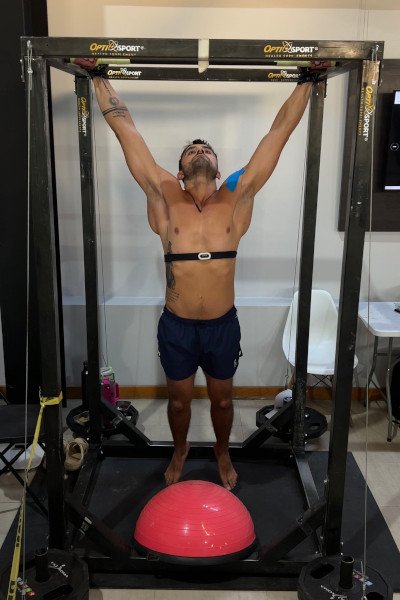
Zapata’s event footage and photographs show an athlete repeatedly returning to the same pull-up apparatus under observation. The published account also notes short breaks to replace protective sponges and take in fluid. That is useful context for understanding an otherwise misleadingly simple headline: the bar interface and the hands become major constraints when a movement is repeated thousands of times.
For a normal trainee, the first standard should be personal consistency. Pick a comfortable grip, begin from a repeatable controlled bottom position, raise yourself with minimal uncontrolled swing, and stop when your chosen range or control deteriorates. Some people may need assisted pull-ups, neutral-grip handles or lat-pulldown work while building capacity. None of those is an identical substitute for a certified record attempt, and accessories that make regular training more comfortable should not be assumed legal for record counting.
Sharp pain, loss of grip security or worsening joint symptoms are reasons to end a set, not opportunities to demonstrate toughness.
A realistic pull-up progression for normal lifters
Start by separating three goals: your first pull-up, more strict repetitions, or better weighted-pull-up strength. A person who cannot yet perform one quality rep needs assistance or an easier vertical-pulling variation, while someone who can complete twelve consistent reps may need a different mix of strength and endurance. An enormous total is not a meaningful universal target.
For a beginner, two or three weekly sessions with at least a day between demanding pulling bouts are a reasonable starting point. Use several sets of assisted pull-ups, controlled negatives or neutral-grip pulldowns that finish with a couple of technically sound repetitions in reserve. Add modest upper-back rows if desired, but count overall pulling fatigue rather than treating each exercise as free volume.
For an intermediate lifter with five to ten clean reps, practice a few submaximal sets and record the total without chasing exhaustion. For example, four sets of four reps yield sixteen controlled repetitions; progressing to four sets of five produces twenty without adding a fifth set. Repeatable standards make this progress interpretable. When capacity grows, occasional density work can test how many clean reps fit into a short fixed window while still leaving recovery for other training.
A weighted vest or dip belt belongs later, after dependable unloaded form and a suitably secure station. Even then, use it for modest, purposeful resistance rather than turning every session into a personal-record contest. The best program is one you can repeat for months without progressively worsening elbows, shoulders or hands.
One practical four-week example for someone with six comfortable repetitions is to accumulate three to four submaximal sets twice weekly, starting with triples. In week two, keep the same quality standard and add a total of two or three repetitions across the session. In week three, extend one set by a rep when recovery permits. In week four, reduce total work slightly and assess one clean set after a rested day. This is an example plan, not Zapata’s routine; individual recovery and starting capacity determine the right pace.
Equipment Worth Exploring
Explore equipment, accessories and gear from our carefully selected range.

VForce Lat Tower
Wall-mounted cable tower with pivot arms and adjustable 1:1 or 2:1 pulley ratios.

Trinity Lat Machine LSW-850
Weight-stack pulldown tower offering three cable directions and adjustable seated support.

48in Aluminum Lat Bar
48-inch aluminum lat pulldown bar with knurled grip and rotating center swivel.

Lat Pulldown Set
Multi-grip cable attachment set for pulldowns, rows, and varied upper-body training.

Multi Pull Smith Rack MPHR-780
All-in-one rack with a Smith machine, functional trainer, lat pulldown and low row.

Leather Lifting Straps
Padded leather straps support grip during heavy rows, deadlifts and pulling exercises.
VOLTRA
Compact digital cable trainer with smooth, adjustable resistance.


What Zapata’s record teaches—and what it cannot
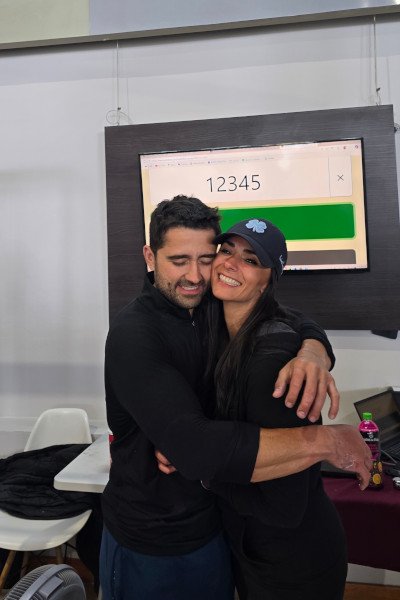
The most transferable idea is patience. Zapata’s January performance was the outcome of years of practice, not an eight-week transformation challenge. His small-set rhythm demonstrates why consistency can beat occasional dramatic efforts. His spreadsheet reinforces a less glamorous truth: logging work accurately can keep an ambitious plan from becoming guesswork.
His achievement also shows how much context a single impressive statistic hides. A team helped run the attempt, pacing was planned, the bar was protected, supplies were available, and an official record category defined success. Those details deserve attention because they separate a designed feat from a risky stunt assembled from a social-media headline.
Nothing about the result proves that ultra-high-repetition pull-ups are the best path to wide lats, stronger weighted singles or everyday health. For muscle growth, moderately challenging sets with useful range, sufficient rest and recoverable weekly volume are generally more practical. For max strength, heavier resistance and lower repetitions usually take on a larger role. For an attainable endurance goal, adding five clean weekly repetitions over time may be worth celebrating.
Zapata’s 12,345 is remarkable precisely because it is so far beyond normal training. Respect the record, learn from the preparation and pacing, and leave the temptation to copy the final number behind.