Advertising disclosure: This page includes affiliate product links that may earn us a commission, as well as products from our own store.
A dumbbell push jerk is easy to mislabel. Bend your knees, drive two weights upward and finish with straight arms, and the rep may look like any other overhead lift. The detail that changes the exercise happens between the drive and the finish: you bend your knees again to receive the dumbbells overhead, then stand tall. Learn that sequence before chasing a heavier pair. This guide separates the rack, drive, receiving position and reset so you can practice an actual jerk instead of turning every difficult repetition into a different movement.
Build a rack position you can leave and return to
Start with a pair you can bring to your shoulders and lower without assistance. Stand on a level, unobstructed surface with enough clearance above and around you. Check the ceiling, hanging lights and nearby people before lifting. The space must accommodate both dumbbells, not just the narrow line a barbell would occupy. Keep your footwear stable and avoid balancing on a soft pad while learning a fast overhead movement.
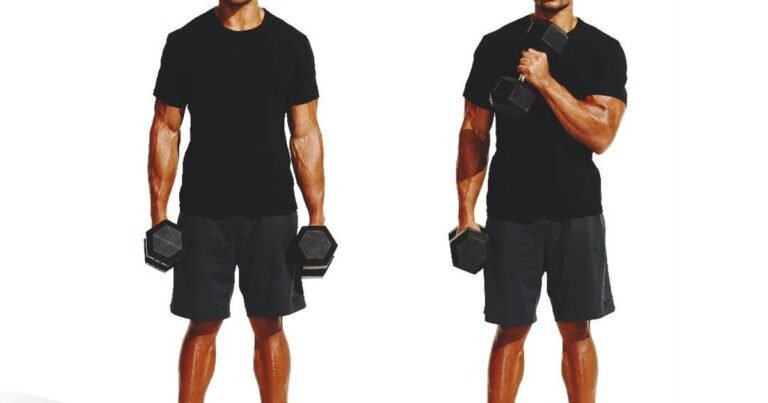
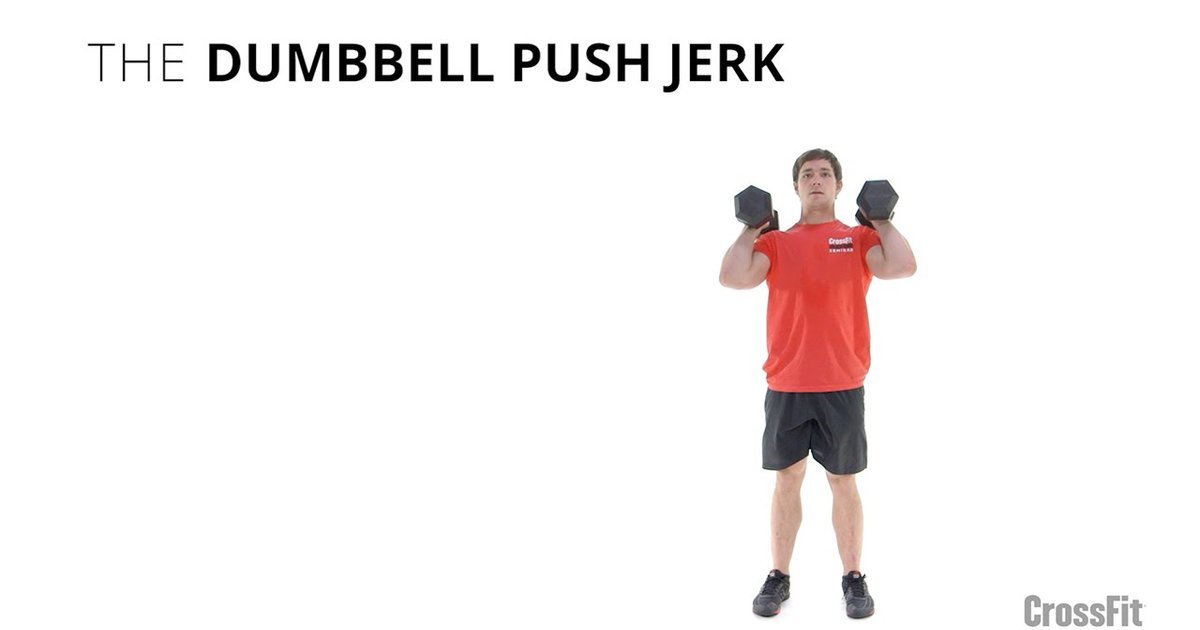
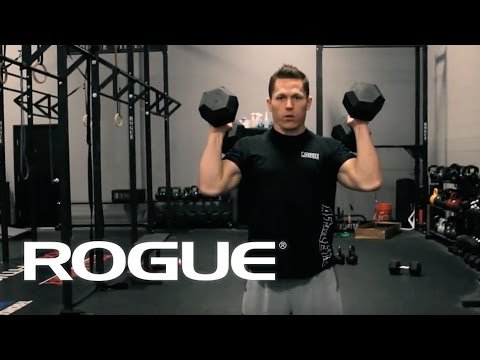
Hold one dumbbell in each hand with a complete grip. Bring the weights beside the shoulders, allowing a head of each dumbbell to rest lightly against the shoulder region where its shape permits. Your elbows should sit somewhat forward rather than pointing behind you. Find a wrist position that lets the handles stay secure without folding the wrists excessively backward. The exact hand spacing depends on your build and the equipment; forcing both dumbbells together is unnecessary.
Before adding speed, rehearse a comfortable overhead position with very light weights. Can you straighten both arms, keep the weights balanced over your base and breathe without leaning far backward? If you need a large backbend or experience joint pain, address the position with qualified coaching or choose a tolerable alternative. A faster leg drive cannot make an uncomfortable overhead position suitable.
The return matters as much as the departure. Think through how the weights will reach shoulder level and how you will put them down. A pair that you can launch but cannot manage on the way back is a poor practice load. Keep the lifting area clear enough to end the set deliberately rather than stepping around bags or a bench while holding weights overhead.
Use a short dip to create a vertical drive
From the rack, bend the knees a little while keeping your torso upright and your balance centered over the feet. This is a preparation for upward acceleration, not a deep squat or a hip hinge. If your chest tips down, the weights tend to travel forward and you have to chase them. Practice the dip alone with a light pair: lower a short distance, pause, and check whether your torso and dumbbells stayed stacked.
Reverse the dip and extend the legs assertively to send the weights upward. Let that lower-body drive initiate the movement, then direct the dumbbells overhead. Starting with a slow arm press wastes the reason for using the legs. Equally, a dramatic forward lean followed by a backbend creates motion without establishing a useful vertical path. The goal is a coordinated upward impulse, with both weights leaving the shoulders under control.
A useful troubleshooting question is where the error begins. If the dumbbells move away from you before they rise, inspect the dip. If the legs finish but the weights barely move, check whether your elbows and rack position are letting you transfer the drive. If one dumbbell repeatedly gets ahead, reduce the load and compare the two sides on video. Simply pushing the slower arm harder may conceal the setup problem.
Avoid copying an exact dip depth from a different lifter. A short, repeatable motion that preserves balance is a better starting point than forcing a particular knee angle. Make one change at a time. For example, try a quieter upright dip before changing the load, stance and grip together. That way the next set tells you which adjustment helped.
Receive with straight arms, then stand to finish
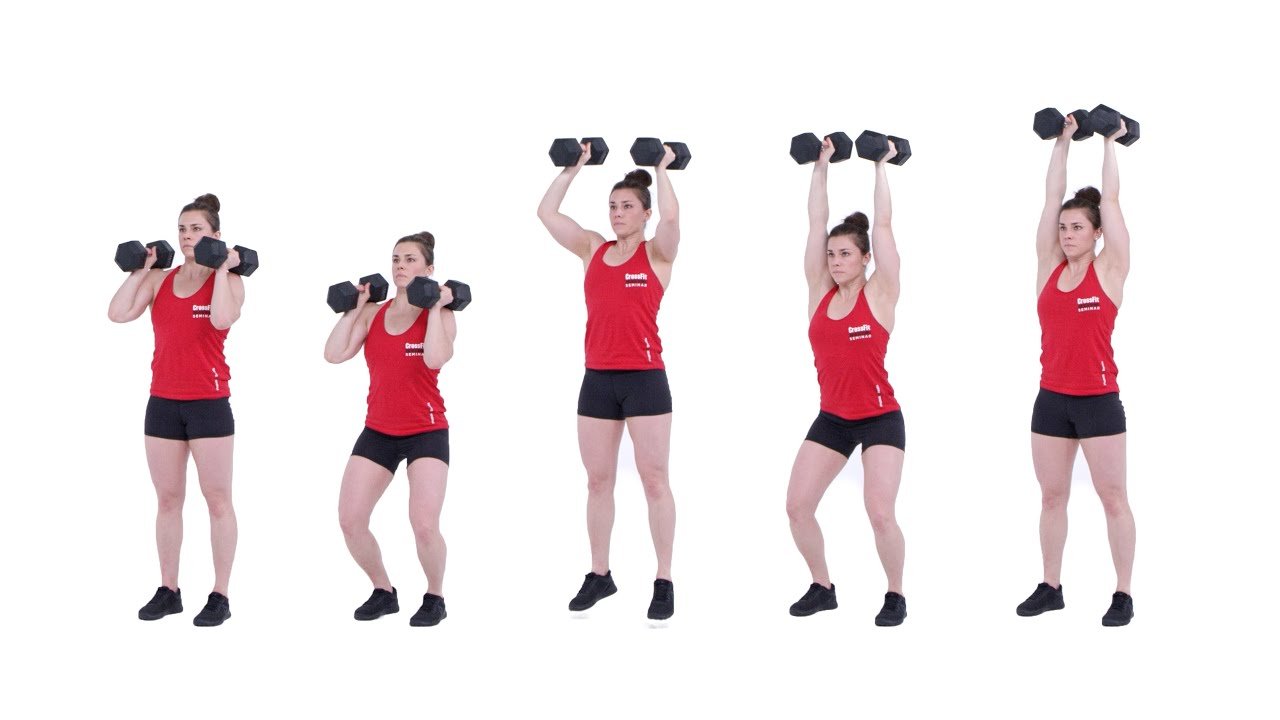
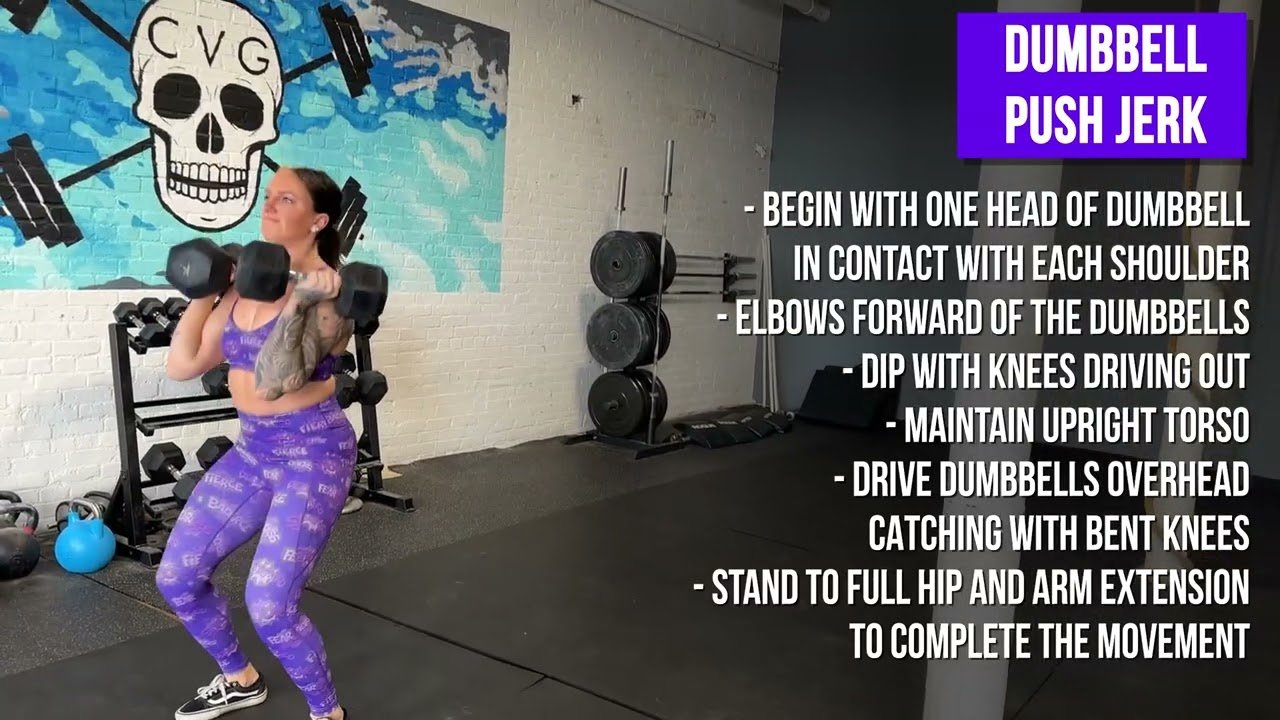
The defining second action is moving underneath the rising dumbbells. After the leg drive, bend the knees again as you establish straight arms overhead. Receive in a shallow squat with the weights supported over you, then straighten the hips and knees to finish. Do not call the repetition complete while you are still sitting in the receiving position. The visible sequence is drive, receive and stand.
This is different from slowly pressing the weights through the final few inches while the knees soften afterward. In that version, the second knee bend has stopped helping you receive the load. Use a lighter pair until the timing becomes clear. You do not need to manufacture a deep squat to prove you are doing a jerk; the important feature is getting underneath with a stable overhead position.
Keep the two weights controlled independently. Their paths do not have to mirror each other to the millimeter, but a wobbling or drifting dumbbell is feedback to stop and reset. Do not repeatedly rescue the weaker side with a large side bend. The movement asks for coordination, and a load that hides that coordination behind grinding effort defeats the learning task.
For a practical video check, film a few light repetitions from a safe side angle. Look for a small initial dip, a clear drive, a receiving knee bend while the arms become straight, and a final stand. Review the whole repetition rather than one impressive overhead screenshot. A still image cannot tell you whether the knees bent before or after the weights were secured. If the sequence remains unclear, ask a coach to review it before adding weight.
Separate the jerk from the presses and other equipment
A strict dumbbell press uses no deliberate leg drive. A push press adds a dip and drive but finishes the overhead press without the jerk's second receiving bend. A push jerk adds that second bend and the stand afterward. These are related skills with different intentions, so record the movement you actually performed. A heavier jerk is not proof that your strict shoulder press has improved by the same amount.
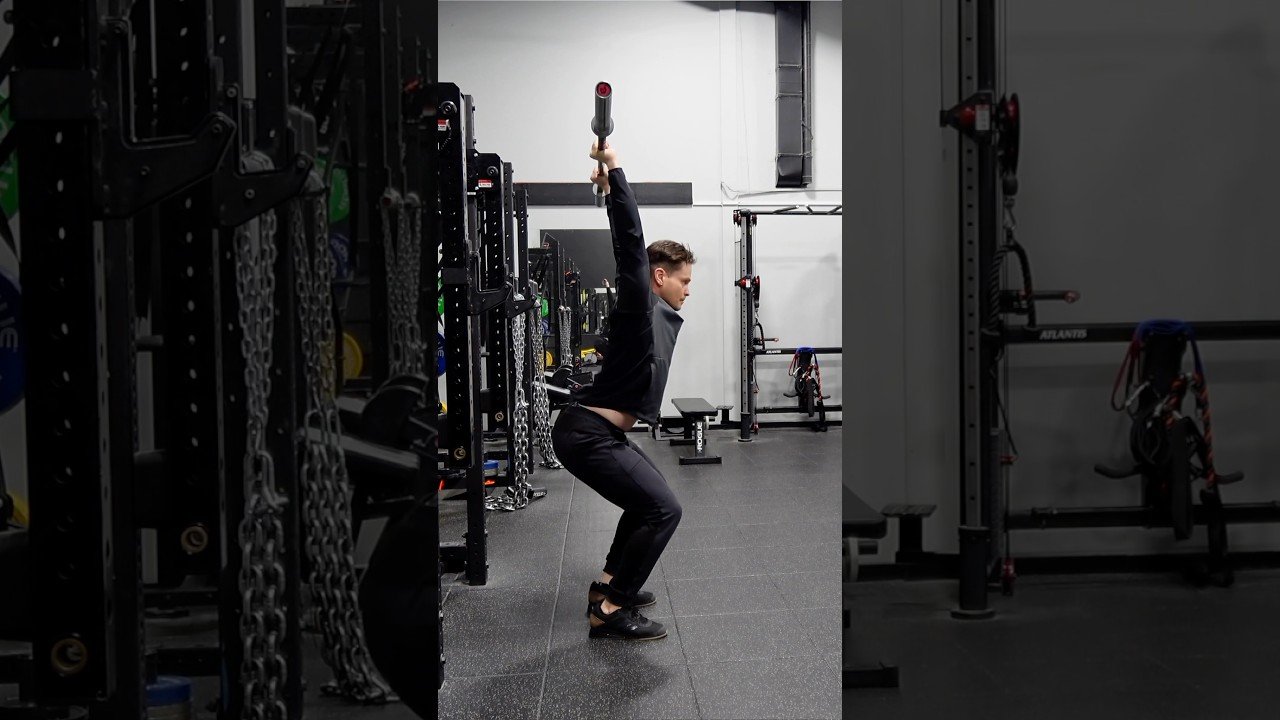
The accompanying barbell photograph illustrates the receiving bend for comparison. A barbell links the hands and has its own front-rack demands; two dumbbells move independently and allow different hand positions. Do not automatically transfer a barbell grip, rack cue or loading percentage to the dumbbell version. Similarly, paired kettlebells are a separate option whose offset shape changes the rack and handling. Choose equipment you can control rather than treating every overhead implement as interchangeable.
Fixed dumbbells offer a straightforward setup. With adjustable or plate-loaded handles, check the manufacturer's instructions, locking mechanism and permitted exercises before using rapid overhead movements. Secure plates do not establish that an adjustable mechanism tolerates dropping. For barbell practice, use a suitable bar, appropriate plates and secure collars; check the training area's rules and equipment limits. These choices support the exercise but do not substitute for receiving skill.
Choose the variation to match the session. If the purpose is controlled shoulder pressing, keep that work distinct from jerk practice. If you are learning overhead timing, practice before fatigue blurs the receiving position. There is no need to promote the most technical variation as universally superior. The useful version is the one that serves the intended task and remains repeatable.

Equipment Worth Exploring
Explore equipment, accessories and gear from our carefully selected range.


Rubber Hex Dumbbells
Rubber-coated hex dumbbell pairs with a stable shape for home and commercial strength training.


Competition Plates
Competition-style bumper plates for Olympic lifts and loaded strength training.

Grip Plates
Rubber-coated weight plates with handholds for loading barbells and machines.

Practice clean repetitions and control the reset
Begin with a warm-up that lets you rehearse the rack and overhead positions, then a few light dips and drives. Use short practice sets so you can pay attention to each receiving position. Three sets of three relaxed repetitions is one optional starting example, not a validated prescription or a test of your maximum. Rest long enough to reproduce the sequence rather than rushing to satisfy a timer.
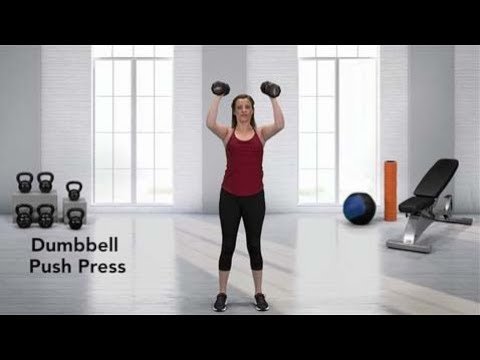
The push-press photograph here shows a simpler related drill, not a second-dip catch. If you cannot yet distinguish the two movements, practice a few light push presses and jerks separately, with coaching where available. Name each repetition before doing it. Alternating unintentionally between a press and a jerk within one recorded set makes it difficult to judge progress or compare sessions.
After standing with the dumbbells overhead, lower them deliberately toward the shoulders. Keep the weights close enough to manage and use a small knee bend to soften their arrival if appropriate. This reset is separate from the receiving bend that defines the upward jerk. Pause, regain your rack position and begin the next repetition only when balanced. Do not bounce uncontrolled dumbbells off your shoulders to keep a set moving.
Log the load per hand, number of clear repetitions and one useful observation: for example, both arms secure before standing, or right dumbbell drifting forward. Increase the load only when the full sequence and return remain controlled. Stop the set if timing unravels, the overhead position becomes unstable or discomfort appears. Consistent practice, sensible rest and honest movement labels tell you more than forcing extra repetitions after the exercise has changed.

Funny Gym Shirts & Workout Gear
Funny gym shirts, tanks, hoodies and workout gear for lifters who like training hard.

Dost Thou Even Press Hoodie
Show off your medieval humor in a laid-back “Shoulder Press” hoodie.

Lift Smart Brain Plate Tee
Show some lifting attitude with a playful “Lift Smart Brain Weight Plate” tee.

Safety Practice Safe Sets Sweater Jumper T-Shirt
Show some gym-day personality with “Gym Safety”.

Consistency Is Key Stoic Greek God Marble Sculpture T-Shirt
Make gym days more fun with “Consistency is Key Stoic Greek God Marble” style.

Discipline Stoic Tee
Show some lifting attitude with a playful “Discipline Stoic Sigma Bodybuilder” tee.

I’m Strong Barbell Heartbeat Crewneck Pullover for Powe T-Shirt
Bring “I’m Strong Barbell Heartbeat” humor to your everyday gym style.

Gymhead Lifting Is On My Mind Skull Vest Tank Top
Your gym-day look, with a playful “Gymhead” twist.

Muscle Mommy Muscle Club for Gym Girls, Lifting, Bodybu T-Shirt
Heavy lifts, good laughs, and a little “Muscle Mommy Muscle Club” energy.

Lift Together Grow Stronger for Gym Buddies Who Train T T-Shirt
Show some gym-day personality with “Lift Together Grow Stronger”.

Gym Sworn to the Iron Oath Medieval Knight Crewneck for T-Shirt
Show some gym-day personality with “Sworn to the Iron Oath Medieval Knight”.