Should a home gym be built around a barbell and dumbbells, or does a cable machine deliver the same muscle-building results with less equipment? The argument often turns into a loyalty test: free weights are supposedly more functional, while machines are supposedly better for isolation. Neither slogan tells you what to buy or how to train.
Research comparing these tools points toward a more useful answer. Both can build muscle and strength, but the strength you develop is partly specific to the movement you practice. A compact home gym therefore needs to be judged by its exercise coverage, progression, safety and the space you actually have—not by whether every load comes from a plate or a pulley.
Below is an evidence-led comparison, followed by a practical way to choose equipment and combine both methods. It is not a hands-on review of every product mentioned.
Some product links may be affiliate links, which can support Mind Muscle Perfection at no additional cost to you.
1. What the research actually says about free weights and machines
A 2023 systematic review and meta-analysis compared free-weight and machine-based resistance training across 13 studies involving 1,016 participants. The review considered maximal strength, countermovement jump performance and muscle hypertrophy. Its central finding was not that the methods are identical in every respect. Rather, the researchers found no clear overall difference in directly compared strength, jumping or muscle-growth outcomes between modalities.
That conclusion deserves context. Only five of the included studies reported hypertrophy outcomes, and methods for estimating muscle size varied considerably. Some measured muscle thickness directly, while others used less precise indicators such as circumference or body-composition estimates. A statistically nonsignificant difference is not proof that every exercise produces precisely equal results for every muscle.
A separate meta-analysis published in 2022 reached a similar broad conclusion: measured muscle growth and power did not clearly favor one equipment category. This convergence makes the practical question more interesting. If both can work, what should decide between them? The answer depends on the movement you want to improve, the resistance profile you can create, and how consistently you can train.
It is also important not to confuse a machine’s stated weight with the force at the handle. Cable ratios, lever arms, cams and friction change what the user experiences. Comparing the number on a weight stack directly with the plates on a barbell is rarely meaningful.
2. Strength is specific: a stronger barbell squat is not the same test as a stronger leg press
One of the clearest findings from the 2023 review was exercise specificity. Participants who trained with free weights tended to improve more when strength was tested using free weights. People practicing machine exercises tended to perform better when tested on those same machine patterns. This is exactly what you would expect when strength includes skill, coordination and familiarity with a movement.
Imagine two lifters who both increase their quadriceps capacity. One practices barbell squats, learning to brace, balance and control a bar path. The other trains hard on a leg press, where the path is constrained and the torso is supported. Both can get stronger, yet their squat and leg-press test scores need not rise by the same amount. That does not automatically mean one person built more muscle.
A 2023 eight-week study in resistance-trained men also compared barbell and machine versions of common lifts, with training variables aligned. It reported broadly comparable strength and hypertrophy outcomes between groups. A 2020 randomized trial in 46 adults found increases in biceps and quadriceps muscle thickness with both free weights and machines, without a significant between-group difference in those muscle-size measures.
For a home-gym owner, the decision is straightforward when the goal is performance in a specific lift. If you want a better barbell squat, squat with a barbell. If your goal is leg development without a barbell setup, a well-designed leg-press or cable-based lower-body program can still provide useful resistance. Use the test that matches the goal rather than declaring a universal winner.

Equipment Worth Exploring
Explore equipment, accessories and gear from our carefully selected range.


FID Bench MAX
Adjustable bench offering flat, incline, and decline positions + adjustable headrest.


3. Muscle growth depends on the stimulus, not the equipment label
Muscle growth is driven by repeated exposure to challenging resistance training over time. The equipment matters insofar as it lets you load the target muscles through an appropriate range, perform enough hard work, and gradually increase the challenge. A dumbbell, cable, lever machine and barbell can each satisfy those conditions, although they do not necessarily feel the same at every joint angle.
A small 2025 within-subject trial provides a useful example. Eight previously untrained women trained one leg using free-weight lunges and the other using an inclined leg press, three times weekly for nine weeks. Ultrasound measurements showed increases in quadriceps muscle thickness with both approaches, with no statistically significant group-by-time differences across the measured regions. This supports the possibility of comparable growth, but the tiny sample and different exercises limit how widely the result can be generalized.
Neither the free-weight label nor the machine label guarantees full muscle development. A squat and a knee extension challenge the quadriceps differently; a dumbbell row and a pulldown emphasize different shoulder and elbow actions. Exercise selection, technique, range of motion, proximity to failure and weekly training volume remain important.
For an individual with limited equipment, the most productive strategy is often to cover movement patterns rather than collect machines. Pair a squat or lunge with a hip hinge, horizontal and vertical pulls, pressing, and a few isolation movements for muscles that otherwise receive too little direct work. Progress the exercises you can perform comfortably and consistently.
Do not assume that unstable movements are automatically superior. Extra balance demands can sometimes reduce the load you can direct to a target muscle. Stability is a tool: valuable when balance and coordination are training goals, but not a mandatory ingredient in every hypertrophy set.
4. Where barbells and dumbbells genuinely earn their place
Free weights offer simple, durable resistance and a wide selection of exercises without requiring a separate machine for every movement. A barbell with plates can support squats, presses, deadlifts, rows and variations that scale across a broad strength range. Dumbbells make unilateral work and independent arm paths easier, and adjustable models can reduce the storage footprint of a fixed dumbbell rack.
That flexibility has practical costs. Heavy barbell bench pressing or squatting alone requires suitable safeties and careful setup. A barbell also needs room for its length, plate loading, lifting area and movement path. A rack’s published footprint does not account for walking around the bar, placing a bench, changing plates or storing attachments.
Free weights can be especially attractive when strength in barbell lifts is a primary goal. They also make it easy to quantify progress in load, repetitions and technique. However, a single barbell does not reproduce every machine exercise. Some lifters find it difficult to load certain muscles comfortably with a barbell because of grip, balance, mobility or joint constraints.
Start with the exercises you genuinely perform. If your training revolves around squats, presses and heavy pulls, a sturdy rack, bench, barbell and plates may be the best foundation. If you mainly want general hypertrophy in a small room, adjustable dumbbells and a bench can cover surprisingly much of the program before a full rack becomes necessary.
Inspect collars, plates, benches and rack hardware regularly. Position safeties correctly, leave clearances for the movement, and never substitute improvised mounts or unrated anchors for equipment designed to handle training loads.

Powerlifting Shirts & Lifting Gear
Powerlifting shirts and gym gear for squat, bench and deadlift lifters who live for heavy numbers.


Four Plates Bench Club Tee
Show some powerlifting attitude with a playful “4 Plates Bench Club” tee.

Bench Press and Chill Funny Gym T
Make gym days more fun with “Bench Press and Chill” style.

Ultimate Bench Press Tee
Heavy lifts, good laughs, and a little “Ultimate Bench Press” energy.

Six Plates Deadlift Club Motivational T-Shirt
Heavy lifts, good laughs, and a little “Six Plates Deadlift Club” energy.

Shirt – Squat Bench Deads Gains T-Shirt
Heavy lifts, good laughs, and a little “Squat Bench Deads” energy.
5. What machines and cable systems do especially well
Machines reduce some of the coordination demands of an exercise by guiding the load or stabilizing the body. That can be useful when you want to challenge a particular muscle without making balance the limiting factor. A leg extension, chest-supported row or seated press can also provide exercise options when a free-weight movement is uncomfortable or impractical.
Cables occupy an interesting middle ground. They are not all fixed-path machines: a freely moving handle allows different positions, angles and one-arm exercises, while the resistance source remains separate from the hand. Depending on anchor height and body position, a cable can support rows, pulldowns, presses, flyes, curls, triceps extensions and lower-body work.
The details matter. A cable’s direction of pull changes through the movement as your position changes, and a pulley ratio can alter handle force and travel. Some motorized resistance systems can vary load or offer eccentric-focused modes, but those features are product-specific and should not be treated as a proven advantage for every exercise. Always verify the actual load rating at the handle and the manufacturer’s mounting instructions.
A dedicated machine is not automatically safer than free weights. Incorrect setup, poorly adjusted range of motion, damaged cables or unstable attachments can create risks. A machine can also fit a particular body poorly. Test whether the handles, seat, path and range suit your dimensions before assuming that a guided path is ideal.
The strongest reason to buy a cable system is that it solves a real training problem. It might add vertical pulling to a rack-only gym, let you train with lower starting loads, or make frequent exercise changes faster. It is less compelling if it duplicates everything you already do and leaves no room to move around it.
Equipment Worth Exploring
Explore equipment, accessories and gear from our carefully selected range.
VOLTRA
Compact digital cable trainer with smooth, adjustable resistance.

Go-Tone Pro
Portable digital cable trainer with up to 66 lb (30 kg) of adjustable resistance.

Original GymPin
Adds Olympic plates to compatible cable-machine weight stacks for extra resistance.
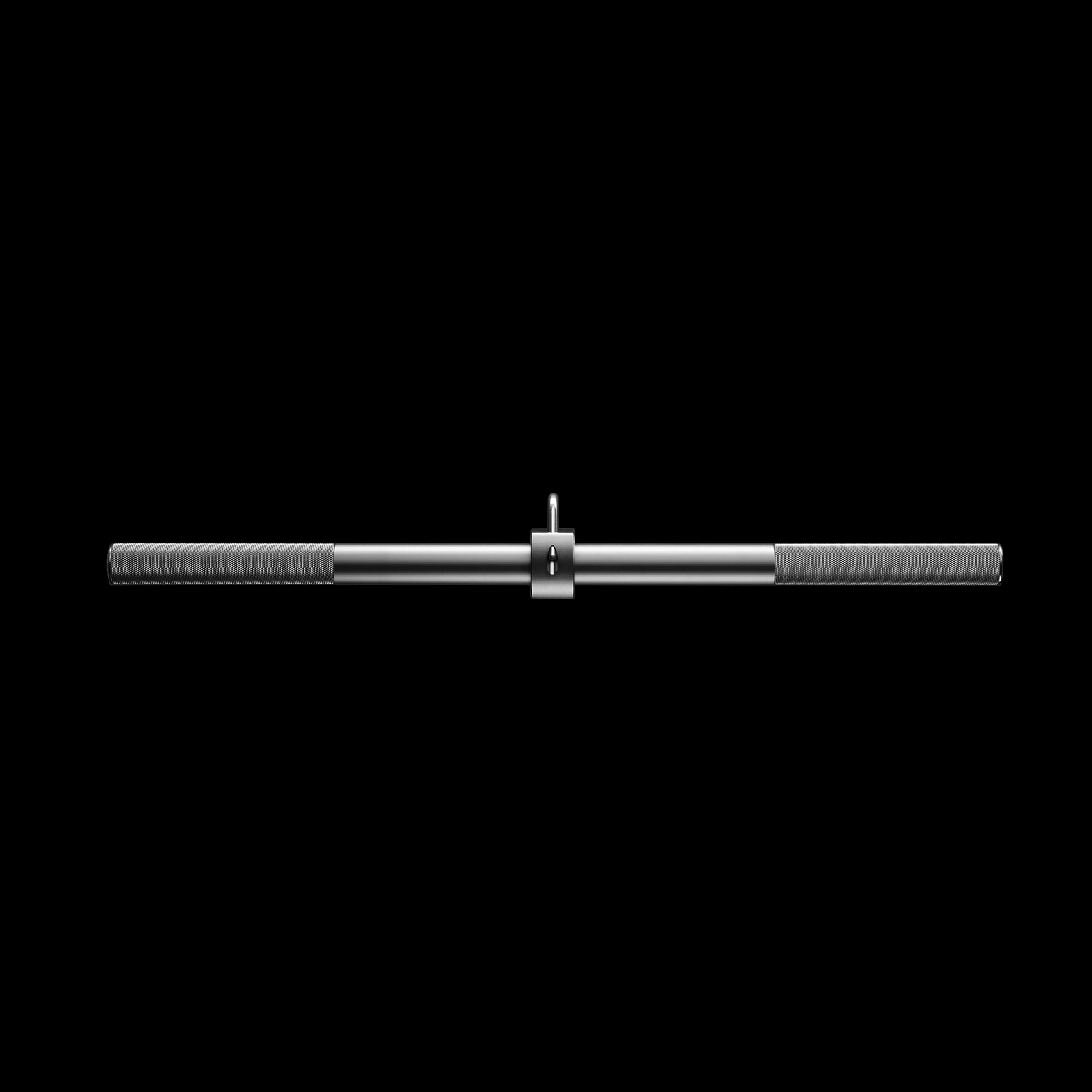

GymPin Ergo Handles
Pair of ergonomic cable handles shaped for comfortable triceps and pulling exercises.


HUSLA Leg Extension Pad
Pad attachment designed to increase usable range of motion on compatible leg-extension machines.


6. How to choose for a genuinely small home gym
Start by measuring the usable training envelope, not simply the floor area occupied by a machine. Include ceiling height, door swings, bench positions, cable extension and the space required for safe lifting. A compact machine may still need several steps of open floor space in front of it. A rack may require enough side clearance to load plates and adjust safety hardware.
Next, write down your six to ten most important exercises. Mark each as available, awkward or impossible with the equipment you are considering. A versatile setup should cover your actual weekly program with few workarounds. If you enjoy heavy barbell squats, do not buy a cable system expecting it to reproduce that exact skill. If you want cable flyes and pulldowns, a dumbbell-only setup will leave obvious gaps.
Budget for the complete system. A rack may need a bench, barbell, plates, storage and floor protection. A digital cable trainer may require mounts, handles, a platform or charging arrangements. A compact adjustable dumbbell set may still need a stable bench and enough increments for progressive overload. Compare the total price after accessories, not the attractive headline price.
Then assess friction: how long does it take to switch from a row to a press, or from a squat to a curl? If every exercise requires moving furniture, swapping heavy attachments and clearing cables, a theoretically versatile gym can become irritating. Quick adjustments, reliable storage and a clear floor often matter more than an extra feature on a spec sheet.
One practical buying order is to begin with adjustable dumbbells and a bench, then add a rack or cable solution according to your missing movements. Another is to start with a rack-and-barbell foundation and later add cable versatility. Neither order is universal; the best one reflects the training you will actually repeat.
7. A three-day program that uses the strengths of both methods
You do not need to alternate free weights and machines for every exercise. A useful hybrid plan gives each tool a job. Use the movements that matter most to your strength goals early in the session, then add stable cable or machine exercises where they provide a convenient way to accumulate focused work.
Day A — squat and horizontal push: perform a squat variation for three sets of five to eight repetitions, a barbell or dumbbell press for three sets of six to ten, and a cable or chest-supported row for three sets of eight to twelve. Finish with two sets each of a leg curl alternative and a triceps movement if your setup allows.
Day B — hinge and vertical pull: use a Romanian deadlift or other hip-hinge variation for three sets of six to ten, a pulldown or pull-up for three sets of six to twelve, and a dumbbell shoulder press for two or three sets of eight to twelve. Add two sets of a split squat and two sets of curls. If overhead pressing is uncomfortable, substitute a comfortable pressing pattern rather than forcing the movement.
Day C — mixed hypertrophy: choose a leg press, lunge or squat variation for three sets of eight to twelve, an incline press for three sets of eight to twelve, and a row for three sets of eight to twelve. Finish with two sets each of a lateral-raise variation, calf work and an arm exercise. These are illustrative starting points, not individualized prescriptions.
Choose loads that leave roughly one to three repetitions in reserve on most working sets, with technique maintained. Rest long enough to repeat quality work; heavier multi-joint lifts often require longer rests than light isolation work. When you reach the top of a repetition range across all prescribed sets with consistent form, increase the resistance by the smallest practical step.
Keep a simple log of sets, repetitions, load and any discomfort. If an exercise repeatedly feels wrong for your joints or setup, substitute another movement that trains the same broad function. The objective is sustainable progress, not loyalty to a particular machine or barbell.
Bodybuilding Shirts & Workout Gear
Bodybuilding shirts, tanks and gym gear for lifters chasing muscle, size, symmetry and the pump.

Lift With Me Renaissance Michelangelo Sistine Chapel T-Shirt
Heavy lifts, good laughs, and a little “Lift With Me Gym Renaissance” energy.

Heavy Enough Tee
Bring “If You're Not Scared It's Not Heavy Enough” humor to your next gym day.

Anti Social Lifting Club – & – T-Shirt
Make gym days more fun with “Anti Social Lifting Club” style.

Yeah Buddy Lightweight Baby Meme Top & T-Shirt
Bring “Yeah Buddy Lightweight Baby” humor to your next gym day.

Raise The Barbell Shirt – Motivational & T-Shirt
Show some powerlifting attitude with a playful “Raise The Barbell” tee.

Vitruvian Man With A Barbell Shirt – Leonardo Da T-Shirt
Show some powerlifting attitude with a playful “Vitruvian Man With A Barbell” tee.


OnlyGains Big Biceps Tee
Rep “OnlyGains Only Gains Big Biceps” humor in and out of the gym.

Bending Bars Meme – Barbell Squat Bench Deadlift, & T-Shirt
Heavy lifts, good laughs, and a little “Bending Bars Gym Meme” energy.

Pumpeye – Strongest Sailor Meme – & , Gymbro & T-Shirt
Bring “Pumpeye” humor to your next gym day.
The bottom line
Free weights and machines are not competing religions. The best available research does not show a clear universal hypertrophy winner, while strength improvements are partly specific to the exercises you practice. For a home gym, that means buying for your goals, usable space and exercise coverage. A barbell is invaluable if you want barbell strength; cables and machines can add convenient, targeted resistance; adjustable dumbbells can bridge both worlds in a small footprint. Choose the combination that makes hard, progressive training easiest to sustain.