Advertising disclosure: This page includes affiliate product links that may earn us a commission, as well as products from our own store.
Creatine Blend vs Placebo: What 40 Beginner Lifters Gained in Four Weeks
Creatine is often sold as if every scoop must deliver a bigger weight on the bar. A four-week trial involving beginner lifters offers a more complicated picture: the group taking a creatine-based multi-ingredient blend reported better recovery and showed favorable changes in several body measurements, yet did not outperform the placebo group on leg-press strength. That is neither a verdict against creatine nor a reason to buy every expensive supplement stack. It is a useful lesson in how to read short training experiments without confusing a promising secondary outcome with a guaranteed performance result.
Here is what the comparison actually tested, which findings matter to lifters, where its limits sit and how to turn the evidence into a sensible first month of lifting.
1. Forty finishers, one training plan and two different drinks
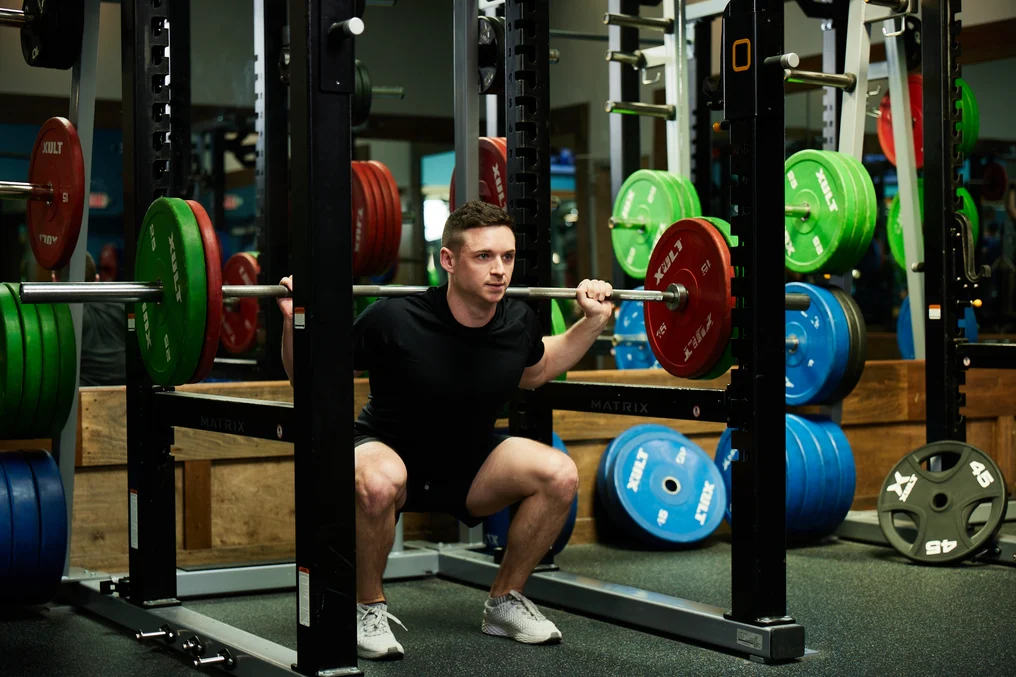
The experiment began with 46 male resistance-training novices who were randomly assigned to a creatine-based multi-ingredient supplement or a placebo. Forty completed the four-week intervention and were included in the final analysis. Both groups followed the same standardized resistance-training program. That shared program matters: when the exercises, schedule and progression are broadly aligned, the comparison more directly tests what the drink might add, rather than comparing two unrelated approaches to training.
The trial was double-blind and placebo-controlled. That design reduces some obvious expectations that can influence how people report energy and recovery. It does not eliminate every source of bias, and six people not completing the intervention still limits what we can infer. Four weeks is enough for novices to learn an unfamiliar movement and become stronger at it, but it is a short window for disentangling genuine muscle growth from normal training familiarization, fluid changes and measurement noise.
The investigators tracked several categories rather than a single headline number: body composition, thigh circumference, leg-press performance, blood-based markers and subjective fatigue or recovery. Keep these categories separate when interpreting the results. A larger circumference, a better self-rated recovery score and a heavier one-repetition maximum are different outcomes. They may move together, but none automatically proves another.
For an everyday lifter, the fair translation is not “this supplement builds muscle in four weeks.” It is “under the tested conditions, a short supplement-plus-training intervention produced some differences worth studying, while the main strength comparison did not favor the supplement.” That distinction sets up everything that follows.
2. Leg-press strength rose in both groups, not just the supplement group
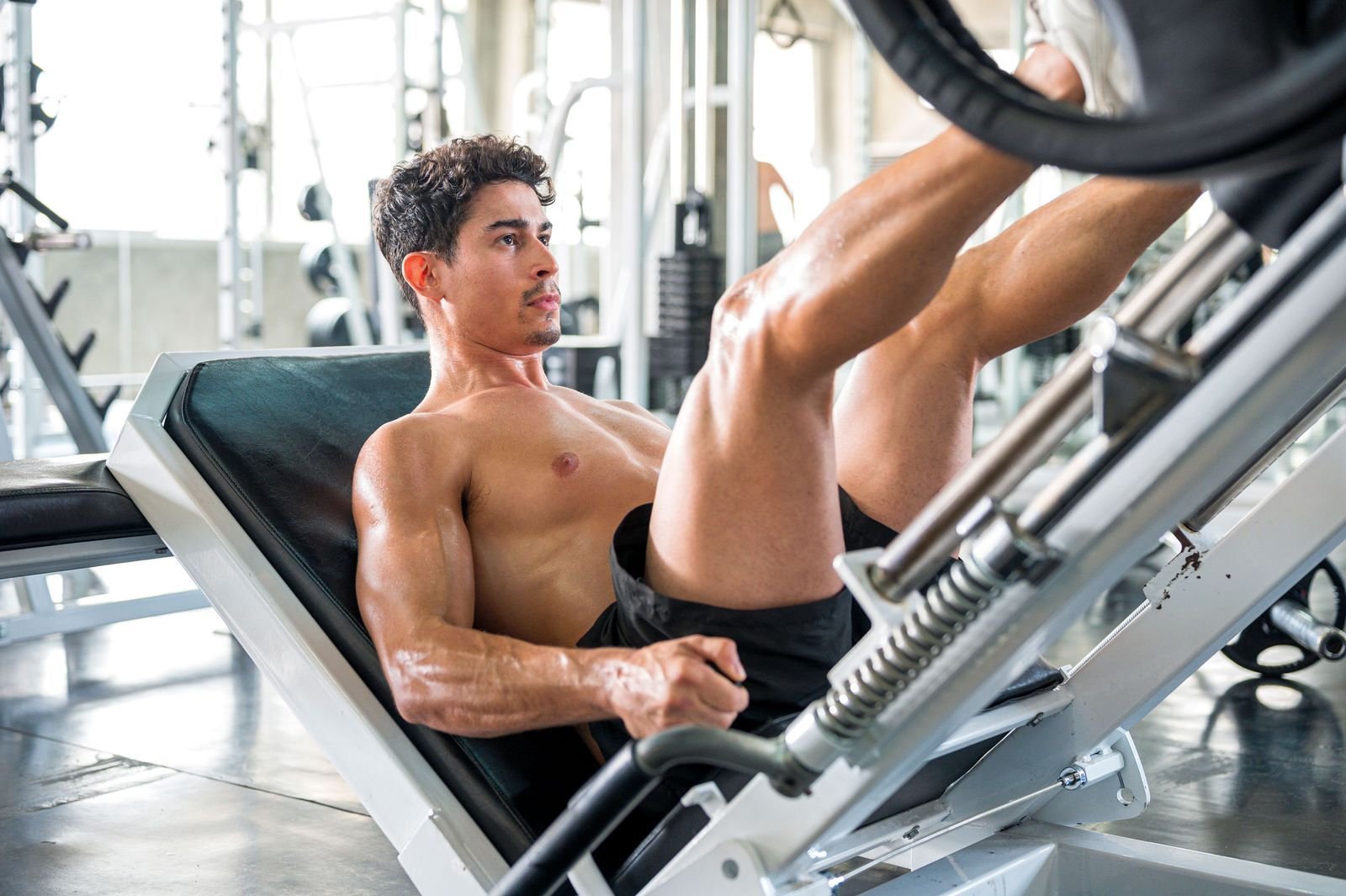
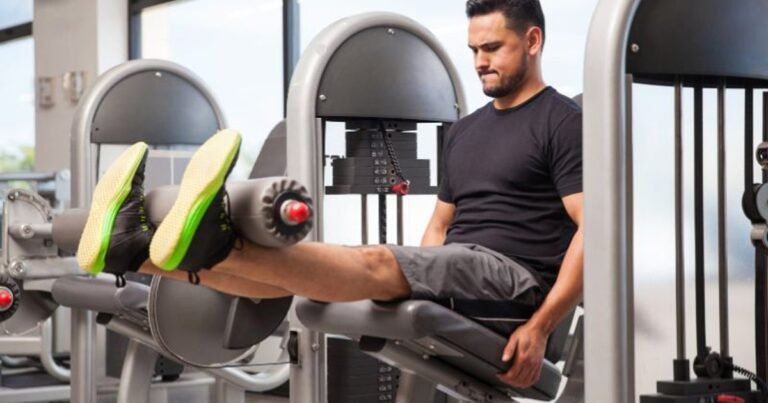
Both groups improved their one-repetition maximum on the leg press across the four-week period. The supplemented group did not gain a statistically demonstrated extra advantage over placebo on that outcome. The same overall conclusion applied to the short-term muscular-endurance comparison. It would therefore be misleading to describe the intervention as a proven faster route to a stronger leg press, even if participants taking the blend reported other benefits.
There are several reasons newcomers can add weight quickly without dramatic changes in muscle size. Better positioning, deeper familiarity with the machine, improved coordination and greater confidence under effort can all raise performance. Learning how hard a true heavy rep feels can matter almost as much as the load on the stack. This is why a four-week strength result should never be treated as a clean readout of four weeks of hypertrophy.
Leg-press one-rep max is also only one specific strength test. If a lift improves, that does not automatically mean deadlift, squat and sprint performance improve by identical percentages. Conversely, failure to show an extra difference in one tested lift does not prove a substance can never benefit resistance training. Larger, longer trials using different performance outcomes have sometimes found advantages for creatine monohydrate, and their conditions are not interchangeable with a brief combination-product test.
If you are tracking your own progress, record the exact machine, seat position, range of motion and rep standard. An extra plate gained by shortening the range or changing equipment tells you little. The cleanest comparison is a stable setup, repeatable form and a trend over weeks, not a one-off personal best after a highly caffeinated day.

Equipment Worth Exploring
Explore equipment, accessories and gear from our carefully selected range.

Leg Press/Hack Squat BPR-790
Convertible 45-degree leg press and hack squat machine with a broad footplate and band pegs.

Compact Leg Press CLP-700
Compact reverse-style leg press with a moving seat carriage and an adjustable footplate.

Leg Extension/Curl BCO-780
Leg extension and lying leg curl combo with plate loading, band pegs and a cable-loading option.

Seated Leg Combo BCO-680
Adjustable seated leg extension and leg curl machine with band pegs for added resistance.

Studio V-Squat
Plate-loaded V-squat machine for supported lower-body strength training.

Competition Plates
Competition-style bumper plates for Olympic lifts and loaded strength training.



3. Recovery improved, but the muscle measurements need context
The supplement group reported more favorable subjective recovery than the placebo group. It also showed larger changes in measured muscle mass and thigh circumference during the four weeks. These are interesting signals, especially for beginners who find the first weeks of resistance training unusually disruptive. But subjective recovery is not the same as measured tissue repair, and a body-composition estimate is not a biopsy showing new contractile muscle protein.
Creatine supplementation can change body water as muscles store more creatine and associated fluid. Depending on the measurement method, that may influence some estimates of lean mass. Thigh circumference likewise reflects more than newly built fibers: short-term fluid shifts, glycogen and measurement variability can all contribute. That does not make the result useless. It means a small short trial cannot precisely separate each contributor to apparent gains.
The blood-marker pattern also requires care. A more favorable testosterone-to-cortisol ratio was recorded in the supplemented group, alongside comparatively stable creatine-kinase responses. Neither number should be converted into a personal “anabolic score.” Blood concentrations vary with timing, sleep, recent exercise, food intake and normal day-to-day physiology. Creatine kinase is frequently interpreted as a sign of exercise-related muscle stress, but it cannot by itself tell you whether a workout was productive or whether recovery is complete.
There was an exploratory association between changes in the hormone ratio and perceived recovery or leg-press progress. Associations can generate hypotheses; they do not establish that changing that ratio caused the improvements. A practical way to think about the finding is that several recovery-related measures moved in an encouraging direction, but the performance and tissue-level conclusions remain more restrained.

Bodybuilding Shirts & Workout Gear
Bodybuilding shirts, tanks and gym gear for lifters chasing muscle, size, symmetry and the pump.

Creatine Monster Cookie Monster Meme Weightlifting & Tank Top
Add some lifting attitude to training with “Creatine Monster”.

Creatine – Meme & Gains – Powered By Creatine Top T-Shirt
Bring “Creatine” humor to your next gym day.

Sniffing Creatine Gym | Hilarious Gym Meme Workout Deca Sticker
A fun “Sniffing Creatine” touch for bottles, laptops, and lockers.

Powered By Creatine Creatine Lovers & Breaking Bad Tank Top
Train hard, laugh a little, and rep “Powered By Creatine”.

Creatine Scarface Gym Meme , Bodybuilders, Gym Bros & M Hoodie
Show off your lifting humor in a laid-back “Creatine” hoodie.

Creatine Gym Cosmic Graphic , Crazy Workout Shirt T-Shirt
Make gym days more fun with “Creatine” style.

Fuel Your Gains Metallica Rock Music — Protein Shakes M Tank Top
Your gym-day look, with a playful “Fuel Your Gains Metallica Rock Music” twist.

Wheyhalla Viking Shirt Meme & Protein Lovers T-Shirt
Show some Viking attitude with a playful “Wheyhalla Viking” tee.

Wheysted | GTA Parody Muscle Shirt | Whey Protein Vest Tank Top
Bring “Wheysted” humor to your next lifting session.

Protein Gym Cosmic Muscle Shirt , Macros Workout Top Tank Top
Bring “Protein” humor to your next lifting session.
4. This was a creatine blend, not a creatine-only showdown
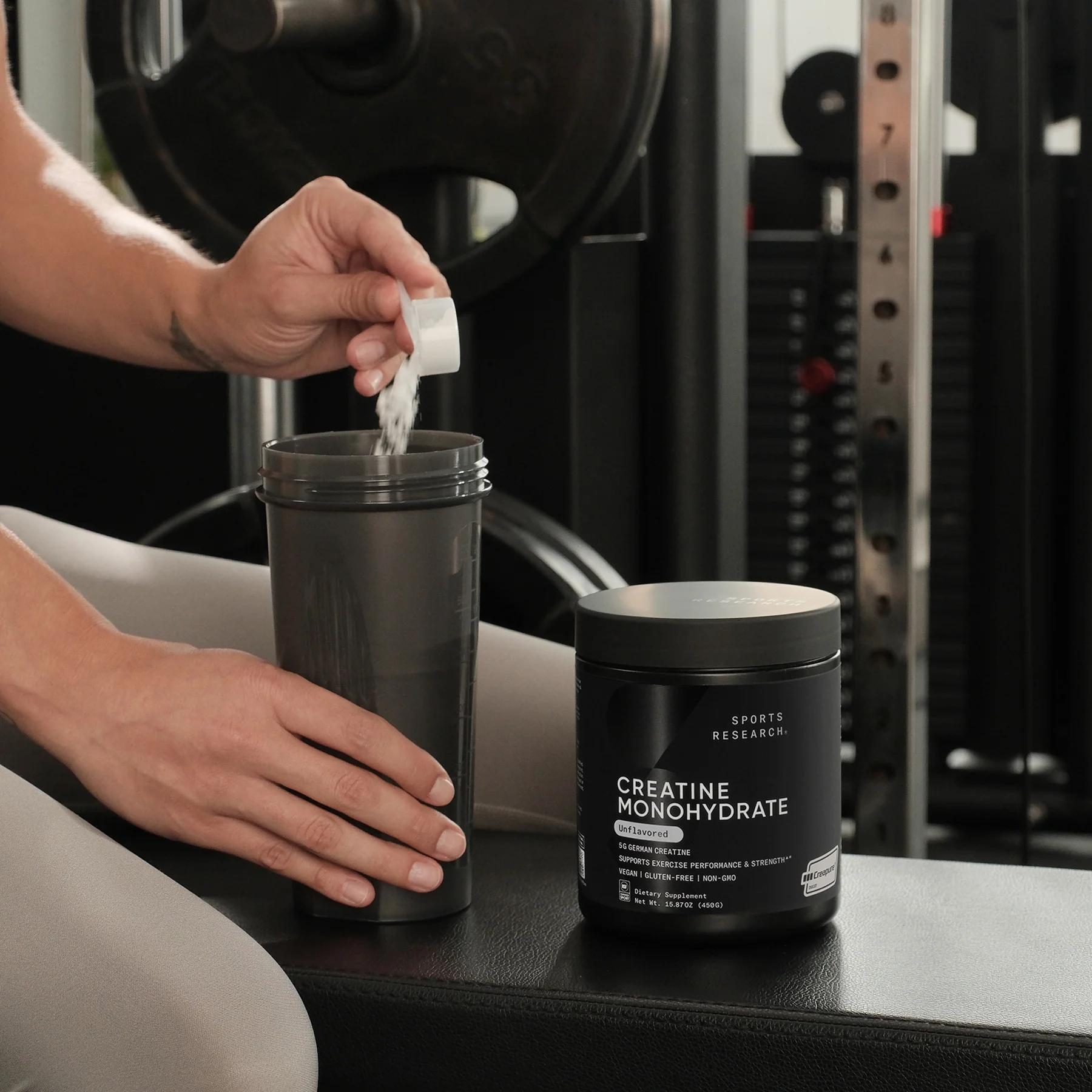
The most important purchasing detail is easy to miss: participants did not receive plain creatine monohydrate as the sole experimental ingredient. They received a creatine-based multi-ingredient formulation. That makes this a test of the combined formula under the chosen dosing and training conditions, not an isolated test of how creatine itself works. If the blend contains other active compounds, the result cannot tell us which ingredient contributed to each change or whether any interaction mattered.
That distinction should shape the way you shop. Plain creatine monohydrate has a comparatively large research base, straightforward serving sizes and generally competitive prices. A proprietary “recovery matrix” with half a dozen ingredients can cost much more while making it harder to see whether the creatine portion is sufficient. Paying extra for a blend solely because one short group comparison had better recovery scores would be a leap beyond the available result.
For healthy adults considering standard creatine monohydrate, consistent daily intake is generally more important than an elaborate pre-workout ritual. Many protocols use roughly 3 to 5 grams per day. Loading protocols can saturate stores sooner, but are optional. People with known kidney disease, relevant medical conditions or medications should check suitability with a clinician instead of treating a short trial in healthy men as a personal medical clearance.
One reassuring detail from the four-week trial was that measured kidney-function parameters stayed within normal physiological ranges in the participants. That is a statement about those 40 finishers over a brief period, not proof of universal safety for every product, dose or person. Exact ingredient labels and third-party product testing still matter.
5. Four weeks of size data cannot settle months of hypertrophy
Muscle gain is slow enough that measurement method and timeline become central. A person who has never trained might see fast changes in how muscles look and feel. Glycogen replenishment, improved posture, training-induced swelling and ordinary daily hydration differences can all alter short-term appearance. Genuine tissue adaptation is happening too, but its contribution is not easily isolated from one circumference reading or a short before-and-after scan.
That is why longer resistance-training comparisons deserve more weight when estimating what a supplement might add to a full training block. Across multiple studies, creatine monohydrate has sometimes been associated with extra lean-mass and strength gains alongside training. The effect sizes vary across populations, training status, protocols and measurements. Some trials show little or no advantage for a particular outcome. The short blend trial does not overturn that broader picture, and the broader picture does not allow us to rewrite this experiment’s null leg-press result.
A useful approach is to separate three questions. First: did the individual become better at completing the prescribed workout? Second: did their measurable strength or muscle dimensions change beyond what ordinary training predicts? Third: was the change attributable to the specific supplement ingredient rather than training, nutrition, water or another ingredient? The trial gives information relevant to each question, but only directly randomizes the blended drink versus placebo.
The research was supported financially and materially by supplement companies, with the report stating those companies did not control design, data collection, analysis or publication decisions. Funding support does not automatically invalidate findings; it is relevant context when deciding how confidently to generalize results or whether independent replication would strengthen the case. The strongest future test would be longer and separately compare plain creatine, the other blend ingredients, the combined formula and placebo under matched training.
Equipment Worth Exploring
Explore equipment, accessories and gear from our carefully selected range.


Rubber Hex Dumbbells
Rubber-coated hex dumbbell pairs with a stable shape for home and commercial strength training.


Multi Pull Smith Rack MPHR-780
All-in-one rack with a Smith machine, functional trainer, lat pulldown and low row.


Multi Bench MBX-650 2.0
Adjustable multi-bench with roller adjustment, 15 backrest positions and accessory mounts.

FID Bench MAX
Adjustable bench offering flat, incline, and decline positions + adjustable headrest.
VOLTRA
Compact digital cable trainer with smooth, adjustable resistance.
6. Build your first month around training, not a miraculous scoop
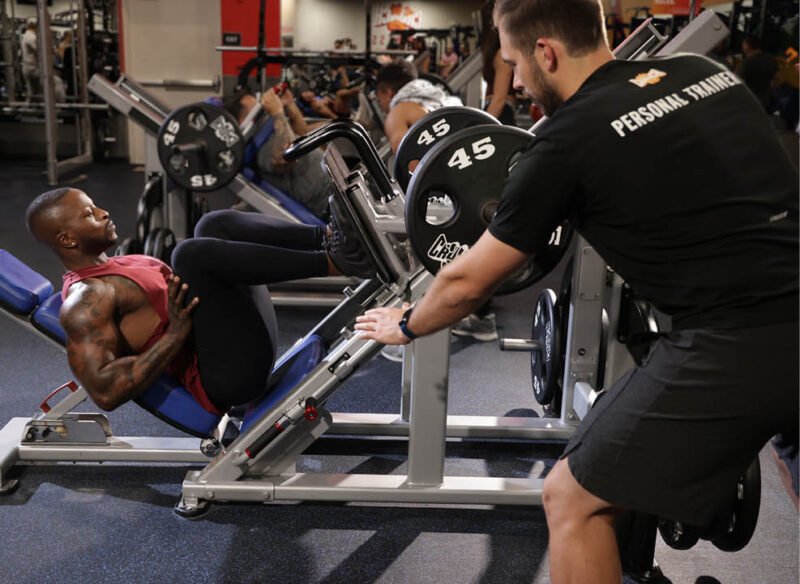
A beginner can take a very practical lesson from this: use the supplement decision as a small part of an otherwise measurable program. Begin with two or three resistance-training sessions weekly, leaving recovery time between hard sessions for the same muscle groups. Cover a squat or leg-press pattern, a hip hinge, an upper-body push, an upper-body pull and a few accessories suited to your abilities. There is no need to turn a novice routine into six consecutive days of failure training.
Choose a load that lets you complete the planned reps with consistent technique and a little capacity left at first. For example, three sets of six to ten controlled leg-press repetitions can provide a repeatable anchor. When you can perform all three sets at the top end with the same depth and setup, add a modest amount of weight next session. Make that rule clear before you start, so improvement is driven by comparable work instead of mood.
Track only a few recovery clues: whether your performance is stable or rising, how sore you are relative to the last comparable session, sleep duration and whether fatigue is carrying into everyday life. A subjective recovery score can be useful for your own trend; it is not a lab measure. If soreness is severe or a joint becomes painful, adjust the exercise or workload rather than relying on a drink to rescue poor programming.
Eat enough total calories for your actual goal, maintain adequate daily protein and prioritize sleep. If you choose creatine monohydrate, use a consistent sensible dose and give it time; avoid judging success solely by first-week scale weight. If you skip supplements entirely, a well-designed first month can still deliver clear strength improvements. The key finding from the new trial reinforces that basic point: the training program worked in both groups, and the added blend did not clearly pull one group ahead on the test of maximal leg-press strength.
Funny Gym Shirts & Workout Gear
Funny gym shirts, tanks, hoodies and workout gear for lifters who like training hard.

This Is Your Body On Creatine Shirt – Superpower T-Shirt
Heavy lifts, good laughs, and a little “This Is Your Body On Creatine” energy.

Pink Protein Shaker | Meme Pullover for Bodybuilding Ga Hoodie
Bring “Pink Protein Shaker” gym humor to lazy days and post-workout plans.

Funny Free Protein Gym | Sarcastic Muscle Shirt For Bod Tank Top
Your gym-day look, with a playful “Free Protein” twist.

Funny Supplement Lover Gym | Hypebeast Pre-Workout Meme T-Shirt
Show some gym-day personality with “Supplement Lover”.

Broccolift Eat Broccoli Lift Hooded Gains Meme Jumper Hoodie
Keep it laid-back with a little “Broccolift” attitude.


Funny Protein Addict Gym | Breaking Bad Meme Muscle Shi Tank Top
Bring “Protein Addict” humor to your next lifting session.

Funny Brotein Bar Gym | Protein Bar Meme Muscle Shirt F Tank Top
Your gym-day look, with a playful “Brotein Bar” twist.

Bear Protein : Hilarious Meme Tank Top
Your gym-day look, with a playful “Gym Bear Protein” twist.

Bulking Bad Decal Water Bottles & Supplements Sticker
A fun “Bulking Bad” touch for bottles, laptops, and lockers.