Advertising disclosure: This page includes affiliate product links that may earn us a commission, as well as products from our own store.
The low-to-high cable fly has a simple promise: start with two handles near the hips and bring them upward and inward to train the upper chest. The setup looks easy, but weight-stack numbers can turn it into a completely different movement. Many lifters lean into the cables, curl the handles with their arms, shrug toward their ears, and then credit the heavier pin for progress.
This guide gives you a more useful goal: make the exercise consistent enough that you can judge technique and training progress. You will learn where to set the pulleys, how to control the arm arc, why the fly complements pressing, and how to adapt the setup when the bilateral version is awkward.
What Low-to-High Cable Flys Really Train
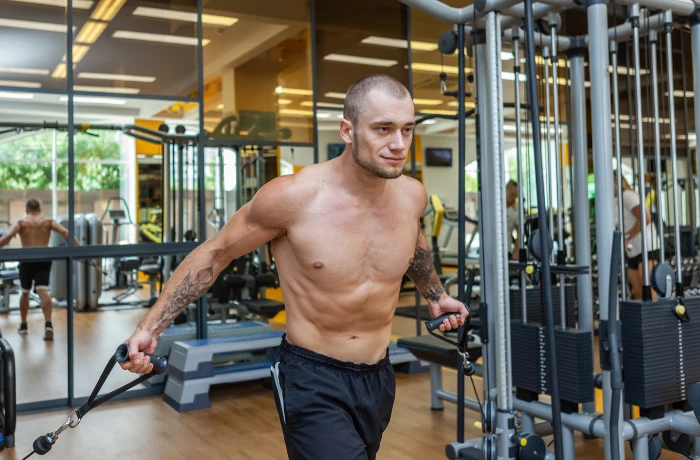
The clavicular, or upper, fibers of the pectoralis major assist in bringing the upper arm forward and toward the center of the body. When a low cable pulls down and back against an arm traveling upward and inward, that region can contribute meaningfully. The front deltoid also helps. The pectorals do not work in isolated compartments; changing the pulley height changes the task, not the existence of the other regions.
A practical advantage of cable flys is the ability to choose a line of pull and keep resistance on the arms through a useful portion of the range. The resistance is not constant at every joint angle, and different towers use different pulley ratios. It is more accurate to say that cables create a controllable external pull than that they maintain an identical muscle load at all times. Their smoothness and adjustability are the reasons to use them.
Do not confuse an upward arm angle with proven superior growth. Studies of muscle electrical activity during incline pressing can help explain how arm position changes muscular involvement, but they do not establish that low-to-high cable flys cause more upper-chest hypertrophy than another fly angle. An intense contraction sensation is useful feedback about the repetition, not a biological growth measurement.
Think of the exercise as chest-accessory volume alongside your bigger presses. If you can keep the same stance, shoulder position and arc across sets, it becomes much easier to build capacity. If every session has a new pulley height or a new aggressive backward stretch, comparing loads and repetitions is nearly meaningless. Keep the method fixed long enough to learn something from it.
Position the Pulleys, Handles and Your Body
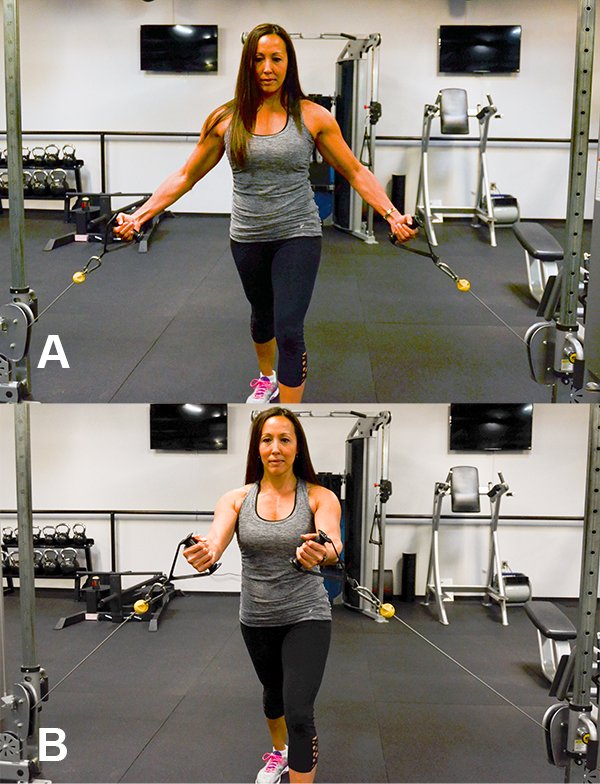
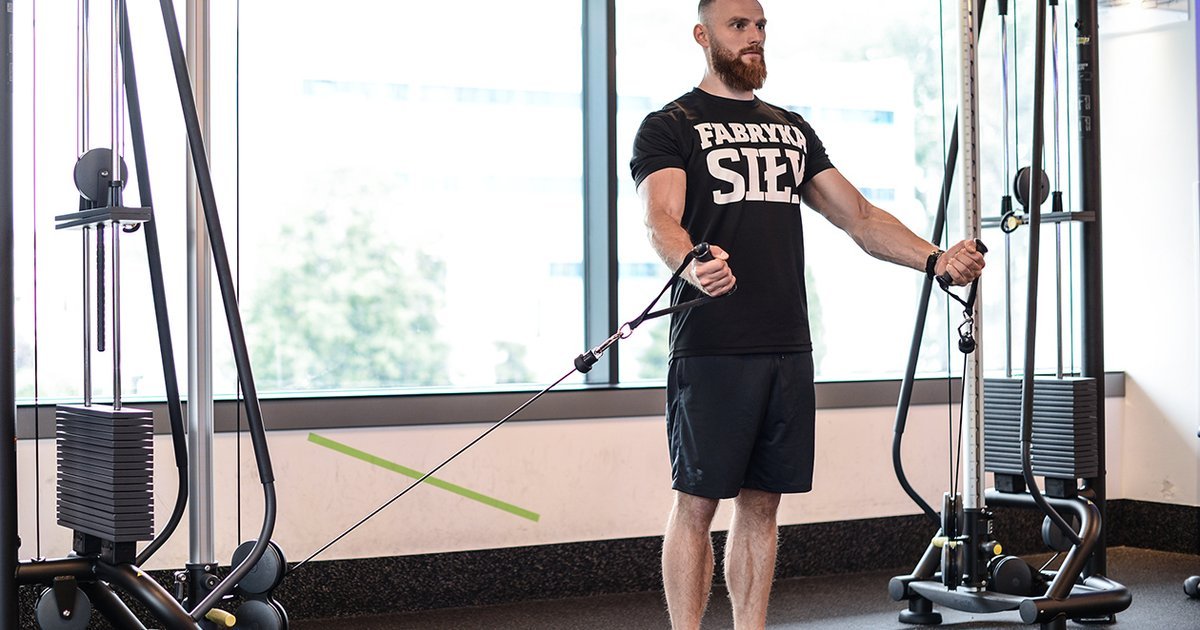
Find two independently adjustable cable columns and place the pulleys low, ideally at the same setting. Attach compatible single-grip handles and confirm that both carabiners close securely, the cables run freely, and each stack pin is properly seated. Even when two stacks show the same number, their effective resistance may differ if the pulleys use different ratios. Start light and treat symmetry as something to check, not assume.
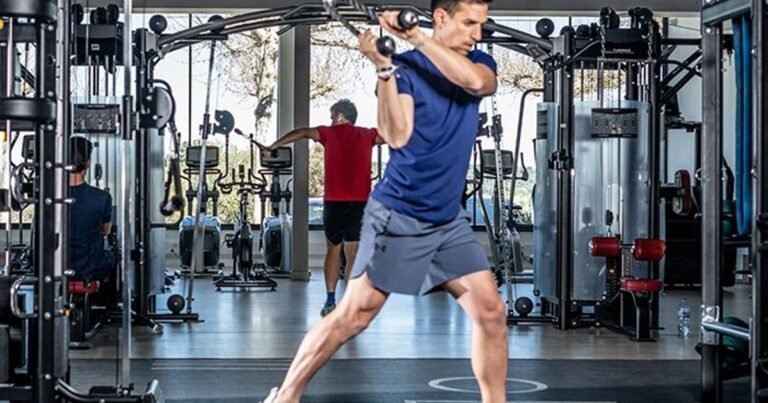
Stand between the towers, take a handle in each hand, and step forward just enough that the weights remain slightly lifted at the starting position. A split stance often helps because the cables pull backward. Keep a soft bend in the knees, ribs over pelvis, and torso almost still. The front leg should stabilize you instead of helping you launch the handles upward. Alternate your lead foot between sets if that makes your balance more comfortable.
Let the upper arms begin beside or slightly behind the torso with a modest elbow bend. There is no prize for allowing the shoulders to be pulled as far back as possible. Stop the opening range where you can keep your posture and where the front of your shoulder feels comfortable. Different arm lengths, cable spacing and shoulder mobility can make appropriate starting positions look different between people.
Do three unweighted or very light rehearsals. Watch that both arms rise on roughly comparable paths without one handle scraping clothing or the opposing cable. If the towers are too close, the cables cross awkwardly or the anchors are not suited to the movement, do not force a symmetrical bilateral fly. A single-arm variation can solve practical geometry problems without pretending that incompatible equipment can behave as a synchronized dual-cable system.
Sweep Up Through the Chest Instead of Curling the Handles

Start the working repetition by drawing the upper arms upward and toward each other, as though making a broad upward hugging motion. Keep the elbows soft but approximately fixed; they are passengers, not the engine. The hands will normally rise toward the upper chest or lower face, depending on your proportions and pain-free shoulder range. The exact endpoint matters less than arriving there with consistent arm and torso mechanics.
If the elbows flex and extend substantially, you are turning the movement into a curl or press. That may let you move a higher stack setting, but it no longer tests the same chest-fly pattern. Choose a weight that allows a smooth elbow angle through all the repetitions. Check this especially near the top, where lifters often bend the wrists and elbows to force the handles together.
Do not slam the handles together to manufacture a peak contraction. Bring them near each other, pause briefly if you can hold tension, then open slowly along the same curved route. Take about two seconds on the return as a useful starting tempo; the exact clock is less important than resisting the cable instead of letting it drag the arms backward. Stop before the shoulders roll uncomfortably or the stack crashes.
Another common mistake is combining a big shrug, exaggerated chest lift and head thrust. The shoulder blades should move naturally, not be frozen together, but you should avoid replacing the pec movement with a dramatic change in posture. Keep the neck easy and the rib cage controlled. Breathing out while the handles move together and breathing in on the return usually works for ordinary accessory sets.
Film a light set from the side if you want an objective technique check. Compare the start and finish position, elbow angle, torso sway and return speed. A lighter load with a repeatable arc is more valuable than a higher number completed by changing all four variables. Progress in this lift is earned through reps you can reproduce.

Equipment Worth Exploring
Explore equipment, accessories and gear from our carefully selected range.

VForce Wall Trainer
Space-saving wall-mounted functional trainer with pivoting cable arms and variable resistance ratios.

VForce 2IN1
Half rack and pivot-arm functional trainer with switchable 1:1 and 2:1 pulley ratios.

VForce 3IN1
All-in-one rack combining an adjustable Smith machine, functional trainer, and free-weight station.

Multi Pull Smith Rack MPHR-780
All-in-one rack with a Smith machine, functional trainer, lat pulldown and low row.
VOLTRA
Compact digital cable trainer with smooth, adjustable resistance.

Go-Tone Pro
Portable digital cable trainer with up to 66 lb (30 kg) of adjustable resistance.

GymPin Ergo Handles
Pair of ergonomic cable handles shaped for comfortable triceps and pulling exercises.
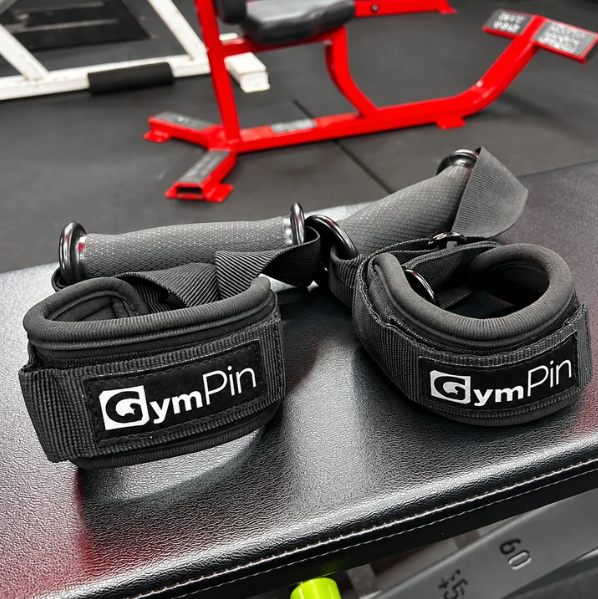
GymPin D Cuffs
Adjustable wrist cuffs with textured grips for supported cable-machine exercises.

Angles 90 Grips
Flexible grip attachments that allow natural wrist movement during pulling exercises.
Choose Single-Arm or Supported Variations When They Fit Better

A single-arm low cable fly is an excellent option when you have only one pulley or when one side repeatedly changes its path. Set one anchor low, face slightly away from the machine, brace the trunk and sweep the working arm up and across. Keep the pelvis and chest largely facing forward rather than rotating to throw the handle. Compare left and right using the same range, setup and rep target; a side-to-side difference is not automatically evidence of an injury.
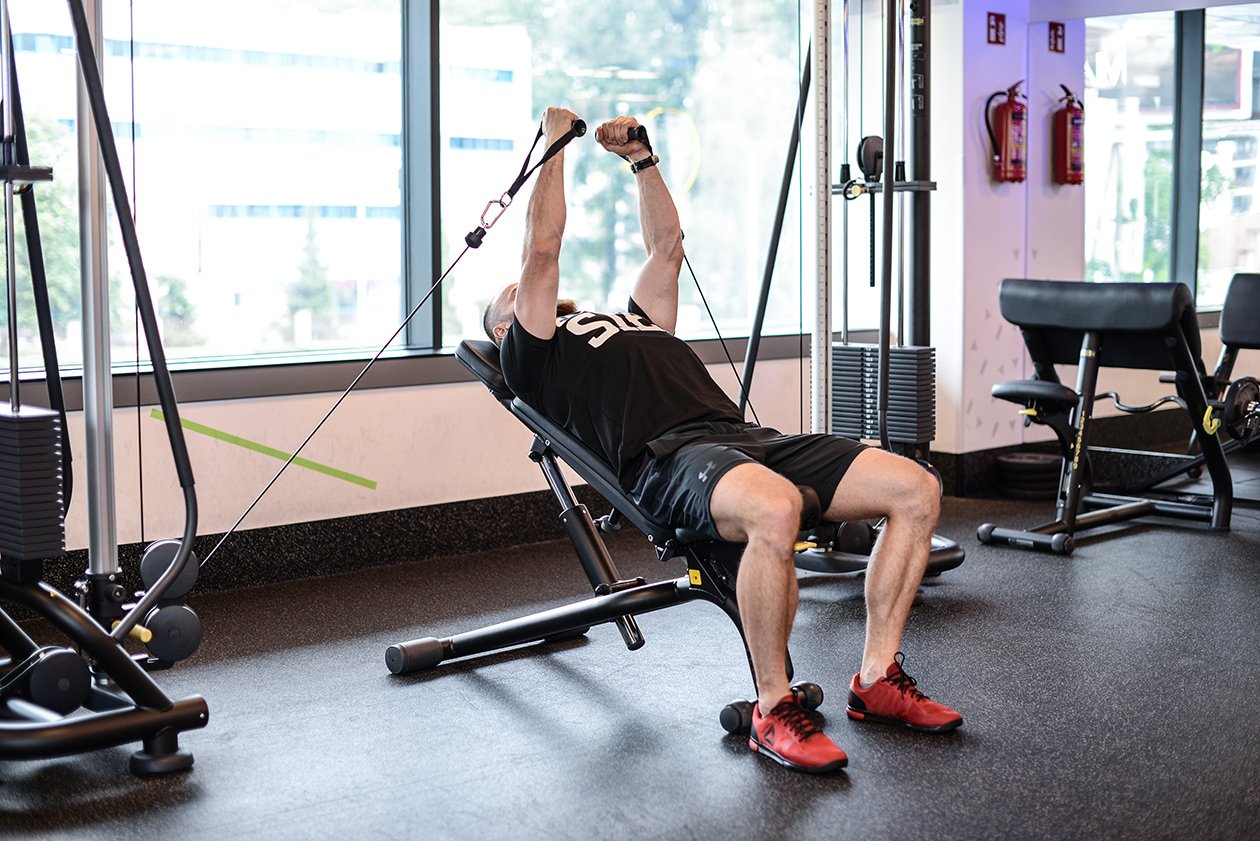
An incline-bench cable fly is another valid chest accessory. It gives the torso a support surface and changes the direction of force relative to the body. That can be useful if standing cable flys mostly challenge balance. The bench must fit safely between the cable towers and allow the handles to clear its frame throughout the movement. This is a related exercise, not the identical low-to-high standing version, so log its sets separately.
Moving the pulleys toward chest height makes the fly arc more horizontal. Starting higher and drawing the arms down creates a high-to-low pattern. Lifters may prefer one of these angles because of comfort, equipment geometry or how the chest is challenged. Avoid descriptions that imply an angle activates one region and completely switches off the rest; muscles work together and individuals vary.
If the front of the shoulder pinches, shorten the stretch, reduce weight or change to an angle you can control. Do not force a deep backward reach to chase a photograph. Sharp pain, instability or pain that persists after training deserves professional assessment. There is no compulsory cable-fly variation: machine pressing, well-tolerated dumbbell pressing and other chest exercises can help you train while a specific painful pattern is addressed.
Progress Your Cable Fly Without Losing the Rep
For most lifters, place the low-to-high cable fly after a larger chest press. A sample push workout might start with three sets of incline pressing, add two sets of flat or machine pressing, then finish with two controlled sets of the fly. This is an example rather than a universal prescription. Your total weekly chest work, fatigue and recovery determine whether those accessory sets are appropriate.
Use a four-week double-progression experiment. Begin with two working sets of roughly 10 to 15 controlled reps and finish each with perhaps two clean reps still available. On the next workout, try to add one repetition before increasing the stack. Once you can make all reps look nearly the same at the upper end of the range, add the smallest available resistance increment and work back up.
During week one, establish your pulley height, attachment, split stance and starting load. During week two, hold those details steady while improving clean repetitions. During week three, add a third set only if pressing performance and recovery remain good, or make a small load increase if the prior work is clearly comfortable. During week four, consolidate the form and repeat your best clean set. If the weight pulls you into a new torso angle, the apparent improvement is probably partly a technique change.
For unilateral sets, complete the same number of controlled reps on both sides, and use a consistent start order. Log the exercise variant as well as the load: a low-to-high standing fly, a single-arm fly and an incline-bench fly should not share one progression line. Machines can also differ enough that their displayed stack numbers are not directly comparable across gyms.
The best reason to keep the fly is that it adds useful chest volume you can recover from and repeat. If your pressing already supplies more chest stress than you can tolerate, more isolation work is not automatically better. Control the movement, let the arm path serve the training goal, and stop chasing a stack number that requires you to cheat every repetition.

Funny Gym Shirts & Workout Gear
Funny gym shirts, tanks, hoodies and workout gear for lifters who like training hard.

Dost Thou Even Fly Tee
Make gym days more fun with “Dost Thou Even Fly Medieval Knight Pec Fly” style.

Kanye Chest Gym | Funny Chest Day Hooded | Gym Meme Wor Hoodie
Show off your bodybuilding humor in a laid-back “Kanye Chest” hoodie.

Four Plates Bench Club Tee
Show some powerlifting attitude with a playful “4 Plates Bench Club” tee.

The Chestfather Arnold Meme Big Chest Vest Tank Top
Add some lifting attitude to training with “The Chestfather”.

I Love Bench Press Gym | Funny Bench Press Meme Crewnec T-Shirt
For laid-back days and gym-girl humor: “I Love Bench Press”.

Chest Day Decal Water Bottles & Equipment Meme Sticker
Bring “Chest Day” attitude to your water bottle or laptop.

If You're Reading This Its Chest Day | Drake Album Cove Hoodie
Bring “If You're Reading This Its Chest Day” gym humor to lazy days and post-workout plans.


Work on His Pecks Tee
Show some bodybuilding attitude with a playful “Why Did The Chicken Go To The Gym? To Work” tee.

Bottom line: low-to-high cable flys become valuable when you own the setup, move the upper arms through a repeatable arc, and advance only after clean reps. The pulley angle is a tool for varied chest training, not a guarantee of special growth.
Some equipment links may be affiliate links, which can support our independent editorial work at no additional cost to you.