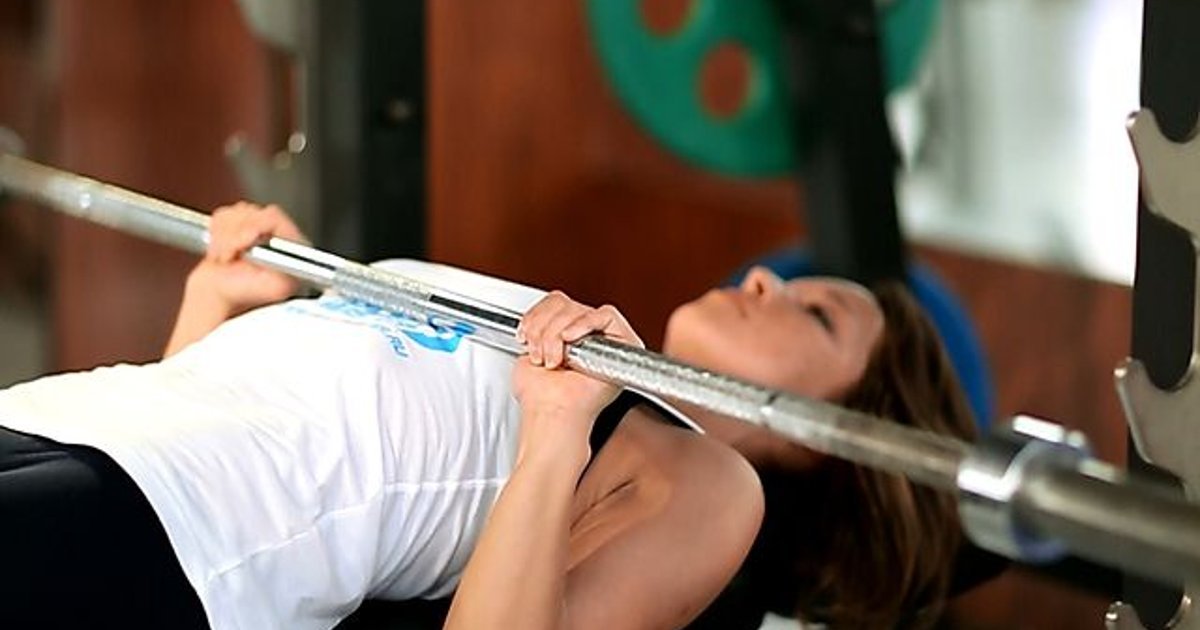
Advertising disclosure: This page includes affiliate product links that may earn us a commission, as well as products from our own store.
JM Press: Learn the Elbow Path Before Chasing a Heavier Bar
The JM press can look like an unfinished bench press or a triceps extension that changed direction halfway through. That resemblance is precisely why it takes practice. The objective is a repeatable triceps-focused assistance movement, not finding a new way to move your usual bench weight through a shorter distance.
It is also optional. If straightforward presses and cable extensions already fit your goals, there is no requirement to add a more technical exercise. For lifters who want to learn it, the useful starting points are a secure setup, a consistent elbow path and a workload that leaves room to assess how the movement feels.
1. Build a setup you can repeat
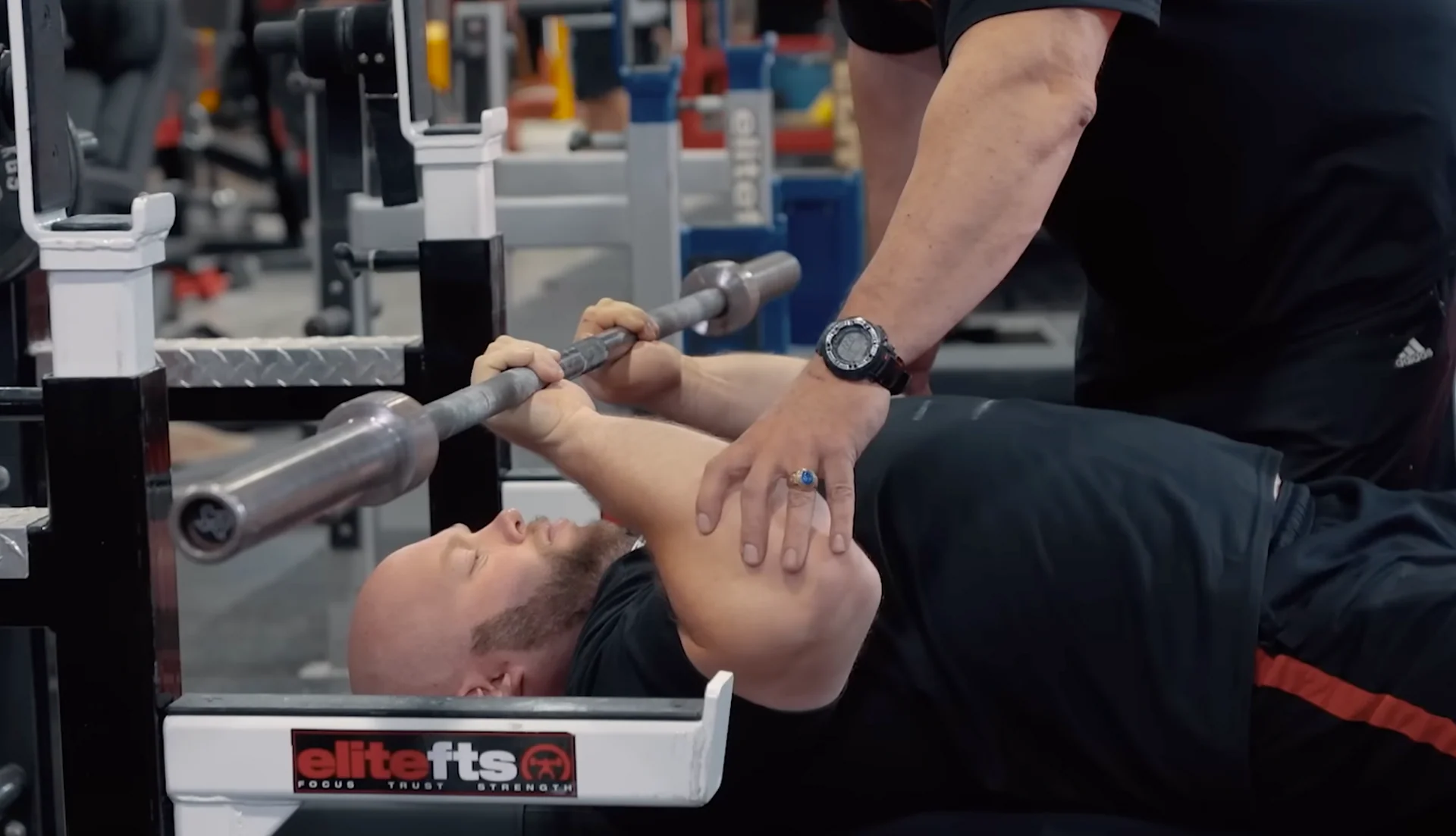
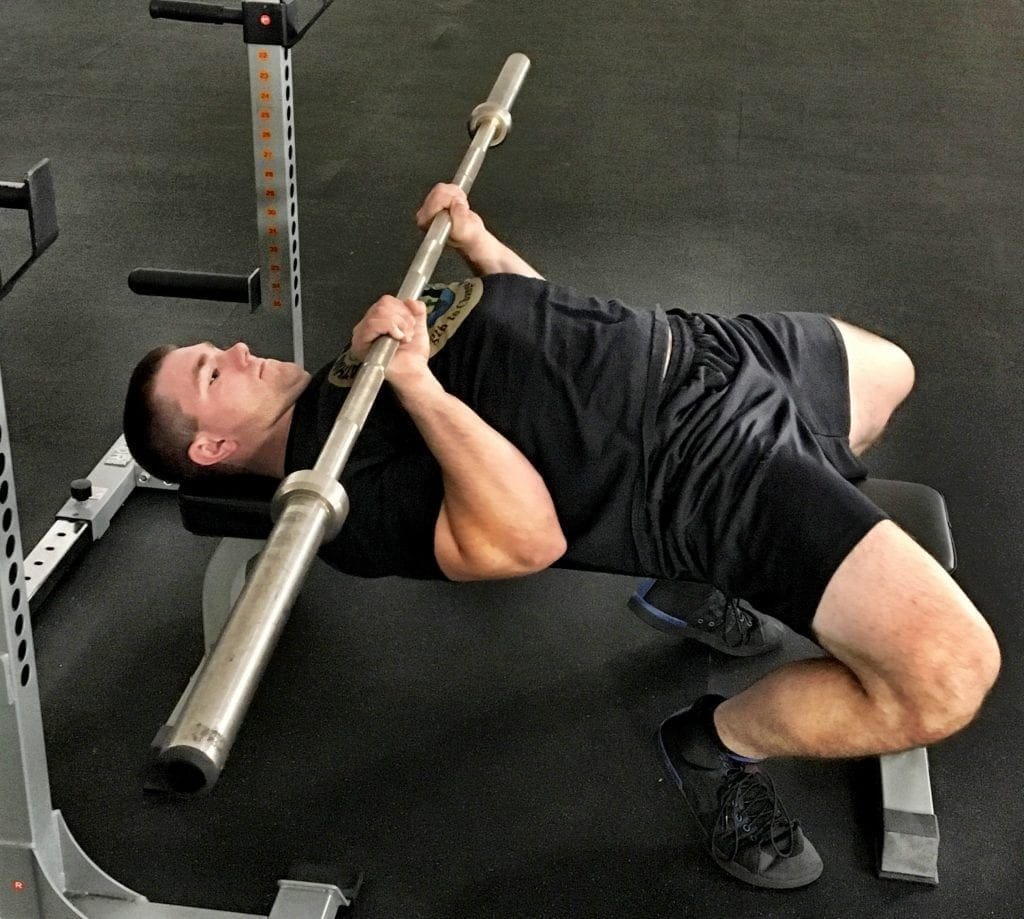
The classic JM press blends a narrow-grip press with elbow extension. Begin lying on a flat bench with a manageable bar at arm’s length. A relatively narrow grip and elbows angled roughly 45 degrees from the torso provide a reference, while the elbows remain elevated during the descent.
Grip width is a starting adjustment, not a contest to bring your hands together. An extremely narrow hold is not a prerequisite. Record where your hands sit on the bar so that you can reproduce the position instead of changing it every time a repetition feels different.
Check the rack before adding meaningful load. You should be able to unrack and return the bar without losing your position. Arrange suitable safeties and assistance for a movement that brings a bar close to your face. Test the arrangement with a light implement; owning a rack does not automatically mean its catches are correctly positioned.
A standard empty bar can still be too heavy for an unfamiliar exercise. Use a lighter training bar or another manageable option if necessary. The learning phase is about controlling the implement, not meeting an arbitrary minimum load. Keep your hands securely around it and avoid relying on a precarious grip.
Make a short setup note: bench position, rack height, implement and hand placement. These details are easy to overlook until a later session feels completely different. They are also more useful than copying another lifter’s exact grip measurement without accounting for your own equipment and proportions.
2. Learn the path without forcing the bottom position
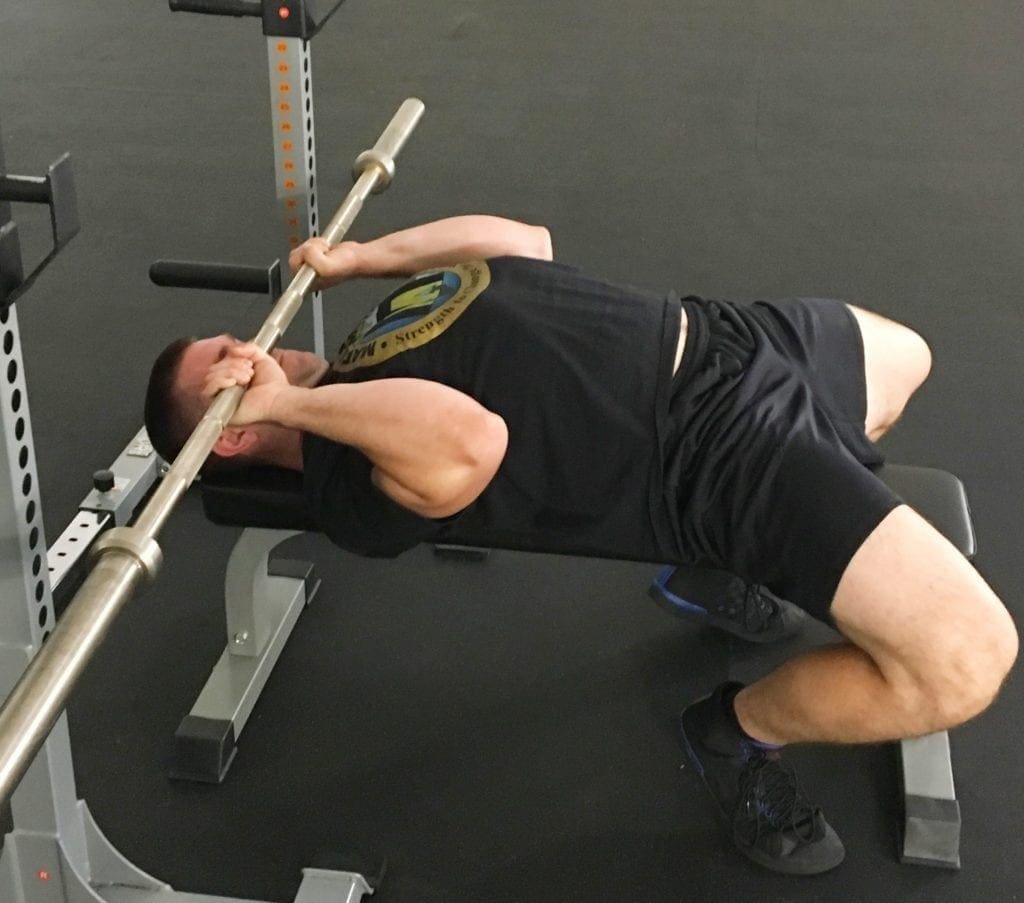
Lower the bar towards the chin and upper-throat area while keeping the elbows high. In the classic demonstration, increasing elbow flexion brings the forearms towards the upper arms; wrist position changes during the movement. Reverse under control and extend the elbows to return the bar upwards.
This is a description of the movement path, not an instruction to touch your throat with the bar. Do not chase a body contact point, bounce out of the bottom or force the wrists into a position they cannot comfortably control. Start with a range you can repeat with light resistance.
Two common substitutions change the exercise. If your elbows drop substantially and the bar travels towards the lower chest, the repetition becomes more like a close-grip bench press. If you turn it into a conventional lying extension, you are practising a different pattern. Either can be a valid exercise, but switching between them mid-set makes progression difficult to interpret.
Film a light set from a useful side angle if possible. Compare the first and final repetitions: did the bar finish in the same place, did the elbows follow a similar path, and did the last repetition suddenly become a press? A video is a technique reference, not a medical assessment or a reason to continue through discomfort.
Online demonstrations also vary. Some show a distinct rolling transition between a press and extension, while others emphasise the high-elbow version. Choose one coherent method to learn rather than assembling contradictory cues into a single repetition. Hands-on coaching is useful when the distinction remains unclear.
3. Compare implements without pretending they are identical
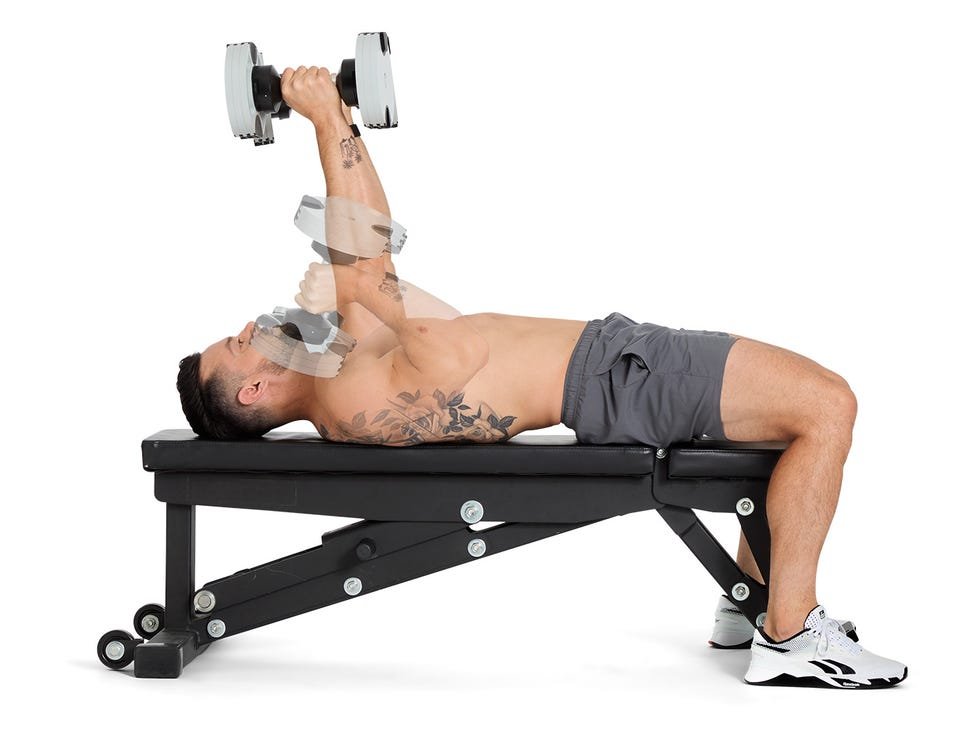
A straight bar links both hands. Dumbbells let each arm follow its own path, and an angled bar changes the available grip. Those differences can affect setup and comfort. None establishes that one implement must be best for every lifter or that a heavier number represents the same task.
For dumbbell work, use weights you can place into position and return safely. Do not casually lift your feet or twist across the bench to rescue a poor setup. If getting the weights into position is already the hardest part, choose a more manageable load or a different arrangement.
Keep different versions separate in the log. A dumbbell JM press, a straight-bar version and a close-grip bench press should not share one undifferentiated personal record. Record the implement, repetitions and any meaningful range change. When an exercise becomes easier because you have shortened it, the extra load is not a like-for-like improvement.
Equipment choice also includes the bench and loading increments. A stable bench, secure barbell collars and small changes in resistance can be more useful than a specialised purchase. Check the manufacturer’s intended use and compatibility rather than assuming every attachment works with every rack or bench.
The equipment examples below cover benches, bars, dumbbells and loading accessories. They are options for the surrounding training setup, not claims that these specific models were used in a study, tested by MMP for this article or guaranteed to improve your bench press.

Equipment Worth Exploring
Explore equipment, accessories and gear from our carefully selected range.


FID Bench MAX
Adjustable bench offering flat, incline, and decline positions + adjustable headrest.


Multi Bench MBX-650 2.0
Adjustable multi-bench with roller adjustment, 15 backrest positions and accessory mounts.


EZ Curl Barbell
Olympic EZ curl bar with angled grips for curls and triceps exercises.


4. Treat the Smith-machine version as a separate setup
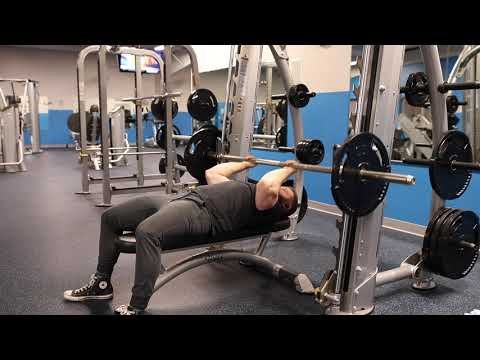
A Smith machine constrains the bar’s travel. That removes one type of movement freedom, but it also means your bench position must suit the machine’s path. A fixed track is not a substitute for checking where the bar will travel relative to your face and upper body.
Before loading, rehearse the unracking and reracking action. Check the safety stops and the space available throughout the repetition. Machines differ in track angle, hooks and counterbalancing; a setup copied from a photograph may not transfer directly to the machine in front of you.
Move the bench deliberately, then test the position again with minimal resistance. If the track forces an awkward path, do not contort your wrists or shoulders to make the exercise fit. Another implement or a simpler triceps exercise is a reasonable choice. The goal is useful training rather than completing a particular variation at any cost.
Record the machine used and, where practical, its bench position. Treat its displayed load as a machine-specific reference. A number on a Smith machine cannot be assumed to equal the same free-bar load, especially when the starting bar resistance is different or unknown.
Once you find a workable arrangement, keep it consistent while learning. Changing the machine, bench location, grip and repetition style together makes it hard to identify what helped or caused a problem.
5. Give the exercise a modest job in your programme
The JM press belongs in a programme for a reason. Perhaps you want a triceps-focused accessory alongside bench training, or you are comparing assistance movements that you can perform consistently. Define that role before adding several hard sets to an already demanding upper-body week.
If the bench press is your priority, keep that priority visible in exercise order and recovery. Do not use a new accessory as an excuse to replace all your familiar pressing work. Equally, you do not need to retain every existing triceps exercise while adding another on top.
A conservative learning example is one or two light practice sets after your main work, stopping well before technique deteriorates. This is an illustrative starting approach, not a trial-proven prescription. Adjust the dose to your experience and response; there is no universal number of JM-press sets that everyone needs.
Broader resistance-training guidance supports regular, individualised training without making momentary failure compulsory. For this unfamiliar movement, deliberately grinding through a final repetition is a poor way to learn whether your setup and path are repeatable. End the set while you still control the bar.
Log technique consistency alongside repetitions and load. Look for repeatable sessions and acceptable recovery before increasing resistance. If elbow discomfort develops, reduce or stop the aggravating exercise instead of treating pain as evidence that the triceps are working. Persistent symptoms warrant appropriate assessment.
Powerlifting clothing and bench-themed accessories are optional extras; the collection below matches the surrounding pressing and assistance-work discussion. What matters in the training log is the work you actually perform, not the slogan on your shirt.

Powerlifting Shirts & Lifting Gear
Powerlifting shirts and gym gear for squat, bench and deadlift lifters who live for heavy numbers.


I Love Bench Press | Heart Weight Plate Hooded For Ches Hoodie
Keep it laid-back with a little “I Love Bench Press” attitude.

Gym Sir Swole of Benchalot Medieval Knight Chest Day Cr T-Shirt
Show some gym-day personality with “Sir Swole of Benchalot Medieval Knight”.

2 Plates Bench Club Chest Day Meme & Top T-Shirt
Heavy lifts, good laughs, and a little “2 Plates Bench Club” energy.

Shirt: Good Argument But I Bench More Than You – T-Shirt
Make gym days more fun with “: Good Argument But I Bench More Than You” style.

Raise The Barbell Shirt – Motivational & T-Shirt
Show some powerlifting attitude with a playful “Raise The Barbell” tee.

Lifting Is My Therapy – Lifting Bodybuilding Powerlifti Sticker
Bring “Lifting Is My Therapy” attitude to your water bottle or laptop.

45LB Metal Weight Plate Barbell Standard Lifting Workou Sticker
Put “45LB Metal Weight Plate” gym humor on your laptop, bottle, or gym gear.

Barbell Heartbeat Crewneck Pullover Sweater for Powerli T-Shirt
Keep things casual with a little “Barbell Heartbeat” attitude.

Big Boy Barbell Club Shirt Meme & Essential Top T-Shirt
Make gym days more fun with “Big Boy Barbell Club” style.