Advertising disclosure: This page includes affiliate product links that may earn us a commission, as well as products from our own store.
Ring Support Holds: Neutral Grip, Turnout and a Six-Week Plan
Hanging from gymnastics rings is familiar. Supporting your whole body above them is a different challenge. Even strong lifters can find that their arms tremble, the rings separate and their shoulders creep toward their ears. A ring support hold is a simple way to practice controlling that position before adding the movement of a dip or muscle-up. The aim is not to survive a heroic hold. It is to accumulate clean, repeatable seconds with your elbows straight, shoulders active and the rings close.
What the ring support hold trains – and what it does not
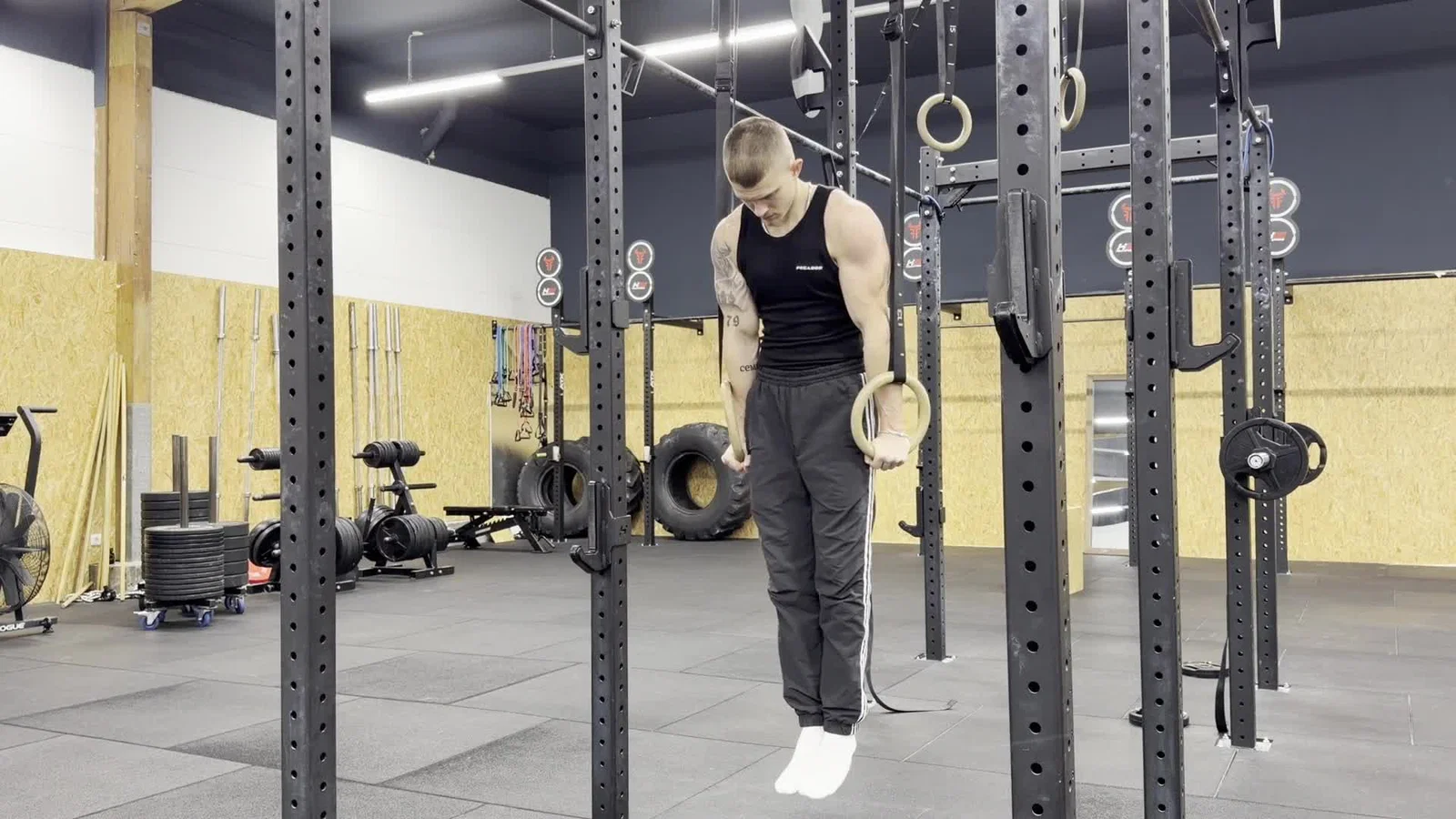
At the top of a ring support, both hands press down through separate, freely moving handles. Your triceps help keep the elbows extended; your chest, shoulder and back muscles help resist the rings drifting outward; and your trunk keeps the legs from swinging. Unlike fixed parallel bars, the rings can rotate and move independently. That means two people with similar bar-dip strength can find very different levels of difficulty on rings.
A static support is best understood as skill and positional strength practice, not a replacement for a full chest or triceps workout. You are training control at one joint configuration rather than challenging the pressing muscles through a large range of motion. Ring dips, push-ups and presses may still supply most of your dynamic upper-body training. The support hold gives you a stable starting and finishing position for those movements.
Some wobble is expected, especially during the first sessions. Small corrections are part of learning. Yet shaking alone does not tell you that a set is productive: if your shoulders rise, elbows soften or rings spread to shoulder-breaking width, the position has changed. Stop the hold, reset, and shorten the next effort. A video from the front and side often reveals whether the rings stayed level and near your body.
There is limited direct research measuring long-term muscle growth or injury prevention from static ring supports. Research on dynamic dips and different apparatuses cannot establish that these holds are superior for hypertrophy. Use the hold for the visible, trainable outcome: more consistent control above the rings. Treat coach-recommended time benchmarks as practical milestones, not scientifically proven readiness tests.
Set the ring height, straps and feet before you lift
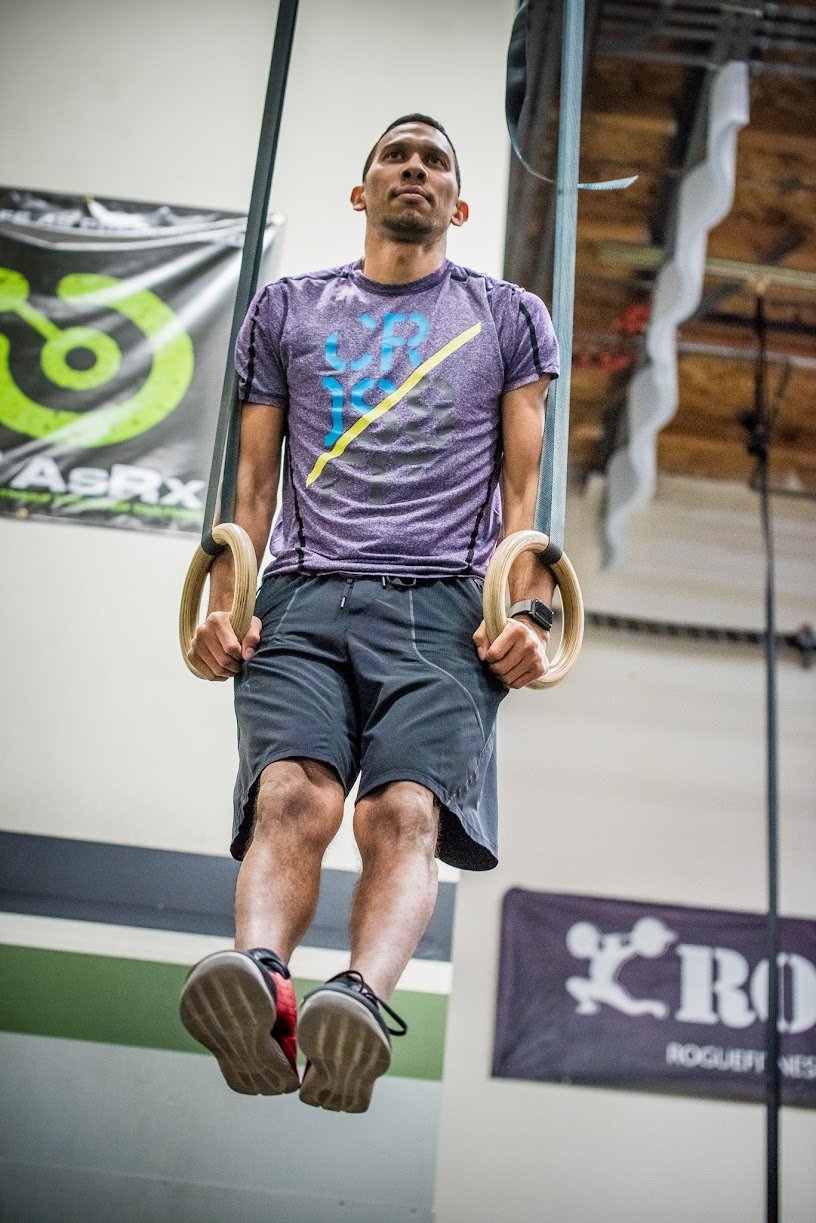
Start with two rated gymnastics rings hanging from a secure, purpose-built anchor or stable rack approved for suspension training. Match the strap lengths so the rings are even. Check the straps, buckles, attachment point and clear area beneath you before each session. Do not assume that an ordinary doorway pull-up bar, decorative ceiling hook or unverified beam is suitable for full-body hanging and support forces.
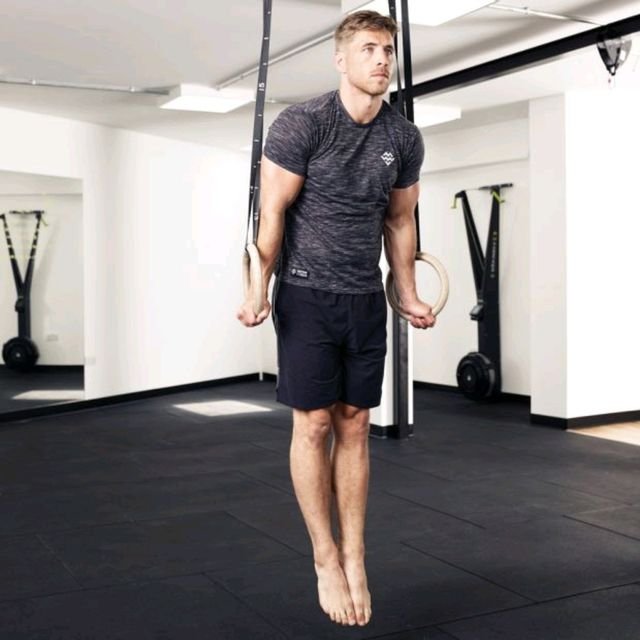
Lower the rings until you can take your weight with a small step rather than a leap. A box or floor position that lets you stand immediately is particularly useful when you are learning. Place the rings roughly hip distance apart, close to your sides, and take a full grip around each ring with your thumb wrapped. Push down until your elbows straighten, then allow the feet to leave the support only when the shoulders and trunk are already organised.
Keep the ribs quietly stacked over the pelvis, squeeze the glutes and bring your feet together. A slight hollow-body line is fine, but a big lower-back arch or a hard pike is usually an attempt to compensate for insufficient control. Look straight ahead and keep breathing; a prolonged breath-hold is unnecessary for a ten-second support. Keep your forearms clear of the straps instead of leaning against them for hidden assistance.
If you cannot hold the position for five clean seconds, do not force a longer unsupported attempt. Leave your toes lightly on a box or the floor, or practise a straight-arm support on fixed bars or stable parallettes. The objective is to reduce the balance and load demands enough that you can learn the alignment. A lower regression executed well beats a full-body-weight hold with pain and collapsing shoulders.

Equipment Worth Exploring
Explore equipment, accessories and gear from our carefully selected range.


Power Tower
Freestanding pull-up and dip station with adjustable handles for bodyweight training.


Foldable Wall Rack
Wall-mounted folding squat rack designed to save floor space between workouts.


Angles 90 Grips
Flexible grip attachments that allow natural wrist movement during pulling exercises.


Leather Wrist Grips
Padded leather lifting grips help support the hands and wrists on heavy pulling exercises.
Own neutral rings before adding turnout
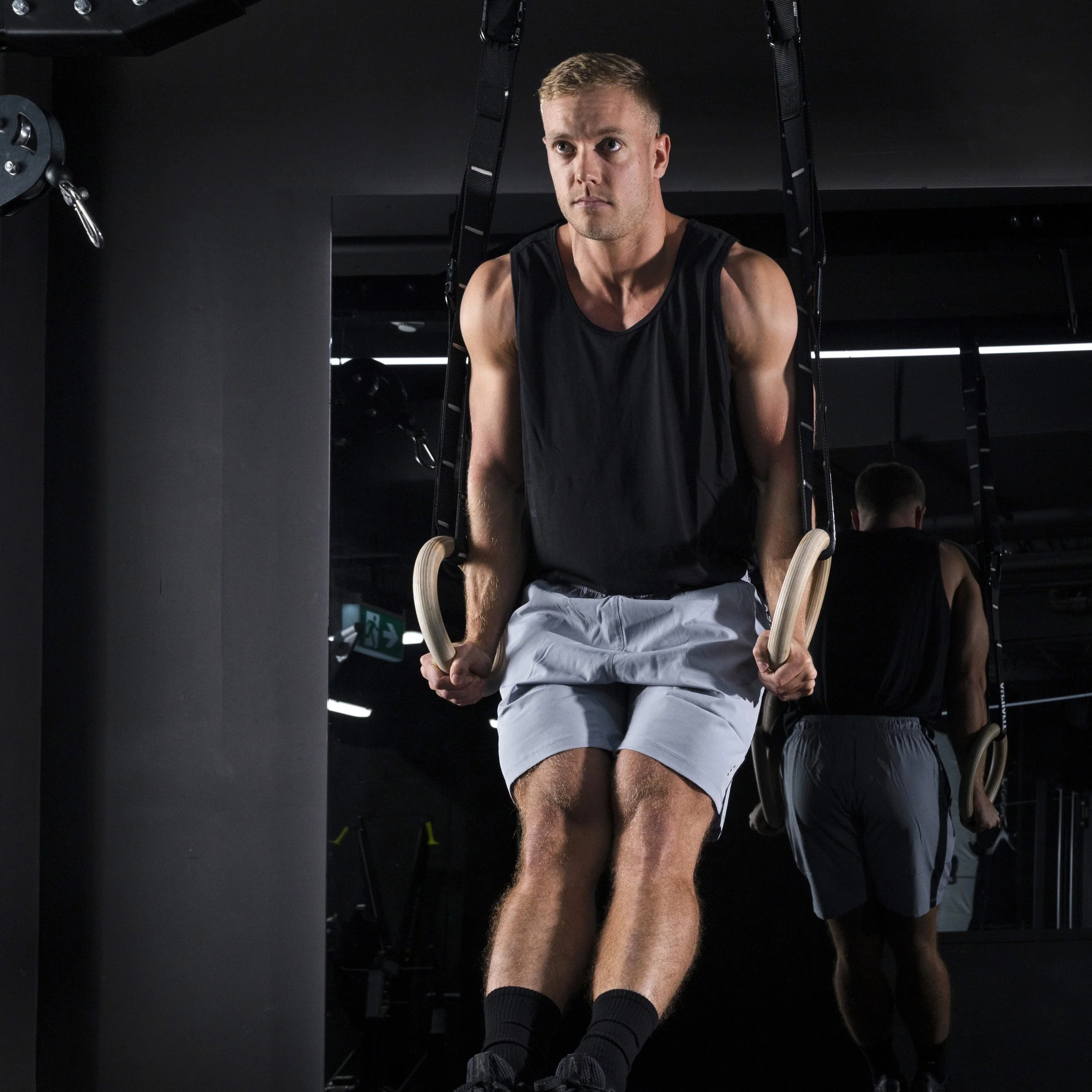
Begin with the rings neutral: the palms face toward your thighs rather than dramatically forward. Straighten the elbows without trying to hyperextend them. Actively press the rings down, leave the neck long and keep the hands beside the hips. Think about pushing your body away from the rings while the torso stays tall. The cue is more reliable than telling yourself simply not to shake.
Try three to five short holds, each ending while you still have a few good seconds left. A starting range of five to fifteen seconds is reasonable for a newcomer; a stronger athlete may begin with ten to twenty. Rest about a minute, or longer if the next attempt is clearly worse. Add seconds only when the final seconds look like the first seconds. Do not turn every practice session into a maximal isometric test.
Once neutral support is consistently controlled, experiment with a small amount of turnout. Rotate the rings so your thumbs turn outward, keeping the elbows straight and the rings beside your hips. Begin with only a few degrees and just three to five seconds. Turnout changes the shoulder and arm demands, so a fully rotated position should not be the first lesson. You can build duration and rotation separately over several weeks.
Do not press the arms far away from the torso in an attempt to create dramatic turnout. That drifts toward a different, much harder gymnastics strength task. Likewise, do not twist the hands outward while letting the elbows bend or shoulders rise. If a small rotation creates front-shoulder or elbow pain, return to neutral and reduce the duration. A pain-free modest turnout is more useful than a photogenic but uncontrolled angle.

Calisthenics Shirts & Street Workout Gear
Calisthenics and bodyweight-training gear for pull-ups, dips, handstands and street-workout athletes.

Gandalf Lord of the Calisthenics Rings | LOTR Workout D Sticker
Give your everyday gear a playful “Gandalf Lord of the Calisthenics Rings” twist.

Funny Lord of the Calisthenics Rings | Gym Meme Workout T-Shirt
For laid-back days and Easter humor: “Lord of the Calisthenics Rings”.

Lord of the Calisthenics Rings Gollum Gym Meme | Funny T-Shirt
Make gym days more fun with “Lord of the Calisthenics Rings Gollum” style.

Calisthenics Heartbeat Crewneck Pullover Sweater for Hu T-Shirt
Add a playful “Calisthenics Heartbeat” touch to your casual rotation.

Shirt Calisthenics Lovers Hilarious Gains & Meme T-Shirt
Rep “for Calisthenics Lovers” humor in and out of the gym.

Spider Hero Pullups Tank
Your gym-day look, with a playful “Gym Spider Hero Pullups” twist.

T-Rex Hates Push Ups Decal for Water Bottles Laptops Ca Sticker
Put “T-Rex Hates Push Ups” gym humor on your laptop, bottle, or gym gear.

Human Flag Calisthenics Hooded Workout Gymbro Pullover Hoodie
Make your off-duty look more fun with “Human Flag”.


Calisthenics Muscle Shirt Athletic Vest for Bodyweight Tank Top
Your gym-day look, with a playful “Calisthenics” twist.
Turn support control into better dips and upper-body work
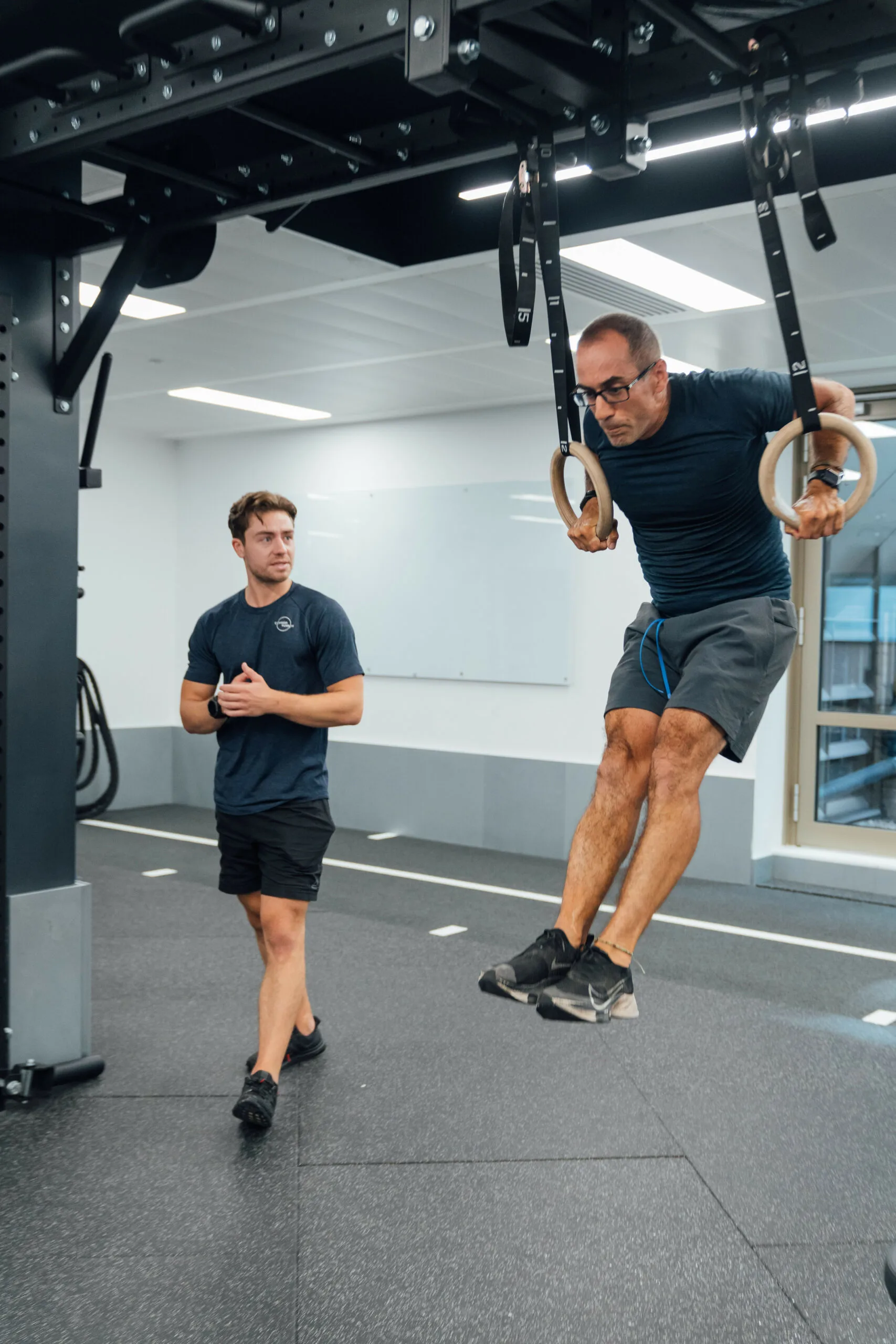
A comfortable support hold is not a promise that you can safely perform full-depth ring dips. A dip adds a loaded lowering phase, substantial shoulder extension and a demanding press back to lockout. Practise that range separately on fixed bars or with feet-assisted ring dips. Start with the rings low enough to step out, and lower only as far as you can control without a pinch at the front of the shoulder.
Consider simple assistance before adding difficulty: toes on the floor for light support, a stable box beneath you, or a band setup you know how to secure correctly. Assisted work should still show the same quiet rings, forward-facing chest and controlled elbow path. For many athletes, the progression is feet-assisted support, neutral free support, short turnout holds, assisted ring dips and finally full ring dips – not every step in one day.
Build the complementary pieces with ordinary training. Push-ups and presses train dynamic elbow extension and shoulder control; rows and pull-ups develop the pulling side; light external-rotation and scapular-control drills can make the warm-up more deliberate. Adjustable resistance, a dip station and parallettes can all provide sensible alternatives when full ring exposure is not appropriate. These are complementary tools, not mandatory purchases.
Weighted ring dips, muscle-ups, long turned-out holds and advanced leans are later skills. Adding a dip belt or vest before your rings stop drifting is not progress. Keep dynamic dip sets separate from static-support practice and leave some shoulder capacity for other pressing work that week. If your existing program already includes heavy bench presses, overhead work or deep dips, start with a very small dose of ring supports rather than stacking hard sessions.
Equipment Worth Exploring
Explore equipment, accessories and gear from our carefully selected range.


VOLTRA
Compact digital cable trainer with smooth, adjustable resistance.

Go-Tone Pro
Portable digital cable trainer with up to 66 lb (30 kg) of adjustable resistance.

GymPin D Cuffs
Adjustable wrist cuffs with textured grips for supported cable-machine exercises.
Back Bar
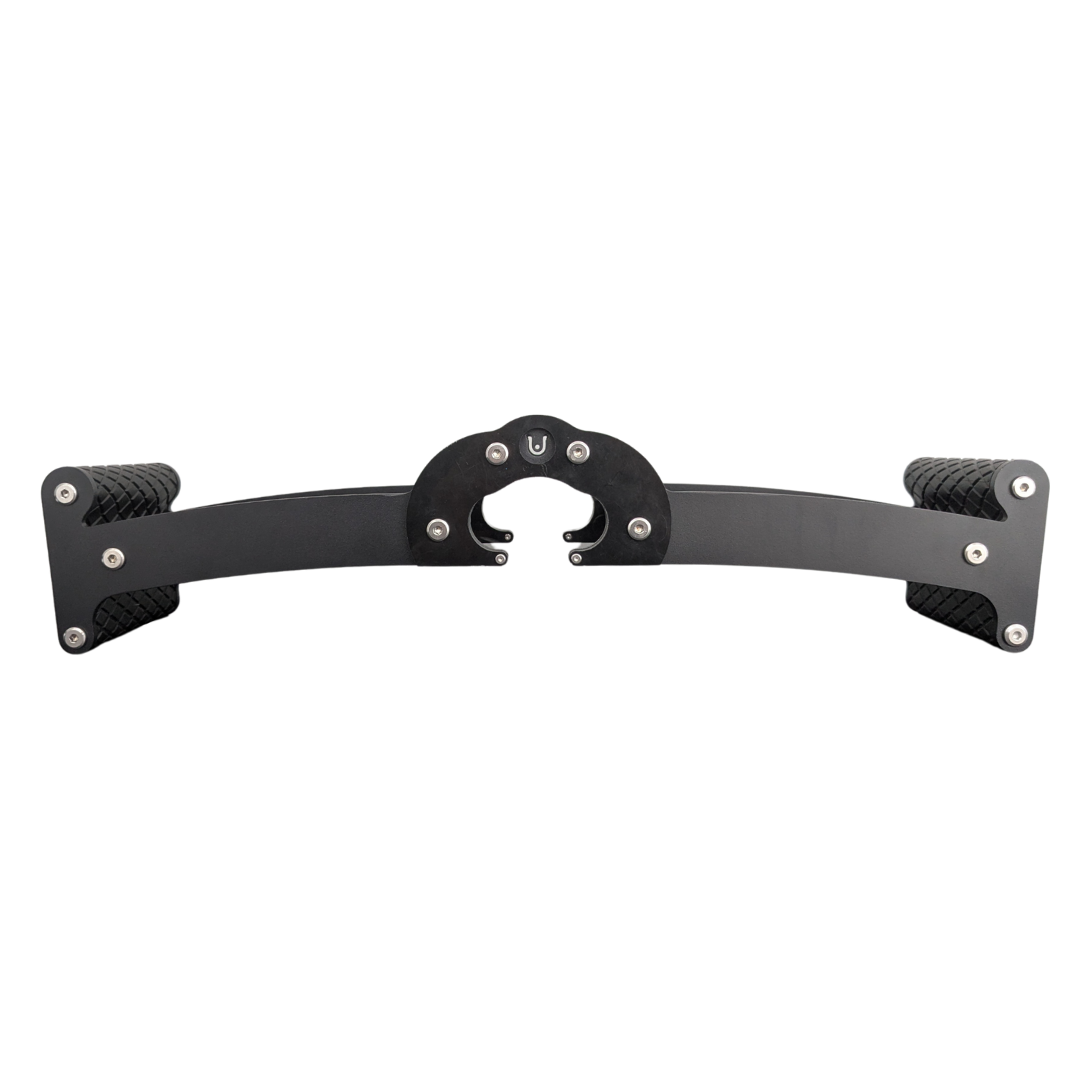
Multi-grip cable and landmine bar with a built-in deadlift jack.

GymPin Ergo Handles
Pair of ergonomic cable handles shaped for comfortable triceps and pulling exercises.
A six-week progression and the errors worth tracking
Use this as an adjustable coaching template for healthy adults, not a medical protocol or a universal strength standard. Train twice per week at first, after a brief upper-body warm-up and before fatiguing pressing work. Leave at least a day between demanding ring sessions. Record your setup, how much foot assistance you used, hold length, whether you turned out and the first sign of lost control.
- Weeks 1-2: Four or five sets of 8-12 seconds in a feet-supported or neutral support, with roughly 60-90 seconds of rest. End early if the shoulders climb or elbows bend.
- Weeks 3-4: Aim for four sets of 12-20 clean seconds. Remove some foot assistance before extending a set. If stable, add two or three separate 3-5-second partial-turnout attempts.
- Weeks 5-6: Build three or four neutral holds toward 20-30 seconds, or gradually lengthen modest turnout to 5-10 seconds. Keep one variable steady while you progress the other.
The suggested second count is a target, not a pass-or-fail exam. An athlete using a box may improve by relying on it less while total seconds remain unchanged. Another may keep a short hold but improve ring stillness. Review a phone video weekly and compare the shoulder position, ring width and torso line with your first session rather than obsessing over the clock.
Three common faults tell you exactly what to adjust. If the shoulders shrug toward the ears, end the set sooner and rehearse pressing down in a supported hold. If the elbows bend or the torso sinks, reduce the load through your feet. If the rings swing or fly outward, shorten the hold and bring the rings close to the hips. Fix one visible problem at a time instead of throwing five cues at a tired athlete.
Stop for sharp pain, tingling, a sense of instability or recurring elbow and front-shoulder irritation. Ask an appropriate clinician about symptoms that persist, particularly if you already have a shoulder injury. Your best outcome after six weeks might be three calm neutral holds, not a dramatic turned-out lockout. Once you can enter, hold and exit the position predictably, the rings become a useful platform for gradual strength training rather than an exercise in hanging on.
Calisthenics Shirts & Street Workout Gear
Calisthenics and bodyweight-training gear for pull-ups, dips, handstands and street-workout athletes.

Calisthenics Evolution Sweatshirt
Keep things casual with a little “Calisthenics Evolution” attitude.

Pull Up Or Shut Up Sticker
Put “Pull Up or Shut Up” gym humor on your laptop, bottle, or gym gear.

Turn Off Gravity Funny Calisthenics Gym Crewneck Pullov T-Shirt
Show some gym-day personality with “Turn Off Gravity Funny Calisthenics”.


Calisthenics Hanging Out Tank
Show some personality between sets with “Calisthenics Is My Idea of Hanging Out”.

Be Stronger Than Your Excuses Motivational Workout Pull Hoodie
Make your off-duty look more fun with “Be Stronger Than Your Excuses”.


Funny Calisthenics Gym Decal for Water Bottles Laptops Sticker
Stick a little “Calisthenics” humor on your favorite gear.

Always Pull Yourself Up Crewneck Calisthenics Pullover T-Shirt
Bring “Always Pull Yourself Up” humor to your everyday gym style.

Funny Calisthenics Gym Muscle Shirt Athletic Vest for B Tank Top
Train hard, laugh a little, and rep “Calisthenics”.