Advertising disclosure: This page includes affiliate product links that may earn us a commission, as well as products from our own store.
Leg press or leg extension: which one deserves the precious working sets in your next leg-day session? The leg press has the bigger plates and the reputation for building everything below the waist. The leg extension looks more modest, but it asks the quads to perform one very direct job. A controlled 2026 experiment involving seventeen previously untrained adults found that both choices grew the thighs, yet one particular quad muscle responded very differently.
The useful question is not which machine lets you lift the most weight. It is which muscles actually grow when training is standardized, and how to use that information without turning an ordinary workout into a laboratory protocol. Here is what the measurements showed, where the two exercises complement each other and how a serious lifter can put the findings to work.
The 12-week test: one leg pressing, the other extending
Plenty of lifters decide between leg presses and leg extensions based on how much weight the stack can hold. The 2026 experiment took a more controlled approach. Seventeen adults who had not been resistance training regularly worked each leg with a different movement: one leg performed the knee-extension exercise, while the other completed the leg press. Using opposite legs within the same person helped reduce differences caused by genetics, diet and general lifestyle, although it could not remove every influence between the two conditions.
Both exercises followed the same basic prescription: five sets of ten repetitions at approximately 70 percent of the respective one-repetition maximum, twice weekly for twelve weeks. The researchers measured muscle volume before and after the program with magnetic resonance imaging. They did not simply ask participants whether their thighs looked bigger or rely on a post-workout pump. The scans covered seventeen separate lower-limb muscles, allowing a much more informative comparison than a single tape measure around the thigh.
That matters because a leg press and a leg extension overlap without being mechanically identical. One exercise extends the knee while the hip position stays broadly fixed. The other asks the hips and knees to extend together against a moving platform. A bigger number on the press sled does not establish that its quadriceps received a bigger growth stimulus. Different joints, lever arms and working muscles contribute to the external load.
The small sample and beginner status matter from the outset. These results describe how the two movements behaved under a specific, controlled twelve-week program. They do not settle every question about elite bodybuilders, different foot placements or what happens after multiple years of hard training.
Which quad muscles actually grew?
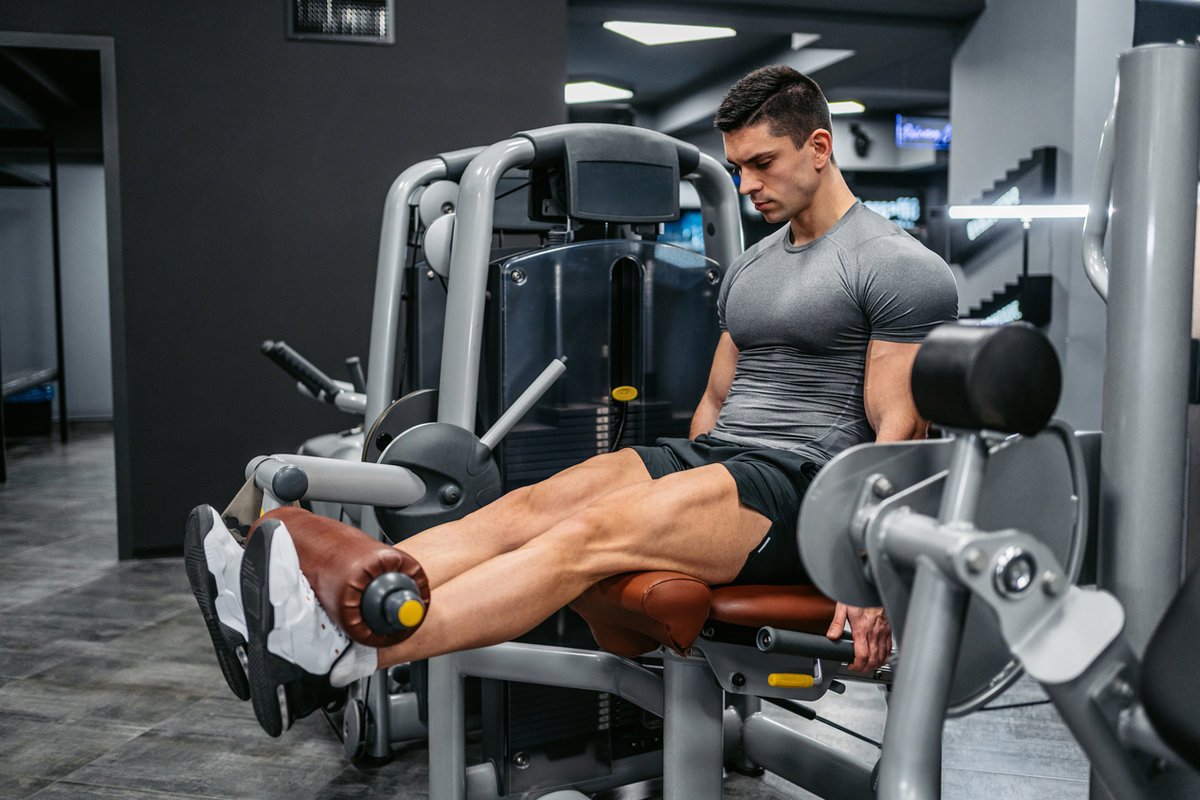
The biggest headline was not that one exercise universally destroyed the other. The overall quadriceps grew under both conditions. Whole-quadriceps volume increased by about 7.1 percent after knee extensions and 4.9 percent after leg presses. That numeric difference did not meet the threshold for a statistically reliable between-exercise difference in this study. In practical terms, both approaches stimulated substantial beginner thigh development under the tested setup.
Breaking the quadriceps into their components changes the story. The three vastus muscles, which span the knee joint rather than both the hip and knee, increased by roughly 5.0 to 7.2 percent with knee extensions and 4.4 to 6.2 percent with the leg press. Their growth was broadly similar across conditions. This is useful reassurance for someone whose lower-body program includes controlled presses but not endless machine isolation work.
The rectus femoris was different. Its muscle volume rose approximately 13.2 percent on the knee-extension leg, against only 1.1 percent on the leg-press leg. The difference between conditions was statistically clear, and the leg-press result for this particular muscle was not a statistically reliable increase. If the front-center portion of your thigh is a specific weakness, that result makes the knee-extension station much more interesting.
Those percentages measure changes in muscle volume, not the amount of weight lifted or the size of an overnight visual transformation. They also come from seventeen people, not a universal law of quadriceps training. The sound conclusion is that the exercises created different patterns of muscle growth, even though total quadriceps gains were not clearly separated.

Equipment Worth Exploring
Explore equipment, accessories and gear from our carefully selected range.

HUSLA Leg Extension Pad
Pad attachment designed to increase usable range of motion on compatible leg-extension machines.


Studio V-Squat
Plate-loaded V-squat machine for supported lower-body strength training.

GymPin Squat Wedges
Non-slip 15-degree squat wedges help elevate the heels for deeper quad-focused squats.

Belt Squat Collar
Heavy-duty collar adapter for compatible belt-squat and landmine bar setups.

Squat Harness
Wearable harness for hands-free cable squats, sled work, and lower-body training.

Studio Glute Drive
Plate-loaded hip-thrust machine with supported back pad and adjustable foot platform.


Rubber Hex Dumbbells
Rubber-coated hex dumbbell pairs with a stable shape for home and commercial strength training.

Why the rectus femoris may prefer an extension machine
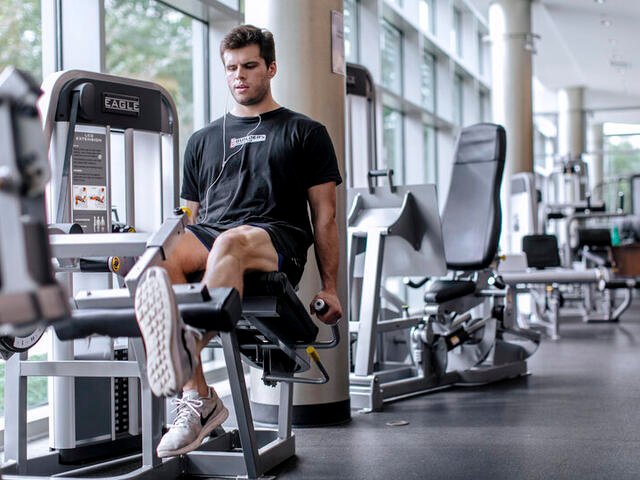
The rectus femoris is the unusual member of the quadriceps family because it crosses two joints. It helps straighten the knee but also contributes to hip flexion. The three vasti primarily act at the knee. That difference changes what happens when you push a leg-press platform away from you while the hip and knee extend together.
During a leg press, hip extension alters the rectus femoris length and mechanical demands at the same time that knee extension tries to shorten it. The combination can reduce how effectively the muscle contributes compared with its three neighbors. On a seated leg-extension machine, the hip position is more stable, while the quadriceps work directly to rotate the shin upward against the padded lever. Under the tested conditions, this movement delivered a more favorable stimulus to the rectus femoris.
It would be too simple to say the leg press never trains the rectus femoris or the extension machine isolates it perfectly. Both recruit multiple tissues, and technique, load, depth, knee angle and anatomy still matter. Muscle activation measurements taken in a follow-up portion of the research generally aligned with the growth patterns, but a momentary electrical signal is not a substitute for months of measured hypertrophy.
For bodybuilding, this points toward complementarity rather than a winner-take-all debate. If your quads already respond well to squat and press variations but you want balanced growth across all four heads, several serious sets of controlled leg extensions can fill a gap that compound-only programming might leave.

Leg Day Shirts & Workout Gear
Leg-day gym shirts and workout gear for lifters who never skip squats, lunges and lower-body punishment.

My Leg Hurts Leg Day , Meme Lovers & Bros Casual T-Shirt
Bring “My Leg Hurts” humor to your next gym day.


The Quadfather Leg Day Meme Top & T-Shirt
Bring “The Quadfather” humor to your next gym day.

Never Skip Legday – Chicken Legs Meme , , & Leg Day T-Shirt
Heavy lifts, good laughs, and a little “Never Skip Legday” energy.

Squatzilla Meme Leg Day Vest Tank Top
Bring “Squatzilla” humor to your next lifting session.

Leg Day No Thanks Skip Leg Day Meme Sweater Squats T-Shirt
Show some gym-day personality with “Leg Day No Thanks”.

Squat Game Gym | Funny Squid Game Parody Workout Decal Sticker
Bring “Squat Game” attitude to your water bottle or laptop.

Leg Day Is Calling You Squats, Deadlifts & Gains T-Shirt
Rep “Leg Day Is Calling You” humor in and out of the gym.

Booty Building Mode Decal Water Bottles & Gear Meme Sticker
Give your everyday gear a playful “Booty Building Mode” twist.

Let It Grow Booty Builder Decal Water Bottles & Sticker
Give your everyday gear a playful “Let It Grow” twist.
The leg press pays you back beyond the quads
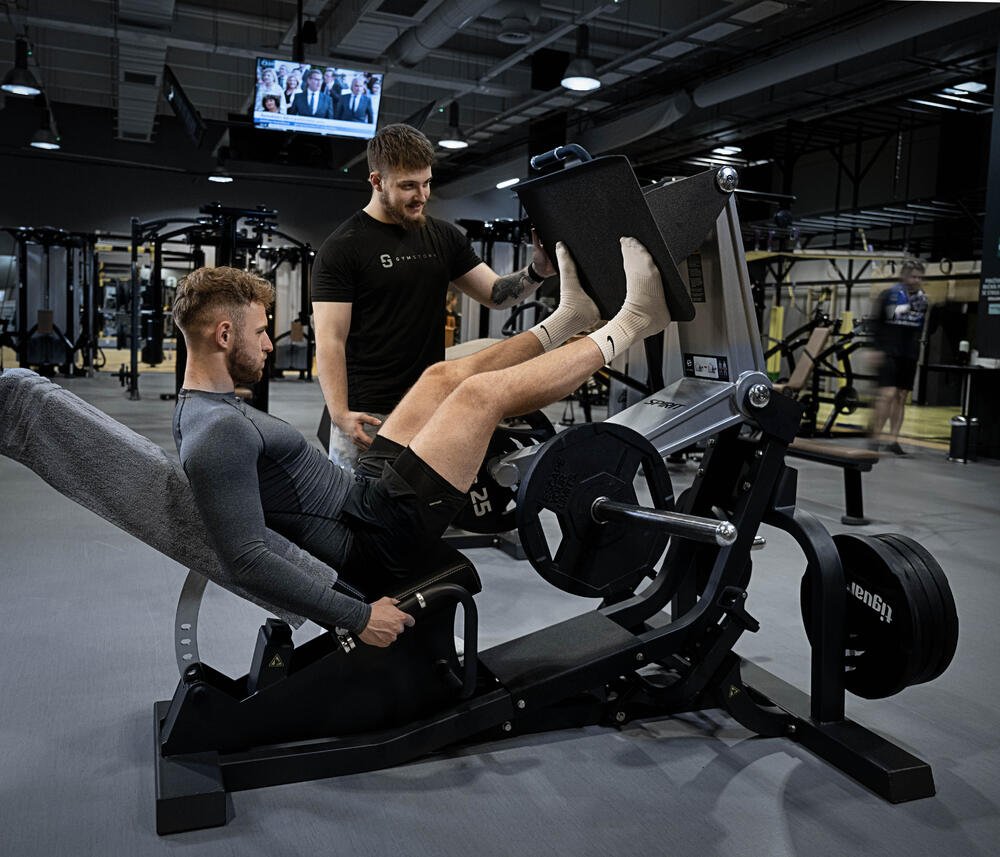
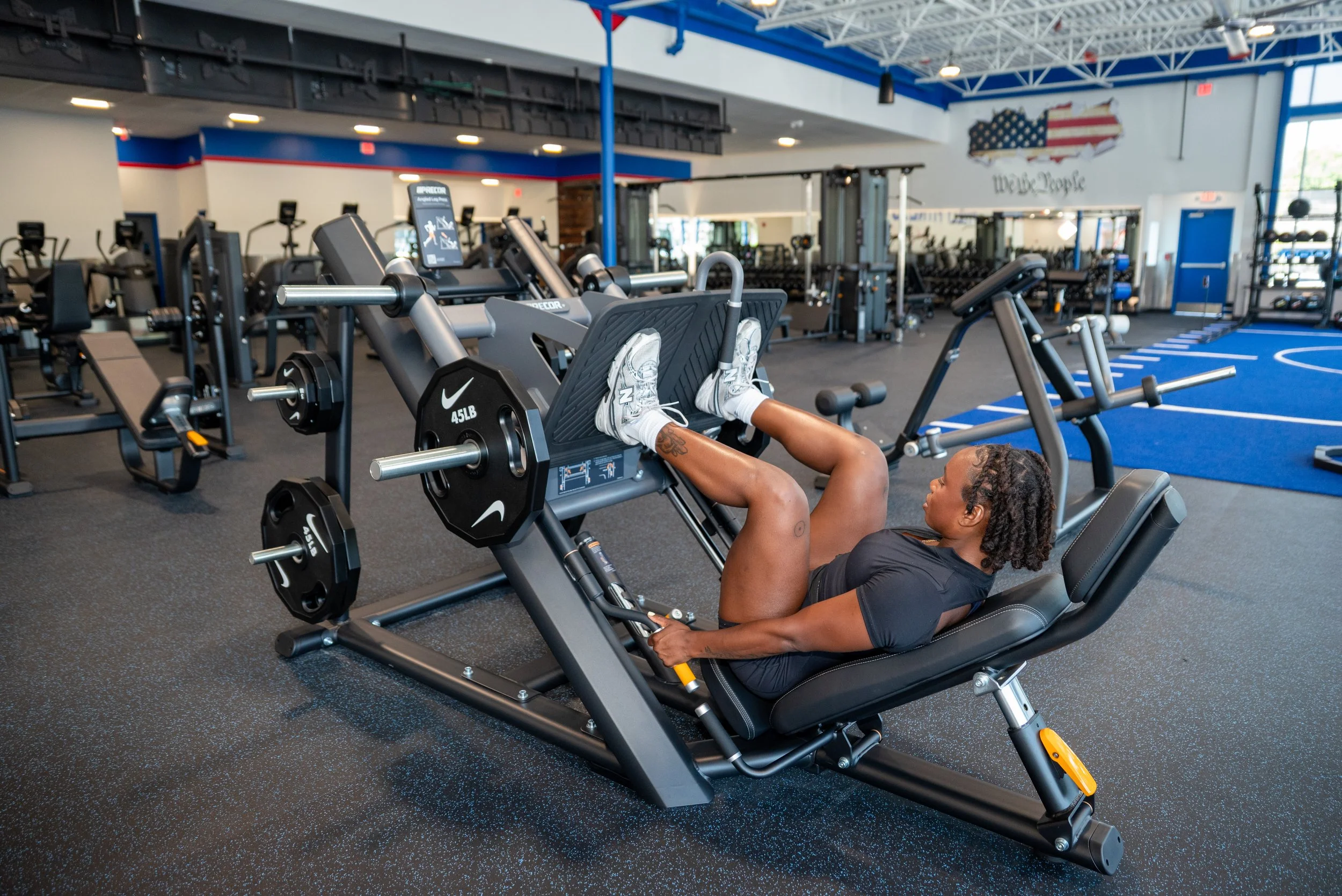
Why keep the leg press if leg extensions deliver a clearer rectus femoris advantage? Because the machine loads more than knee extension. In the controlled comparison, the leg-press condition increased gluteus maximus volume by about 15.4 percent and adductor magnus volume by roughly 6.2 percent. The knee-extension condition did not produce those corresponding increases. Those are meaningful differences in training coverage, not proof that the leg press is the best possible glute exercise for everybody.
The gluteus maximus contributes strongly to hip extension, while the adductor magnus can also assist the hip during powerful lower-body movements. A leg press gives those tissues a reason to work because the hip joint actually moves under load. A seated knee extension, by contrast, concentrates the task at the knee. Asking the extension machine to take over all your lower-body training would leave major muscles without the same direct challenge.
That is a time-efficiency argument for including multijoint work. A lifter with forty minutes for a leg session may obtain useful quadriceps, glute and adductor loading from a handful of controlled leg-press sets before addressing individual weak links. But more muscles involved does not automatically mean better growth in each muscle. The rectus femoris result is the reminder.
Nor does this study tell us that leg press outperforms every squat, lunge, hip thrust or hack-squat variation. It directly compared two machines with a specific load, rep scheme and participant group. Treat the glute numbers as evidence of broad stimulus within that comparison, not a ranking of every exercise available in the gym.
Machine setup and technique matter more than the stack number
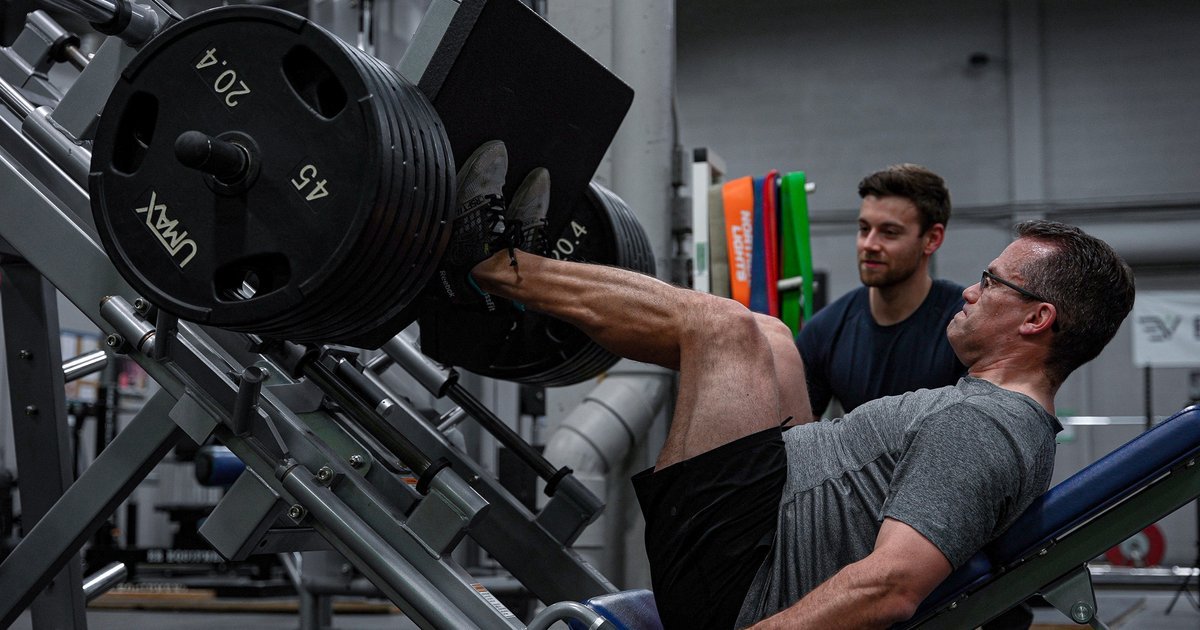
If you want to apply the findings, start by making each exercise repeatable. On a leg press, choose a seat angle and foot position that allow your hips and knees to bend comfortably without your pelvis rolling sharply off the backrest. Keep the feet stable, move through a controlled range that your joints tolerate and avoid bouncing the sled at the bottom. Do not chase an impressive loading figure by shortening every rep to a few inches.
Because different models have different sled angles, friction, lever systems and starting resistance, the plate count on one machine cannot be compared directly with another. Progress is better judged against your own previous sets on the same apparatus, with consistent depth and tempo. It is fine to use a foot placement that feels stable, but a tiny shift in toe angle should not be marketed as a guaranteed method of targeting one individual quad head.
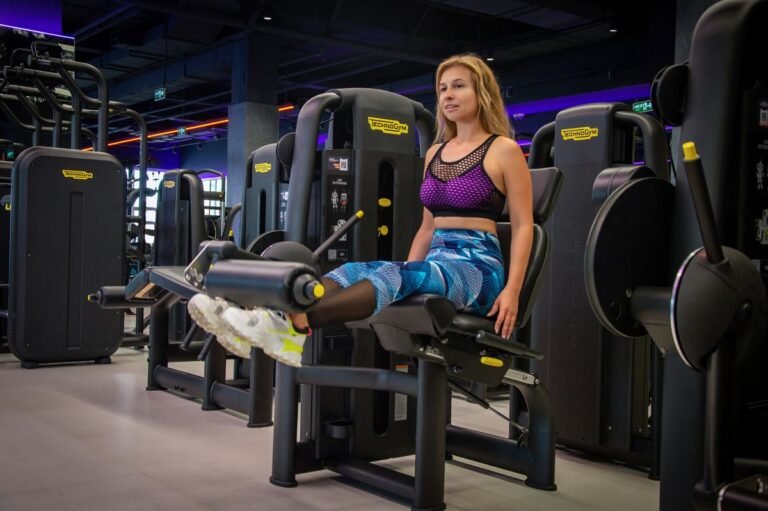
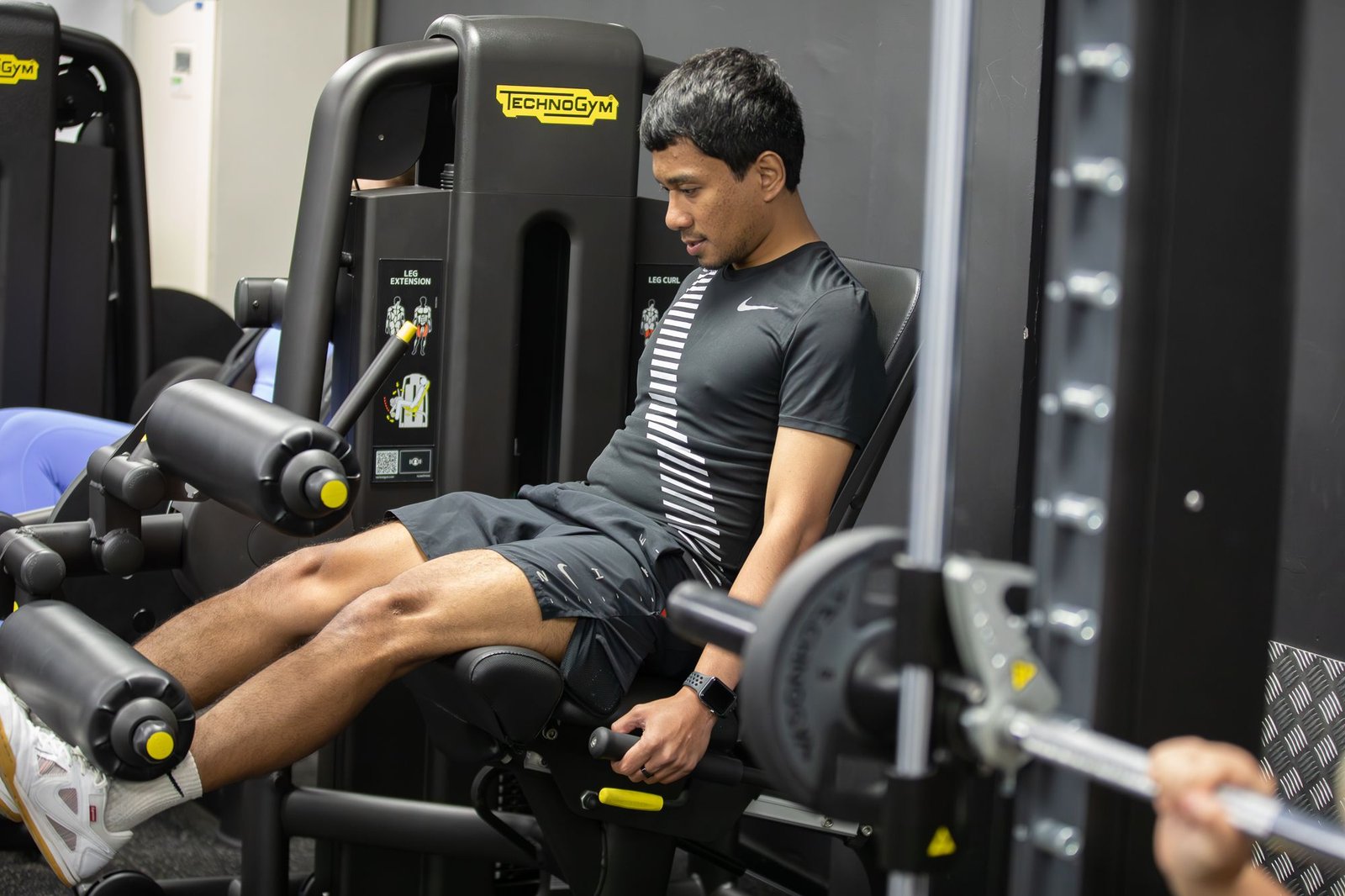
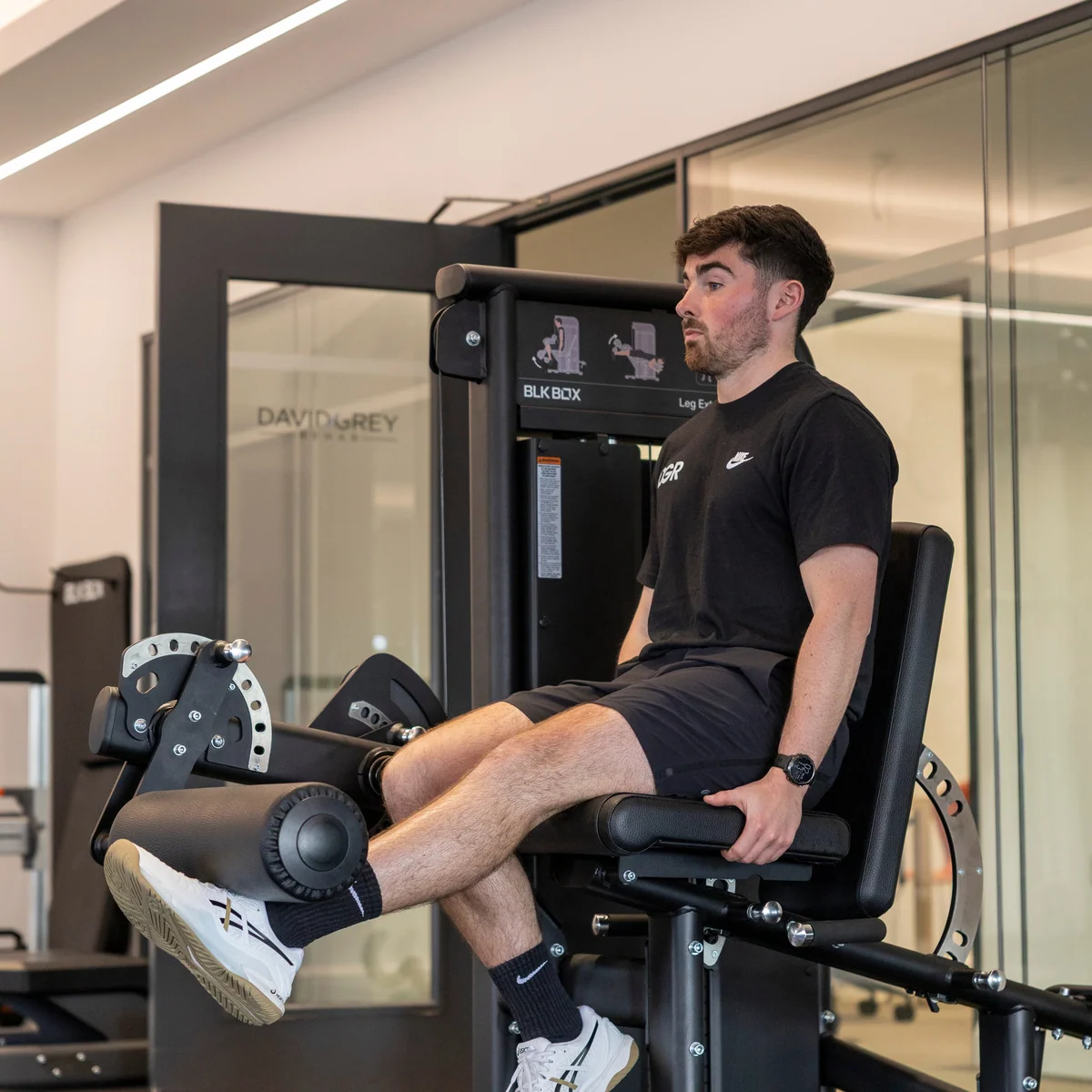
For leg extensions, align the machine’s pivot reasonably close to your knee joint, position the thigh securely under the pad and place the roller where the equipment instructions intend along the lower shin. Raise and lower the load without throwing the torso backward or swinging the pad upward. Keep enough knee motion to challenge the quadriceps while respecting personal comfort; avoid forcing a painful end range merely to chase a textbook image.
More importantly, use proximity to effort intelligently. A set that leaves a huge reserve of easy reps may not compare with the challenging sets used in a controlled training experiment. You do not need to grind every set to absolute failure, but the working sets should demand attention while preserving clean repetitions. Increase resistance when the same load and range become reliably easier.
Equipment Worth Exploring
Explore equipment, accessories and gear from our carefully selected range.


Competition Plates
Competition-style bumper plates for Olympic lifts and loaded strength training.

Grip Plates
Rubber-coated weight plates with handholds for loading barbells and machines.


Open Hex Bar
Open-frame trap bar with multiple handles for deadlifts, carries, and lower-body training.

FID Bench MAX
Adjustable bench offering flat, incline, and decline positions + adjustable headrest.



How to program both exercises on leg day
For a general lifter building muscle, the simplest response is not to copy the entire research protocol and perform ten hard sets of each exercise every week. Participants in the experiment trained one leg with each method under close control; your normal routine probably also includes squats, lunges, deadlifts or other lower-body work. Copying their isolation volume on top of a full program may be unnecessary.
Consider one lower-body day built around three challenging sets of leg press for approximately eight to twelve controlled reps, followed by two or three sets of leg extensions for roughly ten to fifteen reps. A second weekly session could use a squat or split-squat variation as the major movement and finish with another two leg-extension sets if quad development is the priority. Those sample choices are practical programming examples, not a scientifically proven superior dose from this single comparison.
Choose working weights that let you reproduce the intended range and track progress over several weeks. Rest long enough to keep technique consistent, often around two or three minutes for hard compound sets and about one to two minutes for extensions, adjusting as performance dictates. Record the load, repetitions, depth and whether you had a few good reps left. Your log is more informative than how badly your legs shake walking down the stairs afterward.
If training time is tight, prioritize the compound exercise and add a small amount of targeted isolation when useful. If your rectus femoris seems to lag despite otherwise solid quad growth, the new direct comparison makes leg extensions a defensible higher priority. If your knees dislike one particular machine, modify the setup or choose an alternative that you can train productively instead of forcing pain.
The purpose of combining movements is to distribute useful effort across tissues and movement patterns without making the workout needlessly long. Recoverable weekly training volume, progressive overload, sufficient food and sleep remain more influential than declaring permanent loyalty to a single machine.
Bodybuilding Shirts & Workout Gear
Bodybuilding shirts, tanks and gym gear for lifters chasing muscle, size, symmetry and the pump.


Bob The Bodybuilder & Meme , & Gains Top T-Shirt
Show some powerlifting attitude with a playful “Bob The Bodybuilder” tee.

No Days Off for Lifting, Bodybuilding, Powerlifting and T-Shirt
For laid-back days and powerlifting humor: “No Days Off”.

My Therapy – Bodybuilding Powerlifting Meme Muscle Shir Tank Top
Your gym-day look, with a playful “My Therapy” twist.

Therapy Barbell – Lifting Bodybuilding Powerlifting Mem Sticker
Bring “Therapy Barbell” attitude to your water bottle or laptop.

Gym Cult Occult Barbell Meme – Powerlifting Bodybuildin T-Shirt
Show some gym-day personality with “Gym Cult”.

One of Us One of Us Gym Cult Member Meme Bodybuilding P Hoodie
Show off your powerlifting humor in a laid-back “One of Us One of Us Gym Cult Member” hoodie.

Gym Cult Member Occult Lifting Meme – Bodybuilding Powe T-Shirt
Show some gym-day personality with “Gym Cult Member”.

Fitness Is My Therapy – Lifting Bodybuilding Powerlifti Sticker
Bring “Fitness Is My Therapy” attitude to your water bottle or laptop.

Iron Is My Therapy – Lifting Bodybuilding Powerlifting T-Shirt
Add a playful “Iron Is My Therapy” touch to your casual rotation.
What the results can—and cannot—prove
The trial’s strongest feature was its within-person comparison with magnetic resonance imaging of individual muscles. The same person trained one leg each way, so many factors that usually make exercise comparisons noisy were naturally better controlled. The researchers also examined a broad collection of lower-body muscles rather than reporting only total thigh circumference.
Yet there were just seventeen participants, and they were previously untrained. Beginners can grow quickly from many well-executed training choices. Their responses do not tell us exactly what happens to an experienced powerlifter who has already spent years building his quads, or to someone following a high-frequency program with multiple other leg exercises. A twelve-week intervention is also not a lifetime comparison.
The overall quadriceps difference between conditions was not statistically significant. That is not the same as proving the machines are biologically identical or perfectly interchangeable. Conversely, the larger rectus femoris response to knee extension was observed under this specific setup, so we should not extrapolate it to every machine, range of motion, loading strategy or body type. Training volume and fatigue also depend on the complete routine, not just which exercise a paper tests.
Here is the practical conclusion: keep a leg press, squat or another substantial multijoint knee-dominant exercise when you want broad lower-body development. Add leg extensions when you want more directed quadriceps work, especially for the rectus femoris, or when extra heavy compound sets would create too much systemic fatigue. Evaluate the pair over months using strength progress, tolerance and how your legs actually develop. The most useful answer to leg press versus leg extension is often both, used for different jobs.