Advertising disclosure: This page includes affiliate product links that may earn us a commission, as well as products from our own store.
Some product links may be affiliate links. If you shop through them, Mind Muscle Perfection may earn a commission at no extra cost to you.
Ever finish a brutal leg session and worry your biceps will get whatever growth resources are left? It sounds plausible: more muscles trained means more energy spent, so perhaps fewer resources remain for any individual muscle. But a controlled six-week experiment with 105 untrained adults tested a direct version of that idea. Adding demanding leg extensions did not result in smaller measured arm gains than training the arms alone.
That is encouraging news if you want bigger arms without skipping leg day. It is not proof you can double every workout, ignore food and recover perfectly. The useful lesson lies between those extremes. Here is what the experiment actually measured, why the numbers matter, and how to combine arms and legs without turning your program into a recovery contest.
1. Can your quads steal the growth meant for your biceps?
The idea of muscles competing for growth starts with a real observation: a large workout often makes you more tired and hungry than a small one. From there, it is easy to imagine a fixed pool of growth resources that your quads consume before your biceps get their turn. That cartoon is memorable, but it mixes several physiological questions.
Local stimulus is the challenge a particular muscle receives from demanding repetitions. Whole-body recovery includes sleep, nutrition, connective-tissue tolerance and the capacity to train hard again. These systems interact, but adding useful work for one muscle does not automatically erase the stimulus delivered to another. A workout can be more tiring without being less effective for every muscle in it.
The interesting question is narrower than whether every additional exercise steals growth. If you keep the arm training similar, then add substantial leg work to the schedule, do the trained arms grow less? That is a testable question. It matters to anyone planning full-body workouts, mixing compound lifts with arm accessories or trying to fit effective training into three weekly visits.
There is still a practical catch: finishing a hard lower-body block can reduce how many high-quality curls you perform immediately afterward. An acute drop in performance from fatigue is not the same as demonstrating that the body’s muscles must compete for a fixed, universal hypertrophy allowance. Your program needs to respect both issues instead of treating them as identical.
2. How researchers tested the muscle-competition idea
A controlled experiment randomly assigned 105 previously untrained adults to one of three groups. Thirty-six people performed low-load unilateral elbow flexion to failure. Thirty-three performed the same arm work and added leg extensions. Thirty-six were assigned to a time-matched non-training control. This was a targeted comparison, not a conventional contest between a five-day bodybuilding split and a full-body strength program.
The two training groups completed 18 supervised sessions over six weeks. Their common arm work consisted of two sets of elbow flexion at approximately 30 percent of one-repetition maximum, with each set continued to muscular failure. The arm-and-leg group also completed four sets of knee extensions per leg using loads associated with roughly 20 to 30 maximum repetitions. That is a considerable addition of active lower-body muscle mass.
Before and after the block, investigators measured thickness at two sites along the anterior upper arm and tested the trained arm’s elbow-flexor strength. They compared changes while accounting for initial measurements. Because the shared arm work remained similar, the design directly examined whether adding the leg training altered the arm response.
Pay attention to the boundaries. Participants were beginners, nutrition was not strictly controlled, and the experiment lasted only six weeks. It did not test elite bodybuilders, prolonged caloric restriction, high-volume heavy squats, multiple hours of daily training or exact nutrient partitioning. Nor should you assume that the knee extensions themselves produced dramatic leg hypertrophy, because that was not the main outcome being compared.

Equipment Worth Exploring
Explore equipment, accessories and gear from our carefully selected range.

EZ Curl Barbell
Olympic EZ curl bar with angled grips for curls and triceps exercises.

Rubber Hex Dumbbells
Rubber-coated hex dumbbell pairs with a stable shape for home and commercial strength training.

Dual Hook EZ Curl Bar
Angled aluminum dual-hook cable bar for biceps curls and pulldown variations.

44in Dual Hook Bar
44-inch aluminum dual-hook straight bar for cable rows, pulldowns, and curls.

VForce Wall Trainer
Space-saving wall-mounted functional trainer with pivoting cable arms and variable resistance ratios.


VOLTRA
Compact digital cable trainer with smooth, adjustable resistance.

GymPin D Cuffs
Adjustable wrist cuffs with textured grips for supported cable-machine exercises.
3. What the arm-growth measurements really showed
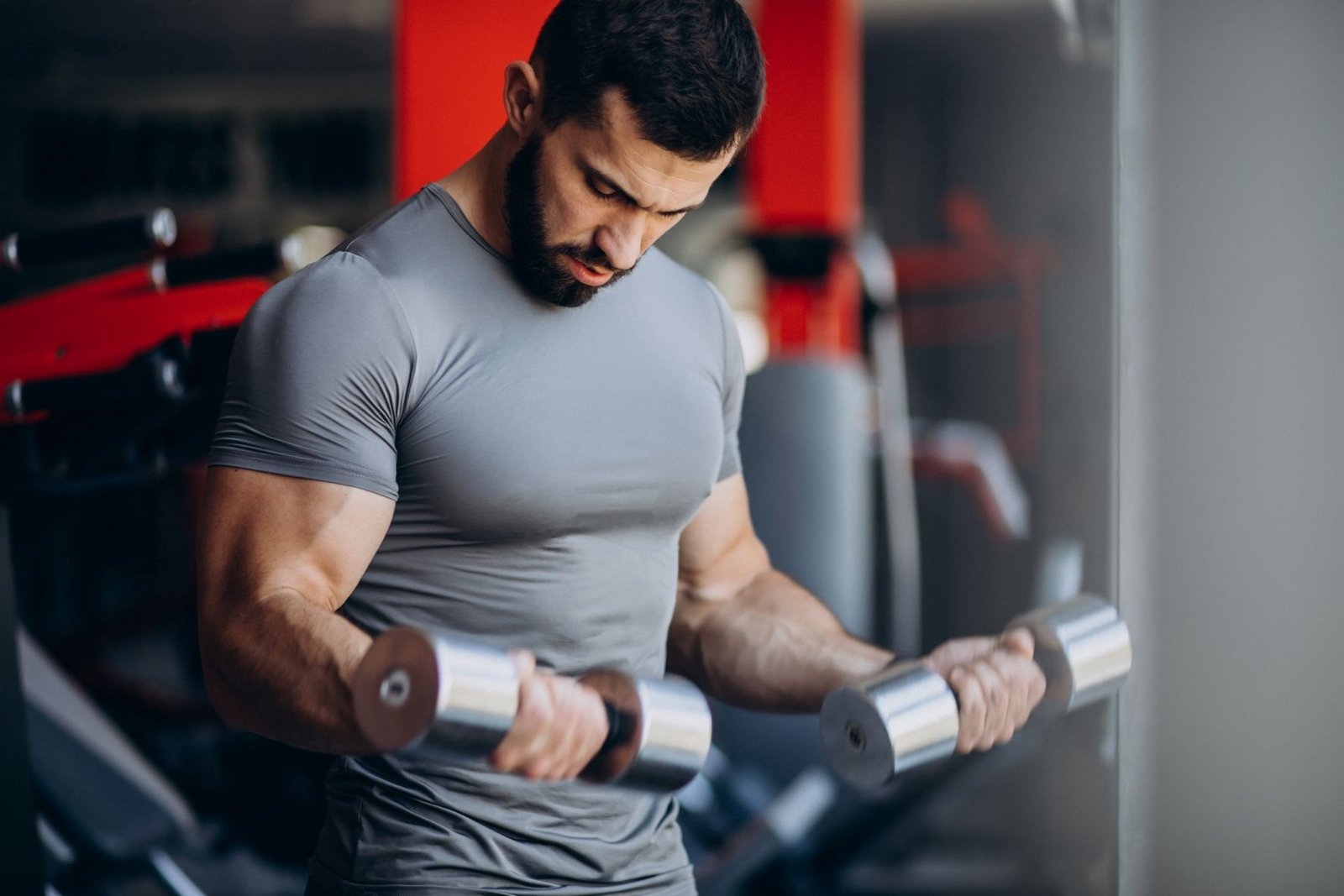
After six weeks, the group training just the arm increased measured anterior upper-arm thickness by about 0.19 cm. The group performing the same arm work plus knee extensions increased it by about 0.18 cm. There was no detected evidence that adding the leg exercises reduced the arm-growth response under these conditions.
Changes in elbow-flexor one-repetition maximum were likewise reported without a clear difference between the lifting groups: approximately 0.32 kg in the arm-only group and 0.25 kg in the arm-plus-legs group. Those are specific changes in a low-load, unfamiliar exercise test, not typical six-week personal-record jumps for experienced lifters using heavy curl bars.
It is tempting to convert those near-identical thickness numbers into the claim that all full-body and split routines are equally effective. That would go too far. No detected difference is not proof of exact equality for every person, volume level or recovery environment. A six-week trial can miss subtle effects, and first-time lifters tend to improve technique along with muscular capacity.
It also matters what was measured. Thickness at specific locations is not a complete three-dimensional map of every arm muscle. Still, the experimental comparison directly challenges the simplistic idea that recruiting more total muscle in a session must leave an independently trained arm with less room to grow. The extra knee extensions did not create that predicted penalty.

Bodybuilding Shirts & Workout Gear
Bodybuilding shirts, tanks and gym gear for lifters chasing muscle, size, symmetry and the pump.

Every Day Is Arm Day
Make gym days more fun with “Every Day is Arm Day Octopus Gym Meme” style.

Curls The Girls Shirt – Bicep Curls Top & Gymbros T-Shirt
Rep “Curls For The Girls” humor in and out of the gym.

The Real Rocky Mountains – Bicep Mountain Meme Hooded Hoodie
Bring “The Real Rocky Mountains” gym humor to lazy days and post-workout plans.

Funny Micro Biceps Club President | Gym Humor Hooded | Hoodie
Bring “Micro Biceps Club President” gym humor to lazy days and post-workout plans.

OnlyGains Big Biceps Decal Water Bottles & Equipment Sticker
A fun “OnlyGains Big Biceps” touch for bottles, laptops, and lockers.

White Marble Greek God Statue – Bicep Pose T-Shirt
Bring “White Marble Greek God Statue” humor to your next gym day.

Mind Muscle Perfection Brain and Biceps Gym for Science Sticker
Give your everyday gear a playful “Mind Muscle Perfection Brain and Biceps” twist.

Muscle Mommy Muscle Club for Gym Girls, Lifting, Fitnes Tank Top
Show some personality between sets with “Muscle Mommy Muscle Club”.

Bicep Heart I Love Gym Funny Workout | Muscle Shirt For Tank Top
Train hard, laugh a little, and rep “Bicep Heart I Love Gym”.

4. Why more total fatigue can still change your results
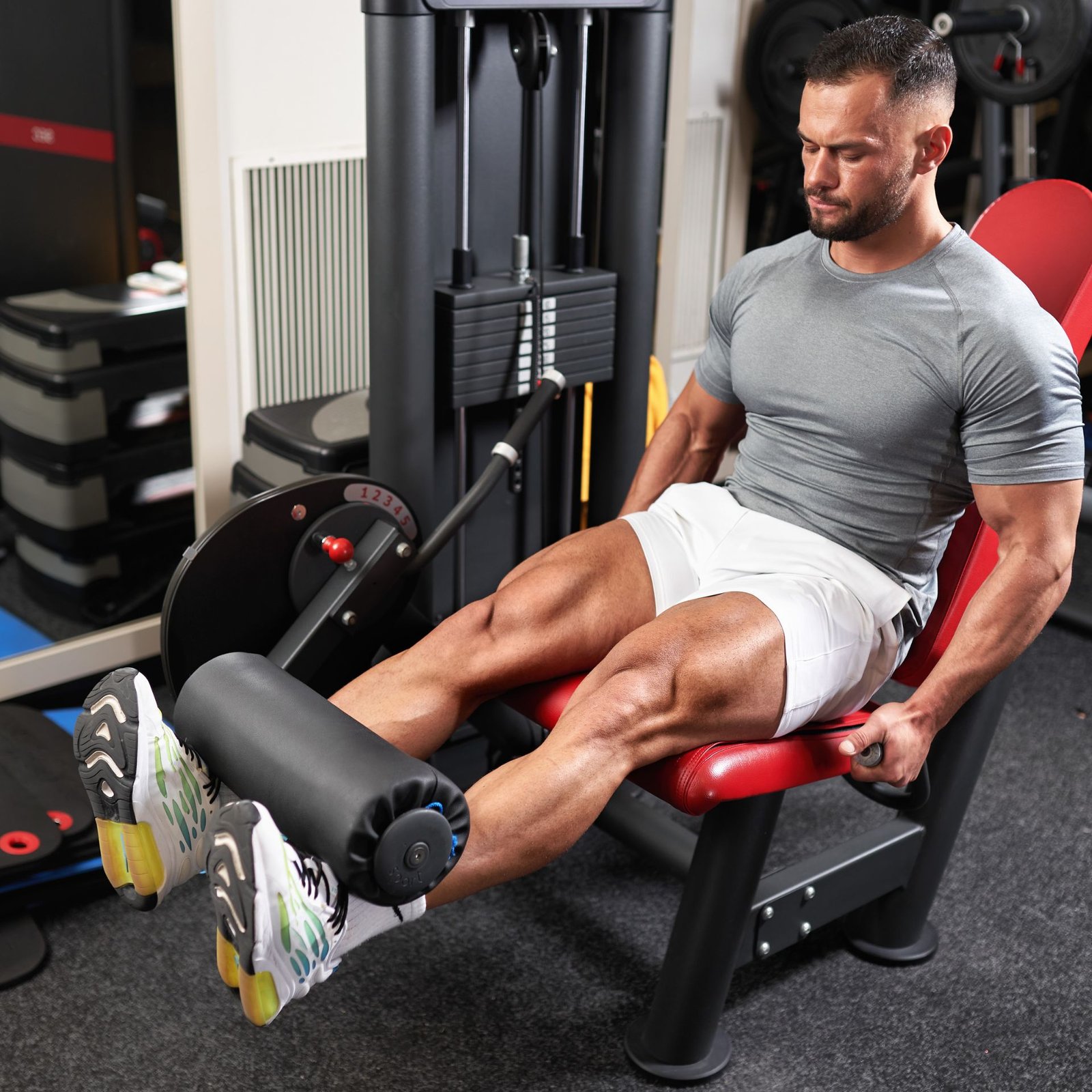
If the added leg work did not blunt arm growth, does that mean recovery is irrelevant? No. A muscle still needs a sufficiently challenging stimulus, and your next session still requires the capacity to repeat useful work. The more total training you add, the more carefully you should monitor whether loads, repetitions and technique hold together.
Think about two different ledgers. The stimulus ledger tracks worthwhile sets for each muscle. The recovery ledger tracks the energy, food, time, sleep and manageable fatigue that make future training possible. Adding two leg sets is not automatically subtracting two biceps sets. But adding exercises until every movement becomes sloppy survival may reduce training quality later in the week.
Broader resistance-training evidence suggests additional weekly sets can improve muscle growth, yet the returns usually diminish. It also suggests that training to momentary failure is not always necessary to grow muscle; the relationship between effort and adaptation is more nuanced than simply making every set as unpleasant as possible.
The study used supervised low-load curling sets to failure. You do not need to reproduce that standard on all heavy compound exercises. Leaving one to three sound repetitions in reserve on a squat can preserve technique and consistency. You may be able to work closer to failure on stable curls or leg extensions if joint comfort and movement quality remain high. The goal is productive training repeated over months, not merely winning today’s fatigue contest.
5. Build a leg-and-arm session that is productive, not endless
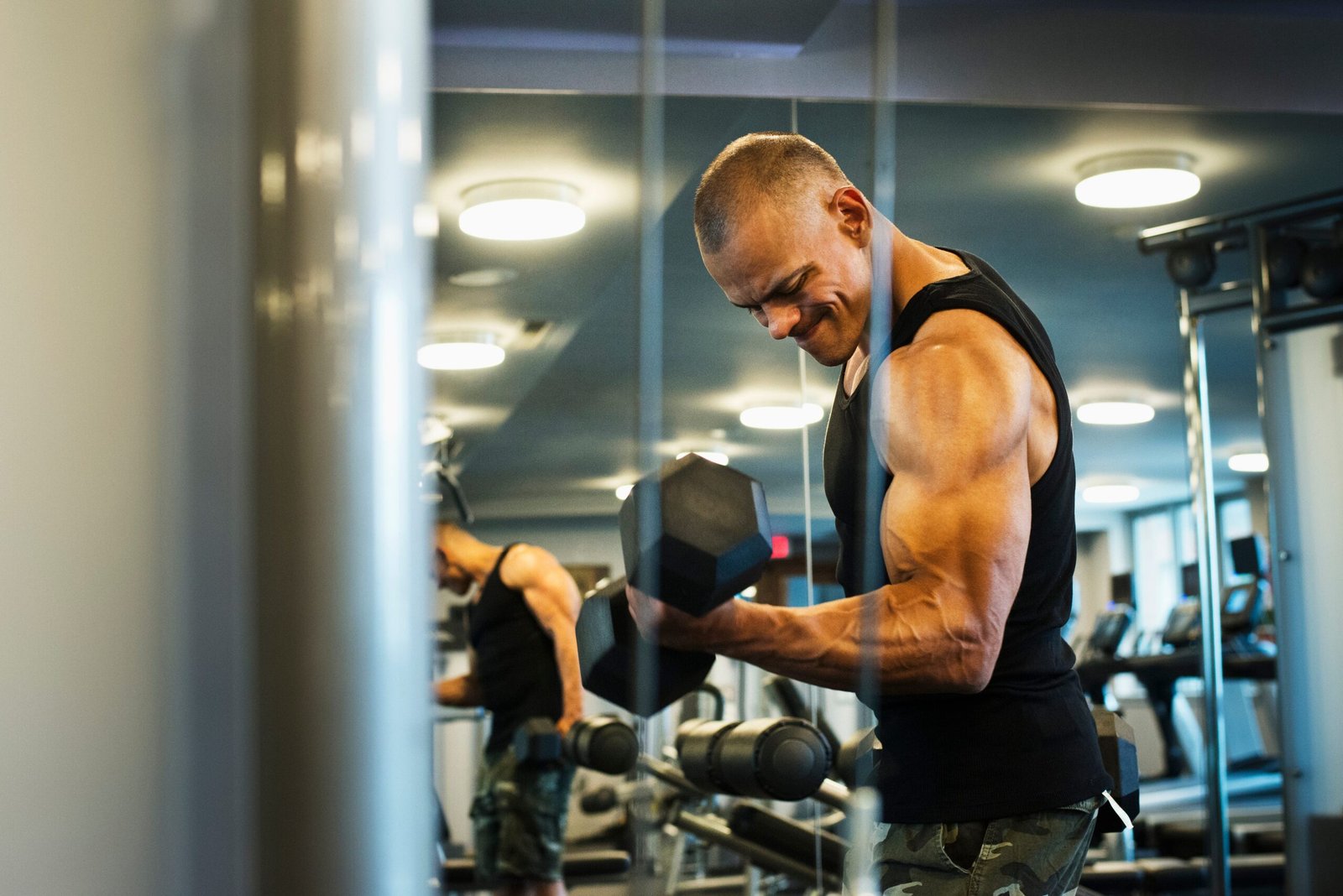
The simplest combined workout starts with the exercise you care most about. If your priority is improving the squat, place it while you are fresh. If the aim is to bring up arm size, place the curl variation early enough that you can perform controlled, challenging repetitions rather than whatever is left after every other lift.
For a recreational lifter already familiar with the movements, one workable example is:
- Squat or leg press: three working sets of six to ten controlled repetitions, with roughly two reps in reserve.
- Seated leg extension: two sets of ten to fifteen, using the same comfortable range on every rep.
- Dumbbell or EZ-bar curl: three sets of eight to twelve with little upper-arm swinging.
- Incline or cable curl: two sets of ten to fifteen to vary the arm position and resistance profile.
- Optional calf or upper-back accessory: one or two extra sets only if time and recovery permit.
Warm up before demanding sets. Rest about two to three minutes for the primary lift and roughly one to two minutes for lighter accessories, adding rest when it helps preserve performance. If you have only forty-five minutes, cut the optional work instead of racing through all your demanding sets with no recovery. Your best set is not always the one with the shortest rest.
This is an illustrative plan rather than the exact study protocol or a promise of superior growth. Its virtue is that you can complete it, log it and return to it. It combines leg and arm training without needing to assume that one region automatically consumes the growth of another.
Equipment Worth Exploring
Explore equipment, accessories and gear from our carefully selected range.

Studio V-Squat
Plate-loaded V-squat machine for supported lower-body strength training.

VForce 3IN1
All-in-one rack combining an adjustable Smith machine, functional trainer, and free-weight station.

Competition Plates
Competition-style bumper plates for Olympic lifts and loaded strength training.

Open Hex Bar
Open-frame trap bar with multiple handles for deadlifts, carries, and lower-body training.

Foldable Wall Rack
Wall-mounted folding squat rack designed to save floor space between workouts.

Pro Sled System
Heavy-duty push-pull training sled for loaded conditioning, speed, and strength work.

HUSLA Leg Extension Pad
Pad attachment designed to increase usable range of motion on compatible leg-extension machines.


GymPin Squat Wedges
Non-slip 15-degree squat wedges help elevate the heels for deeper quad-focused squats.

6. Full-body workouts versus splits: compare the right variables
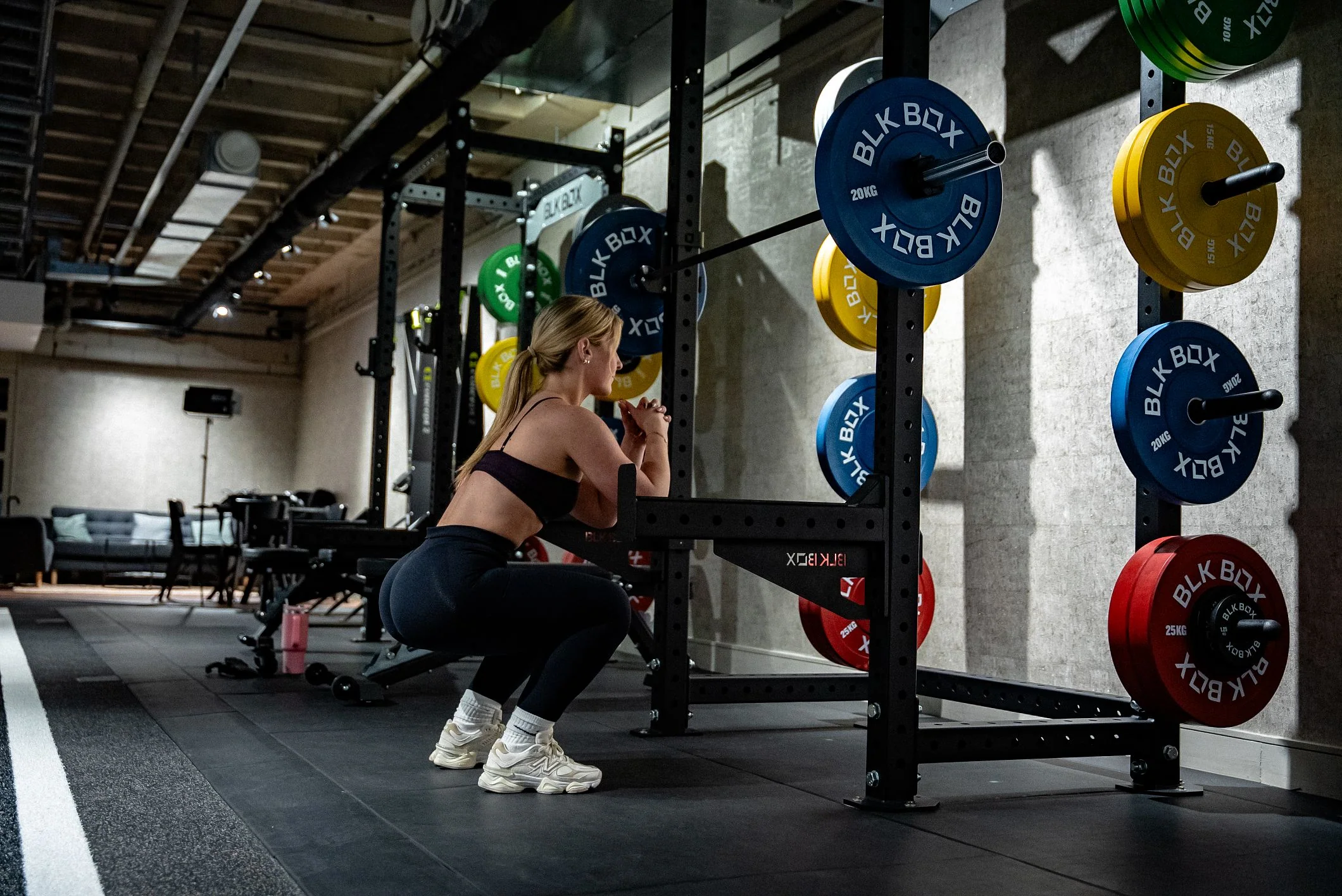
A split may keep each visit focused. A full-body routine can cover more muscles with fewer visits. Neither format wins because of the name on your calendar. What matters is whether each target muscle receives enough challenging work across the week, whether you can progress that work, and whether the fatigue is manageable alongside your life.
On a three-day schedule, you could pair lower-body strength with a small curl block on Monday, emphasize pulling and pressing on Wednesday, and revisit legs and direct arm work on Friday. With four days available, an upper-lower arrangement might be more convenient. A third option is to alternate the priority exercise: squat first in one combined session, then curls first in another.
Remember that an exercise can train several muscles. Rows and pulldowns also involve elbow flexors, while heavy squats make substantial demands beyond your quadriceps. Do not add five direct curl sets to an already exhausting pull workout and assume the weekly arm workload is unchanged. Counting indirect work imperfectly is still better than pretending it does not exist.
If you add legs to an existing arm-focused routine, keep the arm workload approximately steady at first. Observe whether arm performance changes before increasing the total weekly set count. The study’s extra lower-body work was a controlled knee-extension protocol, not several near-maximal deadlift sets. Replacing it with extremely demanding compound work changes the recovery question. Use the evidence as reassurance that combining body regions can be sensible, not as permission to ignore your actual workload.
7. A four-week check to see whether your routine works
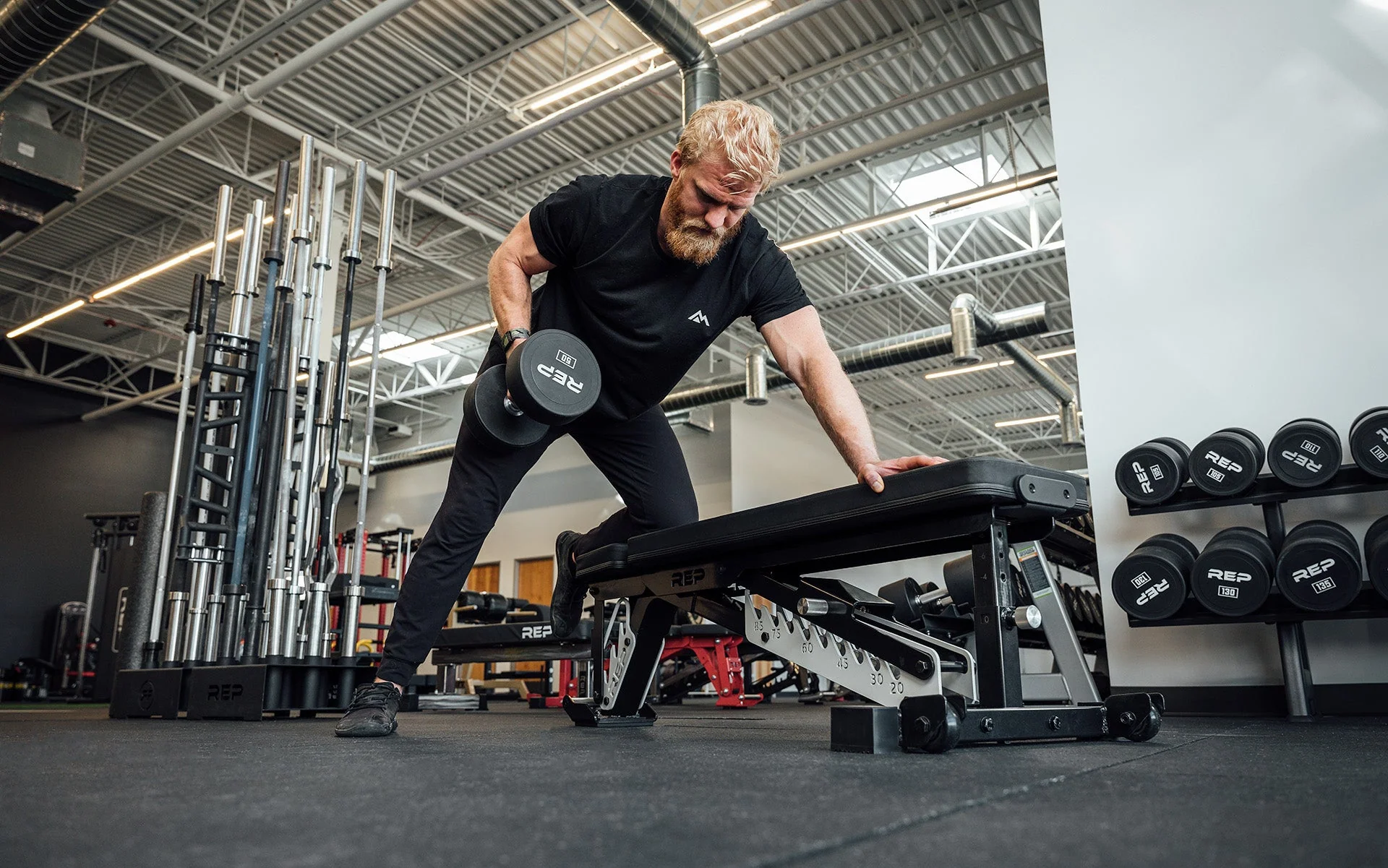
The useful personal test is not how destroyed you feel afterward; it is whether you are building a program you can repeat. During week one, record the load, successful repetitions, approximate repetitions in reserve and session length for one consistent curl and one knee-dominant lift. Keep the exercise setup and range of motion similar from session to session.
During weeks two and three, aim to add a controlled repetition before increasing weight, provided the movement still looks like the previous week’s version. Keep direct arm volume steady while experimenting with the extra leg work. Record sleep, overall energy, knee and elbow comfort, and whether your next session begins with unusually poor performance. Those observations provide context for any change in the logbook.
In week four, review trends rather than individual bad sessions. If curls are holding steady or progressing while leg work is also moving forward, there is a practical reason to retain the combination. If arm performance declines consistently, shorten the session, spread sets across another day or place your priority lift first. That is a coaching adjustment, not evidence that quads literally stole nutrients from biceps.
Food is part of the equation. A protein intake around 1.6 grams per kilogram of body mass daily is a reasonable evidence-informed reference point for many healthy people engaged in resistance training. But adequate protein alone does not replace the energy needed to support increased workload. Someone on a harsh diet should not assume the six-week beginner experiment answers their recovery question.
Bottom line: in the tested conditions, training legs alongside arms did not measurably reduce arm adaptation. Keep the work challenging, progress patiently, protect sleep and nutrition, and let your logbook—not a mythical fixed pool of muscle growth—guide your next changes.
Leg Day Shirts & Workout Gear
Leg-day gym shirts and workout gear for lifters who never skip squats, lunges and lower-body punishment.

Never Skip Leg Day | LEGO Muscle Shirt For Squats & Dea Tank Top
Train hard, laugh a little, and rep “Never Skip Leg Day”.

Negative Leg Day Review Not Recommended 1 Star T-Shirt
Keep things casual with a little “Negative Leg Day Review” attitude.

Never Skip Leg Day Flamingo – Fitness Meme Hooded Pullo Hoodie
Bring “Never Skip Leg Day Flamingo” gym humor to lazy days and post-workout plans.

Booty Building Mode Witch Meme Leg Day & Squat Lovers Tank Top
Bring “Booty Building Mode” humor to your next lifting session.

Leg Day Squats Deadlifts Vest Meme Tank Top
Bring “Leg Day” humor to your next lifting session.

I Look Better Bent Over Squats Deadlifts & Booty Tank Top
Add some leg-day attitude to training with “I Look Better Bent Over”.

Mermaid Leg Day Decal Water Bottles & Gear Meme Sticker
Put “Mermaid Leg Day” gym humor on your laptop, bottle, or gym gear.

Never Skip Leg Day Chicken Legs Meme Sweater & Bros T-Shirt
Show some gym-day personality with “Never Skip Leg Day”.

Fried Chicken Gains – Thanksgiving Leg Day Meme Hooded Hoodie
Bring “Fried Chicken Gains” gym humor to lazy days and post-workout plans.

Patriotic Eagle Stars Stripes and Squats Gym Decal for Sticker
Give your everyday gear a playful “Patriotic Eagle” twist.