Some product links may be affiliate links, which can support Mind Muscle Perfection at no additional cost to you.
Does resting just 20 seconds between sets sabotage your leg gains? A 2026 experiment followed 17 young men for ten weeks and compared very short breaks with two-minute rests during single-leg extensions. The surprising part: when total repetitions were matched, measured quadriceps growth and leg-extension strength did not significantly differ. That is useful evidence, but it is not permission to rush every squat, deadlift and heavy press. The real question is what you give up to make those short breaks work.
1. The 17-man experiment: 20 seconds against two minutes
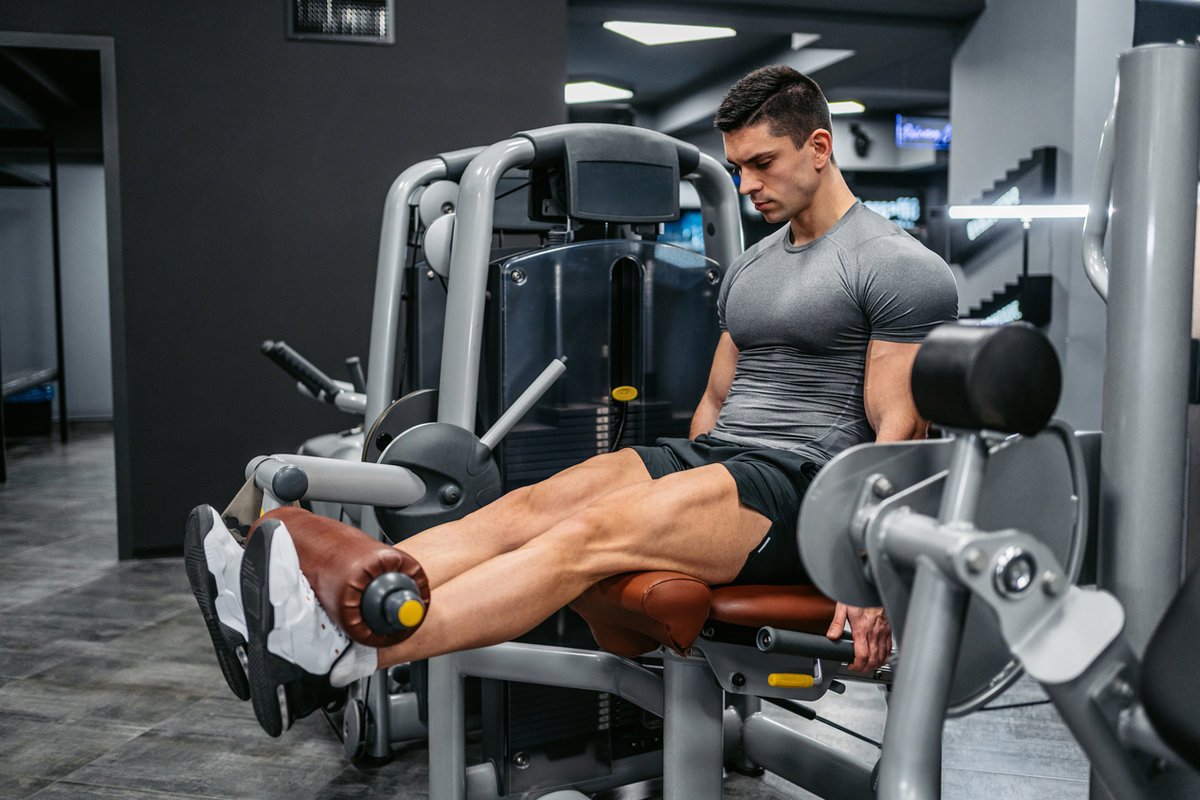
Seventeen previously untrained men, averaging about 25 years old, trained unilateral knee extensions twice weekly for ten weeks. Each participant effectively supplied two training conditions: one leg used conventional sets with two minutes between sets, while the other used only 20 seconds between efforts. This within-person approach helps reduce differences in genetics, nutrition and general activity between groups, although it cannot remove every source of variation.
The longer-rest condition performed three to four sets at approximately a ten-repetition-maximum load, with sets taken to failure. The short-rest condition did as many brief-rest sets as needed to match the total repetitions and volume load completed with the longer breaks. That matching is the crucial detail. Researchers were not asking whether doing three sets with 20-second rests equals three sets with two-minute rests. They were asking whether similar work, distributed differently, leads to similar adaptations.
After ten weeks, MRI measurements found rectus femoris cross-sectional area increases of 14.3% with short rests and 16.7% with long rests. The combined vastii increased 7.2% and 6.4%, respectively. The differences were not statistically significant. Leg-extension one-rep-max strength improved 42.4% with short rests and 41.5% with longer rests, again without a meaningful between-condition difference. These are group results, not a guarantee for every lifter.
There are two boundaries to remember: the sample was small and untrained, and the exercise was a supported knee extension, not a full-body compound lift. Neither condition establishes the ideal rest interval for an experienced powerlifter squatting heavy triples.
2. Why matched volume changes the answer
When a lifter rests 20 seconds, the next set usually begins with less local recovery. The working muscle has not restored the same immediate energy supply, and fatigue can cut repetitions or force a lighter load. With two minutes, more of that capacity returns. If you insist on an identical number of sets, short rests can therefore produce fewer hard repetitions and less total work.
The ten-week experiment deliberately prevented that straightforward disadvantage by adding short-rest sets until the work matched. That is why its result should be read as a volume-equated comparison. More sets can offset the repetitions lost from abbreviated breaks. The tradeoff is that the session may become less time-efficient than the phrase “20-second rest” suggests. Ten short pauses plus several additional sets may not beat three productive sets with sensible recovery.
Imagine two leg-extension sessions using the same working load. Session A completes 12, 11 and 10 reps with two-minute rests: 33 total reps. Session B manages 12, 7 and 5 reps with 20-second rests: only 24. If Session B continues with extra mini-sets until reaching 33 good reps, the total work is closer, but the structure is no longer identical. This example illustrates the mechanism rather than reproducing the study’s actual session data.
Track total clean repetitions, load and perceived effort, not merely how short the timer looks. If your last reps become uncontrolled kicks or your hips lift off the pad, the theoretical time saving has already become a technique problem.

Equipment Worth Exploring
Explore equipment, accessories and gear from our carefully selected range.

HUSLA Leg Extension Pad
Pad attachment designed to increase usable range of motion on compatible leg-extension machines.

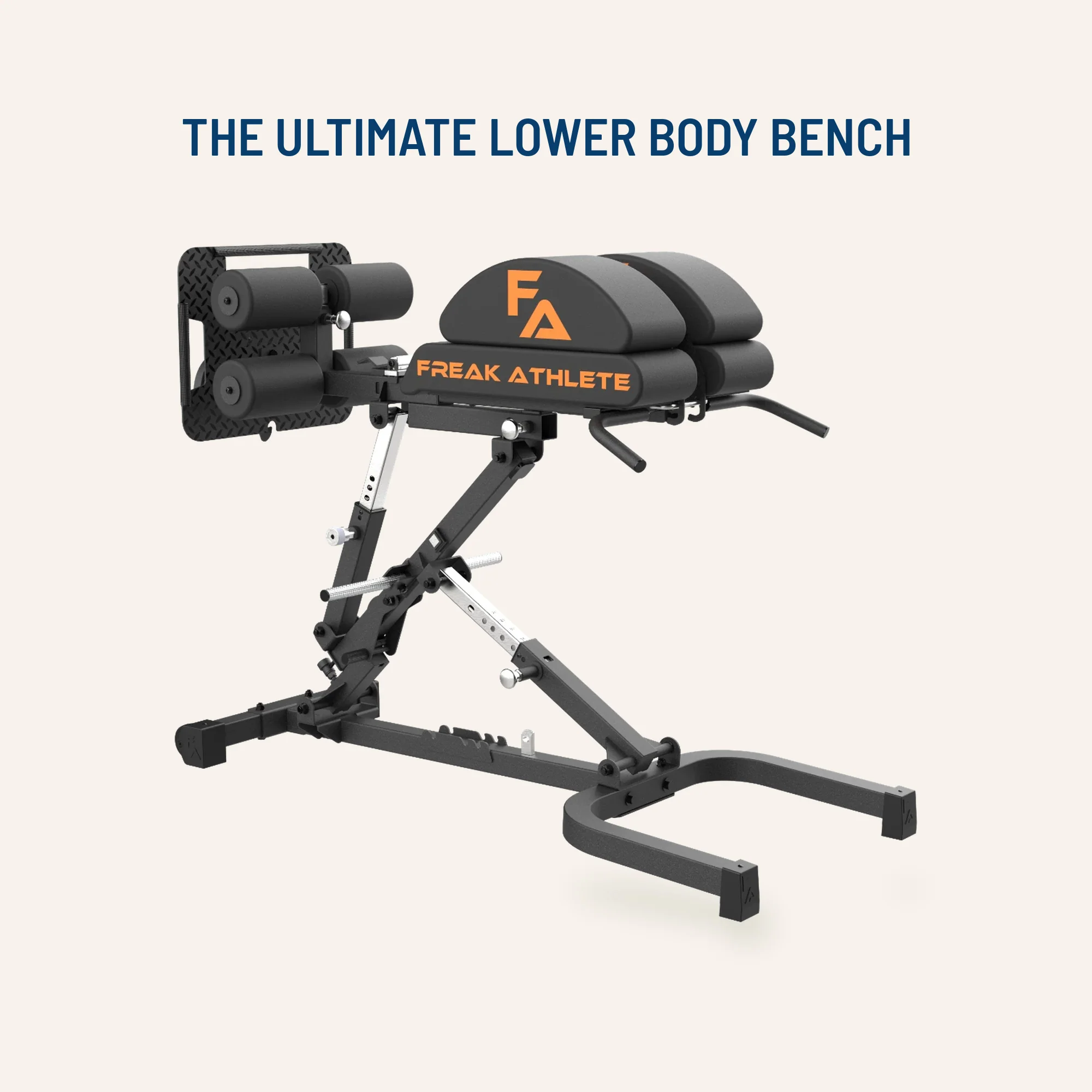


FID Bench MAX
Adjustable bench offering flat, incline, and decline positions + adjustable headrest.


3. What the broader muscle-growth evidence adds
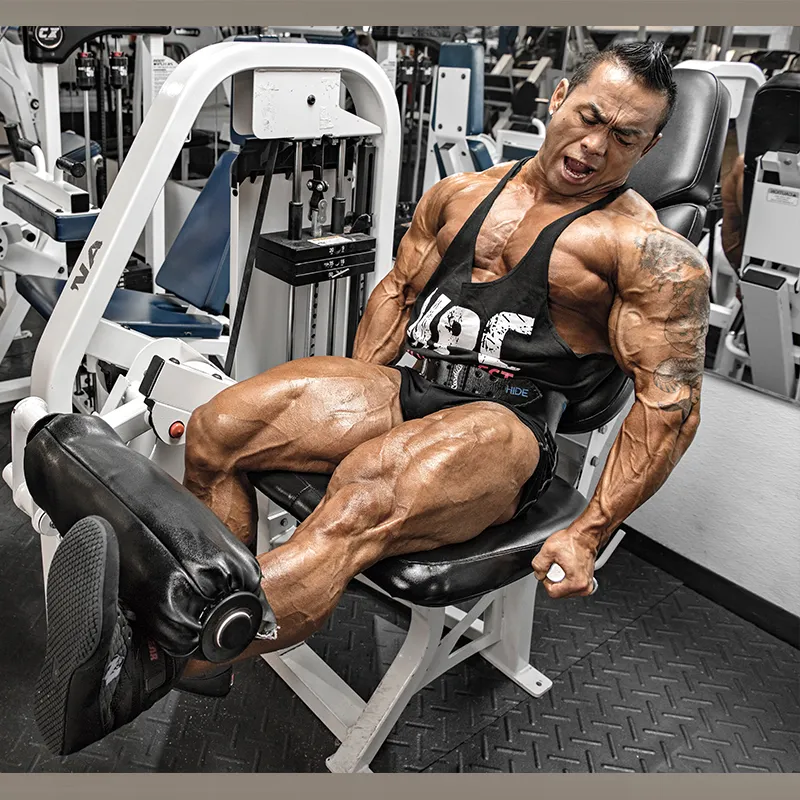
One trial cannot settle every rest-period debate. A 2024 synthesis pooled nine randomized studies and found a small overall tendency toward greater hypertrophy with rests longer than 60 seconds. However, estimates overlapped substantially, and there was no clear additional muscle-growth advantage once breaks exceeded roughly 90 seconds. This is a broad average, not a universal stopwatch prescription.
An earlier eight-week experiment in 21 resistance-trained men compared one-minute and three-minute breaks while participants performed full-body workouts. Longer rests produced greater improvements in squat and bench-press strength, with an advantage in anterior-thigh muscle thickness. The training setup was different from the 2026 knee-extension experiment: longer rest made it easier to sustain performance across fixed sets, and the lifters were already trained. The results can coexist without contradiction.
Another acute experiment compared one-minute and five-minute rests during leg press and knee extensions. The longer-rest group showed a greater early postexercise muscle-protein-synthesis response. That measures a short-term biological signal, not actual muscle gained over months. Acute hormone spikes, lactate, soreness and a big pump are similarly imperfect substitutes for tracking hypertrophy.
The sensible synthesis is conditional: extremely short rests can work when hard work is maintained, especially on stable isolation movements; longer rests are often the easier route to maintaining quality and strength on demanding exercises. Do not treat “no significant difference” in a 17-person study as proof that the methods are identical.

Leg Day Shirts & Workout Gear
Leg-day gym shirts and workout gear for lifters who never skip squats, lunges and lower-body punishment.

Train Legs Uncle Sam Tee
Bring “I Want You To Train Legs Uncle Sam Meme” humor to your next gym day.

Funny Gym Meme Graphic Tee
Show some leg-day attitude with a playful “Gym Meme Graphic” tee.

Quadzilla Massive Quads Leg Day Squatting Meme Tank Top
Train hard, laugh a little, and rep “Quadzilla”.

Let It Grow Leg Day Sweater Squats & Booty Gains Meme T-Shirt
For laid-back days and leg-day humor: “Let It Grow”.

I Love Squats – Valentine's Day Leg Day Meme Vest Muscl Tank Top
Add some leg-day attitude to training with “I Love Squats”.

Funny Squat Inspector Gym | Edgy Leg Day Meme Muscle Sh Tank Top
Show some personality between sets with “Squat Inspector”.

Let the Gainz Begin Bane Inspired Workout Crewneck Pull T-Shirt
Keep things casual with a little “Let the Gainz Begin” attitude.

Patriotic Eagle Stars Stripes and Squats Crewneck for U T-Shirt
Show some gym-day personality with “Patriotic Eagle”.

No Bane No Pain No Gain Muscle Shirt Athletic Vest Gymb Tank Top
Add some lifting attitude to training with “No Bane No Pain No Gain”.

Captain Deadlift Hooded Pullover Leg Day Workout Top Hoodie
Stay casual and show some leg-day attitude with “Captain Deadlift”.
4. Rest for strength, size and conditioning are different jobs
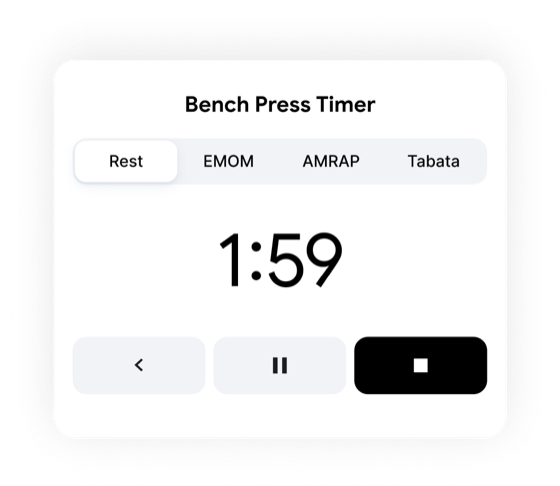
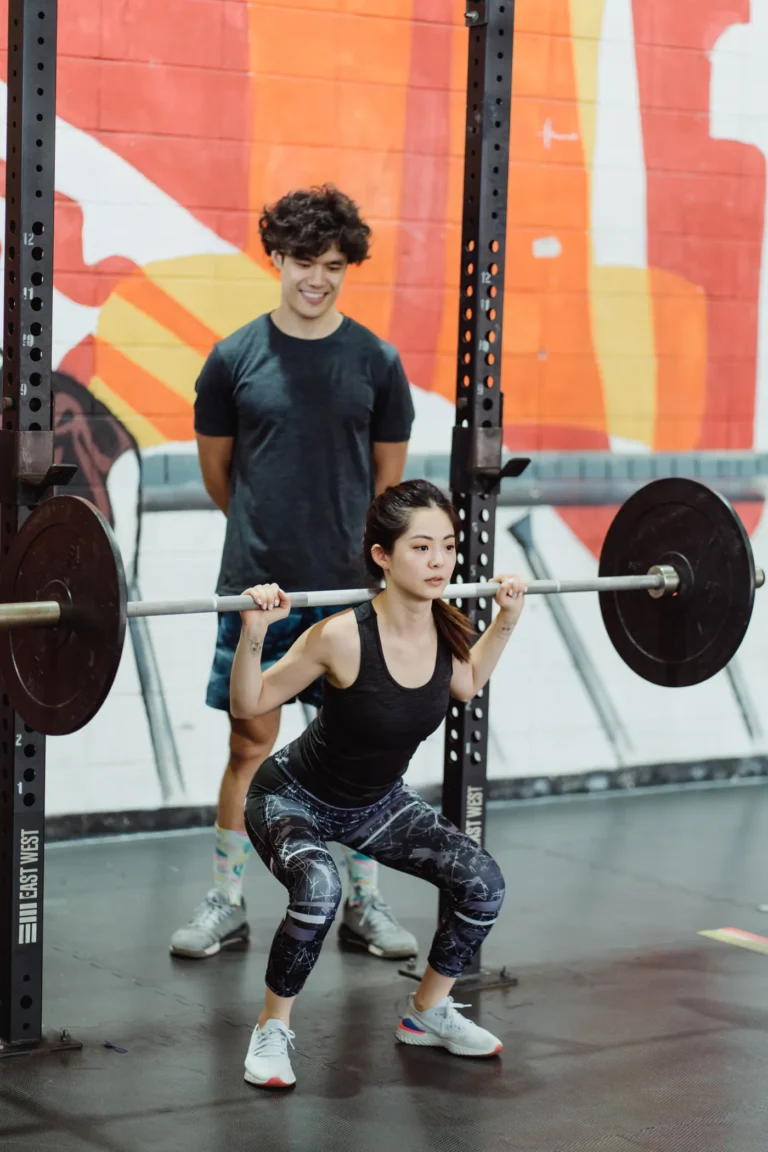
Rest intervals should support the adaptation you are chasing. Heavy sets of squats, deadlifts, presses and weighted pull-ups demand technical precision and high force. A two- to four-minute break is a practical starting point for hard compound sets, and very heavy near-maximal attempts may justify longer. You are buying the ability to repeat strong, controlled efforts rather than collecting fatigue for its own sake.
For conventional hypertrophy work, about 90 seconds to three minutes often balances performance and session length. An isolation exercise such as a lateral raise, cable curl or leg extension may tolerate 60 to 120 seconds if the next set still reaches the intended effort and range of motion. The more reps collapse from set to set, the more reason to lengthen the break.
Rest-pause training is a separate tool. After a hard set, you might take 15 to 30 seconds and complete a few additional quality reps. Those clusters can be useful when time is tight, but they are not a free replacement for every full set in a program. A cluster of three-rep mini-sets after an exhausting set should not be counted as if it were three fresh straight sets.
Conditioning circuits can deliberately use short breaks to raise cardiovascular demand. That is a legitimate goal, but it should not be confused with optimizing maximal bar speed or heavy-load performance. Choose the rest interval after choosing the goal, not the other way around.
5. How to use the findings on leg day
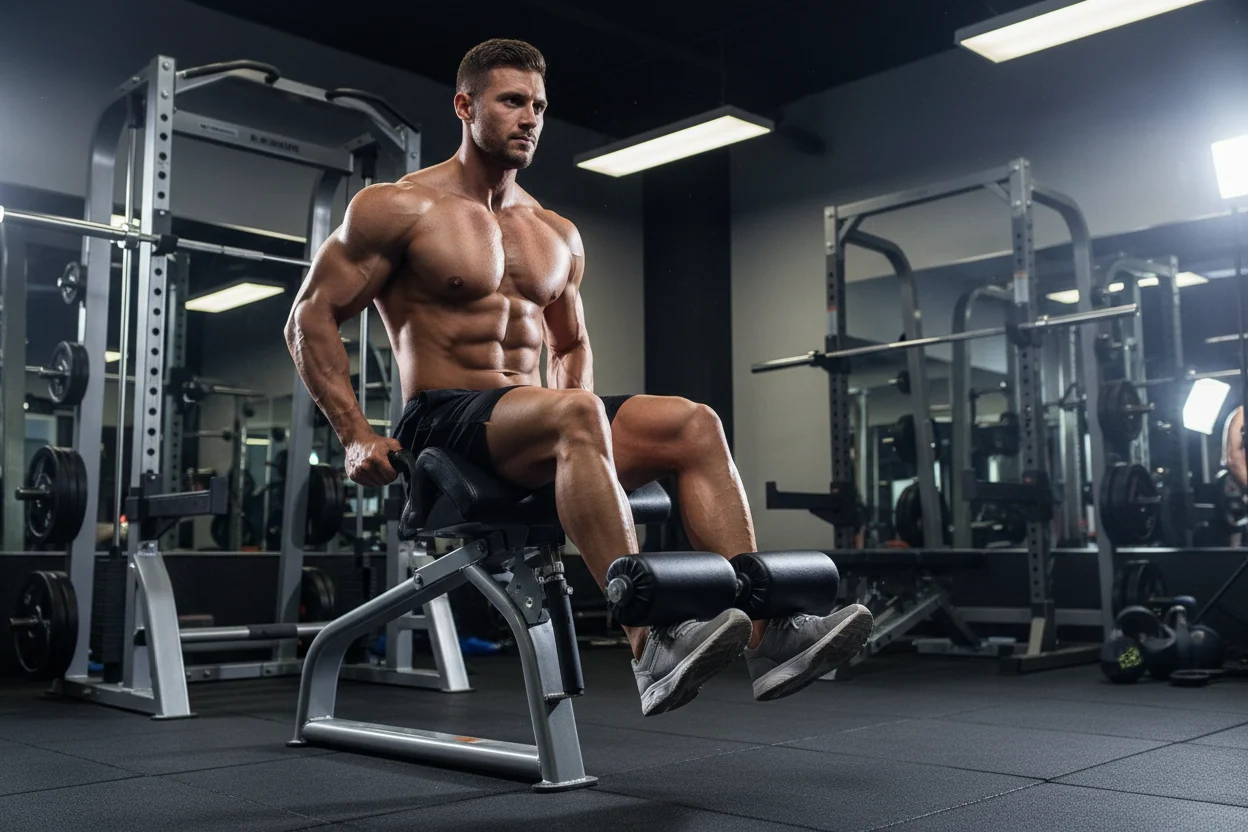
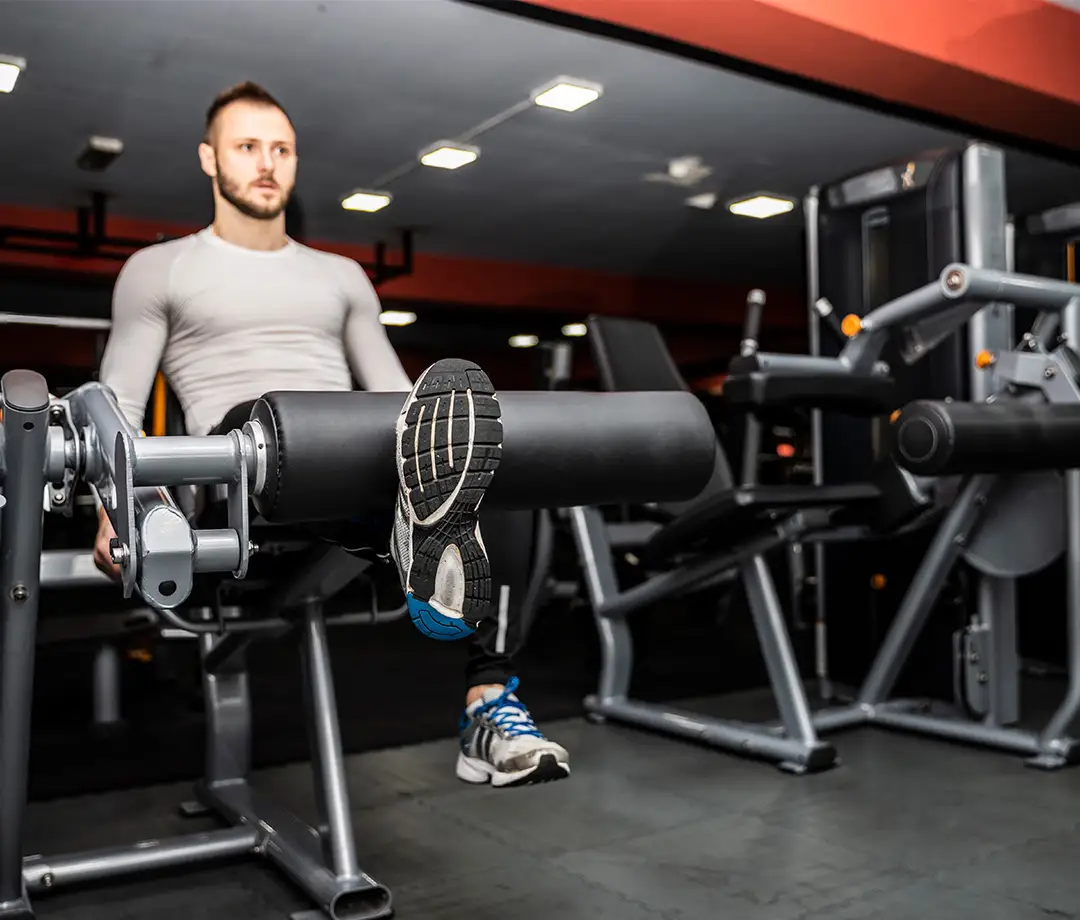
The most faithful application of the new experiment is a stable quad isolation exercise. Adjust a leg-extension machine so the knee aligns with its pivot and the roller rests above the ankles. Keep your hips and back supported. Use a load you can control through the available range without bouncing the stack or throwing the weight upward. Because the study trained each leg separately, single-leg extensions are a particularly close practical comparison.
Try two approaches on different training blocks rather than switching randomly every session. For conventional straight sets, perform three hard sets of eight to twelve reps with roughly two minutes between sets. For a rest-pause variation, complete a demanding initial set, rest about 20 seconds and perform short follow-up clusters until you reach a planned total of quality repetitions. Record the total load and reps so you can see whether you truly preserved work.
Keep heavy squats or leg presses on their own sensible rest schedule. A quad isolation finisher can use shorter rests without forcing the entire lower-body session into a breathless circuit. If you do not have a commercial leg-extension machine, a suitable leg-developer attachment, controlled heel-elevated squat or reverse Nordic can provide additional quad training, but their resistance curves and stability differ. They are not exact substitutes for the research protocol.
Stop if knee pain changes your movement or technique deteriorates. Hard muscular effort is expected; sharp joint discomfort is not a reason to push through a timer. A more patient set that you can repeat and progress is more valuable than a rushed set you cannot measure.
Equipment Worth Exploring
Explore equipment, accessories and gear from our carefully selected range.
VOLTRA
Compact digital cable trainer with smooth, adjustable resistance.

Go-Tone Pro
Portable digital cable trainer with up to 66 lb (30 kg) of adjustable resistance.





Safety Squat Handles
Barbell squat handles that reduce shoulder positioning demands during high-bar squats.

GymPin Squat Wedges
Non-slip 15-degree squat wedges help elevate the heels for deeper quad-focused squats.
6. A six-week plan that tests your own recovery
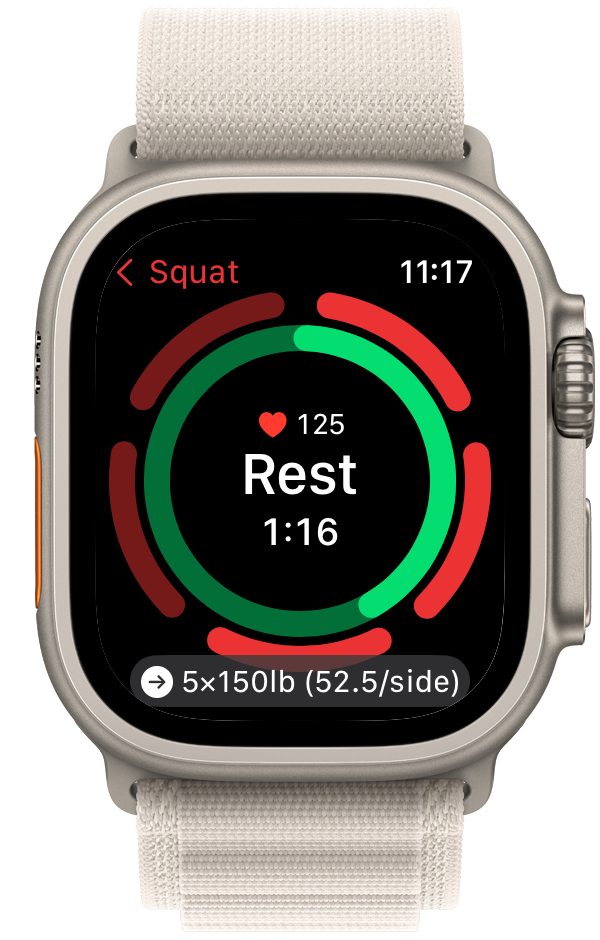
Use two lower-body sessions per week with at least two days between them. Day A emphasizes heavy, repeatable compound work: three sets of six to eight squats or leg presses with two to three minutes of rest, then three sets of eight to twelve knee extensions with 90 to 120 seconds of rest. Add a hip hinge or hamstring curl for balanced posterior-chain work. Day B uses a lighter compound pattern, then a controlled rest-pause quad finisher.
For weeks one and two, keep both leg-extension sessions conventional. Establish baseline loads, rep counts, technique and how much rest you need to repeat good sets. In weeks three and four, keep Day A unchanged and replace Day B’s final leg-extension sets with a single hard set followed by 20-second mini-rests. Aim to match the planned total quality reps without turning the movement into jerky partials. In weeks five and six, increase the load only if the total repetitions and execution remain stable.
Log the load, total reps, number of mini-sets, elapsed time and the first point at which range of motion or speed falls apart. If the rest-pause version takes more time than straight sets, causes disproportionate soreness or reduces performance in your next workout, it is not a win for you. If it fits a busy schedule and you recover well, keep it as one tool rather than a religion.
For more advanced lifters, begin conservatively: the 17 participants in the study were untrained. An experienced athlete doing far more weekly sets may respond differently to fatigue, and there is no obligation to copy a research protocol verbatim.
Leg Day Shirts & Workout Gear
Leg-day gym shirts and workout gear for lifters who never skip squats, lunges and lower-body punishment.

Viking Shirt – Viking Squats , Gymbros & Gains – T-Shirt
Bring “Viking” humor to your next gym day.

Legday – Squats & Deadlifts , Meme Top Bros & T-Shirt
Bring “Legday” humor to your next gym day.

Squat You Must – Leg Day Meme , Top Gains T-Shirt
Heavy lifts, good laughs, and a little “Squat You Must” energy.

Heavy Metal Leg Day – Shirt Squats & Gains – & T-Shirt
Show some metalhead attitude with a playful “Heavy Metal Leg Day” tee.


Squatzilla Meme Leg Day Vest Tank Top
Bring “Squatzilla” humor to your next lifting session.

Deadlift Frozen Skull Gym Decal for Powerlifters, Winte Sticker
Stick a little “Deadlift” humor on your favorite gear.

Bane Barbell Club Crewneck Pullover Sweater Gymbros Bar T-Shirt
Add a playful “Bane Barbell Club” touch to your casual rotation.

Deadlift or Die Tryin Muscle Shirt Athletic Vest Deadpo Tank Top
Show some personality between sets with “Deadlift or Die Tryin”.

Día de los Muertos Deadlift Gym – Mexican Calavera Musc Tank Top
Bring “Día de los Muertos Deadlift” humor to your next lifting session.
7. The practical verdict: earn your next set
The headline result is narrower and more useful than “rest does not matter.” In one ten-week, volume-matched experiment, 20-second and two-minute rests led to similar measured quad growth and leg-extension strength in 17 untrained men. That suggests rest duration is not magic when training work is preserved. It does not establish that short breaks are superior, faster or equally effective for every muscle and every lift.
Use longer breaks when the next set needs substantial force, complex coordination or a consistent load. Use moderate breaks when you want a reliable blend of growth stimulus and training efficiency. Experiment with short rest-pause clusters on stable accessories when the technique remains clean and the weekly workload is recoverable. If a timer becomes the main event and your reps get worse, extend the rest.
Most lifters benefit more from a repeatable plan than from arguing whether 60, 90 or 120 seconds is universally best. Pick a range, track your performance and adjust it based on what actually happens. Your quads do not know what your stopwatch says; they respond to challenging, progressive training that you can sustain.