Advertising disclosure: This page includes affiliate links that may earn us a commission at no additional cost to you.
Tuesday is interval day, but it is also the only weekday when you can get to the gym. Should you do squats before breakfast and ride after work, ride first and lift later, or move one session to another day? For cyclists who want stronger legs without sacrificing the quality of their riding, the answer depends more on the purpose of each session than on a universal rule about exercise order.
Two workouts on one day can make the rest of the week easier to organize. They can also turn a productive interval session into a struggle if the first workout leaves too much fatigue. Here is how to decide which comes first, how much lifting to include, and how to arrange your week when time is limited.
Why cyclists should protect their priority session
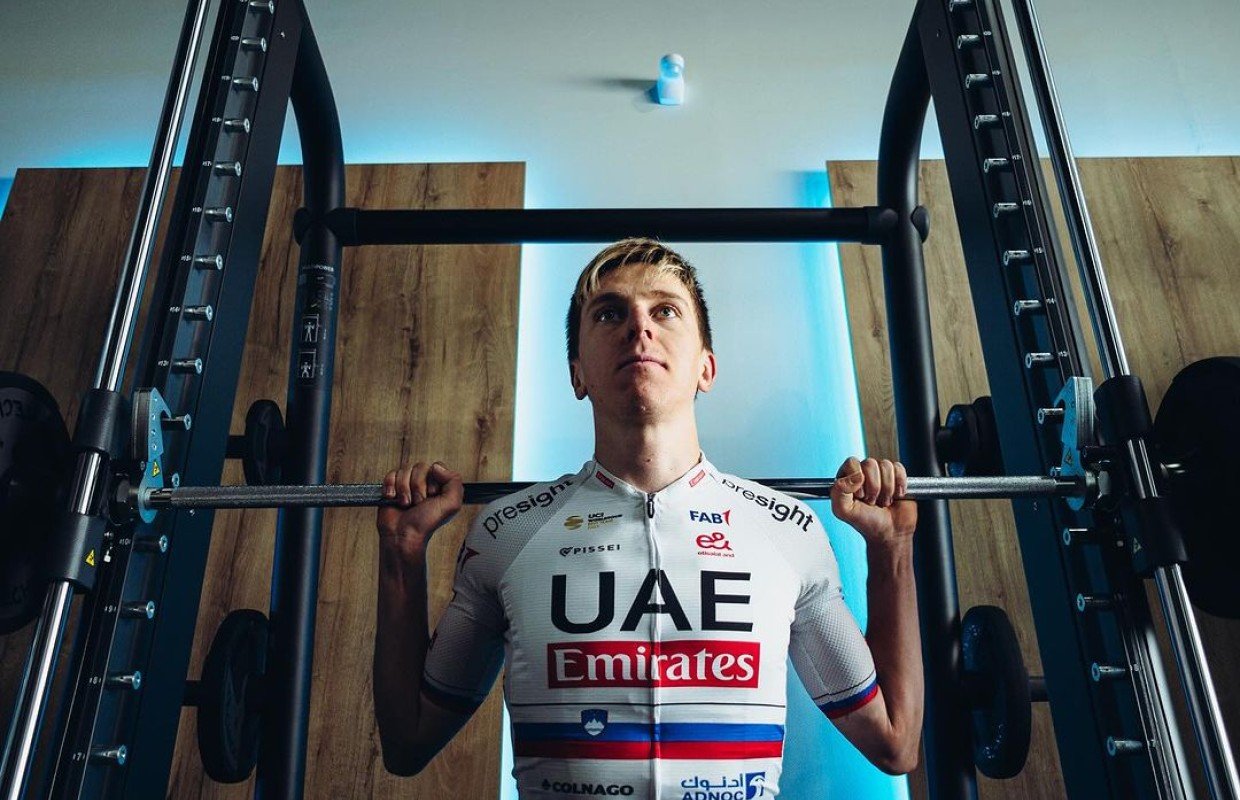
Strength training can complement cycling without needing to look like cycling. Your legs already perform thousands of relatively low-force pedal strokes during a typical ride. In the gym, you can expose them to greater forces through fewer controlled repetitions and progressively heavier loads. That is a different stimulus, not simply another way to accumulate kilometres.
A 2025 review of heavy strength training in endurance cyclists pooled 17 studies involving 262 participants, including 60 women. The findings suggested improvements in cycling efficiency, anaerobic power and cycling performance, although the certainty of the evidence was low. Maximum oxygen uptake did not show a clear improvement. In other words, lifting may help you use the aerobic engine you already have more effectively; it does not replace the riding needed to develop that engine.
The important distinction is between long-term adaptation and short-term fatigue. You can benefit from a training program over several months even if your legs feel sluggish for a few hours after a particular session. Conversely, two individually productive workouts can become less useful if you repeatedly perform them while exhausted. A large concurrent-training review found no clear average reduction in maximal strength or whole-muscle growth when aerobic training was added, but explosive strength appeared more sensitive, particularly when both modes occurred in one session. Our guide to combining cardio and lifting explains why those outcomes should not be treated as interchangeable.
Before scheduling anything, identify the workout you most need to execute well. Is it a set of race-specific intervals, a heavy squat session, or simply a comfortable endurance ride? The answer may change during the season. A sensible schedule respects that change instead of enforcing the same order every day of the year.
When the ride should come first
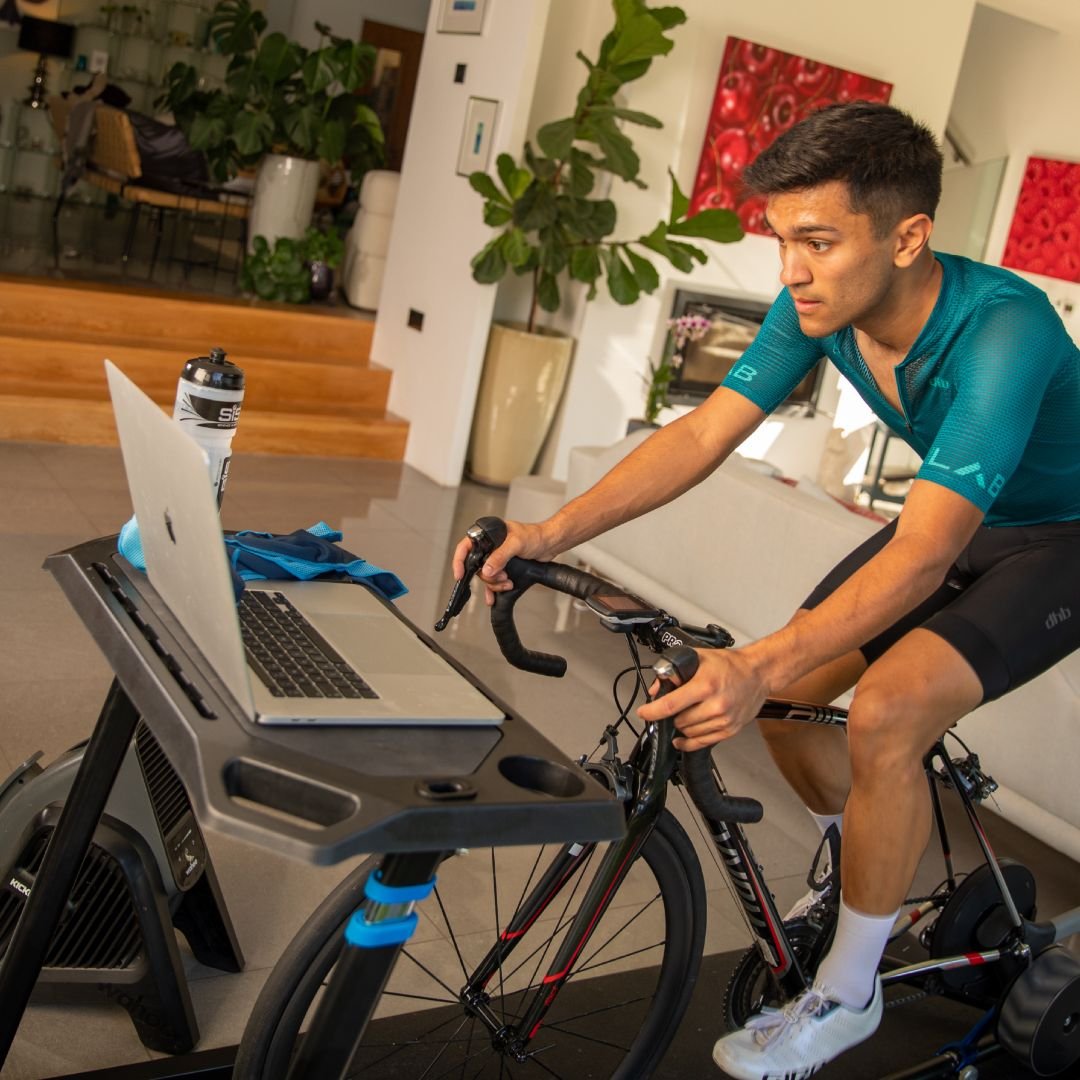
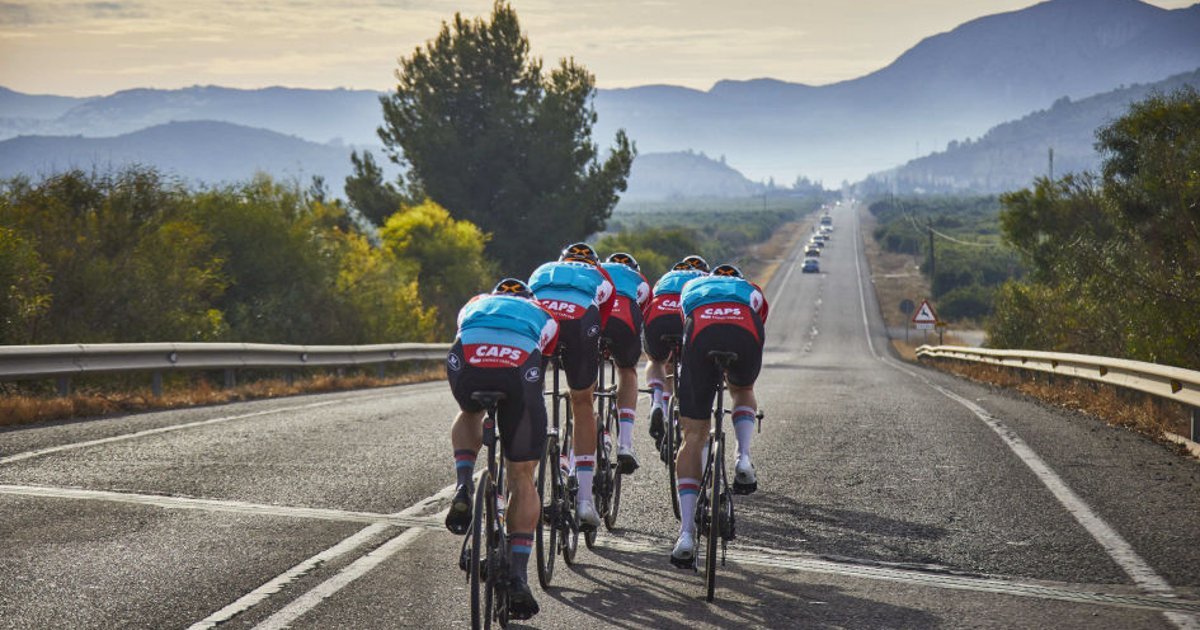
Ride first when the bike session contains your most important high-quality work. Imagine a rider preparing for a hilly event who needs to complete four sustained threshold intervals on Tuesday. Heavy squats and split squats immediately beforehand could make the rider miss the planned power, shorten the intervals or turn the session into a test of sore legs rather than the intended cardiovascular workload.
Do the intervals while you are relatively fresh. If your calendar permits, eat, rehydrate and lift several hours later. An interval workout in the morning and a short gym visit after work gives you a chance to recover some of the resources used during the ride. There is no reason to chase a precise separation time as if it were a magic switch: research comparing combined sessions with sessions separated by at least three hours provides useful context, but does not establish an optimal gap for every cyclist, training dose or outcome.
What if the gym closes before you can get a break? You can still lift after the ride, but set expectations appropriately. A good secondary session might contain two challenging but controlled sets of a squat pattern and two sets of a hinge, rather than a maximal strength test or a high-volume leg workout. If technique deteriorates or the load feels unusually difficult, reduce it. The point is to obtain a useful stimulus without compromising safety or the next important ride.
Do not automatically apply this rule to every bike outing. A 30-minute relaxed commute, a gentle spin and a hard interval session are very different workloads. Classify the effort by what it actually costs you, not just by the fact that it involves a bicycle.
When lifting first makes more sense
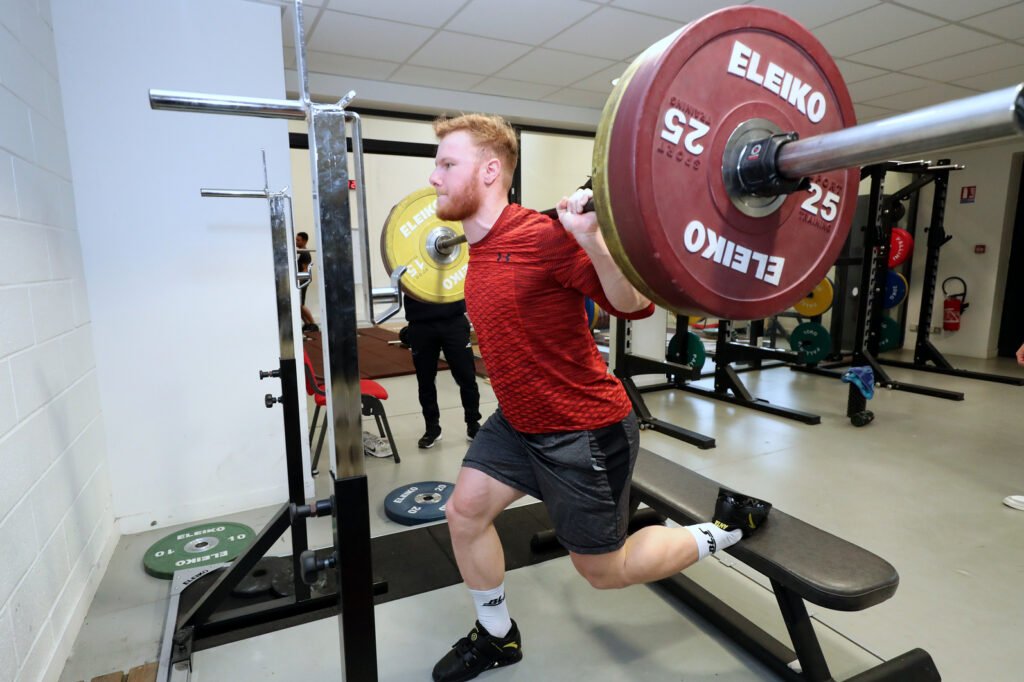
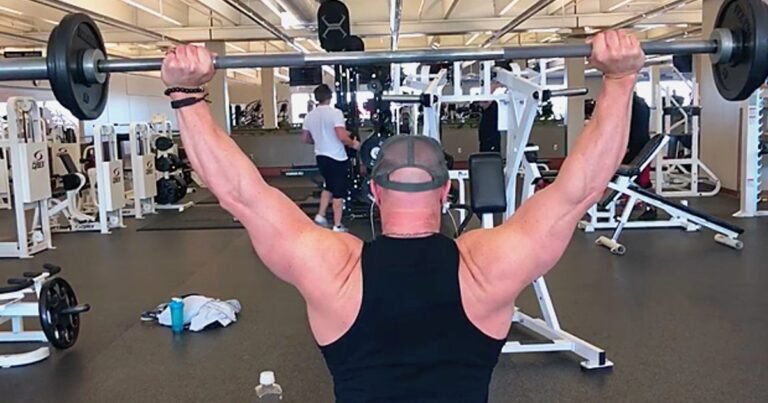
Lift first when strength is the priority and the subsequent ride can remain genuinely easy. During an off-season strength block, for example, you might want to progress a squat or leg press while maintaining your aerobic base. In that situation, going into the gym fresh makes sense. A short easy ride afterward may fit the plan, provided you resist turning it into a threshold workout just because another rider passes you or a virtual leaderboard appears on screen.
One practical way to set the boundary is to decide before the first workout that the second is maintenance, not a performance test. If the ride is supposed to be easy, use a comfortable effort at which you can speak in sentences. Do not increase power to compensate for a shorter duration. If you are chasing sprint power, keep high-speed bike efforts away from demanding leg sessions whenever possible; tired legs can change the quality of the work even when your heart and lungs feel capable of more.
Research on endurance and resistance exercise order does not establish a universal advantage for every outcome. A review examining session order found the endurance results less consistent than a simple rule might suggest. That makes the priority-session approach especially useful: it is a scheduling decision based on preserving the quality of the work you value, not a claim that one order inevitably delivers superior adaptations.
There is also a case for separate days. If both workouts demand peak performance, both are long, or you consistently struggle to recover from the second, give them their own time. A rider with flexible hours may prefer to alternate sessions rather than cram them together. However, splitting hard work across too many consecutive days can remove opportunities for meaningful recovery. Look at the whole week instead of optimizing a single Tuesday in isolation.
Build a strength workout your cycling can tolerate
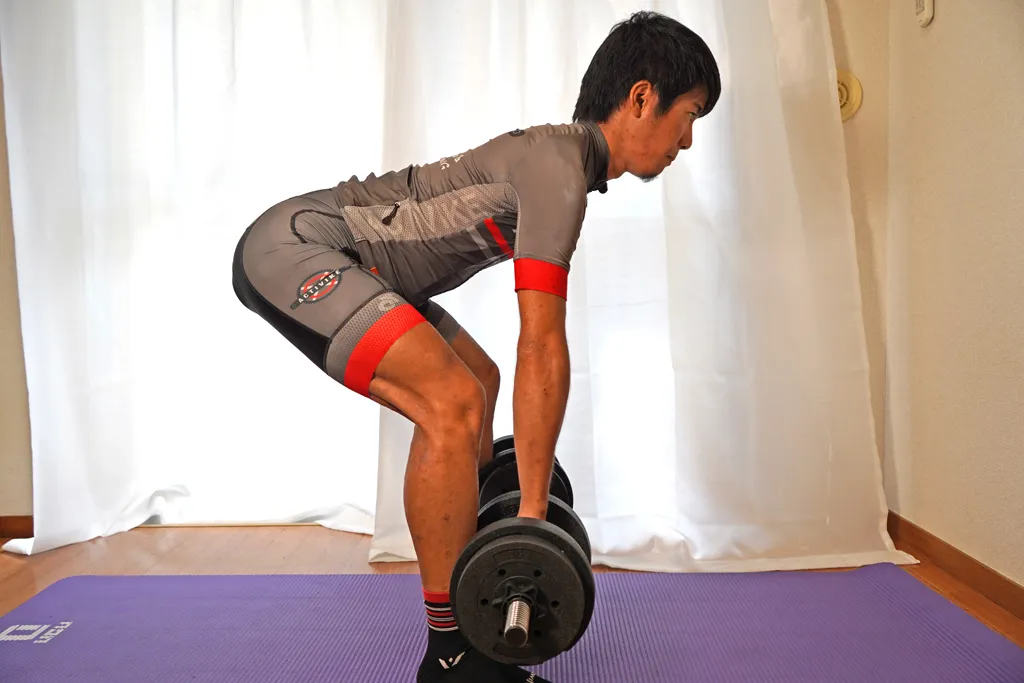
The amount of strength work matters just as much as its position on the calendar. A cyclist who has never lifted regularly does not need to begin with five sets each of squats, deadlifts, lunges and leg extensions. The resulting soreness might disrupt riding for several days, making the experiment harder to evaluate. Start with exercises you can perform safely and consistently, then build tolerance.
An illustrative first session could include two sets of five to eight repetitions of a squat or leg press, two sets of six to eight repetitions of a Romanian deadlift, and one or two sets of a single-leg exercise such as a split squat. Finish with a manageable amount of upper-body pulling or trunk work if time allows. Leave roughly two or three repetitions in reserve and allow sufficient rest between the harder sets. This is a starting example, not a prescription derived from a particular research protocol.
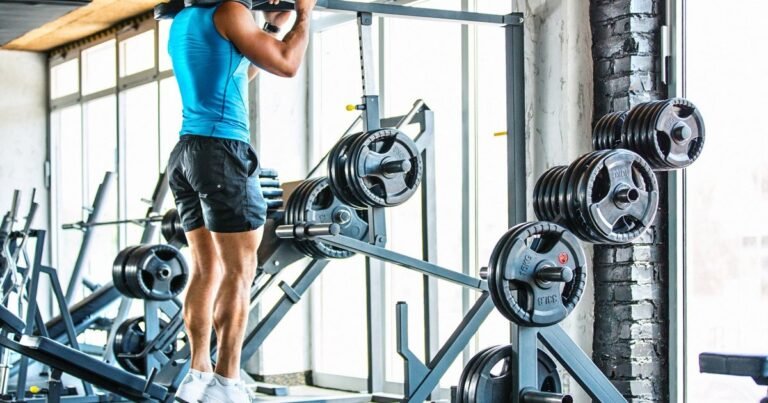
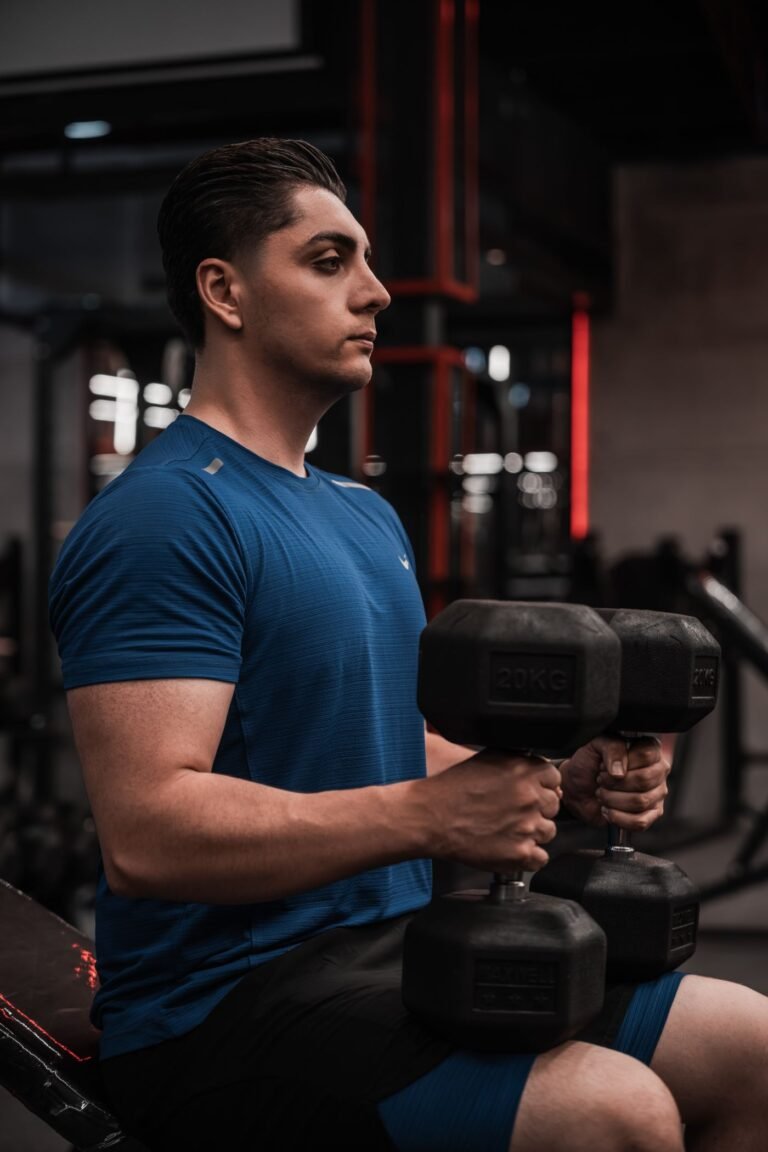
Equipment should match your training experience. A barbell and a rack with properly positioned safeties allow progressive loading; dumbbells work well for split squats and hinges, and a leg press or hack squat can be an alternative for riders who prefer a supported lower-body exercise. You do not need every machine on the gym floor. Pick a small number of movements you can repeat and measure over several weeks.
When racing approaches, consider reducing lifting volume before reducing all resistance training to zero. For instance, a rider who normally completes three working sets might temporarily perform one or two controlled sets with a familiar load. The aim is to maintain the useful strength stimulus while making space for race-specific work. Avoid introducing unfamiliar exercises or suddenly increasing eccentric work just before an important event.

Equipment Worth Exploring
Explore equipment, accessories and gear from our carefully selected range.

Rubber Hex Dumbbells
Rubber-coated hex dumbbell pairs with a stable shape for home and commercial strength training.


Foldable Wall Rack
Wall-mounted folding squat rack designed to save floor space between workouts.

Competition Plates
Competition-style bumper plates for Olympic lifts and loaded strength training.


Leg Press/Hack Squat BPR-790
Convertible 45-degree leg press and hack squat machine with a broad footplate and band pegs.

Studio V-Squat
Plate-loaded V-squat machine for supported lower-body strength training.
Put both sessions into a realistic week
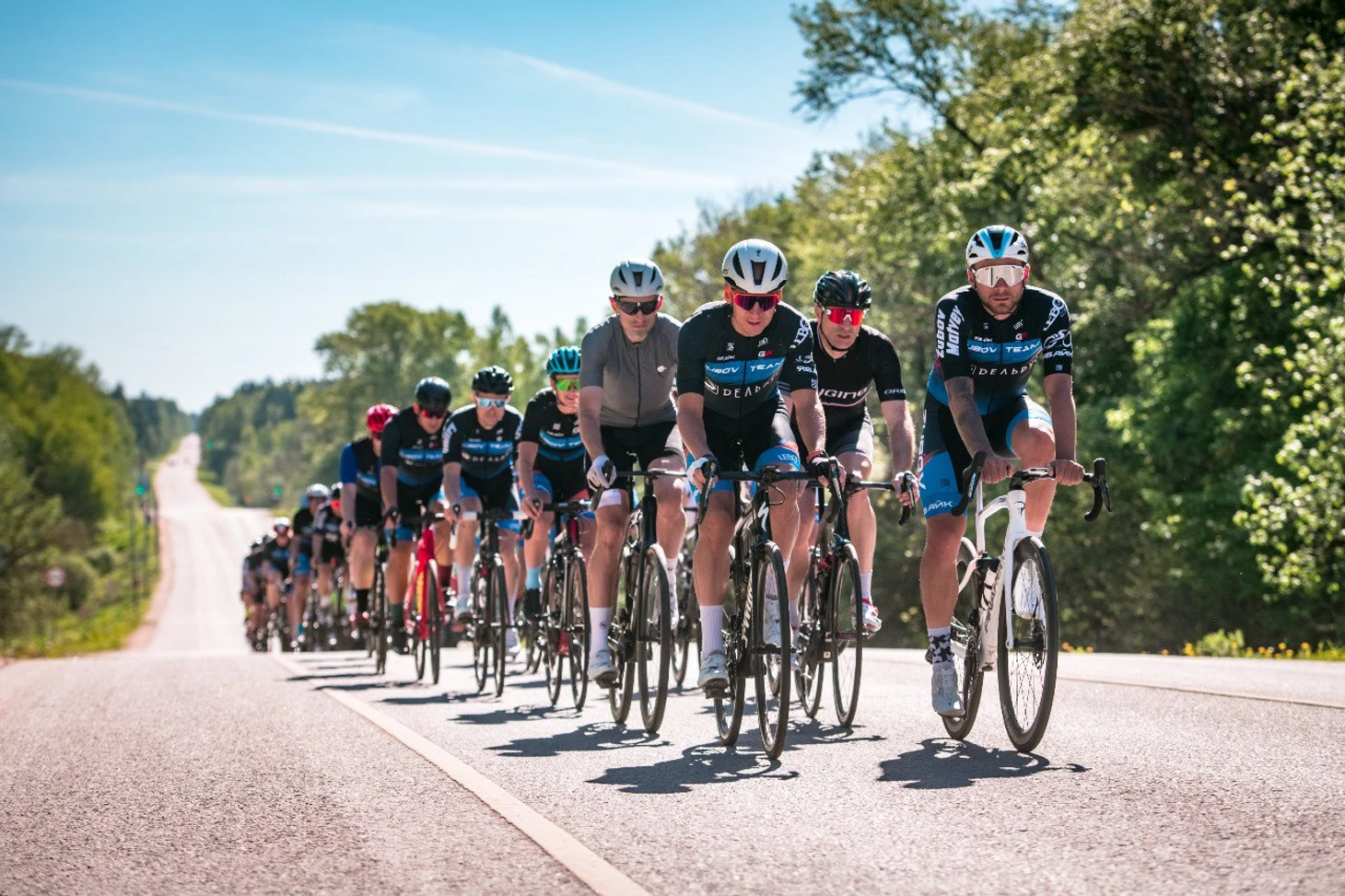
Here is one example for a recreational cyclist who rides three times a week, lifts twice and has four available training days. It is deliberately modest enough to adjust if work or family commitments interfere.
- Monday: Rest, ordinary walking or gentle mobility.
- Tuesday: Key cycling intervals, then a short strength session later in the day if feasible.
- Wednesday: Rest or a comfortable walk.
- Thursday: Easy endurance ride; keep the intensity controlled.
- Friday: Strength session without a demanding ride afterward. Reduce volume if Friday lifting repeatedly compromises Saturday.
- Saturday: Long endurance ride at the planned effort.
- Sunday: Rest or optional light movement.
If Friday squats repeatedly ruin Saturday’s ride, move Friday lifting to Thursday and do the easy ride after it, or reduce Friday’s leg work. This creates a larger recovery window ahead of Saturday without removing a strength session. If Tuesday’s second workout consistently feels poor despite several hours between sessions, make Tuesday lifting shorter or move it to Wednesday and make Thursday easier. Each adjustment has a different effect on the spacing of your hard days; choose the one that solves the actual problem.
Keep a simple log. On the bike, record whether you completed the intended intervals at the planned effort, alongside perceived exertion and, if available, power. In the gym, record loads, repetitions and how many repetitions you had left. Also record unusually persistent soreness and changes in sleep. Look for trends across several comparable weeks, not one disappointing session after a stressful day.
Fuel both workouts. A rider who does intervals before breakfast, skips lunch and then attempts heavy lifting in the evening has changed more than exercise order. Normal meals containing sufficient carbohydrate and protein, fluids and appropriate recovery time help make the second session viable. Avoid interpreting the effect of under-fuelling as proof that concurrent training cannot work.
The best schedule is the one you can repeat while progressing toward your priorities. Put your crucial workout first when two sessions compete for the same day, protect recovery around your key rides, and make the other workout appropriately demanding rather than automatically maximal. With that framework, riding and lifting can belong in the same week and, when necessary, the same day.