The Hidden Danger of Metal-on-Metal Wear: Why Your Carabiner and Cable Attachment Could Fail Mid-Workout
Learn how metal-on-metal friction between cable machine attachments and carabiners causes gradual wear that can lead to sudden failure. Discover how to inspect your equipment, prevent damage, and train safely for long-term results.
HOME GYM PRODUCT REVIEWSFITNESS BLOG
2/12/20264 min read
Cable Attachment and Carabiner Wear: How Metal-on-Metal Friction Can Lead to Dangerous Gym Equipment Failure
Has this ever happened to you?
You’ve been using the same cable attachment and the same carabiner for over a year. Everything feels solid. No obvious issues. Then one day you look closely — and realize you’ve almost worn through both of them.
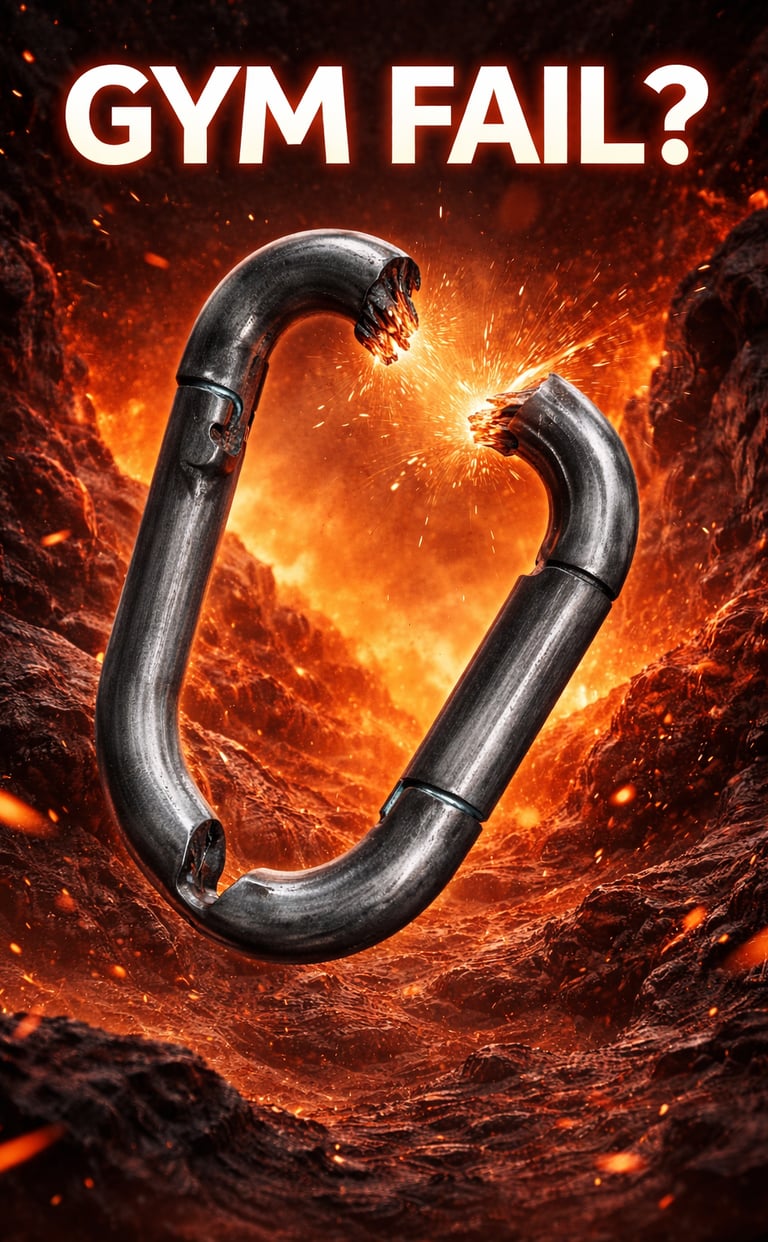
That constant metal-on-metal contact between your cable machine attachment and carabiner creates friction. Over time, it literally grinds the metal away. It’s subtle at first. Hard to see. Easy to ignore.
Until there’s barely any material left at the connection point.
If you keep using that setup, one of those pieces is eventually going to fail — and when it does, it won’t be gradual. It’ll be sudden.
Let’s break down why this happens, how to spot it, and what smart lifters should do.
Is My Equipment About To Break?

Why Cable Attachments and Carabiners Wear Down Over Time
Every time you perform a rep on a cable machine — whether it’s curls, triceps pushdowns, rows, or face pulls — there’s micro-movement happening at the connection point.
Steel against steel.
Load shifting under tension.
Tiny oscillations during every repetition.
Individually, each rep causes microscopic abrasion. But multiply that by:
Hundreds of reps per workout
Multiple workouts per week
Months (or years) of consistent training
The friction accumulates.
Unlike rubber-coated components or swivel joints designed to reduce grind, a fixed metal eyelet clipped directly into a metal carabiner creates a concentrated wear zone. Eventually, grooves form. Then thinning. Then structural compromise.
The Silent Danger: When Wear Becomes Structural Failure
The biggest issue isn’t cosmetic damage — it’s load capacity loss.
When the eyelet of a cable attachment thins out, or the inner curve of a carabiner develops deep grooves, you’ve reduced the amount of metal handling the load.
At that point, failure isn’t theoretical.
If you’re training heavy and the attachment point snaps mid-set:
The bar or handle can drop instantly
The cable can recoil unpredictably
Your wrists, elbows, shoulders, or face could be in danger
You risk serious injury and equipment damage
The scariest part? It rarely gives a dramatic warning. By the time it’s obvious, it’s already close to failing.
How to Inspect Your Cable Machine Attachments Properly
Most lifters check their form more often than they check their equipment.
A proper inspection takes less than 60 seconds.
Look for:
Deep grooves inside the carabiner
Flattened or shaved-down metal on attachment eyelets
Sharp edges forming at contact points
Visible thinning where metal used to be rounded
Chipped off paint or powdercoat at attachment points
If you can clearly see material loss — not just surface scratches — you’re past the “monitor it” phase.
You’re in the “replace it” phase.
Why Carabiners Wear Faster Than You Think
Carabiners are often overlooked because they seem indestructible. They’re small, solid pieces of steel — but they absorb massive repeated stress.
Each rep shifts the load slightly inside the curve of the carabiner. Over time, that creates:
A carved groove along the inner arc
Uneven stress distribution
Increased pressure on thinner sections
Once a groove forms, wear accelerates. The thinner the metal becomes, the faster friction eats away at it.
Replacing carabiners periodically is inexpensive and dramatically reduces failure risk.
How to Prevent Metal-on-Metal Wear in Cable Training
You can’t eliminate wear entirely, but you can slow it down significantly.
Practical strategies include:
Replacing carabiners regularly
Rotating attachments instead of using one daily
Choosing attachments with built-in swivel joints
Inspecting equipment monthly if you train frequently
Avoiding excessive swinging or jerking reps
Smooth, controlled reps reduce micro-impact stress at the connection point — improving both muscle tension and equipment longevity.
The Real Question: Would You Wait Until It Snaps?
When you notice that there’s barely any metal left at your attachment point, you have two choices:
Keep using it until it fails.
Or stop now.
This isn’t about paranoia — it’s about risk management. The cost of replacing a worn cable attachment or carabiner is minimal compared to the cost of an injury.
Longevity in training isn’t just about programming and recovery. It’s also about maintaining the tools you rely on every session.
If you’ve been using the same cable attachment and carabiner combination for over a year, inspect it today.
You might be surprised by what you see.
Final Thoughts: Small Friction Adds Up
Metal-on-metal friction doesn’t look dramatic. It happens slowly. Quietly. Gradually.
Until one day, there’s barely any material left holding hundreds of pounds together.
Cable attachments and carabiners are small pieces of equipment — but they carry serious responsibility. Inspect them. Replace them when necessary. And don’t ignore visible wear.
Because when metal fails under tension, it doesn’t give you a warning rep first.
Shop Hilarious Gym Shirts Today
Explore funny gym apparel and exclusive pump covers that will elevate your workout wardrobe.
Rated 5 stars by cUSTOMERS
★★★★★