Advertising disclosure: This page includes affiliate product links that may earn us a commission, as well as products from our own store.
Aleksandr Karelin could make a super-heavyweight wrestler look like an awkward piece of luggage. His reverse body lift remains a startling sight: a huge opponent leaves the mat, rotates and lands while Karelin keeps control. It is easy to watch that and start searching for the exercise that built him. The more useful question is how an exceptional strength athlete turned physical capacity into repeatable wrestling results.
The answer involves much more than a muscular back or a brutal conditioning session. Karelin’s career offers a way to think about strength, technical practice and competition without pretending that a famous athlete’s entire preparation can be reconstructed from highlights.
The record is extraordinary enough without embellishment
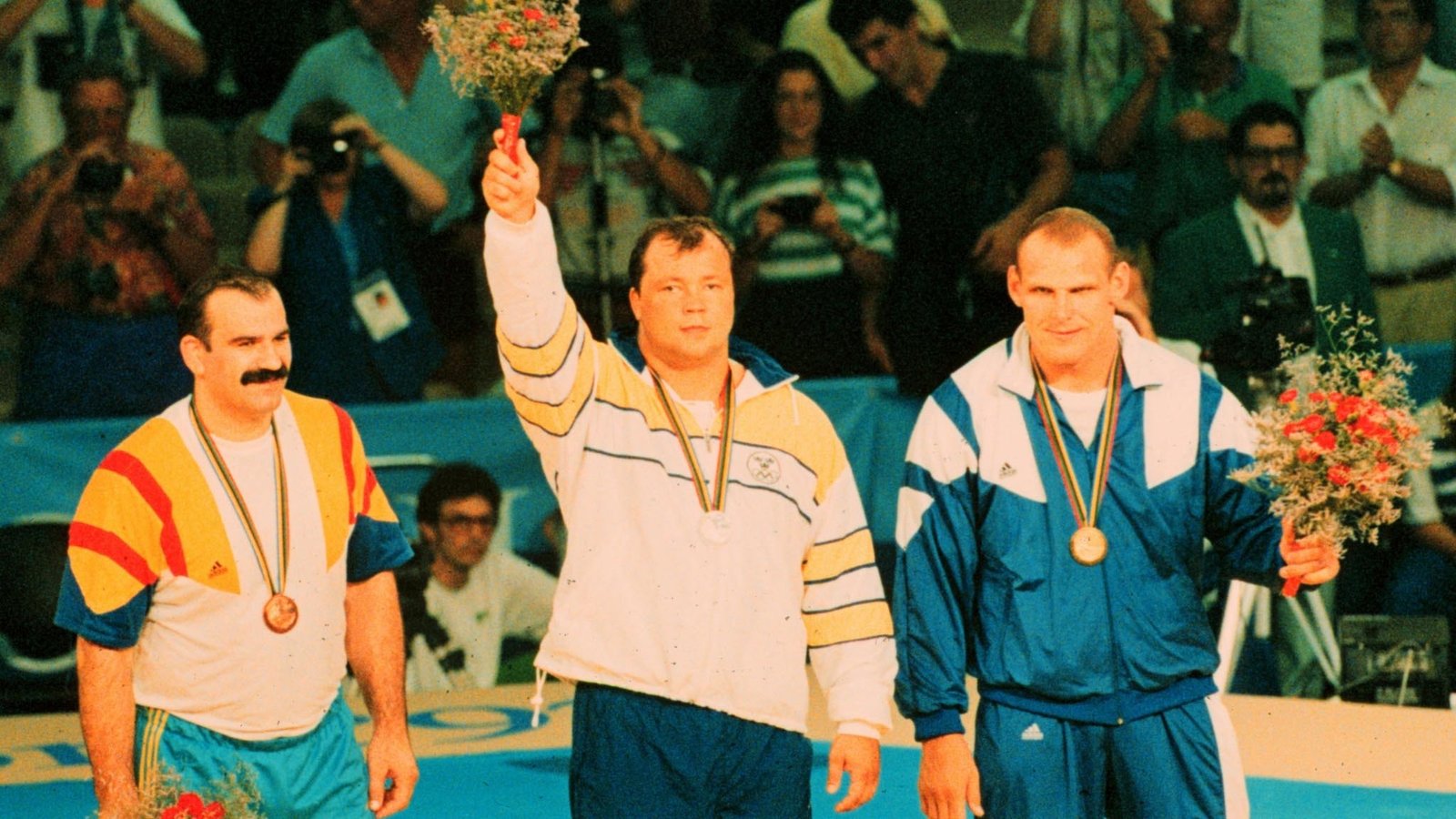
Karelin won Olympic gold in 1988, 1992 and 1996, followed by silver in 2000. He also won nine senior world titles between 1989 and 1999. That combination gives him twelve gold medals across those two championship stages. His three Olympic victories came while representing the Soviet Union, the Unified Team and Russia respectively, an unusual thread running through a remarkably consistent sporting career.
His widely documented thirteen-year unbeaten run ended in the Sydney Olympic final. Within that period, he went six consecutive years without conceding a point. Those are different measures: a winning streak counts results, while a scoreless stretch describes how thoroughly opponents were being contained. Combining them into one vague claim of invincibility loses something important about the performance.
This was dominance in Greco-Roman wrestling, with its own opponents, weight divisions and rules. It was not a measured claim that Karelin possessed the world’s biggest deadlift, strongest hands or highest power output. He competed in the super-heavyweight class, where moving another enormous trained athlete was part of the job.
Keeping the claim specific makes it more impressive. A gym lift happens under relatively stable conditions. A wrestling opponent actively changes the conditions. Karelin repeatedly solved that moving problem at the highest level, across years rather than a single spectacular afternoon.
Why the reverse body lift looks so different from a deadlift
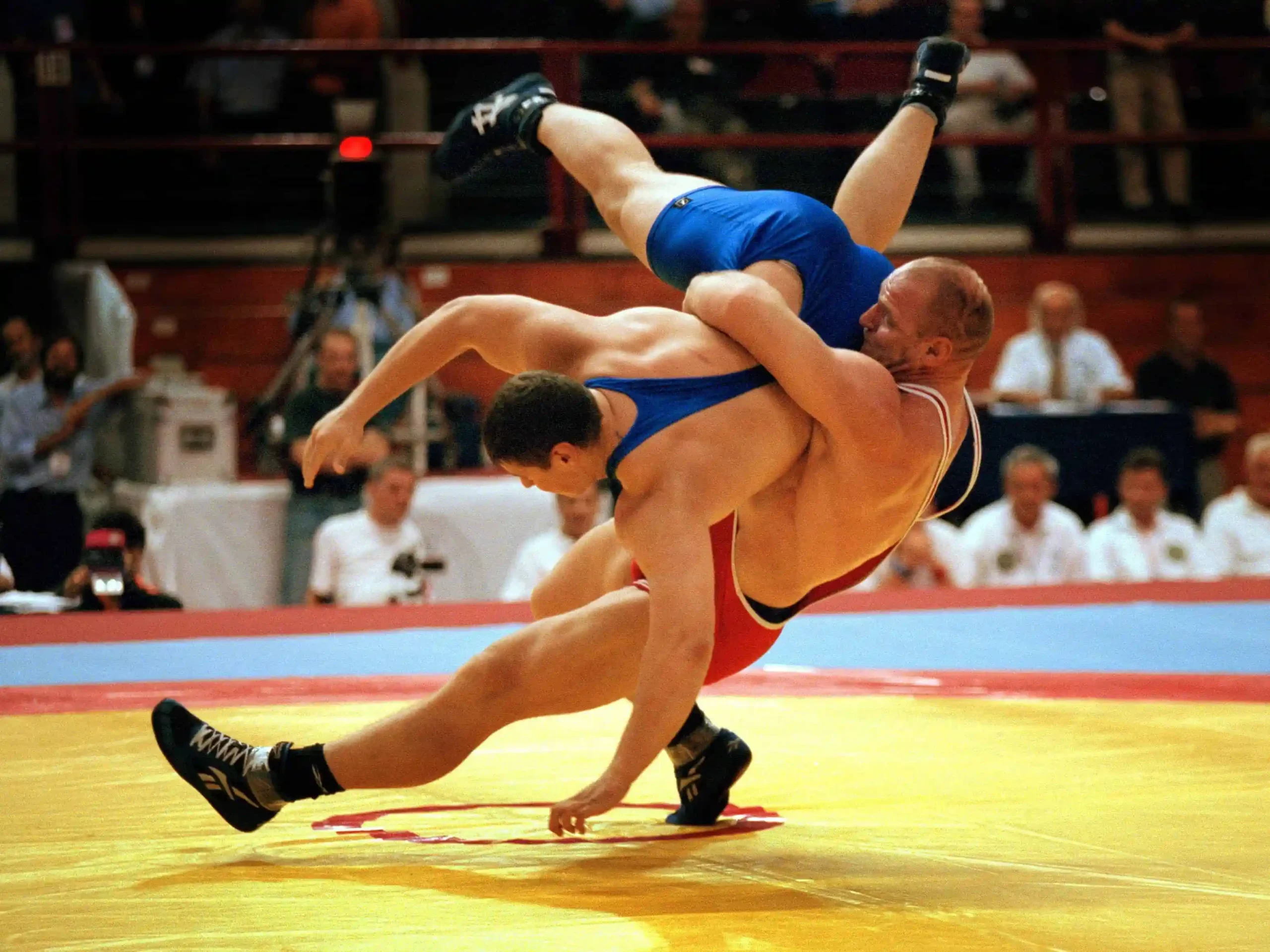
In Greco-Roman wrestling, attacking the legs and using the legs to trip an opponent are outside the discipline’s defining upper-body framework. Securing and moving the torso therefore becomes central. Karelin’s ability to lift super-heavyweight opponents from difficult positions made his reverse body lift especially memorable.
A person is not a barbell with poorly positioned handles. He can widen his base, shift his hips, resist the grip and anticipate the attempt. The wrestler doing the lifting must establish a useful hold before force can produce the desired movement. Timing and position affect what that force achieves. The spectacular airborne moment is only the visible finish of a longer interaction.
This is why equating an opponent’s body mass with a deadlift number is misleading. The direction of force changes, the athlete rotates, and the opponent’s resistance is part of the task. A heavy deadlift demonstrates a valuable capacity, but it does not automatically demonstrate the ability to secure, elevate and turn a resisting wrestler.
There is a practical parallel in how different sandbag holds change a carry. The object can weigh the same while the support position changes what limits you. That comparison helps explain the principle; a sandbag remains far more predictable than a trained opponent.
Do not turn a highlight into an improvised partner-lifting challenge. The grip, lift, rotation and landing are wrestling skills that belong on suitable mats under qualified coaching. Adding enthusiasm or gym strength does not supply the missing experience.
Build capacity, then practise the task that uses it
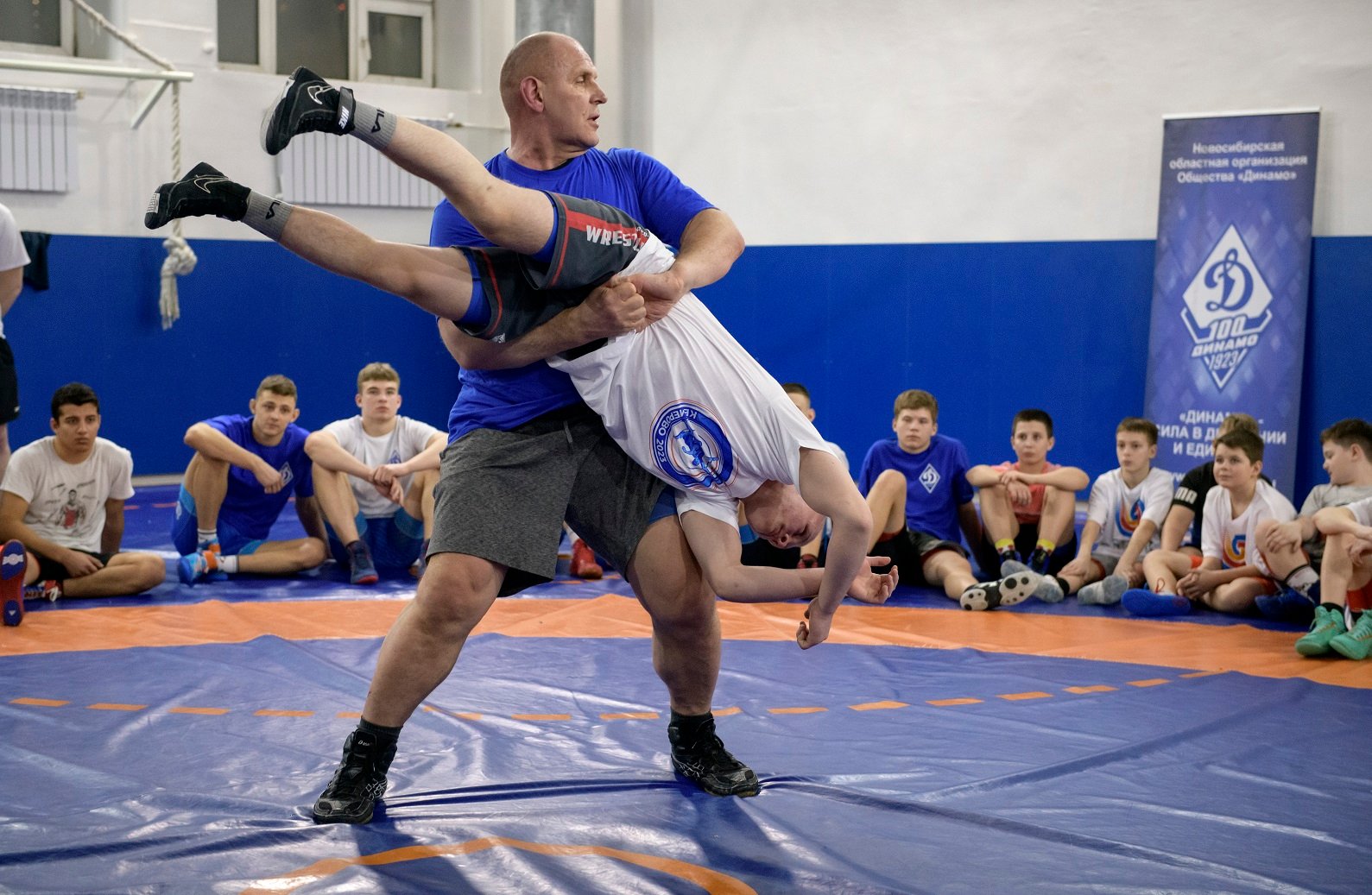
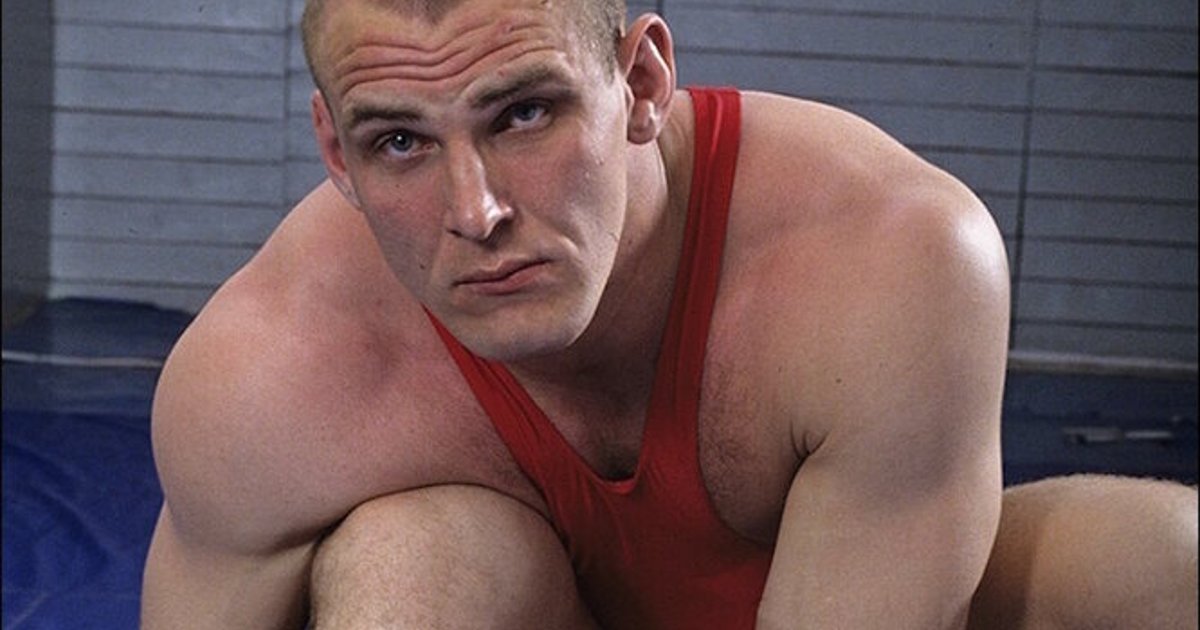
Karelin’s physique tells you that wrestling can demand substantial physical capacity. It does not tell you his exact exercise selection, weekly volume, recovery schedule or lifting numbers. A photograph cannot supply a verified programme. Neither can an exercise list circulating without a clear account of when he performed it and why.
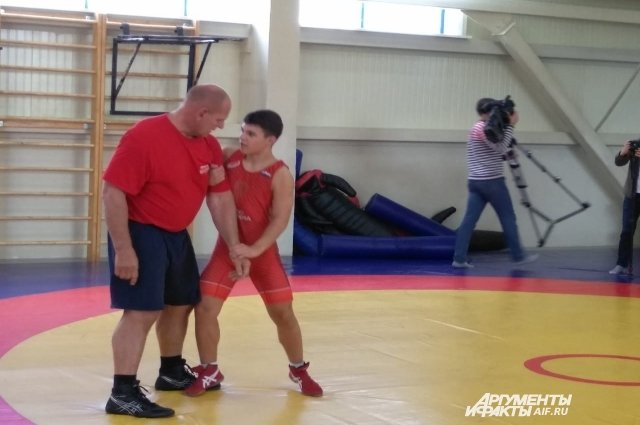
The distinction becomes clearer when watching him teach. In a documented March training session at Novosibirsk’s Dynamo wrestling hall, Karelin demonstrated techniques including the reverse body lift and discussed preparatory exercises for refining them. Technique was something to work on deliberately, even when the teacher was famous for overwhelming strength.
For an ordinary lifter interested in wrestling, that suggests two separate questions. What physical quality needs work? And where will you practise applying it? General pulling strength, the ability to support a load and conditioning can be trained in the gym. Establishing a body lock against resistance requires wrestling practice. Neither question is answered simply by collecting harder exercises.
Suppose your rows improve but you still lose a useful position immediately in a coached drill. More rowing may remain worthwhile, but it does not establish that your pulling muscles are the only limitation. Ask the coach what happened before deciding that another accessory exercise is the answer. Conversely, understanding a position does not remove the need for adequate strength to maintain it.
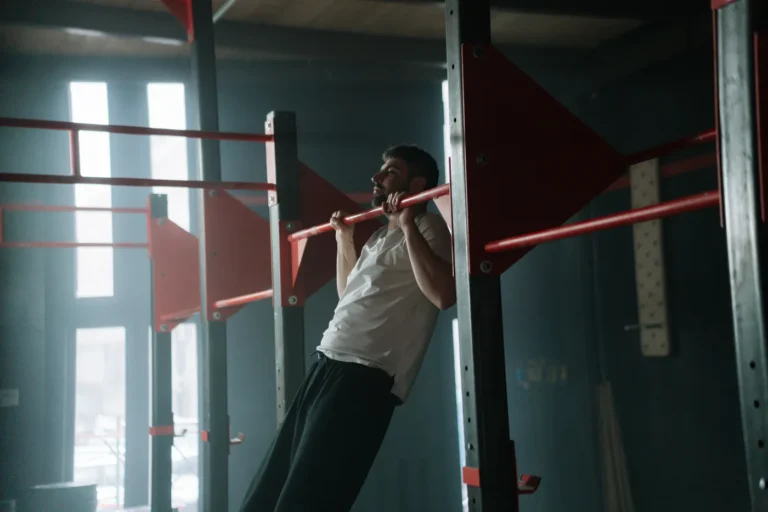
Equipment can support that general preparation. Rings and pull-up handles offer pulling options; free weights allow controlled lifting and carrying; specialised tools can train grip or neck strength when appropriately programmed. The equipment below is for those broad uses. It is not a reconstruction of Karelin’s gym, an endorsement by him or a requirement for learning wrestling.

Equipment Worth Exploring
Explore equipment, accessories and gear from our carefully selected range.


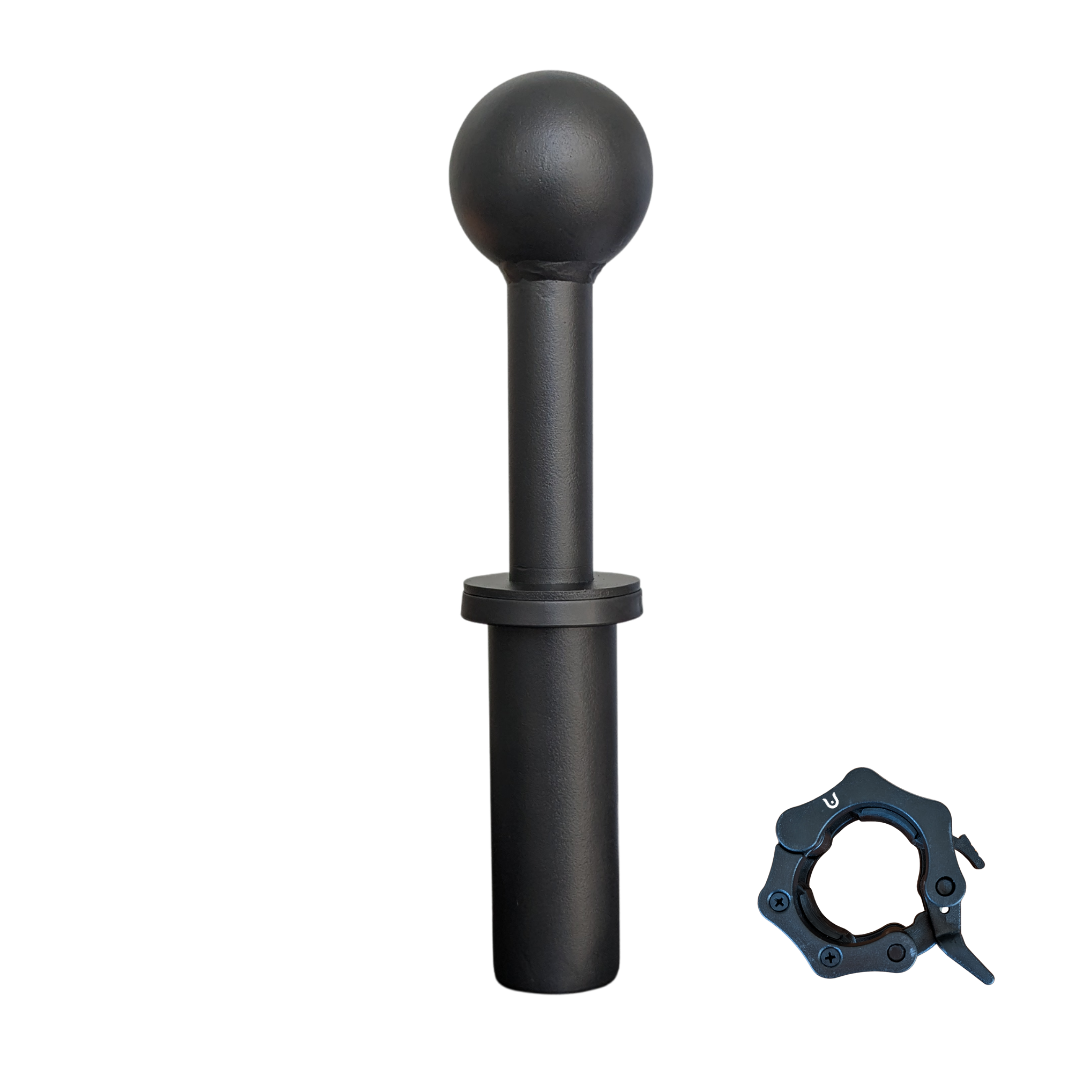


T-Bar Row Attachment
Welded barbell attachment that connects a D-handle bar for landmine and T-bar rows.

Open Hex Bar
Open-frame trap bar with multiple handles for deadlifts, carries, and lower-body training.

Cast Iron Kettlebells
Textured cast-iron kettlebells for swings, squats, carries, and full-body training.

Sydney shows why strength never guarantees a result
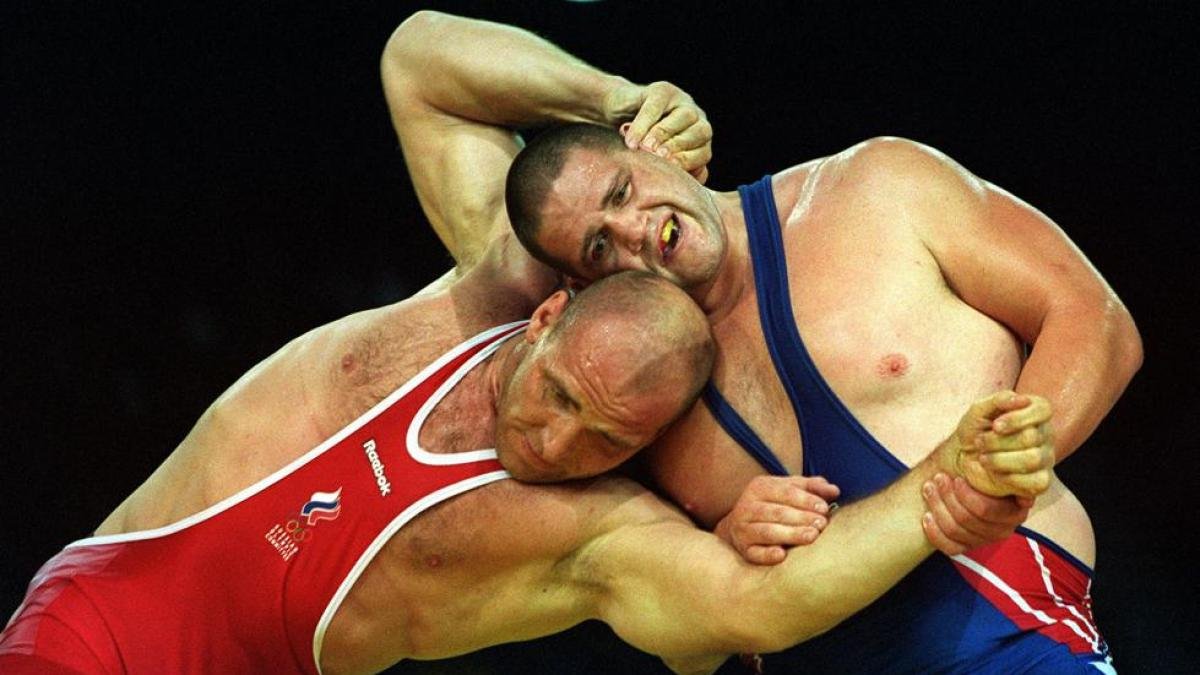
Rulon Gardner defeated Karelin 1–0 in the 2000 Olympic final. Karelin left Sydney with silver rather than a fourth consecutive gold. A single point ended the unbeaten run without erasing the three earlier Olympic titles or the nine world championships.
It is tempting to use a famous upset to announce that strength does not matter. That is just as simplistic as assuming the stronger-looking athlete must win. A contest rewards actions under its rules on that day. It does not award a medal for the most intimidating physique or for a reputation built over previous seasons.
For lifters, the useful lesson is about measurement. If your goal is wrestling performance, evaluate wrestling performance alongside physical tests. If your goal is a stronger deadlift, evaluate the deadlift. A physique photograph, a difficult carry and a competition result provide different information. Treating one as a universal score makes progress harder to interpret.
Gardner’s victory also leaves the history more interesting than a flawless superhero narrative. Karelin was exceptionally successful and still beatable. You can admire that career without needing every appearance, training story or physical attribute to become evidence of something supernatural.
Borrow the approach without inventing his routine
The most usable Karelin-inspired training idea is to connect preparation with a clear task. Start with your own aim. A recreational lifter who enjoys strength history does not need the same week as an international wrestler. Someone joining a wrestling club should build gym work around the club’s demands, experience and coaching rather than trying to imitate a champion’s presumed workload.
Choose measures you can repeat honestly. For a controlled carry, record the implement, load, distance and hold. For a pulling exercise, keep the range of motion and assistance consistent. In wrestling practice, ask which technical detail you are trying to improve. These are editorial suggestions for organising training, not claims about Karelin’s personal training log.
Then leave room to learn. Making every session a test of toughness can obscure whether the intended skill is improving. A manageable drill that reveals a positioning error can be more informative than an exhausting session that only proves you worked hard. Fortitude and discipline include the patience to practise something before loading it aggressively.
The history of George Hackenschmidt’s strength and wrestling career offers another useful example of how physical culture and competitive wrestling became intertwined. Different eras produced different athletes and circumstances; a shared reputation for strength does not establish that their methods were interchangeable.
Karelin’s legacy gives you plenty to admire: strength applied through position, technical mastery sustained over years and results that survived changes of Olympic team and generation. The sensible ambition is not to become a copy of him. It is to become stronger at a defined task, understand what the evidence actually shows and keep practising the part that cannot be bought as a programme.

Greek Gods Gym Shirts & Workout Gear
Greek mythology-inspired gym shirts and workout gear for lifters chasing godlike strength and physiques.

Perseverance Stoic Sigma Marble Statue – Meme Shirt & T-Shirt
Heavy lifts, good laughs, and a little “Perseverance Stoic Sigma Marble Statue” energy.

Willpower Stoic Lifting Sigma – Greek God Marble T-Shirt
Rep “Willpower Stoic Lifting Sigma Graphic” humor in and out of the gym.

Strength Stoic Bodybuilder Greek God Marble T-Shirt
Bring “Strength Stoic Bodybuilder Greek God Marble” humor to your next gym day.

Fortitude Stoic Sigma Bodybuilder : Meme Shirt & T-Shirt
Rep “Fortitude Stoic Sigma Bodybuilder” humor in and out of the gym.

Resilience Stoic Sigma Greek God Statue Meme T-Shirt
Show some bodybuilding attitude with a playful “Resilience Stoic Sigma Greek God Statue” tee.


Diligence Greek God Tee
Heavy lifts, good laughs, and a little “Diligence Greek God Marble Sculpture” energy.

Strength Stoic Sigma Greek God Marble Sculpture – T-Shirt
Rep “Strength Stoic Sigma Greek God Marble” humor in and out of the gym.

Discipline Greek God Statue Stoic Sigma T-Shirt
Heavy lifts, good laughs, and a little “Discipline Greek God Statue Funny Stoic” energy.

Consistency Is Key Stoic Greek God Marble Sculpture T-Shirt
Make gym days more fun with “Consistency is Key Stoic Greek God Marble” style.