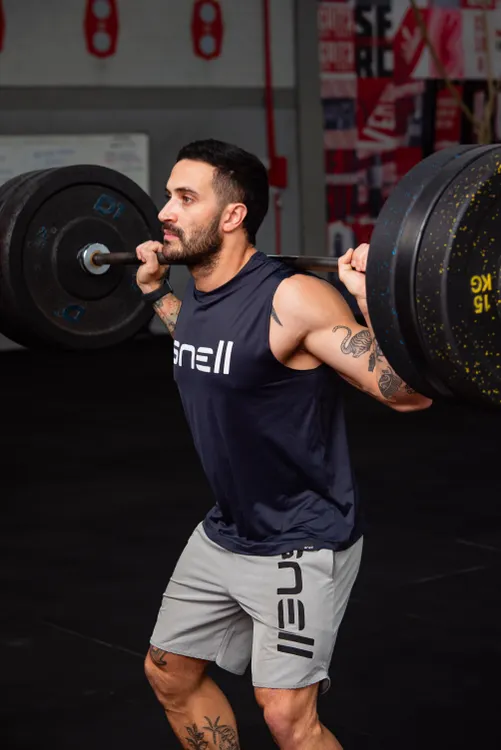
What if the fastest way to keep a demanding set productive is not to add more rest, but to move some of your existing rest into the set itself? That is the idea behind rest redistribution: dividing recovery into shorter pauses so the later repetitions do not deteriorate as quickly.
A 2026 analysis found advantages for some power-related outcomes and lower perceived exertion, but not for every measure of strength or speed. Here is what that means for squats, deadlifts, presses and everyday programming—and why a clever rest pattern should never be confused with guaranteed extra muscle.
What the 2026 review found—and what it did not
When a heavy set slows down, most lifters have two options: grind through the remaining repetitions or wait until the next set. Rest redistribution offers a third choice. Instead of concentrating all the recovery between sets, it spreads a fixed rest allowance into shorter breaks within the work. A 2026 synthesis of 15 randomized comparisons involving 346 participants examined this arrangement against traditional sets in healthy, active people.
Across the included studies, redistributed rest was associated with better mean power output, with a standardized effect of 0.39, and better peak torque, with an effect of 0.23. Participants also reported lower perceived exertion, with an effect of minus 0.67. These are group-level standardized differences, not promises that every lifter will add a specific number of kilograms or watts.
Several other outcomes did not show a clear advantage: peak power, mean lifting velocity, maximal force and mean force were not significantly different in the pooled analysis. That distinction is important. The practical headline is not that brief pauses make every lift stronger. It is that distributing recovery differently can preserve some aspects of performance and make a demanding session feel more manageable, even when total rest is held comparable. Many included experiments measured immediate session responses; they cannot by themselves establish superior long-term muscle growth.
Rest redistribution, cluster sets and straight sets are different tools

A traditional set places repetitions together, followed by one longer break. Imagine three sets of six squats with two minutes between sets: the working repetitions are continuous, and all recovery occurs after each group. Rest redistribution keeps the overall rest budget similar but moves some of those seconds inside the work. You might perform three repetitions, pause briefly, complete another three, and shorten the later break accordingly.
A cluster set also inserts mini-rests between repetitions or small groups, but many cluster protocols add recovery rather than merely rearrange an identical total. This matters when comparing results. Six repetitions performed as three pairs with twenty seconds between pairs can feel much easier than six uninterrupted reps, yet it may also take longer. If the rest budget changes, the improvement cannot be credited solely to its placement.
There are also two forms of redistribution: an intra-set version moves breaks into a set, while an inter-set version alters the spacing of work and recovery between sets. Neither should be confused with rest-pause training, where a lifter deliberately approaches failure and then takes short breaks to squeeze out extra repetitions. Rest redistribution generally aims to preserve output, not extend an already exhausted set. For a fair personal comparison, match the load, completed repetitions and total recovery time before deciding which structure performs better.

Powerlifting Shirts & Lifting Gear
Powerlifting shirts and gym gear for squat, bench and deadlift lifters who live for heavy numbers.

9 Plates Squat Club Meme Shirt – Essential & T-Shirt
Show some leg-day attitude with a playful “9 Plates Squat Club” tee.

Meme : Squat Rack Top Home T-Shirt
Make gym days more fun with “Powerlifting Gym Meme” style.

Chest Day Sweater Bench Press & Meme T-Shirt
Add a playful “Chest Day” touch to your casual rotation.

PR or ER – Hardcore Powerlifting for Deadlift PR Chaser Hoodie
Show off your deadlift humor in a laid-back “PR or ER” hoodie.

I’m Strong Barbell Heartbeat Muscle Shirt for Powerlift Tank Top
Show some personality between sets with “I’m Strong Barbell Heartbeat”.

Barbell Flag USA Patriotic Gym | Funny Workout Decal | Sticker
Put “Barbell Flag USA Patriotic” gym humor on your laptop, bottle, or gym gear.

45LB Metal Weight Plate Barbell Standard Lifting T-Shirt
For laid-back days and metalhead humor: “45LB Metal Weight Plate”.

Gym Cult Occult Barbell Meme – Powerlifting Bodybuildin Sticker
Give your everyday gear a playful “Gym Cult” twist.

Gym The Bar Does Not Lie Medieval Knight for Powerlifte Hoodie
Show off your medieval humor in a laid-back “The Bar Does Not Lie Medieval Knight” hoodie.

Off-Season Rest Day Sweater & Bros Meme T-Shirt
For laid-back days and powerlifting humor: “Off-Season Rest Day”.
Why short breaks can protect rep quality
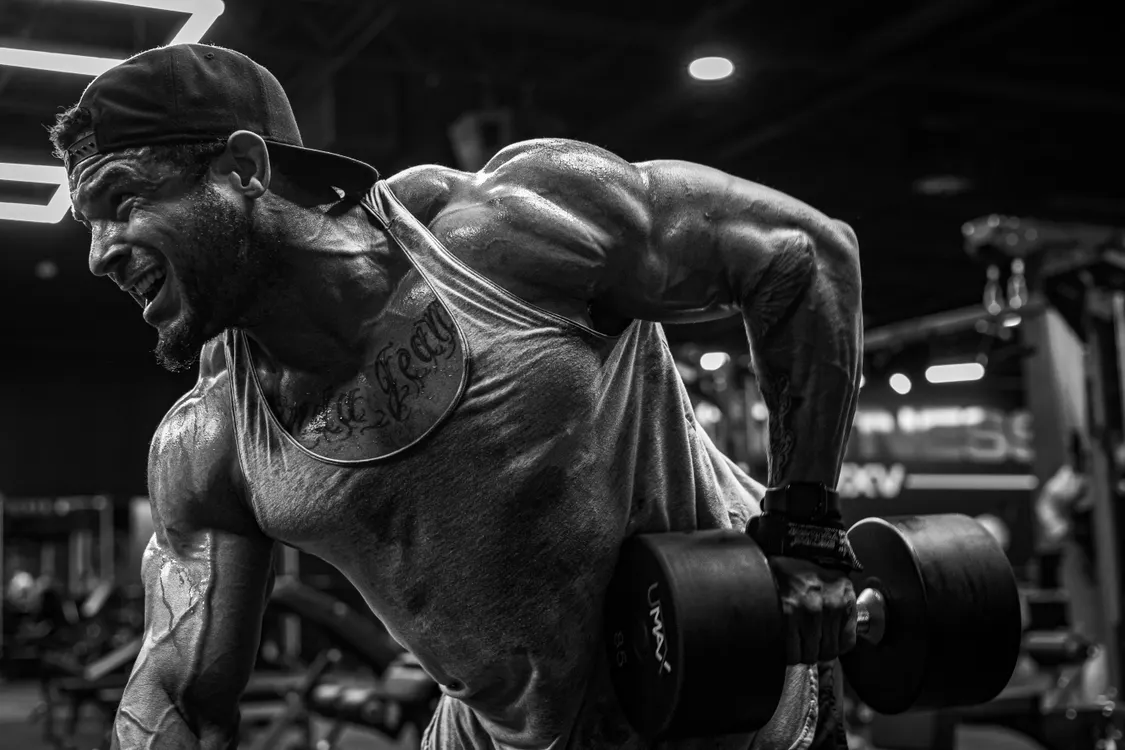
Power depends on producing force quickly. As a set continues, fatigue can slow the bar, change coordination and make the last repetition look very different from the first. A brief pause does not erase fatigue, but it can allow some immediate recovery before the next repetition. That may help preserve intent and consistency when explosive output matters.
Another 2026 synthesis, covering 37 studies, compared traditional sets with clusters and different redistribution formats. All three alternative arrangements preserved average repetition velocity better than traditional sets. Direct comparisons between the alternative formats did not establish a clear, practically important winner. Ranking probabilities favored clusters, but a high ranking probability is not the same thing as proof of a meaningful superiority over the other methods.
Velocity is also only one outcome. Faster repetitions under a fixed load may reflect better power expression or lower fatigue; they do not automatically prove more hypertrophy, better maximal strength or improved sports performance months later. A lifter preparing for jumps, Olympic-lift derivatives or speed-focused squats might value maintaining fast, technically consistent repetitions. Someone trying to complete an ordinary moderate-load bodybuilding session may value simplicity instead.
Use the quality of the movement as feedback: consistent depth, bar path and deliberate acceleration are more informative than simply feeling less tired. If a mini-break helps you perform the intended movement rather than turn it into a survival exercise, the structure may be useful.

Equipment Worth Exploring
Explore equipment, accessories and gear from our carefully selected range.


FID Bench MAX
Adjustable bench offering flat, incline, and decline positions + adjustable headrest.


Safety Squat Handles
Barbell squat handles that reduce shoulder positioning demands during high-bar squats.


Squats and deadlifts: how to test redistributed rest
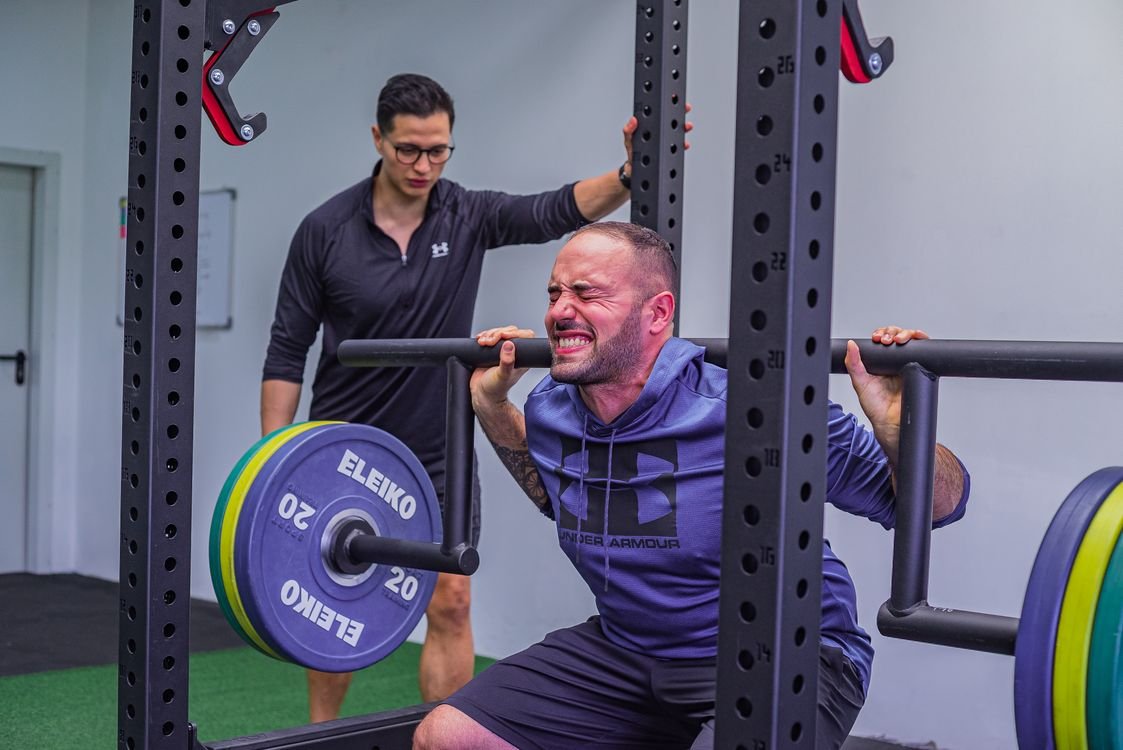
Start with a load you can control comfortably rather than a near-maximal attempt. Suppose your plan calls for three sets of six squats. In the straight-set version, perform six consecutive repetitions and rest two minutes before the next set. In a redistribution experiment, try three repetitions, a brief fifteen- to twenty-second pause while safely re-racking the bar, then three more repetitions. Reduce the following between-set break by the inserted rest if your goal is to keep the total recovery budget comparable.
The numbers are a practical illustration, not a protocol shown to be optimal. Count the entire session’s rest rather than accidentally giving the split version extra recovery. Record whether the sixth repetition retains the same depth, trunk position and speed as the first. If it does, the extra complexity may be worthwhile for your current goal.
For deadlifts, resetting the bar between repetitions already changes the rhythm. A useful alternative is two or three technically crisp singles separated by short, deliberate pauses, provided the load remains safely submaximal and the training plan permits it. Never use mini-rests as an excuse to rush your setup, ignore bracing or perform more heavy repetitions than you can control.
Equipment and environment matter. Squats should be performed with correctly positioned safeties or competent spotting where appropriate. A clear rack area makes it easier to take a pause without interfering with other lifters. If your gym is crowded, a simpler conventional set may be the better choice.
Bench press and dumbbells: practical applications
Bench pressing is another setting where a set can deteriorate from smooth repetitions into an unstable final grind. A practical trial might use four repetitions, a brief pause with the bar securely re-racked, and two more repetitions at the same load. Keep the total planned repetitions unchanged. Use safeties or a capable spotter whenever a missed repetition could trap you under the bar.
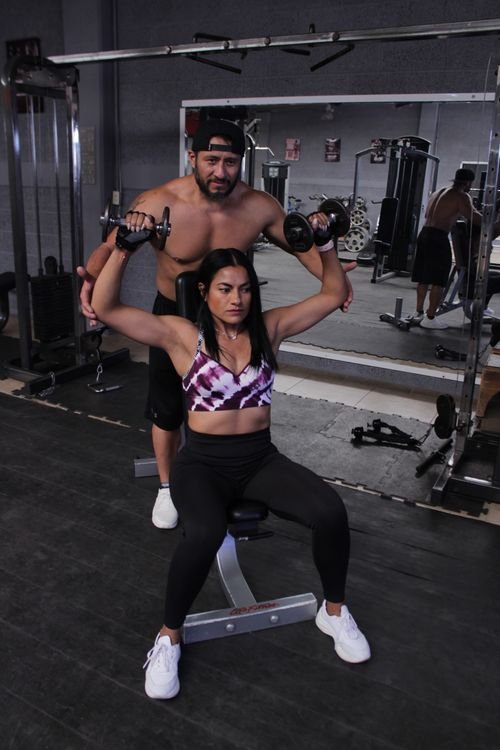
Dumbbell presses can be split too, although setting the weights down and picking them up repeatedly may cost more energy than it saves. A seated machine press or supported row often makes the method easier to execute. The best exercise is not necessarily the one that looks most impressive on a program; it is the one where the short pause can be taken safely and repeatably.
Consider why you are inserting the break. For a strength-and-power block, preserving bar speed and position may be valuable. For a general hypertrophy workout, maintaining consistent technique across hard sets can be useful, but you do not need to interrupt every set. On smaller exercises such as curls, lateral raises or triceps extensions, ordinary straight sets may provide a simpler stimulus without much practical downside.
Use a timer rather than guessing at the pause length. If a twenty-second break gradually becomes a full minute, you have changed the session rather than tested redistribution. Track both the time spent lifting and the total time spent recovering; a format that feels easier but doubles your session length may not suit your schedule.
Bodybuilding Shirts & Workout Gear
Bodybuilding shirts, tanks and gym gear for lifters chasing muscle, size, symmetry and the pump.

Pink 45LB Weight Plate Barbell Lifting Workout Graphic T-Shirt
Show some gym-girl attitude with a playful “Pink 45LB Weight Plate” tee.

Leg Day Squats Deadlifts Vest Meme Tank Top
Bring “Leg Day” humor to your next lifting session.

I Look Better Bent Over Squats Deadlifts & Booty Hoodie
Keep it laid-back with a little “I Look Better Bent Over” attitude.

First Progressive Overload President Theodore Roosevelt Sticker
Bring “First Progressive Overload President” attitude to your water bottle or laptop.

Funny Patriotic Gym – Two More Reps Nixon 4th of July V Tank Top
Train hard, laugh a little, and rep “Patriotic”.

Therapy Barbell – Lifting Bodybuilding Powerlifting Mem Sticker
Bring “Therapy Barbell” attitude to your water bottle or laptop.

Flaming 45LB Weight Plate Fire Barbell Lifting Workout T-Shirt
Show some powerlifting attitude with a playful “Flaming 45LB Weight Plate” tee.

Deadlift Stone Skull Gym Crewneck for Powerlifters, Hea T-Shirt
For laid-back days and deadlift humor: “Deadlift”.

Leg Day Is Calling You Squats & Deadlifts Meme Hoodie
Stay casual and show some leg-day attitude with “Leg Day Is Calling You”.

Muscle Mommy Pink Gym Graphic for Women, Lifters & Stre T-Shirt
For laid-back days and gym-girl humor: “Muscle Mommy”.
Does splitting rest build more muscle?
It is tempting to turn a positive short-term performance result into a promise of faster muscle growth. The longer-term evidence is more restrained. A synthesis of 29 training studies found no clear overall difference between cluster and traditional sets for strength, power, velocity, hypertrophy or muscular endurance adaptations. That does not mean every arrangement is identical, but it does challenge the claim that inserting mini-breaks is automatically a superior muscle-building method.
A smaller eight-week comparison in trained participants matched sets, repetitions and effort by adjusting loads to a similar reps-in-reserve target. Cluster and straight-set protocols produced similar improvements in measured thigh muscle thickness and lean tissue. Its small sample means it cannot settle the issue, yet it reinforces the practical lesson: when work and effort are reasonably controlled, different set structures can produce comparable growth.
The distinction between feeling fresh and stimulating muscle is essential. If your split set preserves excellent technique but reduces the challenge of every repetition, you may need to adjust other programming variables to achieve the intended training stimulus. Conversely, if it lets you maintain load and complete high-quality work without unnecessary exhaustion, it may help manage fatigue over a demanding training week.
Do not mistake lower perceived exertion for a universal improvement in results. Choose the format that allows progressive overload, sufficient hard work and repeatable recovery. The evidence currently supports rest redistribution as an option for session quality, not as a compulsory replacement for straight sets.
Equipment Worth Exploring
Explore equipment, accessories and gear from our carefully selected range.
VOLTRA
Compact digital cable trainer with smooth, adjustable resistance.

Go-Tone Pro
Portable digital cable trainer with up to 66 lb (30 kg) of adjustable resistance.


Original GymPin
Adds Olympic plates to compatible cable-machine weight stacks for extra resistance.

A two-week experiment—and when to stick with straight sets

For the first week, keep your normal exercise selection and record two comparable sessions. Note the load, repetitions, rest periods, estimated effort and whether later repetitions noticeably slow or lose technique. In week two, use a redistributed-rest structure for just one compound lift while leaving the other exercises unchanged. Match total repetitions and aim to match the total recovery allowance. That gives you a useful comparison without rebuilding the entire program around one idea.
For example, test a moderate squat session of three sets of six with a three-plus-three split. Use a fifteen-second pause inside each set and account for those seconds when setting the following rest. Rate the final repetition’s technique, record any visible slowing, and note whether the next exercise suffers. A simple training log is sufficient; a velocity sensor is helpful only if you already have a reliable way to use it.
Keep conventional sets when your objective is to practice continuous repetitions, when a competition standard demands them, when the interruption complicates setup, or when your training is already progressing well. For explosive lifts, higher-skill movements or blocks where accumulated fatigue is a major concern, strategically redistributed rest may be worth the extra attention.
There is no need to apply the method to every lift or to turn an ordinary workout into a timing experiment. Try it on one movement, observe the result and retain it only if it improves the training quality you actually care about. The strongest takeaway from the 2026 evidence is modest but useful: changing where recovery happens can alter how well you perform, even when the total rest budget stays similar.